How LiDAR for AGV Obstacle Avoidance Improves Navigation in Narrow Aisles
Publication Date
author
Why narrow aisles change the value of LiDAR
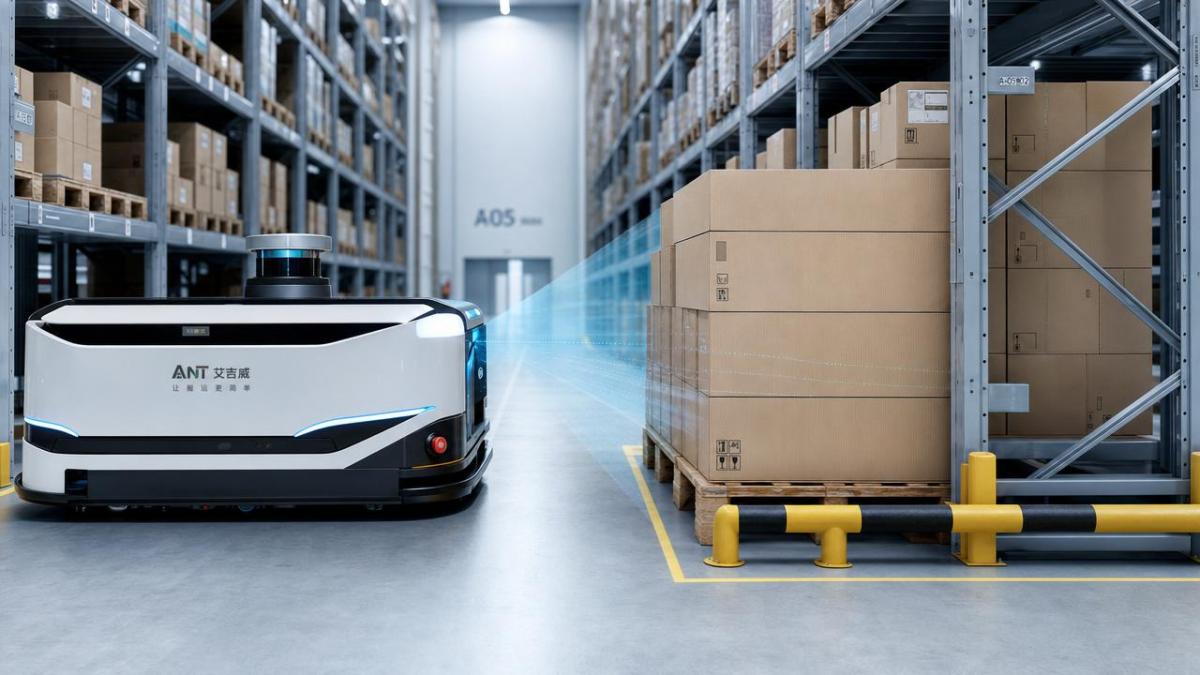
In dense intralogistics layouts, navigation errors rarely stay small. A slight deviation can block traffic, damage racks, or interrupt synchronized picking and replenishment cycles.
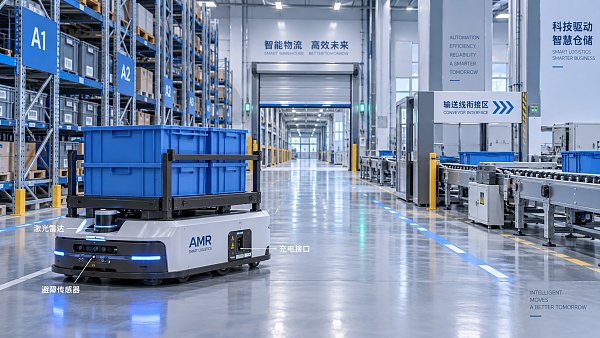
That is why lidar for agv obstacle avoidance matters most in narrow aisles. It supports precise movement where turning clearance, pallet overhang, and mixed traffic compress the operating margin.
The real issue is not whether LiDAR detects obstacles. The issue is how reliably it distinguishes usable path space from temporary interference under changing site conditions.
A TSV-style engineering view helps here. Marketing language often highlights range alone, while practical deployment depends on point cloud density, refresh behavior, reflectivity tolerance, and integration stability.
In warehouses, micro-fulfillment centers, component plants, and spare-parts hubs, the same AGV may face very different aisle realities. That is where application judgment becomes more important than headline specifications.
Actual use cases rarely share the same risk profile
Aisle width alone does not define difficulty. The harder variable is usually how dynamic the aisle becomes over a shift, a season, or a product mix change.
In a pallet warehouse, loads may protrude unpredictably. In electronics assembly, carts, bins, and people cross paths more often. In cold storage, condensation and reflective wrapping create another layer of sensing complexity.
This is why lidar for agv obstacle avoidance should be judged by context. The same sensor can perform well in one aisle pattern and struggle in another if filtering, mounting, and safety zones are poorly matched.
A practical review usually starts with four questions: what objects appear unexpectedly, how fast the AGV moves, how much clearance is truly available, and how often the environment changes.
High-bay pallet storage needs stable edge recognition
In high-bay aisles, the AGV often travels long straight paths with limited lateral clearance. The challenge is less about route complexity and more about maintaining centerline discipline.
Here, lidar for agv obstacle avoidance is valuable when it can consistently interpret pallet edges, rack legs, and minor intrusions without false stops. Excessive false positives can reduce throughput as much as true collisions.
The key checks are angular resolution, side coverage, and performance with irregular pallet geometry. Stretch wrap reflections and damaged pallets should be included in acceptance testing, not left to later troubleshooting.
Mixed pedestrian zones depend on reaction quality
Facilities with manual picking or kitting create more unpredictable motion. Objects do not only appear; they hesitate, reverse, or partially enter the path before fully crossing it.
In this setting, lidar for agv obstacle avoidance must support fast zone switching and dependable tracking at short distance. Braking behavior and controller latency matter as much as sensor range.
A common mistake is to treat all pedestrian interactions as a safety-only issue. In practice, navigation smoothness also matters because repeated stop-start behavior can create queueing and battery inefficiency.
Small-parts manufacturing often exposes low-height obstacles
Component plants and assembly lines tend to introduce low carts, tool trolleys, dropped containers, and temporary fixtures. These are not always captured well by a single mounting height.
For this reason, lidar for agv obstacle avoidance may need layered sensing logic. One scan plane can protect navigation, while another protects against low-profile hazards that disrupt forks, wheels, or payload swing.
The judgment point is not simply adding more sensors. It is deciding whether the obstacle profile justifies multi-layer coverage, vision fusion, or tighter housekeeping controls.
Different aisle conditions demand different technical priorities
When teams compare solutions, the most useful method is to map operating conditions against sensing demands. That prevents overpaying for irrelevant features or underestimating hidden failure modes.
This comparison also reflects TSV’s broader position. Parameters only become meaningful when they are linked to actual engineering thresholds and operating constraints.
What usually separates a smooth deployment from a fragile one
In many projects, the first deployment looks acceptable during pilot hours. Problems emerge later when aisle congestion, packaging variability, and maintenance drift begin to accumulate.
A robust lidar for agv obstacle avoidance strategy usually includes more than sensor selection. It also covers mounting geometry, scanner protection, controller tuning, map maintenance, and cleaning intervals.
- Validate with real loads, not empty vehicles, because payload shape can alter blind zones and turning behavior.
- Test under shift-change traffic, because sparse pilot traffic often hides braking and queueing problems.
- Measure false-stop frequency separately from collision avoidance success, because both affect uptime.
- Check scanner contamination risk in dust, film, or cold environments before defining maintenance cycles.
Where edge AI or fleet software is involved, the sensor should also be reviewed as part of a full decision chain. Good raw detection can still produce poor aisle behavior if localization and motion control are loosely integrated.
Common misjudgments in narrow-aisle navigation
One frequent error is choosing lidar for agv obstacle avoidance by maximum range alone. In narrow aisles, excessive range may add little value if short-range detail and stable object classification remain weak.
Another mistake is assuming similar facilities share identical sensing demands. Two warehouses with equal aisle width can differ sharply if one handles uniform pallets and the other mixes cartons, bins, and manual carts.
There is also a cost-related blind spot. Lower upfront sensor cost may look attractive until false stops, cleaning labor, software rework, or unplanned retrofits increase the total operating burden.
Finally, some implementations overlook compatibility with safety standards, industrial gateways, and vehicle controller timing. The result is not a sensing failure by itself, but an unstable navigation stack.
A practical way to match LiDAR capability to the aisle
A useful evaluation path starts with the aisle, not the catalog. Document clearance, traffic behavior, load variation, reflective materials, and cleaning conditions before comparing sensor options.
Then define measurable thresholds for lidar for agv obstacle avoidance. These may include minimum obstacle size, tolerated false-stop rate, braking distance at operating speed, and map update intervals.
After that, run scenario-based validation. Include damaged pallets, offset loads, blocked corners, low obstacles, and temporary congestion. Real navigation confidence comes from repeated edge cases, not ideal-path demos.
For long-term resilience, build a site-specific benchmark sheet. That aligns with TSV’s data-first philosophy: strip away promotional noise and compare systems by verifiable behavior under real constraints.
The next step is usually straightforward. Clarify which aisle conditions are non-negotiable, compare how each LiDAR setup handles them, and weigh implementation effort against uptime risk over the full operating cycle.
Search News
Hot Articles
- Carbon Fiber StructuresHow to Specify Aerospace Carbon Fiber Assemblies for Lightweight, Load-Bearing PartsJul 11, 2026
- Machine VisionXiaomi, Alibaba DAMO Academy Drive Open-Source Robotics Model Ecosystem, Lowering Algorithm Development Barriers for Overseas SMEs Adopting Chinese Robotics SolutionsMar 30, 2026
- Cobots & ArmsShanxi 'AI+' Conference Showcases Embodied Intelligence with Multinational Buyer Engagement: Key Industry ImplicationsMar 30, 2026
Popular Tags
Recommended News
 Jul 11, 2026How to Specify Aerospace Carbon Fiber Assemblies for Lightweight, Load-Bearing PartsAerospace carbon fiber assemblies: learn how to specify laminate design, load data, joining methods, and inspection controls for lighter, reliable load-bearing aerospace parts.Elena Rostova (UAV Systems Researcher)
 Mar 30, 2026Xiaomi, Alibaba DAMO Academy Drive Open-Source Robotics Model Ecosystem, Lowering Algorithm Development Barriers for Overseas SMEs Adopting Chinese Robotics SolutionsXiaomi & Alibaba DAMO Academy's open-source robotics models lower algorithm barriers for global SMEs. Boost efficiency in manufacturing, logistics & smart retail with ROS 2 compatible solutions.TSV Data Lab
 Mar 30, 2026Shanxi 'AI+' Conference Showcases Embodied Intelligence with Multinational Buyer Engagement: Key Industry ImplicationsShanxi 'AI+' Conference highlights embodied intelligence with Tesla, Ubtech & Jiantao showcasing multimodal robotics. 40+ global buyers validated tech on-site, creating new B2B channels for industrial automation & AI solutions.Chen Wei (Automation Lead Engineer)
 Mar 30, 2026Zhongguancun Unveils 6G Integrated Sensing-Computing-Intelligence Platform to Empower Embodied Robots for Global Industrial ApplicationsZhongguancun's new 6G platform revolutionizes industrial robotics with <10ms latency, empowering global automotive, logistics & port automation. Discover how this tech boosts China's smart manufacturing exports.TSV Data Lab
 Mar 30, 2026Mech-Mind Tianjin Embodied Intelligence R&D and Production Base Goes Live, Cutting Delivery Time by 20%–30% for Global Customized AMR+Vision SolutionsMech-Mind's Tianjin AMR+Vision production base cuts delivery time by 20%-30% for欧美 & Latin American markets. Discover how this PLd-certified facility accelerates customized robotics solutions for smart manufacturing and logistics.Chen Wei (Automation Lead Engineer)
 Mar 30, 2026Boao Forum Reveals 'Co-evolution of Big and Small Brains' Trend in Humanoid Robots, China's Embodied Intelligence Accelerates Adaptation to Overseas Manufacturing Service ScenariosDiscover how China's humanoid robots, featuring 'Co-evolution of Big and Small Brains,' are revolutionizing global manufacturing. Learn about Embodied Tian Gong 3.0's ISO compliance and overseas deployment at Boao Forum 2026.Chen Wei (Automation Lead Engineer)
 Mar 30, 2026China Railway Industrial Secures Patent for Embodied Robotics in Material Handling, Boosting High-Precision Delivery Capabilities for Overseas Infrastructure and Manufacturing ProjectsChina Railway Industrial's new patent for embodied robotics in material handling boosts high-precision delivery for global infrastructure & manufacturing. Discover how this innovation enhances logistics accuracy in automotive, rail transit & EPC projects.Chen Wei (Automation Lead Engineer)
 Sep 20, 2026Autonomous Navigation Pricing: Cost Drivers and Budget Benchmarks for AMR ProjectsAutonomous navigation price explained: compare AMR cost drivers, software, sensors, integration, safety, and lifecycle budgets to build a scalable project plan.Chen Wei (Automation Lead Engineer)
 Sep 19, 2026How to Scope Automation Integration Services for Multi-System Factory ProjectsAutomation integration services: learn how to scope multi-system factory projects with clear workflows, interface contracts, safety boundaries, and acceptance criteria.Victor Lin (Chief Software Architect)
 Sep 18, 2026Selecting UAV Aerospace Structural Parts for Strength, Weight, and Fatigue LifeUAV aerospace structural parts guide: compare strength, weight, stiffness, fatigue life, joints, and traceability to select reliable flight-ready components.Elena Rostova (UAV Systems Researcher)
 Sep 17, 2026Selecting Commercial Drone Payloads for European Inspection ProjectsCommercial drone payloads Europe: learn how to select RGB, thermal and LiDAR systems for compliant, reliable inspection data and better project outcomes.Elena Rostova (UAV Systems Researcher)
 Sep 16, 2026Machining Tolerance Validation: How to Verify Critical Dimensions Before Production ReleaseMachining tolerance analysis validation: verify critical dimensions, measurement systems, process capability, and tolerance stacks before production release.Dr. Marcus Vance
 Sep 15, 2026AGV Tape Guidance vs Laser Navigation: Which Fits Your Warehouse Layout?AGV tape guidance comparison: discover how tape and laser navigation fit changing warehouse layouts, docking needs, floor conditions, maintenance, and route flexibility.Chen Wei (Automation Lead Engineer)
 Sep 14, 2026How Point Cloud Analytics Improves Asset Inspection Workflows Across GCC ProjectsPoint cloud analytics GCC helps project leaders improve asset inspections with accurate change detection, safer workflows, and faster maintenance decisions.TSV Data Lab
 Sep 13, 2026How Aerospace Manufacturers Can Build a Digital Thread From Design to Certified ProductionDigital manufacturing for aerospace: learn how to build a traceable digital thread from design through certified production, supplier control, and audit-ready compliance.Victor Lin (Chief Software Architect)
 Sep 12, 2026How to Select a Thermal Sensor for Mapping Drones in Surveying ProjectsMapping drone thermal sensor selection made simple: compare GSD, radiometric data, NETD, calibration, and workflow fit for accurate, survey-ready thermal maps.Elena Rostova (UAV Systems Researcher)
 Sep 11, 2026Integrating Photogrammetry Workflows into Digital Twin Projects Without Data BottlenecksPhotogrammetry workflow integration for digital twins: learn how to streamline capture, validation, versioning, and delivery to prevent data bottlenecks.Victor Lin (Chief Software Architect)
 Sep 10, 2026Hard-Tech Supply Chain Procurement: Qualifying Suppliers to Cut Lead-Time RiskHard-tech supply chain procurement guide: qualify suppliers with proven process, traceability, capacity, and change control to reduce lead-time risk.Chen Wei (Automation Lead Engineer)
 Sep 09, 2026Industrial Application Notes: Cost Factors That Shape Automation Project BudgetsIndustrial application notes cost factors explained: uncover the engineering, safety, integration, and commissioning variables that shape accurate automation budgets.Victor Lin (Chief Software Architect)
 Sep 08, 2026Supplier Discovery for Sourcing: How Buyers Can Verify Capability and Supply RiskSupplier discovery for sourcing: learn how to verify supplier capability, traceability, quote assumptions, and supply risk before placing production orders.TSV Data Lab
 Sep 07, 2026What Determines Process Control Systems Pricing? A Buyer’s Cost GuideProcess control systems pricing explained: compare hardware, engineering, integration, cybersecurity, validation, and lifecycle costs to choose the right-value solution.Victor Lin (Chief Software Architect)
 Sep 07, 2026AMR Robots in ASEAN: Which Industries Are Adopting Them—and Why?AMR robots ASEAN adoption is accelerating in electronics, automotive, warehousing, healthcare, and cold chain. Explore use cases, risks, and deployment insights.Chen Wei (Automation Lead Engineer)
 Sep 05, 2026How to Evaluate Supplier Qualification Support Tools for Industrial Procurement TeamsSupplier qualification support tools help industrial procurement teams verify technical evidence, manage risk, and make defensible supplier approvals. Learn what to evaluate.Victor Lin (Chief Software Architect)
 Sep 04, 2026Grinding Tolerance Analysis: How to Set Realistic Limits for Precision PartsGrinding tolerance analysis explains how to set realistic limits for precision parts, balance fit, geometry, process capability, and inspection for reliable performance.Dr. Marcus Vance