Tourbillon Watches OEM: Key Questions to Ask Before Choosing a Manufacturing Partner
Publication Date
author
Tourbillon Watches OEM: Key Questions to Ask Before Choosing a Manufacturing Partner
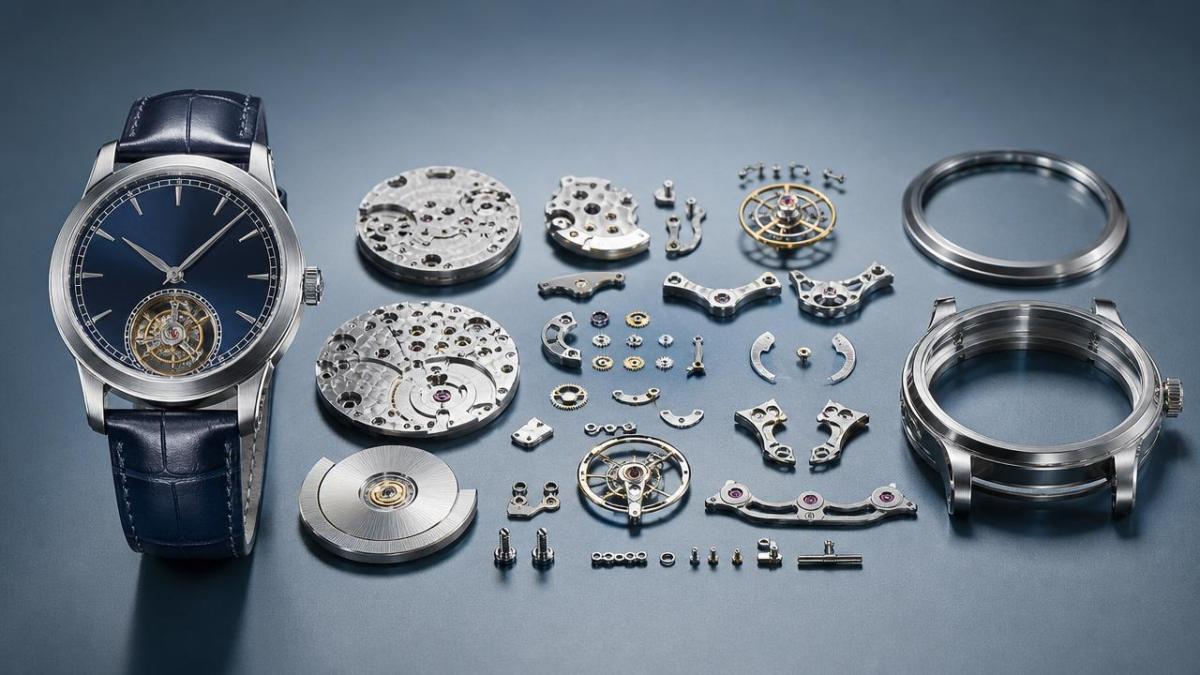
Choosing the right tourbillon watches OEM partner is not just about craftsmanship. It is about validating precision, process control, and long-term supply reliability.
For any sourcing decision, polished catalogs mean very little without verifiable manufacturing data. That is where a disciplined evaluation process becomes useful.
In practice, a tourbillon watches OEM project combines mechanical complexity, cosmetic consistency, and brand risk. One weak supplier link can affect delivery, returns, and market perception.
A capable partner should not only build a beautiful movement. The factory should also prove repeatability, quality traceability, and commercial discipline under real production pressure.
This matters even more now. Buyers are facing longer qualification cycles, tighter compliance expectations, and greater sensitivity to supply disruption.
So before signing with a tourbillon watches OEM, ask deeper questions. The answers often reveal far more than a showroom sample ever can.
Why Tourbillon Watches OEM Selection Requires Extra Caution
A standard watch OEM review is already detailed. A tourbillon watches OEM review should be far stricter because the mechanism is harder to assemble and regulate.
The tourbillon is not just a design feature. It increases demands on balance stability, gear interaction, assembly skill, lubrication control, and long-term accuracy.
That also means supplier claims can be misleading. Some factories assemble outsourced modules but present themselves as full tourbillon watches OEM specialists.
The first goal is simple. Separate true manufacturing capability from outsourced integration dressed up as in-house strength.
Question 1: What Is Actually Made In House?
Start with scope. Ask which components are produced internally and which are purchased from outside partners.
A dependable tourbillon watches OEM should clearly define responsibility for movement parts, cages, bridges, dials, cases, polishing, and final assembly.
This question affects cost, lead time, confidentiality, and quality stability. It also shows whether the supplier controls critical bottlenecks.
Useful follow-up questions include:
- Which tourbillon components are machined internally?
- Who performs movement regulation and final timing?
- Are cages and escapement parts sourced from one supplier or several?
- Can the factory provide process maps for the full OEM workflow?
When a tourbillon watches OEM answers vaguely here, more caution is usually justified.
Question 2: How Do You Prove Precision and Stability?
Precision is easy to advertise and harder to document. Ask for measurable performance records, not general statements about quality.
A serious tourbillon watches OEM should provide timing standards, positional testing methods, and acceptance criteria for daily rate variation.
If possible, request sample data from pilot runs. That gives a better picture than one ideal prototype.
Focus on evidence such as:
- Timing deviation across multiple positions
- Amplitude consistency after assembly
- Power reserve verification records
- Shock and transport stability checks
- Reject rates during regulation and inspection
From a decision standpoint, process capability matters more than a single impressive number.
Question 3: What Quality Control System Supports the Tourbillon Watches OEM Process?
Quality control should be reviewed in layers. Incoming parts inspection alone is not enough for complex mechanical watch manufacturing.
Ask how the tourbillon watches OEM manages inspection before assembly, during assembly, after regulation, and before packaging.
A mature factory usually has clear checkpoints, operator qualification records, and nonconformance handling procedures.
This is where TSV-style thinking is useful. Engineering truth comes from traceable parameters, not polished sales language.
Ask to review:
- Inspection standards for movement parts and cosmetic parts
- Calibration routines for measuring equipment
- Lot traceability for components and finished watches
- Corrective action records for recurring defects
If the supplier cannot show structured records, future claims handling may become difficult.
Question 4: Can the Supplier Scale Without Losing Consistency?
Many factories can produce a beautiful sample. Fewer can deliver repeated batches with matching finish, timing, and assembly consistency.
That makes capacity assessment essential when choosing a tourbillon watches OEM partner.
Ask about monthly output for similar models, technician headcount, training systems, and bottlenecks during high season.
Also check whether critical knowledge sits with one master watchmaker or is documented across a trained team.
In real business terms, scalability is not only about volume. It is about keeping defect rates stable while orders grow.
Question 5: How Transparent Are Lead Times, Costs, and Change Management?
Commercial clarity matters as much as technical skill. Hidden assumptions usually appear later as delays, extra charges, or specification drift.
A reliable tourbillon watches OEM should explain tooling timelines, prototype rounds, approval gates, and payment terms in detail.
This becomes especially important when custom dials, skeleton structures, precious materials, or branded packaging are involved.
Before moving forward, confirm:
- What is included in quoted unit cost?
- What triggers a price adjustment?
- How are engineering changes approved and documented?
- What buffer exists for material or logistics disruption?
Clear documentation here reduces conflict later and supports more accurate total-cost decisions.
Question 6: What Is the Real After-Sales Risk?
After-sales performance is often overlooked during initial sourcing. Yet it strongly affects brand reputation and operational cost.
For a tourbillon watches OEM, ask about warranty return rates, spare part availability, repair turnaround time, and root-cause analysis procedures.
A responsive service system suggests the factory understands long-term product responsibility, not just shipment completion.
More importantly, it helps estimate the hidden cost of ownership beyond the purchase order.
A Practical Evaluation Table for Faster Comparison
How to Make the Final Tourbillon Watches OEM Decision
At the final stage, compare suppliers using evidence, not impressions. A premium office or elegant sample room should never outweigh process visibility.
A strong tourbillon watches OEM partner usually performs well across four dimensions: technical control, documented quality, delivery discipline, and after-sales responsiveness.
If one supplier has better pricing but weak traceability, the lower quote may create higher downstream cost. That is a common sourcing trap.
On the other hand, a factory that provides transparent data, stable pilot results, and realistic schedules often becomes the safer long-term choice.
In other words, the best tourbillon watches OEM is rarely the loudest one. It is the one that can answer difficult questions with specifics.
That approach aligns with a broader hard-tech sourcing principle. Parameters matter, tolerances matter, and documented execution matters even more.
Before commitment, run a structured supplier review, request production evidence, and test responsiveness during the quoting stage.
The way a tourbillon watches OEM handles early questions often predicts how it will handle future problems.
Ask sharper questions, verify more data, and choose the partner that proves reliability under scrutiny. That is how better procurement decisions are made.
Search News
Hot Articles
- Carbon Fiber StructuresHow to Specify Aerospace Carbon Fiber Assemblies for Lightweight, Load-Bearing PartsJul 11, 2026
- Machine VisionXiaomi, Alibaba DAMO Academy Drive Open-Source Robotics Model Ecosystem, Lowering Algorithm Development Barriers for Overseas SMEs Adopting Chinese Robotics SolutionsMar 30, 2026
- Cobots & ArmsShanxi 'AI+' Conference Showcases Embodied Intelligence with Multinational Buyer Engagement: Key Industry ImplicationsMar 30, 2026
Popular Tags
Recommended News
 Jul 11, 2026How to Specify Aerospace Carbon Fiber Assemblies for Lightweight, Load-Bearing PartsAerospace carbon fiber assemblies: learn how to specify laminate design, load data, joining methods, and inspection controls for lighter, reliable load-bearing aerospace parts.Elena Rostova (UAV Systems Researcher)
 Mar 30, 2026Xiaomi, Alibaba DAMO Academy Drive Open-Source Robotics Model Ecosystem, Lowering Algorithm Development Barriers for Overseas SMEs Adopting Chinese Robotics SolutionsXiaomi & Alibaba DAMO Academy's open-source robotics models lower algorithm barriers for global SMEs. Boost efficiency in manufacturing, logistics & smart retail with ROS 2 compatible solutions.TSV Data Lab
 Mar 30, 2026Shanxi 'AI+' Conference Showcases Embodied Intelligence with Multinational Buyer Engagement: Key Industry ImplicationsShanxi 'AI+' Conference highlights embodied intelligence with Tesla, Ubtech & Jiantao showcasing multimodal robotics. 40+ global buyers validated tech on-site, creating new B2B channels for industrial automation & AI solutions.Chen Wei (Automation Lead Engineer)
 Mar 30, 2026Zhongguancun Unveils 6G Integrated Sensing-Computing-Intelligence Platform to Empower Embodied Robots for Global Industrial ApplicationsZhongguancun's new 6G platform revolutionizes industrial robotics with <10ms latency, empowering global automotive, logistics & port automation. Discover how this tech boosts China's smart manufacturing exports.TSV Data Lab
 Mar 30, 2026Mech-Mind Tianjin Embodied Intelligence R&D and Production Base Goes Live, Cutting Delivery Time by 20%–30% for Global Customized AMR+Vision SolutionsMech-Mind's Tianjin AMR+Vision production base cuts delivery time by 20%-30% for欧美 & Latin American markets. Discover how this PLd-certified facility accelerates customized robotics solutions for smart manufacturing and logistics.Chen Wei (Automation Lead Engineer)
 Mar 30, 2026Boao Forum Reveals 'Co-evolution of Big and Small Brains' Trend in Humanoid Robots, China's Embodied Intelligence Accelerates Adaptation to Overseas Manufacturing Service ScenariosDiscover how China's humanoid robots, featuring 'Co-evolution of Big and Small Brains,' are revolutionizing global manufacturing. Learn about Embodied Tian Gong 3.0's ISO compliance and overseas deployment at Boao Forum 2026.Chen Wei (Automation Lead Engineer)
 Mar 30, 2026China Railway Industrial Secures Patent for Embodied Robotics in Material Handling, Boosting High-Precision Delivery Capabilities for Overseas Infrastructure and Manufacturing ProjectsChina Railway Industrial's new patent for embodied robotics in material handling boosts high-precision delivery for global infrastructure & manufacturing. Discover how this innovation enhances logistics accuracy in automotive, rail transit & EPC projects.Chen Wei (Automation Lead Engineer)
 Sep 18, 2026Selecting UAV Aerospace Structural Parts for Strength, Weight, and Fatigue LifeUAV aerospace structural parts guide: compare strength, weight, stiffness, fatigue life, joints, and traceability to select reliable flight-ready components.Elena Rostova (UAV Systems Researcher)
 Sep 17, 2026Selecting Commercial Drone Payloads for European Inspection ProjectsCommercial drone payloads Europe: learn how to select RGB, thermal and LiDAR systems for compliant, reliable inspection data and better project outcomes.Elena Rostova (UAV Systems Researcher)
 Sep 16, 2026Machining Tolerance Validation: How to Verify Critical Dimensions Before Production ReleaseMachining tolerance analysis validation: verify critical dimensions, measurement systems, process capability, and tolerance stacks before production release.Dr. Marcus Vance
 Sep 15, 2026AGV Tape Guidance vs Laser Navigation: Which Fits Your Warehouse Layout?AGV tape guidance comparison: discover how tape and laser navigation fit changing warehouse layouts, docking needs, floor conditions, maintenance, and route flexibility.Chen Wei (Automation Lead Engineer)
 Sep 14, 2026How Point Cloud Analytics Improves Asset Inspection Workflows Across GCC ProjectsPoint cloud analytics GCC helps project leaders improve asset inspections with accurate change detection, safer workflows, and faster maintenance decisions.TSV Data Lab
 Sep 13, 2026How Aerospace Manufacturers Can Build a Digital Thread From Design to Certified ProductionDigital manufacturing for aerospace: learn how to build a traceable digital thread from design through certified production, supplier control, and audit-ready compliance.Victor Lin (Chief Software Architect)
 Sep 12, 2026How to Select a Thermal Sensor for Mapping Drones in Surveying ProjectsMapping drone thermal sensor selection made simple: compare GSD, radiometric data, NETD, calibration, and workflow fit for accurate, survey-ready thermal maps.Elena Rostova (UAV Systems Researcher)
 Sep 11, 2026Integrating Photogrammetry Workflows into Digital Twin Projects Without Data BottlenecksPhotogrammetry workflow integration for digital twins: learn how to streamline capture, validation, versioning, and delivery to prevent data bottlenecks.Victor Lin (Chief Software Architect)
 Sep 10, 2026Hard-Tech Supply Chain Procurement: Qualifying Suppliers to Cut Lead-Time RiskHard-tech supply chain procurement guide: qualify suppliers with proven process, traceability, capacity, and change control to reduce lead-time risk.Chen Wei (Automation Lead Engineer)
 Sep 09, 2026Industrial Application Notes: Cost Factors That Shape Automation Project BudgetsIndustrial application notes cost factors explained: uncover the engineering, safety, integration, and commissioning variables that shape accurate automation budgets.Victor Lin (Chief Software Architect)
 Sep 08, 2026Supplier Discovery for Sourcing: How Buyers Can Verify Capability and Supply RiskSupplier discovery for sourcing: learn how to verify supplier capability, traceability, quote assumptions, and supply risk before placing production orders.TSV Data Lab
 Sep 07, 2026What Determines Process Control Systems Pricing? A Buyer’s Cost GuideProcess control systems pricing explained: compare hardware, engineering, integration, cybersecurity, validation, and lifecycle costs to choose the right-value solution.Victor Lin (Chief Software Architect)
 Sep 07, 2026AMR Robots in ASEAN: Which Industries Are Adopting Them—and Why?AMR robots ASEAN adoption is accelerating in electronics, automotive, warehousing, healthcare, and cold chain. Explore use cases, risks, and deployment insights.Chen Wei (Automation Lead Engineer)
 Sep 05, 2026How to Evaluate Supplier Qualification Support Tools for Industrial Procurement TeamsSupplier qualification support tools help industrial procurement teams verify technical evidence, manage risk, and make defensible supplier approvals. Learn what to evaluate.Victor Lin (Chief Software Architect)
 Sep 04, 2026Grinding Tolerance Analysis: How to Set Realistic Limits for Precision PartsGrinding tolerance analysis explains how to set realistic limits for precision parts, balance fit, geometry, process capability, and inspection for reliable performance.Dr. Marcus Vance
 Sep 03, 2026Warehouse Automation Strategies to Increase Storage Capacity Without ExpansionWarehouse automation space saving strategies help unlock vertical capacity, optimize slotting, and improve storage density without costly building expansion.Victor Lin (Chief Software Architect)
 Sep 02, 2026What Should Buyers Evaluate When Choosing a Hybrid VTOL UAV Factory?Hybrid VTOL UAV factory selection guide: evaluate mission fit, production traceability, payload integration, support, and total ownership costs before procurement.Elena Rostova (UAV Systems Researcher)