AMR for Warehouse Logistics: How to Match Robot Type to Pallet, Tote, and Picking Workflows
Publication Date
author
AMR for Warehouse Logistics Starts With Workflow, Not Brand

Choosing the right AMR for warehouse logistics is not about vendor popularity. It is about fitting robot behavior to the actual movement of goods.
That distinction matters because pallet transport, tote movement, and picking support create very different traffic, safety, and integration demands.
In real projects, the wrong robot type usually fails quietly at first. Throughput drops, intersections clog, battery swaps rise, and operators build workarounds.
A better AMR for warehouse logistics strategy begins with measurable workflow variables. These include load profile, task frequency, aisle geometry, stopping precision, and system response time.
At TechStat Vanguard, the practical question is simple. Which robot architecture creates stable flow with the lowest operational friction over time?
From recent deployment patterns, the strongest signal is clear. Facilities win when they match AMR design to task physics, not broad automation claims.
Map the Three Core Warehouse Workflows First
Before comparing suppliers, define the dominant workflow. Most AMR for warehouse logistics projects revolve around three movement types.
- Pallet transport: moving heavy loads between receiving, storage, replenishment, and shipping.
- Tote transport: handling cartons, bins, or totes across packing, kitting, buffering, or production feeding.
- Picking support: assisting people or goods-to-person cells during order fulfillment.
These workflows often coexist, but one usually dominates labor hours and congestion risk. That dominant flow should shape the first AMR decision.
This also means robot standardization is not always efficient. One fleet type may simplify maintenance, yet still create performance losses at critical nodes.
A strong design review should document travel distance, loads per hour, peak queue time, docking accuracy, and handoff exceptions for each workflow.
Best AMR for Warehouse Logistics in Pallet Transport
Pallet movement is the least forgiving use case. Loads are heavier, stopping distance grows, and small navigation errors become safety or rack damage risks.
For this reason, the best AMR for warehouse logistics in pallet workflows is usually a pallet jack AMR or forklift-style AMR.
What to check
- Payload range under real floor conditions, not lab assumptions.
- Fork or pallet engagement tolerance at varying pallet quality levels.
- Aisle width needs during loaded turns and reverse exits.
- Localization stability around stretch wrap, reflective surfaces, and dock light changes.
- Traffic logic near cross aisles and manual forklift zones.
The key mistake is choosing by rated payload alone. A 1500 kilogram rating means little if damaged pallets or poor floor flatness reduce pickup reliability.
Another issue is transfer height consistency. If conveyors, staging stands, or rack interfaces vary too much, cycle time becomes unstable.
In pallet operations, navigation fault tolerance matters as much as lift capability. A stable AMR for warehouse logistics program needs predictable behavior under mixed traffic pressure.
Best AMR for Warehouse Logistics in Tote and Carton Movement
Tote workflows reward speed, repeatability, and flexible routing. Loads are lighter, but task counts are far higher.
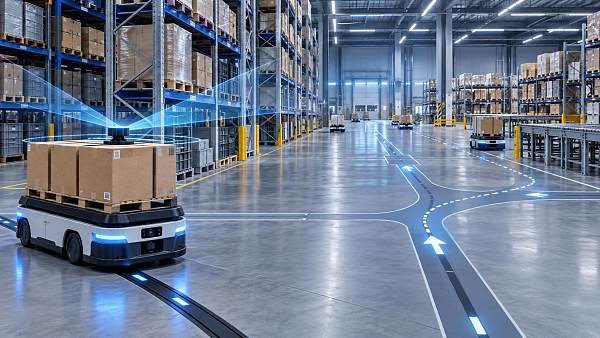
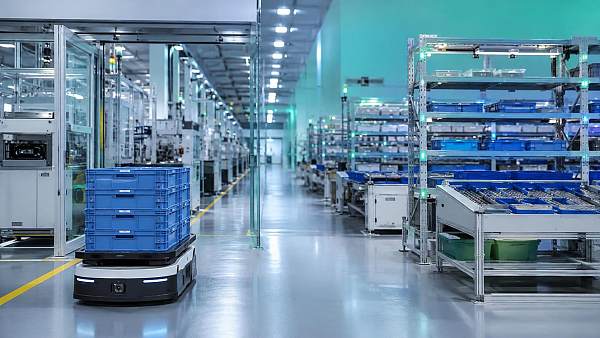
Here, the best AMR for warehouse logistics is often a low-profile carrier, shelf AMR, or top-roller robot integrated with conveyor handoff points.
Why these robots fit better
- They support high trip frequency with lower energy per move.
- They navigate tighter aisles and denser intersections.
- They integrate more easily with sortation, packing, and buffer zones.
- They scale in fleet count without introducing large turning envelopes.
Still, tote automation fails when transfer assumptions are vague. If upstream systems do not present totes consistently, the robot waits and line balance collapses.
This is why system integration readiness should be reviewed early. Warehouse control system logic, barcode validation, and buffer release rules shape real throughput.
In other words, AMR for warehouse logistics in tote environments is less about lifting technology and more about orchestration quality.
How to Match AMR for Warehouse Logistics to Picking Operations
Picking support sits between labor design and robot design. The best fit depends on whether the robot follows people, brings inventory, or stages completed picks.
For person-to-goods environments, cart-following or multi-tote AMRs can cut walking distance and improve batch efficiency.
For goods-to-person models, shelf-moving AMRs may be better, especially where order lines are dense and SKU velocity is concentrated.
Decision factors that matter most
- Pick path length per labor hour.
- Order profile by line count and cube.
- Required scan, confirm, and exception steps.
- Human-robot interaction safety and stopping behavior.
- Wave, waveless, or zone-picking logic.
A common mistake is treating all picking AMRs as labor-saving tools. Some save walking. Others improve slotting flexibility. A few mainly reduce congestion.
That difference should guide the business case. Otherwise, expected return is built on the wrong operational lever.
Selection Criteria That Make or Break Performance
Once the workflow is clear, compare options using engineering criteria. This is where AMR for warehouse logistics decisions become defensible.
For a serious AMR for warehouse logistics project, ask vendors for failure recovery behavior, not just ideal cycle time. Recovery design reveals platform maturity.
Common Risks in AMR for Warehouse Logistics Projects
Most deployment delays come from workflow mismatch, not from robotics alone. The warning signs appear early if teams look for them.
- Pallet dimensions vary more than the robot pickup logic allows.
- Tote presentation points lack mechanical consistency.
- Manual and autonomous traffic share the same bottlenecks.
- Wi-Fi coverage or edge response is unstable in critical aisles.
- Exception rules are handled by people, not by system logic.
A practical countermeasure is pilot scoping with harsh conditions included. Test damaged pallets, crowded intersections, and shift-change peaks before scaling fleet size.
This is fully aligned with the TSV approach. Engineering truth appears under edge conditions, not in polished demo routes.
A Practical Framework for Choosing the Right Robot Type
If the goal is a reliable AMR for warehouse logistics rollout, keep the selection sequence simple and disciplined.
- Quantify each workflow by hourly moves, peak loads, distance, and exception rate.
- Identify whether pallet, tote, or picking flow drives the operational bottleneck.
- Match robot architecture to the dominant task physics first.
- Validate navigation, transfer, and traffic logic in the real facility layout.
- Review WMS, WCS, and safety integration before approving full-scale deployment.
- Model total cost using uptime, support needs, and process changes, not purchase price alone.
The right answer may be one fleet or a mixed fleet. What matters is that each robot type serves a defined operational role.
In the end, the best AMR for warehouse logistics is the one that keeps flow stable, handles exceptions cleanly, and integrates into the warehouse as a system.
That is the real path to lower labor friction, safer movement, and scalable automation built on measurable engineering decisions.
Search News
Hot Articles
- Carbon Fiber StructuresHow to Specify Aerospace Carbon Fiber Assemblies for Lightweight, Load-Bearing PartsJul 11, 2026
- Machine VisionXiaomi, Alibaba DAMO Academy Drive Open-Source Robotics Model Ecosystem, Lowering Algorithm Development Barriers for Overseas SMEs Adopting Chinese Robotics SolutionsMar 30, 2026
- Cobots & ArmsShanxi 'AI+' Conference Showcases Embodied Intelligence with Multinational Buyer Engagement: Key Industry ImplicationsMar 30, 2026
Popular Tags
Recommended News
 Jul 11, 2026How to Specify Aerospace Carbon Fiber Assemblies for Lightweight, Load-Bearing PartsAerospace carbon fiber assemblies: learn how to specify laminate design, load data, joining methods, and inspection controls for lighter, reliable load-bearing aerospace parts.Elena Rostova (UAV Systems Researcher)
 Mar 30, 2026Xiaomi, Alibaba DAMO Academy Drive Open-Source Robotics Model Ecosystem, Lowering Algorithm Development Barriers for Overseas SMEs Adopting Chinese Robotics SolutionsXiaomi & Alibaba DAMO Academy's open-source robotics models lower algorithm barriers for global SMEs. Boost efficiency in manufacturing, logistics & smart retail with ROS 2 compatible solutions.TSV Data Lab
 Mar 30, 2026Shanxi 'AI+' Conference Showcases Embodied Intelligence with Multinational Buyer Engagement: Key Industry ImplicationsShanxi 'AI+' Conference highlights embodied intelligence with Tesla, Ubtech & Jiantao showcasing multimodal robotics. 40+ global buyers validated tech on-site, creating new B2B channels for industrial automation & AI solutions.Chen Wei (Automation Lead Engineer)
 Mar 30, 2026Zhongguancun Unveils 6G Integrated Sensing-Computing-Intelligence Platform to Empower Embodied Robots for Global Industrial ApplicationsZhongguancun's new 6G platform revolutionizes industrial robotics with <10ms latency, empowering global automotive, logistics & port automation. Discover how this tech boosts China's smart manufacturing exports.TSV Data Lab
 Mar 30, 2026Mech-Mind Tianjin Embodied Intelligence R&D and Production Base Goes Live, Cutting Delivery Time by 20%–30% for Global Customized AMR+Vision SolutionsMech-Mind's Tianjin AMR+Vision production base cuts delivery time by 20%-30% for欧美 & Latin American markets. Discover how this PLd-certified facility accelerates customized robotics solutions for smart manufacturing and logistics.Chen Wei (Automation Lead Engineer)
 Mar 30, 2026Boao Forum Reveals 'Co-evolution of Big and Small Brains' Trend in Humanoid Robots, China's Embodied Intelligence Accelerates Adaptation to Overseas Manufacturing Service ScenariosDiscover how China's humanoid robots, featuring 'Co-evolution of Big and Small Brains,' are revolutionizing global manufacturing. Learn about Embodied Tian Gong 3.0's ISO compliance and overseas deployment at Boao Forum 2026.Chen Wei (Automation Lead Engineer)
 Mar 30, 2026China Railway Industrial Secures Patent for Embodied Robotics in Material Handling, Boosting High-Precision Delivery Capabilities for Overseas Infrastructure and Manufacturing ProjectsChina Railway Industrial's new patent for embodied robotics in material handling boosts high-precision delivery for global infrastructure & manufacturing. Discover how this innovation enhances logistics accuracy in automotive, rail transit & EPC projects.Chen Wei (Automation Lead Engineer)
 Sep 19, 2026How to Scope Automation Integration Services for Multi-System Factory ProjectsAutomation integration services: learn how to scope multi-system factory projects with clear workflows, interface contracts, safety boundaries, and acceptance criteria.Victor Lin (Chief Software Architect)
 Sep 18, 2026Selecting UAV Aerospace Structural Parts for Strength, Weight, and Fatigue LifeUAV aerospace structural parts guide: compare strength, weight, stiffness, fatigue life, joints, and traceability to select reliable flight-ready components.Elena Rostova (UAV Systems Researcher)
 Sep 17, 2026Selecting Commercial Drone Payloads for European Inspection ProjectsCommercial drone payloads Europe: learn how to select RGB, thermal and LiDAR systems for compliant, reliable inspection data and better project outcomes.Elena Rostova (UAV Systems Researcher)
 Sep 16, 2026Machining Tolerance Validation: How to Verify Critical Dimensions Before Production ReleaseMachining tolerance analysis validation: verify critical dimensions, measurement systems, process capability, and tolerance stacks before production release.Dr. Marcus Vance
 Sep 15, 2026AGV Tape Guidance vs Laser Navigation: Which Fits Your Warehouse Layout?AGV tape guidance comparison: discover how tape and laser navigation fit changing warehouse layouts, docking needs, floor conditions, maintenance, and route flexibility.Chen Wei (Automation Lead Engineer)
 Sep 14, 2026How Point Cloud Analytics Improves Asset Inspection Workflows Across GCC ProjectsPoint cloud analytics GCC helps project leaders improve asset inspections with accurate change detection, safer workflows, and faster maintenance decisions.TSV Data Lab
 Sep 13, 2026How Aerospace Manufacturers Can Build a Digital Thread From Design to Certified ProductionDigital manufacturing for aerospace: learn how to build a traceable digital thread from design through certified production, supplier control, and audit-ready compliance.Victor Lin (Chief Software Architect)
 Sep 12, 2026How to Select a Thermal Sensor for Mapping Drones in Surveying ProjectsMapping drone thermal sensor selection made simple: compare GSD, radiometric data, NETD, calibration, and workflow fit for accurate, survey-ready thermal maps.Elena Rostova (UAV Systems Researcher)
 Sep 11, 2026Integrating Photogrammetry Workflows into Digital Twin Projects Without Data BottlenecksPhotogrammetry workflow integration for digital twins: learn how to streamline capture, validation, versioning, and delivery to prevent data bottlenecks.Victor Lin (Chief Software Architect)
 Sep 10, 2026Hard-Tech Supply Chain Procurement: Qualifying Suppliers to Cut Lead-Time RiskHard-tech supply chain procurement guide: qualify suppliers with proven process, traceability, capacity, and change control to reduce lead-time risk.Chen Wei (Automation Lead Engineer)
 Sep 09, 2026Industrial Application Notes: Cost Factors That Shape Automation Project BudgetsIndustrial application notes cost factors explained: uncover the engineering, safety, integration, and commissioning variables that shape accurate automation budgets.Victor Lin (Chief Software Architect)
 Sep 08, 2026Supplier Discovery for Sourcing: How Buyers Can Verify Capability and Supply RiskSupplier discovery for sourcing: learn how to verify supplier capability, traceability, quote assumptions, and supply risk before placing production orders.TSV Data Lab
 Sep 07, 2026What Determines Process Control Systems Pricing? A Buyer’s Cost GuideProcess control systems pricing explained: compare hardware, engineering, integration, cybersecurity, validation, and lifecycle costs to choose the right-value solution.Victor Lin (Chief Software Architect)
 Sep 07, 2026AMR Robots in ASEAN: Which Industries Are Adopting Them—and Why?AMR robots ASEAN adoption is accelerating in electronics, automotive, warehousing, healthcare, and cold chain. Explore use cases, risks, and deployment insights.Chen Wei (Automation Lead Engineer)
 Sep 05, 2026How to Evaluate Supplier Qualification Support Tools for Industrial Procurement TeamsSupplier qualification support tools help industrial procurement teams verify technical evidence, manage risk, and make defensible supplier approvals. Learn what to evaluate.Victor Lin (Chief Software Architect)
 Sep 04, 2026Grinding Tolerance Analysis: How to Set Realistic Limits for Precision PartsGrinding tolerance analysis explains how to set realistic limits for precision parts, balance fit, geometry, process capability, and inspection for reliable performance.Dr. Marcus Vance
 Sep 03, 2026Warehouse Automation Strategies to Increase Storage Capacity Without ExpansionWarehouse automation space saving strategies help unlock vertical capacity, optimize slotting, and improve storage density without costly building expansion.Victor Lin (Chief Software Architect)