ID Card Holders Wholesale: What Affects Unit Price, Material Choice, and Order Volume
Publication Date
author
ID Card Holders Wholesale: What Really Changes Cost
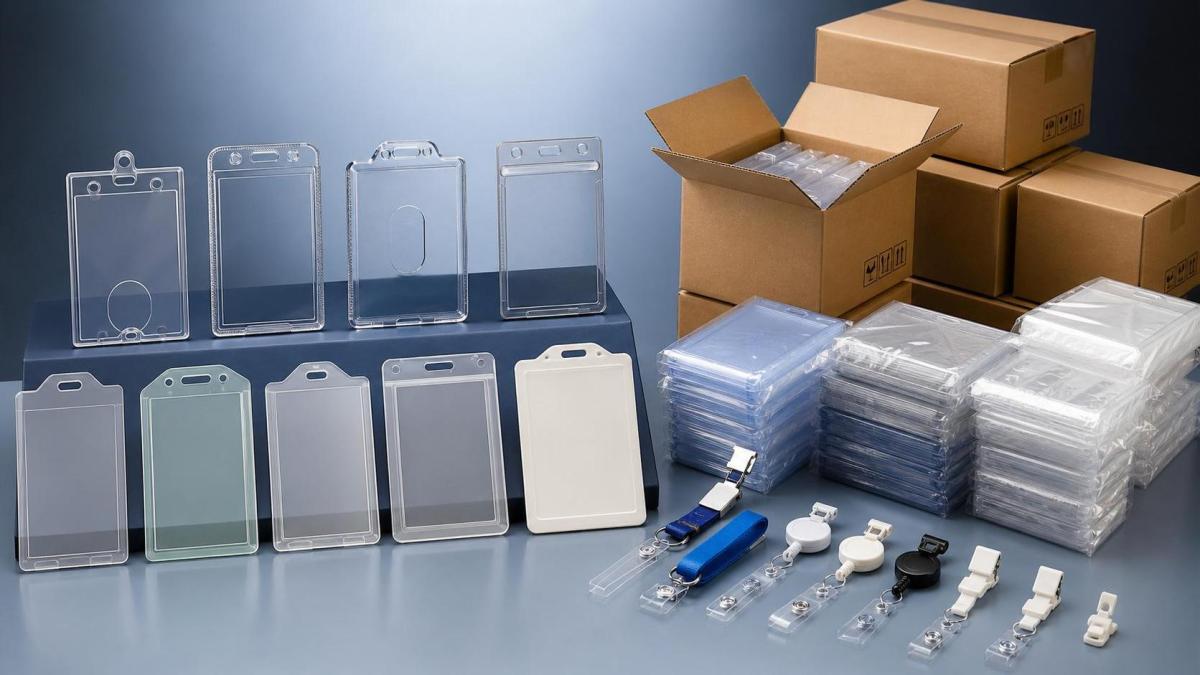
For buyers comparing id card holders wholesale, price usually looks simple at first glance. In practice, it is shaped by several linked variables.
Material, tooling, print method, packaging, and order quantity all affect the final unit cost. Small differences can change margin more than expected.
That is why a sourcing decision should not focus only on the lowest quote. It should compare cost structure, durability, and resale fit together.
From a procurement view, id card holders wholesale is a volume game. Better buying comes from understanding where cost moves and where value holds.
This matters even more when a product serves schools, hospitals, offices, trade shows, factories, or security programs. Each use case rewards a different specification.
A data-led approach fits this decision well. At TechStat Vanguard, the same logic applies across industrial sourcing: clear parameters reduce trial costs and shorten supplier evaluation cycles.
Why Unit Price Changes in ID Card Holders Wholesale
The first mistake is treating all holders as the same commodity. They may look alike in photos, yet cost drivers can be very different.
For id card holders wholesale, suppliers usually build quotes around five core elements. Those elements explain most price gaps.
- Material type and thickness
- Molding or assembly complexity
- Printing, logo, or color customization
- Packaging and accessory bundles
- Order volume and repeat purchase predictability
In actual business, unit cost drops fastest when setup cost is spread over larger quantities. That is why MOQ often matters more than many buyers expect.
A low opening quote can also hide trade-offs. Thinner walls, weaker clips, or unstable color finishing may create returns later.
Material Choice and Its Impact on Wholesale Cost
Material is usually the biggest visible factor in id card holders wholesale. It influences price, lifespan, feel, transparency, and target market fit.
PVC: Affordable and Widely Used
PVC holders are common in high-volume office and event channels. They are cost-effective and easy to source in standard formats.
The trade-off is durability. Soft PVC can yellow, scratch, or crack faster in rough daily use.
ABS and Polycarbonate: Better Structure, Higher Cost
Rigid materials like ABS or polycarbonate cost more, but perform better in industrial or security-heavy settings. They resist deformation and hold shape longer.
These options often suit access control programs, manufacturing sites, or hospitals where badges are used every day.
Eco Materials: Growing but Not Always Cheaper
Recycled plastic or biodegradable blends are gaining interest. They can improve market positioning, especially for corporate procurement tenders.
Still, in id card holders wholesale, eco material does not automatically mean lower cost. Supply consistency and processing limits may increase price.
How Customization Changes the Quote
Customization can improve resale value, but it is one of the fastest ways to move cost upward. The increase comes from both labor and setup.
For id card holders wholesale, the most common custom requests include logo printing, special colors, vertical or horizontal layouts, and slot adjustments.
Simple one-color logo printing usually adds less cost than custom molds. A new mold can change the economics of the whole order.
Accessory bundles also matter. Adding lanyards, reels, clips, or zip bags creates a higher ticket item, but not always a better margin.
- Standard shape with standard color keeps costs stable
- Custom logo adds setup plus print cost
- Custom mold adds tooling cost and lead time
- Bundle packs raise handling, packing, and defect risk
A practical rule is simple. If the design is not reusable across multiple clients, the tooling cost should be recovered quickly, not spread on hope.
Order Volume, MOQ, and Real Price Breaks
Volume is where many sourcing wins happen. In id card holders wholesale, quantity affects more than material purchasing. It changes factory scheduling and overhead absorption.
Most suppliers use quantity tiers. Common breakpoints may appear at 1,000, 3,000, 5,000, or 10,000 pieces.
The bigger signal is not just the lower unit number. It is whether the new tier also unlocks better packaging rates or reduced setup cost.
That said, overbuying creates its own risk. Slow-moving stock ties up cash and makes style changes harder later.
How to Judge the Right Volume
- Estimate turnover by channel, not by guesswork.
- Check whether designs are evergreen or project-based.
- Compare landed cost at three realistic volume tiers.
- Balance savings against storage and obsolescence risk.
In short, the best id card holders wholesale order is not always the largest one. It is the quantity that protects margin and keeps inventory healthy.
What Buyers Should Compare Beyond Unit Price
A quote sheet can hide risk if it only shows price per piece. Better sourcing decisions compare total procurement performance.
For id card holders wholesale, useful comparison points include defect rate, scratch resistance, slot strength, color consistency, and packaging accuracy.
Lead time stability matters too. A cheaper supplier loses value quickly if shipments slip during peak demand windows.
This is where a more engineering-led sourcing mindset helps. Specifications should be measurable, not promotional.
- Wall thickness tolerance
- Clip or slot pull strength
- Transparency and surface finish consistency
- Carton count accuracy and packing quality
- Repeatability across future batches
These checkpoints help separate a cheap offer from a reliable one. Over time, reliability usually protects margin better than an aggressive first quote.
A Practical Buying Framework for ID Card Holders Wholesale
If the goal is smarter sourcing, a simple framework works better than chasing endless quotations. Keep the process disciplined and comparable.
- Define the target market and expected daily use level.
- Choose material based on lifespan, not appearance alone.
- Separate standard items from custom programs.
- Compare price tiers using landed cost, not factory quote only.
- Request samples and check fit, finish, and durability.
- Confirm repeat order terms before committing to tooling.
This kind of structure keeps id card holders wholesale decisions grounded in commercial reality. It also reduces the chance of margin loss after delivery.
The wider lesson is clear. Better procurement comes from better parameters, not louder claims.
When material choice, customization, and order volume are evaluated together, price becomes easier to explain and negotiate.
For teams buying id card holders wholesale, that clarity creates stronger supplier conversations and more predictable resale outcomes.
Start with the use case, quantify the trade-offs, and buy to a measurable standard. That is usually where the best bulk decision begins.
Search News
Hot Articles
- Carbon Fiber StructuresHow to Specify Aerospace Carbon Fiber Assemblies for Lightweight, Load-Bearing PartsJul 11, 2026
- Machine VisionXiaomi, Alibaba DAMO Academy Drive Open-Source Robotics Model Ecosystem, Lowering Algorithm Development Barriers for Overseas SMEs Adopting Chinese Robotics SolutionsMar 30, 2026
- Cobots & ArmsShanxi 'AI+' Conference Showcases Embodied Intelligence with Multinational Buyer Engagement: Key Industry ImplicationsMar 30, 2026
Popular Tags
Recommended News
 Jul 11, 2026How to Specify Aerospace Carbon Fiber Assemblies for Lightweight, Load-Bearing PartsAerospace carbon fiber assemblies: learn how to specify laminate design, load data, joining methods, and inspection controls for lighter, reliable load-bearing aerospace parts.Elena Rostova (UAV Systems Researcher)
 Mar 30, 2026Xiaomi, Alibaba DAMO Academy Drive Open-Source Robotics Model Ecosystem, Lowering Algorithm Development Barriers for Overseas SMEs Adopting Chinese Robotics SolutionsXiaomi & Alibaba DAMO Academy's open-source robotics models lower algorithm barriers for global SMEs. Boost efficiency in manufacturing, logistics & smart retail with ROS 2 compatible solutions.TSV Data Lab
 Mar 30, 2026Shanxi 'AI+' Conference Showcases Embodied Intelligence with Multinational Buyer Engagement: Key Industry ImplicationsShanxi 'AI+' Conference highlights embodied intelligence with Tesla, Ubtech & Jiantao showcasing multimodal robotics. 40+ global buyers validated tech on-site, creating new B2B channels for industrial automation & AI solutions.Chen Wei (Automation Lead Engineer)
 Mar 30, 2026Zhongguancun Unveils 6G Integrated Sensing-Computing-Intelligence Platform to Empower Embodied Robots for Global Industrial ApplicationsZhongguancun's new 6G platform revolutionizes industrial robotics with <10ms latency, empowering global automotive, logistics & port automation. Discover how this tech boosts China's smart manufacturing exports.TSV Data Lab
 Mar 30, 2026Mech-Mind Tianjin Embodied Intelligence R&D and Production Base Goes Live, Cutting Delivery Time by 20%–30% for Global Customized AMR+Vision SolutionsMech-Mind's Tianjin AMR+Vision production base cuts delivery time by 20%-30% for欧美 & Latin American markets. Discover how this PLd-certified facility accelerates customized robotics solutions for smart manufacturing and logistics.Chen Wei (Automation Lead Engineer)
 Mar 30, 2026Boao Forum Reveals 'Co-evolution of Big and Small Brains' Trend in Humanoid Robots, China's Embodied Intelligence Accelerates Adaptation to Overseas Manufacturing Service ScenariosDiscover how China's humanoid robots, featuring 'Co-evolution of Big and Small Brains,' are revolutionizing global manufacturing. Learn about Embodied Tian Gong 3.0's ISO compliance and overseas deployment at Boao Forum 2026.Chen Wei (Automation Lead Engineer)
 Mar 30, 2026China Railway Industrial Secures Patent for Embodied Robotics in Material Handling, Boosting High-Precision Delivery Capabilities for Overseas Infrastructure and Manufacturing ProjectsChina Railway Industrial's new patent for embodied robotics in material handling boosts high-precision delivery for global infrastructure & manufacturing. Discover how this innovation enhances logistics accuracy in automotive, rail transit & EPC projects.Chen Wei (Automation Lead Engineer)
 Sep 19, 2026How to Scope Automation Integration Services for Multi-System Factory ProjectsAutomation integration services: learn how to scope multi-system factory projects with clear workflows, interface contracts, safety boundaries, and acceptance criteria.Victor Lin (Chief Software Architect)
 Sep 18, 2026Selecting UAV Aerospace Structural Parts for Strength, Weight, and Fatigue LifeUAV aerospace structural parts guide: compare strength, weight, stiffness, fatigue life, joints, and traceability to select reliable flight-ready components.Elena Rostova (UAV Systems Researcher)
 Sep 17, 2026Selecting Commercial Drone Payloads for European Inspection ProjectsCommercial drone payloads Europe: learn how to select RGB, thermal and LiDAR systems for compliant, reliable inspection data and better project outcomes.Elena Rostova (UAV Systems Researcher)
 Sep 16, 2026Machining Tolerance Validation: How to Verify Critical Dimensions Before Production ReleaseMachining tolerance analysis validation: verify critical dimensions, measurement systems, process capability, and tolerance stacks before production release.Dr. Marcus Vance
 Sep 15, 2026AGV Tape Guidance vs Laser Navigation: Which Fits Your Warehouse Layout?AGV tape guidance comparison: discover how tape and laser navigation fit changing warehouse layouts, docking needs, floor conditions, maintenance, and route flexibility.Chen Wei (Automation Lead Engineer)
 Sep 14, 2026How Point Cloud Analytics Improves Asset Inspection Workflows Across GCC ProjectsPoint cloud analytics GCC helps project leaders improve asset inspections with accurate change detection, safer workflows, and faster maintenance decisions.TSV Data Lab
 Sep 13, 2026How Aerospace Manufacturers Can Build a Digital Thread From Design to Certified ProductionDigital manufacturing for aerospace: learn how to build a traceable digital thread from design through certified production, supplier control, and audit-ready compliance.Victor Lin (Chief Software Architect)
 Sep 12, 2026How to Select a Thermal Sensor for Mapping Drones in Surveying ProjectsMapping drone thermal sensor selection made simple: compare GSD, radiometric data, NETD, calibration, and workflow fit for accurate, survey-ready thermal maps.Elena Rostova (UAV Systems Researcher)
 Sep 11, 2026Integrating Photogrammetry Workflows into Digital Twin Projects Without Data BottlenecksPhotogrammetry workflow integration for digital twins: learn how to streamline capture, validation, versioning, and delivery to prevent data bottlenecks.Victor Lin (Chief Software Architect)
 Sep 10, 2026Hard-Tech Supply Chain Procurement: Qualifying Suppliers to Cut Lead-Time RiskHard-tech supply chain procurement guide: qualify suppliers with proven process, traceability, capacity, and change control to reduce lead-time risk.Chen Wei (Automation Lead Engineer)
 Sep 09, 2026Industrial Application Notes: Cost Factors That Shape Automation Project BudgetsIndustrial application notes cost factors explained: uncover the engineering, safety, integration, and commissioning variables that shape accurate automation budgets.Victor Lin (Chief Software Architect)
 Sep 08, 2026Supplier Discovery for Sourcing: How Buyers Can Verify Capability and Supply RiskSupplier discovery for sourcing: learn how to verify supplier capability, traceability, quote assumptions, and supply risk before placing production orders.TSV Data Lab
 Sep 07, 2026What Determines Process Control Systems Pricing? A Buyer’s Cost GuideProcess control systems pricing explained: compare hardware, engineering, integration, cybersecurity, validation, and lifecycle costs to choose the right-value solution.Victor Lin (Chief Software Architect)
 Sep 07, 2026AMR Robots in ASEAN: Which Industries Are Adopting Them—and Why?AMR robots ASEAN adoption is accelerating in electronics, automotive, warehousing, healthcare, and cold chain. Explore use cases, risks, and deployment insights.Chen Wei (Automation Lead Engineer)
 Sep 05, 2026How to Evaluate Supplier Qualification Support Tools for Industrial Procurement TeamsSupplier qualification support tools help industrial procurement teams verify technical evidence, manage risk, and make defensible supplier approvals. Learn what to evaluate.Victor Lin (Chief Software Architect)
 Sep 04, 2026Grinding Tolerance Analysis: How to Set Realistic Limits for Precision PartsGrinding tolerance analysis explains how to set realistic limits for precision parts, balance fit, geometry, process capability, and inspection for reliable performance.Dr. Marcus Vance
 Sep 03, 2026Warehouse Automation Strategies to Increase Storage Capacity Without ExpansionWarehouse automation space saving strategies help unlock vertical capacity, optimize slotting, and improve storage density without costly building expansion.Victor Lin (Chief Software Architect)