ISO/IEC 23043:2026 Published: AMS7034B Fatigue Spectra Mandatory for Ti Alloy AM Parts
Publication Date
author
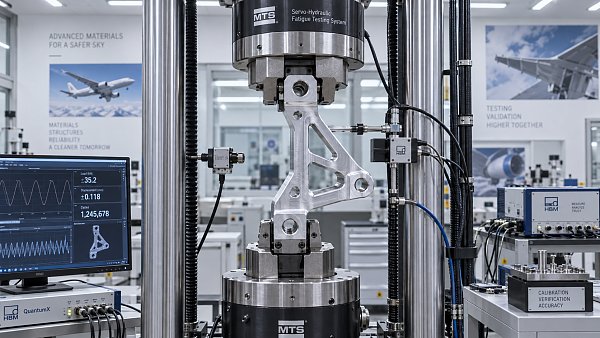
On 14 May 2026, the International Organization for Standardization (ISO) and the International Electrotechnical Commission (IEC) officially published ISO/IEC 23043:2026, General Principles for Performance Verification of Additively Manufactured Metallic Components. The standard introduces, for the first time, AMS7034B fatigue spectrum testing as a mandatory verification requirement for titanium alloy structural components exported for aerospace applications. This development directly affects manufacturers and exporters supplying critical parts—including aircraft fittings and landing gear components—to Japan, South Korea, and the United Arab Emirates, where the standard has been concurrently adopted by METI, KATS, and ESMA respectively.
Event Overview
ISO/IEC 23043:2026 was issued on 14 May 2026. It establishes general principles for performance verification of additively manufactured metallic components. A key provision specifies that titanium alloy structural parts intended for aerospace use must undergo fatigue spectrum testing in accordance with AMS7034B. Compliance requires full fatigue life curve reports issued by laboratories certified under the National Aerospace and Defense Contractors Accreditation Program (NADCAP). The standard is now formally recognized by Japan’s Ministry of Economy, Trade and Industry (METI), South Korea’s Korea Agency for Technology and Standards (KATS), and the UAE’s Emirates Authority for Standardization and Metrology (ESMA).
Industries Affected
Export-Oriented Additive Manufacturing Manufacturers
Manufacturers producing titanium alloy components via industrial 3D printing for aerospace end-use face direct compliance obligations. Export shipments to Japan, South Korea, and the UAE will require validated fatigue data aligned with AMS7034B—beyond existing tensile or microstructural assessments. This adds both technical validation burden and timeline pressure, particularly for serial production parts requiring batch-level fatigue characterization.
Supply Chain Service Providers (e.g., NADCAP-Accredited Testing Labs)
Testing laboratories accredited under NADCAP are now positioned as essential gatekeepers for export compliance. Demand for AMS7034B-compliant fatigue spectrum testing is expected to increase, especially among labs with established capabilities in high-cycle fatigue testing of Ti-6Al-4V and similar alloys. Capacity constraints or geographic gaps in NADCAP-accredited fatigue testing infrastructure may create bottlenecks for manufacturers without local access.
Aerospace Component Distributors & Integrators
Distributors and system integrators handling titanium AM parts for export must verify upstream compliance documentation before customs clearance or delivery. Absence of a complete fatigue life curve report from a NADCAP-certified lab may result in rejection by regulatory authorities in adopting markets—even if mechanical property certificates exist. Traceability and documentation integrity become critical at the handover stage.
Key Considerations and Practical Responses
Monitor official implementation timelines and guidance documents
While ISO/IEC 23043:2026 is published, national adoption often includes phased enforcement schedules and transitional provisions. Exporters should track updates from METI, KATS, and ESMA regarding effective dates, acceptable test protocols, and documentation formats—especially whether legacy AMS7034A data may be grandfathered.
Prioritize fatigue-critical part families for immediate validation
Not all titanium AM parts carry equal fatigue sensitivity. Companies should identify high-stress, safety-critical categories—such as landing gear brackets, engine mount interfaces, and flight control linkages—as priority candidates for AMS7034B fatigue spectrum testing. Early validation supports design freeze, certification planning, and customer qualification cycles.
Confirm NADCAP laboratory scope and reporting alignment
NADCAP accreditation covers specific test methods and materials. Exporters must verify that their chosen laboratory holds current accreditation for AMS7034B fatigue spectrum testing on titanium alloys—and that its reporting format meets the explicit requirements of ISO/IEC 23043:2026 (e.g., inclusion of stress ratio, cycle count ranges, environmental conditions, and statistical confidence intervals).
Review supply chain contracts and quality clauses
Existing procurement or distribution agreements may not reference fatigue spectrum validation. Companies should audit contractual terms with suppliers and customers to determine responsibility for generating, validating, and archiving AMS7034B-compliant reports—and update quality annexes accordingly ahead of enforcement deadlines.
Editorial Perspective / Industry Observation
Observably, ISO/IEC 23043:2026 signals a structural shift toward harmonized, application-driven performance verification—not just process qualification—for metal additive manufacturing. Its mandatory linkage to AMS7034B reflects growing regulatory confidence in fatigue behavior as a decisive indicator of airworthiness for AM titanium parts. Analysis shows this is less an isolated compliance hurdle and more a formal recognition that fatigue performance cannot be reliably inferred from static properties alone. From an industry perspective, the adoption by three major non-U.S. regulators suggests broader convergence around AMS-based fatigue standards may follow—though actual enforcement rigor and inspection frequency remain subject to national interpretation. Current attention should focus less on whether the requirement applies, and more on how quickly it becomes a de facto condition for market access beyond these initial jurisdictions.
This standard marks a milestone in the operationalization of AM for safety-critical aerospace structures—but its practical impact hinges on consistent interpretation and accessible validation pathways. It is best understood not as a final destination, but as a calibrated step toward globally aligned fatigue assurance frameworks for additively manufactured metals.
Source: Official publications from ISO/IEC (ISO/IEC 23043:2026), Japan METI, South Korea KATS, and UAE ESMA; public statements confirming concurrent adoption. Note: Enforcement timelines, transitional arrangements, and acceptance of prior test data remain subject to ongoing national regulatory guidance and require continued monitoring.
Search News
Hot Articles
- Carbon Fiber StructuresHow to Specify Aerospace Carbon Fiber Assemblies for Lightweight, Load-Bearing PartsJul 11, 2026
- Machine VisionXiaomi, Alibaba DAMO Academy Drive Open-Source Robotics Model Ecosystem, Lowering Algorithm Development Barriers for Overseas SMEs Adopting Chinese Robotics SolutionsMar 30, 2026
- Cobots & ArmsShanxi 'AI+' Conference Showcases Embodied Intelligence with Multinational Buyer Engagement: Key Industry ImplicationsMar 30, 2026
Popular Tags
Recommended News
 Jul 11, 2026How to Specify Aerospace Carbon Fiber Assemblies for Lightweight, Load-Bearing PartsAerospace carbon fiber assemblies: learn how to specify laminate design, load data, joining methods, and inspection controls for lighter, reliable load-bearing aerospace parts.Elena Rostova (UAV Systems Researcher)
 Mar 30, 2026Xiaomi, Alibaba DAMO Academy Drive Open-Source Robotics Model Ecosystem, Lowering Algorithm Development Barriers for Overseas SMEs Adopting Chinese Robotics SolutionsXiaomi & Alibaba DAMO Academy's open-source robotics models lower algorithm barriers for global SMEs. Boost efficiency in manufacturing, logistics & smart retail with ROS 2 compatible solutions.TSV Data Lab
 Mar 30, 2026Shanxi 'AI+' Conference Showcases Embodied Intelligence with Multinational Buyer Engagement: Key Industry ImplicationsShanxi 'AI+' Conference highlights embodied intelligence with Tesla, Ubtech & Jiantao showcasing multimodal robotics. 40+ global buyers validated tech on-site, creating new B2B channels for industrial automation & AI solutions.Chen Wei (Automation Lead Engineer)
 Mar 30, 2026Zhongguancun Unveils 6G Integrated Sensing-Computing-Intelligence Platform to Empower Embodied Robots for Global Industrial ApplicationsZhongguancun's new 6G platform revolutionizes industrial robotics with <10ms latency, empowering global automotive, logistics & port automation. Discover how this tech boosts China's smart manufacturing exports.TSV Data Lab
 Mar 30, 2026Mech-Mind Tianjin Embodied Intelligence R&D and Production Base Goes Live, Cutting Delivery Time by 20%–30% for Global Customized AMR+Vision SolutionsMech-Mind's Tianjin AMR+Vision production base cuts delivery time by 20%-30% for欧美 & Latin American markets. Discover how this PLd-certified facility accelerates customized robotics solutions for smart manufacturing and logistics.Chen Wei (Automation Lead Engineer)
 Mar 30, 2026Boao Forum Reveals 'Co-evolution of Big and Small Brains' Trend in Humanoid Robots, China's Embodied Intelligence Accelerates Adaptation to Overseas Manufacturing Service ScenariosDiscover how China's humanoid robots, featuring 'Co-evolution of Big and Small Brains,' are revolutionizing global manufacturing. Learn about Embodied Tian Gong 3.0's ISO compliance and overseas deployment at Boao Forum 2026.Chen Wei (Automation Lead Engineer)
 Mar 30, 2026China Railway Industrial Secures Patent for Embodied Robotics in Material Handling, Boosting High-Precision Delivery Capabilities for Overseas Infrastructure and Manufacturing ProjectsChina Railway Industrial's new patent for embodied robotics in material handling boosts high-precision delivery for global infrastructure & manufacturing. Discover how this innovation enhances logistics accuracy in automotive, rail transit & EPC projects.Chen Wei (Automation Lead Engineer)
 Oct 04, 2026CAD/CAM Benchmarking in the GCC: What Manufacturers Should Ask a ConsultantCAD CAM benchmark consultant GCC guide: learn the key questions manufacturers should ask to validate post-processors, workflows, machine performance, and production risk.Victor Lin (Chief Software Architect)
 Oct 03, 2026Selecting Automotive Radar Sensor Modules for ADAS Range, Resolution, and IntegrationAutomotive radar sensor module selection guide for ADAS: compare range, resolution, field of view, latency, and integration to build safer, reliable vehicle systems.TSV Data Lab
 Oct 02, 2026How to Qualify Machined Parts Suppliers for Hard Tech ProgramsHard tech supply chain machined parts demand rigorous supplier qualification. Learn how to assess capability, traceability, quality controls, and delivery resilience.Dr. Marcus Vance
 Oct 01, 2026How to Select an Outdoor Security Radar Sensor for Perimeter Detection?Outdoor security radar sensor selection guide: compare range, accuracy, false-alarm control, integration, and field testing for reliable perimeter detection.TSV Data Lab
 Sep 30, 2026How to Evaluate Solid-State LiDAR Hardware for Outdoor Autonomous VehiclesSolid state LiDAR hardware evaluation guide for outdoor autonomous vehicles—compare range, point-cloud quality, environmental resilience, integration, and safety.TSV Data Lab
 Sep 29, 2026ISO 9283 Repeatability: How to Evaluate Cobot Positioning PerformanceISO 9283 cobot repeatability explained: learn how payload, reach, approach direction, and test conditions affect positioning performance and cell capability.Chen Wei (Automation Lead Engineer)
 Oct 03, 2026Is Edge Computing Necessary for Real-Time Quality Inspection?Is industrial edge computing necessary for real-time quality inspection? Explore how latency, data volume, reliability, and control integration shape the right architecture.TSV Data Lab
 Oct 02, 2026What Documents Prove a Precision Machining Supplier Can Hold Tolerance?What documents prove a precision machining supplier can hold tolerance? Explore certificates, FAI reports, calibration, SPC, and traceability evidence to qualify suppliers with confidence.Dr. Marcus Vance
 Oct 01, 2026Can a Machining Supplier Meet Aerospace Fatigue Testing Requirements?Can a machining supplier meet aerospace fatigue testing requirements? Learn the traceability, process control, and test evidence needed for reliable aerospace parts.Dr. Marcus Vance
 Sep 30, 2026Which Industrial Robot Specifications Matter for High-Precision Assembly?Which industrial robot specifications matter most for high-precision assembly? Explore repeatability, accuracy, stiffness, vibration, calibration, and force control for reliable yields.Chen Wei (Automation Lead Engineer)
 Sep 29, 2026How Do You Verify Servo Motor Torque Under Continuous Load?How do I verify servo motor torque under continuous load? Learn RMS torque checks, torque-speed limits, thermal derating, and real-machine testing.Chen Wei (Automation Lead Engineer)
 Oct 02, 2026ZD330 Software Configuration: Verifying Cut-List Import Before PurchaseZD330 software and machine configuration: verify cut-list imports, data mapping, labels, and workflow before purchase to reduce errors and choose with confidence.Victor Lin (Chief Software Architect)
 Sep 28, 2026Spindle Runout Measurement in Germany: DIN Standards, Methods, and Acceptance LimitsSpindle runout measurement Germany: explore DIN standards, proven methods, acceptance limits, and audit-ready practices for reliable machining quality.Dr. Marcus Vance
 Sep 27, 2026How to Select Wall-Mount Edge Devices for Space-Constrained Factory NetworksWall mount edge devices for space-constrained factories: evaluate workload, thermal design, power resilience, cable access, and network reliability for smarter deployments.TSV Data Lab
 Sep 26, 2026Machining Tolerance Analysis: How to Set Limits That Meet Function and Cost TargetsMachining tolerance analysis: learn how to set functional limits, control tolerance stacks, reduce inspection risk, and balance precision with production cost.Dr. Marcus Vance
 Sep 25, 2026How to Evaluate an Industrial Infrastructure Data Platform for Multi-Site OperationsIndustrial infrastructure data platform evaluation guide for multi-site operations: compare data quality, edge resilience, interoperability, governance, and scalable proof-of-value criteria.Victor Lin (Chief Software Architect)
 Sep 24, 2026How to Select Machine Vision Optics for Accurate Inspection at Different Working DistancesMachine vision optics selection guide for accurate inspection at every working distance. Compare FOV, pixel scale, DOF, distortion, lighting, and telecentric options.TSV Data Lab