PEEK machining for medical devices without burr issues
Publication Date
author
In medical manufacturing, burr-free precision is not optional—it directly affects fit, safety, and regulatory confidence. PEEK machining for medical devices demands tight process control, sharp tooling strategy, and verified surface integrity to prevent defects that compromise performance. This article explains how operators and production teams can reduce burr issues, improve consistency, and achieve cleaner, more reliable PEEK components for critical medical applications.
What PEEK machining for medical devices involves
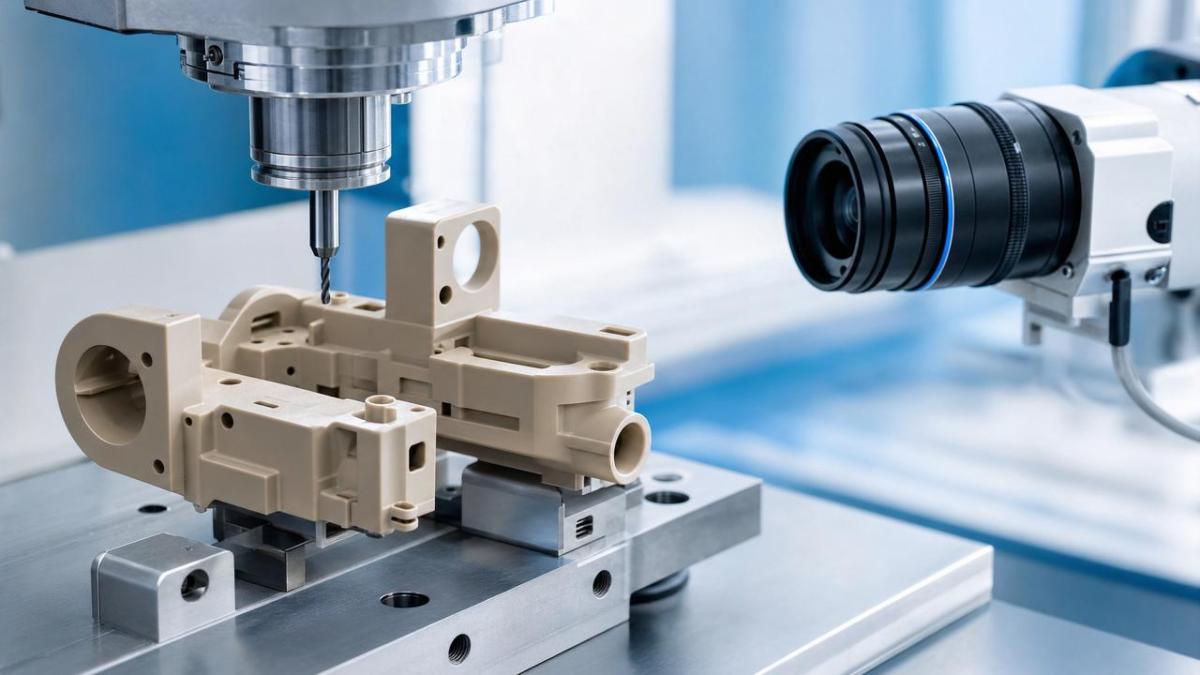
PEEK, or polyether ether ketone, is a high-performance thermoplastic widely used in demanding medical components because it combines chemical resistance, dimensional stability, sterilization compatibility, and strong mechanical performance. In practice, PEEK machining for medical devices often includes milling, drilling, turning, slotting, and finishing of implant-adjacent parts, surgical instrument components, trial devices, analyzers, housings, and other precision parts that must hold form without surface damage.
Compared with common engineering plastics, medical-grade PEEK behaves differently under cutting forces. It can generate heat quickly at the tool edge, deform slightly if clamping is excessive, and leave feathered edges if chip evacuation or tool geometry is poorly matched. Burrs are especially problematic because they are not only a cosmetic issue. In medical applications, even a small burr can interfere with assembly, trap contamination, damage mating parts, or weaken confidence during inspection and validation.
That is why operators should treat burr prevention as a process outcome rather than a deburring task at the end. The most reliable route is to create a controlled machining window where tools, feeds, spindle speed, workholding, and inspection methods are aligned to the behavior of the polymer.
Why the medical sector pays close attention to burr-free results
Medical manufacturing works under stricter expectations than many general industrial sectors. Parts must be clean, traceable, repeatable, and suitable for downstream processes such as ultrasonic cleaning, pass-through inspection, packaging, or sterilization. Burrs create risk at each of these stages. For operators, the challenge is practical: a part may still measure within tolerance while failing visual or functional acceptance because an edge rolled over or a small string of material remained attached.
At TechStat Vanguard, the engineering-first view is simple: parameters matter more than marketing claims. In PEEK machining for medical devices, success comes from measurable control of edge quality, not from general statements about “precision.” Medical teams care about burr reduction because it shortens rework loops, improves first-pass yield, reduces handling damage, and supports more stable supplier qualification.
Where burr issues usually begin
Burr formation in medical PEEK machining typically starts with a mismatch between cutting mechanics and material response. The most common causes are dull tools, excessive heat, unsupported exits, unstable fixturing, aggressive feed at hole breakthrough, and tool paths that drag rather than shear the polymer. Because PEEK is tough and slightly elastic, it can bend before it separates cleanly. That behavior is often misunderstood as a simple speed problem, when it is really a combined issue involving edge sharpness, chip load, and support conditions.
Operators should also watch for hidden process triggers: tool dwell, repeated spring passes, worn drills, chips recutting in narrow pockets, and clamp pressure that distorts thin sections. In PEEK machining for medical devices, burrs are often the visible symptom of a broader process imbalance.
Typical medical applications and burr sensitivity
Not every PEEK part has the same burr risk profile. Understanding the application helps operators focus control where it matters most. Components with small holes, thin walls, sealing features, or tight assembly edges generally require the most disciplined machining approach.
Process controls that reduce burrs in PEEK machining
For production teams, the most effective burr-reduction strategy is to prevent edge deformation before it happens. That requires disciplined control in five areas.
1. Use sharp, geometry-appropriate tools
Sharp cutting edges are essential for clean shearing. Tools intended for metals do not always work well on PEEK. Positive rake geometry, polished flutes, and edge conditions designed for polymer chip flow often produce better results. Once wear begins, burr risk rises quickly, especially on exit edges and drilled features. Tool life should therefore be tracked by actual edge condition, not only by time in cut.
2. Keep heat under control
Heat buildup softens the cutting zone and encourages smearing rather than separation. In PEEK machining for medical devices, too much spindle speed with too little feed can rub the material and create fuzzy edges. Balanced cutting parameters, short engagement time, and effective chip removal are usually more important than simply increasing speed. The objective is a stable cut that clears chips before they recontact the workpiece.
3. Support the workpiece without distortion
PEEK parts, especially thin or narrow sections, can flex under clamp pressure. When the part springs back after machining, edge geometry may change and burrs can become more pronounced. Fixtures should support the cut path while minimizing compression. Soft jaws, vacuum support for flat parts, and localized backing at drill exits can all help.
4. Control entry and exit conditions
Many burrs appear at hole breakthrough, slot exits, or contour endpoints. Peck strategies, reduced feed near exit, backing material, and smarter path sequencing can limit breakout. When milling profiles, climb-cutting behavior, lead-in design, and final pass planning should be reviewed together rather than separately.
5. Verify, don’t assume
Medical operators should inspect edge condition as a defined quality characteristic. Magnified visual checks, standardized lighting, tactile comparison samples, and documented acceptance criteria help convert “looks clean” into a repeatable standard. This is especially important when several shifts or multiple machines run the same part family.
Practical setup advice for operators
On the shop floor, burr-free performance often depends on small setup choices. First, confirm material condition and grade. Medical-grade PEEK from different sources can behave slightly differently due to filler content, lot variation, or stock form history. Second, check runout carefully. Minor tool runout can increase local rubbing and leave one side of a feature clean while the other side burrs. Third, keep chips away from the part. Recutting chips in pockets or bores is a frequent cause of edge tearing.
It is also useful to build a simple process sheet for repeat jobs. Record tool type, edge condition standard, spindle speed, feed per tooth, step-over, depth of cut, fixture method, and burr inspection points. This fits well with TSV’s data-centered philosophy: process stability improves when the team works from measurable engineering truth instead of informal habits.
Common mistakes that make burrs worse
Several habits increase burr risk even when the machine is capable. One is using a worn tool because dimensions still appear acceptable. Another is overpolishing or hand-deburring aggressively after machining, which may round critical features and create inconsistent edge conditions. A third is applying metal-cutting logic directly to polymer work, especially in drilling and finishing passes. In PEEK machining for medical devices, a clean edge usually comes from controlled shearing, not forceful correction afterward.
Teams should also avoid treating burrs as isolated operator mistakes when they are actually process-design issues. If the same feature burrs repeatedly across shifts, the root cause is usually in tooling, support, path design, or a parameter window that is too narrow for repeatable production.
How to evaluate process capability for cleaner PEEK parts
A good evaluation method combines dimensional control with edge-quality evidence. Start with a pilot run and inspect the highest-risk features: small bores, thin profiles, intersecting holes, and sharp corners. Compare parts at the beginning, middle, and end of tool life. If burrs increase rapidly, the process may be too sensitive to wear. Next, review handling and cleaning. Some burrs break loose later, so a part that passes immediately after machining may fail after washing or transport.
For suppliers and internal teams alike, the strongest confidence comes from repeatability data. A burr-free sample is useful, but a stable process window is what supports long-term medical production. That is the broader value of disciplined PEEK machining for medical devices: fewer surprises, less rework, and stronger trust across engineering, quality, and operations.
FAQ on burr control in medical PEEK machining
Is deburring always necessary after machining?
Not always. The better goal is to machine the part so that only minimal edge conditioning is required. Excessive post-process deburring can damage tolerances and create variability.
Does higher speed automatically improve edge quality?
No. Higher speed can increase heat and rubbing if feed, tool geometry, and chip evacuation are not matched. Clean edges come from a balanced cutting condition.
Which features are most likely to burr?
Hole exits, thin walls, slot ends, profile breakouts, and unsupported edges are the most common problem areas in PEEK machining for medical devices.
Why does one batch machine differently from another?
Material grade, filler content, stock form condition, moisture history, and even storage practices can influence cutting behavior. Operators should verify assumptions when material source changes.
Final takeaway for production teams
Burr-free medical parts are the result of engineering discipline, not luck. When teams understand how PEEK reacts to heat, pressure, and edge wear, they can turn PEEK machining for medical devices into a stable, repeatable process with less hand correction and better quality confidence. For operators, the practical path is clear: use sharp tools, protect edge exits, control heat, support the part correctly, and inspect edge integrity as carefully as size and position. In medical manufacturing, those details are what separate acceptable parts from trusted parts.
Search News
Hot Articles
- Carbon Fiber StructuresHow to Specify Aerospace Carbon Fiber Assemblies for Lightweight, Load-Bearing PartsJul 11, 2026
- Machine VisionXiaomi, Alibaba DAMO Academy Drive Open-Source Robotics Model Ecosystem, Lowering Algorithm Development Barriers for Overseas SMEs Adopting Chinese Robotics SolutionsMar 30, 2026
- Cobots & ArmsShanxi 'AI+' Conference Showcases Embodied Intelligence with Multinational Buyer Engagement: Key Industry ImplicationsMar 30, 2026
Popular Tags
Recommended News
 Jul 11, 2026How to Specify Aerospace Carbon Fiber Assemblies for Lightweight, Load-Bearing PartsAerospace carbon fiber assemblies: learn how to specify laminate design, load data, joining methods, and inspection controls for lighter, reliable load-bearing aerospace parts.Elena Rostova (UAV Systems Researcher)
 Mar 30, 2026Xiaomi, Alibaba DAMO Academy Drive Open-Source Robotics Model Ecosystem, Lowering Algorithm Development Barriers for Overseas SMEs Adopting Chinese Robotics SolutionsXiaomi & Alibaba DAMO Academy's open-source robotics models lower algorithm barriers for global SMEs. Boost efficiency in manufacturing, logistics & smart retail with ROS 2 compatible solutions.TSV Data Lab
 Mar 30, 2026Shanxi 'AI+' Conference Showcases Embodied Intelligence with Multinational Buyer Engagement: Key Industry ImplicationsShanxi 'AI+' Conference highlights embodied intelligence with Tesla, Ubtech & Jiantao showcasing multimodal robotics. 40+ global buyers validated tech on-site, creating new B2B channels for industrial automation & AI solutions.Chen Wei (Automation Lead Engineer)
 Mar 30, 2026Zhongguancun Unveils 6G Integrated Sensing-Computing-Intelligence Platform to Empower Embodied Robots for Global Industrial ApplicationsZhongguancun's new 6G platform revolutionizes industrial robotics with <10ms latency, empowering global automotive, logistics & port automation. Discover how this tech boosts China's smart manufacturing exports.TSV Data Lab
 Mar 30, 2026Mech-Mind Tianjin Embodied Intelligence R&D and Production Base Goes Live, Cutting Delivery Time by 20%–30% for Global Customized AMR+Vision SolutionsMech-Mind's Tianjin AMR+Vision production base cuts delivery time by 20%-30% for欧美 & Latin American markets. Discover how this PLd-certified facility accelerates customized robotics solutions for smart manufacturing and logistics.Chen Wei (Automation Lead Engineer)
 Mar 30, 2026Boao Forum Reveals 'Co-evolution of Big and Small Brains' Trend in Humanoid Robots, China's Embodied Intelligence Accelerates Adaptation to Overseas Manufacturing Service ScenariosDiscover how China's humanoid robots, featuring 'Co-evolution of Big and Small Brains,' are revolutionizing global manufacturing. Learn about Embodied Tian Gong 3.0's ISO compliance and overseas deployment at Boao Forum 2026.Chen Wei (Automation Lead Engineer)
 Mar 30, 2026China Railway Industrial Secures Patent for Embodied Robotics in Material Handling, Boosting High-Precision Delivery Capabilities for Overseas Infrastructure and Manufacturing ProjectsChina Railway Industrial's new patent for embodied robotics in material handling boosts high-precision delivery for global infrastructure & manufacturing. Discover how this innovation enhances logistics accuracy in automotive, rail transit & EPC projects.Chen Wei (Automation Lead Engineer)
 Sep 28, 2026Spindle Runout Measurement in Germany: DIN Standards, Methods, and Acceptance LimitsSpindle runout measurement Germany: explore DIN standards, proven methods, acceptance limits, and audit-ready practices for reliable machining quality.Dr. Marcus Vance
 Sep 27, 2026How to Select Wall-Mount Edge Devices for Space-Constrained Factory NetworksWall mount edge devices for space-constrained factories: evaluate workload, thermal design, power resilience, cable access, and network reliability for smarter deployments.TSV Data Lab
 Sep 26, 2026Machining Tolerance Analysis: How to Set Limits That Meet Function and Cost TargetsMachining tolerance analysis: learn how to set functional limits, control tolerance stacks, reduce inspection risk, and balance precision with production cost.Dr. Marcus Vance
 Sep 25, 2026How to Evaluate an Industrial Infrastructure Data Platform for Multi-Site OperationsIndustrial infrastructure data platform evaluation guide for multi-site operations: compare data quality, edge resilience, interoperability, governance, and scalable proof-of-value criteria.Victor Lin (Chief Software Architect)
 Sep 24, 2026How to Select Machine Vision Optics for Accurate Inspection at Different Working DistancesMachine vision optics selection guide for accurate inspection at every working distance. Compare FOV, pixel scale, DOF, distortion, lighting, and telecentric options.TSV Data Lab
 Sep 23, 2026How to Evaluate a Machine Vision System Integrator for High-Speed Inspection LinesChoose a machine vision system integrator with proven expertise in high-speed inspection, reliable reject timing, robust optics, and measurable acceptance criteria.TSV Data Lab
 Sep 28, 2026When is a SCADA API the right choice for connecting plant systems?SCADA API guide: learn when governed plant data integration improves traceability, security, and scalability—without compromising real-time control.Victor Lin (Chief Software Architect)
 Sep 27, 2026How SCADA data integration improves traceability across production linesSCADA data integration connects production-line data to improve traceability, accelerate quality investigations, and strengthen safety decisions.Victor Lin (Chief Software Architect)
 Sep 26, 2026What to define before starting SCADA integration planningSCADA integration planning starts with clear scope, control boundaries, data models, cybersecurity, and testing. Discover the definitions that reduce risk and costly rework.Victor Lin (Chief Software Architect)
 Sep 25, 2026How a smart factory with Industrial IoT reduces production blind spotsDiscover how a smart factory with Industrial IoT turns real-time machine, quality, and workflow data into actionable insights that reduce production blind spots and delivery risks.Victor Lin (Chief Software Architect)
 Sep 24, 2026When does Industrial IoT make smart manufacturing easier to scale?Smart manufacturing Industrial IoT scales when trusted data, interoperable systems, and secure workflows turn connected assets into measurable gains.TSV Data Lab
 Sep 23, 2026What drives ultra-precision machining cost at 1-micron tolerance?Ultra precision machining cost per part at 1 micron tolerance depends on process, material, metrology, and yield. Learn how to compare quotes confidently.Dr. Marcus Vance
 Sep 22, 2026Drone Engine-T550CC Applications: Build the UAV Power System Around the MissionAn application guide for Drone Engine-T550CC integration, covering payload planning, airframe matching, cooling, fuel, vibration, test procedures, documentation, and service preparation.Elena Rostova (UAV Systems Researcher)
 Sep 22, 2026How to Evaluate Industrial Edge Computing Vendors for Factory DeploymentIndustrial edge computing vendor evaluation guide for factories: compare latency, protocol fit, reliability, security, and lifecycle support before deployment.TSV Data Lab
 Sep 21, 2026Drone Payload Integration: Matching Power, Data, and Center of Gravity for Reliable FlightsDrone payload integration made practical: balance power, data, center of gravity, and endurance to build safer, more reliable mission-ready flights.Elena Rostova (UAV Systems Researcher)
 Sep 20, 2026Autonomous Navigation Pricing: Cost Drivers and Budget Benchmarks for AMR ProjectsAutonomous navigation price explained: compare AMR cost drivers, software, sensors, integration, safety, and lifecycle budgets to build a scalable project plan.Chen Wei (Automation Lead Engineer)
 Sep 19, 2026How to Scope Automation Integration Services for Multi-System Factory ProjectsAutomation integration services: learn how to scope multi-system factory projects with clear workflows, interface contracts, safety boundaries, and acceptance criteria.Victor Lin (Chief Software Architect)