
Medical Machining for Orthopedic Implants Where Consistency Matters Most
Publication Date
author
In medical machining for orthopedic implants, consistency is not a slogan—it is a measurable requirement tied to fit, fatigue life, and patient safety. From titanium CNC for surgical instruments to PEEK machining for medical devices, buyers and engineers need verified tolerances, stable process control, and traceable production data. This article examines what truly defines reliable implant machining and how precision translates into lower risk across procurement and performance.
Why consistency is the real performance metric in orthopedic implant machining
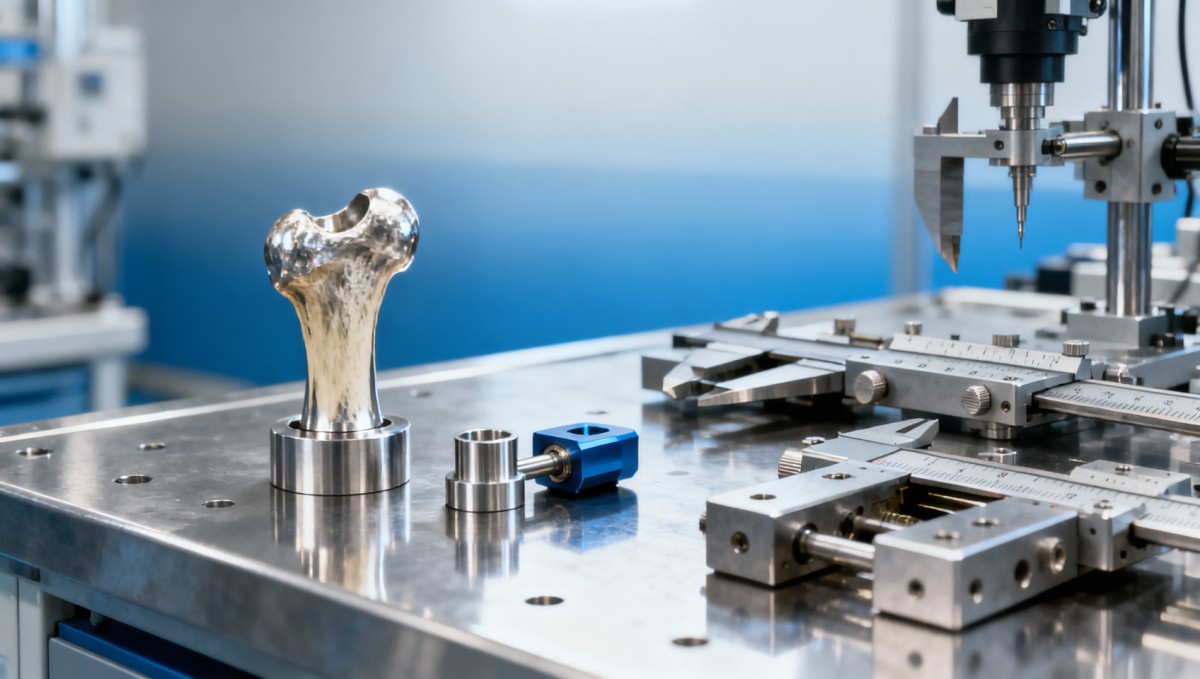
Orthopedic implants are not judged only by whether a part can be machined. They are judged by whether the same geometry, surface condition, and dimensional behavior can be repeated from the first article to the next 100 or 1,000 units without drift. In practice, medical machining for orthopedic implants depends on consistency across 3 connected layers: material integrity, process stability, and inspection traceability.
For implant buyers, this matters because small dimensional variation can create large downstream consequences. A mismatch of only a few microns at a taper, interface, or threaded feature may affect seating force, assembly repeatability, coating compatibility, or instrument engagement. For operators and quality teams, repeatability also affects scrap rate, rework time, and inspection load over a typical 2–4 week production cycle.
For decision-makers, the key question is not who claims high precision, but who can document it under controlled production conditions. TSV’s approach aligns with this requirement: parameters over slogans, tolerance evidence over generic marketing. In implant machining, the most useful supplier information includes tolerance windows, batch traceability, inspection sampling plans, and process capability logic—not broad statements about excellence.
Consistency also protects product validation programs. When prototype parts differ from pilot-run or scaled production parts, engineering data loses value. That is why serious orthopedic implant machining programs emphasize setup control, tool wear monitoring, coolant discipline, and in-process verification at defined intervals such as every setup, every tool change, or every batch lot.
What consistency usually means on the shop floor
- Stable dimensional performance across small, medium, and validation batches rather than one successful sample.
- Controlled machining response for materials such as titanium alloys, cobalt-chrome, stainless steel, and implant-grade PEEK.
- Documented inspection flow using calibrated metrology, first article review, and lot-level traceability.
- Predictable lead times, often in the range of 7–15 working days for sample runs, depending on geometry, surface treatment, and regulatory documentation requirements.
Which technical factors most affect reliable implant machining?
The most common mistake in evaluating orthopedic implant machining is to focus on nominal dimensional accuracy alone. Reliable outcomes depend on a wider set of variables: material lot behavior, machine rigidity, thermal control, cutting strategy, burr control, surface finish management, and inspection method selection. A supplier that controls only the final measurement step may still struggle with repeatable production.
Titanium CNC for surgical instruments and implants requires particular attention to heat generation, tool pressure, and edge condition. Titanium’s lower thermal conductivity compared with many common industrial metals can increase local heat concentration, which in turn affects tool wear and dimensional stability over longer runs. This is why process windows, not only machine brand names, should be reviewed during supplier qualification.
PEEK machining for medical devices introduces a different set of controls. Polymer deformation, fixture pressure, and cutting-induced stress can influence flatness, hole quality, and dimensional recovery after machining. In some applications, waiting periods between roughing and finishing may be useful to manage stress relaxation, especially for tight-fit features or thin-wall structures.
For teams comparing suppliers, it helps to organize technical review around 5 checkpoints: material verification, machine and tooling strategy, process validation method, inspection plan, and post-machining cleanliness control. This framework is more reliable than comparing quotations based only on unit price or advertised machine count.
Typical machining control points by implant category
The table below shows how machining focus areas change by material and implant-related application. It is intended as a procurement and engineering discussion tool when comparing orthopedic implant machining capabilities.
This comparison highlights a simple truth: “precision” is material-specific. A supplier may perform well on stainless steel instruments yet show inconsistent results on implant-grade titanium or PEEK. That is why material history, not only CNC capacity, should be part of vendor selection.
Questions engineering and quality teams should ask
- How is raw material traceability maintained from incoming lot to final batch release?
- Which dimensions are checked in-process, and at what interval: every part, every 5 parts, or every setup?
- How are tool wear limits defined for critical features with tight tolerance bands?
- What cleaning and handling steps are used before packaging or downstream finishing?
How should procurement evaluate suppliers beyond price?
In orthopedic implant sourcing, the lowest quoted price can become the highest total cost if it creates revalidation, delayed approvals, or unstable delivery. Procurement teams should evaluate at least 4 dimensions together: process capability, compliance readiness, lead-time reliability, and communication quality. A quote without inspection detail or change-control logic is incomplete, even if the unit cost looks attractive.
A practical supplier review should cover both prototype and production readiness. Prototype machining may tolerate more manual intervention, but scaled manufacturing requires repeatable fixturing, documented work instructions, and controlled revision management. For many buyers, the risk appears after the first successful sample, when volume shifts from 10 units to 100 or from 100 to 1,000 pieces per year.
Medical machining for orthopedic implants also involves cross-functional approval. Information researchers may need benchmark clarity, operators may focus on assembly behavior, procurement may compare lead times and quality documents, and executives may care about supply continuity. A good supplier evaluation framework should therefore connect technical evidence with commercial predictability.
TSV’s data-driven lens is useful here because it filters vague claims out of the buying process. Instead of asking who is “best,” ask who can show stable process evidence, practical tolerance control, and traceable production logic under actual manufacturing constraints.
Supplier selection checklist for orthopedic implant machining
The next table can be used during RFQ review, supplier qualification meetings, or technical-commercial comparison. It helps teams weigh capability, risk, and implementation readiness in a more disciplined way.
When teams use this type of structured review, supplier comparison becomes more objective. It also shortens internal alignment because engineering, sourcing, and management can evaluate the same evidence through different decision lenses.
A practical 4-step sourcing workflow
- Define the critical-to-function features, target material, batch size, and required documents before sending RFQs.
- Request machining feedback on manufacturability, tolerance risk, and likely lead-time range instead of price only.
- Validate one controlled sample batch and review dimensional stability, documentation quality, and communication speed.
- Approve production release only after process consistency, not just one-time sample acceptance, has been confirmed.
What standards, documentation, and traceability should buyers expect?
Orthopedic implant machining sits inside a regulated medical device environment, so production quality is inseparable from documentation quality. Even when one supplier is responsible only for machining, buyers still need evidence of controlled processes, lot traceability, inspection discipline, and revision awareness. This is where ISO 13485 familiarity becomes highly relevant for supplier communication and qualification.
A mature medical machining workflow usually includes 3 documentation layers. First is incoming material control, including lot identity and basic conformance records. Second is process documentation such as travelers, setup instructions, and inspection points. Third is release documentation, which may include dimensional reports, certificates requested by the customer, and packaging or cleaning records where applicable.
Buyers should also distinguish between certificate presence and usable compliance support. A supplier may mention quality systems, but the real test is whether records can be produced quickly, accurately, and in the right revision state. In practical procurement terms, slow document retrieval can delay approvals as much as a late shipment can delay production.
TSV consistently emphasizes benchmarkable information because traceability is valuable only when it connects to measurable process outputs. For orthopedic implant machining, that means records should help answer concrete questions: which material lot was used, which machine route was followed, when inspection occurred, and how nonconformance was contained if an issue appeared.
Common documentation items in medical machining programs
- Material identification and lot traceability linked to each production batch.
- First article or initial dimensional verification for critical features.
- In-process inspection records at defined checkpoints, especially after setup or tool replacement.
- Nonconformance handling, segregation, and corrective action follow-up where required.
- Revision-controlled drawings and communication records for engineering changes.
Why this matters for executives and supply chain leaders
For management, documentation quality directly affects supplier qualification cycle time, audit readiness, and risk exposure. A machining supplier that responds clearly within 24–72 hours on technical records is usually easier to integrate than one that requires repeated follow-up. The gain is not only administrative. Faster, cleaner traceability improves root-cause response when timelines are tight.
This is especially important when working across regions or managing dual-source strategies. If one site needs to transfer volume to another, standardized records reduce re-learning and confusion. In a market where precision manufacturing decisions can influence program schedules for months, that operational clarity becomes a strategic advantage.
Common misconceptions, implementation risks, and what to ask before ordering
One common misconception is that a capable 5-axis CNC machine automatically guarantees capable orthopedic implant machining. Machine architecture matters, but fixturing, process engineering, metrology discipline, and material-specific know-how are just as important. Another misconception is that prototype success guarantees batch stability. Many quality failures appear only after tool wear accumulates or production pace increases.
A second risk is oversimplifying the cost conversation. Low upfront pricing may exclude inspection detail, special packaging, or process validation support. Buyers then discover added costs later through extra reports, rework, delayed approvals, or emergency logistics. A more useful question is total procurement risk over the full lifecycle of prototype, pilot, and recurring supply.
A third issue is unclear specification ownership. If the drawing does not identify critical-to-function dimensions, surface requirements, and acceptance criteria, supplier comparison becomes inconsistent. Strong sourcing outcomes usually start with a clearer RFQ package that includes target material, finish expectations, estimated annual volume, and required records from day one.
For information researchers and engineers, the most valuable pre-order action is to convert assumptions into documented questions. Doing so reduces ambiguity before machining begins and often shortens qualification by 1–2 review cycles.
FAQ: the questions buyers and engineers ask most often
How should we choose between titanium CNC and PEEK machining for medical devices?
The choice depends on clinical design intent, load case, interface requirements, sterilization path, and downstream validation needs. From a machining standpoint, titanium usually demands tighter thermal and tool wear control, while PEEK requires more attention to deformation and fixture pressure. Procurement should compare not just material cost, but also machining stability, inspection method, and batch repeatability.
What lead time is typical for orthopedic implant machining?
For sample or early validation batches, a common range is 7–15 working days, depending on geometry, quantity, and document requirements. Production lots can move into a 2–4 week window when additional inspection, finishing coordination, or packaging steps are involved. Shorter commitments should be supported by a clear process plan, not only a sales promise.
What should we review first during supplier qualification?
Start with 5 items: material traceability, tolerance strategy, in-process inspection frequency, document control, and change management. If these are weak, later claims about machining quality become harder to trust. If these are clear, technical discussion becomes more efficient and comparable across vendors.
Is final inspection enough if sample parts already passed?
Usually no. Final inspection alone detects problems late. Orthopedic implant machining benefits from in-process control at setup, after tool replacement, and at defined batch intervals. That approach reduces scrap risk and provides stronger evidence that production consistency, not one-time success, has been achieved.
Why informed buyers work with data-first technical partners
In a market filled with generic claims, informed procurement and engineering teams need clearer filters. They need to know which orthopedic implant machining supplier can support tolerance review, which process is suitable for titanium CNC for surgical instruments, whether PEEK machining for medical devices can hold the required form, and how long validation-to-production transfer is likely to take. These are engineering questions first and commercial questions second.
That is where TSV adds practical value. Our perspective is built around benchmark logic, traceable parameters, and hard-tech supply chain clarity. We help teams compare manufacturing capability using measurable criteria rather than marketing language, so information researchers can validate claims, operators can anticipate usability impact, procurement can reduce sourcing risk, and executives can make better long-range decisions.
If you are evaluating medical machining for orthopedic implants, contact us with the details that matter: target material, tolerance priorities, estimated batch size, documentation needs, prototype timeline, and quality expectations. We can support discussions around parameter confirmation, supplier comparison, lead-time planning, certification-related questions, sample strategy, and quotation alignment.
Bring the drawing set, the inspection concerns, or the sourcing shortlist. We will help you translate them into a more rigorous technical review framework—one that reduces noise, shortens decision cycles, and keeps consistency where it matters most.
Search News
Hot Articles
- Carbon Fiber StructuresHow to Specify Aerospace Carbon Fiber Assemblies for Lightweight, Load-Bearing PartsJul 11, 2026
- Machine VisionXiaomi, Alibaba DAMO Academy Drive Open-Source Robotics Model Ecosystem, Lowering Algorithm Development Barriers for Overseas SMEs Adopting Chinese Robotics SolutionsMar 30, 2026
- Cobots & ArmsShanxi 'AI+' Conference Showcases Embodied Intelligence with Multinational Buyer Engagement: Key Industry ImplicationsMar 30, 2026
Popular Tags
Recommended News
 Jul 11, 2026How to Specify Aerospace Carbon Fiber Assemblies for Lightweight, Load-Bearing PartsAerospace carbon fiber assemblies: learn how to specify laminate design, load data, joining methods, and inspection controls for lighter, reliable load-bearing aerospace parts.Elena Rostova (UAV Systems Researcher)
 Mar 30, 2026Xiaomi, Alibaba DAMO Academy Drive Open-Source Robotics Model Ecosystem, Lowering Algorithm Development Barriers for Overseas SMEs Adopting Chinese Robotics SolutionsXiaomi & Alibaba DAMO Academy's open-source robotics models lower algorithm barriers for global SMEs. Boost efficiency in manufacturing, logistics & smart retail with ROS 2 compatible solutions.TSV Data Lab
 Mar 30, 2026Shanxi 'AI+' Conference Showcases Embodied Intelligence with Multinational Buyer Engagement: Key Industry ImplicationsShanxi 'AI+' Conference highlights embodied intelligence with Tesla, Ubtech & Jiantao showcasing multimodal robotics. 40+ global buyers validated tech on-site, creating new B2B channels for industrial automation & AI solutions.Chen Wei (Automation Lead Engineer)
 Mar 30, 2026Zhongguancun Unveils 6G Integrated Sensing-Computing-Intelligence Platform to Empower Embodied Robots for Global Industrial ApplicationsZhongguancun's new 6G platform revolutionizes industrial robotics with <10ms latency, empowering global automotive, logistics & port automation. Discover how this tech boosts China's smart manufacturing exports.TSV Data Lab
 Mar 30, 2026Mech-Mind Tianjin Embodied Intelligence R&D and Production Base Goes Live, Cutting Delivery Time by 20%–30% for Global Customized AMR+Vision SolutionsMech-Mind's Tianjin AMR+Vision production base cuts delivery time by 20%-30% for欧美 & Latin American markets. Discover how this PLd-certified facility accelerates customized robotics solutions for smart manufacturing and logistics.Chen Wei (Automation Lead Engineer)
 Mar 30, 2026Boao Forum Reveals 'Co-evolution of Big and Small Brains' Trend in Humanoid Robots, China's Embodied Intelligence Accelerates Adaptation to Overseas Manufacturing Service ScenariosDiscover how China's humanoid robots, featuring 'Co-evolution of Big and Small Brains,' are revolutionizing global manufacturing. Learn about Embodied Tian Gong 3.0's ISO compliance and overseas deployment at Boao Forum 2026.Chen Wei (Automation Lead Engineer)
 Mar 30, 2026China Railway Industrial Secures Patent for Embodied Robotics in Material Handling, Boosting High-Precision Delivery Capabilities for Overseas Infrastructure and Manufacturing ProjectsChina Railway Industrial's new patent for embodied robotics in material handling boosts high-precision delivery for global infrastructure & manufacturing. Discover how this innovation enhances logistics accuracy in automotive, rail transit & EPC projects.Chen Wei (Automation Lead Engineer)
 Oct 14, 2026Drone Frame Composites: Carbon Fiber vs. Fiberglass for Weight and StiffnessExplore drone structural materials composites: compare carbon fiber and fiberglass for weight, stiffness, cost, and antenna compatibility. Find the right material for your drone frame.Elena Rostova (UAV Systems Researcher)
 Oct 13, 2026Smart Cameras vs. PC-Based Machine Vision: Which Fits High-Speed Inspection?This industrial product comparison for machine vision weighs smart cameras vs. PC-based systems on latency, throughput, and cost. Discover your best fit for high-speed inspection.TSV Data Lab
 Oct 12, 2026How to Verify RoHS Compliance in Industrial Sensing Systems Before DeploymentRoHS compliant sensing systems: learn how to verify materials, supplier declarations, testing, and configuration controls before industrial deployment.TSV Data Lab
 Oct 11, 2026How Procurement-Oriented Content Taxonomy Improves B2B Buying JourneysProcurement-oriented content taxonomy streamlines B2B buying journeys with clearer evidence, supplier comparisons, risk visibility, and faster approvals.TSV Data Lab
 Oct 10, 2026How to Select a Machine Performance Monitoring Platform for OEE and Downtime ReductionMachine performance monitoring platform selection guide: validate machine states, OEE data, downtime reasons, integrations, and scalability to reduce losses with confidence.TSV Data Lab
 Oct 08, 2026How to Machine Inconel 625 Blades Without Heat Cracks or Edge ChippingInconel 625 blade machining guide: prevent heat cracks, edge chipping, chatter, and work hardening with proven tooling, cooling, fixturing, and inspection strategies.Dr. Marcus Vance
 Oct 07, 2026How to Evaluate an HMI Panel Distributor for Industrial Automation ProjectsHMI panel distributor evaluation guide: verify technical compatibility, traceability, supply reliability, lifecycle support, and total cost for automation projects.Victor Lin (Chief Software Architect)
 Oct 06, 2026Navigation Fault Tolerance Standards for AMRs: What Safety Teams Must VerifyNavigation fault tolerance standards: learn what AMR safety teams must verify, from localization loss and sensor faults to stopping distance, safe restart, and site-specific validation.Chen Wei (Automation Lead Engineer)
 Oct 05, 2026Calculating Edge Computing Total Cost of Ownership Across Distributed SitesEdge computing ownership cost explained: calculate deployment, energy, connectivity, security, remote support, and refresh costs across distributed sites.TSV Data Lab
 Oct 04, 2026CAD/CAM Benchmarking in the GCC: What Manufacturers Should Ask a ConsultantCAD CAM benchmark consultant GCC guide: learn the key questions manufacturers should ask to validate post-processors, workflows, machine performance, and production risk.Victor Lin (Chief Software Architect)
 Oct 03, 2026Selecting Automotive Radar Sensor Modules for ADAS Range, Resolution, and IntegrationAutomotive radar sensor module selection guide for ADAS: compare range, resolution, field of view, latency, and integration to build safer, reliable vehicle systems.TSV Data Lab
 Oct 02, 2026How to Qualify Machined Parts Suppliers for Hard Tech ProgramsHard tech supply chain machined parts demand rigorous supplier qualification. Learn how to assess capability, traceability, quality controls, and delivery resilience.Dr. Marcus Vance
 Oct 01, 2026How to Select an Outdoor Security Radar Sensor for Perimeter Detection?Outdoor security radar sensor selection guide: compare range, accuracy, false-alarm control, integration, and field testing for reliable perimeter detection.TSV Data Lab
 Sep 30, 2026How to Evaluate Solid-State LiDAR Hardware for Outdoor Autonomous VehiclesSolid state LiDAR hardware evaluation guide for outdoor autonomous vehicles—compare range, point-cloud quality, environmental resilience, integration, and safety.TSV Data Lab
 Sep 29, 2026ISO 9283 Repeatability: How to Evaluate Cobot Positioning PerformanceISO 9283 cobot repeatability explained: learn how payload, reach, approach direction, and test conditions affect positioning performance and cell capability.Chen Wei (Automation Lead Engineer)
 Oct 14, 2026How tight can micro machining aerospace tolerances be in production?Micro machining aerospace tolerances can reach low-micron levels in production. Learn what controls repeatability, inspection confidence, and flight-critical quality.Dr. Marcus Vance
 Oct 13, 2026How to keep an industrial robotic integration project on scheduleIndustrial robotic integration project management: keep automation on schedule with proven controls for interfaces, suppliers, FAT, commissioning, and change risk.Victor Lin (Chief Software Architect)























