Jump Rings Wholesale: What Sizes, Metals, and Finishes Sell Best for Jewelry Making?
Publication Date
author
Jump Rings Wholesale: What Sizes, Metals, and Finishes Sell Best for Jewelry Making?
For distributors, agents, and bulk buyers evaluating jump rings wholesale opportunities, knowing which sizes, metals, and finishes move fastest is critical to stock planning and margin control.
This guide breaks down the commercial demand behind jewelry-making jump rings, helping you identify best-selling specifications, reduce slow-moving inventory, and source with greater confidence in a competitive market.
Why Jump Rings Wholesale Demand Stays Strong
Jump rings are small parts, but they drive repeat purchasing across many jewelry categories.
They connect clasps, chains, charms, pendants, earrings, and layered bracelet components.
That steady usage makes jump rings wholesale a volume business with predictable reorder cycles.
From recent buying patterns, demand is strongest for practical, everyday jewelry findings.
More buyers now prefer wider assortments with fewer dead-stock finishes and low-turn sizes.
That also means procurement decisions need to balance cost, plating stability, and sell-through speed.
Best-Selling Jump Ring Sizes in Bulk Orders
In jump rings wholesale, size demand usually follows mainstream jewelry repair and assembly needs.
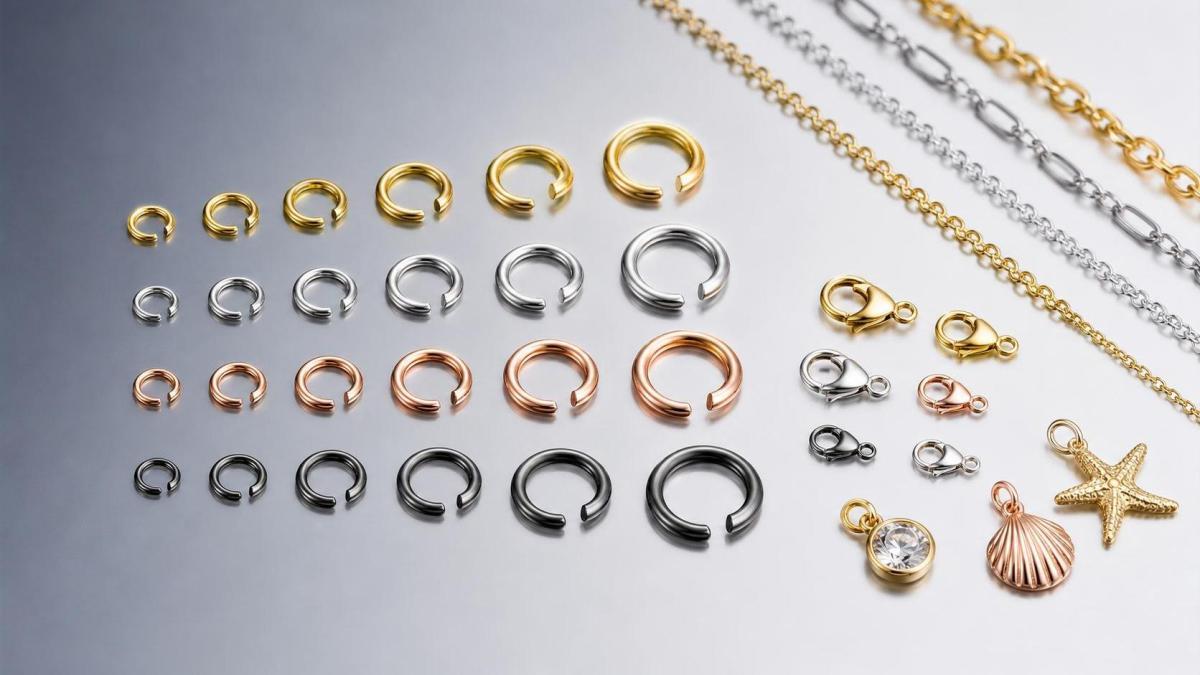
The fastest-moving sizes are typically 4mm, 5mm, 6mm, 7mm, and 8mm outer diameter.
Among them, 5mm and 6mm usually deliver the safest balance of versatility and turnover.
These sizes work well for necklaces, bracelets, earrings, and charm connection points.
Smaller 3mm and 4mm rings often appeal to fine, lightweight, or minimalist designs.
Larger 7mm and 8mm rings support chunkier chains, statement pieces, and craft kits.
For wholesale buyers, it helps to split inventory into core, support, and experimental size groups.
Recommended size mix for easier stock planning
- Core stock: 5mm and 6mm in the top three finishes.
- Support stock: 4mm and 7mm for broader jewelry applications.
- Optional stock: 3mm and 8mm for niche collections and specialty buyers.
Wire thickness matters too, especially when buyers compare strength against appearance.
Thicker gauges perform better for heavier charms, but can look bulky in delicate designs.
In actual business, moderate thickness often outsells extreme thin or heavy specifications.
Which Metals Sell Best in Jump Rings Wholesale
Metal choice directly affects cost, positioning, return rates, and customer satisfaction.
The best-selling jump rings wholesale materials are usually stainless steel, brass, copper, and sterling silver.
Each metal serves a different price band and product strategy.
Stainless steel
Stainless steel performs well when durability and anti-tarnish resistance matter most.
It is a strong choice for entry-level fashion jewelry and online volume sellers.
It also reduces complaints linked to quick discoloration in humid markets.
Brass
Brass remains one of the most common bases in jump rings wholesale sourcing.
It offers good forming performance, broad finish compatibility, and competitive pricing.
For plated products, brass often delivers the broadest commercial flexibility.
Copper
Copper is less dominant, but still useful for artisan styles and warm-tone finishes.
It can be attractive for vintage, handcrafted, or oxidized collections.
Sterling silver
Sterling silver serves higher-value jewelry lines and more specialized buyers.
Margins can be better, but purchasing risk rises when metal prices fluctuate sharply.
That is why many buyers separate silver demand from standard jump rings wholesale programs.
Top Finishes That Move Faster
Finish selection often decides whether inventory moves quickly or sits too long.
In jump rings wholesale, the safest high-turn finishes are gold, silver, gunmetal, and rose gold.
Among them, bright gold and silver-tone usually lead total order volume.
They match the widest range of chains, clasps, charms, and ready-made jewelry sets.
Fast-moving commercial finishes
- Gold plated: high visibility, broad fashion appeal, strong gift-category demand.
- Silver tone: dependable everyday seller across many jewelry styles.
- Rose gold: still useful in curated assortments and feminine collections.
- Gunmetal: solid niche option for modern, edgy, or masculine products.
Matte finishes can work, but turnover is usually slower than classic polished surfaces.
Antique bronze and antique copper still sell, yet they behave more like targeted seasonal stock.
This is where careful MOQ planning becomes important for jump rings wholesale profitability.
Open vs. Closed Jump Rings: What Bulk Buyers Should Prioritize
Open jump rings generally outsell closed jump rings in jewelry-making supply channels.
They are easier to use for assembly, repair, customization, and small-batch design changes.
Closed jump rings remain important for heavier attachments and cleaner structural support.
However, open styles usually carry stronger repeat demand in jump rings wholesale catalogs.
A practical mix is to keep open styles as the main volume line.
Then support them with selected closed sizes for buyers needing strength-focused applications.
How to Reduce Cost Risk in Jump Rings Wholesale Sourcing
Price alone can be misleading when evaluating jump rings wholesale suppliers.
Low prices sometimes hide plating inconsistency, inaccurate sizing, weak springback, or poor packaging control.
Those issues increase returns, sorting time, and customer complaints later.
Procurement checkpoints worth using
- Confirm actual outer diameter and wire thickness tolerances.
- Ask whether plating thickness and salt-spray performance are documented.
- Check opening resilience for repeated jewelry assembly use.
- Review packaging counts for bag-to-bag consistency.
- Test color matching across clasps, chains, and extension parts.
This approach aligns with TSV’s data-first view of sourcing decisions.
Parameters matter more than broad claims, especially in repeat-purchase findings categories.
Even in jewelry components, consistent specifications protect margin better than headline discounts.
A Practical Product Mix for Better Sell-Through
If the goal is stable sell-through, simplicity usually beats oversupply.
A focused jump rings wholesale range often performs better than a wide but unbalanced catalog.
This kind of product mix helps keep jump rings wholesale purchasing clear and measurable.
It also makes forecast adjustments easier when style trends change quickly.
Final Takeaway for Smarter Bulk Buying
The strongest jump rings wholesale performers are rarely the most complicated products.
They are usually the sizes, metals, and finishes that fit everyday jewelry production.
For most bulk programs, 5mm to 7mm sizes, brass or stainless steel bases, and gold or silver finishes remain the safest core.
From there, rose gold, gunmetal, and specialty sizes can extend the range without overloading stock.
In practical terms, better jump rings wholesale decisions come from data, not guesswork.
Track sell-through, compare finish performance, test consistency, and refine the assortment regularly.
That process keeps inventory healthier, margins more stable, and sourcing decisions easier to scale.
Search News
Hot Articles
- Carbon Fiber StructuresHow to Specify Aerospace Carbon Fiber Assemblies for Lightweight, Load-Bearing PartsJul 11, 2026
- Machine VisionXiaomi, Alibaba DAMO Academy Drive Open-Source Robotics Model Ecosystem, Lowering Algorithm Development Barriers for Overseas SMEs Adopting Chinese Robotics SolutionsMar 30, 2026
- Cobots & ArmsShanxi 'AI+' Conference Showcases Embodied Intelligence with Multinational Buyer Engagement: Key Industry ImplicationsMar 30, 2026
Popular Tags
Recommended News
 Jul 11, 2026How to Specify Aerospace Carbon Fiber Assemblies for Lightweight, Load-Bearing PartsAerospace carbon fiber assemblies: learn how to specify laminate design, load data, joining methods, and inspection controls for lighter, reliable load-bearing aerospace parts.Elena Rostova (UAV Systems Researcher)
 Mar 30, 2026Xiaomi, Alibaba DAMO Academy Drive Open-Source Robotics Model Ecosystem, Lowering Algorithm Development Barriers for Overseas SMEs Adopting Chinese Robotics SolutionsXiaomi & Alibaba DAMO Academy's open-source robotics models lower algorithm barriers for global SMEs. Boost efficiency in manufacturing, logistics & smart retail with ROS 2 compatible solutions.TSV Data Lab
 Mar 30, 2026Shanxi 'AI+' Conference Showcases Embodied Intelligence with Multinational Buyer Engagement: Key Industry ImplicationsShanxi 'AI+' Conference highlights embodied intelligence with Tesla, Ubtech & Jiantao showcasing multimodal robotics. 40+ global buyers validated tech on-site, creating new B2B channels for industrial automation & AI solutions.Chen Wei (Automation Lead Engineer)
 Mar 30, 2026Zhongguancun Unveils 6G Integrated Sensing-Computing-Intelligence Platform to Empower Embodied Robots for Global Industrial ApplicationsZhongguancun's new 6G platform revolutionizes industrial robotics with <10ms latency, empowering global automotive, logistics & port automation. Discover how this tech boosts China's smart manufacturing exports.TSV Data Lab
 Mar 30, 2026Mech-Mind Tianjin Embodied Intelligence R&D and Production Base Goes Live, Cutting Delivery Time by 20%–30% for Global Customized AMR+Vision SolutionsMech-Mind's Tianjin AMR+Vision production base cuts delivery time by 20%-30% for欧美 & Latin American markets. Discover how this PLd-certified facility accelerates customized robotics solutions for smart manufacturing and logistics.Chen Wei (Automation Lead Engineer)
 Mar 30, 2026Boao Forum Reveals 'Co-evolution of Big and Small Brains' Trend in Humanoid Robots, China's Embodied Intelligence Accelerates Adaptation to Overseas Manufacturing Service ScenariosDiscover how China's humanoid robots, featuring 'Co-evolution of Big and Small Brains,' are revolutionizing global manufacturing. Learn about Embodied Tian Gong 3.0's ISO compliance and overseas deployment at Boao Forum 2026.Chen Wei (Automation Lead Engineer)
 Mar 30, 2026China Railway Industrial Secures Patent for Embodied Robotics in Material Handling, Boosting High-Precision Delivery Capabilities for Overseas Infrastructure and Manufacturing ProjectsChina Railway Industrial's new patent for embodied robotics in material handling boosts high-precision delivery for global infrastructure & manufacturing. Discover how this innovation enhances logistics accuracy in automotive, rail transit & EPC projects.Chen Wei (Automation Lead Engineer)
 Sep 19, 2026How to Scope Automation Integration Services for Multi-System Factory ProjectsAutomation integration services: learn how to scope multi-system factory projects with clear workflows, interface contracts, safety boundaries, and acceptance criteria.Victor Lin (Chief Software Architect)
 Sep 18, 2026Selecting UAV Aerospace Structural Parts for Strength, Weight, and Fatigue LifeUAV aerospace structural parts guide: compare strength, weight, stiffness, fatigue life, joints, and traceability to select reliable flight-ready components.Elena Rostova (UAV Systems Researcher)
 Sep 17, 2026Selecting Commercial Drone Payloads for European Inspection ProjectsCommercial drone payloads Europe: learn how to select RGB, thermal and LiDAR systems for compliant, reliable inspection data and better project outcomes.Elena Rostova (UAV Systems Researcher)
 Sep 16, 2026Machining Tolerance Validation: How to Verify Critical Dimensions Before Production ReleaseMachining tolerance analysis validation: verify critical dimensions, measurement systems, process capability, and tolerance stacks before production release.Dr. Marcus Vance
 Sep 15, 2026AGV Tape Guidance vs Laser Navigation: Which Fits Your Warehouse Layout?AGV tape guidance comparison: discover how tape and laser navigation fit changing warehouse layouts, docking needs, floor conditions, maintenance, and route flexibility.Chen Wei (Automation Lead Engineer)
 Sep 14, 2026How Point Cloud Analytics Improves Asset Inspection Workflows Across GCC ProjectsPoint cloud analytics GCC helps project leaders improve asset inspections with accurate change detection, safer workflows, and faster maintenance decisions.TSV Data Lab
 Sep 13, 2026How Aerospace Manufacturers Can Build a Digital Thread From Design to Certified ProductionDigital manufacturing for aerospace: learn how to build a traceable digital thread from design through certified production, supplier control, and audit-ready compliance.Victor Lin (Chief Software Architect)
 Sep 12, 2026How to Select a Thermal Sensor for Mapping Drones in Surveying ProjectsMapping drone thermal sensor selection made simple: compare GSD, radiometric data, NETD, calibration, and workflow fit for accurate, survey-ready thermal maps.Elena Rostova (UAV Systems Researcher)
 Sep 11, 2026Integrating Photogrammetry Workflows into Digital Twin Projects Without Data BottlenecksPhotogrammetry workflow integration for digital twins: learn how to streamline capture, validation, versioning, and delivery to prevent data bottlenecks.Victor Lin (Chief Software Architect)
 Sep 10, 2026Hard-Tech Supply Chain Procurement: Qualifying Suppliers to Cut Lead-Time RiskHard-tech supply chain procurement guide: qualify suppliers with proven process, traceability, capacity, and change control to reduce lead-time risk.Chen Wei (Automation Lead Engineer)
 Sep 09, 2026Industrial Application Notes: Cost Factors That Shape Automation Project BudgetsIndustrial application notes cost factors explained: uncover the engineering, safety, integration, and commissioning variables that shape accurate automation budgets.Victor Lin (Chief Software Architect)
 Sep 08, 2026Supplier Discovery for Sourcing: How Buyers Can Verify Capability and Supply RiskSupplier discovery for sourcing: learn how to verify supplier capability, traceability, quote assumptions, and supply risk before placing production orders.TSV Data Lab
 Sep 07, 2026What Determines Process Control Systems Pricing? A Buyer’s Cost GuideProcess control systems pricing explained: compare hardware, engineering, integration, cybersecurity, validation, and lifecycle costs to choose the right-value solution.Victor Lin (Chief Software Architect)
 Sep 07, 2026AMR Robots in ASEAN: Which Industries Are Adopting Them—and Why?AMR robots ASEAN adoption is accelerating in electronics, automotive, warehousing, healthcare, and cold chain. Explore use cases, risks, and deployment insights.Chen Wei (Automation Lead Engineer)
 Sep 05, 2026How to Evaluate Supplier Qualification Support Tools for Industrial Procurement TeamsSupplier qualification support tools help industrial procurement teams verify technical evidence, manage risk, and make defensible supplier approvals. Learn what to evaluate.Victor Lin (Chief Software Architect)
 Sep 04, 2026Grinding Tolerance Analysis: How to Set Realistic Limits for Precision PartsGrinding tolerance analysis explains how to set realistic limits for precision parts, balance fit, geometry, process capability, and inspection for reliable performance.Dr. Marcus Vance
 Sep 03, 2026Warehouse Automation Strategies to Increase Storage Capacity Without ExpansionWarehouse automation space saving strategies help unlock vertical capacity, optimize slotting, and improve storage density without costly building expansion.Victor Lin (Chief Software Architect)