How to Evaluate a Titanium CNC Machining Supplier for Tolerance, Traceability, and Lead Time
Publication Date
author
Why does choosing a titanium CNC machining supplier require more than a quality brochure?
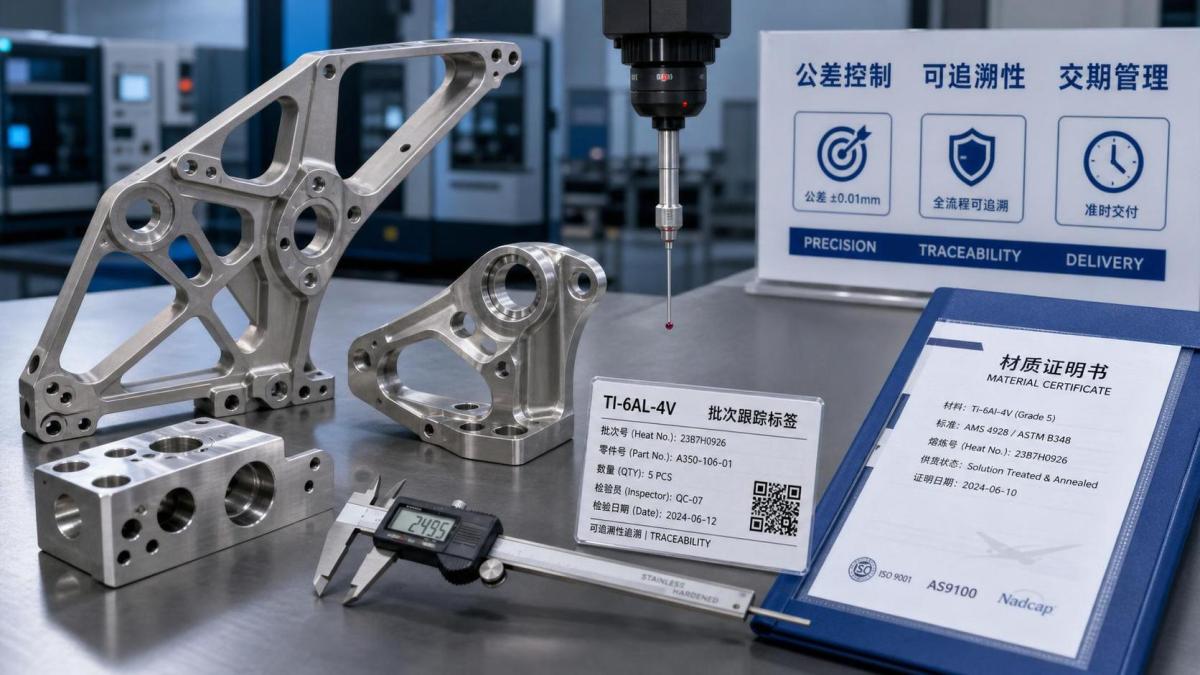
A titanium CNC machining supplier is usually judged first by certifications, machinery lists, and polished presentations.
That is rarely enough when parts carry tight tolerances, flight-critical loads, or expensive downstream assembly risk.
Titanium is difficult to machine consistently. Heat buildup, tool wear, burr control, and springback can all distort final dimensions.
So the real question is not whether a supplier says it can machine titanium.
The real question is whether that titanium CNC machining supplier can prove repeatable results with data.
In practical sourcing, three issues decide most outcomes: tolerance capability, material traceability, and lead time reliability.
These factors affect scrap rate, incoming inspection burden, schedule stability, and total cost far more than unit price alone.
This is also why engineering-led platforms like TechStat Vanguard emphasize verifiable parameters over marketing language.
When information noise is high, clean evidence becomes the fastest path to a safer supplier decision.
What tolerance evidence should you ask for before approving a supplier?
A capable titanium CNC machining supplier should discuss tolerance with context, not just with a generic claim like “high precision.”
Start by asking which titanium grades are machined most often, such as Ti-6Al-4V or commercially pure titanium.
Then ask for dimensional capability by feature type, because flatness, bore position, thread integrity, and wall thickness behave differently.
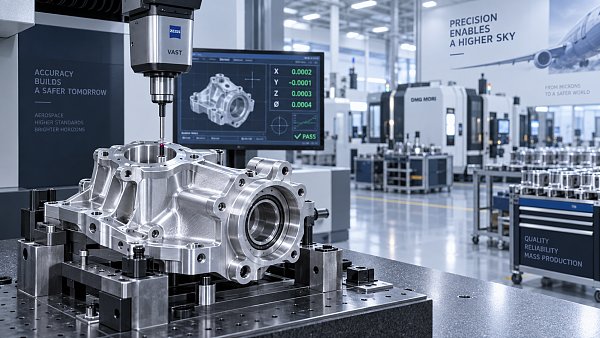
More useful evidence usually includes first article reports, in-process inspection plans, and statistical data from repeat production lots.
If the part has aerospace, medical, robotics, or sensor housing use, the tolerance discussion should become even more specific.
Ask whether the supplier controls tool wear offsets, fixture distortion, coolant strategy, and post-machining stress effects.
Those details often separate stable machining from one-off success.
A useful checkpoint table can make screening faster.
If answers stay vague, the tolerance claim is probably not mature enough for high-value titanium work.
How much traceability should a titanium CNC machining supplier really provide?
For titanium components, traceability is not paperwork for its own sake.
It is the chain of evidence that connects the shipped part to the correct material, process route, inspection record, and revision level.
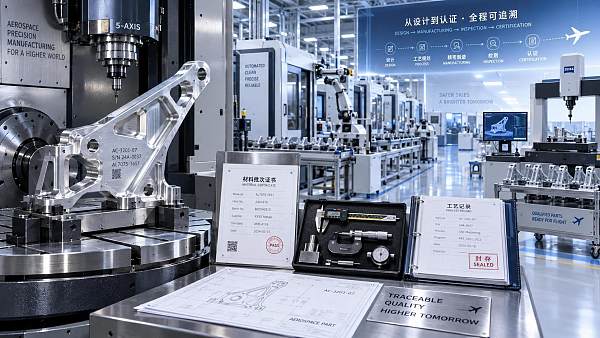
A reliable titanium CNC machining supplier should be able to trace each batch back to mill certificates and internal job travelers.
In stricter environments, this may also include heat numbers, operator records, outsourced process control, and final inspection linkage.
This matters because titanium often enters demanding assemblies where a later failure triggers expensive root-cause investigation.
Without traceability, containment actions become slow, broad, and costly.
A supplier with strong traceability usually answers these questions clearly:
- Can raw stock certificates be matched to each delivered lot?
- Are subcontracted treatments, coatings, or NDT steps documented?
- Is revision control visible from quote to shipment?
- Can nonconforming parts be isolated quickly by batch or serial reference?
In actual sourcing reviews, incomplete traceability often hides behind phrases like “documents available on request.”
That sounds acceptable until an audit, warranty event, or delayed inspection exposes missing links.
The better approach is simple: request a sample document package before approval, not after a problem appears.
When a supplier promises fast lead times, what should you verify behind the promise?
Short lead time is attractive, but dependable lead time is what protects production planning.
A titanium CNC machining supplier may quote aggressively, then lose time in raw material sourcing, fixture setup, or final inspection backlog.
That is why lead time should be tested as an operational capability, not a sales commitment.
Start by separating prototype lead time from repeat-order lead time.
These are often very different because programming, tooling, and validation consume time on first runs.
Then check what percentage of recent orders shipped on time and how exceptions were handled.
A stronger supplier can usually explain capacity loading, material availability, and bottleneck processes with unusual clarity.
That fits the TSV view of procurement intelligence: operational data is more trustworthy than broad assurances.
It also helps to ask whether the supplier holds safety stock, uses qualified backup machines, or has approved secondary processors.
Those answers show whether the quoted lead time can survive normal disruption.
Useful questions for lead time validation
- What is the current queue time before machining starts?
- Which steps are performed in-house, and which are outsourced?
- How often do titanium jobs wait for inspection capacity?
- What is the recovery plan if one machine goes down?
- Can partial shipments be arranged for staged demand?
Is lower quoted cost a warning sign or a real sourcing advantage?
It can be either, depending on what sits behind the quote.
Titanium machining cost is shaped by material buy-to-fly ratio, cycle time, tooling consumption, scrap exposure, and inspection depth.
So a lower quote is only meaningful if the scope assumptions are transparent.
One titanium CNC machining supplier may exclude documentation, finishing, or first article inspection from the base price.
Another may include them and appear more expensive at first glance.
A fair comparison should look at total landed value, not just piece price.
That includes incoming inspection effort, defect risk, expediting cost, and schedule disruption cost.
More commonly, the best-value supplier is not the cheapest line item.
It is the one that reduces uncertainty across the full sourcing cycle.
A practical quote comparison checklist
- Confirm titanium grade, stock form, and material source assumptions.
- Check whether FAI, CMM reports, and certificates are included.
- Review setup charges separately from repeat production pricing.
- Ask how scrap or remake responsibility is handled.
- Verify packaging, export compliance, and shipping terms.
What mistakes are most common when comparing titanium CNC machining suppliers?
The first mistake is treating all CNC capacity as interchangeable.
Titanium parts for UAV structures, sensor mounts, automation systems, or medical fixtures may require very different process control.
The second mistake is focusing only on certification badges.
Certifications matter, but they do not automatically confirm performance on your exact geometry and tolerance stack.
Another common error is approving a titanium CNC machining supplier without testing communication quality.
If technical questions take too long or return vague answers during quoting, execution usually becomes harder later.
There is also a habit of underestimating documentation friction.
Missing certs, unclear revision control, or incomplete inspection files can delay receiving far longer than machining itself.
A final mistake is skipping a pilot order for a critical family of parts.
A controlled trial reveals process discipline, response speed, and packaging quality better than any presentation deck.
So how should you make the final decision with less risk?
The safest decision usually comes from a scored comparison, not from instinct.
Build a short evaluation sheet covering tolerance evidence, traceability depth, lead time realism, responsiveness, and total cost clarity.
Then rank each titanium CNC machining supplier against the same technical standard.
In many hard-tech sectors, that discipline shortens qualification time because weak options are filtered out earlier.
This is exactly the kind of evidence-first thinking that TSV promotes across precision machining benchmarks and supply chain analysis.
If a supplier can show real tolerance data, complete traceability, and believable lead time control, the conversation changes.
It moves from marketing claims to measurable risk control.
The next step is straightforward: define your critical features, request sample documentation, compare quote scope line by line, and validate with a pilot run.
That process will not guarantee zero issues, but it will make the choice of a titanium CNC machining supplier far more defensible and far more efficient.
Search News
Hot Articles
- Carbon Fiber StructuresHow to Specify Aerospace Carbon Fiber Assemblies for Lightweight, Load-Bearing PartsJul 11, 2026
- Machine VisionXiaomi, Alibaba DAMO Academy Drive Open-Source Robotics Model Ecosystem, Lowering Algorithm Development Barriers for Overseas SMEs Adopting Chinese Robotics SolutionsMar 30, 2026
- Cobots & ArmsShanxi 'AI+' Conference Showcases Embodied Intelligence with Multinational Buyer Engagement: Key Industry ImplicationsMar 30, 2026
Popular Tags
Recommended News
 Jul 11, 2026How to Specify Aerospace Carbon Fiber Assemblies for Lightweight, Load-Bearing PartsAerospace carbon fiber assemblies: learn how to specify laminate design, load data, joining methods, and inspection controls for lighter, reliable load-bearing aerospace parts.Elena Rostova (UAV Systems Researcher)
 Mar 30, 2026Xiaomi, Alibaba DAMO Academy Drive Open-Source Robotics Model Ecosystem, Lowering Algorithm Development Barriers for Overseas SMEs Adopting Chinese Robotics SolutionsXiaomi & Alibaba DAMO Academy's open-source robotics models lower algorithm barriers for global SMEs. Boost efficiency in manufacturing, logistics & smart retail with ROS 2 compatible solutions.TSV Data Lab
 Mar 30, 2026Shanxi 'AI+' Conference Showcases Embodied Intelligence with Multinational Buyer Engagement: Key Industry ImplicationsShanxi 'AI+' Conference highlights embodied intelligence with Tesla, Ubtech & Jiantao showcasing multimodal robotics. 40+ global buyers validated tech on-site, creating new B2B channels for industrial automation & AI solutions.Chen Wei (Automation Lead Engineer)
 Mar 30, 2026Zhongguancun Unveils 6G Integrated Sensing-Computing-Intelligence Platform to Empower Embodied Robots for Global Industrial ApplicationsZhongguancun's new 6G platform revolutionizes industrial robotics with <10ms latency, empowering global automotive, logistics & port automation. Discover how this tech boosts China's smart manufacturing exports.TSV Data Lab
 Mar 30, 2026Mech-Mind Tianjin Embodied Intelligence R&D and Production Base Goes Live, Cutting Delivery Time by 20%–30% for Global Customized AMR+Vision SolutionsMech-Mind's Tianjin AMR+Vision production base cuts delivery time by 20%-30% for欧美 & Latin American markets. Discover how this PLd-certified facility accelerates customized robotics solutions for smart manufacturing and logistics.Chen Wei (Automation Lead Engineer)
 Mar 30, 2026Boao Forum Reveals 'Co-evolution of Big and Small Brains' Trend in Humanoid Robots, China's Embodied Intelligence Accelerates Adaptation to Overseas Manufacturing Service ScenariosDiscover how China's humanoid robots, featuring 'Co-evolution of Big and Small Brains,' are revolutionizing global manufacturing. Learn about Embodied Tian Gong 3.0's ISO compliance and overseas deployment at Boao Forum 2026.Chen Wei (Automation Lead Engineer)
 Mar 30, 2026China Railway Industrial Secures Patent for Embodied Robotics in Material Handling, Boosting High-Precision Delivery Capabilities for Overseas Infrastructure and Manufacturing ProjectsChina Railway Industrial's new patent for embodied robotics in material handling boosts high-precision delivery for global infrastructure & manufacturing. Discover how this innovation enhances logistics accuracy in automotive, rail transit & EPC projects.Chen Wei (Automation Lead Engineer)
 Sep 20, 2026Autonomous Navigation Pricing: Cost Drivers and Budget Benchmarks for AMR ProjectsAutonomous navigation price explained: compare AMR cost drivers, software, sensors, integration, safety, and lifecycle budgets to build a scalable project plan.Chen Wei (Automation Lead Engineer)
 Sep 19, 2026How to Scope Automation Integration Services for Multi-System Factory ProjectsAutomation integration services: learn how to scope multi-system factory projects with clear workflows, interface contracts, safety boundaries, and acceptance criteria.Victor Lin (Chief Software Architect)
 Sep 18, 2026Selecting UAV Aerospace Structural Parts for Strength, Weight, and Fatigue LifeUAV aerospace structural parts guide: compare strength, weight, stiffness, fatigue life, joints, and traceability to select reliable flight-ready components.Elena Rostova (UAV Systems Researcher)
 Sep 17, 2026Selecting Commercial Drone Payloads for European Inspection ProjectsCommercial drone payloads Europe: learn how to select RGB, thermal and LiDAR systems for compliant, reliable inspection data and better project outcomes.Elena Rostova (UAV Systems Researcher)
 Sep 16, 2026Machining Tolerance Validation: How to Verify Critical Dimensions Before Production ReleaseMachining tolerance analysis validation: verify critical dimensions, measurement systems, process capability, and tolerance stacks before production release.Dr. Marcus Vance
 Sep 15, 2026AGV Tape Guidance vs Laser Navigation: Which Fits Your Warehouse Layout?AGV tape guidance comparison: discover how tape and laser navigation fit changing warehouse layouts, docking needs, floor conditions, maintenance, and route flexibility.Chen Wei (Automation Lead Engineer)
 Sep 14, 2026How Point Cloud Analytics Improves Asset Inspection Workflows Across GCC ProjectsPoint cloud analytics GCC helps project leaders improve asset inspections with accurate change detection, safer workflows, and faster maintenance decisions.TSV Data Lab
 Sep 13, 2026How Aerospace Manufacturers Can Build a Digital Thread From Design to Certified ProductionDigital manufacturing for aerospace: learn how to build a traceable digital thread from design through certified production, supplier control, and audit-ready compliance.Victor Lin (Chief Software Architect)
 Sep 12, 2026How to Select a Thermal Sensor for Mapping Drones in Surveying ProjectsMapping drone thermal sensor selection made simple: compare GSD, radiometric data, NETD, calibration, and workflow fit for accurate, survey-ready thermal maps.Elena Rostova (UAV Systems Researcher)
 Sep 11, 2026Integrating Photogrammetry Workflows into Digital Twin Projects Without Data BottlenecksPhotogrammetry workflow integration for digital twins: learn how to streamline capture, validation, versioning, and delivery to prevent data bottlenecks.Victor Lin (Chief Software Architect)
 Sep 10, 2026Hard-Tech Supply Chain Procurement: Qualifying Suppliers to Cut Lead-Time RiskHard-tech supply chain procurement guide: qualify suppliers with proven process, traceability, capacity, and change control to reduce lead-time risk.Chen Wei (Automation Lead Engineer)
 Sep 09, 2026Industrial Application Notes: Cost Factors That Shape Automation Project BudgetsIndustrial application notes cost factors explained: uncover the engineering, safety, integration, and commissioning variables that shape accurate automation budgets.Victor Lin (Chief Software Architect)
 Sep 08, 2026Supplier Discovery for Sourcing: How Buyers Can Verify Capability and Supply RiskSupplier discovery for sourcing: learn how to verify supplier capability, traceability, quote assumptions, and supply risk before placing production orders.TSV Data Lab
 Sep 07, 2026What Determines Process Control Systems Pricing? A Buyer’s Cost GuideProcess control systems pricing explained: compare hardware, engineering, integration, cybersecurity, validation, and lifecycle costs to choose the right-value solution.Victor Lin (Chief Software Architect)
 Sep 07, 2026AMR Robots in ASEAN: Which Industries Are Adopting Them—and Why?AMR robots ASEAN adoption is accelerating in electronics, automotive, warehousing, healthcare, and cold chain. Explore use cases, risks, and deployment insights.Chen Wei (Automation Lead Engineer)
 Sep 05, 2026How to Evaluate Supplier Qualification Support Tools for Industrial Procurement TeamsSupplier qualification support tools help industrial procurement teams verify technical evidence, manage risk, and make defensible supplier approvals. Learn what to evaluate.Victor Lin (Chief Software Architect)
 Sep 04, 2026Grinding Tolerance Analysis: How to Set Realistic Limits for Precision PartsGrinding tolerance analysis explains how to set realistic limits for precision parts, balance fit, geometry, process capability, and inspection for reliable performance.Dr. Marcus Vance