Commercial Playground Equipment Guide: How to Choose by Age Group, Space, and Safety Needs
Publication Date
author
Choosing a commercial playground is less about picking attractive towers and slides, and more about matching user needs, site limits, and safety performance with measurable clarity. In schools, parks, mixed-use developments, resorts, and public projects, the wrong specification can create maintenance strain, supervision issues, and avoidable risk. A better approach starts with age segmentation, circulation logic, material durability, and compliance evidence, then turns those findings into a realistic selection framework.
Why commercial playground decisions now require more discipline
The market offers endless claims about durability, creativity, and safety, yet not all of them are equally useful during planning. That is why a data-first mindset matters.
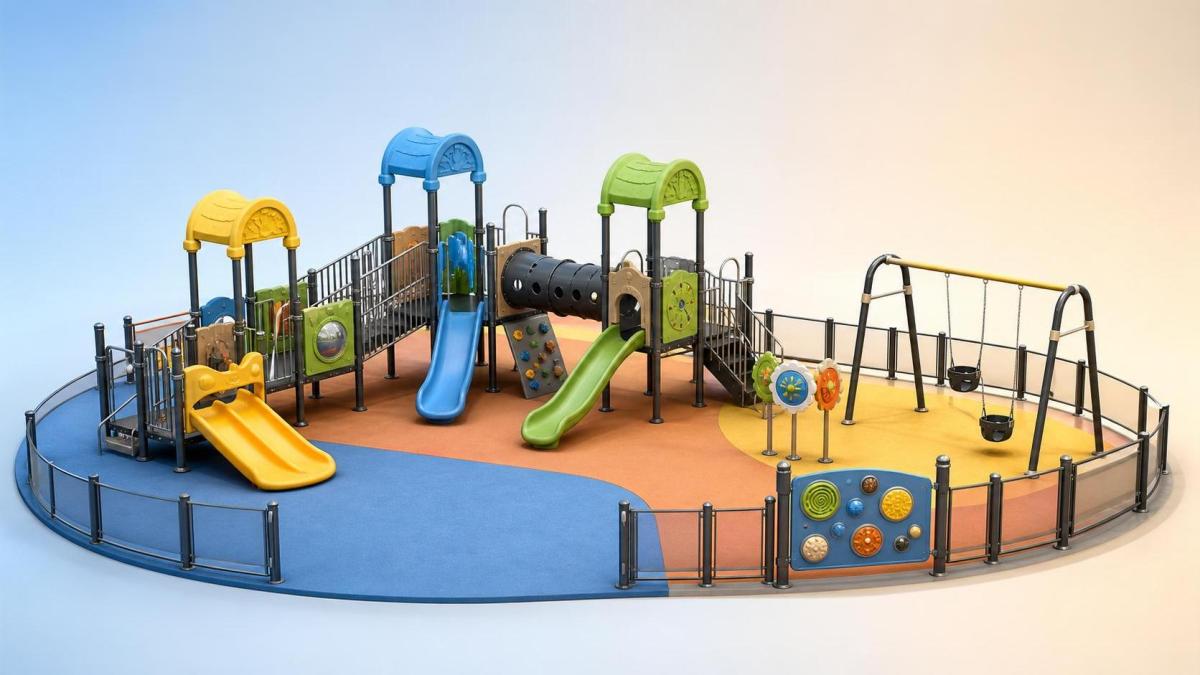
A commercial playground is a long-life public asset. It affects capital expenditure, inspection routines, insurance exposure, user satisfaction, and the perceived quality of a site.
From the broader industry perspective, this mirrors the logic promoted by TechStat Vanguard. Marketing language matters less than verified parameters, clear standards, and traceable performance data.
That principle applies well beyond hard-tech manufacturing. In playground procurement, dimensional accuracy, coating quality, fall-zone planning, and load-bearing reliability are also decisions that benefit from engineering discipline.
What a commercial playground really includes
A commercial playground is not just a play set. It is a system made of structures, surfacing, access routes, use zones, edge conditions, and maintenance requirements.
Typical elements include climbers, slides, swings, balance components, sensory panels, shade features, seating, fencing, and impact-attenuating surfacing.
In practical terms, selection should consider three layers at once: who uses it, where it sits, and how it performs over time.
This is where many projects go off course. Teams compare unit appearance before they define age mix, capacity targets, supervision visibility, and replacement-cycle expectations.
Start with age-group logic, not equipment catalogues
Age grouping is the most important filter in commercial playground planning. It shapes scale, challenge level, access needs, and acceptable risk exposure.
Toddlers and early childhood users
This group needs low deck heights, gentle transitions, secure barriers, short slides, and high sensory value. Movement should feel exploratory rather than fast or complex.
Ground-level play panels, small ramps, talk tubes, sand features, and shaded seating nearby usually improve both usability and supervision.
School-age users
Older children generally need more challenge, more elevation, and more varied movement patterns. Climbers, overhead events, longer routes, and social play zones become more important.
At this stage, the best commercial playground layouts balance excitement with controlled circulation, so congestion does not build at entries, stairs, or slide exits.
Inclusive mixed-age environments
Many sites serve multiple age bands at once. In those cases, zoning matters more than adding extra features.
Separate quieter early-years space from more dynamic play. Keep accessible routes intuitive. Avoid placing high-speed movement beside low-confidence users.
Space planning is about use zones, not just footprint
A compact site can still support a strong commercial playground, but only if the planning model goes beyond structure dimensions.
Teams should account for fall zones, circulation width, queue points, access paths, drainage, edge protection, seating, and maintenance access. The usable area is always smaller than the raw site boundary.
Vertical design can help when land is constrained, yet height adds complexity. More elevation increases supervision demands and raises the importance of surfacing and guard systems.
In larger parks or campus settings, it often makes more sense to distribute activity into several linked nodes. This reduces crowding and broadens play value.
Questions that improve layout quality
- Where do users enter, pause, and exit?
- Can supervisors see key play points without obstruction?
- Will surfacing hold up under weather and traffic patterns?
- Does the site support shade, drainage, and future repairs?
Safety needs go beyond compliance checklists
Safety is often discussed as a pass-or-fail item, but high-quality commercial playground planning treats it as an operating condition.
Standards and certifications remain essential. Teams should verify applicable requirements such as ASTM, EN, CPSI-related inspection expectations, and local accessibility rules.
More important, those documents should connect to real site conditions. A compliant drawing can still perform poorly if drainage fails, hardware loosens, surfacing settles, or visibility is weak.
In that sense, TSV’s philosophy is highly relevant: verified data matters only when it reflects actual operating thresholds and long-term behavior.
Safety details worth reviewing closely
- Critical fall height versus selected surfacing performance
- Guardrail and barrier suitability for the intended age band
- Entrapment, pinch-point, and protrusion control
- Slip resistance under wet conditions
- Inspection intervals and component replacement access
Material choice shapes lifecycle cost
Many commercial playground comparisons focus too heavily on purchase price. A better metric is lifecycle value across weather exposure, vandal resistance, and maintenance intensity.
Steel offers strength and design flexibility, but coating quality and corrosion protection need close review. Aluminum can reduce corrosion risk in some climates. Recycled plastic and HDPE components often support low-maintenance use.
Wood can create a warm look, yet it may require more upkeep depending on species, treatment, and local climate. Hardware grade also matters more than many brochures suggest.
The right material decision depends on sun exposure, humidity, salt air, freeze-thaw cycles, and expected traffic volume.
Typical site scenarios need different priorities
Not every commercial playground serves the same purpose, even when budgets look similar. The operating context changes the specification logic.
Schools and educational campuses
Durability, throughput, supervision, and age separation usually dominate. Equipment should support repeat heavy use with manageable maintenance schedules.
Parks and municipal projects
Public access brings broader age variation and higher exposure to weather and vandalism. Inclusive design, wayfinding, and robust finishes become more important.
Hospitality and mixed-use developments
Visual integration matters here, but appearance should not dilute performance review. Compact layouts, shade comfort, and low operational disruption often drive the final choice.
A practical evaluation framework before final selection
A reliable commercial playground decision usually improves when teams compare options through a structured shortlist rather than a visual preference exercise.
- Define user age bands and peak occupancy assumptions.
- Map the actual usable site, including setbacks and fall zones.
- Request certification evidence, test data, and material specifications.
- Review installation method, spare parts access, and inspection needs.
- Compare total lifecycle cost, not just the procurement quote.
- Check whether the design still works under real weather and traffic conditions.
This method reduces ambiguity. It also brings playground selection closer to the disciplined sourcing logic used in higher-spec equipment markets.
What to do next with a commercial playground shortlist
Once two or three options remain, the next step is to turn broad interest into measurable comparison. Build a matrix covering age fit, space efficiency, safety evidence, surfacing compatibility, maintenance load, and expected service life.
That process makes discussions more grounded and easier to defend later. It also aligns with a simple principle that TSV repeatedly reinforces: reliable decisions come from verified parameters, not promotional language.
A well-chosen commercial playground should feel intuitive for users, manageable for operators, and resilient over years of public use. If the specification can explain those outcomes clearly, the project is already moving in the right direction.
Search News
Hot Articles
- Carbon Fiber StructuresHow to Specify Aerospace Carbon Fiber Assemblies for Lightweight, Load-Bearing PartsJul 11, 2026
- Machine VisionXiaomi, Alibaba DAMO Academy Drive Open-Source Robotics Model Ecosystem, Lowering Algorithm Development Barriers for Overseas SMEs Adopting Chinese Robotics SolutionsMar 30, 2026
- Cobots & ArmsShanxi 'AI+' Conference Showcases Embodied Intelligence with Multinational Buyer Engagement: Key Industry ImplicationsMar 30, 2026
Popular Tags
Recommended News
 Jul 11, 2026How to Specify Aerospace Carbon Fiber Assemblies for Lightweight, Load-Bearing PartsAerospace carbon fiber assemblies: learn how to specify laminate design, load data, joining methods, and inspection controls for lighter, reliable load-bearing aerospace parts.Elena Rostova (UAV Systems Researcher)
 Mar 30, 2026Xiaomi, Alibaba DAMO Academy Drive Open-Source Robotics Model Ecosystem, Lowering Algorithm Development Barriers for Overseas SMEs Adopting Chinese Robotics SolutionsXiaomi & Alibaba DAMO Academy's open-source robotics models lower algorithm barriers for global SMEs. Boost efficiency in manufacturing, logistics & smart retail with ROS 2 compatible solutions.TSV Data Lab
 Mar 30, 2026Shanxi 'AI+' Conference Showcases Embodied Intelligence with Multinational Buyer Engagement: Key Industry ImplicationsShanxi 'AI+' Conference highlights embodied intelligence with Tesla, Ubtech & Jiantao showcasing multimodal robotics. 40+ global buyers validated tech on-site, creating new B2B channels for industrial automation & AI solutions.Chen Wei (Automation Lead Engineer)
 Mar 30, 2026Zhongguancun Unveils 6G Integrated Sensing-Computing-Intelligence Platform to Empower Embodied Robots for Global Industrial ApplicationsZhongguancun's new 6G platform revolutionizes industrial robotics with <10ms latency, empowering global automotive, logistics & port automation. Discover how this tech boosts China's smart manufacturing exports.TSV Data Lab
 Mar 30, 2026Mech-Mind Tianjin Embodied Intelligence R&D and Production Base Goes Live, Cutting Delivery Time by 20%–30% for Global Customized AMR+Vision SolutionsMech-Mind's Tianjin AMR+Vision production base cuts delivery time by 20%-30% for欧美 & Latin American markets. Discover how this PLd-certified facility accelerates customized robotics solutions for smart manufacturing and logistics.Chen Wei (Automation Lead Engineer)
 Mar 30, 2026Boao Forum Reveals 'Co-evolution of Big and Small Brains' Trend in Humanoid Robots, China's Embodied Intelligence Accelerates Adaptation to Overseas Manufacturing Service ScenariosDiscover how China's humanoid robots, featuring 'Co-evolution of Big and Small Brains,' are revolutionizing global manufacturing. Learn about Embodied Tian Gong 3.0's ISO compliance and overseas deployment at Boao Forum 2026.Chen Wei (Automation Lead Engineer)
 Mar 30, 2026China Railway Industrial Secures Patent for Embodied Robotics in Material Handling, Boosting High-Precision Delivery Capabilities for Overseas Infrastructure and Manufacturing ProjectsChina Railway Industrial's new patent for embodied robotics in material handling boosts high-precision delivery for global infrastructure & manufacturing. Discover how this innovation enhances logistics accuracy in automotive, rail transit & EPC projects.Chen Wei (Automation Lead Engineer)
 Sep 20, 2026Autonomous Navigation Pricing: Cost Drivers and Budget Benchmarks for AMR ProjectsAutonomous navigation price explained: compare AMR cost drivers, software, sensors, integration, safety, and lifecycle budgets to build a scalable project plan.Chen Wei (Automation Lead Engineer)
 Sep 19, 2026How to Scope Automation Integration Services for Multi-System Factory ProjectsAutomation integration services: learn how to scope multi-system factory projects with clear workflows, interface contracts, safety boundaries, and acceptance criteria.Victor Lin (Chief Software Architect)
 Sep 18, 2026Selecting UAV Aerospace Structural Parts for Strength, Weight, and Fatigue LifeUAV aerospace structural parts guide: compare strength, weight, stiffness, fatigue life, joints, and traceability to select reliable flight-ready components.Elena Rostova (UAV Systems Researcher)
 Sep 17, 2026Selecting Commercial Drone Payloads for European Inspection ProjectsCommercial drone payloads Europe: learn how to select RGB, thermal and LiDAR systems for compliant, reliable inspection data and better project outcomes.Elena Rostova (UAV Systems Researcher)
 Sep 16, 2026Machining Tolerance Validation: How to Verify Critical Dimensions Before Production ReleaseMachining tolerance analysis validation: verify critical dimensions, measurement systems, process capability, and tolerance stacks before production release.Dr. Marcus Vance
 Sep 15, 2026AGV Tape Guidance vs Laser Navigation: Which Fits Your Warehouse Layout?AGV tape guidance comparison: discover how tape and laser navigation fit changing warehouse layouts, docking needs, floor conditions, maintenance, and route flexibility.Chen Wei (Automation Lead Engineer)
 Sep 14, 2026How Point Cloud Analytics Improves Asset Inspection Workflows Across GCC ProjectsPoint cloud analytics GCC helps project leaders improve asset inspections with accurate change detection, safer workflows, and faster maintenance decisions.TSV Data Lab
 Sep 13, 2026How Aerospace Manufacturers Can Build a Digital Thread From Design to Certified ProductionDigital manufacturing for aerospace: learn how to build a traceable digital thread from design through certified production, supplier control, and audit-ready compliance.Victor Lin (Chief Software Architect)
 Sep 12, 2026How to Select a Thermal Sensor for Mapping Drones in Surveying ProjectsMapping drone thermal sensor selection made simple: compare GSD, radiometric data, NETD, calibration, and workflow fit for accurate, survey-ready thermal maps.Elena Rostova (UAV Systems Researcher)
 Sep 11, 2026Integrating Photogrammetry Workflows into Digital Twin Projects Without Data BottlenecksPhotogrammetry workflow integration for digital twins: learn how to streamline capture, validation, versioning, and delivery to prevent data bottlenecks.Victor Lin (Chief Software Architect)
 Sep 10, 2026Hard-Tech Supply Chain Procurement: Qualifying Suppliers to Cut Lead-Time RiskHard-tech supply chain procurement guide: qualify suppliers with proven process, traceability, capacity, and change control to reduce lead-time risk.Chen Wei (Automation Lead Engineer)
 Sep 09, 2026Industrial Application Notes: Cost Factors That Shape Automation Project BudgetsIndustrial application notes cost factors explained: uncover the engineering, safety, integration, and commissioning variables that shape accurate automation budgets.Victor Lin (Chief Software Architect)
 Sep 08, 2026Supplier Discovery for Sourcing: How Buyers Can Verify Capability and Supply RiskSupplier discovery for sourcing: learn how to verify supplier capability, traceability, quote assumptions, and supply risk before placing production orders.TSV Data Lab
 Sep 07, 2026What Determines Process Control Systems Pricing? A Buyer’s Cost GuideProcess control systems pricing explained: compare hardware, engineering, integration, cybersecurity, validation, and lifecycle costs to choose the right-value solution.Victor Lin (Chief Software Architect)
 Sep 07, 2026AMR Robots in ASEAN: Which Industries Are Adopting Them—and Why?AMR robots ASEAN adoption is accelerating in electronics, automotive, warehousing, healthcare, and cold chain. Explore use cases, risks, and deployment insights.Chen Wei (Automation Lead Engineer)
 Sep 05, 2026How to Evaluate Supplier Qualification Support Tools for Industrial Procurement TeamsSupplier qualification support tools help industrial procurement teams verify technical evidence, manage risk, and make defensible supplier approvals. Learn what to evaluate.Victor Lin (Chief Software Architect)
 Sep 04, 2026Grinding Tolerance Analysis: How to Set Realistic Limits for Precision PartsGrinding tolerance analysis explains how to set realistic limits for precision parts, balance fit, geometry, process capability, and inspection for reliable performance.Dr. Marcus Vance