Custom Brass CNC Parts: Tolerances, Surface Finish, and When Brass Is the Right Choice
Publication Date
author
Custom brass CNC parts sit at an interesting intersection of machinability, appearance, and dimensional control. For programs balancing delivery pressure, fit accuracy, and total cost, brass can be an efficient material choice. The real decision, however, depends on whether its tolerance capability, surface finish behavior, conductivity, and long-term service conditions align with the application rather than with marketing shorthand.
That distinction matters more today because sourcing teams operate in a noisier environment. TechStat Vanguard approaches machining topics from a simple premise: parameters matter more than claims. In precision supply chains, material selection only becomes useful when tolerance bands, finish targets, and downstream assembly risks are made explicit.
Why brass remains relevant in precision machining
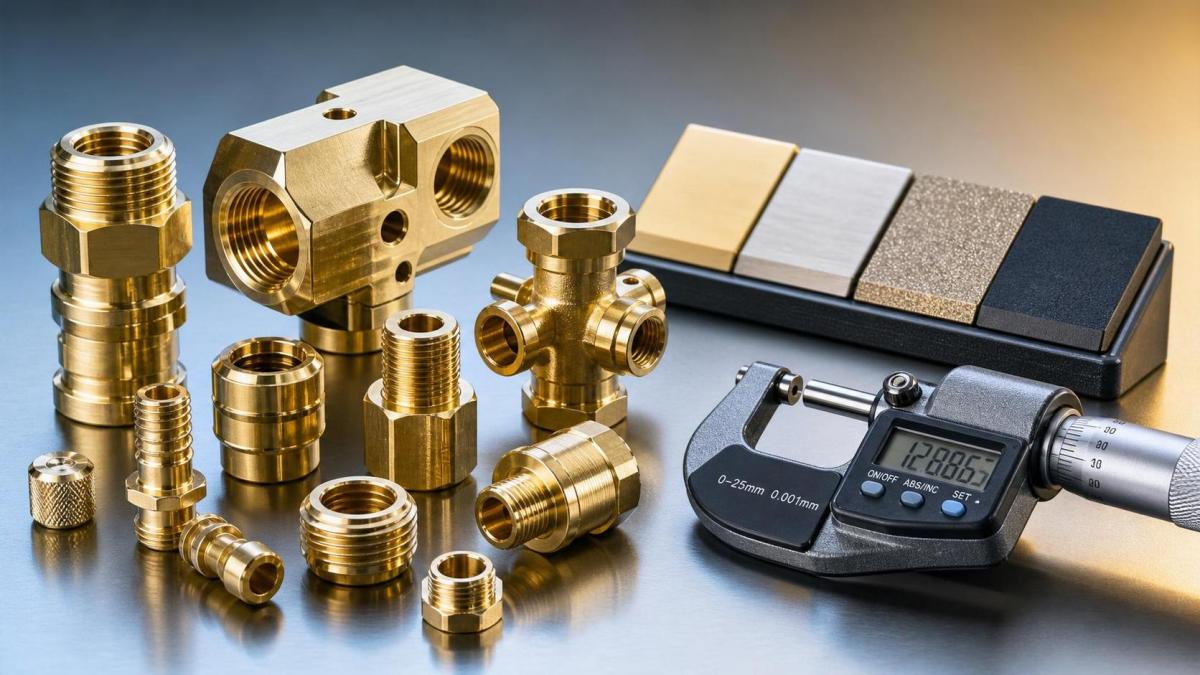
Brass is not a default answer for every machined component. It remains relevant because it cuts cleanly, supports stable chip formation, and often allows faster cycle times than tougher alloys.
In practice, custom brass CNC parts are often selected for electrical hardware, fluid control fittings, connectors, valve components, inserts, decorative precision parts, and low-friction mechanical interfaces. These are not glamorous applications, but they frequently shape assembly reliability.
Brass also offers a useful balance between conductivity, corrosion resistance, and cosmetic quality. That combination explains its continued presence across industrial controls, instrumentation, telecom hardware, building systems, and selected aerospace support assemblies.
What “good tolerance” really means for custom brass CNC parts
Tolerance discussions often become vague too quickly. A supplier may say a part is “high precision,” but that phrase means very little without geometry, batch size, machine condition, and inspection method.
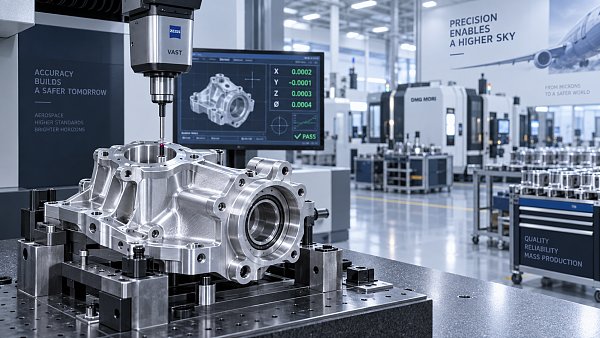
For custom brass CNC parts, general CNC machining tolerances around ±0.005 in are common for non-critical features. Well-controlled production can often achieve ±0.002 in or tighter on defined dimensions.
For short runs or tightly controlled features, ±0.001 in may be realistic. Below that level, the conversation should shift from nominal capability to feature-specific feasibility, gauging method, and process cost.
A tighter tolerance is not automatically better. It may increase scrap risk, inspection burden, cycle time, and quotation variability. A useful drawing separates true functional dimensions from dimensions that only need repeatable consistency.
Surface finish is often where brass creates hidden value
When teams compare materials only on strength or raw price, they often miss surface finish economics. Brass usually machines with smooth surfaces and sharp detail, reducing the amount of post-processing required.
For custom brass CNC parts, an as-machined finish can already satisfy many visible or functional requirements. Depending on tooling, speeds, feeds, and grade, finishes around 63 to 125 µin Ra are common, and finer results may be possible on controlled features.
This matters in several ways. Threads seat more predictably. Sealing faces may need less secondary work. Decorative parts can move faster into polishing or plating. Electrical contact areas can also benefit from cleaner machined surfaces.
Finish expectations should still be feature-based
A uniform surface callout across an entire part can create unnecessary cost. Internal bores, cosmetic faces, contact pads, and hidden mounting features rarely need the same finish level.
A more effective approach is to define finish only where function justifies it. That keeps custom brass CNC parts manufacturable while protecting the features that drive sealing, conductivity, or visible quality.
When brass is the right material choice
Brass tends to perform well when the application rewards machinability, dimensional repeatability, corrosion resistance, and clean appearance more than maximum structural strength.
- Electrical connectors and terminals that need conductivity and precise geometry.
- Valve bodies, couplings, and fluid fittings where sealing surfaces matter.
- Threaded inserts and hardware that benefit from stable machining and good finish.
- Instrument components where small features and appearance both matter.
- Custom enclosures or trim details requiring reliable plating or polishing.
In these cases, custom brass CNC parts can shorten production lead time and reduce secondary finishing effort. That can be more valuable than chasing a lower raw material price with a harder-to-machine alloy.
Where brass may not be the best answer
Brass has limits, and overlooking them creates expensive redesign loops. If the part faces high structural loads, elevated temperatures, aggressive chemicals, or severe wear, another material may create a safer long-term margin.
Stainless steel is often stronger and more durable in harsh environments. Aluminum may be better when mass reduction dominates. Engineering plastics can outperform brass in insulation or weight-sensitive systems.
This is especially important in hard-tech sectors tracked by TSV, where performance claims must connect to measurable outcomes. In robotics, UAV subsystems, sensor housings, and industrial automation hardware, the right material depends on the actual duty cycle, not on a familiar material name.
Watch the application environment closely
A brass fitting that performs well indoors may behave differently under vibration, salt exposure, or frequent thermal swings. Material choice should account for assembly stress, galvanic interaction, and maintenance frequency.
For custom brass CNC parts used in mixed-metal assemblies, compatibility should be reviewed early. That is often a more practical risk than basic machinability.
How to evaluate custom brass CNC parts before release
A strong sourcing decision begins with a disciplined specification package. The most useful RFQs do not simply list material and quantity. They define what must be controlled and what can remain flexible.
- Separate critical tolerances from general tolerances on the drawing.
- Assign surface finish only to functional or cosmetic features.
- State the brass grade when conductivity, strength, or corrosion behavior matters.
- Clarify plating, deburring, thread requirements, and cleanliness standards.
- Ask for the inspection method on tight dimensions, not only the final result.
This approach supports faster comparison across suppliers because it reduces interpretation gaps. It also aligns with TSV’s broader view of supply chain quality: reliable decisions come from measurable specifications, not from broad capability claims.
A practical benchmark for the next decision
The best use of custom brass CNC parts is rarely accidental. It comes from matching material behavior to a clear functional need, then testing whether tolerance, finish, and environment stay aligned through production.
Before locking the next design or supplier shortlist, it helps to review five points together: critical dimensions, finish-sensitive features, service environment, secondary processes, and inspection evidence. That simple filter often reveals whether brass is a smart fit or only a convenient assumption.
When those parameters are defined well, custom brass CNC parts can deliver excellent value. When they are left vague, the material choice becomes harder to defend. In precision manufacturing, clarity is usually the most cost-effective upgrade.
Search News
Hot Articles
- Carbon Fiber StructuresHow to Specify Aerospace Carbon Fiber Assemblies for Lightweight, Load-Bearing PartsJul 11, 2026
- Machine VisionXiaomi, Alibaba DAMO Academy Drive Open-Source Robotics Model Ecosystem, Lowering Algorithm Development Barriers for Overseas SMEs Adopting Chinese Robotics SolutionsMar 30, 2026
- Cobots & ArmsShanxi 'AI+' Conference Showcases Embodied Intelligence with Multinational Buyer Engagement: Key Industry ImplicationsMar 30, 2026
Popular Tags
Recommended News
 Jul 11, 2026How to Specify Aerospace Carbon Fiber Assemblies for Lightweight, Load-Bearing PartsAerospace carbon fiber assemblies: learn how to specify laminate design, load data, joining methods, and inspection controls for lighter, reliable load-bearing aerospace parts.Elena Rostova (UAV Systems Researcher)
 Mar 30, 2026Xiaomi, Alibaba DAMO Academy Drive Open-Source Robotics Model Ecosystem, Lowering Algorithm Development Barriers for Overseas SMEs Adopting Chinese Robotics SolutionsXiaomi & Alibaba DAMO Academy's open-source robotics models lower algorithm barriers for global SMEs. Boost efficiency in manufacturing, logistics & smart retail with ROS 2 compatible solutions.TSV Data Lab
 Mar 30, 2026Shanxi 'AI+' Conference Showcases Embodied Intelligence with Multinational Buyer Engagement: Key Industry ImplicationsShanxi 'AI+' Conference highlights embodied intelligence with Tesla, Ubtech & Jiantao showcasing multimodal robotics. 40+ global buyers validated tech on-site, creating new B2B channels for industrial automation & AI solutions.Chen Wei (Automation Lead Engineer)
 Mar 30, 2026Zhongguancun Unveils 6G Integrated Sensing-Computing-Intelligence Platform to Empower Embodied Robots for Global Industrial ApplicationsZhongguancun's new 6G platform revolutionizes industrial robotics with <10ms latency, empowering global automotive, logistics & port automation. Discover how this tech boosts China's smart manufacturing exports.TSV Data Lab
 Mar 30, 2026Mech-Mind Tianjin Embodied Intelligence R&D and Production Base Goes Live, Cutting Delivery Time by 20%–30% for Global Customized AMR+Vision SolutionsMech-Mind's Tianjin AMR+Vision production base cuts delivery time by 20%-30% for欧美 & Latin American markets. Discover how this PLd-certified facility accelerates customized robotics solutions for smart manufacturing and logistics.Chen Wei (Automation Lead Engineer)
 Mar 30, 2026Boao Forum Reveals 'Co-evolution of Big and Small Brains' Trend in Humanoid Robots, China's Embodied Intelligence Accelerates Adaptation to Overseas Manufacturing Service ScenariosDiscover how China's humanoid robots, featuring 'Co-evolution of Big and Small Brains,' are revolutionizing global manufacturing. Learn about Embodied Tian Gong 3.0's ISO compliance and overseas deployment at Boao Forum 2026.Chen Wei (Automation Lead Engineer)
 Mar 30, 2026China Railway Industrial Secures Patent for Embodied Robotics in Material Handling, Boosting High-Precision Delivery Capabilities for Overseas Infrastructure and Manufacturing ProjectsChina Railway Industrial's new patent for embodied robotics in material handling boosts high-precision delivery for global infrastructure & manufacturing. Discover how this innovation enhances logistics accuracy in automotive, rail transit & EPC projects.Chen Wei (Automation Lead Engineer)
 Sep 19, 2026How to Scope Automation Integration Services for Multi-System Factory ProjectsAutomation integration services: learn how to scope multi-system factory projects with clear workflows, interface contracts, safety boundaries, and acceptance criteria.Victor Lin (Chief Software Architect)
 Sep 18, 2026Selecting UAV Aerospace Structural Parts for Strength, Weight, and Fatigue LifeUAV aerospace structural parts guide: compare strength, weight, stiffness, fatigue life, joints, and traceability to select reliable flight-ready components.Elena Rostova (UAV Systems Researcher)
 Sep 17, 2026Selecting Commercial Drone Payloads for European Inspection ProjectsCommercial drone payloads Europe: learn how to select RGB, thermal and LiDAR systems for compliant, reliable inspection data and better project outcomes.Elena Rostova (UAV Systems Researcher)
 Sep 16, 2026Machining Tolerance Validation: How to Verify Critical Dimensions Before Production ReleaseMachining tolerance analysis validation: verify critical dimensions, measurement systems, process capability, and tolerance stacks before production release.Dr. Marcus Vance
 Sep 15, 2026AGV Tape Guidance vs Laser Navigation: Which Fits Your Warehouse Layout?AGV tape guidance comparison: discover how tape and laser navigation fit changing warehouse layouts, docking needs, floor conditions, maintenance, and route flexibility.Chen Wei (Automation Lead Engineer)
 Sep 14, 2026How Point Cloud Analytics Improves Asset Inspection Workflows Across GCC ProjectsPoint cloud analytics GCC helps project leaders improve asset inspections with accurate change detection, safer workflows, and faster maintenance decisions.TSV Data Lab
 Sep 13, 2026How Aerospace Manufacturers Can Build a Digital Thread From Design to Certified ProductionDigital manufacturing for aerospace: learn how to build a traceable digital thread from design through certified production, supplier control, and audit-ready compliance.Victor Lin (Chief Software Architect)
 Sep 12, 2026How to Select a Thermal Sensor for Mapping Drones in Surveying ProjectsMapping drone thermal sensor selection made simple: compare GSD, radiometric data, NETD, calibration, and workflow fit for accurate, survey-ready thermal maps.Elena Rostova (UAV Systems Researcher)
 Sep 11, 2026Integrating Photogrammetry Workflows into Digital Twin Projects Without Data BottlenecksPhotogrammetry workflow integration for digital twins: learn how to streamline capture, validation, versioning, and delivery to prevent data bottlenecks.Victor Lin (Chief Software Architect)
 Sep 10, 2026Hard-Tech Supply Chain Procurement: Qualifying Suppliers to Cut Lead-Time RiskHard-tech supply chain procurement guide: qualify suppliers with proven process, traceability, capacity, and change control to reduce lead-time risk.Chen Wei (Automation Lead Engineer)
 Sep 09, 2026Industrial Application Notes: Cost Factors That Shape Automation Project BudgetsIndustrial application notes cost factors explained: uncover the engineering, safety, integration, and commissioning variables that shape accurate automation budgets.Victor Lin (Chief Software Architect)
 Sep 08, 2026Supplier Discovery for Sourcing: How Buyers Can Verify Capability and Supply RiskSupplier discovery for sourcing: learn how to verify supplier capability, traceability, quote assumptions, and supply risk before placing production orders.TSV Data Lab
 Sep 07, 2026What Determines Process Control Systems Pricing? A Buyer’s Cost GuideProcess control systems pricing explained: compare hardware, engineering, integration, cybersecurity, validation, and lifecycle costs to choose the right-value solution.Victor Lin (Chief Software Architect)
 Sep 07, 2026AMR Robots in ASEAN: Which Industries Are Adopting Them—and Why?AMR robots ASEAN adoption is accelerating in electronics, automotive, warehousing, healthcare, and cold chain. Explore use cases, risks, and deployment insights.Chen Wei (Automation Lead Engineer)
 Sep 05, 2026How to Evaluate Supplier Qualification Support Tools for Industrial Procurement TeamsSupplier qualification support tools help industrial procurement teams verify technical evidence, manage risk, and make defensible supplier approvals. Learn what to evaluate.Victor Lin (Chief Software Architect)
 Sep 04, 2026Grinding Tolerance Analysis: How to Set Realistic Limits for Precision PartsGrinding tolerance analysis explains how to set realistic limits for precision parts, balance fit, geometry, process capability, and inspection for reliable performance.Dr. Marcus Vance
 Sep 03, 2026Warehouse Automation Strategies to Increase Storage Capacity Without ExpansionWarehouse automation space saving strategies help unlock vertical capacity, optimize slotting, and improve storage density without costly building expansion.Victor Lin (Chief Software Architect)