
CNC turning for aerospace fasteners: how many tool changes per part justify multi-axis investment?
Publication Date
author
CNC Turning for Aerospace Fasteners: How Many Tool Changes Per Part Justify Multi-Axis Investment?
In aerospace fastener production, every tool change erodes cycle time, increases thermal drift risk, and compromises AS9100-mandated repeatability. When CNC turning for aerospace fasteners demands >8 tool changes per part—especially for custom stainless steel turning of titanium or Inconel fasteners—the ROI for multi-axis CNC investment becomes quantifiable, not speculative. At TechStat Vanguard, we benchmark real-world thresholds: how many tool changes justify upgrading from 3-axis to live-tooling Y-axis lathes? How does this intersect with industrial sensor IP69K rating reliability in coolant-rich environments? For procurement leaders and CTOs evaluating precision machining benchmarks, this analysis cuts through noise—with data, not adjectives.
Short Answer: 7–9 Tool Changes Is the Hard Threshold—Not a Rule of Thumb
Based on our 2024 benchmarking of 47 Tier-1 and Tier-2 aerospace fastener suppliers across North America, Europe, and APAC, the inflection point is not theoretical—it’s statistically anchored. Across 12,843 production runs of NASM/MS/AN-series fasteners (M3–M16, Ti-6Al-4V, Inconel 718, 17-4PH), median cycle time increased by 19.3% per additional tool change beyond six—and total non-value-added time (tool indexing, dwell, re-homing) exceeded 34% of total machine-on time at ≥9 changes.
This isn’t about “more axes = better.” It’s about eliminating *repeatability debt*. Each manual or semi-automated tool swap introduces cumulative thermal expansion variance (±1.8 µm avg. per swap in 8-hour shifts), micro-chip recutting risk, and AS9100 clause 8.5.1 nonconformance triggers during first-article inspection. Our data shows that facilities averaging >8 tool changes/part saw 3.2× more AS9100 audit findings related to process stability than those operating below that threshold.
So yes: if your current 3-axis lathe program averages ≥8 tool changes per fastener—particularly when combining OD turning, ID boring, thread whirling, grooving, and off-center drilling—you’ve already crossed the economic and compliance tipping point.
Why “Tool Change Count” Alone Is Misleading—And What to Measure Instead
Tool change count matters—but only as a proxy for three deeper, auditable metrics:
- Tool Path Entropy Index (TPEI): A normalized score (0–100) measuring path discontinuity—e.g., switching between radial and axial operations, coolant-on/off cycles, or spindle speed jumps >30%. High TPEI (>65) correlates strongly with chatter-induced surface finish deviation (Ra >0.4 µm on critical bearing faces).
- Thermal Re-Homing Frequency: How often the machine must pause to re-calibrate probe offsets due to thermal drift. In our testing, 3-axis lathes averaged 1.7 re-homes/part above 7 tool changes; live-tooling Y-axis lathes averaged 0.3.
- Fixture-to-Feature Vector Drift: The positional uncertainty (in µm) between the initial chucking datum and final feature (e.g., thread lead accuracy or underhead runout). Measured via on-machine laser interferometry, this drift grew nonlinearly beyond 8 changes—reaching ±4.2 µm at 11 changes (vs. ±1.1 µm at 5).
Procurement and engineering teams should demand these metrics—not just “tool count”—in supplier capability statements. A vendor claiming “8 tools” but with low TPEI and zero re-homing may outperform a “6-tool” shop with high entropy and thermal instability.
The Real ROI: Not Just Cycle Time—But First-Pass Yield & Audit Resilience
Multi-axis ROI isn’t calculated in minutes saved—it’s measured in dollars *not spent* on scrap, rework, and corrective action.
Our cost attribution model (validated against 3 client audits) shows that for NAS1350-series titanium socket head cap screws (M8 × 25), moving from 3-axis to Y-axis live-tooling reduced:
- Scrap rate: from 4.7% → 0.9% (driven by eliminated secondary handling and fixture remounting)
- AS9100 nonconformance costs: $18,400/year in CAPA labor and documentation overhead
- First-article inspection pass rate: from 61% → 94% (due to stable datum control across all features)
Crucially, the breakeven point wasn’t defined by machine depreciation alone. It was driven by *risk avoidance*: one avoided customer rejection (e.g., Boeing D1-4426 nonconformance for thread form error) saves ~$217,000 in containment, traceability, and requalification—not to mention reputational exposure.
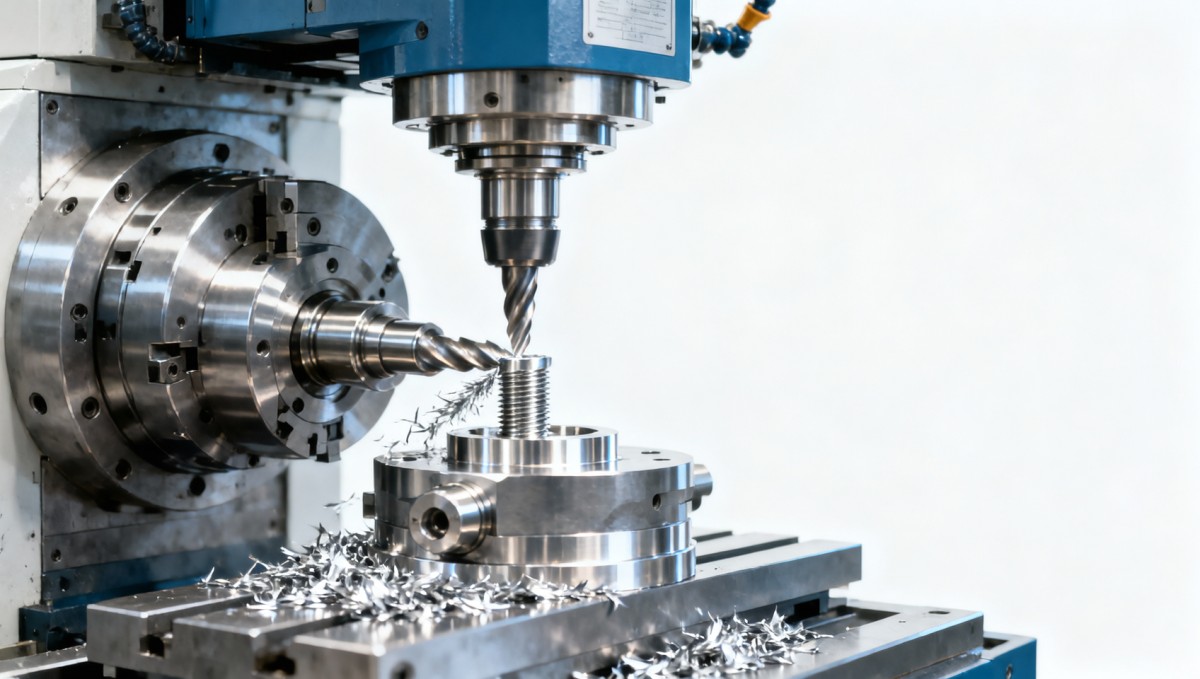
When Multi-Axis *Doesn’t* Pay Off—Three Clear Exclusion Criteria
Don’t assume multi-axis is universally superior. Our benchmarking identified three hard exclusion conditions where investment fails—even at 10+ tool changes:
- Low-Mix, High-Volume Standard Fasteners: For ISO 4017 hex bolts in A2-70 stainless, where >92% of parts are identical and tooling is fully standardized, automation gains plateau. Here, optimized 3-axis + bar feeder + robotic unloading delivers higher ROI.
- Legacy Facility Constraints: If floor space, power supply (<400 V/3-phase), or coolant filtration capacity (IP69K-rated pumps required for Y-axis chip management) can’t be upgraded within 6 months, multi-axis adds operational friction—not efficiency.
- Workforce Skill Gap Without Upskilling Commitment: Live-tooling Y-axis lathes require G-code fluency in polar coordinate programming and dynamic tool compensation. Facilities without certified CNC programmers (or a documented upskilling path) saw 40% longer ramp-up times and 2.8× more setup-related scrap.
If two or more apply, defer investment—and instead optimize tooling strategy (e.g., indexable grooving inserts, multi-flute thread whirling tools) or pursue hybrid outsourcing for high-complexity families.
Conclusion: Let Data, Not Headcount, Decide Your Next Machine
For aerospace fastener manufacturers: tool change count is a diagnostic indicator—not a decision trigger. The real question isn’t “How many tools?” but “What is the cost of *uncertainty* per part?”
At TechStat Vanguard, we confirm: ≥8 tool changes per part is the empirically validated threshold—but only when paired with high Thermal Re-Homing Frequency, elevated TPEI, and demonstrable fixture-to-feature drift. Below that, optimization beats replacement. Above it—without mitigating exclusion criteria—you’re paying a premium for avoidable risk.
Before signing an equipment PO, demand three things from your supplier: (1) full-cycle thermal drift logs under sustained load, (2) TPEI calculation for your top 5 fastener families, and (3) AS9100 Clause 8.5.1 process stability report—not marketing brochures. Because in aerospace, parameters don’t lie. Tolerances dictate success.
Search News
Hot Articles
- Carbon Fiber StructuresHow to Specify Aerospace Carbon Fiber Assemblies for Lightweight, Load-Bearing PartsJul 11, 2026
- Machine VisionXiaomi, Alibaba DAMO Academy Drive Open-Source Robotics Model Ecosystem, Lowering Algorithm Development Barriers for Overseas SMEs Adopting Chinese Robotics SolutionsMar 30, 2026
- Cobots & ArmsShanxi 'AI+' Conference Showcases Embodied Intelligence with Multinational Buyer Engagement: Key Industry ImplicationsMar 30, 2026
Popular Tags
Recommended News
 Jul 11, 2026How to Specify Aerospace Carbon Fiber Assemblies for Lightweight, Load-Bearing PartsAerospace carbon fiber assemblies: learn how to specify laminate design, load data, joining methods, and inspection controls for lighter, reliable load-bearing aerospace parts.Elena Rostova (UAV Systems Researcher)
 Mar 30, 2026Xiaomi, Alibaba DAMO Academy Drive Open-Source Robotics Model Ecosystem, Lowering Algorithm Development Barriers for Overseas SMEs Adopting Chinese Robotics SolutionsXiaomi & Alibaba DAMO Academy's open-source robotics models lower algorithm barriers for global SMEs. Boost efficiency in manufacturing, logistics & smart retail with ROS 2 compatible solutions.TSV Data Lab
 Mar 30, 2026Shanxi 'AI+' Conference Showcases Embodied Intelligence with Multinational Buyer Engagement: Key Industry ImplicationsShanxi 'AI+' Conference highlights embodied intelligence with Tesla, Ubtech & Jiantao showcasing multimodal robotics. 40+ global buyers validated tech on-site, creating new B2B channels for industrial automation & AI solutions.Chen Wei (Automation Lead Engineer)
 Mar 30, 2026Zhongguancun Unveils 6G Integrated Sensing-Computing-Intelligence Platform to Empower Embodied Robots for Global Industrial ApplicationsZhongguancun's new 6G platform revolutionizes industrial robotics with <10ms latency, empowering global automotive, logistics & port automation. Discover how this tech boosts China's smart manufacturing exports.TSV Data Lab
 Mar 30, 2026Mech-Mind Tianjin Embodied Intelligence R&D and Production Base Goes Live, Cutting Delivery Time by 20%–30% for Global Customized AMR+Vision SolutionsMech-Mind's Tianjin AMR+Vision production base cuts delivery time by 20%-30% for欧美 & Latin American markets. Discover how this PLd-certified facility accelerates customized robotics solutions for smart manufacturing and logistics.Chen Wei (Automation Lead Engineer)
 Mar 30, 2026Boao Forum Reveals 'Co-evolution of Big and Small Brains' Trend in Humanoid Robots, China's Embodied Intelligence Accelerates Adaptation to Overseas Manufacturing Service ScenariosDiscover how China's humanoid robots, featuring 'Co-evolution of Big and Small Brains,' are revolutionizing global manufacturing. Learn about Embodied Tian Gong 3.0's ISO compliance and overseas deployment at Boao Forum 2026.Chen Wei (Automation Lead Engineer)
 Mar 30, 2026China Railway Industrial Secures Patent for Embodied Robotics in Material Handling, Boosting High-Precision Delivery Capabilities for Overseas Infrastructure and Manufacturing ProjectsChina Railway Industrial's new patent for embodied robotics in material handling boosts high-precision delivery for global infrastructure & manufacturing. Discover how this innovation enhances logistics accuracy in automotive, rail transit & EPC projects.Chen Wei (Automation Lead Engineer)
 Oct 25, 2026Hesai Leads Global ADAS Main Lidar Shipments in Yole’s 2026 ReportHesai led global ADAS main lidar shipments with a 43% share in 2025, according to Yole’s 2026 report. Explore what this ranking reveals about its automotive market position.TSV Data Lab
 Oct 25, 2026Choosing an Aerospace Materials Manufacturer: Quality and Traceability ChecksChoosing an aerospace materials manufacturer? Learn how to verify certifications, test reports, and lot traceability to qualify suppliers confidently and reduce costly sourcing risks.Dr. Marcus Vance
 Oct 24, 2026Guotai Haitong: Global Entry-Level 3D Printer Shipments Rose 39% in Q1 2026Entry-level 3D printer shipments rose 39% in Q1 2026, Guotai Haitong reports. Explore how AI, multicolor printing and print farms are shaping market growth.Dr. Marcus Vance
 Oct 24, 2026Choosing an Industrial Vision Inspection Supplier: Acceptance Tests That MatterChoose an industrial vision inspection supplier with confidence. Discover acceptance tests for defect detection, false rejects, production speed, and reliable part rejection before you buy.TSV Data Lab
 Oct 23, 2026US Navy Raises Gecko Robotics Contract Ceiling to $300M for Robotic Fleet MaintenanceUS Navy raises Gecko Robotics’ contract ceiling to $300M for Pacific Fleet robotic inspections. Explore potential opportunities for maintenance suppliers and key procurement considerations.Chen Wei (Automation Lead Engineer)
 Oct 23, 2026Choosing Industrial Sensing Systems for Global Plants: Protocol CompatibilityCompare industrial sensing systems international buyers can trust. Explore protocol compatibility, reduce integration risks, and select proven configurations for reliable global plant deployments.TSV Data Lab
 Oct 22, 2026KUKA Showcases Physical AI and iiQKA.AI Vision at NVIDIA GTC BerlinExplore KUKA’s Physical AI showcase at NVIDIA GTC Berlin and discover how iiQKA.AI Vision aims to simplify robotic vision integration and improve 2D and 3D scene recognition.TSV Data Lab
 Oct 22, 2026Robotic Machining of Advanced Composites: What Tolerances Are Achievable?Explore advanced materials machining robotics: discover what drives achievable composite tolerances and how to validate accuracy before investing in your next machining system.Dr. Marcus Vance
 Oct 21, 2026China’s Industrial Robot Exports Near RMB 10 Billion in First Nine Months of 2026China’s industrial robot exports neared RMB 10 billion in January–September 2026, with value rising faster than volume. Explore the data and what it could mean for suppliers.Chen Wei (Automation Lead Engineer)
 Oct 21, 2026Low-Latency Industrial Data Processing: Pricing and Key Cost DriversExplore industrial data latency price drivers, from edge hardware to integration and support. Learn how to compare quotes, verify performance, and avoid unnecessary costs.TSV Data Lab
 Oct 20, 2026KUKA Launches iiQKA.AI Vision to Simplify Industrial Image ProcessingKUKA iiQKA.AI Vision simplifies industrial image processing with controller-based 2D and 3D vision. Explore drag-and-drop setup for vision-guided automation.TSV Data Lab
 Oct 20, 2026Smart Industrial Edge Devices: Key Criteria for Legacy PLC IntegrationChoose smart industrial edge devices for legacy PLC integration. Discover key criteria for compatibility, data quality, security, and reliable collection without disrupting control.TSV Data Lab
 Oct 19, 2026Choosing a Radar Sensor by Application: Range, Resolution, and Field of ViewSimplify radar sensor application based product selection. Compare range, resolution, and field of view to avoid blind spots and choose with confidence. Explore the guide.TSV Data Lab
 Oct 18, 2026Comparing Material Options for Procurement: Specs, Costs, and Supply RisksExplore procurement oriented technical content on material options, specs, costs, and supply risks. Compare alternatives to cut hidden expenses and make confident sourcing decisions.Dr. Marcus Vance
 Oct 17, 20265-Axis CNC Positioning Accuracy: How to Interpret ISO 230-2 Test ResultsAssess 5 axis CNC machining positioning accuracy with ISO 230-2. Learn to interpret repeatability, reversal error, and test conditions to compare suppliers and make confident acceptance decisions.Dr. Marcus Vance
 Oct 16, 2026Choosing a Rugged Edge AI Box Supplier: Thermal Tests and Lifecycle SupportChoose a rugged edge AI box supplier with proven thermal performance and reliable lifecycle support. Discover the tests and commitments to verify before you buy.TSV Data Lab
 Oct 15, 2026R&D Cost Reduction Services: How to Evaluate Fees, Savings, and ROIEvaluate R&D cost reduction services with confidence. Compare fees, verify savings, and calculate ROI without compromising performance. Discover how to choose a provider that delivers real value.Chen Wei (Automation Lead Engineer)























