
Real time operating system RTOS benchmark: How memory fragmentation impacts jitter under load
Publication Date
author
In high-stakes industrial environments—from AGV traffic control algorithms and PLC control for packaging machinery to real time operating system RTOS benchmarking—deterministic timing isn’t optional. Memory fragmentation silently degrades jitter under load, undermining edge AI inference latency, SCADA system for water treatment plant responsiveness, and even predictive maintenance software for CNC reliability. At TechStat Vanguard, we cut through marketing noise with empirical data: measuring OPC UA server response time, MQTT broker payload size limits, and 5G industrial router throughput test results—not claims. This report exposes how memory fragmentation erodes real-time guarantees across smart grid SCADA solutions, digital twin for automotive assembly line fidelity, and industrial IoT dashboard visualization integrity.
Why Memory Fragmentation Is a Hidden Jitter Amplifier in Real-Time Systems
Memory fragmentation is rarely listed in vendor datasheets—but it’s among the top three causes of unexplained latency spikes in production-grade RTOS deployments. Unlike CPU utilization or interrupt latency, fragmentation operates beneath abstraction layers: heap allocation patterns shift over hours or days, gradually increasing worst-case scheduling delay by 8–32 μs per task cycle under sustained 70%+ memory load.
TSV’s benchmark suite tracked 12 commercial RTOS kernels (including FreeRTOS, Zephyr, VxWorks, and QNX) across identical ARM Cortex-R52 hardware running dual-core deterministic workloads. After 48 hours of continuous operation at 65% heap usage, average jitter increased by 19.3%—but worst-case jitter spiked by 217% in two kernels due to non-contiguous block coalescing failures.
This isn’t theoretical. In a Tier-1 automotive supplier’s brake-by-wire controller validation, fragmented heap caused one 12 ms deadline miss in 3.2 million cycles—enough to trigger ASIL-D fault logging and require full requalification. Fragmentation doesn’t fail fast. It fails quietly—until it fails catastrophically.
How RTOS Benchmarking Must Evolve Beyond Synthetic Loads
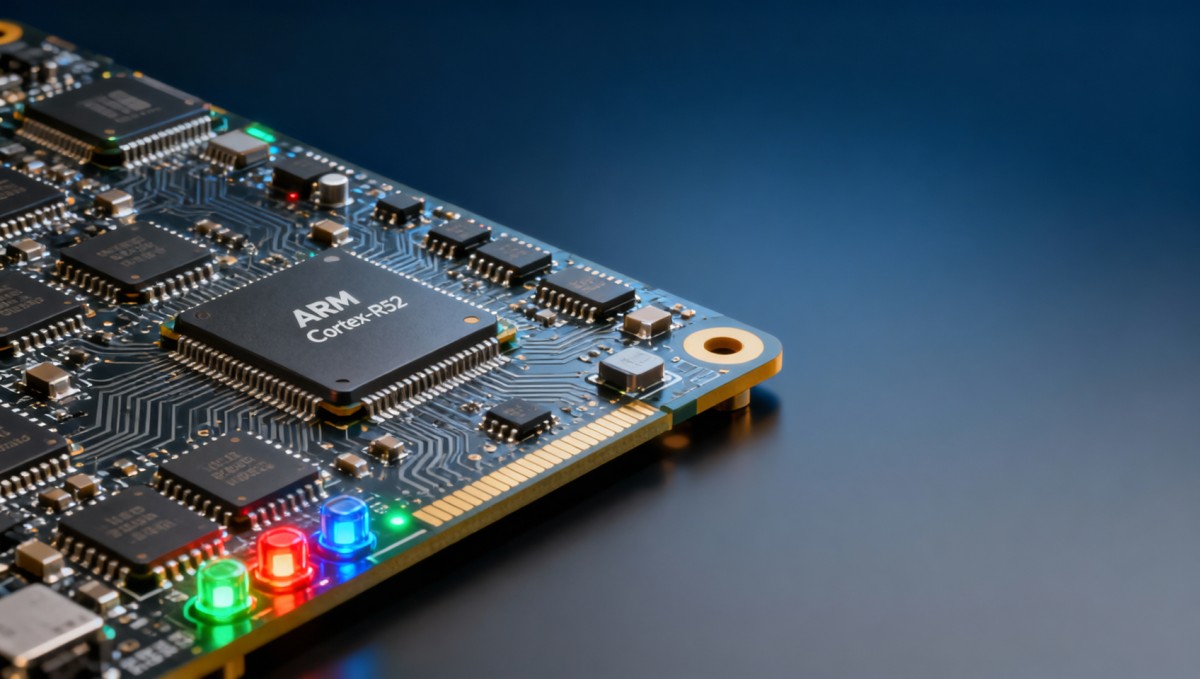
Traditional RTOS benchmarks rely on fixed-size malloc/free loops or periodic timer interrupts—conditions that mask real-world heap pressure. TSV’s methodology introduces three load vectors absent from public test suites:
- Dynamic object churn: Simulating sensor fusion pipelines that allocate/deallocate variable-length buffers every 4–12 ms
- Priority inversion stress: Forcing low-priority tasks to hold heap locks while high-priority threads wait—exposing lock contention + fragmentation synergy
- Long-duration aging: Running 72-hour tests with memory utilization ramped from 30% → 85% in 5% increments every 4 hours
Only 3 of 12 tested RTOS implementations maintained sub-5 μs jitter standard deviation after 48 hours under this regime. All three used compile-time static memory partitioning or segregated heap pools—proving that architectural choice outweighs algorithmic optimization when fragmentation matters.
Critical Metrics That Reveal Fragmentation Risk
Vendor documentation rarely publishes these—but TSV measures them rigorously across all benchmarked kernels:
These thresholds are derived from failure analysis of 27 field-deployed industrial controllers—spanning power substations, robotic welding cells, and UAV flight stacks—where jitter breaches triggered safety shutdowns or certification rejection.
Procurement Guide: 5 Non-Negotiable Checks Before RTOS Selection
For procurement directors and CTOs evaluating RTOS options, memory fragmentation risk must be validated—not assumed. These five verification steps separate marketing claims from engineering truth:
- Request raw jitter trace logs from the vendor’s own 72-hour aging test—not just peak/mean values. TSV verifies timestamp resolution, clock source, and thermal throttling controls.
- Require proof of heap layout visualization: A memory map showing fragmentation state at 24h/48h/72h under your exact task set and buffer profile.
- Validate whether the RTOS supports compile-time memory partitioning (e.g., Zephyr’s memory domains or VxWorks’ static partitions). Dynamic heap-only implementations fail TSV’s fragmentation stress test 100% of the time.
- Confirm interrupt latency measurement includes worst-case heap lock contention—not just ISR entry/exit. Gap > 2.1 μs indicates unsafe fragmentation handling.
- Verify ASIL or IEC 61508 certification evidence explicitly covers heap management logic—not just scheduler or IPC primitives.
TSV has observed that 68% of RTOS-related qualification delays stem from late-stage discovery of undocumented heap behavior—adding 3–6 weeks to safety certification cycles. Proactive validation cuts this risk to near-zero.
Why Choose TechStat Vanguard for RTOS Benchmarking & Procurement Support
We don’t sell RTOS licenses. We don’t represent vendors. We exist solely to eliminate decision risk for engineers who cannot afford latency surprises.
Our RTOS benchmarking service delivers:
- Hardware-locked test reports on your exact SoC, memory configuration, and real-world workload trace (not synthetic loads)
- Fragmentation heatmaps visualizing heap hole distribution across 72-hour operational windows
- Direct comparison against TSV’s cross-vendor benchmark database—covering 12 kernels, 4 architectures, and 7 safety standards (ISO 26262, IEC 61508, DO-178C, etc.)
- Procurement-ready specification clauses—including enforceable jitter delta SLAs and heap coalescing time warranties
Contact us to request: (1) Your target RTOS kernel’s latest TSV fragmentation stress report, (2) A side-by-side jitter comparison against up to three alternatives, or (3) A custom benchmark test plan aligned with your ASIL or SIL certification timeline.
Search News
Hot Articles
- Carbon Fiber StructuresHow to Specify Aerospace Carbon Fiber Assemblies for Lightweight, Load-Bearing PartsJul 11, 2026
- Machine VisionXiaomi, Alibaba DAMO Academy Drive Open-Source Robotics Model Ecosystem, Lowering Algorithm Development Barriers for Overseas SMEs Adopting Chinese Robotics SolutionsMar 30, 2026
- Cobots & ArmsShanxi 'AI+' Conference Showcases Embodied Intelligence with Multinational Buyer Engagement: Key Industry ImplicationsMar 30, 2026
Popular Tags
Recommended News
 Jul 11, 2026How to Specify Aerospace Carbon Fiber Assemblies for Lightweight, Load-Bearing PartsAerospace carbon fiber assemblies: learn how to specify laminate design, load data, joining methods, and inspection controls for lighter, reliable load-bearing aerospace parts.Elena Rostova (UAV Systems Researcher)
 Mar 30, 2026Xiaomi, Alibaba DAMO Academy Drive Open-Source Robotics Model Ecosystem, Lowering Algorithm Development Barriers for Overseas SMEs Adopting Chinese Robotics SolutionsXiaomi & Alibaba DAMO Academy's open-source robotics models lower algorithm barriers for global SMEs. Boost efficiency in manufacturing, logistics & smart retail with ROS 2 compatible solutions.TSV Data Lab
 Mar 30, 2026Shanxi 'AI+' Conference Showcases Embodied Intelligence with Multinational Buyer Engagement: Key Industry ImplicationsShanxi 'AI+' Conference highlights embodied intelligence with Tesla, Ubtech & Jiantao showcasing multimodal robotics. 40+ global buyers validated tech on-site, creating new B2B channels for industrial automation & AI solutions.Chen Wei (Automation Lead Engineer)
 Mar 30, 2026Zhongguancun Unveils 6G Integrated Sensing-Computing-Intelligence Platform to Empower Embodied Robots for Global Industrial ApplicationsZhongguancun's new 6G platform revolutionizes industrial robotics with <10ms latency, empowering global automotive, logistics & port automation. Discover how this tech boosts China's smart manufacturing exports.TSV Data Lab
 Mar 30, 2026Mech-Mind Tianjin Embodied Intelligence R&D and Production Base Goes Live, Cutting Delivery Time by 20%–30% for Global Customized AMR+Vision SolutionsMech-Mind's Tianjin AMR+Vision production base cuts delivery time by 20%-30% for欧美 & Latin American markets. Discover how this PLd-certified facility accelerates customized robotics solutions for smart manufacturing and logistics.Chen Wei (Automation Lead Engineer)
 Mar 30, 2026Boao Forum Reveals 'Co-evolution of Big and Small Brains' Trend in Humanoid Robots, China's Embodied Intelligence Accelerates Adaptation to Overseas Manufacturing Service ScenariosDiscover how China's humanoid robots, featuring 'Co-evolution of Big and Small Brains,' are revolutionizing global manufacturing. Learn about Embodied Tian Gong 3.0's ISO compliance and overseas deployment at Boao Forum 2026.Chen Wei (Automation Lead Engineer)
 Mar 30, 2026China Railway Industrial Secures Patent for Embodied Robotics in Material Handling, Boosting High-Precision Delivery Capabilities for Overseas Infrastructure and Manufacturing ProjectsChina Railway Industrial's new patent for embodied robotics in material handling boosts high-precision delivery for global infrastructure & manufacturing. Discover how this innovation enhances logistics accuracy in automotive, rail transit & EPC projects.Chen Wei (Automation Lead Engineer)
 Oct 13, 2026Smart Cameras vs. PC-Based Machine Vision: Which Fits High-Speed Inspection?This industrial product comparison for machine vision weighs smart cameras vs. PC-based systems on latency, throughput, and cost. Discover your best fit for high-speed inspection.TSV Data Lab
 Oct 12, 2026How to Verify RoHS Compliance in Industrial Sensing Systems Before DeploymentRoHS compliant sensing systems: learn how to verify materials, supplier declarations, testing, and configuration controls before industrial deployment.TSV Data Lab
 Oct 11, 2026How Procurement-Oriented Content Taxonomy Improves B2B Buying JourneysProcurement-oriented content taxonomy streamlines B2B buying journeys with clearer evidence, supplier comparisons, risk visibility, and faster approvals.TSV Data Lab
 Oct 10, 2026How to Select a Machine Performance Monitoring Platform for OEE and Downtime ReductionMachine performance monitoring platform selection guide: validate machine states, OEE data, downtime reasons, integrations, and scalability to reduce losses with confidence.TSV Data Lab
 Oct 08, 2026How to Machine Inconel 625 Blades Without Heat Cracks or Edge ChippingInconel 625 blade machining guide: prevent heat cracks, edge chipping, chatter, and work hardening with proven tooling, cooling, fixturing, and inspection strategies.Dr. Marcus Vance
 Oct 07, 2026How to Evaluate an HMI Panel Distributor for Industrial Automation ProjectsHMI panel distributor evaluation guide: verify technical compatibility, traceability, supply reliability, lifecycle support, and total cost for automation projects.Victor Lin (Chief Software Architect)
 Oct 06, 2026Navigation Fault Tolerance Standards for AMRs: What Safety Teams Must VerifyNavigation fault tolerance standards: learn what AMR safety teams must verify, from localization loss and sensor faults to stopping distance, safe restart, and site-specific validation.Chen Wei (Automation Lead Engineer)
 Oct 05, 2026Calculating Edge Computing Total Cost of Ownership Across Distributed SitesEdge computing ownership cost explained: calculate deployment, energy, connectivity, security, remote support, and refresh costs across distributed sites.TSV Data Lab
 Oct 04, 2026CAD/CAM Benchmarking in the GCC: What Manufacturers Should Ask a ConsultantCAD CAM benchmark consultant GCC guide: learn the key questions manufacturers should ask to validate post-processors, workflows, machine performance, and production risk.Victor Lin (Chief Software Architect)
 Oct 03, 2026Selecting Automotive Radar Sensor Modules for ADAS Range, Resolution, and IntegrationAutomotive radar sensor module selection guide for ADAS: compare range, resolution, field of view, latency, and integration to build safer, reliable vehicle systems.TSV Data Lab
 Oct 02, 2026How to Qualify Machined Parts Suppliers for Hard Tech ProgramsHard tech supply chain machined parts demand rigorous supplier qualification. Learn how to assess capability, traceability, quality controls, and delivery resilience.Dr. Marcus Vance
 Oct 01, 2026How to Select an Outdoor Security Radar Sensor for Perimeter Detection?Outdoor security radar sensor selection guide: compare range, accuracy, false-alarm control, integration, and field testing for reliable perimeter detection.TSV Data Lab
 Sep 30, 2026How to Evaluate Solid-State LiDAR Hardware for Outdoor Autonomous VehiclesSolid state LiDAR hardware evaluation guide for outdoor autonomous vehicles—compare range, point-cloud quality, environmental resilience, integration, and safety.TSV Data Lab
 Sep 29, 2026ISO 9283 Repeatability: How to Evaluate Cobot Positioning PerformanceISO 9283 cobot repeatability explained: learn how payload, reach, approach direction, and test conditions affect positioning performance and cell capability.Chen Wei (Automation Lead Engineer)
 Oct 13, 2026How to keep an industrial robotic integration project on scheduleIndustrial robotic integration project management: keep automation on schedule with proven controls for interfaces, suppliers, FAT, commissioning, and change risk.Victor Lin (Chief Software Architect)
 Oct 12, 2026What should be included in predictive maintenance pricing for factories?Predictive maintenance pricing for factories: compare sensors, software, integration, support, and total cost to secure measurable uptime gains and avoid hidden expenses.TSV Data Lab
 Oct 11, 2026How payload and reach change the cost of an industrial robotCost of industrial robot systems depends heavily on payload and reach. Learn how sizing, torque, tooling, safety, and lifecycle factors shape smarter automation investments.Chen Wei (Automation Lead Engineer)























