
Packaging machine PLC control problems that start with timing
Publication Date
author
When packaging line faults seem random, the root cause often starts with timing—scan cycles, sensor delays, servo response, and PLC task conflicts. This guide explains how plc control for packaging machinery breaks down under real production conditions, and how data-driven diagnostics help operators, buyers, and decision-makers isolate issues faster, reduce downtime, and restore stable, repeatable machine performance.
Why timing is the hidden starting point in packaging machine PLC control problems
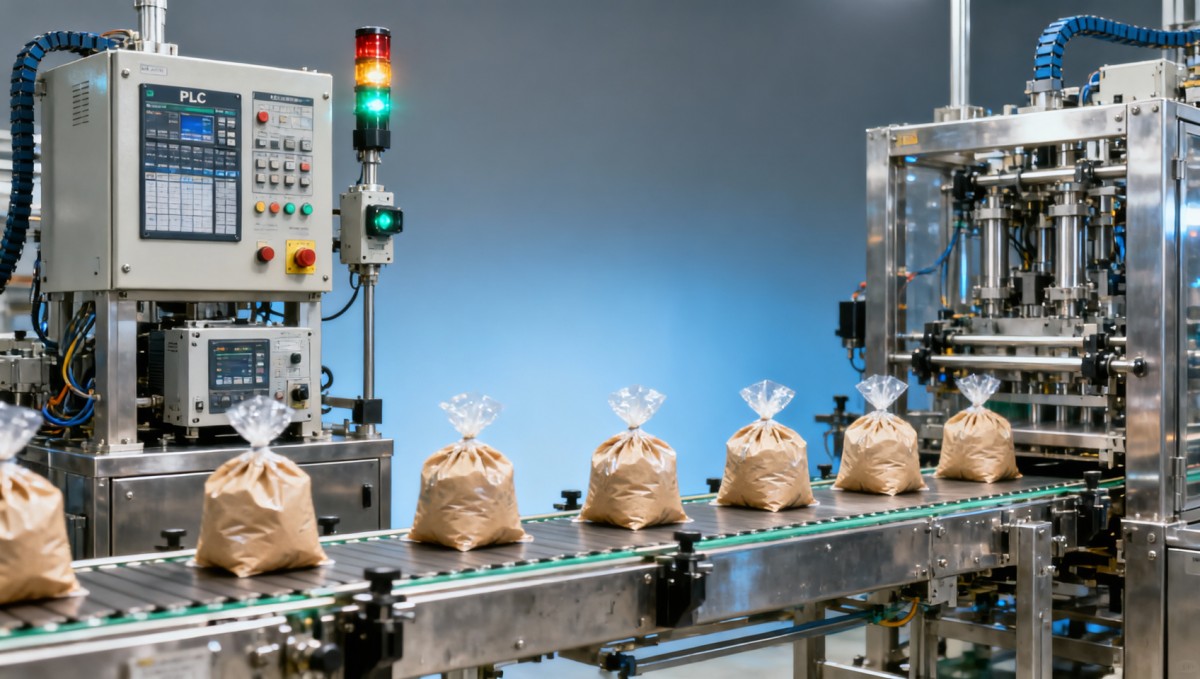
In packaging equipment, timing errors rarely announce themselves as “timing errors.” They appear as missed seals, unstable cut length, late label placement, product jams, false rejects, or intermittent servo alarms. In many lines, the mechanical assembly is blamed first, yet the real instability begins in the control layer where PLC scan time, input filtering, actuator latency, and network update intervals no longer match the physical speed of the machine.
This matters across the broader industrial landscape because packaging machinery often combines motion control, sensors, HMIs, drives, pneumatics, safety circuits, and upstream or downstream line synchronization. A problem that lasts only 20–80 ms can still create visible scrap when a wrapper, cartoner, pouch machine, or case packer runs at medium to high throughput. What looks random to an operator is often deterministic when reviewed against sequence timing.
For information researchers and procurement teams, the challenge is that many suppliers describe control systems in broad terms but do not clarify task structure, scan performance, timestamping capability, or how the machine behaves under speed changes. TechStat Vanguard approaches the topic from an engineering-first standpoint: parameters, event ordering, and tolerance windows matter more than promotional language.
A practical diagnostic baseline starts with 4 timing layers: input detection, PLC logic execution, command transmission, and actuator response. If any one layer drifts beyond the process window, repeatability drops. On fast intermittent machines, even a 10–30 ms mismatch can be enough to cause registration drift. On slower machines, the issue may only surface during acceleration, product changeover, or after several hours of thermal buildup.
What “timing” usually includes in real packaging lines
- PLC scan cycle consistency, including average scan time and peak scan time during alarm handling, recipe switching, or communications bursts.
- Sensor response and debounce settings, especially for photoeyes detecting transparent film, glossy labels, or irregular product gaps.
- Servo and VFD command latency, including network refresh rate, drive processing time, and encoder feedback alignment.
- Task scheduling conflicts between motion, HMI updates, data logging, safety status checks, and external device communications.
The result is simple: packaging machine PLC control problems that start with timing are not niche events. They are common integration faults that sit between mechanics, software, and electrical design. Understanding that intersection is the fastest way to reduce trial-and-error troubleshooting.
Which timing faults create the most downtime on packaging machinery?
Not all timing faults carry the same operational cost. Some generate occasional scrap with little disruption, while others trigger repeated stops, quality complaints, or missed delivery windows. For operators, the key is to distinguish between persistent sequence errors and line-speed-sensitive faults. For buyers and plant managers, the more important question is whether the machine architecture can tolerate normal process variation without losing control stability.
The table below organizes common PLC timing-related failure patterns in packaging systems. It focuses on symptoms, likely control-side causes, and what teams should verify first before replacing mechanical components or expanding maintenance hours.
A useful pattern emerges from these cases: the same symptom can come from different timing layers. That is why replacing a sensor, cylinder, or servo drive without sequence evidence often wastes both maintenance time and procurement budget. Better diagnosis starts with event logging and synchronized timestamp review.
Where timing faults usually originate
In many packaging machine PLC control problems, three origin zones dominate. First is the input side, where photoelectric sensors, encoders, or registration marks are read too late or too aggressively filtered. Second is the logic side, where ladder, structured text, and communication tasks compete for processor time. Third is the output side, where command timing no longer aligns with real actuator dynamics.
Typical source breakdown for engineering review
- Input path: sensor signal quality, edge detection, filter values, encoder integrity, and I/O module refresh behavior.
- Execution path: scan time variability, interrupt use, task priority, HMI polling load, and recipe handling routines.
- Output path: pneumatic valve switching time, drive update period, motor acceleration limits, and mechanical backlash.
In practical terms, a line that appears mechanically unstable may actually be control-stable only within a narrow operating range. If that range is 40–70% of design speed, then the machine is not robust enough for normal production variability. This is a key buying and acceptance issue, not just a maintenance concern.
How operators and engineers should diagnose PLC timing problems step by step
A disciplined workflow shortens downtime. Instead of changing multiple variables at once, teams should capture sequence evidence in stages. In most facilities, a 3-stage approach works well: stabilize the process, collect timing data, and isolate the mismatch point. This can often be done within one production shift if the machine already supports trend logs, drive diagnostics, and fault history export.
The first stage is operating condition control. Verify product dimensions, material consistency, air pressure stability, and temperature-sensitive sealing conditions before looking deeply at the PLC. If film tension or carton quality is fluctuating, those process variables can mask control faults. A sound review window is usually 20–40 minutes at one stable speed, followed by repeat checks at a second speed band.
The second stage is event correlation. Operators should identify exactly which signal should occur first, second, and third. Examples include product detect, encoder position capture, seal jaw close command, or reject gate fire. Once the intended order is clear, teams can compare actual timestamps and determine whether the problem is a fixed offset, random jitter, or speed-linked drift.
The third stage is controlled adjustment. Change only one variable at a time: sensor filter by a small increment, task priority for one routine, or output delay for one station. If two or three changes are applied together, the root cause may disappear temporarily without being understood. That raises the risk of recurring faults during the next recipe change or maintenance cycle.
A practical field checklist for packaging machine troubleshooting
- Record average and peak PLC scan time during idle, normal run, and high-load communication periods.
- Check whether input filter settings match signal duration; short pulses can be missed when filters exceed the real pulse width.
- Validate drive and servo response against commanded motion, not only against alarm status.
- Review networked I/O and motion updates, especially if HMI trends, vision systems, or MES data traffic share the same communications path.
- Compare line performance before and after changeover to identify recipe-specific timing values that were not re-scaled.
For decision-makers, the most valuable output from this process is not only a repaired machine. It is a repeatable diagnostic method. Plants that define 5–6 mandatory timing checks during FAT, SAT, and post-changeover verification usually reduce ambiguity later in the machine lifecycle.
Recommended timing review points by subsystem
Because packaging equipment integrates several technologies, subsystem review prevents blind spots. The table below can be used by maintenance, engineering, and procurement teams when evaluating existing lines or comparing new machine offers.
This type of structured review supports faster fault isolation and stronger technical discussions with machine builders. It also creates a better basis for future retrofit decisions, especially when plants consider adding vision inspection, traceability, or remote diagnostics.
What buyers should evaluate before purchasing or retrofitting a packaging machine control system
For procurement teams, packaging machine PLC control problems are not only a maintenance risk. They are a sourcing risk. A machine may meet nominal speed targets in a brochure yet still perform poorly in real production if timing architecture is underspecified. The buying question should therefore move from “What is the rated speed?” to “How does the control system hold synchronization across product variation, speed ramps, and peripheral integration?”
A robust specification should include at least 5 control-side checkpoints: CPU loading under normal operation, task priority structure, sensor and registration strategy, motion synchronization method, and data availability for diagnostics. If remote support or plant-level analytics are expected, ask whether event logs can be exported with timestamps rather than simple alarm codes only.
Retrofit decisions also require caution. Replacing the PLC without reviewing I/O update behavior, drive compatibility, and existing machine sequence logic can shift the fault rather than remove it. In some cases, a targeted upgrade of sensors, encoder interface, or drive communications delivers better value than a full control overhaul. In others, legacy architecture becomes the bottleneck and phased replacement is more economical over 12–24 months.
TSV’s engineering perspective is especially relevant here: hard-tech decisions should be based on verifiable parameters, not vague claims. For buyers, that means asking for acceptance criteria tied to repeatability, fault capture, and recovery behavior after stop-start cycles. Those criteria reduce later disputes over whether the machine is truly fit for the intended throughput and product mix.
Procurement questions that expose timing risk early
- What is the normal PLC scan range during production, and what peak scan condition has been tested during alarm, logging, and communication load?
- How are registration, encoder, or product-detect signals timestamped and processed at higher line speeds?
- Can the supplier demonstrate stable performance across at least 3 operating bands: low speed, nominal speed, and maximum qualified speed?
- Which diagnostic data can be exported locally or remotely for root cause analysis?
- What changes are required when adding vision systems, checkweighers, robots, or upstream/downstream machine synchronization?
Control architecture comparison for selection
The best choice depends on machine speed, product variability, and integration depth. The matrix below helps compare common approaches without reducing the decision to brand preference alone.
This comparison shows why selection should be tied to process demands rather than a generic “automation upgrade.” A line producing multiple SKU sizes, rapid changeovers, and frequent start-stop cycles usually benefits from stronger motion synchronization and better event visibility than a simple fixed-format line.
Common misconceptions, compliance considerations, and what stable performance really looks like
One common misconception is that a faster PLC automatically solves packaging machine control problems. In reality, processor speed helps only when software structure, I/O design, and actuator behavior are aligned. Another misconception is that if a machine passes a short demo run, the control system is proven. Many timing faults emerge only after 2–8 hours of production, after several changeovers, or when the line is connected to external devices and plant systems.
A second misconception is that intermittent faults cannot be measured. They can, but only if the machine captures the right variables with useful resolution. Timestamped events, alarm history with sequence context, and trend logs across different speed bands create evidence. Without that, teams fall back on guesswork, and repeated downtime becomes normalized as “just how the machine runs.”
Compliance also matters. While exact requirements vary by region and application, packaging systems commonly need proper electrical design, machine safety integration, and documented change control. When PLC timing issues interact with safety logic, stop categories, or guarded access routines, troubleshooting must respect applicable machine safety practices rather than bypassing interlocks for convenience.
Stable performance is not the absence of alarms for 10 minutes. It is repeatable behavior across normal operating variation: multiple products, start-stop recovery, line speed changes, and routine maintenance cycles. For many buyers, that means defining acceptance over several runs and at more than one operating point, not relying on a single best-case demonstration.
FAQ for researchers, operators, and procurement teams
How do I know whether the issue is timing or mechanics?
Start by checking whether the fault changes with speed, recipe, or communication load. If the symptom becomes worse at higher throughput, during acceleration, or after HMI-heavy operations, timing is a strong suspect. If the error remains fixed regardless of control state, then mechanical wear, alignment, or backlash may be more likely. In practice, many faults involve both, but timing often explains why the same machine behaves differently across shifts.
What is a reasonable diagnostic time frame before escalating to a retrofit?
For a machine with accessible trends and fault logs, an initial timing assessment can often be completed in 1 shift. A more reliable root cause exercise may take 2–5 production days if multiple products or speed bands must be reviewed. Retrofit discussion becomes more justified when the architecture lacks visibility, spare parts are constrained, or the process window is too narrow for normal production variation.
Which packaging lines are most sensitive to timing issues?
Lines with registration control, intermittent motion, multiple synchronized axes, or frequent handoff between stations are especially sensitive. Flow wrappers, vertical form-fill-seal systems, cartoners, labelers, and integrated end-of-line cells often show timing stress early. Sensitivity increases when transparent materials, reflective surfaces, or irregular product spacing reduce sensor reliability.
What should buyers request from suppliers before acceptance?
Request a test plan covering at least 3 conditions: lower speed, nominal speed, and the highest qualified operating speed for the actual product family. Ask for fault logging visibility, changeover validation steps, and recovery performance after stop-start events. If the machine will integrate with vision, MES, robots, or checkweighers, require demonstration under connected conditions rather than standalone mode only.
Why work with a data-driven engineering partner on packaging control decisions
When packaging machine PLC control problems start with timing, the cost of vague answers is high. Operators lose production time, maintenance teams chase intermittent faults, procurement risks buying incomplete solutions, and decision-makers inherit unstable throughput forecasts. What changes the outcome is disciplined technical interpretation: separating symptom from cause, and marketing claims from measurable control behavior.
TechStat Vanguard is built for that kind of work. TSV’s position is not to amplify generic supplier language but to filter it through engineering evidence. For automation, that means examining control repeatability, motion response, communication behavior, and real-world operating windows. Parameters do not lie, and tolerances still determine whether a packaging line performs consistently after installation.
If your team is comparing packaging machinery, investigating recurring PLC timing faults, or planning a retrofit, the most useful next step is a structured technical review. That can include parameter confirmation, control architecture comparison, line-speed suitability, diagnostic data requirements, delivery-cycle assumptions, and changeover risk mapping for your product range.
Contact TSV to discuss timing-related fault analysis, machine selection criteria, retrofit evaluation, diagnostic checkpoint design, acceptance test structure, or quotation-stage technical clarification. These conversations are most valuable when they focus on scan behavior, synchronization method, response windows, integration constraints, and the exact operating conditions your packaging line must handle.
Search News
Hot Articles
- Carbon Fiber StructuresHow to Specify Aerospace Carbon Fiber Assemblies for Lightweight, Load-Bearing PartsJul 11, 2026
- Machine VisionXiaomi, Alibaba DAMO Academy Drive Open-Source Robotics Model Ecosystem, Lowering Algorithm Development Barriers for Overseas SMEs Adopting Chinese Robotics SolutionsMar 30, 2026
- Cobots & ArmsShanxi 'AI+' Conference Showcases Embodied Intelligence with Multinational Buyer Engagement: Key Industry ImplicationsMar 30, 2026
Popular Tags
Recommended News
 Jul 11, 2026How to Specify Aerospace Carbon Fiber Assemblies for Lightweight, Load-Bearing PartsAerospace carbon fiber assemblies: learn how to specify laminate design, load data, joining methods, and inspection controls for lighter, reliable load-bearing aerospace parts.Elena Rostova (UAV Systems Researcher)
 Mar 30, 2026Xiaomi, Alibaba DAMO Academy Drive Open-Source Robotics Model Ecosystem, Lowering Algorithm Development Barriers for Overseas SMEs Adopting Chinese Robotics SolutionsXiaomi & Alibaba DAMO Academy's open-source robotics models lower algorithm barriers for global SMEs. Boost efficiency in manufacturing, logistics & smart retail with ROS 2 compatible solutions.TSV Data Lab
 Mar 30, 2026Shanxi 'AI+' Conference Showcases Embodied Intelligence with Multinational Buyer Engagement: Key Industry ImplicationsShanxi 'AI+' Conference highlights embodied intelligence with Tesla, Ubtech & Jiantao showcasing multimodal robotics. 40+ global buyers validated tech on-site, creating new B2B channels for industrial automation & AI solutions.Chen Wei (Automation Lead Engineer)
 Mar 30, 2026Zhongguancun Unveils 6G Integrated Sensing-Computing-Intelligence Platform to Empower Embodied Robots for Global Industrial ApplicationsZhongguancun's new 6G platform revolutionizes industrial robotics with <10ms latency, empowering global automotive, logistics & port automation. Discover how this tech boosts China's smart manufacturing exports.TSV Data Lab
 Mar 30, 2026Mech-Mind Tianjin Embodied Intelligence R&D and Production Base Goes Live, Cutting Delivery Time by 20%–30% for Global Customized AMR+Vision SolutionsMech-Mind's Tianjin AMR+Vision production base cuts delivery time by 20%-30% for欧美 & Latin American markets. Discover how this PLd-certified facility accelerates customized robotics solutions for smart manufacturing and logistics.Chen Wei (Automation Lead Engineer)
 Mar 30, 2026Boao Forum Reveals 'Co-evolution of Big and Small Brains' Trend in Humanoid Robots, China's Embodied Intelligence Accelerates Adaptation to Overseas Manufacturing Service ScenariosDiscover how China's humanoid robots, featuring 'Co-evolution of Big and Small Brains,' are revolutionizing global manufacturing. Learn about Embodied Tian Gong 3.0's ISO compliance and overseas deployment at Boao Forum 2026.Chen Wei (Automation Lead Engineer)
 Mar 30, 2026China Railway Industrial Secures Patent for Embodied Robotics in Material Handling, Boosting High-Precision Delivery Capabilities for Overseas Infrastructure and Manufacturing ProjectsChina Railway Industrial's new patent for embodied robotics in material handling boosts high-precision delivery for global infrastructure & manufacturing. Discover how this innovation enhances logistics accuracy in automotive, rail transit & EPC projects.Chen Wei (Automation Lead Engineer)
 Oct 14, 2026Drone Frame Composites: Carbon Fiber vs. Fiberglass for Weight and StiffnessExplore drone structural materials composites: compare carbon fiber and fiberglass for weight, stiffness, cost, and antenna compatibility. Find the right material for your drone frame.Elena Rostova (UAV Systems Researcher)
 Oct 13, 2026Smart Cameras vs. PC-Based Machine Vision: Which Fits High-Speed Inspection?This industrial product comparison for machine vision weighs smart cameras vs. PC-based systems on latency, throughput, and cost. Discover your best fit for high-speed inspection.TSV Data Lab
 Oct 12, 2026How to Verify RoHS Compliance in Industrial Sensing Systems Before DeploymentRoHS compliant sensing systems: learn how to verify materials, supplier declarations, testing, and configuration controls before industrial deployment.TSV Data Lab
 Oct 11, 2026How Procurement-Oriented Content Taxonomy Improves B2B Buying JourneysProcurement-oriented content taxonomy streamlines B2B buying journeys with clearer evidence, supplier comparisons, risk visibility, and faster approvals.TSV Data Lab
 Oct 10, 2026How to Select a Machine Performance Monitoring Platform for OEE and Downtime ReductionMachine performance monitoring platform selection guide: validate machine states, OEE data, downtime reasons, integrations, and scalability to reduce losses with confidence.TSV Data Lab
 Oct 08, 2026How to Machine Inconel 625 Blades Without Heat Cracks or Edge ChippingInconel 625 blade machining guide: prevent heat cracks, edge chipping, chatter, and work hardening with proven tooling, cooling, fixturing, and inspection strategies.Dr. Marcus Vance
 Oct 07, 2026How to Evaluate an HMI Panel Distributor for Industrial Automation ProjectsHMI panel distributor evaluation guide: verify technical compatibility, traceability, supply reliability, lifecycle support, and total cost for automation projects.Victor Lin (Chief Software Architect)
 Oct 06, 2026Navigation Fault Tolerance Standards for AMRs: What Safety Teams Must VerifyNavigation fault tolerance standards: learn what AMR safety teams must verify, from localization loss and sensor faults to stopping distance, safe restart, and site-specific validation.Chen Wei (Automation Lead Engineer)
 Oct 05, 2026Calculating Edge Computing Total Cost of Ownership Across Distributed SitesEdge computing ownership cost explained: calculate deployment, energy, connectivity, security, remote support, and refresh costs across distributed sites.TSV Data Lab
 Oct 04, 2026CAD/CAM Benchmarking in the GCC: What Manufacturers Should Ask a ConsultantCAD CAM benchmark consultant GCC guide: learn the key questions manufacturers should ask to validate post-processors, workflows, machine performance, and production risk.Victor Lin (Chief Software Architect)
 Oct 03, 2026Selecting Automotive Radar Sensor Modules for ADAS Range, Resolution, and IntegrationAutomotive radar sensor module selection guide for ADAS: compare range, resolution, field of view, latency, and integration to build safer, reliable vehicle systems.TSV Data Lab
 Oct 02, 2026How to Qualify Machined Parts Suppliers for Hard Tech ProgramsHard tech supply chain machined parts demand rigorous supplier qualification. Learn how to assess capability, traceability, quality controls, and delivery resilience.Dr. Marcus Vance
 Oct 01, 2026How to Select an Outdoor Security Radar Sensor for Perimeter Detection?Outdoor security radar sensor selection guide: compare range, accuracy, false-alarm control, integration, and field testing for reliable perimeter detection.TSV Data Lab
 Sep 30, 2026How to Evaluate Solid-State LiDAR Hardware for Outdoor Autonomous VehiclesSolid state LiDAR hardware evaluation guide for outdoor autonomous vehicles—compare range, point-cloud quality, environmental resilience, integration, and safety.TSV Data Lab
 Sep 29, 2026ISO 9283 Repeatability: How to Evaluate Cobot Positioning PerformanceISO 9283 cobot repeatability explained: learn how payload, reach, approach direction, and test conditions affect positioning performance and cell capability.Chen Wei (Automation Lead Engineer)
 Oct 14, 2026How tight can micro machining aerospace tolerances be in production?Micro machining aerospace tolerances can reach low-micron levels in production. Learn what controls repeatability, inspection confidence, and flight-critical quality.Dr. Marcus Vance
 Oct 13, 2026How to keep an industrial robotic integration project on scheduleIndustrial robotic integration project management: keep automation on schedule with proven controls for interfaces, suppliers, FAT, commissioning, and change risk.Victor Lin (Chief Software Architect)























