
IP69K HMI screen touch sensitivity after washdown cycles
Publication Date
author
After repeated washdown cycles, does an IP69K HMI screen touch sensitivity remain stable enough for real-world industrial use? This article examines the engineering factors behind ip69k hmi screen touch sensitivity, from sealing structures and glove operation to moisture interference, calibration drift, and durability under harsh cleaning routines—helping operators, buyers, and decision-makers assess performance with data-driven clarity.
In food processing, pharmaceuticals, dairy, chemical packaging, and outdoor automation, the answer is rarely a simple yes or no. Touch performance after washdown depends on the interaction between the front glass stack-up, controller tuning, enclosure compression, bonding quality, and the cleaning profile itself. A panel may pass ingress testing yet still suffer reduced responsiveness after 500 to 2,000 cleaning cycles.
For operators, the issue shows up as missed inputs, delayed swipes, or unstable glove operation. For procurement teams, it affects maintenance cost, replacement frequency, and line downtime. For engineering managers and plant leaders, it becomes a reliability question: whether the HMI can maintain usable touch sensitivity over 3 to 5 years in a high-pressure sanitation environment.
Why IP69K Does Not Automatically Guarantee Stable Touch Performance
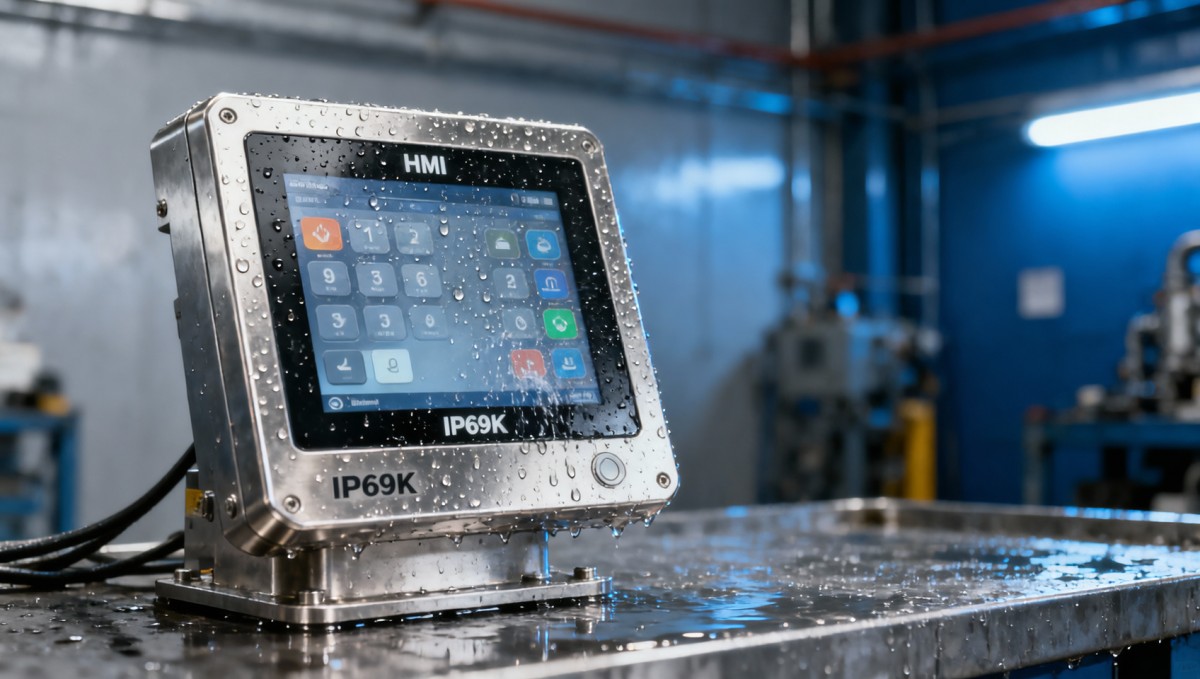
IP69K is a protection rating focused on resistance to high-pressure, high-temperature washdown. In common test practice, water jets may reach 80°C, with pressures around 80 to 100 bar, delivered from multiple angles at close range. That rating confirms enclosure sealing performance under defined conditions, but it does not independently verify long-term touch accuracy, glove sensitivity, or post-wash input stability.
This distinction matters because an HMI screen can remain sealed while its touch layer gradually becomes less predictable. A projected capacitive touch system, for example, may be influenced by moisture films, grounding changes, laminated stack stress, and controller recalibration drift. In real plants, washdown is not a one-time certification event. It is a repeated maintenance routine, often 1 to 3 times per shift, 5 to 7 days per week.
A practical assessment therefore needs to separate three variables: ingress resistance, immediate touch response after cleaning, and touch performance retention after repeated cycles. Buyers who only request an IP69K statement may miss the more important question: how touch sensitivity behaves after 6 months, 12 months, or 24 months of sanitation exposure.
The table below shows why procurement and engineering teams should evaluate IP69K HMI screen touch sensitivity as a broader performance topic rather than as a single certification checkbox.
The key conclusion is straightforward: IP69K is necessary in many washdown environments, but it is not sufficient as the only touch-performance criterion. Engineering teams should ask for both sealing evidence and functional retention data tied to repeated cleaning exposure.
The most common confusion in vendor comparisons
A frequent sourcing mistake is to compare an HMI only by screen size, brightness, and ingress rating. In practice, plants with wet gloves, stainless control stations, and aggressive sanitation routines often care more about post-wash actuation consistency than about peak display specifications. A 12-inch panel that remains stable after 1,000 washdowns is usually a better operational choice than a higher-resolution unit that becomes erratic after 4 months.
The Engineering Factors That Change Touch Sensitivity After Washdown
Several design layers determine whether ip69k hmi screen touch sensitivity remains usable after harsh cleaning. The first is the front-end stack: cover glass thickness, surface treatment, optical bonding, and gasket compression. Thicker glass, often in the 2 mm to 4 mm range, can improve impact resistance and washdown durability, but it may require more careful controller tuning to preserve accurate touch response, especially with nitrile or neoprene gloves.
The second factor is moisture behavior. A residual water film or cleaning chemical residue can change capacitance patterns across the touch surface. Well-designed systems use firmware filtering, palm rejection logic, and adaptive thresholds to distinguish a real finger input from conductive moisture. Poorly tuned systems may register ghost touches, need repeated presses, or fail near the screen edge after cleaning.
The third factor is mechanical stress from thermal cycling and spray force. Repeated transitions from ambient temperatures to hot washdown can slowly affect adhesive layers, front seal compression, or conductive sensor alignment. Even small dimensional changes matter. A drift of a fraction of a millimeter in laminated geometry can alter local sensitivity, particularly in corner zones and around bezel transitions.
The fourth factor is electrical integration. Grounding quality, cable routing, power supply noise, and nearby variable frequency drives can all reduce touch stability. In wet industrial cells, poor grounding can make a good panel feel unreliable. That is why touch sensitivity should be reviewed as part of the full HMI installation, not only as a standalone display specification.
High-impact variables buyers should request
- Touch technology type, such as projected capacitive or resistive, and whether it supports glove mode.
- Cover lens thickness range, for example 2 mm, 3 mm, or 4 mm glass, and its effect on sensitivity tuning.
- Post-wash response metrics, including false-touch rate, missed-touch rate, and edge-zone accuracy.
- Operating temperature and cleaning temperature exposure, such as 0°C to 50°C in operation and up to 80°C during washdown.
- Recommended detergent compatibility and any restrictions on caustic or chlorinated chemicals.
Glove operation is not a minor feature
In many hygienic production lines, glove use is mandatory for 8 to 12 hours per shift. That means glove touch performance is not an optional convenience. It is a core usability requirement. A panel that works with bare fingers but struggles with 0.2 mm to 1.5 mm glove material can create routine operator frustration and input delay. In batch processes or cleaning validation screens, even a 1 to 2 second interaction delay can affect throughput and traceability.
How to Test IP69K HMI Screen Touch Sensitivity for Real Plant Conditions
A useful evaluation protocol should simulate the actual washdown pattern of the plant. That means matching water temperature, spray angle, nozzle distance, detergent exposure, and drying interval as closely as possible. For many facilities, a basic lab touch demo is insufficient. A more decision-ready method uses at least 3 stages: baseline test, repeated washdown endurance, and post-cycle functional verification.
Baseline testing should measure touch activation consistency at the center, edges, and corners of the screen. A common practical grid is 9 to 25 points across the display. Operators should test with the gloves they actually wear, not generic gloves from a demo kit. Procurement teams should also record response behavior with both dry and wet surfaces, since many cleaning routines leave transient moisture for several minutes.
Endurance testing should include a meaningful cycle count. For a preliminary screen, 100 to 300 washdown cycles may reveal early weaknesses. For purchase validation, 500 to 1,000 cycles gives a more useful view of durability, particularly for plants running 2 sanitation events per day. If the expected service life is 3 years, the total field exposure can easily exceed 2,000 cycles.
After cycling, review not only whether the HMI still works, but how well it works. Measure missed touches, repeated taps needed for response, edge accuracy drift, and any increase in ghost input frequency. These indicators are often more operationally relevant than a simple pass or fail statement.
A practical validation framework
The following table summarizes a field-oriented approach that can be used by engineering teams, machine builders, and plant buyers when comparing rugged HMI options.
The main takeaway is that repeated-use evaluation should reflect real maintenance behavior. A panel that passes a one-day demo may still underperform after months of thermal, chemical, and mechanical stress. Testing against the plant’s own sanitation profile gives procurement decisions a much stronger technical basis.
Checklist for factory acceptance or pilot validation
- Confirm touch response with the actual glove types used on site.
- Verify stable operation within 5 to 10 minutes after washdown, not only after full drying.
- Check corner and edge actuation on key buttons, alarms, and recipe screens.
- Review whether controller retuning or recalibration is required after repeated cycles.
- Document detergent type, concentration, water temperature, and spray distance used in testing.
Procurement Criteria: What Buyers, Operators, and Decision-Makers Should Compare
When selecting an HMI for wet industrial environments, buyers should compare whole-life usability rather than purchase price alone. A lower-cost unit may become expensive if it causes 15 to 30 minutes of downtime per week, requires more frequent operator retries, or needs replacement within 12 to 18 months. In high-throughput lines, these indirect costs can outweigh initial savings quickly.
Operators usually focus on practical issues: whether the screen recognizes touches through wet gloves, whether buttons remain accurate after sanitation, and whether the display can be cleaned without creating false input. Maintenance teams focus on seal durability, spare parts access, and whether field recalibration is possible. Management teams tend to prioritize lifecycle risk, support responsiveness, and qualification time.
For that reason, supplier comparison should include both technical and operational dimensions. Ask for details on expected washdown frequency, supported detergent range, recommended installation grounding, and any measured change in touch behavior after endurance exposure. If a vendor cannot describe these points clearly, the risk shifts back to the buyer.
The matrix below helps structure a more disciplined sourcing process for ip69k hmi screen touch sensitivity in sanitation-heavy applications.
A disciplined buyer should also distinguish between a clean-room style wipe-down environment and a true high-pressure washdown line. The same HMI will not necessarily perform equally in both. Matching the specification to the sanitation method is often the difference between stable operation and recurring complaints.
Common sourcing mistakes
- Assuming IP69K alone proves long-term touch responsiveness.
- Testing with bare hands instead of site-specific gloves and moisture conditions.
- Ignoring grounding and EMC conditions in stainless or mixed-metal installations.
- Failing to define acceptable missed-touch or ghost-touch thresholds before approval.
FAQ and Practical Recommendations for Long-Term Reliability
Below are several practical questions that often arise when teams evaluate touch stability in harsh cleaning environments. These points help translate engineering concerns into actionable inspection and procurement steps.
How many washdown cycles should be considered enough for evaluation?
For early screening, 100 to 300 cycles can identify obvious weaknesses. For serious procurement review, 500 to 1,000 cycles is more meaningful. If the equipment will face 2 cleanings per day, 6 days per week, annual exposure may exceed 600 cycles. That makes short demo testing a limited predictor of lifecycle behavior.
Is resistive touch better than capacitive touch after washdown?
Not automatically. Resistive systems can be more tolerant of simple glove input, but they may offer lower optical clarity and different durability tradeoffs. Projected capacitive systems often provide better interface responsiveness and multi-touch behavior, but they require stronger engineering around moisture rejection, controller tuning, and grounding. The better choice depends on cleaning method, glove type, and interface complexity.
What are the most useful acceptance criteria?
Plants should define 4 core checks: stable touch within a target recovery window after washdown, acceptable missed-touch rate on critical buttons, no persistent ghost input, and no mandatory recalibration within the planned maintenance interval. Even a simple threshold such as fewer than 1 missed input in 20 critical presses can improve approval clarity.
Can cleaning chemistry affect touch sensitivity?
Yes. Alkaline detergents, foaming agents, sanitizers, and residue-forming chemicals can alter surface conductivity and drying behavior. If a site uses multiple cleaning agents across different shifts, test at least the 2 or 3 most common chemical profiles. Chemical compatibility should be reviewed alongside sealing, not after installation problems appear.
Recommended implementation steps
- Define the real sanitation routine, including water temperature, pressure range, frequency, and chemicals.
- Set measurable touch-performance criteria before vendor comparison.
- Run an on-site or simulated pilot with actual gloves, grounding conditions, and operator workflows.
- Review lifecycle support, replacement lead time, and firmware tuning options before final approval.
For teams that evaluate industrial interfaces through a data-first lens, the central lesson is clear: ip69k hmi screen touch sensitivity should be judged by repeatable functional performance, not by marketing shorthand. When sealing design, touch controller behavior, glove operation, moisture rejection, and maintenance reality are assessed together, buyers gain a far more reliable basis for specification and sourcing.
If your project involves washdown-intensive machinery, hygienic production cells, or rugged outdoor control interfaces, now is the right time to review your HMI criteria in more detail. Contact us to discuss application-specific requirements, compare evaluation methods, or explore a more precise selection framework for long-term touch reliability.
Search News
Hot Articles
- Carbon Fiber StructuresHow to Specify Aerospace Carbon Fiber Assemblies for Lightweight, Load-Bearing PartsJul 11, 2026
- Machine VisionXiaomi, Alibaba DAMO Academy Drive Open-Source Robotics Model Ecosystem, Lowering Algorithm Development Barriers for Overseas SMEs Adopting Chinese Robotics SolutionsMar 30, 2026
- Cobots & ArmsShanxi 'AI+' Conference Showcases Embodied Intelligence with Multinational Buyer Engagement: Key Industry ImplicationsMar 30, 2026
Popular Tags
Recommended News
 Jul 11, 2026How to Specify Aerospace Carbon Fiber Assemblies for Lightweight, Load-Bearing PartsAerospace carbon fiber assemblies: learn how to specify laminate design, load data, joining methods, and inspection controls for lighter, reliable load-bearing aerospace parts.Elena Rostova (UAV Systems Researcher)
 Mar 30, 2026Xiaomi, Alibaba DAMO Academy Drive Open-Source Robotics Model Ecosystem, Lowering Algorithm Development Barriers for Overseas SMEs Adopting Chinese Robotics SolutionsXiaomi & Alibaba DAMO Academy's open-source robotics models lower algorithm barriers for global SMEs. Boost efficiency in manufacturing, logistics & smart retail with ROS 2 compatible solutions.TSV Data Lab
 Mar 30, 2026Shanxi 'AI+' Conference Showcases Embodied Intelligence with Multinational Buyer Engagement: Key Industry ImplicationsShanxi 'AI+' Conference highlights embodied intelligence with Tesla, Ubtech & Jiantao showcasing multimodal robotics. 40+ global buyers validated tech on-site, creating new B2B channels for industrial automation & AI solutions.Chen Wei (Automation Lead Engineer)
 Mar 30, 2026Zhongguancun Unveils 6G Integrated Sensing-Computing-Intelligence Platform to Empower Embodied Robots for Global Industrial ApplicationsZhongguancun's new 6G platform revolutionizes industrial robotics with <10ms latency, empowering global automotive, logistics & port automation. Discover how this tech boosts China's smart manufacturing exports.TSV Data Lab
 Mar 30, 2026Mech-Mind Tianjin Embodied Intelligence R&D and Production Base Goes Live, Cutting Delivery Time by 20%–30% for Global Customized AMR+Vision SolutionsMech-Mind's Tianjin AMR+Vision production base cuts delivery time by 20%-30% for欧美 & Latin American markets. Discover how this PLd-certified facility accelerates customized robotics solutions for smart manufacturing and logistics.Chen Wei (Automation Lead Engineer)
 Mar 30, 2026Boao Forum Reveals 'Co-evolution of Big and Small Brains' Trend in Humanoid Robots, China's Embodied Intelligence Accelerates Adaptation to Overseas Manufacturing Service ScenariosDiscover how China's humanoid robots, featuring 'Co-evolution of Big and Small Brains,' are revolutionizing global manufacturing. Learn about Embodied Tian Gong 3.0's ISO compliance and overseas deployment at Boao Forum 2026.Chen Wei (Automation Lead Engineer)
 Mar 30, 2026China Railway Industrial Secures Patent for Embodied Robotics in Material Handling, Boosting High-Precision Delivery Capabilities for Overseas Infrastructure and Manufacturing ProjectsChina Railway Industrial's new patent for embodied robotics in material handling boosts high-precision delivery for global infrastructure & manufacturing. Discover how this innovation enhances logistics accuracy in automotive, rail transit & EPC projects.Chen Wei (Automation Lead Engineer)
 Oct 16, 2026Choosing a Rugged Edge AI Box Supplier: Thermal Tests and Lifecycle SupportChoose a rugged edge AI box supplier with proven thermal performance and reliable lifecycle support. Discover the tests and commitments to verify before you buy.TSV Data Lab
 Oct 15, 2026R&D Cost Reduction Services: How to Evaluate Fees, Savings, and ROIEvaluate R&D cost reduction services with confidence. Compare fees, verify savings, and calculate ROI without compromising performance. Discover how to choose a provider that delivers real value.Chen Wei (Automation Lead Engineer)
 Oct 16, 2026How Can You Fairly Compare MTBF Across Industrial Servo Motors?Make a fair industrial servo motor MTBF comparison with matched operating profiles, failure criteria, and confidence bounds. Discover how to assess reliability beyond advertised numbers.Chen Wei (Automation Lead Engineer)
 Oct 15, 2026How Should You Compare TechStat Vanguard 5-Axis CNC Tolerances?TechStat Vanguard 5-axis CNC tolerance comparison: learn how to verify part accuracy, assess inspection evidence, and choose suppliers that reliably meet your drawing requirements.Dr. Marcus Vance
 Oct 14, 2026Drone Frame Composites: Carbon Fiber vs. Fiberglass for Weight and StiffnessExplore drone structural materials composites: compare carbon fiber and fiberglass for weight, stiffness, cost, and antenna compatibility. Find the right material for your drone frame.Elena Rostova (UAV Systems Researcher)
 Oct 13, 2026Smart Cameras vs. PC-Based Machine Vision: Which Fits High-Speed Inspection?This industrial product comparison for machine vision weighs smart cameras vs. PC-based systems on latency, throughput, and cost. Discover your best fit for high-speed inspection.TSV Data Lab
 Oct 12, 2026How to Verify RoHS Compliance in Industrial Sensing Systems Before DeploymentRoHS compliant sensing systems: learn how to verify materials, supplier declarations, testing, and configuration controls before industrial deployment.TSV Data Lab
 Oct 11, 2026How Procurement-Oriented Content Taxonomy Improves B2B Buying JourneysProcurement-oriented content taxonomy streamlines B2B buying journeys with clearer evidence, supplier comparisons, risk visibility, and faster approvals.TSV Data Lab
 Oct 10, 2026How to Select a Machine Performance Monitoring Platform for OEE and Downtime ReductionMachine performance monitoring platform selection guide: validate machine states, OEE data, downtime reasons, integrations, and scalability to reduce losses with confidence.TSV Data Lab
 Oct 08, 2026How to Machine Inconel 625 Blades Without Heat Cracks or Edge ChippingInconel 625 blade machining guide: prevent heat cracks, edge chipping, chatter, and work hardening with proven tooling, cooling, fixturing, and inspection strategies.Dr. Marcus Vance
 Oct 07, 2026How to Evaluate an HMI Panel Distributor for Industrial Automation ProjectsHMI panel distributor evaluation guide: verify technical compatibility, traceability, supply reliability, lifecycle support, and total cost for automation projects.Victor Lin (Chief Software Architect)
 Oct 06, 2026Navigation Fault Tolerance Standards for AMRs: What Safety Teams Must VerifyNavigation fault tolerance standards: learn what AMR safety teams must verify, from localization loss and sensor faults to stopping distance, safe restart, and site-specific validation.Chen Wei (Automation Lead Engineer)
 Oct 05, 2026Calculating Edge Computing Total Cost of Ownership Across Distributed SitesEdge computing ownership cost explained: calculate deployment, energy, connectivity, security, remote support, and refresh costs across distributed sites.TSV Data Lab
 Oct 04, 2026CAD/CAM Benchmarking in the GCC: What Manufacturers Should Ask a ConsultantCAD CAM benchmark consultant GCC guide: learn the key questions manufacturers should ask to validate post-processors, workflows, machine performance, and production risk.Victor Lin (Chief Software Architect)
 Oct 03, 2026Selecting Automotive Radar Sensor Modules for ADAS Range, Resolution, and IntegrationAutomotive radar sensor module selection guide for ADAS: compare range, resolution, field of view, latency, and integration to build safer, reliable vehicle systems.TSV Data Lab
 Oct 02, 2026How to Qualify Machined Parts Suppliers for Hard Tech ProgramsHard tech supply chain machined parts demand rigorous supplier qualification. Learn how to assess capability, traceability, quality controls, and delivery resilience.Dr. Marcus Vance
 Oct 01, 2026How to Select an Outdoor Security Radar Sensor for Perimeter Detection?Outdoor security radar sensor selection guide: compare range, accuracy, false-alarm control, integration, and field testing for reliable perimeter detection.TSV Data Lab























