
Are CODESYS compatible PLCs from China reliable?
Publication Date
author
Are CODESYS compatible PLCs from China reliable? For engineers, operators, buyers, and decision-makers, the answer depends on verifiable data—not slogans. This article examines codesys compatible plc china options through engineering benchmarks, supply chain transparency, lifecycle stability, and integration realities with HMI panel supplier networks, iot edge gateway software, and AGV AMR applications, helping you assess real-world reliability before procurement.
What does reliability really mean for a CODESYS compatible PLC from China?
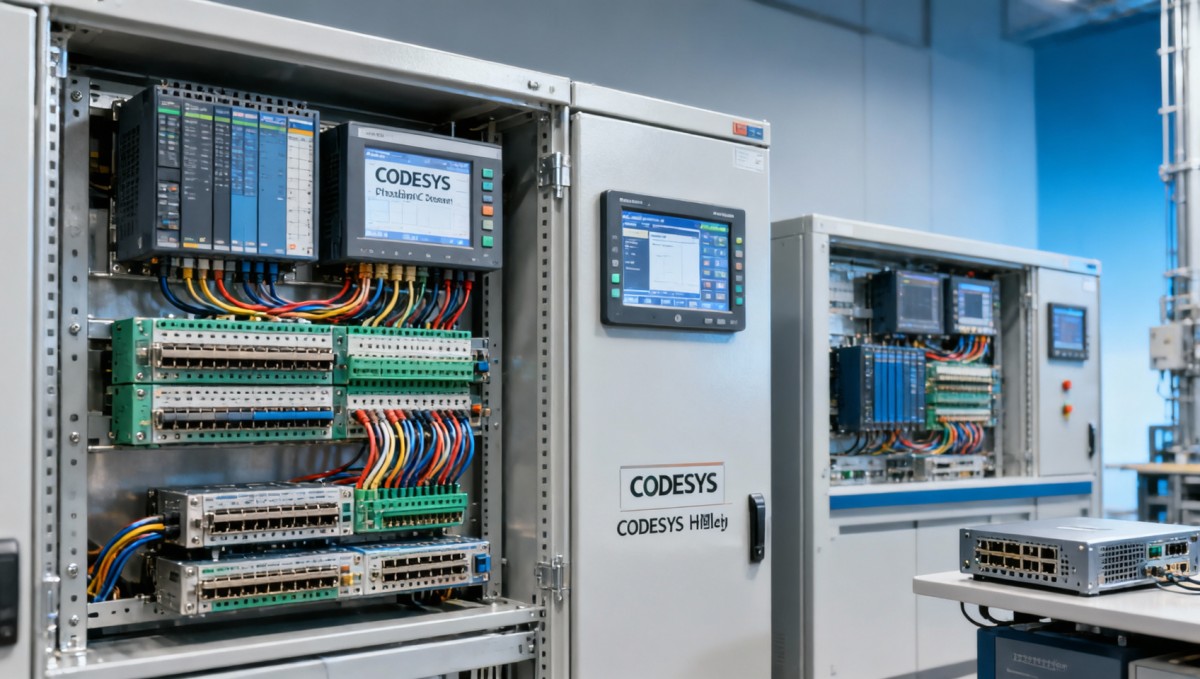
In industrial automation, reliability is not a single attribute. For a codesys compatible plc china solution, it usually means stable runtime, predictable communication behavior, recoverable fault handling, maintainable firmware, and repeatable production quality across batches. A PLC that powers up correctly on day one but fails after 6–12 months of thermal cycling, vibration, or network load is not reliable in any procurement sense.
This matters because CODESYS compatibility often attracts buyers looking for flexibility. They want IEC 61131-3 programming, openness across protocols, and easier integration into mixed-brand systems. But compatibility alone does not guarantee industrial durability. Engineers must separate three layers: software compatibility, hardware robustness, and supplier process control. If one layer is weak, field reliability drops quickly.
Chinese manufacturers now span a very wide range. Some offer entry-level control hardware suitable for light equipment, small skids, and HMI-linked automation cells. Others target more demanding use cases such as packaging lines, conveyor control, machine vision coordination, or distributed edge control. The market is not uniform, so the right question is not whether all products are reliable, but under which conditions and from which suppliers they are reliable enough.
At TechStat Vanguard, the practical view is simple: parameters do not lie. A buyer should ask for operating temperature range, I/O isolation details, supported fieldbus stacks, firmware update policy, cycle scan behavior, EMC design approach, and spare part continuity over a 3–5 year window. These factors reveal more than promotional language ever will.
Core reliability dimensions to verify before shortlisting
- Hardware endurance: input protection, surge tolerance, connector stability, heat dissipation design, and resistance to cabinet temperatures commonly seen in the 40°C–55°C range.
- Software maturity: clean boot behavior, watchdog recovery, deterministic task scheduling, and the stability of libraries used for Modbus TCP, EtherCAT, CANopen, or OPC UA.
- Manufacturing consistency: whether units from different batches behave the same, especially across 20, 50, or 100-unit procurement lots.
- Supportability: response speed for bug fixes, availability of English technical documents, and the existence of version tracking for firmware and runtime packages.
Where Chinese CODESYS compatible PLCs perform well—and where caution is needed
A realistic market assessment shows that many Chinese PLC suppliers are strongest in applications where openness, cost balance, and practical integration matter more than deep vendor lock-in. This includes compact machinery, process skids, warehouse subsystems, OEM control cabinets, utility control panels, and light-to-medium automation cells connected to HMI panels and remote I/O.
They can also be attractive in projects that require communication bridging. For example, a system may need to connect barcode scanners, VFDs, distributed sensors, and an iot edge gateway software layer without redesigning the whole control architecture. In such cases, a CODESYS-based platform can reduce engineering friction if the hardware platform is stable and the vendor’s runtime implementation is mature.
Caution is more important in high-consequence environments. These include continuous 24/7 process lines, severe EMI conditions, mobile equipment with shock and vibration, aerospace-adjacent test rigs, or AGV AMR fleets where a communication freeze can create operational risk. In these scenarios, bench validation should last at least 2–4 weeks, not just a quick FAT check.
Another caution point is ecosystem depth. Some suppliers offer acceptable controllers but limited long-term accessory support. A buyer may find the CPU available today, yet struggle to maintain matching I/O modules, expansion bus components, or panel integration parts 18–24 months later. Reliability in procurement is therefore both a product question and a supply continuity question.
Application suitability by operational profile
The table below helps translate reliability into scenario fit. It does not rank all suppliers the same way. Instead, it shows where a codesys compatible plc china option is often practical and where additional validation is essential.
The key takeaway is that Chinese CODESYS compatible PLCs can be reliable enough for many industrial uses, but the acceptance threshold changes by application. Buyers should align validation depth with downtime risk, not with unit price alone.
How to evaluate technical reliability beyond the datasheet
Many procurement teams compare controller CPU speed, memory, and protocol lists, then stop too early. Those items matter, but real reliability also depends on how the PLC behaves under stress. A useful evaluation process should include at least 4 layers: electrical robustness, runtime stability, communication endurance, and maintainability during firmware changes.
Electrical robustness begins with practical cabinet conditions. Ask whether the PLC is rated for common industrial ranges such as 0°C–55°C or wider, whether digital inputs are isolated, and whether power fluctuation tolerance is documented. If the unit will share enclosures with VFDs, servo drives, or switching power supplies, request guidance on grounding and EMC layout, not just nominal input voltage.
Runtime stability should be tested with the actual application profile. That means cyclic tasks, event tasks, communication polling, alarm handling, and HMI refresh all active together. A demo with one screen and a few tags proves very little. A better test runs for 72–168 hours continuously while monitoring task overruns, reconnect behavior, and retained data integrity after forced power cycles.
Communication endurance is especially important when the PLC must coordinate with HMI panel supplier ecosystems, remote I/O, VFDs, and iot edge gateway software. It is common to see acceptable performance during short bench tests but instability after repeated reconnects, cable disturbances, or network congestion. Ask for tested protocol combinations rather than generic statements that “all mainstream protocols are supported.”
Engineering checklist for acceptance testing
Recommended 6-point validation flow
- Run a cold start and warm restart test at least 20–30 cycles to confirm stable boot states, retained parameters, and communication reinitialization.
- Operate the full logic set for 72–168 hours with HMI, remote I/O, and gateway traffic active, then review alarms, logs, and scan consistency.
- Simulate network interruptions for 3 common cases: switch reboot, cable removal, and edge gateway restart. Recovery behavior should be documented.
- Verify analog scaling, digital debounce behavior, and time-sensitive sequences under realistic loads, not simulation only.
- Check firmware version control, rollback method, and the vendor’s patch response window for known issues.
- Confirm spare availability for CPUs, I/O modules, and accessories over a planned 3-year or 5-year maintenance horizon.
This process does not require a huge lab budget. It requires discipline. In many B2B projects, one additional week of structured validation prevents months of field troubleshooting and supplier dispute later.
What procurement teams should request in writing
The next table summarizes the most useful written evidence to request from a supplier before placing a medium or large order. This is where data-driven sourcing becomes more effective than brochure-based sourcing.
When a supplier can answer these points clearly, reliability assessment becomes measurable. When answers stay vague, the sourcing risk usually increases, even if the quotation looks attractive.
How do Chinese PLCs compare with established international alternatives?
A balanced comparison should avoid two extremes. One extreme assumes that lower-cost Chinese automation hardware is automatically inferior. The other assumes that CODESYS compatibility erases all differences. In reality, international brands often bring stronger long-cycle ecosystem support, broader certification coverage, and longer documentation maturity, while Chinese suppliers can offer better cost flexibility, faster customization, and more open commercial terms for OEM projects.
For many buyers, the trade-off is not simply price versus quality. It is engineering risk versus system openness versus procurement efficiency. If your team needs 10–30 units quickly for a machine export project, a strong codesys compatible plc china supplier may be very competitive. If you need identical platform continuity across global plants over 7–10 years, you may place more value on ecosystem depth and regional service networks.
Another practical difference is integration style. Chinese suppliers often work well in mixed architectures where HMIs, gateways, sensors, and drives come from different sources. That can be an advantage in cost-sensitive or fast-iteration environments. However, it also means your team must own more of the validation burden, especially when several third-party devices share the same industrial network.
Decision-makers should therefore compare total project friction, not just the CPU price. A controller that saves 20% upfront but adds 2–3 weeks of troubleshooting during commissioning may not be the better procurement result.
Comparison logic that supports procurement decisions
- If your priority is lower initial capex for compact machines, compare package pricing for CPU, I/O, HMI connectivity, and engineering effort together.
- If your priority is multi-site standardization, compare lifecycle notices, firmware consistency, and local technical response time across regions.
- If your priority is integration with iot edge gateway software, compare tested protocols, data mapping methods, and restart recovery behavior.
- If your priority is AGV AMR or mobile subsystems, compare event handling, communication resilience, and logging depth during abnormal states.
What should buyers, engineers, and decision-makers check before procurement?
A good procurement process starts with the real application envelope. Too many teams ask for “a reliable PLC” without documenting cabinet temperature, I/O count, protocol load, HMI tag volume, motion coordination needs, and remote diagnostics expectations. Without those inputs, supplier comparisons become vague and expensive.
For information researchers and technical buyers, the first priority is supplier transparency. Can the vendor explain the difference between CODESYS support at the engineering layer and stability at the hardware layer? Can they provide revision history, not just a PDF datasheet? Can they specify lead times such as 7–15 days for standard units versus 3–6 weeks for customized I/O or panel configurations?
For operators and maintenance teams, the focus changes. They need clear diagnostics, recoverable faults, readable alarm text, and practical documentation. A PLC can look attractive during procurement but become costly if local technicians cannot restore a machine after a communication loss or power event. Maintainability is a reliability factor, not a training issue alone.
For enterprise decision-makers, the key question is exposure. What happens if one supplier changes a module revision, discontinues an interface board, or delays firmware support? A prudent sourcing plan usually includes sample evaluation, pilot deployment, and then staged volume release rather than direct full-scale purchase.
A practical 5-check procurement filter
Use these checkpoints before issuing a PO
- Match the PLC to the task profile: simple discrete control, process control, distributed edge integration, or AGV AMR coordination.
- Validate communication under realistic loads: HMI, drives, sensors, and gateway traffic together for at least several days.
- Check documentation completeness: wiring, addressing, sample code, firmware notes, and recovery steps for abnormal restarts.
- Review supply continuity: standard lead time, MOQ, spare stock logic, and notice period for hardware changes.
- Confirm commercial support: sample availability, technical clarification cycle, and quotation response structure for future expansions.
FAQ: common misconceptions about CODESYS compatible PLCs from China
Search intent around codesys compatible plc china often includes doubts shaped by outdated assumptions. The questions below address the issues most relevant to sourcing, operation, and long-term maintenance.
Does CODESYS compatibility mean the PLC is equal to every other CODESYS device?
No. Compatibility means the controller supports the CODESYS ecosystem to some degree, usually including IEC 61131-3 programming and selected runtime functions. It does not guarantee identical performance, protocol behavior, hardware protection level, or lifecycle support. Two devices may both be compatible yet differ significantly in boot stability, communication recovery, or documentation quality.
Are Chinese PLCs only suitable for low-end applications?
Not necessarily. Some are clearly aimed at cost-sensitive, light-duty applications. Others are used in demanding OEM equipment, distributed control panels, and edge-connected industrial systems. The deciding factor is not country of origin alone. It is the supplier’s engineering maturity, batch consistency, and the level of validation you perform for the intended duty cycle.
What is a reasonable pilot process before volume procurement?
A common low-risk path is 3 stages: sample evaluation, pilot deployment, then scaled release. In practice, that may mean 1–3 controllers for lab testing, followed by 5–20 units in live equipment, then broader rollout after a stable observation period of several weeks or one maintenance cycle. This staged method exposes compatibility and support issues before they affect a full fleet.
How important is the HMI and gateway ecosystem in judging reliability?
It is extremely important. Many field failures that appear to be “PLC problems” are actually interaction problems between the controller, HMI panel supplier devices, remote I/O, or iot edge gateway software. Reliable procurement therefore requires system-level testing, not component-level assumptions. If the PLC will sit inside a multi-vendor architecture, integration evidence matters as much as the CPU specification.
Why work with a data-driven evaluation partner before selecting a supplier?
When teams source automation hardware across borders, the biggest risk is not always product failure. It is decision failure caused by incomplete technical comparison, weak validation planning, and unclear supplier accountability. That is exactly where TechStat Vanguard brings value. We focus on engineering truth: parameter benchmarking, supply chain traceability, application-fit analysis, and evidence-based procurement screening.
For a codesys compatible plc china project, we help translate broad claims into decision-ready criteria. That includes communication stack review, environment fit assessment, HMI and gateway integration mapping, lead-time comparison, and practical test planning for pilot deployment. This reduces the chance that your team approves a controller based on software familiarity while overlooking hardware or lifecycle gaps.
If your project touches robotics, warehouse automation, AGV AMR coordination, edge data collection, or mixed-brand industrial control, a neutral technical filter becomes even more valuable. The more interfaces involved, the more important disciplined verification becomes. In many cases, the cost of one misaligned procurement cycle exceeds the cost of a careful evaluation step.
Contact TechStat Vanguard if you need support with parameter confirmation, product selection logic, supplier comparison, delivery cycle review, customized control architecture, compliance-oriented documentation checks, sample test planning, or quotation-side technical clarification. We do not reduce decisions to slogans. We help you make them with data, engineering context, and procurement discipline.
Search News
Hot Articles
- Carbon Fiber StructuresHow to Specify Aerospace Carbon Fiber Assemblies for Lightweight, Load-Bearing PartsJul 11, 2026
- Machine VisionXiaomi, Alibaba DAMO Academy Drive Open-Source Robotics Model Ecosystem, Lowering Algorithm Development Barriers for Overseas SMEs Adopting Chinese Robotics SolutionsMar 30, 2026
- Cobots & ArmsShanxi 'AI+' Conference Showcases Embodied Intelligence with Multinational Buyer Engagement: Key Industry ImplicationsMar 30, 2026
Popular Tags
Recommended News
 Jul 11, 2026How to Specify Aerospace Carbon Fiber Assemblies for Lightweight, Load-Bearing PartsAerospace carbon fiber assemblies: learn how to specify laminate design, load data, joining methods, and inspection controls for lighter, reliable load-bearing aerospace parts.Elena Rostova (UAV Systems Researcher)
 Mar 30, 2026Xiaomi, Alibaba DAMO Academy Drive Open-Source Robotics Model Ecosystem, Lowering Algorithm Development Barriers for Overseas SMEs Adopting Chinese Robotics SolutionsXiaomi & Alibaba DAMO Academy's open-source robotics models lower algorithm barriers for global SMEs. Boost efficiency in manufacturing, logistics & smart retail with ROS 2 compatible solutions.TSV Data Lab
 Mar 30, 2026Shanxi 'AI+' Conference Showcases Embodied Intelligence with Multinational Buyer Engagement: Key Industry ImplicationsShanxi 'AI+' Conference highlights embodied intelligence with Tesla, Ubtech & Jiantao showcasing multimodal robotics. 40+ global buyers validated tech on-site, creating new B2B channels for industrial automation & AI solutions.Chen Wei (Automation Lead Engineer)
 Mar 30, 2026Zhongguancun Unveils 6G Integrated Sensing-Computing-Intelligence Platform to Empower Embodied Robots for Global Industrial ApplicationsZhongguancun's new 6G platform revolutionizes industrial robotics with <10ms latency, empowering global automotive, logistics & port automation. Discover how this tech boosts China's smart manufacturing exports.TSV Data Lab
 Mar 30, 2026Mech-Mind Tianjin Embodied Intelligence R&D and Production Base Goes Live, Cutting Delivery Time by 20%–30% for Global Customized AMR+Vision SolutionsMech-Mind's Tianjin AMR+Vision production base cuts delivery time by 20%-30% for欧美 & Latin American markets. Discover how this PLd-certified facility accelerates customized robotics solutions for smart manufacturing and logistics.Chen Wei (Automation Lead Engineer)
 Mar 30, 2026Boao Forum Reveals 'Co-evolution of Big and Small Brains' Trend in Humanoid Robots, China's Embodied Intelligence Accelerates Adaptation to Overseas Manufacturing Service ScenariosDiscover how China's humanoid robots, featuring 'Co-evolution of Big and Small Brains,' are revolutionizing global manufacturing. Learn about Embodied Tian Gong 3.0's ISO compliance and overseas deployment at Boao Forum 2026.Chen Wei (Automation Lead Engineer)
 Mar 30, 2026China Railway Industrial Secures Patent for Embodied Robotics in Material Handling, Boosting High-Precision Delivery Capabilities for Overseas Infrastructure and Manufacturing ProjectsChina Railway Industrial's new patent for embodied robotics in material handling boosts high-precision delivery for global infrastructure & manufacturing. Discover how this innovation enhances logistics accuracy in automotive, rail transit & EPC projects.Chen Wei (Automation Lead Engineer)
 Oct 18, 2026Comparing Material Options for Procurement: Specs, Costs, and Supply RisksExplore procurement oriented technical content on material options, specs, costs, and supply risks. Compare alternatives to cut hidden expenses and make confident sourcing decisions.Dr. Marcus Vance
 Oct 17, 20265-Axis CNC Positioning Accuracy: How to Interpret ISO 230-2 Test ResultsAssess 5 axis CNC machining positioning accuracy with ISO 230-2. Learn to interpret repeatability, reversal error, and test conditions to compare suppliers and make confident acceptance decisions.Dr. Marcus Vance
 Oct 16, 2026Choosing a Rugged Edge AI Box Supplier: Thermal Tests and Lifecycle SupportChoose a rugged edge AI box supplier with proven thermal performance and reliable lifecycle support. Discover the tests and commitments to verify before you buy.TSV Data Lab
 Oct 15, 2026R&D Cost Reduction Services: How to Evaluate Fees, Savings, and ROIEvaluate R&D cost reduction services with confidence. Compare fees, verify savings, and calculate ROI without compromising performance. Discover how to choose a provider that delivers real value.Chen Wei (Automation Lead Engineer)
 Oct 17, 2026How Should You Interpret Industrial Robot Repeatability Specs?Decode industrial robot repeatability specifications, understand ISO 9283 test conditions, and avoid costly selection mistakes. Learn how to verify performance for your process.Chen Wei (Automation Lead Engineer)
 Oct 16, 2026How Can You Fairly Compare MTBF Across Industrial Servo Motors?Make a fair industrial servo motor MTBF comparison with matched operating profiles, failure criteria, and confidence bounds. Discover how to assess reliability beyond advertised numbers.Chen Wei (Automation Lead Engineer)
 Oct 15, 2026How Should You Compare TechStat Vanguard 5-Axis CNC Tolerances?TechStat Vanguard 5-axis CNC tolerance comparison: learn how to verify part accuracy, assess inspection evidence, and choose suppliers that reliably meet your drawing requirements.Dr. Marcus Vance
 Oct 14, 2026Drone Frame Composites: Carbon Fiber vs. Fiberglass for Weight and StiffnessExplore drone structural materials composites: compare carbon fiber and fiberglass for weight, stiffness, cost, and antenna compatibility. Find the right material for your drone frame.Elena Rostova (UAV Systems Researcher)
 Oct 13, 2026Smart Cameras vs. PC-Based Machine Vision: Which Fits High-Speed Inspection?This industrial product comparison for machine vision weighs smart cameras vs. PC-based systems on latency, throughput, and cost. Discover your best fit for high-speed inspection.TSV Data Lab
 Oct 12, 2026How to Verify RoHS Compliance in Industrial Sensing Systems Before DeploymentRoHS compliant sensing systems: learn how to verify materials, supplier declarations, testing, and configuration controls before industrial deployment.TSV Data Lab
 Oct 11, 2026How Procurement-Oriented Content Taxonomy Improves B2B Buying JourneysProcurement-oriented content taxonomy streamlines B2B buying journeys with clearer evidence, supplier comparisons, risk visibility, and faster approvals.TSV Data Lab
 Oct 10, 2026How to Select a Machine Performance Monitoring Platform for OEE and Downtime ReductionMachine performance monitoring platform selection guide: validate machine states, OEE data, downtime reasons, integrations, and scalability to reduce losses with confidence.TSV Data Lab
 Oct 08, 2026How to Machine Inconel 625 Blades Without Heat Cracks or Edge ChippingInconel 625 blade machining guide: prevent heat cracks, edge chipping, chatter, and work hardening with proven tooling, cooling, fixturing, and inspection strategies.Dr. Marcus Vance
 Oct 07, 2026How to Evaluate an HMI Panel Distributor for Industrial Automation ProjectsHMI panel distributor evaluation guide: verify technical compatibility, traceability, supply reliability, lifecycle support, and total cost for automation projects.Victor Lin (Chief Software Architect)
 Oct 06, 2026Navigation Fault Tolerance Standards for AMRs: What Safety Teams Must VerifyNavigation fault tolerance standards: learn what AMR safety teams must verify, from localization loss and sensor faults to stopping distance, safe restart, and site-specific validation.Chen Wei (Automation Lead Engineer)
 Oct 05, 2026Calculating Edge Computing Total Cost of Ownership Across Distributed SitesEdge computing ownership cost explained: calculate deployment, energy, connectivity, security, remote support, and refresh costs across distributed sites.TSV Data Lab
 Oct 04, 2026CAD/CAM Benchmarking in the GCC: What Manufacturers Should Ask a ConsultantCAD CAM benchmark consultant GCC guide: learn the key questions manufacturers should ask to validate post-processors, workflows, machine performance, and production risk.Victor Lin (Chief Software Architect)























