
What makes edge computing for smart city deployments hard to scale?
Publication Date
author
Scaling edge computing for smart city deployments is harder than most vendors admit. From industrial iot data collection architecture and sensor fusion lidar and camera pipelines to radar sensor for traffic monitoring and edge ai facial recognition access control, every layer adds latency, interoperability, security, and lifecycle management challenges. This article cuts through the hype to explain why edge computing for smart city initiatives often stalls—and what technical leaders, operators, and buyers must evaluate before expanding.
Why edge computing in smart cities becomes difficult after the pilot stage
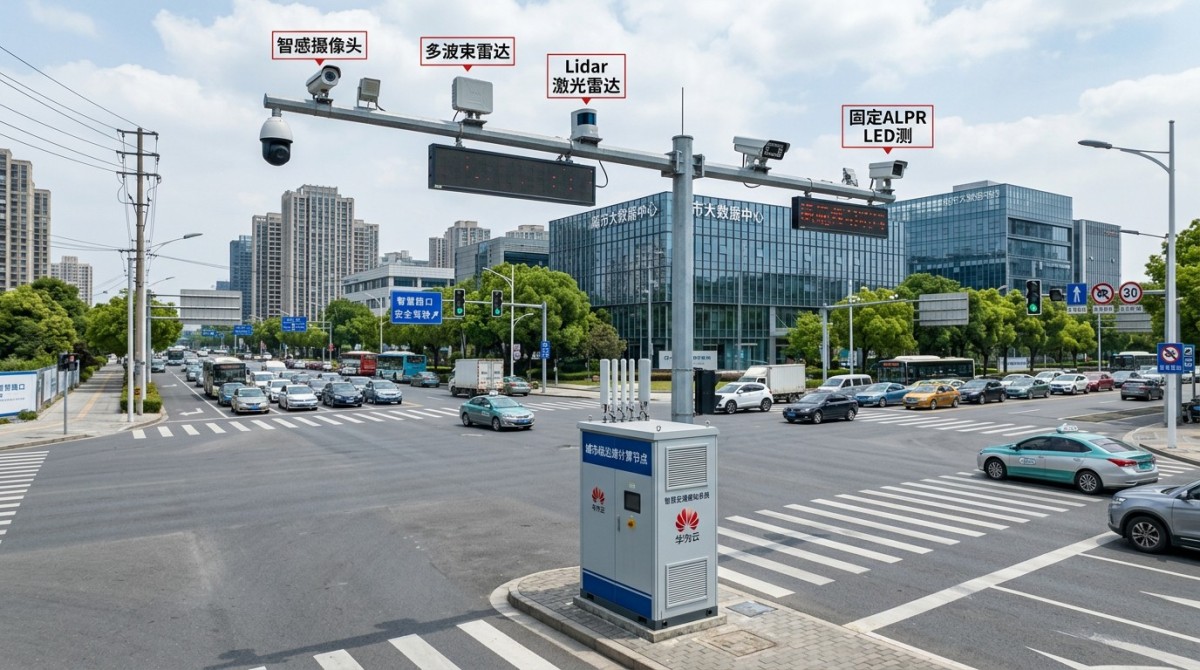
A smart city proof of concept often looks manageable because it starts with 1 district, 2–3 sensor types, and a limited number of edge nodes. Scaling is different. Once the scope expands to traffic corridors, transit hubs, public safety zones, utility assets, and municipal buildings, the edge computing stack must support thousands of data endpoints, uneven network quality, and multiple decision cycles running at the same time.
The problem is not simply computing power. It is systems engineering. A city may combine video analytics, radar sensor for traffic monitoring, industrial IoT gateways, LiDAR-based perception, environmental telemetry, and edge AI facial recognition access control under different departments. Each subsystem comes with its own protocol, retention policy, firmware schedule, and uptime expectation. What scales in a lab often fails in mixed-vendor field conditions.
For operators, the pain shows up as alert fatigue, unstable remote maintenance, and inconsistent data quality. For procurement teams, the difficulty is comparing proposals that describe “real-time” differently. In practice, acceptable latency may range from under 20 milliseconds for intersection safety logic to 1–5 seconds for environmental dashboards. Without a parameter-based specification, buyers cannot compare systems on equal terms.
For decision-makers, the bigger issue is lifecycle exposure. Smart city programs usually run in 3 phases: pilot, district expansion, and citywide integration. Costs and risks grow at each phase. Edge devices may remain in service for 5–8 years, while AI models, cybersecurity controls, and connectivity plans can change every 6–18 months. That mismatch is one of the main reasons edge computing for smart city deployments is hard to scale.
What changes when deployment moves from pilot to production
In a pilot, teams can manually inspect devices, patch software one node at a time, and tolerate intermittent downtime. At production scale, those assumptions collapse. A deployment with 500–2,000 field devices needs remote observability, secure update orchestration, audit logs, and standard operating procedures that municipal staff or contractors can actually execute. The technical design must fit the staffing reality, not just the architecture diagram.
The data path also changes. During trials, teams often move more data to the cloud for experimentation. In production, bandwidth cost, privacy constraints, and response-time requirements push more filtering, inference, and event handling to the edge. That means edge hardware selection must consider thermal limits, storage endurance, and workload spikes rather than nominal CPU or TOPS figures alone.
- More endpoints increase failure surfaces across power supply, networking, storage media, and enclosure durability.
- More departments increase governance complexity, especially for ownership of data models, alerts, and incident response.
- More use cases increase performance conflicts, because one edge node may need to prioritize video inference, sensor fusion, and local buffering at the same time.
Which technical bottlenecks slow down smart city edge scaling first?
The first bottleneck is interoperability at the edge. Municipal deployments rarely start from a clean slate. Existing CCTV, access systems, traffic controllers, RS485 devices, industrial Ethernet segments, and cloud dashboards may all need to coexist. If a supplier cannot explain how its industrial iot data collection architecture handles protocol translation, timestamp alignment, and packet loss recovery, the scaling risk is high from day one.
The second bottleneck is multi-sensor synchronization. Sensor fusion lidar and camera systems, especially when paired with radar sensor for traffic monitoring, are sensitive to calibration drift, occlusion, and clock mismatch. A few milliseconds of timing error can degrade object tracking, incident detection, or near-miss analysis. In city streets with weather variation, reflective surfaces, and changing lighting, that gap becomes operationally important.
The third bottleneck is cybersecurity with distributed maintenance. Every edge node is a potential attack surface. A city may have devices on poles, rooftops, cabinets, stations, and public buildings. Secure boot, certificate management, role-based access, and patch management are not optional. If security updates take 2–4 weeks to validate and roll out, the fleet can remain exposed longer than policy owners expect.
The fourth bottleneck is model and firmware lifecycle control. Edge AI facial recognition access control, traffic classification, and anomaly detection do not remain static. Models require retraining, firmware requires updates, and cameras or sensors may be swapped mid-cycle. Without disciplined version control and rollback procedures, a city can end up with inconsistent outputs across sites that appear identical on paper.
Critical engineering checks before scale-out
The table below highlights the most common scale blockers in edge computing for smart city programs and the parameters teams should request before approving broader deployment. These are not marketing checkboxes. They are practical evaluation points for research teams, operators, procurement specialists, and enterprise decision-makers.
A useful procurement rule is simple: if a vendor can describe functions but cannot define measurable operating thresholds, scale readiness is still unproven. TSV’s engineering-led approach is built around this distinction. Parameters matter because they expose whether a deployment can survive weather, maintenance cycles, and mixed workloads over several years rather than during a short demo period.
Why sensor fusion is especially difficult in urban environments
Urban sensor fusion looks attractive because LiDAR, cameras, and radar complement each other. In practice, deployment quality depends on calibration stability, mounting geometry, vibration tolerance, and software alignment. A sensor fusion lidar and camera stack tested on one boulevard may behave differently near bus stops, glass façades, tree cover, or construction zones. Procurement teams should ask how recalibration is handled after maintenance or accidental movement.
Radar sensor for traffic monitoring adds robustness in rain, fog, and glare, but the integration logic still matters. Radar can improve detection confidence, yet false association rises if object identifiers are not harmonized across streams. This is where engineering benchmarking becomes more valuable than broad product claims. TSV focuses on measurable data paths, latency ranges, and noise-handling realities instead of generic “smart mobility” language.
How should buyers compare edge architectures, hardware, and operating models?
Most smart city buyers are not choosing one product. They are choosing an operating model. The real decision is whether to centralize more processing, distribute more intelligence to edge nodes, or adopt a hybrid model. Each option changes bandwidth demand, maintenance burden, fault containment, and data governance. For example, centralized analysis can simplify model control, but a hybrid design often handles local response better when network quality fluctuates.
For operators, local edge processing reduces backhaul dependence and can keep core functions alive during connection drops lasting several minutes or even a few hours. For procurement teams, that benefit must be weighed against higher node complexity, more field software maintenance, and stricter enclosure requirements. For decision-makers, the question is whether the city can support that distributed operational model for a 5-year program horizon.
The right comparison framework should cover at least 5 dimensions: compute placement, sensor compatibility, cybersecurity architecture, lifecycle serviceability, and total cost of change. Total cost of change is often ignored. It includes retraining staff, rewriting integrations, replacing storage media, and requalifying systems after a policy or compliance update. These downstream costs can exceed the savings from selecting the cheapest initial hardware.
The comparison table below helps teams evaluate which architecture aligns with application criticality, such as public safety analytics, traffic optimization, municipal access control, or environmental monitoring. It is especially useful when proposals look similar at the brochure level but differ sharply in service burden and resilience.
In many cities, hybrid edge-cloud is the practical middle path. It supports local decision-making for time-sensitive events while preserving centralized oversight for analytics, compliance, and historical review. Even so, success depends on measurable engineering criteria. TSV recommends evaluating thermal operating range, storage endurance, synchronization methods, and remote management depth before approving multi-site procurement.
A 6-point procurement checklist for smart city edge systems
- Define latency by use case. Do not accept a single “real-time” statement for all workloads.
- Request protocol and API detail for industrial iot data collection architecture, not only dashboard screenshots.
- Check how sensor fusion lidar and camera pipelines are recalibrated, monitored, and validated after field changes.
- Verify cybersecurity update windows, credential rotation policy, and rollback capability across the entire fleet.
- Review spare-part planning, maintenance intervals, and whether operators can replace components without specialist attendance.
- Estimate 3-year and 5-year operational cost, not just year-1 acquisition cost.
This checklist is particularly relevant when comparing smart mobility, urban security, and public building deployments. The same hardware family may not be suitable across all three. Traffic nodes tolerate different response profiles than edge AI facial recognition access control systems, and access systems may face stricter privacy governance than road analytics.
What implementation, compliance, and lifecycle issues are often underestimated?
Implementation usually fails at the interfaces between teams. City IT, transport engineers, security managers, facilities operators, and external integrators often use different success criteria. A robust deployment plan should define 4 implementation stages: site survey, controlled pilot, phased scale-out, and fleet governance. Each stage needs clear acceptance checks, or technical debt accumulates quickly and becomes expensive to reverse.
Site survey quality matters more than many buyers expect. Pole vibration, cabinet ventilation, power stability, cable length, line of sight, electromagnetic interference, and maintenance access all influence edge reliability. A system that performs well in a controlled station room may degrade in an outdoor cabinet exposed to heat, moisture, dust, and intermittent power events. This is where engineering fundamentals outperform presentation-heavy procurement.
Compliance also becomes more complex as the deployment grows. Smart city edge systems may intersect with cybersecurity policies, public surveillance rules, data retention requirements, sector-specific safety procedures, and local procurement rules. The exact standard set differs by region and application, but buyers should at least ask how logging, access control, update traceability, and data minimization are implemented across distributed nodes.
Lifecycle planning is the final blind spot. Many programs budget for deployment but under-budget for recalibration, storage replacement, firmware updates, vulnerability remediation, and model drift monitoring. A practical review cycle is every quarter for software and security posture, with a broader architecture review every 12 months. Without this cadence, systems remain installed but gradually lose decision quality and trust.
Common misconceptions that create avoidable cost
“If the pilot worked, scaling is mostly procurement.”
This is one of the most expensive assumptions. Scaling changes support structure, security exposure, and maintenance volume. Procurement is only one part of the transition. Cities need operating playbooks, escalation paths, and measurable performance baselines before they issue large-volume orders.
“More sensors automatically mean better awareness.”
Not unless the data model is harmonized. More cameras, LiDAR units, and radar devices can also create more false positives, more synchronization errors, and more calibration burden. Better awareness comes from disciplined fusion logic and tested maintenance routines, not from device count alone.
“Edge AI lowers cloud cost, so it always lowers total cost.”
Edge AI can reduce backhaul and storage pressure, but it increases field complexity. When teams overlook remote update tooling, spare inventory, and on-site replacement procedures, the total operating cost can rise. The lowest-cost architecture depends on workload criticality, connectivity quality, and organizational capability.
How can technical leaders and buyers de-risk expansion before citywide rollout?
The most effective way to de-risk edge computing for smart city deployments is to move from feature-led evaluation to parameter-led validation. That means defining measurable thresholds before scaling: response windows, packet loss tolerance, storage retention at the edge, update success rate, synchronization accuracy, and maintenance completion time. A proposal that cannot map features to operating thresholds should not move directly to citywide rollout.
TSV is built for this kind of decision environment. Our role is not to amplify hype but to isolate engineering truth from commercial noise. For smart city infrastructure, that means benchmarking sensors and edge AI components on the questions that matter most: anti-interference behavior, data throughput, microsecond-level gateway timing where relevant, field maintenance feasibility, and practical fit inside multi-vendor industrial ecosystems.
For information researchers, TSV helps turn broad market claims into comparable technical criteria. For operators, we help identify maintenance and integration risks before they become recurring incidents. For procurement teams, we support parameter-based vendor comparison. For enterprise decision-makers, we help reduce R&D trial-and-error cost and shorten supplier qualification cycles through more disciplined technical screening.
If your team is evaluating industrial iot data collection architecture, sensor fusion lidar and camera platforms, radar sensor for traffic monitoring, or edge AI facial recognition access control, the next step should be specific. Define the use case, the latency window, the integration boundary, and the lifecycle burden you can actually support. Then validate suppliers against those realities, not against abstract product language.
Why choose us
TechStat Vanguard works as a data-driven hard-tech filter for engineering teams and buyers who need evidence, not adjectives. We focus on technical whitepapers, benchmarking logic, and supply-chain-facing evaluation criteria that help organizations compare edge computing solutions on measurable grounds. Our methods are aligned with the needs of advanced manufacturing, sensors, edge AI, and complex infrastructure programs where tolerance, latency, and interoperability determine success.
You can contact TSV for support on parameter confirmation, product selection frameworks, delivery-cycle planning, custom evaluation criteria, standards and compliance checkpoints, sample assessment logic, and quotation-stage comparison questions. If your smart city program is moving beyond pilot scale, we can help you define what should be measured before expansion, which risks deserve deeper testing, and how to distinguish operationally viable systems from presentation-ready ones.
Search News
Hot Articles
- Carbon Fiber StructuresHow to Specify Aerospace Carbon Fiber Assemblies for Lightweight, Load-Bearing PartsJul 11, 2026
- Machine VisionXiaomi, Alibaba DAMO Academy Drive Open-Source Robotics Model Ecosystem, Lowering Algorithm Development Barriers for Overseas SMEs Adopting Chinese Robotics SolutionsMar 30, 2026
- Cobots & ArmsShanxi 'AI+' Conference Showcases Embodied Intelligence with Multinational Buyer Engagement: Key Industry ImplicationsMar 30, 2026
Popular Tags
Recommended News
 Jul 11, 2026How to Specify Aerospace Carbon Fiber Assemblies for Lightweight, Load-Bearing PartsAerospace carbon fiber assemblies: learn how to specify laminate design, load data, joining methods, and inspection controls for lighter, reliable load-bearing aerospace parts.Elena Rostova (UAV Systems Researcher)
 Mar 30, 2026Xiaomi, Alibaba DAMO Academy Drive Open-Source Robotics Model Ecosystem, Lowering Algorithm Development Barriers for Overseas SMEs Adopting Chinese Robotics SolutionsXiaomi & Alibaba DAMO Academy's open-source robotics models lower algorithm barriers for global SMEs. Boost efficiency in manufacturing, logistics & smart retail with ROS 2 compatible solutions.TSV Data Lab
 Mar 30, 2026Shanxi 'AI+' Conference Showcases Embodied Intelligence with Multinational Buyer Engagement: Key Industry ImplicationsShanxi 'AI+' Conference highlights embodied intelligence with Tesla, Ubtech & Jiantao showcasing multimodal robotics. 40+ global buyers validated tech on-site, creating new B2B channels for industrial automation & AI solutions.Chen Wei (Automation Lead Engineer)
 Mar 30, 2026Zhongguancun Unveils 6G Integrated Sensing-Computing-Intelligence Platform to Empower Embodied Robots for Global Industrial ApplicationsZhongguancun's new 6G platform revolutionizes industrial robotics with <10ms latency, empowering global automotive, logistics & port automation. Discover how this tech boosts China's smart manufacturing exports.TSV Data Lab
 Mar 30, 2026Mech-Mind Tianjin Embodied Intelligence R&D and Production Base Goes Live, Cutting Delivery Time by 20%–30% for Global Customized AMR+Vision SolutionsMech-Mind's Tianjin AMR+Vision production base cuts delivery time by 20%-30% for欧美 & Latin American markets. Discover how this PLd-certified facility accelerates customized robotics solutions for smart manufacturing and logistics.Chen Wei (Automation Lead Engineer)
 Mar 30, 2026Boao Forum Reveals 'Co-evolution of Big and Small Brains' Trend in Humanoid Robots, China's Embodied Intelligence Accelerates Adaptation to Overseas Manufacturing Service ScenariosDiscover how China's humanoid robots, featuring 'Co-evolution of Big and Small Brains,' are revolutionizing global manufacturing. Learn about Embodied Tian Gong 3.0's ISO compliance and overseas deployment at Boao Forum 2026.Chen Wei (Automation Lead Engineer)
 Mar 30, 2026China Railway Industrial Secures Patent for Embodied Robotics in Material Handling, Boosting High-Precision Delivery Capabilities for Overseas Infrastructure and Manufacturing ProjectsChina Railway Industrial's new patent for embodied robotics in material handling boosts high-precision delivery for global infrastructure & manufacturing. Discover how this innovation enhances logistics accuracy in automotive, rail transit & EPC projects.Chen Wei (Automation Lead Engineer)
 Oct 27, 2026GXO and Agility Robotics Expand Partnership to Accelerate US Humanoid Robot DeploymentGXO and Agility Robotics plan to expand US humanoid robot deployment with Digit 4 in early 2027. Explore warehouse automation plans, service terms and future Digit 5 upgrades.Chen Wei (Automation Lead Engineer)
 Oct 27, 2026Robotic Automation Costs: Budgeting for Equipment, Integration, and MaintenancePlan your robotics automation cost with confidence. Explore equipment, integration, and maintenance expenses, compare quotes, and build a realistic budget for better ROI.Chen Wei (Automation Lead Engineer)
 Oct 26, 2026AMAXiMAL Releases Open-Source TopMod 3D v3 With Claude AIExplore AMAXiMAL’s free, open-source TopMod 3D v3 with Claude AI assistance, topology-based modeling and plywood fabrication tools that connect complex designs to physical builds.Dr. Marcus Vance
 Oct 26, 2026Choosing a SCADA System Integrator Company: PLC Compatibility and Long-Term SupportChoose a scada system integrator company with proven PLC compatibility and reliable long-term support. Discover what to test, compare, and require before investing.Victor Lin (Chief Software Architect)
 Oct 25, 2026Hesai Leads Global ADAS Main Lidar Shipments in Yole’s 2026 ReportHesai led global ADAS main lidar shipments with a 43% share in 2025, according to Yole’s 2026 report. Explore what this ranking reveals about its automotive market position.TSV Data Lab
 Oct 25, 2026Choosing an Aerospace Materials Manufacturer: Quality and Traceability ChecksChoosing an aerospace materials manufacturer? Learn how to verify certifications, test reports, and lot traceability to qualify suppliers confidently and reduce costly sourcing risks.Dr. Marcus Vance
 Oct 24, 2026Guotai Haitong: Global Entry-Level 3D Printer Shipments Rose 39% in Q1 2026Entry-level 3D printer shipments rose 39% in Q1 2026, Guotai Haitong reports. Explore how AI, multicolor printing and print farms are shaping market growth.Dr. Marcus Vance
 Oct 24, 2026Choosing an Industrial Vision Inspection Supplier: Acceptance Tests That MatterChoose an industrial vision inspection supplier with confidence. Discover acceptance tests for defect detection, false rejects, production speed, and reliable part rejection before you buy.TSV Data Lab
 Oct 23, 2026US Navy Raises Gecko Robotics Contract Ceiling to $300M for Robotic Fleet MaintenanceUS Navy raises Gecko Robotics’ contract ceiling to $300M for Pacific Fleet robotic inspections. Explore potential opportunities for maintenance suppliers and key procurement considerations.Chen Wei (Automation Lead Engineer)
 Oct 23, 2026Choosing Industrial Sensing Systems for Global Plants: Protocol CompatibilityCompare industrial sensing systems international buyers can trust. Explore protocol compatibility, reduce integration risks, and select proven configurations for reliable global plant deployments.TSV Data Lab
 Oct 22, 2026KUKA Showcases Physical AI and iiQKA.AI Vision at NVIDIA GTC BerlinExplore KUKA’s Physical AI showcase at NVIDIA GTC Berlin and discover how iiQKA.AI Vision aims to simplify robotic vision integration and improve 2D and 3D scene recognition.TSV Data Lab
 Oct 22, 2026Robotic Machining of Advanced Composites: What Tolerances Are Achievable?Explore advanced materials machining robotics: discover what drives achievable composite tolerances and how to validate accuracy before investing in your next machining system.Dr. Marcus Vance
 Oct 21, 2026China’s Industrial Robot Exports Near RMB 10 Billion in First Nine Months of 2026China’s industrial robot exports neared RMB 10 billion in January–September 2026, with value rising faster than volume. Explore the data and what it could mean for suppliers.Chen Wei (Automation Lead Engineer)
 Oct 21, 2026Low-Latency Industrial Data Processing: Pricing and Key Cost DriversExplore industrial data latency price drivers, from edge hardware to integration and support. Learn how to compare quotes, verify performance, and avoid unnecessary costs.TSV Data Lab
 Oct 20, 2026KUKA Launches iiQKA.AI Vision to Simplify Industrial Image ProcessingKUKA iiQKA.AI Vision simplifies industrial image processing with controller-based 2D and 3D vision. Explore drag-and-drop setup for vision-guided automation.TSV Data Lab
 Oct 20, 2026Smart Industrial Edge Devices: Key Criteria for Legacy PLC IntegrationChoose smart industrial edge devices for legacy PLC integration. Discover key criteria for compatibility, data quality, security, and reliable collection without disrupting control.TSV Data Lab
 Oct 19, 2026Choosing a Radar Sensor by Application: Range, Resolution, and Field of ViewSimplify radar sensor application based product selection. Compare range, resolution, and field of view to avoid blind spots and choose with confidence. Explore the guide.TSV Data Lab























