
Warehouse Automation Strategies to Increase Storage Capacity Without Expansion
Publication Date
author
Warehouse Automation Strategies to Increase Storage Capacity Without Expansion
Rising order volumes do not always justify a new building. In many warehouses, the apparent capacity problem is actually a combination of poor slotting, low vertical utilization, oversized travel aisles, staging areas that have become permanent, and storage equipment selected for a simpler operation than the one running today.
That distinction matters. A warehouse can be “full” in terms of occupied floor space while still wasting a meaningful portion of its usable cubic volume. It can also have enough pallet positions on paper but insufficient accessible positions for fast-moving items, replenishment buffers, returns, or peak-season exceptions. For project managers, the task is not merely to add automation. It is to identify which constraint is genuinely limiting capacity, then select a system that improves usable storage without creating a new throughput, maintenance, or safety bottleneck.
The strongest warehouse automation space saving projects begin with engineering facts rather than supplier claims: clear height, column grid, slab condition, fire protection configuration, load characteristics, SKU velocity, order profiles, replenishment frequency, and the actual dwell time of inventory. A high-density solution that works for stable pallet reserves may be a poor fit for a rapidly changing, each-pick operation. Capacity is not simply how much inventory fits inside the building; it is how much inventory can be stored, found, replenished, and shipped without disrupting the daily operation.
Start by Separating Physical Capacity From Operational Capacity
Before changing racking or introducing robotics, map the warehouse by inventory behavior. Project teams often begin with a layout drawing, but the more revealing document is usually a movement map: where goods arrive, where they wait, how often they move, where exceptions occur, and which locations become congested during a normal shift rather than an idealized one.
Consider a site with conventional selective pallet racking. It may show few empty locations, yet many slow-moving pallets occupy prime lower-level slots while fast movers are distributed across distant aisles. Meanwhile, outbound staging expands whenever dispatch schedules become uneven. Adding more rack positions will not necessarily solve this. Re-slotting inventory, defining stricter staging rules, and separating reserve storage from active pick faces may release capacity faster than a major capital project.
A practical assessment should distinguish at least four conditions: static storage, active picking, replenishment, and temporary exception inventory. Damaged goods, quality holds, returns, incomplete orders, packaging supplies, and seasonal overflow are frequently underestimated. They are also where “invisible” floor space disappears. If those flows are not designed into the future state, automation may simply move congestion from one zone to another.
Use the Building Height Before Sacrificing Accessibility
Vertical optimization is usually the first serious option because warehouse rent and construction costs are tied to footprint, while many buildings retain unused clear height. The sensible approach is not to fill every vertical gap. It is to calculate the safe, maintainable height available after accounting for sprinkler clearance, lighting, roof structure, seismic requirements where applicable, truck lift height, load stability, and access for inspection or repair.
Narrow-aisle and very-narrow-aisle configurations can increase the number of storage positions by reducing travel lane width and using taller racking. However, they introduce dependencies. Specialized reach trucks or turret trucks need appropriate floor flatness, disciplined aisle management, battery or charging planning, and reliable availability during peak periods. A layout that looks excellent in CAD can become fragile if a single truck failure leaves a high-volume zone inaccessible.
For projects considering vertical racking, inspect the floor early. Slab condition is not a minor construction detail when lift equipment must operate at height in narrow aisles. Localized repairs, joint condition, flatness requirements, and rack anchoring all influence what is feasible. These items should be validated before the equipment order, not discovered after the layout has been approved.
Choose High-Density Storage According to Inventory Selectivity
High-density storage is often described as a universal answer to warehouse capacity pressure. It is not. The key trade-off is selectivity: how directly an operator or automated system can reach a specific load. When inventory is deep-lane, homogeneous, or managed by predictable rotation rules, dense storage can be highly effective. When each pallet may be needed at unpredictable times, density can create excessive reshuffling and longer retrieval cycles.
Drive-in, push-back, pallet flow, shuttle-based systems, and mobile racking each solve a different version of the problem. Pallet flow can support first-in, first-out movement where stock rotation is essential, but it requires careful load compatibility and maintenance of the flow lanes. Shuttle systems can reduce aisle demand and provide flexible depth, yet their actual performance depends on shuttle availability, battery management, transfer logic, and the software rules governing retrieval priorities.
Mobile racking can remove most fixed aisles, but only one or a limited number of aisles may be open at a time. That can suit archives, cold storage, slow reserves, or applications with controlled access patterns. It is less suitable when many pickers need simultaneous access to different SKU families. The question should be: “How many independent retrieval events must happen at once?” not merely “How many pallets can fit?”
Where AS/RS Creates Usable Space—and Where It Can Overreach
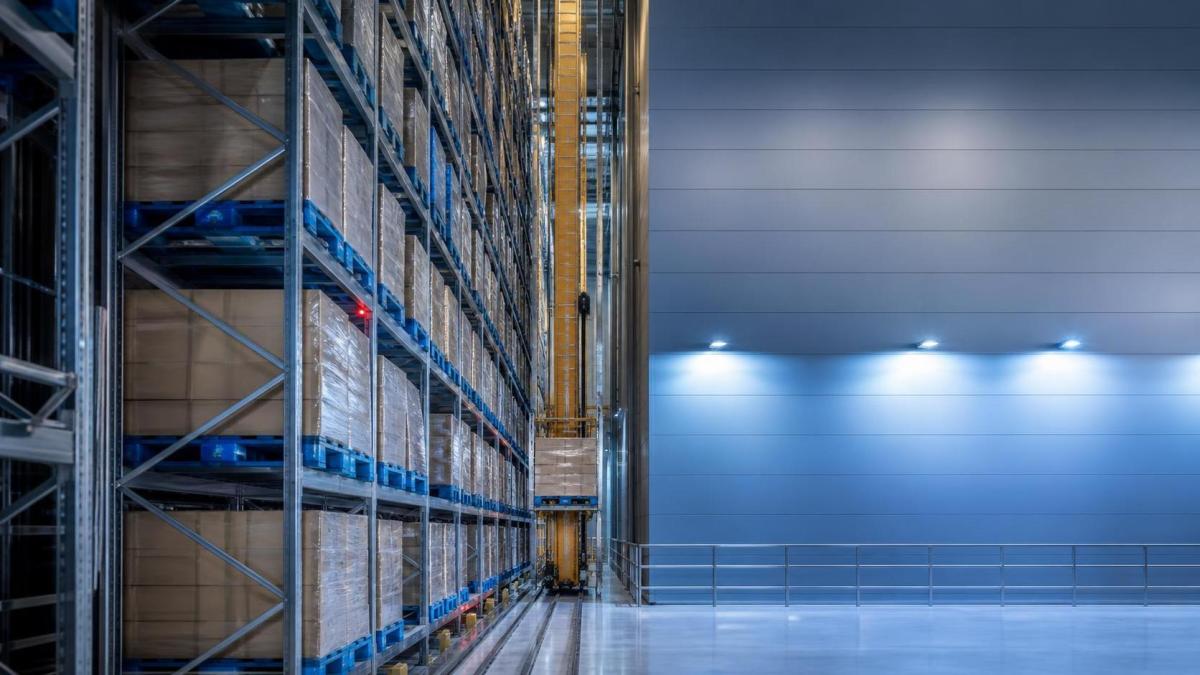
Automated storage and retrieval systems can combine height, reduced aisle requirements, and controlled inventory handling. They are often attractive when labor-intensive put-away and retrieval activities are consuming both time and floor area. Unit-load AS/RS is generally associated with palletized inventory, while mini-load, tote, and shuttle systems are more relevant to cartons, components, and each-pick fulfillment.
The space benefit is real only when the surrounding process is designed around it. An AS/RS may compress reserve storage but still require substantial induction, discharge, accumulation, and exception-handling zones. These zones are routinely under-modeled. If cartons arrive in inconsistent conditions, pallets vary in quality, or master data is unreliable, the automated store can spend too much time dealing with non-standard loads. In that situation, the storage engine is not the problem; upstream process discipline is.
Project leaders should ask suppliers for more than nominal cycle rates. Request assumptions behind those rates: load dimensions, sequencing rules, number of simultaneous transactions, maintenance state, interface response time, and the treatment of rejected loads. A system’s theoretical peak capacity is not the same as its recoverable capacity after an exception, a communication fault, or a late inbound wave.
AMRs Save Space Indirectly, Through Flow Rather Than Dense Storage
Autonomous mobile robots are often presented as warehouse space-saving equipment, but their impact is usually indirect. AMRs do not inherently make pallets or bins denser. They can, however, reduce the amount of dedicated travel space and fixed conveyor infrastructure required to connect work areas. In a goods-to-person model, mobile robots may allow workstations to be positioned closer to the most practical operating areas while carrying totes or carts between storage, packing, and replenishment zones.
This flexibility is valuable in facilities with changing order profiles. Yet an AMR deployment needs traffic engineering, not just robot count. Crossing points, charging locations, pedestrian zones, Wi-Fi coverage, floor transitions, door behavior, and safety responses all affect fleet performance. A route that is technically navigable may still be operationally poor if it forces robots through the same choke point as inbound forklifts.
The useful design metric is not simply robots per square meter. It is whether the fleet reduces manual travel and staging without turning the floor into a shared-traffic conflict zone. Dynamic navigation fault tolerance, sensor performance around reflective packaging or changing light, and recovery behavior after blocked paths deserve review. These are engineering questions, not marketing details.
Slotting Software Is Often the Lowest-Disruption Capacity Project
A warehouse management system or slotting tool cannot create physical cubic volume, but it can improve the quality of available locations. Better slotting places inventory according to velocity, dimensions, handling constraints, co-purchase patterns, replenishment burden, and seasonal demand. That reduces the need for oversized forward-pick areas and prevents slow stock from occupying the most accessible locations indefinitely.
The discipline matters as much as the software. Slotting recommendations fail when location master data is inaccurate, dimensions are missing, product packaging changes without notice, or operations overrides the rules until the system no longer represents reality. Establish ownership for location data and define when temporary deviations must be cleared. Otherwise, a well-designed storage strategy gradually becomes a collection of exceptions.
For mixed-SKU operations, it is also worth reviewing whether replenishment is causing excess storage. A forward pick face that is too large may protect labor productivity but consume valuable space. One that is too small creates frequent replenishment trips and traffic. The appropriate balance depends on order cut-off times, labor availability, pallet-to-case ratios, and the reliability of the replenishment process.
Integration Risk Is Usually More Expensive Than the Rack or Robot
Warehouse automation projects are frequently evaluated as equipment purchases. In reality, they are systems-integration projects. The physical storage structure, warehouse control system, WMS, ERP records, scanners, material handling equipment, and operating procedures all need to agree on the identity and status of every load.
This is where a parameter-led evaluation is more useful than broad promises. TechStat Vanguard’s engineering perspective—Engineering Truth Through Data—fits warehouse automation particularly well. Evaluate interface specifications, latency expectations, sensor boundaries, load tolerances, fault handling, maintenance access, and stated availability assumptions. For AMRs, examine navigation behavior in the real environmental conditions of the site. For AS/RS, understand what happens when a location is unavailable or a load is rejected. For sensor-dependent systems, confirm how reflective surfaces, dust, labels, and changing ambient conditions are handled.
A clean demonstration is not a commissioning plan. The project team should require documented tests for abnormal but plausible events: lost barcode reads, out-of-position pallets, blocked routes, low batteries, network interruptions, manual override, and recovery after a controlled stop. The exact tests depend on the solution, but the principle is consistent: the value of automation is proven by its behavior at the edges of normal operation.
Build the Business Case Around Constraints, Not Headlines
A credible capacity project states exactly what it is trying to release: pallet positions, bin locations, pick faces, floor staging area, travel distance, or building footprint. It also states the operating condition under which the benefit applies. Peak inbound, peak outbound, seasonal inventory, and normal daily flow can produce very different answers.
Do not treat all empty floor space as available capacity. Some of it is required for safe turning, fire access, inspection, maintenance, emergency egress, or queueing when the operation is under pressure. Similarly, do not assume every existing process must be automated. A manual exception lane may be more resilient and economical than forcing every damaged or irregular load through a highly controlled automated path.
The best warehouse automation space saving strategy is often a staged combination: clean inventory data and slotting first, targeted rack changes next, then automation where volume stability and process discipline support it. Expansion may still be necessary eventually, but it should not be the default response to a crowded building. Measure the physical envelope, model the real flow, challenge the performance assumptions, and choose the level of automation that preserves access as well as density.
Search News
Hot Articles
- Carbon Fiber StructuresHow to Specify Aerospace Carbon Fiber Assemblies for Lightweight, Load-Bearing PartsJul 11, 2026
- Machine VisionXiaomi, Alibaba DAMO Academy Drive Open-Source Robotics Model Ecosystem, Lowering Algorithm Development Barriers for Overseas SMEs Adopting Chinese Robotics SolutionsMar 30, 2026
- Cobots & ArmsShanxi 'AI+' Conference Showcases Embodied Intelligence with Multinational Buyer Engagement: Key Industry ImplicationsMar 30, 2026
Popular Tags
Recommended News
 Jul 11, 2026How to Specify Aerospace Carbon Fiber Assemblies for Lightweight, Load-Bearing PartsAerospace carbon fiber assemblies: learn how to specify laminate design, load data, joining methods, and inspection controls for lighter, reliable load-bearing aerospace parts.Elena Rostova (UAV Systems Researcher)
 Mar 30, 2026Xiaomi, Alibaba DAMO Academy Drive Open-Source Robotics Model Ecosystem, Lowering Algorithm Development Barriers for Overseas SMEs Adopting Chinese Robotics SolutionsXiaomi & Alibaba DAMO Academy's open-source robotics models lower algorithm barriers for global SMEs. Boost efficiency in manufacturing, logistics & smart retail with ROS 2 compatible solutions.TSV Data Lab
 Mar 30, 2026Shanxi 'AI+' Conference Showcases Embodied Intelligence with Multinational Buyer Engagement: Key Industry ImplicationsShanxi 'AI+' Conference highlights embodied intelligence with Tesla, Ubtech & Jiantao showcasing multimodal robotics. 40+ global buyers validated tech on-site, creating new B2B channels for industrial automation & AI solutions.Chen Wei (Automation Lead Engineer)
 Mar 30, 2026Zhongguancun Unveils 6G Integrated Sensing-Computing-Intelligence Platform to Empower Embodied Robots for Global Industrial ApplicationsZhongguancun's new 6G platform revolutionizes industrial robotics with <10ms latency, empowering global automotive, logistics & port automation. Discover how this tech boosts China's smart manufacturing exports.TSV Data Lab
 Mar 30, 2026Mech-Mind Tianjin Embodied Intelligence R&D and Production Base Goes Live, Cutting Delivery Time by 20%–30% for Global Customized AMR+Vision SolutionsMech-Mind's Tianjin AMR+Vision production base cuts delivery time by 20%-30% for欧美 & Latin American markets. Discover how this PLd-certified facility accelerates customized robotics solutions for smart manufacturing and logistics.Chen Wei (Automation Lead Engineer)
 Mar 30, 2026Boao Forum Reveals 'Co-evolution of Big and Small Brains' Trend in Humanoid Robots, China's Embodied Intelligence Accelerates Adaptation to Overseas Manufacturing Service ScenariosDiscover how China's humanoid robots, featuring 'Co-evolution of Big and Small Brains,' are revolutionizing global manufacturing. Learn about Embodied Tian Gong 3.0's ISO compliance and overseas deployment at Boao Forum 2026.Chen Wei (Automation Lead Engineer)
 Mar 30, 2026China Railway Industrial Secures Patent for Embodied Robotics in Material Handling, Boosting High-Precision Delivery Capabilities for Overseas Infrastructure and Manufacturing ProjectsChina Railway Industrial's new patent for embodied robotics in material handling boosts high-precision delivery for global infrastructure & manufacturing. Discover how this innovation enhances logistics accuracy in automotive, rail transit & EPC projects.Chen Wei (Automation Lead Engineer)
 Oct 18, 2026Comparing Material Options for Procurement: Specs, Costs, and Supply RisksExplore procurement oriented technical content on material options, specs, costs, and supply risks. Compare alternatives to cut hidden expenses and make confident sourcing decisions.Dr. Marcus Vance
 Oct 17, 20265-Axis CNC Positioning Accuracy: How to Interpret ISO 230-2 Test ResultsAssess 5 axis CNC machining positioning accuracy with ISO 230-2. Learn to interpret repeatability, reversal error, and test conditions to compare suppliers and make confident acceptance decisions.Dr. Marcus Vance
 Oct 16, 2026Choosing a Rugged Edge AI Box Supplier: Thermal Tests and Lifecycle SupportChoose a rugged edge AI box supplier with proven thermal performance and reliable lifecycle support. Discover the tests and commitments to verify before you buy.TSV Data Lab
 Oct 15, 2026R&D Cost Reduction Services: How to Evaluate Fees, Savings, and ROIEvaluate R&D cost reduction services with confidence. Compare fees, verify savings, and calculate ROI without compromising performance. Discover how to choose a provider that delivers real value.Chen Wei (Automation Lead Engineer)
 Oct 17, 2026How Should You Interpret Industrial Robot Repeatability Specs?Decode industrial robot repeatability specifications, understand ISO 9283 test conditions, and avoid costly selection mistakes. Learn how to verify performance for your process.Chen Wei (Automation Lead Engineer)
 Oct 16, 2026How Can You Fairly Compare MTBF Across Industrial Servo Motors?Make a fair industrial servo motor MTBF comparison with matched operating profiles, failure criteria, and confidence bounds. Discover how to assess reliability beyond advertised numbers.Chen Wei (Automation Lead Engineer)
 Oct 15, 2026How Should You Compare TechStat Vanguard 5-Axis CNC Tolerances?TechStat Vanguard 5-axis CNC tolerance comparison: learn how to verify part accuracy, assess inspection evidence, and choose suppliers that reliably meet your drawing requirements.Dr. Marcus Vance
 Oct 14, 2026Drone Frame Composites: Carbon Fiber vs. Fiberglass for Weight and StiffnessExplore drone structural materials composites: compare carbon fiber and fiberglass for weight, stiffness, cost, and antenna compatibility. Find the right material for your drone frame.Elena Rostova (UAV Systems Researcher)
 Oct 13, 2026Smart Cameras vs. PC-Based Machine Vision: Which Fits High-Speed Inspection?This industrial product comparison for machine vision weighs smart cameras vs. PC-based systems on latency, throughput, and cost. Discover your best fit for high-speed inspection.TSV Data Lab
 Oct 12, 2026How to Verify RoHS Compliance in Industrial Sensing Systems Before DeploymentRoHS compliant sensing systems: learn how to verify materials, supplier declarations, testing, and configuration controls before industrial deployment.TSV Data Lab
 Oct 11, 2026How Procurement-Oriented Content Taxonomy Improves B2B Buying JourneysProcurement-oriented content taxonomy streamlines B2B buying journeys with clearer evidence, supplier comparisons, risk visibility, and faster approvals.TSV Data Lab
 Oct 10, 2026How to Select a Machine Performance Monitoring Platform for OEE and Downtime ReductionMachine performance monitoring platform selection guide: validate machine states, OEE data, downtime reasons, integrations, and scalability to reduce losses with confidence.TSV Data Lab
 Oct 08, 2026How to Machine Inconel 625 Blades Without Heat Cracks or Edge ChippingInconel 625 blade machining guide: prevent heat cracks, edge chipping, chatter, and work hardening with proven tooling, cooling, fixturing, and inspection strategies.Dr. Marcus Vance
 Oct 07, 2026How to Evaluate an HMI Panel Distributor for Industrial Automation ProjectsHMI panel distributor evaluation guide: verify technical compatibility, traceability, supply reliability, lifecycle support, and total cost for automation projects.Victor Lin (Chief Software Architect)
 Oct 06, 2026Navigation Fault Tolerance Standards for AMRs: What Safety Teams Must VerifyNavigation fault tolerance standards: learn what AMR safety teams must verify, from localization loss and sensor faults to stopping distance, safe restart, and site-specific validation.Chen Wei (Automation Lead Engineer)
 Oct 05, 2026Calculating Edge Computing Total Cost of Ownership Across Distributed SitesEdge computing ownership cost explained: calculate deployment, energy, connectivity, security, remote support, and refresh costs across distributed sites.TSV Data Lab
 Oct 04, 2026CAD/CAM Benchmarking in the GCC: What Manufacturers Should Ask a ConsultantCAD CAM benchmark consultant GCC guide: learn the key questions manufacturers should ask to validate post-processors, workflows, machine performance, and production risk.Victor Lin (Chief Software Architect)























