Trampoline park supplier shortlist: 7 details that change ROI
Publication Date
author
Choosing a trampoline park supplier is not just a sourcing task—it is a capital allocation decision that directly affects utilization, maintenance costs, compliance exposure, and payback speed. For commercial evaluators comparing vendors, this shortlist framework highlights seven often-overlooked details that materially change ROI, helping separate polished sales claims from the engineering, safety, and lifecycle data that truly determine long-term project performance.
Why does a trampoline park supplier shortlist have such a large impact on ROI?
A trampoline park supplier influences much more than the initial equipment invoice. In practice, the supplier shapes asset uptime, attraction throughput, spare parts response, insurance readiness, future expansion flexibility, and even the speed at which local authorities approve the site. For a business evaluator, this means supplier selection belongs in the same conversation as capex efficiency and revenue resilience.
Many buyers focus first on visible features: slide colors, obstacle layouts, foam pit size, or whether the vendor can deliver a dramatic 3D concept. Those elements matter for guest appeal, but they do not tell you how long springs last under commercial duty cycles, how often bed tension needs recalibration, or whether padding replacement is standardized across modules. A low-entry quote from the wrong trampoline park supplier can become expensive through downtime, rework, high freight cost for parts, or non-compliance retrofits.
The best shortlist process therefore moves beyond brochure aesthetics and asks a harder question: which supplier can prove predictable operational performance over five to ten years? That is the lens through which the seven details below should be evaluated.
What are the seven shortlist details that change ROI the most?
When screening any trampoline park supplier, seven details usually create the largest gap between projected returns and actual returns.
- Frame and structural engineering, including steel grade, connection design, corrosion protection, and load assumptions.
- Consumable lifecycle data for springs, jump mats, pads, nets, and soft play surfaces.
- Standards compliance documentation and how easily it can be audited by insurers, landlords, and regulators.
- Layout productivity, meaning how the design converts square footage into safe, high-turnover revenue zones.
- Installation quality control and handover discipline, including punch-list closure and training.
- After-sales support responsiveness, spare parts strategy, and technical escalation paths.
- Upgrade compatibility, so future attractions can be added without major structural rework.
A serious trampoline park supplier should be able to discuss each of these in operational terms, not just sales language. If a vendor cannot provide data, references, or engineering rationale, the buyer is being asked to underwrite uncertainty.
How can you tell whether the structure and materials are truly commercial-grade?
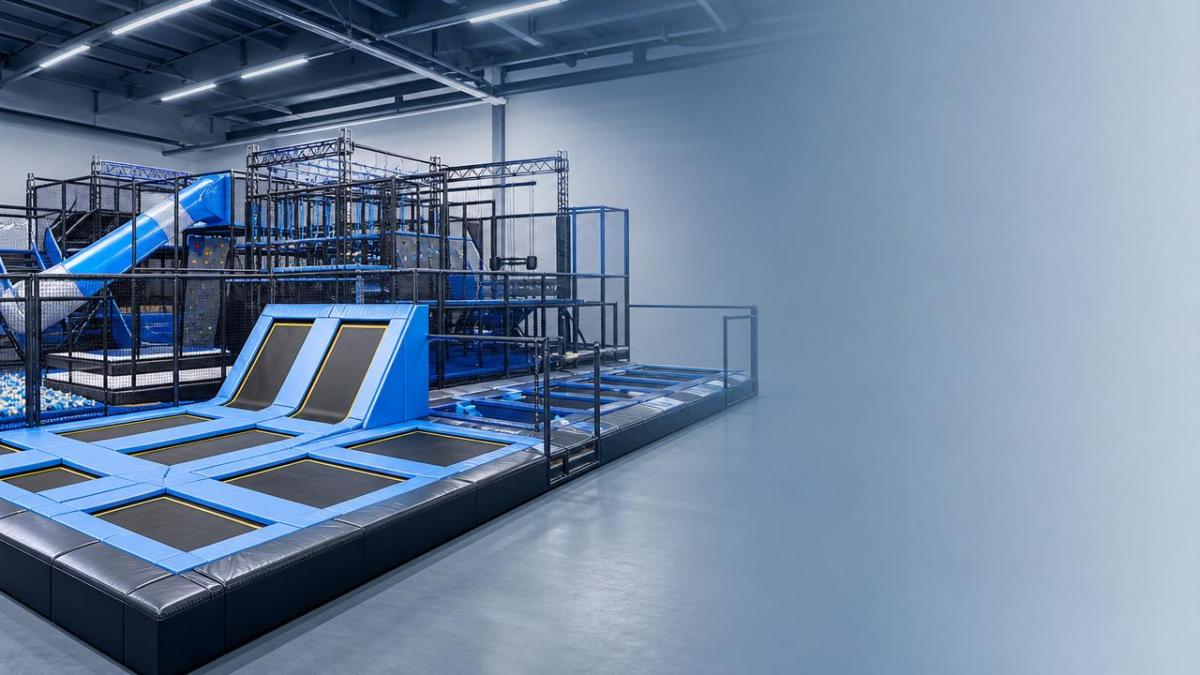
This is one of the most important questions in any trampoline park supplier review because structural quality is the foundation of both safety and maintenance cost. Commercial use creates repetitive dynamic loads, not occasional residential-style use. That means the relevant issue is not whether the structure looks strong, but whether it was engineered for high-frequency, multi-user, impact-driven service.
Ask for specifics: steel thickness ranges, weld inspection process, bolt specification, anti-rust treatment, and design load assumptions for high-use zones such as dodgeball courts, slam dunk lanes, and performance trampolines. A reliable trampoline park supplier should explain why certain zones use different reinforcement logic and where fatigue risk typically appears after years of operation.
Also examine replaceable wear interfaces. For example, if pads, springs, and mats require custom dimensions unique to one project, replacement costs may rise and lead times may lengthen. Standardized modularity often improves lifecycle economics. Commercial evaluators should think in terms of total cost of ownership rather than first shipment value.
Why do consumables and maintenance schedules matter more than the purchase price?
Because revenue depends on uptime. A trampoline park supplier with a quote that is 8% lower may appear competitive, but if pad sets wear out faster, if bed stitching fails early, or if springs need more frequent replacement, operating margin can erode quickly. Consumables are where many commercial projects lose their original ROI model.
A useful buyer question is: what is the expected replacement interval under specified traffic assumptions? Not “how durable is it?” but “what is the replacement cycle if average attendance is X, peak utilization is Y, and daily operating hours are Z?” This shifts the conversation from marketing claims to usage-based forecasting.
You should also ask whether the trampoline park supplier stocks regional spare parts, whether maintenance kits are standardized, and whether preventive checklists are included in the handover package. If parts must be manufactured after failure occurs, downtime becomes expensive. Good suppliers understand that a commercial venue needs a predictable maintenance calendar, not reactive improvisation.
What compliance documents should a business evaluator request before shortlisting a trampoline park supplier?
Compliance should never be treated as a box-ticking exercise. It affects insurance underwriting, landlord approval, local inspection outcomes, and liability posture. A credible trampoline park supplier should be ready to provide test references, material certifications where relevant, installation documentation, operating manuals, and evidence aligned with the standards expected in the destination market.
Business evaluators should request a document package early, not after commercial terms are advanced. That package may include structural calculations, product test reports, maintenance guidance, inspection protocols, and prior project references in similar jurisdictions. The key is not just possession of documents, but their traceability and relevance to the exact attraction mix being proposed.
One common mistake is assuming a globally active trampoline park supplier automatically meets local expectations. In reality, standards interpretation, fire-related materials requirements, and insurer preferences can vary. A strong supplier acknowledges this and helps map the compliance pathway before fabrication begins.
Shortlist comparison table for fast commercial review
How does layout design from a trampoline park supplier affect revenue per square foot?
A trampoline park is not only an equipment package; it is a throughput system. Two suppliers can offer the same floor area and similar attraction count, yet one design may generate meaningfully better revenue because it uses circulation, sightlines, queuing, and zoning more effectively. That is why a trampoline park supplier should be evaluated on commercial layout intelligence, not just visual creativity.
Look for design choices that reduce bottlenecks and improve supervision. Can staff oversee multiple zones without blind spots? Are high-demand attractions positioned to spread traffic rather than concentrate it? Is party-room access separated from jump traffic? Are toddler or low-intensity areas buffered from advanced zones? These details affect guest experience, staffing efficiency, and incident prevention.
An experienced trampoline park supplier should also discuss seasonality and local customer mix. A venue serving family parties has different monetization logic than one targeting teen groups, schools, or fitness programs. Good design reflects the business model, not just a catalog of attractions.
What mistakes do buyers make when comparing trampoline park suppliers?
The biggest mistake is comparing quotes line by line without normalizing scope. One trampoline park supplier may include freight planning, installation supervision, staff training, maintenance manuals, and spare parts kits, while another excludes them. On paper, the cheaper quote wins; in actual project delivery, the cheaper quote often expands.
Another mistake is overvaluing renderings. A polished visual proposal does not verify engineering rigor. Commercial buyers should request bill-of-material logic, maintenance assumptions, and reference projects with operating history. If the supplier cannot connect design choices to operating outcomes, the proposal is not yet decision-grade.
A third mistake is ignoring post-installation reality. Many venues discover only later that training was shallow, inspection routines were unclear, or replacement parts were difficult to source. A strong trampoline park supplier treats opening day as the start of an operating relationship, not the end of a sales cycle.
How should you validate after-sales support before making the final shortlist?
Ask for response commitments in practical terms: who answers technical issues, in what time zone, with what service-level expectation, and through what escalation path. A dependable trampoline park supplier should specify whether diagnostics can be handled remotely, whether field support is available, and what parts are usually kept in stock for fast dispatch.
Reference checks are especially important here. Speak with operators who have been open for more than a year, ideally in markets with comparable attendance intensity. Ask how fast the supplier responds, whether parts matched the promised lead time, and whether warranty issues were resolved with minimal dispute. References from only newly opened projects tell you little about lifecycle support.
If possible, score each trampoline park supplier on support maturity: documentation quality, preventive maintenance system, training depth, spare parts planning, and issue resolution speed. These factors protect uptime and are often more financially meaningful than small differences in initial procurement cost.
Which questions should you ask before moving from shortlist to negotiation?
Before negotiating final price, narrow the conversation to the variables that most influence operational certainty. Ask each trampoline park supplier to clarify the exact deliverables, assumptions, exclusions, and handover criteria. This helps prevent scope ambiguity and gives procurement teams a firmer basis for comparing offers.
- What are the expected wear-part replacement intervals under our attendance model?
- Which standards and local approval requirements does the proposal address, and which remain the buyer’s responsibility?
- What training is included for operations, inspection, and routine maintenance?
- What spare parts package should be purchased at launch to avoid downtime?
- What changes can be made later without structural redesign?
- How are warranty claims handled, and what evidence is required?
These questions force a trampoline park supplier to move from sales positioning to operational accountability. That is exactly where a business evaluator should keep the discussion.
Final FAQ takeaway: what should evaluators prioritize first?
If you are building a trampoline park supplier shortlist, prioritize proof over presentation. Start with structural engineering, lifecycle maintenance data, compliance readiness, layout productivity, and after-sales capability. Then compare price within that filtered group. This sequence is more likely to protect ROI than selecting the cheapest design and hoping operations compensate later.
For teams that need to move from research into supplier conversations, the most useful next step is to request five things from each trampoline park supplier: a detailed scope matrix, compliance document list, replacement-part forecast, installation and training plan, and reference projects with at least one year of operating history. With those inputs, commercial evaluators can judge not just who can build the venue, but who can support a profitable one.
Search News
Hot Articles
- Carbon Fiber StructuresHow to Specify Aerospace Carbon Fiber Assemblies for Lightweight, Load-Bearing PartsJul 11, 2026
- Machine VisionXiaomi, Alibaba DAMO Academy Drive Open-Source Robotics Model Ecosystem, Lowering Algorithm Development Barriers for Overseas SMEs Adopting Chinese Robotics SolutionsMar 30, 2026
- Cobots & ArmsShanxi 'AI+' Conference Showcases Embodied Intelligence with Multinational Buyer Engagement: Key Industry ImplicationsMar 30, 2026
Popular Tags
Recommended News
 Jul 11, 2026How to Specify Aerospace Carbon Fiber Assemblies for Lightweight, Load-Bearing PartsAerospace carbon fiber assemblies: learn how to specify laminate design, load data, joining methods, and inspection controls for lighter, reliable load-bearing aerospace parts.Elena Rostova (UAV Systems Researcher)
 Mar 30, 2026Xiaomi, Alibaba DAMO Academy Drive Open-Source Robotics Model Ecosystem, Lowering Algorithm Development Barriers for Overseas SMEs Adopting Chinese Robotics SolutionsXiaomi & Alibaba DAMO Academy's open-source robotics models lower algorithm barriers for global SMEs. Boost efficiency in manufacturing, logistics & smart retail with ROS 2 compatible solutions.TSV Data Lab
 Mar 30, 2026Shanxi 'AI+' Conference Showcases Embodied Intelligence with Multinational Buyer Engagement: Key Industry ImplicationsShanxi 'AI+' Conference highlights embodied intelligence with Tesla, Ubtech & Jiantao showcasing multimodal robotics. 40+ global buyers validated tech on-site, creating new B2B channels for industrial automation & AI solutions.Chen Wei (Automation Lead Engineer)
 Mar 30, 2026Zhongguancun Unveils 6G Integrated Sensing-Computing-Intelligence Platform to Empower Embodied Robots for Global Industrial ApplicationsZhongguancun's new 6G platform revolutionizes industrial robotics with <10ms latency, empowering global automotive, logistics & port automation. Discover how this tech boosts China's smart manufacturing exports.TSV Data Lab
 Mar 30, 2026Mech-Mind Tianjin Embodied Intelligence R&D and Production Base Goes Live, Cutting Delivery Time by 20%–30% for Global Customized AMR+Vision SolutionsMech-Mind's Tianjin AMR+Vision production base cuts delivery time by 20%-30% for欧美 & Latin American markets. Discover how this PLd-certified facility accelerates customized robotics solutions for smart manufacturing and logistics.Chen Wei (Automation Lead Engineer)
 Mar 30, 2026Boao Forum Reveals 'Co-evolution of Big and Small Brains' Trend in Humanoid Robots, China's Embodied Intelligence Accelerates Adaptation to Overseas Manufacturing Service ScenariosDiscover how China's humanoid robots, featuring 'Co-evolution of Big and Small Brains,' are revolutionizing global manufacturing. Learn about Embodied Tian Gong 3.0's ISO compliance and overseas deployment at Boao Forum 2026.Chen Wei (Automation Lead Engineer)
 Mar 30, 2026China Railway Industrial Secures Patent for Embodied Robotics in Material Handling, Boosting High-Precision Delivery Capabilities for Overseas Infrastructure and Manufacturing ProjectsChina Railway Industrial's new patent for embodied robotics in material handling boosts high-precision delivery for global infrastructure & manufacturing. Discover how this innovation enhances logistics accuracy in automotive, rail transit & EPC projects.Chen Wei (Automation Lead Engineer)
 Sep 28, 2026Spindle Runout Measurement in Germany: DIN Standards, Methods, and Acceptance LimitsSpindle runout measurement Germany: explore DIN standards, proven methods, acceptance limits, and audit-ready practices for reliable machining quality.Dr. Marcus Vance
 Sep 27, 2026How to Select Wall-Mount Edge Devices for Space-Constrained Factory NetworksWall mount edge devices for space-constrained factories: evaluate workload, thermal design, power resilience, cable access, and network reliability for smarter deployments.TSV Data Lab
 Sep 26, 2026Machining Tolerance Analysis: How to Set Limits That Meet Function and Cost TargetsMachining tolerance analysis: learn how to set functional limits, control tolerance stacks, reduce inspection risk, and balance precision with production cost.Dr. Marcus Vance
 Sep 25, 2026How to Evaluate an Industrial Infrastructure Data Platform for Multi-Site OperationsIndustrial infrastructure data platform evaluation guide for multi-site operations: compare data quality, edge resilience, interoperability, governance, and scalable proof-of-value criteria.Victor Lin (Chief Software Architect)
 Sep 24, 2026How to Select Machine Vision Optics for Accurate Inspection at Different Working DistancesMachine vision optics selection guide for accurate inspection at every working distance. Compare FOV, pixel scale, DOF, distortion, lighting, and telecentric options.TSV Data Lab
 Sep 23, 2026How to Evaluate a Machine Vision System Integrator for High-Speed Inspection LinesChoose a machine vision system integrator with proven expertise in high-speed inspection, reliable reject timing, robust optics, and measurable acceptance criteria.TSV Data Lab
 Sep 28, 2026When is a SCADA API the right choice for connecting plant systems?SCADA API guide: learn when governed plant data integration improves traceability, security, and scalability—without compromising real-time control.Victor Lin (Chief Software Architect)
 Sep 27, 2026How SCADA data integration improves traceability across production linesSCADA data integration connects production-line data to improve traceability, accelerate quality investigations, and strengthen safety decisions.Victor Lin (Chief Software Architect)
 Sep 26, 2026What to define before starting SCADA integration planningSCADA integration planning starts with clear scope, control boundaries, data models, cybersecurity, and testing. Discover the definitions that reduce risk and costly rework.Victor Lin (Chief Software Architect)
 Sep 25, 2026How a smart factory with Industrial IoT reduces production blind spotsDiscover how a smart factory with Industrial IoT turns real-time machine, quality, and workflow data into actionable insights that reduce production blind spots and delivery risks.Victor Lin (Chief Software Architect)
 Sep 24, 2026When does Industrial IoT make smart manufacturing easier to scale?Smart manufacturing Industrial IoT scales when trusted data, interoperable systems, and secure workflows turn connected assets into measurable gains.TSV Data Lab
 Sep 23, 2026What drives ultra-precision machining cost at 1-micron tolerance?Ultra precision machining cost per part at 1 micron tolerance depends on process, material, metrology, and yield. Learn how to compare quotes confidently.Dr. Marcus Vance
 Sep 22, 2026Drone Engine-T550CC Applications: Build the UAV Power System Around the MissionAn application guide for Drone Engine-T550CC integration, covering payload planning, airframe matching, cooling, fuel, vibration, test procedures, documentation, and service preparation.Elena Rostova (UAV Systems Researcher)
 Sep 22, 2026How to Evaluate Industrial Edge Computing Vendors for Factory DeploymentIndustrial edge computing vendor evaluation guide for factories: compare latency, protocol fit, reliability, security, and lifecycle support before deployment.TSV Data Lab
 Sep 21, 2026Drone Payload Integration: Matching Power, Data, and Center of Gravity for Reliable FlightsDrone payload integration made practical: balance power, data, center of gravity, and endurance to build safer, more reliable mission-ready flights.Elena Rostova (UAV Systems Researcher)
 Sep 20, 2026Autonomous Navigation Pricing: Cost Drivers and Budget Benchmarks for AMR ProjectsAutonomous navigation price explained: compare AMR cost drivers, software, sensors, integration, safety, and lifecycle budgets to build a scalable project plan.Chen Wei (Automation Lead Engineer)
 Sep 19, 2026How to Scope Automation Integration Services for Multi-System Factory ProjectsAutomation integration services: learn how to scope multi-system factory projects with clear workflows, interface contracts, safety boundaries, and acceptance criteria.Victor Lin (Chief Software Architect)