
Food traceability software is only as strong as lot data quality
Publication Date
author
Food traceability software delivers value only when lot data is accurate, complete, and audit-ready. For manufacturers evaluating food beverage traceability software, weak batch records can break recalls, slow warehouse management system WMS integration, and undermine supplier trust. This article explains why lot data quality is the real foundation of end-to-end traceability, compliance, and faster operational decisions.
Why lot data quality determines whether traceability software actually works
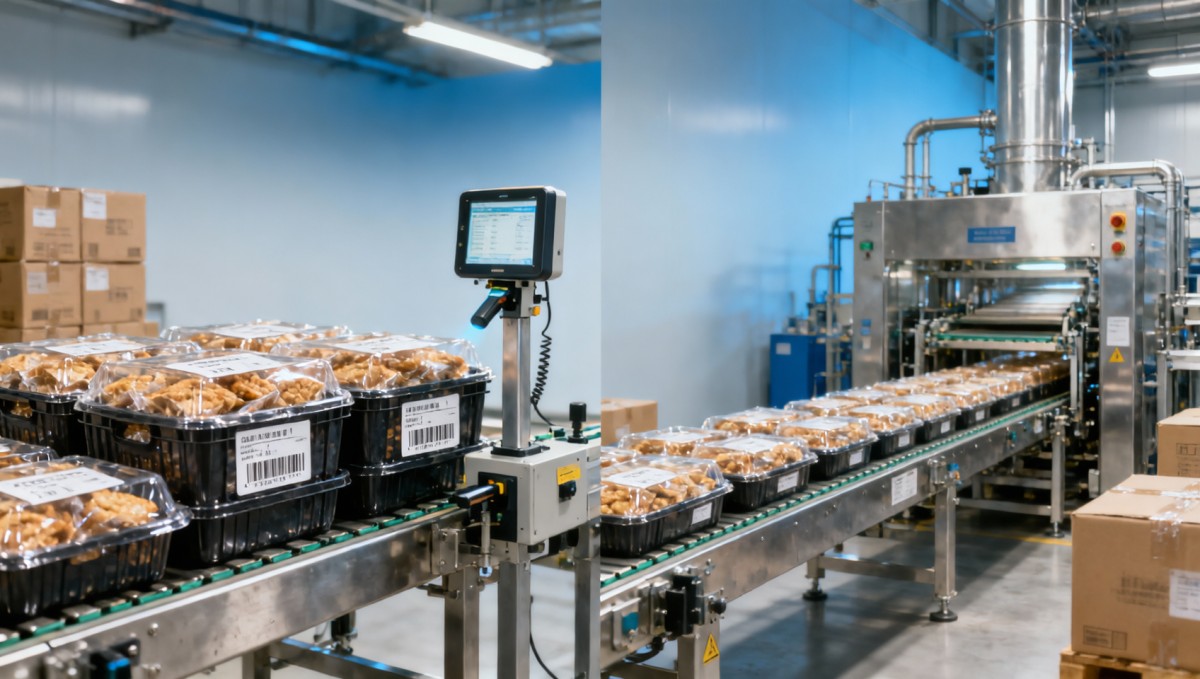
Many teams buy food traceability software expecting instant visibility across receiving, production, storage, and shipment. Yet the software can only process what operators, suppliers, and upstream systems record. If lot data is inconsistent at the source, even a well-designed platform becomes a faster way to move bad information. In practical terms, the traceability chain fails long before the dashboard loads.
For information researchers and enterprise decision-makers, this is the key procurement insight: traceability performance is not defined only by interface quality or report output. It is defined by the integrity of lot creation rules, time stamps, unit conversions, supplier identifiers, and change logs. A recall exercise that should take 2–4 hours can stretch into 1–2 days when records are fragmented across ERP, WMS, spreadsheets, and paper labels.
For operators, poor lot data shows up as duplicate labels, missing production dates, unreadable handheld scans, or batch numbers that do not match packing records. For procurement teams, it appears as implementation overruns, repeated customization requests, and extra validation work during onboarding. For leadership, it becomes a governance issue because incomplete traceability raises both operational risk and brand risk.
TechStat Vanguard approaches this issue with a data-first engineering lens. Instead of accepting broad claims about digital transformation, TSV emphasizes parameter logic, data lineage, and system interoperability. That matters in food beverage traceability software evaluation because the winning solution is rarely the one with the most features. It is the one that preserves lot accuracy across 3 critical layers: master data, transaction data, and event history.
What counts as high-quality lot data?
High-quality lot data is complete enough for audit review, structured enough for system exchange, and precise enough for product isolation. At a minimum, most manufacturers need lot number, material identity, supplier reference, receipt date, quantity, unit of measure, production or transformation event, internal movement record, and outbound link. In regulated or export-sensitive environments, shelf life, retest date, country of origin, and operator confirmation may also be required.
The practical standard is simple: can the business trace one finished item backward to all relevant inputs, and trace one suspect input forward to all potentially affected outputs, within a usable time window? If the answer is no, the software is not the main weakness. The lot data model is.
Common signals that data quality is already breaking traceability
- The same supplier material is received under 2–3 naming conventions, creating false inventory splits.
- Operators manually retype batch IDs because barcode content does not map to internal fields.
- Rework, blending, or repacking events are not assigned new lot relationships, so genealogy ends mid-process.
- Finished goods can be traced to a production date but not to the exact source lots consumed during the run.
Where manufacturers lose control: receiving, production, and WMS integration gaps
In most factories, lot data quality does not collapse in one dramatic event. It degrades across handoff points. The first gap often appears at receiving. Supplier labels may include lot code, production date, and quantity, but not in a format aligned with the buyer’s internal schema. If receiving staff must reinterpret fields manually across 20–50 inbound line items per day, inconsistency becomes routine rather than exceptional.
The second gap appears during production. Food and beverage operations frequently involve splitting, blending, staging, or rework. If the food traceability software cannot record parent-child lot relationships at each transformation event, the digital genealogy becomes shallow. During mock recall or complaint investigation, teams can identify the final batch but not the intermediate process path that connects ingredients, line time, and packaging sequence.
The third gap is warehouse management system WMS integration. When inventory movement data posts every 15–30 minutes instead of in near real time, lot status may be technically recorded but operationally unusable. A batch can appear available in one system, quarantined in another, and already picked in a third record. This is why procurement teams should evaluate synchronization cadence, transaction mapping, and exception handling before signing off on any deployment.
TSV’s engineering perspective is especially useful here because it filters out vague claims such as seamless integration. In traceability projects, integration quality depends on field mapping discipline, validation rules, and event timing. A reliable architecture should make it possible to verify at least 5 checkpoints: inbound lot capture, internal movement, production consumption, finished goods assignment, and outbound shipment linkage.
Typical failure points by process stage
The table below summarizes where lot data often weakens food beverage traceability software performance and what buyers should verify during evaluation.
This comparison shows why traceability maturity should be assessed as a process system, not a software screen. If one stage still relies on manual interpretation or disconnected event capture, the entire recall chain becomes slower and less defensible.
What operators and procurement should inspect during site review
- Observe at least 1 live receiving cycle and confirm whether scanner input maps directly to internal lot fields without retyping.
- Review 3 sample production orders that include rework or split lots, not only simple one-batch runs.
- Check whether WMS and ERP timestamps use the same event logic and time zone controls.
- Run one backward trace and one forward trace using a historical batch from the last 30–90 days.
How to evaluate food beverage traceability software beyond feature lists
A feature comparison alone rarely reveals whether a solution can sustain reliable lot control. Procurement teams should evaluate the software as part of a data discipline program. That means asking how lot numbers are generated, how duplicates are blocked, how unit conversions are governed, and how audit logs preserve change history. A good demo answers workflow questions. A strong solution also answers data integrity questions.
For decision-makers, the buying framework should combine 4 dimensions: data structure, operational usability, integration behavior, and compliance readiness. If one dimension is weak, implementation costs rise later. For example, a platform may support mobile scanning and dashboards, yet still require custom scripting to handle supplier-specific lot prefixes or multi-stage blending. That cost often appears after contract signature, not before.
For users and supervisors, usability matters because lot data quality is created at the point of execution. Screens should reduce manual entry, enforce mandatory fields, and flag invalid combinations before confirmation. In many plants, a 4-step input flow is workable; an 8-step correction flow is not. Strong software design supports accurate behavior under shift pressure, line stoppages, and staff turnover.
TSV recommends a benchmark-style review rather than a sales-led review. Ask vendors to show how the system handles exceptions: short receipts, relabeling, mixed pallets, partial consumption, quality hold, returned goods, and lot merges that should not be allowed. Real traceability strength appears in exception management, not in ideal-path slides.
Procurement checklist for lot-data-centered selection
The following matrix can help procurement, QA, operations, and IT evaluate software using the same criteria.
This table is useful because it shifts vendor discussions from general promises to verifiable control points. It also helps cross-functional teams avoid the common mistake of letting IT, QA, and operations evaluate different success criteria.
A practical 3-phase implementation approach
- Phase 1, 2–6 weeks: clean lot master data, standardize naming rules, define mandatory fields, and map supplier input formats.
- Phase 2, 4–8 weeks: connect receiving, production, and WMS transactions; test exception handling and user permissions.
- Phase 3, 2–4 weeks: run mock recall drills, verify audit exports, and measure trace time against internal targets.
Compliance, recall readiness, and the hidden cost of weak batch records
In food manufacturing, traceability is not only an operations convenience. It supports recall control, customer response, supplier accountability, and documented due diligence. Weak batch records create hidden cost in three directions: longer investigation time, wider product holds, and more labor spent reconciling records after the fact. Even when no formal enforcement action occurs, the business still absorbs disruption through overtime, delayed releases, and damaged buyer confidence.
This is why audit-ready data matters. Audit-ready does not mean perfect data at every moment. It means records are sufficiently complete, attributable, and reviewable to show what happened, when it happened, who recorded it, and which lots were affected. For many plants, the realistic goal is to assemble a defensible trace file within the same shift or within a few hours, not after multiple business days of spreadsheet reconciliation.
Industry practices vary by market and product category, but many buyers, retailers, and food safety teams expect fast trace demonstrations, version-controlled records, and clear hold-release status. Where shelf-life-sensitive products are involved, the tolerance for data lag is even lower. A lot record delayed by 12–24 hours may still exist, but it may not support timely containment decisions.
From TSV’s standpoint, the compliance question is really an engineering question: is the lot record granular enough to support isolation without overexpansion? If a single suspect ingredient forces the business to quarantine 10 production runs because internal genealogy is incomplete, the cost comes from poor data precision, not from a lack of software modules.
Common misconceptions that weaken recall readiness
“If the lot exists somewhere, we are covered”
A batch number stored in one module is not enough. It must link to the right material, quantity, event time, and downstream disposition. Otherwise, traceability becomes record existence rather than record usability.
“We can reconstruct the path manually during an incident”
Manual reconstruction may work for a small facility with low SKU complexity, but it becomes unstable when there are multiple lines, repacks, contract manufacturing steps, or shared storage locations. Manual methods also increase inconsistency across shifts.
“More data automatically means better traceability”
Only relevant, standardized, validated data improves outcomes. Excessive free-text fields and uncontrolled attachments create noise. The goal is not maximum data volume. The goal is actionable lot data with controlled semantics.
FAQ: what buyers and operators ask before investing in traceability upgrades
How do we know whether our current lot data is good enough?
Start with 3 tests. First, choose one finished goods lot from the past 60 days and trace backward to all consumed inputs. Second, choose one raw material lot and trace forward to every finished shipment affected. Third, review whether every data change shows user, timestamp, and reason. If any test depends on memory, email search, or manual spreadsheet stitching, your lot data quality likely needs correction before major software expansion.
Which scenarios make food beverage traceability software selection more difficult?
Complexity increases when operations involve blending, repacking, co-manufacturing, short shelf life, multi-site storage, or supplier label variation. These cases require deeper genealogy logic and tighter integration with WMS, quality status, and production events. Buyers in these environments should request scenario-based demos rather than generic inventory demos.
What should procurement prioritize if budget is limited?
Prioritize the controls that protect lot identity first: standardized lot schema, barcode capture, duplicate prevention, transformation tracking, and audit logs. Advanced dashboards can wait if the underlying batch record is unreliable. In limited-budget projects, a narrower but disciplined deployment often performs better than a broad rollout with weak data rules.
How long does a practical rollout usually take?
For a focused implementation covering one site and core traceability workflows, many teams plan in the range of 8–18 weeks, depending on master data quality, interface complexity, and operator training needs. Projects with multiple facilities, legacy customizations, or inconsistent supplier labeling can take longer because data standardization must happen before automation can be trusted.
Why work with a data-driven technical partner before you commit
Food traceability software decisions often fail when vendors, integrators, and internal teams use different definitions of success. TechStat Vanguard brings a different approach: engineering truth through data. That means focusing on measurable control points such as lot structure, genealogy depth, exception logic, synchronization behavior, and audit readiness instead of broad marketing language.
For researchers, TSV helps turn scattered claims into comparable technical criteria. For operators, TSV highlights whether workflow design supports accurate execution under real plant conditions. For procurement teams, TSV clarifies what to request in demos, pilots, and quotation reviews. For decision-makers, TSV reduces the risk of approving a platform that looks complete on paper but fails during recall simulation or multi-system reconciliation.
If you are reviewing food beverage traceability software, contacting TSV is most valuable before vendor shortlisting or before final approval. The discussion can focus on lot data schema, WMS integration checkpoints, recall drill expectations, deployment sequence, and evidence to request from suppliers. These are the factors that shorten qualification cycles and improve implementation confidence.
Reach out if you need support with parameter confirmation, traceability workflow review, software selection criteria, integration scope definition, audit-readiness checkpoints, sample evaluation logic, or quotation comparison. In hard-tech and industrial decision-making, trust should come from verifiable structure. That is where reliable traceability begins.
Search News
Hot Articles
- Carbon Fiber StructuresHow to Specify Aerospace Carbon Fiber Assemblies for Lightweight, Load-Bearing PartsJul 11, 2026
- Machine VisionXiaomi, Alibaba DAMO Academy Drive Open-Source Robotics Model Ecosystem, Lowering Algorithm Development Barriers for Overseas SMEs Adopting Chinese Robotics SolutionsMar 30, 2026
- Cobots & ArmsShanxi 'AI+' Conference Showcases Embodied Intelligence with Multinational Buyer Engagement: Key Industry ImplicationsMar 30, 2026
Popular Tags
Recommended News
 Jul 11, 2026How to Specify Aerospace Carbon Fiber Assemblies for Lightweight, Load-Bearing PartsAerospace carbon fiber assemblies: learn how to specify laminate design, load data, joining methods, and inspection controls for lighter, reliable load-bearing aerospace parts.Elena Rostova (UAV Systems Researcher)
 Mar 30, 2026Xiaomi, Alibaba DAMO Academy Drive Open-Source Robotics Model Ecosystem, Lowering Algorithm Development Barriers for Overseas SMEs Adopting Chinese Robotics SolutionsXiaomi & Alibaba DAMO Academy's open-source robotics models lower algorithm barriers for global SMEs. Boost efficiency in manufacturing, logistics & smart retail with ROS 2 compatible solutions.TSV Data Lab
 Mar 30, 2026Shanxi 'AI+' Conference Showcases Embodied Intelligence with Multinational Buyer Engagement: Key Industry ImplicationsShanxi 'AI+' Conference highlights embodied intelligence with Tesla, Ubtech & Jiantao showcasing multimodal robotics. 40+ global buyers validated tech on-site, creating new B2B channels for industrial automation & AI solutions.Chen Wei (Automation Lead Engineer)
 Mar 30, 2026Zhongguancun Unveils 6G Integrated Sensing-Computing-Intelligence Platform to Empower Embodied Robots for Global Industrial ApplicationsZhongguancun's new 6G platform revolutionizes industrial robotics with <10ms latency, empowering global automotive, logistics & port automation. Discover how this tech boosts China's smart manufacturing exports.TSV Data Lab
 Mar 30, 2026Mech-Mind Tianjin Embodied Intelligence R&D and Production Base Goes Live, Cutting Delivery Time by 20%–30% for Global Customized AMR+Vision SolutionsMech-Mind's Tianjin AMR+Vision production base cuts delivery time by 20%-30% for欧美 & Latin American markets. Discover how this PLd-certified facility accelerates customized robotics solutions for smart manufacturing and logistics.Chen Wei (Automation Lead Engineer)
 Mar 30, 2026Boao Forum Reveals 'Co-evolution of Big and Small Brains' Trend in Humanoid Robots, China's Embodied Intelligence Accelerates Adaptation to Overseas Manufacturing Service ScenariosDiscover how China's humanoid robots, featuring 'Co-evolution of Big and Small Brains,' are revolutionizing global manufacturing. Learn about Embodied Tian Gong 3.0's ISO compliance and overseas deployment at Boao Forum 2026.Chen Wei (Automation Lead Engineer)
 Mar 30, 2026China Railway Industrial Secures Patent for Embodied Robotics in Material Handling, Boosting High-Precision Delivery Capabilities for Overseas Infrastructure and Manufacturing ProjectsChina Railway Industrial's new patent for embodied robotics in material handling boosts high-precision delivery for global infrastructure & manufacturing. Discover how this innovation enhances logistics accuracy in automotive, rail transit & EPC projects.Chen Wei (Automation Lead Engineer)
 Oct 14, 2026Drone Frame Composites: Carbon Fiber vs. Fiberglass for Weight and StiffnessExplore drone structural materials composites: compare carbon fiber and fiberglass for weight, stiffness, cost, and antenna compatibility. Find the right material for your drone frame.Elena Rostova (UAV Systems Researcher)
 Oct 13, 2026Smart Cameras vs. PC-Based Machine Vision: Which Fits High-Speed Inspection?This industrial product comparison for machine vision weighs smart cameras vs. PC-based systems on latency, throughput, and cost. Discover your best fit for high-speed inspection.TSV Data Lab
 Oct 12, 2026How to Verify RoHS Compliance in Industrial Sensing Systems Before DeploymentRoHS compliant sensing systems: learn how to verify materials, supplier declarations, testing, and configuration controls before industrial deployment.TSV Data Lab
 Oct 11, 2026How Procurement-Oriented Content Taxonomy Improves B2B Buying JourneysProcurement-oriented content taxonomy streamlines B2B buying journeys with clearer evidence, supplier comparisons, risk visibility, and faster approvals.TSV Data Lab
 Oct 10, 2026How to Select a Machine Performance Monitoring Platform for OEE and Downtime ReductionMachine performance monitoring platform selection guide: validate machine states, OEE data, downtime reasons, integrations, and scalability to reduce losses with confidence.TSV Data Lab
 Oct 08, 2026How to Machine Inconel 625 Blades Without Heat Cracks or Edge ChippingInconel 625 blade machining guide: prevent heat cracks, edge chipping, chatter, and work hardening with proven tooling, cooling, fixturing, and inspection strategies.Dr. Marcus Vance
 Oct 07, 2026How to Evaluate an HMI Panel Distributor for Industrial Automation ProjectsHMI panel distributor evaluation guide: verify technical compatibility, traceability, supply reliability, lifecycle support, and total cost for automation projects.Victor Lin (Chief Software Architect)
 Oct 06, 2026Navigation Fault Tolerance Standards for AMRs: What Safety Teams Must VerifyNavigation fault tolerance standards: learn what AMR safety teams must verify, from localization loss and sensor faults to stopping distance, safe restart, and site-specific validation.Chen Wei (Automation Lead Engineer)
 Oct 05, 2026Calculating Edge Computing Total Cost of Ownership Across Distributed SitesEdge computing ownership cost explained: calculate deployment, energy, connectivity, security, remote support, and refresh costs across distributed sites.TSV Data Lab
 Oct 04, 2026CAD/CAM Benchmarking in the GCC: What Manufacturers Should Ask a ConsultantCAD CAM benchmark consultant GCC guide: learn the key questions manufacturers should ask to validate post-processors, workflows, machine performance, and production risk.Victor Lin (Chief Software Architect)
 Oct 03, 2026Selecting Automotive Radar Sensor Modules for ADAS Range, Resolution, and IntegrationAutomotive radar sensor module selection guide for ADAS: compare range, resolution, field of view, latency, and integration to build safer, reliable vehicle systems.TSV Data Lab
 Oct 02, 2026How to Qualify Machined Parts Suppliers for Hard Tech ProgramsHard tech supply chain machined parts demand rigorous supplier qualification. Learn how to assess capability, traceability, quality controls, and delivery resilience.Dr. Marcus Vance
 Oct 01, 2026How to Select an Outdoor Security Radar Sensor for Perimeter Detection?Outdoor security radar sensor selection guide: compare range, accuracy, false-alarm control, integration, and field testing for reliable perimeter detection.TSV Data Lab
 Sep 30, 2026How to Evaluate Solid-State LiDAR Hardware for Outdoor Autonomous VehiclesSolid state LiDAR hardware evaluation guide for outdoor autonomous vehicles—compare range, point-cloud quality, environmental resilience, integration, and safety.TSV Data Lab
 Sep 29, 2026ISO 9283 Repeatability: How to Evaluate Cobot Positioning PerformanceISO 9283 cobot repeatability explained: learn how payload, reach, approach direction, and test conditions affect positioning performance and cell capability.Chen Wei (Automation Lead Engineer)
 Oct 14, 2026How tight can micro machining aerospace tolerances be in production?Micro machining aerospace tolerances can reach low-micron levels in production. Learn what controls repeatability, inspection confidence, and flight-critical quality.Dr. Marcus Vance
 Oct 13, 2026How to keep an industrial robotic integration project on scheduleIndustrial robotic integration project management: keep automation on schedule with proven controls for interfaces, suppliers, FAT, commissioning, and change risk.Victor Lin (Chief Software Architect)























