
Digital twin for wind turbines: what actually improves uptime?
Publication Date
author
A digital twin for wind turbine programs can raise uptime—but only when models are tied to real maintenance workflows, failure modes, and site data. For engineers, operators, buyers, and executives, the real question is not visualization, but whether the twin improves fault prediction, spare-part planning, and decision speed across the asset lifecycle.
What does a digital twin for wind turbines actually do in the field?
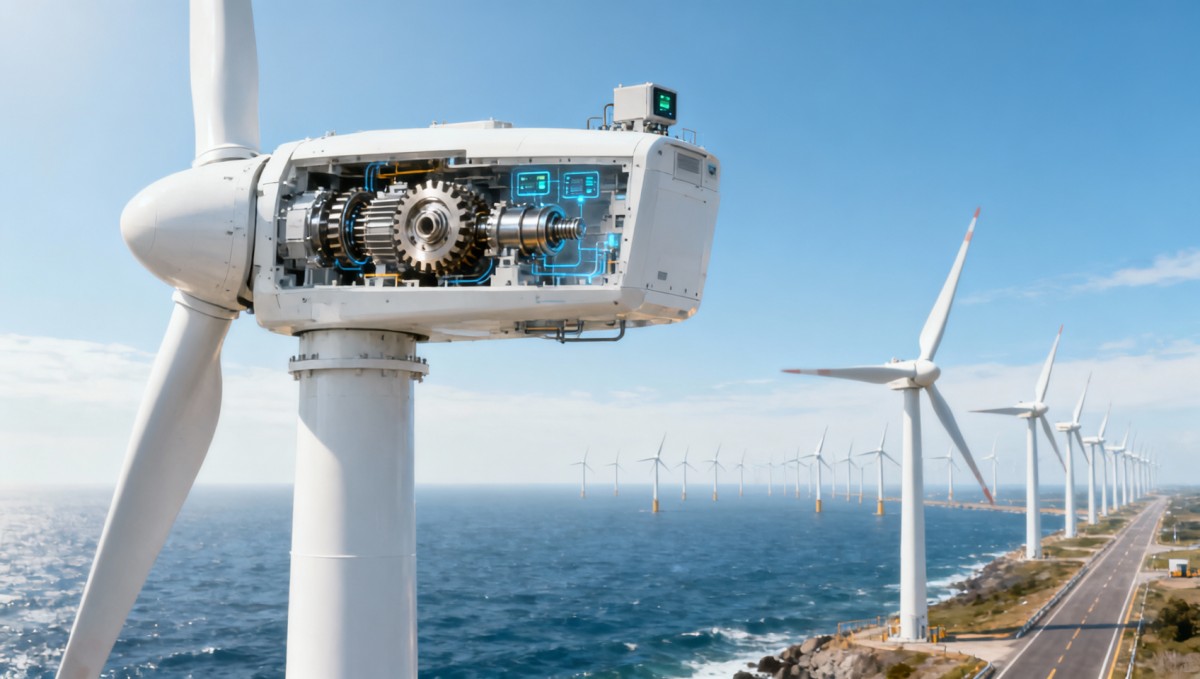
In wind operations, a digital twin is not just a 3D model or dashboard. It is a structured digital representation of turbine behavior that connects design assumptions, sensor streams, maintenance history, and environmental conditions into one decision layer. In practical terms, it should help teams answer 3 recurring questions: what is degrading, how fast is it degrading, and what action should be scheduled before output or availability drops.
For operators, the twin becomes useful when it tracks failure modes across the drivetrain, pitch system, yaw system, converter, transformer, blades, and tower interfaces. For procurement teams, it becomes useful when those insights improve the timing of spare-part orders, crane planning, service contracts, and supplier qualification. For executives, the key metric is not software adoption but whether the site sees fewer unplanned stoppages over 1 quarter, 2 quarters, and 12-month maintenance cycles.
Many programs fail because they stop at data aggregation. A wind turbine digital twin improves uptime only when it links SCADA signals, condition monitoring, inspection records, and work orders. If the model flags bearing temperature drift but no workflow assigns root-cause review within 24–72 hours, the insight does not change availability. This is where engineering discipline matters more than visual sophistication.
At TSV, the focus is aligned with engineering truth rather than promotional claims. That means asking whether the twin can support measurable maintenance decisions under real site conditions: varying wind classes, remote farm logistics, mixed turbine vintages, intermittent sensor quality, and different OEM service structures. Parameters, thresholds, and decision latency matter more than presentation.
Core functions that influence uptime
- Failure pattern detection using SCADA, vibration, oil debris, temperature, and power quality signals collected at intervals such as 10 seconds, 1 minute, or 10 minutes depending on architecture.
- Remaining useful life estimation for components that drive high downtime cost, especially main bearings, gearboxes, generators, pitch bearings, and power electronics.
- Maintenance workflow orchestration that converts alerts into inspections, spare reservations, field crew scheduling, and escalation rules.
- Scenario simulation for derating, shutdown windows, weather-access planning, and comparison of repair now versus defer to the next service window.
Which digital twin capabilities improve uptime, and which ones mainly add noise?
Not every digital twin feature has equal operational value. In wind fleets, uptime usually improves from a narrow set of capabilities: anomaly detection tuned to component failure modes, maintenance prioritization, and site-specific context. Features that often create noise include generic health scores without traceable variables, simulation layers disconnected from maintenance planning, and benchmark claims that ignore turbine age, terrain, turbulence intensity, or curtailment history.
A useful evaluation method is to separate decision outputs into 4 levels. Level 1 is visibility: charts, trends, and alarms. Level 2 is diagnosis: probable fault source and confidence ranking. Level 3 is actionability: recommended inspection, parts, and timing. Level 4 is business impact: expected reduction in downtime hours, truck rolls, or repeat failures. Many vendors are strong at Level 1 and weak at Levels 3–4, where uptime is actually won.
The table below helps procurement and engineering teams compare high-value and low-value digital twin functions for wind turbine uptime programs. It is intended for mixed audiences, from technical evaluators to budget owners who need to decide what should be included in a pilot or framework agreement.
The practical lesson is simple: buy the parts of a wind turbine digital twin that shorten response cycles and reduce avoidable downtime. If a feature cannot be mapped to detection, diagnosis, planning, or repair execution, it should not dominate the budget. This is especially important for multi-site operators managing both near-term availability and longer-term capex decisions.
Why some uptime projects stall
Common blockers include incomplete sensor coverage, inconsistent SCADA tag naming, no agreed failure taxonomy, and unclear ownership between reliability, operations, and external service providers. Another issue is pilot scope. A 6–12 week pilot focused on 1 high-value failure mode is often more informative than a broad but shallow rollout across every subsystem.
TSV’s data-first perspective is useful here because teams need a commercial filter. Marketing language often promises predictive maintenance in general terms, but real purchasing decisions should be based on signal quality, alarm precision, integration burden, and how the model behaves under missing or noisy field data.
How should buyers evaluate digital twin architecture, data quality, and integration risk?
For procurement teams, the central question is not whether the platform is advanced, but whether the architecture fits the operating environment. Wind portfolios often include turbines from different OEMs, firmware generations, and communication layers. A digital twin for wind turbines must handle fragmented data, delayed uploads, and maintenance records stored in separate systems. Integration risk can easily become the hidden cost driver.
A disciplined buying process usually reviews 5 areas: data ingestion, model logic, workflow integration, cybersecurity, and service support. Data ingestion should define which sources are mandatory in phase 1, such as SCADA, CMS, alarms, and work orders. Model logic should be explainable enough for engineers to validate thresholds. Workflow integration should connect to CMMS or EAM tools so that recommendations lead to action within a predictable service loop.
The table below is a practical procurement guide for teams preparing a request for information, pilot scope, or supplier comparison. It focuses on criteria that affect uptime rather than cosmetic software differences.
A strong procurement process should also define success metrics before the pilot begins. Examples include reduction in false-positive alerts over 8–12 weeks, faster mean time to acknowledge, fewer repeat failures after intervention, or improved spare-part readiness during seasonal maintenance windows. Without these metrics, suppliers can claim progress without proving uptime impact.
A practical 4-step selection sequence
- Choose 1–2 failure modes with clear downtime cost, such as drivetrain overheating or pitch actuator anomalies.
- Validate data availability across at least one representative turbine group, not only the cleanest site.
- Run a limited pilot with defined workflows, roles, and response windows such as 24 hours for review and 7 days for inspection planning.
- Review technical outcomes and commercial implications together, including service burden, integration scope, and future fleet scaling.
Where standards and compliance fit
While no single standard defines a digital twin program for all wind assets, buyers should still review common frameworks around asset management, cybersecurity, and condition monitoring practices. In many organizations, ISO 55000 asset management concepts, IEC-oriented data environments, internal OT security policies, and CMMS governance rules all shape implementation. Compliance is less about a label and more about reliable data handling and accountable maintenance decisions.
Which implementation choices decide whether the digital twin becomes a maintenance tool or a reporting layer?
Implementation is where many wind turbine digital twin projects either prove value or become another dashboard. A productive rollout usually starts with one asset family, one decision chain, and one maintenance outcome. For example, if the objective is gearbox uptime, the team should define the inspection trigger, the responsible analyst, the maintenance planner, the spare-part rule, and the field execution window before activating broad model outputs.
The workflow should be explicit. When an anomaly exceeds a threshold, who reviews it within 24 hours? What evidence is required before opening a work order? Which conditions justify immediate shutdown versus monitored operation until the next low-wind access window? These choices sound operational rather than digital, but they determine whether the twin changes uptime or just changes reporting vocabulary.
Cross-functional alignment matters because each audience uses the twin differently. Operators need alarm clarity and response steps. Reliability engineers need traceable variables and historical comparisons. Procurement needs parts lead times, service exposure, and vendor dependencies. Executives need a business case covering availability, major component risk, and budget predictability over 6–18 months.
A practical implementation cadence often includes 3 phases: baseline setup in 2–6 weeks, pilot validation in 6–12 weeks, and scaled deployment in the following quarter if results are credible. The exact timeline depends on data cleanliness, approval flows, and whether the site already uses condition monitoring and structured work-order systems.
Implementation checklist for uptime-focused teams
- Define 3–5 critical failure modes and map each one to specific sensor tags, inspection methods, and action thresholds.
- Create alarm tiers so that advisory, warning, and urgent events have different response times and evidence requirements.
- Link the digital twin to spare-part logic, especially for components with 2–12 week lead times or constrained crane availability.
- Review false positives monthly during the first quarter and update thresholds using field feedback rather than leaving rules static.
Common mistakes that reduce uptime gains
One mistake is treating the same model as equally valid across all turbine models, climates, and maintenance histories. Another is assuming more alarms mean better protection. In reality, overloaded teams start ignoring noisy systems. A third mistake is keeping maintenance records unstructured. If technicians cannot log root cause, repair scope, and replaced parts consistently, the twin loses the feedback loop needed to improve predictions.
TSV’s engineering-led view emphasizes this point: the value of a digital twin depends on traceability. Decision-makers should ask for evidence of model governance, retraining logic, and threshold review discipline. In hard-tech operations, tolerances, definitions, and workflow ownership are what convert digital promise into measurable uptime.
FAQ: what should engineers, operators, and buyers ask before investing?
How much historical data is usually needed for a wind turbine digital twin?
There is no universal threshold, but many teams aim for 12–24 months of operational and maintenance history when available, because seasonal wind variation and maintenance cycles can distort short datasets. If less history exists, a pilot can still start, but expectations should focus on anomaly detection and workflow testing rather than high-confidence life prediction.
Is a digital twin only suitable for large fleets?
No. Large fleets gain from benchmarking and scale, but smaller portfolios can still benefit if a single component failure causes high downtime cost, difficult site access, or expensive mobilization. For a small fleet, the business case often depends on preventing even a few major unplanned interventions per year rather than optimizing a large analytics estate.
What should buyers prioritize when budgets are limited?
Prioritize the functions closest to action: failure-mode models, workflow integration, and spare-part planning support. Delay broad visualization layers or low-value features until the team proves benefit in one or two high-cost failure domains. A focused pilot with clear thresholds and response ownership usually gives better commercial visibility than a broad but lightly used platform.
What is the biggest misconception about digital twin uptime gains?
The biggest misconception is that prediction alone improves availability. It does not. Uptime rises when predictions are trusted, reviewed quickly, translated into work orders, supported by parts availability, and executed within practical access windows. The twin is one layer in a chain that includes people, process, and logistics.
Why work with TSV when assessing digital twin value for wind turbine uptime?
TechStat Vanguard is positioned for teams that need engineering clarity rather than marketing abstraction. In complex hard-tech procurement, the challenge is rarely a lack of claims. It is a lack of verifiable parameters, realistic comparison logic, and decision-ready interpretation. That is especially true for digital twin programs, where software language can obscure the real issues of signal integrity, model trust, service workflow, and lifecycle economics.
TSV’s data-driven approach helps information researchers, operators, procurement professionals, and enterprise decision-makers ask the right questions before budget is committed. Instead of generic promises, the focus stays on measurable items: fault-detection pathways, integration boundaries, maintenance timing, spare-part planning logic, and the practical limits of site data. This reduces trial-and-error cost and shortens supplier qualification cycles.
If you are evaluating a digital twin for wind turbines, you can contact TSV for support on parameter confirmation, pilot scope definition, supplier comparison structure, maintenance workflow mapping, typical delivery and integration timelines, and the commercial implications of different architecture choices. We can also help frame the right technical questions for RFIs, technical reviews, and internal decision meetings.
For teams preparing a purchase decision, the most useful next step is not a generic demo. It is a disciplined review of your asset mix, data availability, critical failure modes, and spare-part constraints. Bring those inputs into the discussion, and the conversation becomes concrete: which components to monitor first, what thresholds matter, what implementation sequence is realistic, and where the digital twin can genuinely improve uptime across the asset lifecycle.
Search News
Hot Articles
- Carbon Fiber StructuresHow to Specify Aerospace Carbon Fiber Assemblies for Lightweight, Load-Bearing PartsJul 11, 2026
- Machine VisionXiaomi, Alibaba DAMO Academy Drive Open-Source Robotics Model Ecosystem, Lowering Algorithm Development Barriers for Overseas SMEs Adopting Chinese Robotics SolutionsMar 30, 2026
- Cobots & ArmsShanxi 'AI+' Conference Showcases Embodied Intelligence with Multinational Buyer Engagement: Key Industry ImplicationsMar 30, 2026
Popular Tags
Recommended News
 Jul 11, 2026How to Specify Aerospace Carbon Fiber Assemblies for Lightweight, Load-Bearing PartsAerospace carbon fiber assemblies: learn how to specify laminate design, load data, joining methods, and inspection controls for lighter, reliable load-bearing aerospace parts.Elena Rostova (UAV Systems Researcher)
 Mar 30, 2026Xiaomi, Alibaba DAMO Academy Drive Open-Source Robotics Model Ecosystem, Lowering Algorithm Development Barriers for Overseas SMEs Adopting Chinese Robotics SolutionsXiaomi & Alibaba DAMO Academy's open-source robotics models lower algorithm barriers for global SMEs. Boost efficiency in manufacturing, logistics & smart retail with ROS 2 compatible solutions.TSV Data Lab
 Mar 30, 2026Shanxi 'AI+' Conference Showcases Embodied Intelligence with Multinational Buyer Engagement: Key Industry ImplicationsShanxi 'AI+' Conference highlights embodied intelligence with Tesla, Ubtech & Jiantao showcasing multimodal robotics. 40+ global buyers validated tech on-site, creating new B2B channels for industrial automation & AI solutions.Chen Wei (Automation Lead Engineer)
 Mar 30, 2026Zhongguancun Unveils 6G Integrated Sensing-Computing-Intelligence Platform to Empower Embodied Robots for Global Industrial ApplicationsZhongguancun's new 6G platform revolutionizes industrial robotics with <10ms latency, empowering global automotive, logistics & port automation. Discover how this tech boosts China's smart manufacturing exports.TSV Data Lab
 Mar 30, 2026Mech-Mind Tianjin Embodied Intelligence R&D and Production Base Goes Live, Cutting Delivery Time by 20%–30% for Global Customized AMR+Vision SolutionsMech-Mind's Tianjin AMR+Vision production base cuts delivery time by 20%-30% for欧美 & Latin American markets. Discover how this PLd-certified facility accelerates customized robotics solutions for smart manufacturing and logistics.Chen Wei (Automation Lead Engineer)
 Mar 30, 2026Boao Forum Reveals 'Co-evolution of Big and Small Brains' Trend in Humanoid Robots, China's Embodied Intelligence Accelerates Adaptation to Overseas Manufacturing Service ScenariosDiscover how China's humanoid robots, featuring 'Co-evolution of Big and Small Brains,' are revolutionizing global manufacturing. Learn about Embodied Tian Gong 3.0's ISO compliance and overseas deployment at Boao Forum 2026.Chen Wei (Automation Lead Engineer)
 Mar 30, 2026China Railway Industrial Secures Patent for Embodied Robotics in Material Handling, Boosting High-Precision Delivery Capabilities for Overseas Infrastructure and Manufacturing ProjectsChina Railway Industrial's new patent for embodied robotics in material handling boosts high-precision delivery for global infrastructure & manufacturing. Discover how this innovation enhances logistics accuracy in automotive, rail transit & EPC projects.Chen Wei (Automation Lead Engineer)
 Oct 14, 2026Drone Frame Composites: Carbon Fiber vs. Fiberglass for Weight and StiffnessExplore drone structural materials composites: compare carbon fiber and fiberglass for weight, stiffness, cost, and antenna compatibility. Find the right material for your drone frame.Elena Rostova (UAV Systems Researcher)
 Oct 13, 2026Smart Cameras vs. PC-Based Machine Vision: Which Fits High-Speed Inspection?This industrial product comparison for machine vision weighs smart cameras vs. PC-based systems on latency, throughput, and cost. Discover your best fit for high-speed inspection.TSV Data Lab
 Oct 12, 2026How to Verify RoHS Compliance in Industrial Sensing Systems Before DeploymentRoHS compliant sensing systems: learn how to verify materials, supplier declarations, testing, and configuration controls before industrial deployment.TSV Data Lab
 Oct 11, 2026How Procurement-Oriented Content Taxonomy Improves B2B Buying JourneysProcurement-oriented content taxonomy streamlines B2B buying journeys with clearer evidence, supplier comparisons, risk visibility, and faster approvals.TSV Data Lab
 Oct 10, 2026How to Select a Machine Performance Monitoring Platform for OEE and Downtime ReductionMachine performance monitoring platform selection guide: validate machine states, OEE data, downtime reasons, integrations, and scalability to reduce losses with confidence.TSV Data Lab
 Oct 08, 2026How to Machine Inconel 625 Blades Without Heat Cracks or Edge ChippingInconel 625 blade machining guide: prevent heat cracks, edge chipping, chatter, and work hardening with proven tooling, cooling, fixturing, and inspection strategies.Dr. Marcus Vance
 Oct 07, 2026How to Evaluate an HMI Panel Distributor for Industrial Automation ProjectsHMI panel distributor evaluation guide: verify technical compatibility, traceability, supply reliability, lifecycle support, and total cost for automation projects.Victor Lin (Chief Software Architect)
 Oct 06, 2026Navigation Fault Tolerance Standards for AMRs: What Safety Teams Must VerifyNavigation fault tolerance standards: learn what AMR safety teams must verify, from localization loss and sensor faults to stopping distance, safe restart, and site-specific validation.Chen Wei (Automation Lead Engineer)
 Oct 05, 2026Calculating Edge Computing Total Cost of Ownership Across Distributed SitesEdge computing ownership cost explained: calculate deployment, energy, connectivity, security, remote support, and refresh costs across distributed sites.TSV Data Lab
 Oct 04, 2026CAD/CAM Benchmarking in the GCC: What Manufacturers Should Ask a ConsultantCAD CAM benchmark consultant GCC guide: learn the key questions manufacturers should ask to validate post-processors, workflows, machine performance, and production risk.Victor Lin (Chief Software Architect)
 Oct 03, 2026Selecting Automotive Radar Sensor Modules for ADAS Range, Resolution, and IntegrationAutomotive radar sensor module selection guide for ADAS: compare range, resolution, field of view, latency, and integration to build safer, reliable vehicle systems.TSV Data Lab
 Oct 02, 2026How to Qualify Machined Parts Suppliers for Hard Tech ProgramsHard tech supply chain machined parts demand rigorous supplier qualification. Learn how to assess capability, traceability, quality controls, and delivery resilience.Dr. Marcus Vance
 Oct 01, 2026How to Select an Outdoor Security Radar Sensor for Perimeter Detection?Outdoor security radar sensor selection guide: compare range, accuracy, false-alarm control, integration, and field testing for reliable perimeter detection.TSV Data Lab
 Sep 30, 2026How to Evaluate Solid-State LiDAR Hardware for Outdoor Autonomous VehiclesSolid state LiDAR hardware evaluation guide for outdoor autonomous vehicles—compare range, point-cloud quality, environmental resilience, integration, and safety.TSV Data Lab
 Sep 29, 2026ISO 9283 Repeatability: How to Evaluate Cobot Positioning PerformanceISO 9283 cobot repeatability explained: learn how payload, reach, approach direction, and test conditions affect positioning performance and cell capability.Chen Wei (Automation Lead Engineer)
 Oct 14, 2026How tight can micro machining aerospace tolerances be in production?Micro machining aerospace tolerances can reach low-micron levels in production. Learn what controls repeatability, inspection confidence, and flight-critical quality.Dr. Marcus Vance
 Oct 13, 2026How to keep an industrial robotic integration project on scheduleIndustrial robotic integration project management: keep automation on schedule with proven controls for interfaces, suppliers, FAT, commissioning, and change risk.Victor Lin (Chief Software Architect)























