
Automotive assembly twins promise speed, but where is the payoff?
Publication Date
author
A digital twin for automotive assembly line can accelerate changeovers, improve robotic welding offline programming, and sharpen vision based quality inspection software outcomes—but speed alone does not guarantee ROI. For engineers, buyers, and decision-makers, the real question is where measurable value appears: lower downtime, better quality, faster launches, or tighter MES integration with SAP ERP.
Where does an automotive assembly digital twin actually create value?
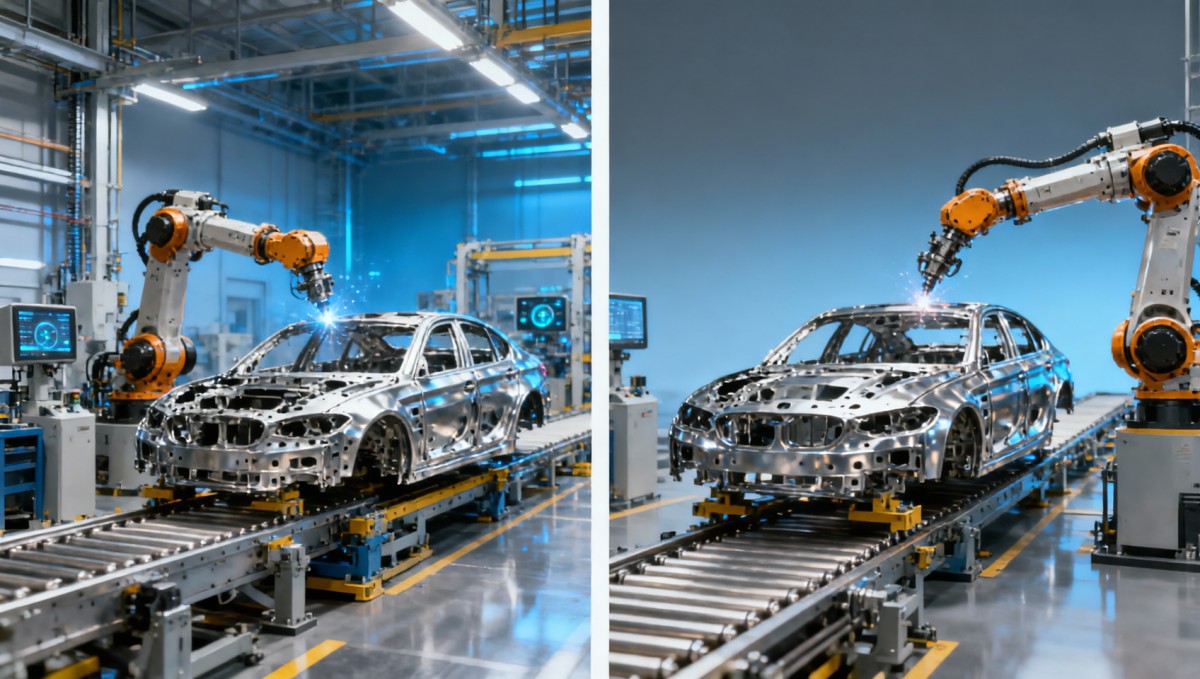
In automotive manufacturing, a digital twin is not just a 3D model of a body shop, paint line, or final assembly station. It is a working data layer that connects process logic, robot paths, cycle time assumptions, equipment status, quality signals, and often MES or ERP context. When suppliers promise faster engineering, the useful question is narrower: which bottleneck will the twin reduce within the next 3–12 months?
For operators, the payoff usually appears in shorter line stoppages, clearer work instructions, and better changeover preparation. For procurement teams, the value lies in comparing vendors on simulation depth, model fidelity, and integration effort rather than on marketing language. For executives, the twin must show measurable impact across launch timing, rework reduction, and asset utilization, not just software adoption.
This is where many programs drift. A digital twin for automotive assembly line may simulate robot reach, weld sequence, torque strategy, or conveyor flow, yet still fail to improve plant economics if the model is disconnected from production data. TSV’s engineering-first lens matters here: parameters, tolerances, latency, and update frequency determine whether the twin is operationally useful or only visually impressive.
In practice, the strongest use cases tend to cluster around 4 measurable domains: launch readiness, downtime prevention, quality stabilization, and engineering change management. If a project cannot map to at least 2 of these domains, the expected ROI is often weak. Speed matters, but speed without a decision path rarely pays back.
The most common sources of measurable payoff
Before approving a platform or integrator, teams should identify where the digital twin changes cost, time, or risk. The table below summarizes where automotive assembly twins most often deliver practical value and where buyers should be cautious.
The pattern is clear. The automotive assembly digital twin produces payoff when it supports a closed loop between simulation and plant reality. If the twin cannot be refreshed at a useful interval, cannot consume trustworthy data, or cannot guide a real decision, then the business case weakens quickly.
Which automotive assembly scenarios justify investment first?
Not every line needs the same twin depth. A greenfield EV plant launching multiple body variants has different priorities from a mature ICE platform plant focused on reducing defects in final assembly. A common mistake is buying an enterprise-scale digital twin stack before selecting the 3–5 production scenarios where the data model can be validated and expanded.
The highest-priority scenarios usually involve robotic welding, conveyor synchronization, machine vision inspection, torque traceability, and model changeovers. In these environments, process interactions are dense, engineering changes are frequent, and the cost of line disruption is high. Even a 10–20 minute reduction in repeated stoppages can matter when throughput targets are tight.
Buyers should also distinguish between static and dynamic twins. A static twin supports layout review and process planning. A dynamic twin incorporates live or near-live updates from PLCs, sensors, historians, or MES. The latter is harder to deploy, but it is usually where downtime reduction and operational decision support become visible.
TSV recommends scenario-led deployment because it reduces noise in supplier evaluation. Instead of asking whether a vendor offers a digital twin, ask whether the system can improve weld path validation within a 2–4 week engineering window, or whether it can reduce false positives in vision inspection during a 1-shift trial period.
Scenario fit by plant objective
The table below helps engineering, procurement, and plant leadership decide where an automotive assembly line digital twin is likely to pay off first, and where lighter alternatives may be sufficient.
This comparison shows why scenario selection should come before platform selection. A plant seeking faster robotic welding optimization may not need a full enterprise twin in phase 1. Meanwhile, a plant trying to synchronize MES, SAP ERP, quality systems, and maintenance data will usually need stronger integration architecture from the start.
A practical prioritization checklist
- Start with 1 line, 1 pain point, and 1 measurable outcome, such as weld rework reduction, launch readiness, or shorter changeovers.
- Confirm whether required data refresh is hourly, shift-based, daily, or event-driven. This alone changes architecture and budget.
- Separate engineering simulation needs from operational twin needs. The tools, users, and ROI windows are often different.
- Define a review period of 8–12 weeks for pilot evaluation so procurement can compare supplier claims with actual deployment friction.
What should procurement and engineering teams verify before buying?
The procurement process for an automotive assembly digital twin should not begin with demo quality. It should begin with data fidelity, integration boundaries, and ownership of model maintenance. Many attractive proposals look strong in a workshop but become difficult when the plant asks how robot path updates, tolerance stack changes, or MES event tags will be maintained over the next 12–24 months.
Engineering teams need to examine whether the twin captures enough process physics and logic to support decisions. Procurement teams need to validate the commercial structure: license model, implementation scope, update responsibilities, and training burden. Executives need to understand where the breakeven point depends on throughput stability, defect costs, or launch frequency.
TSV’s hard-tech evaluation approach is especially relevant in supplier screening. Ask for exact model update workflows, supported interfaces, acceptable latency ranges, and version traceability. Ask whether the vendor can support robot brands, sensor ecosystems, and enterprise systems already in the plant. Ask what is excluded. Those exclusions often decide the true total cost.
A disciplined sourcing process usually reviews 5 core dimensions: model fidelity, integration depth, implementation timeline, support model, and expansion cost. If one of these remains vague, the project risk is higher than the sales deck suggests.
Core procurement checks for digital twin projects
1. Model fidelity and tolerance relevance
A useful twin must reflect the process detail that affects outcomes. In robotic welding, that may include tool center point behavior, fixture access, and sequence logic. In vision inspection, it may require defect class labeling, lighting assumptions, and camera calibration consistency. If the model ignores the variables that drive defects or stoppages, it will not produce operational payoff.
2. Integration with MES, ERP, PLC, and quality systems
If your digital twin for automotive assembly line cannot exchange data with MES and can only read static design files, it may help engineers but not plant operations. For many buyers, the most valuable integration path includes PLC events, historian data, work order context, and SAP ERP references for part, routing, or maintenance coordination.
3. Lifecycle effort after go-live
The ongoing cost is often underestimated. A twin that needs specialist intervention for every line update may slow improvement rather than accelerate it. Teams should ask how many internal roles are required for routine maintenance, what training is needed across 2–3 user groups, and whether updates can be handled within standard engineering change processes.
4. Pilot scope and acceptance criteria
Avoid broad pilots with unclear success definitions. A better structure is a 3-step pilot: baseline measurement, controlled deployment, and acceptance review. Each step should define exact outputs such as cycle time deviation range, offline programming accuracy, inspection false-positive trend, or downtime classification improvement.
Questions buyers should put into the RFQ
- Which interfaces are native, which require middleware, and which are custom-engineered?
- What update cycle is realistic for the model: real time, near real time, shift-based, or daily batch?
- How does the vendor validate synchronization between the twin and actual robot, vision, or conveyor behavior?
- What data ownership terms apply to simulation outputs, event histories, and derived process models?
- What are the expected implementation stages over the first 6–16 weeks, and what are the handoff criteria at each stage?
Why many digital twin projects struggle to show ROI
The biggest ROI problem is not that digital twin technology lacks value. It is that organizations buy a broad concept when they need a narrow result. When project teams cannot connect the twin to a specific cost driver—scrap, downtime, launch delay, rework, or engineering hours—the business case becomes abstract and hard to defend.
Another common issue is treating the digital twin as a software purchase instead of a process discipline. A line model without governance quickly becomes outdated. A dynamic twin without reliable tags, naming conventions, and change control becomes noisy. In both cases, engineers stop trusting it, operators stop using it, and executives see limited payoff despite substantial spending.
There is also a mismatch between expected speed and actual implementation complexity. A supplier may show a body-in-white simulation in days, but plant-grade integration often takes longer because data mapping, control logic validation, cybersecurity review, and user acceptance take time. That does not mean the twin fails; it means the ROI clock should begin after usable deployment, not after a polished demo.
For mixed-model automotive production, ROI can be especially sensitive to engineering churn. If vehicle options, fixtures, inspection logic, and takt assumptions change every few weeks, the twin can create value only if update workflows are efficient. Otherwise, it becomes another engineering artifact that lags behind reality.
Frequent misconceptions in automotive assembly twin adoption
- “A 3D model is already a digital twin.” In most cases, it is only the visual foundation, not the operational system.
- “Real-time data is always necessary.” Some use cases work well with shift-based or daily updates, especially in planning or controlled quality analysis.
- “The platform alone delivers value.” Actual payoff depends on data quality, workflows, user adoption, and engineering governance.
- “ROI should be immediate across the whole plant.” In reality, a staged rollout across 1–2 lines often gives clearer evidence and lower risk.
FAQ for engineers, buyers, and plant leaders
How long does a practical pilot usually take?
For a limited use case such as robotic welding offline programming or one inspection cell, a pilot often runs 6–12 weeks when data access is prepared early. A broader line-level pilot involving MES integration, event mapping, and acceptance testing can take longer. The key variable is rarely software installation; it is data preparation and process alignment.
Is a full enterprise digital twin necessary from the beginning?
Usually no. Many plants gain value by starting with a focused automotive assembly line digital twin tied to one outcome, then expanding. This staged approach helps procurement compare true implementation effort against vendor claims and prevents overspending on unused functionality.
What metrics should define success?
Success metrics should be operational and auditable. Examples include shorter engineering change validation cycles, reduced repeated stoppages, improved offline robot program accuracy, lower inspection false-reject rates, or fewer launch-phase process deviations over a defined 30-, 60-, or 90-day window.
Why work with a data-driven engineering benchmark partner?
When automotive assembly teams evaluate digital twin options, the challenge is rarely lack of vendor messaging. The challenge is separating true technical capability from polished but incomplete claims. That is where TSV contributes value. We examine hard-tech systems through measurable engineering criteria: process parameters, data paths, tolerance relevance, integration depth, and operational fit.
Our perspective is designed for R&D engineers, operations users, senior buyers, and decision-makers who need more than concept language. We help teams compare whether a twin supports robotic welding optimization, machine vision tuning, edge data integration, or multi-system traceability in a way that can actually survive plant conditions. In other words, we focus on where the payoff is likely to emerge and where hidden friction may appear.
If you are screening suppliers, defining a pilot, or preparing an RFQ, we can support parameter confirmation, use-case prioritization, integration boundary review, and procurement comparison logic. If you are already in deployment, we can help clarify whether your current automotive assembly digital twin is under-scoped, over-scoped, or simply disconnected from the metrics that matter to operations and finance.
Contact TSV to discuss your specific line architecture, expected implementation timeline, MES or SAP ERP integration needs, quality inspection objectives, robot programming scope, certification or documentation concerns, and quotation comparison criteria. For teams that need engineering truth rather than noise, this is the fastest way to identify where speed becomes measurable payoff.
Search News
Hot Articles
- Carbon Fiber StructuresHow to Specify Aerospace Carbon Fiber Assemblies for Lightweight, Load-Bearing PartsJul 11, 2026
- Machine VisionXiaomi, Alibaba DAMO Academy Drive Open-Source Robotics Model Ecosystem, Lowering Algorithm Development Barriers for Overseas SMEs Adopting Chinese Robotics SolutionsMar 30, 2026
- Cobots & ArmsShanxi 'AI+' Conference Showcases Embodied Intelligence with Multinational Buyer Engagement: Key Industry ImplicationsMar 30, 2026
Popular Tags
Recommended News
 Jul 11, 2026How to Specify Aerospace Carbon Fiber Assemblies for Lightweight, Load-Bearing PartsAerospace carbon fiber assemblies: learn how to specify laminate design, load data, joining methods, and inspection controls for lighter, reliable load-bearing aerospace parts.Elena Rostova (UAV Systems Researcher)
 Mar 30, 2026Xiaomi, Alibaba DAMO Academy Drive Open-Source Robotics Model Ecosystem, Lowering Algorithm Development Barriers for Overseas SMEs Adopting Chinese Robotics SolutionsXiaomi & Alibaba DAMO Academy's open-source robotics models lower algorithm barriers for global SMEs. Boost efficiency in manufacturing, logistics & smart retail with ROS 2 compatible solutions.TSV Data Lab
 Mar 30, 2026Shanxi 'AI+' Conference Showcases Embodied Intelligence with Multinational Buyer Engagement: Key Industry ImplicationsShanxi 'AI+' Conference highlights embodied intelligence with Tesla, Ubtech & Jiantao showcasing multimodal robotics. 40+ global buyers validated tech on-site, creating new B2B channels for industrial automation & AI solutions.Chen Wei (Automation Lead Engineer)
 Mar 30, 2026Zhongguancun Unveils 6G Integrated Sensing-Computing-Intelligence Platform to Empower Embodied Robots for Global Industrial ApplicationsZhongguancun's new 6G platform revolutionizes industrial robotics with <10ms latency, empowering global automotive, logistics & port automation. Discover how this tech boosts China's smart manufacturing exports.TSV Data Lab
 Mar 30, 2026Mech-Mind Tianjin Embodied Intelligence R&D and Production Base Goes Live, Cutting Delivery Time by 20%–30% for Global Customized AMR+Vision SolutionsMech-Mind's Tianjin AMR+Vision production base cuts delivery time by 20%-30% for欧美 & Latin American markets. Discover how this PLd-certified facility accelerates customized robotics solutions for smart manufacturing and logistics.Chen Wei (Automation Lead Engineer)
 Mar 30, 2026Boao Forum Reveals 'Co-evolution of Big and Small Brains' Trend in Humanoid Robots, China's Embodied Intelligence Accelerates Adaptation to Overseas Manufacturing Service ScenariosDiscover how China's humanoid robots, featuring 'Co-evolution of Big and Small Brains,' are revolutionizing global manufacturing. Learn about Embodied Tian Gong 3.0's ISO compliance and overseas deployment at Boao Forum 2026.Chen Wei (Automation Lead Engineer)
 Mar 30, 2026China Railway Industrial Secures Patent for Embodied Robotics in Material Handling, Boosting High-Precision Delivery Capabilities for Overseas Infrastructure and Manufacturing ProjectsChina Railway Industrial's new patent for embodied robotics in material handling boosts high-precision delivery for global infrastructure & manufacturing. Discover how this innovation enhances logistics accuracy in automotive, rail transit & EPC projects.Chen Wei (Automation Lead Engineer)
 Oct 13, 2026Smart Cameras vs. PC-Based Machine Vision: Which Fits High-Speed Inspection?This industrial product comparison for machine vision weighs smart cameras vs. PC-based systems on latency, throughput, and cost. Discover your best fit for high-speed inspection.TSV Data Lab
 Oct 12, 2026How to Verify RoHS Compliance in Industrial Sensing Systems Before DeploymentRoHS compliant sensing systems: learn how to verify materials, supplier declarations, testing, and configuration controls before industrial deployment.TSV Data Lab
 Oct 11, 2026How Procurement-Oriented Content Taxonomy Improves B2B Buying JourneysProcurement-oriented content taxonomy streamlines B2B buying journeys with clearer evidence, supplier comparisons, risk visibility, and faster approvals.TSV Data Lab
 Oct 10, 2026How to Select a Machine Performance Monitoring Platform for OEE and Downtime ReductionMachine performance monitoring platform selection guide: validate machine states, OEE data, downtime reasons, integrations, and scalability to reduce losses with confidence.TSV Data Lab
 Oct 08, 2026How to Machine Inconel 625 Blades Without Heat Cracks or Edge ChippingInconel 625 blade machining guide: prevent heat cracks, edge chipping, chatter, and work hardening with proven tooling, cooling, fixturing, and inspection strategies.Dr. Marcus Vance
 Oct 07, 2026How to Evaluate an HMI Panel Distributor for Industrial Automation ProjectsHMI panel distributor evaluation guide: verify technical compatibility, traceability, supply reliability, lifecycle support, and total cost for automation projects.Victor Lin (Chief Software Architect)
 Oct 06, 2026Navigation Fault Tolerance Standards for AMRs: What Safety Teams Must VerifyNavigation fault tolerance standards: learn what AMR safety teams must verify, from localization loss and sensor faults to stopping distance, safe restart, and site-specific validation.Chen Wei (Automation Lead Engineer)
 Oct 05, 2026Calculating Edge Computing Total Cost of Ownership Across Distributed SitesEdge computing ownership cost explained: calculate deployment, energy, connectivity, security, remote support, and refresh costs across distributed sites.TSV Data Lab
 Oct 04, 2026CAD/CAM Benchmarking in the GCC: What Manufacturers Should Ask a ConsultantCAD CAM benchmark consultant GCC guide: learn the key questions manufacturers should ask to validate post-processors, workflows, machine performance, and production risk.Victor Lin (Chief Software Architect)
 Oct 03, 2026Selecting Automotive Radar Sensor Modules for ADAS Range, Resolution, and IntegrationAutomotive radar sensor module selection guide for ADAS: compare range, resolution, field of view, latency, and integration to build safer, reliable vehicle systems.TSV Data Lab
 Oct 02, 2026How to Qualify Machined Parts Suppliers for Hard Tech ProgramsHard tech supply chain machined parts demand rigorous supplier qualification. Learn how to assess capability, traceability, quality controls, and delivery resilience.Dr. Marcus Vance
 Oct 01, 2026How to Select an Outdoor Security Radar Sensor for Perimeter Detection?Outdoor security radar sensor selection guide: compare range, accuracy, false-alarm control, integration, and field testing for reliable perimeter detection.TSV Data Lab
 Sep 30, 2026How to Evaluate Solid-State LiDAR Hardware for Outdoor Autonomous VehiclesSolid state LiDAR hardware evaluation guide for outdoor autonomous vehicles—compare range, point-cloud quality, environmental resilience, integration, and safety.TSV Data Lab
 Sep 29, 2026ISO 9283 Repeatability: How to Evaluate Cobot Positioning PerformanceISO 9283 cobot repeatability explained: learn how payload, reach, approach direction, and test conditions affect positioning performance and cell capability.Chen Wei (Automation Lead Engineer)
 Oct 13, 2026How to keep an industrial robotic integration project on scheduleIndustrial robotic integration project management: keep automation on schedule with proven controls for interfaces, suppliers, FAT, commissioning, and change risk.Victor Lin (Chief Software Architect)
 Oct 12, 2026What should be included in predictive maintenance pricing for factories?Predictive maintenance pricing for factories: compare sensors, software, integration, support, and total cost to secure measurable uptime gains and avoid hidden expenses.TSV Data Lab
 Oct 11, 2026How payload and reach change the cost of an industrial robotCost of industrial robot systems depends heavily on payload and reach. Learn how sizing, torque, tooling, safety, and lifecycle factors shape smarter automation investments.Chen Wei (Automation Lead Engineer)























