2026 World Smart Manufacturing Conference to Launch Factory Digitalization Supply Chain Matchmaking Zone
Publication Date
author
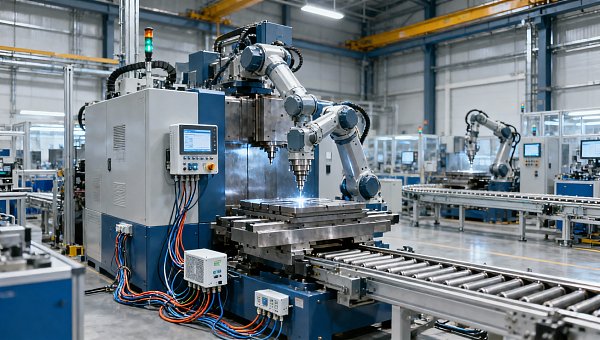
On May 9, 2026, the Organizing Committee of the 2026 World Smart Manufacturing Conference announced the establishment of a dedicated Factory Digitalization Supply Chain Matchmaking Zone at the event, scheduled for August 20–23 in Nanjing. This initiative targets enterprises involved in smart factory integration, industrial automation supply chains, and cross-border procurement—particularly those engaged with collaborative robots (cobots), AGV scheduling systems, and industrial digital twin platforms. The zone signals a structural shift toward demand-driven, scenario-specific B2B matchmaking in global smart manufacturing infrastructure.
Event Overview
The 2026 World Smart Manufacturing Conference will be held in Nanjing from August 20 to 23, 2026. On May 9, 2026, its Organizing Committee officially confirmed the introduction of the Factory Digitalization Supply Chain Matchmaking Zone. The zone will focus on 12 defined application scenarios—including cobot integration, AGV scheduling systems, and industrial digital twin platforms—and will host procurement delegations from 32 countries, including Germany, Japan, and Mexico. Concurrently, China’s Ministry of Industry and Information Technology (MIIT) will release the White List of Capabilities Classification for Smart Factory System Integrators (2026), intended as a trusted reference for overseas buyers.
Impact on Specific Industry Segments
Direct Trade Enterprises
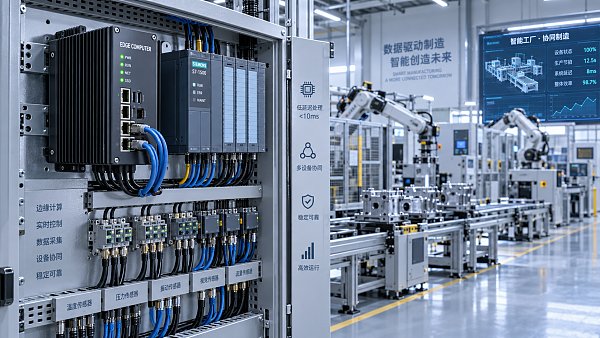
These firms—especially those exporting automation hardware, edge controllers, or MES/SCADA modules—face new opportunities for targeted engagement with overseas procurement teams. The Matchmaking Zone replaces broad exhibition formats with pre-qualified, scenario-aligned meetings, reducing lead time but raising entry thresholds. Impact manifests in tighter qualification criteria, higher expectations for documentation (e.g., interoperability certifications), and greater emphasis on localized technical support capability.
Raw Material & Component Suppliers
Suppliers of motion control components, sensors, real-time communication modules, and industrial-grade computing units may see indirect demand shifts. While not direct participants in the zone, their downstream system integrators and OEMs will increasingly prioritize suppliers whose products are pre-validated for use in white-listed integration frameworks. Impact centers on traceability requirements, compliance alignment (e.g., with IEC 61508 or ISO/IEC 27001), and readiness for joint solution documentation.
Contract Manufacturing & OEM Facilities
Factories undergoing or planning digital transformation—especially those serving multinational clients—will encounter stronger pressure to align with MIIT’s upcoming classification framework. The white list does not certify products but evaluates integrators’ capabilities; however, OEMs selecting partners for smart factory upgrades will likely treat inclusion as a de facto benchmark. Impact includes accelerated due diligence cycles and heightened scrutiny of partner track records in specific scenarios (e.g., AGV fleet management or digital twin deployment).
Supply Chain Service Providers
Logistics coordinators, customs advisory firms, and localization service providers supporting cross-border automation deployments must adapt to new information flows. The Matchmaking Zone implies earlier-stage coordination between foreign buyers and Chinese suppliers—potentially shifting service demand toward pre-shipment validation, bilingual technical documentation review, and regulatory mapping (e.g., CE vs. CCC marking implications). Impact is procedural: increased need for scenario-specific compliance guidance rather than generic export support.
What Relevant Enterprises or Practitioners Should Focus On Now
Monitor official rollout details of the MIIT White List
The White List of Capabilities Classification for Smart Factory System Integrators (2026) has been announced but not yet published. Its evaluation criteria, tier definitions (e.g., Level I–III), and application process remain pending. Enterprises should track MIIT’s official notices and prepare internal capability self-assessments against publicly referenced dimensions: project delivery scale, domain-specific implementation experience, and post-deployment support capacity.
Validate alignment with the 12 designated digitalization scenarios
The Matchmaking Zone explicitly names 12 application categories—not general ‘Industry 4.0’ themes. Firms should map their offerings to these exact use cases (e.g., ‘cobots for machine tending’, ‘digital twin for production line OEE optimization’) rather than relying on broader positioning. Misalignment may result in exclusion from curated match sessions, regardless of overall product quality.
Distinguish policy signal from operational readiness
The zone represents an institutional effort to structure international supply chain connections—not a guaranteed transaction channel. Participation does not ensure contracts; it enables qualified access. Enterprises should treat it as a high-intent sourcing mechanism requiring prior preparation: updated technical datasheets, multilingual case studies, and documented client references in comparable geographies or sectors.
Prepare for procurement delegation engagement protocols
Delegations from Germany, Japan, and Mexico are being ‘target-invited’. Their procurement processes often involve multi-tier evaluations, site audits, and long-term SLA negotiations. Early preparation should include internal alignment on pricing models (CAPEX vs. OPEX), warranty terms, cybersecurity documentation (e.g., IEC 62443 compliance summaries), and local after-sales service commitments—even if physical presence is not yet required.
Editorial Perspective / Industry Observation
Observably, this initiative reflects a maturing phase in China’s smart manufacturing ecosystem: moving from technology demonstration to structured, outcome-oriented supply chain coordination. Analysis shows the Matchmaking Zone is less about generating first-time exposure and more about compressing commercialization timelines for proven solutions. It functions primarily as a signaling mechanism—indicating where domestic capability development is deemed mature enough for international benchmarking. From an industry perspective, the concurrent release of the MIIT white list suggests growing institutional emphasis on *capability transparency* over *technology novelty*. This does not imply immediate market transformation, but it does mark a shift in buyer decision-making criteria—toward verifiable implementation competence in defined contexts. Continued observation is warranted on whether participation correlates with measurable export growth in subsequent quarters, and whether the white list evolves into a formal procurement prerequisite beyond the event context.
This announcement does not constitute a new market opening, nor does it guarantee commercial outcomes. It is better understood as a formalized interface—one that rewards preparedness, specificity, and alignment with internationally recognized operational scenarios. For stakeholders, the value lies not in attendance alone, but in how rigorously capabilities are mapped, documented, and validated against the stated 12 use cases and forthcoming MIIT classification standards.
Source: Official announcement by the 2026 World Smart Manufacturing Conference Organizing Committee, released May 9, 2026. The MIIT White List of Capabilities Classification for Smart Factory System Integrators (2026) has been announced but not yet published; its full criteria and implementation timeline remain pending official release.
Search News
Hot Articles
- Carbon Fiber StructuresHow to Specify Aerospace Carbon Fiber Assemblies for Lightweight, Load-Bearing PartsJul 11, 2026
- Machine VisionXiaomi, Alibaba DAMO Academy Drive Open-Source Robotics Model Ecosystem, Lowering Algorithm Development Barriers for Overseas SMEs Adopting Chinese Robotics SolutionsMar 30, 2026
- Cobots & ArmsShanxi 'AI+' Conference Showcases Embodied Intelligence with Multinational Buyer Engagement: Key Industry ImplicationsMar 30, 2026
Popular Tags
Recommended News
 Jul 11, 2026How to Specify Aerospace Carbon Fiber Assemblies for Lightweight, Load-Bearing PartsAerospace carbon fiber assemblies: learn how to specify laminate design, load data, joining methods, and inspection controls for lighter, reliable load-bearing aerospace parts.Elena Rostova (UAV Systems Researcher)
 Mar 30, 2026Xiaomi, Alibaba DAMO Academy Drive Open-Source Robotics Model Ecosystem, Lowering Algorithm Development Barriers for Overseas SMEs Adopting Chinese Robotics SolutionsXiaomi & Alibaba DAMO Academy's open-source robotics models lower algorithm barriers for global SMEs. Boost efficiency in manufacturing, logistics & smart retail with ROS 2 compatible solutions.TSV Data Lab
 Mar 30, 2026Shanxi 'AI+' Conference Showcases Embodied Intelligence with Multinational Buyer Engagement: Key Industry ImplicationsShanxi 'AI+' Conference highlights embodied intelligence with Tesla, Ubtech & Jiantao showcasing multimodal robotics. 40+ global buyers validated tech on-site, creating new B2B channels for industrial automation & AI solutions.Chen Wei (Automation Lead Engineer)
 Mar 30, 2026Zhongguancun Unveils 6G Integrated Sensing-Computing-Intelligence Platform to Empower Embodied Robots for Global Industrial ApplicationsZhongguancun's new 6G platform revolutionizes industrial robotics with <10ms latency, empowering global automotive, logistics & port automation. Discover how this tech boosts China's smart manufacturing exports.TSV Data Lab
 Mar 30, 2026Mech-Mind Tianjin Embodied Intelligence R&D and Production Base Goes Live, Cutting Delivery Time by 20%–30% for Global Customized AMR+Vision SolutionsMech-Mind's Tianjin AMR+Vision production base cuts delivery time by 20%-30% for欧美 & Latin American markets. Discover how this PLd-certified facility accelerates customized robotics solutions for smart manufacturing and logistics.Chen Wei (Automation Lead Engineer)
 Mar 30, 2026Boao Forum Reveals 'Co-evolution of Big and Small Brains' Trend in Humanoid Robots, China's Embodied Intelligence Accelerates Adaptation to Overseas Manufacturing Service ScenariosDiscover how China's humanoid robots, featuring 'Co-evolution of Big and Small Brains,' are revolutionizing global manufacturing. Learn about Embodied Tian Gong 3.0's ISO compliance and overseas deployment at Boao Forum 2026.Chen Wei (Automation Lead Engineer)
 Mar 30, 2026China Railway Industrial Secures Patent for Embodied Robotics in Material Handling, Boosting High-Precision Delivery Capabilities for Overseas Infrastructure and Manufacturing ProjectsChina Railway Industrial's new patent for embodied robotics in material handling boosts high-precision delivery for global infrastructure & manufacturing. Discover how this innovation enhances logistics accuracy in automotive, rail transit & EPC projects.Chen Wei (Automation Lead Engineer)
 Sep 28, 2026Spindle Runout Measurement in Germany: DIN Standards, Methods, and Acceptance LimitsSpindle runout measurement Germany: explore DIN standards, proven methods, acceptance limits, and audit-ready practices for reliable machining quality.Dr. Marcus Vance
 Sep 27, 2026How to Select Wall-Mount Edge Devices for Space-Constrained Factory NetworksWall mount edge devices for space-constrained factories: evaluate workload, thermal design, power resilience, cable access, and network reliability for smarter deployments.TSV Data Lab
 Sep 26, 2026Machining Tolerance Analysis: How to Set Limits That Meet Function and Cost TargetsMachining tolerance analysis: learn how to set functional limits, control tolerance stacks, reduce inspection risk, and balance precision with production cost.Dr. Marcus Vance
 Sep 25, 2026How to Evaluate an Industrial Infrastructure Data Platform for Multi-Site OperationsIndustrial infrastructure data platform evaluation guide for multi-site operations: compare data quality, edge resilience, interoperability, governance, and scalable proof-of-value criteria.Victor Lin (Chief Software Architect)
 Sep 24, 2026How to Select Machine Vision Optics for Accurate Inspection at Different Working DistancesMachine vision optics selection guide for accurate inspection at every working distance. Compare FOV, pixel scale, DOF, distortion, lighting, and telecentric options.TSV Data Lab
 Sep 23, 2026How to Evaluate a Machine Vision System Integrator for High-Speed Inspection LinesChoose a machine vision system integrator with proven expertise in high-speed inspection, reliable reject timing, robust optics, and measurable acceptance criteria.TSV Data Lab
 Sep 28, 2026When is a SCADA API the right choice for connecting plant systems?SCADA API guide: learn when governed plant data integration improves traceability, security, and scalability—without compromising real-time control.Victor Lin (Chief Software Architect)
 Sep 27, 2026How SCADA data integration improves traceability across production linesSCADA data integration connects production-line data to improve traceability, accelerate quality investigations, and strengthen safety decisions.Victor Lin (Chief Software Architect)
 Sep 26, 2026What to define before starting SCADA integration planningSCADA integration planning starts with clear scope, control boundaries, data models, cybersecurity, and testing. Discover the definitions that reduce risk and costly rework.Victor Lin (Chief Software Architect)
 Sep 25, 2026How a smart factory with Industrial IoT reduces production blind spotsDiscover how a smart factory with Industrial IoT turns real-time machine, quality, and workflow data into actionable insights that reduce production blind spots and delivery risks.Victor Lin (Chief Software Architect)
 Sep 24, 2026When does Industrial IoT make smart manufacturing easier to scale?Smart manufacturing Industrial IoT scales when trusted data, interoperable systems, and secure workflows turn connected assets into measurable gains.TSV Data Lab
 Sep 23, 2026What drives ultra-precision machining cost at 1-micron tolerance?Ultra precision machining cost per part at 1 micron tolerance depends on process, material, metrology, and yield. Learn how to compare quotes confidently.Dr. Marcus Vance
 Sep 22, 2026Drone Engine-T550CC Applications: Build the UAV Power System Around the MissionAn application guide for Drone Engine-T550CC integration, covering payload planning, airframe matching, cooling, fuel, vibration, test procedures, documentation, and service preparation.Elena Rostova (UAV Systems Researcher)
 Sep 22, 2026How to Evaluate Industrial Edge Computing Vendors for Factory DeploymentIndustrial edge computing vendor evaluation guide for factories: compare latency, protocol fit, reliability, security, and lifecycle support before deployment.TSV Data Lab
 Sep 21, 2026Drone Payload Integration: Matching Power, Data, and Center of Gravity for Reliable FlightsDrone payload integration made practical: balance power, data, center of gravity, and endurance to build safer, more reliable mission-ready flights.Elena Rostova (UAV Systems Researcher)
 Sep 20, 2026Autonomous Navigation Pricing: Cost Drivers and Budget Benchmarks for AMR ProjectsAutonomous navigation price explained: compare AMR cost drivers, software, sensors, integration, safety, and lifecycle budgets to build a scalable project plan.Chen Wei (Automation Lead Engineer)
 Sep 19, 2026How to Scope Automation Integration Services for Multi-System Factory ProjectsAutomation integration services: learn how to scope multi-system factory projects with clear workflows, interface contracts, safety boundaries, and acceptance criteria.Victor Lin (Chief Software Architect)