How to shortlist a micro machining parts supplier
Publication Date
author
Choosing the right micro machining parts supplier is no longer a matter of comparing claims—it requires verifying tolerances, material performance, process stability, and quality traceability. For procurement teams under pressure to reduce risk and shorten supplier qualification cycles, a data-driven shortlist is essential. This guide outlines the key criteria to help you identify suppliers that can meet demanding engineering and commercial requirements with confidence.
In sectors such as aerospace, medical devices, sensors, robotics, and compact electronics, the gap between an acceptable component and a failed build can be measured in microns. A capable micro machining parts supplier must do more than machine small features. The supplier must repeatedly hold tight tolerances, document process controls, support low-to-medium production volumes, and respond quickly when design revisions or nonconformance issues arise.
For procurement professionals, shortlisting is where cost control and technical risk management meet. A weak shortlist can extend qualification by 4 to 12 weeks, increase inspection workload, and create hidden costs in scrap, delays, and engineering rework. A strong shortlist, by contrast, reduces supplier onboarding friction and gives engineering teams confidence before the first PO is released.
What defines a qualified micro machining parts supplier
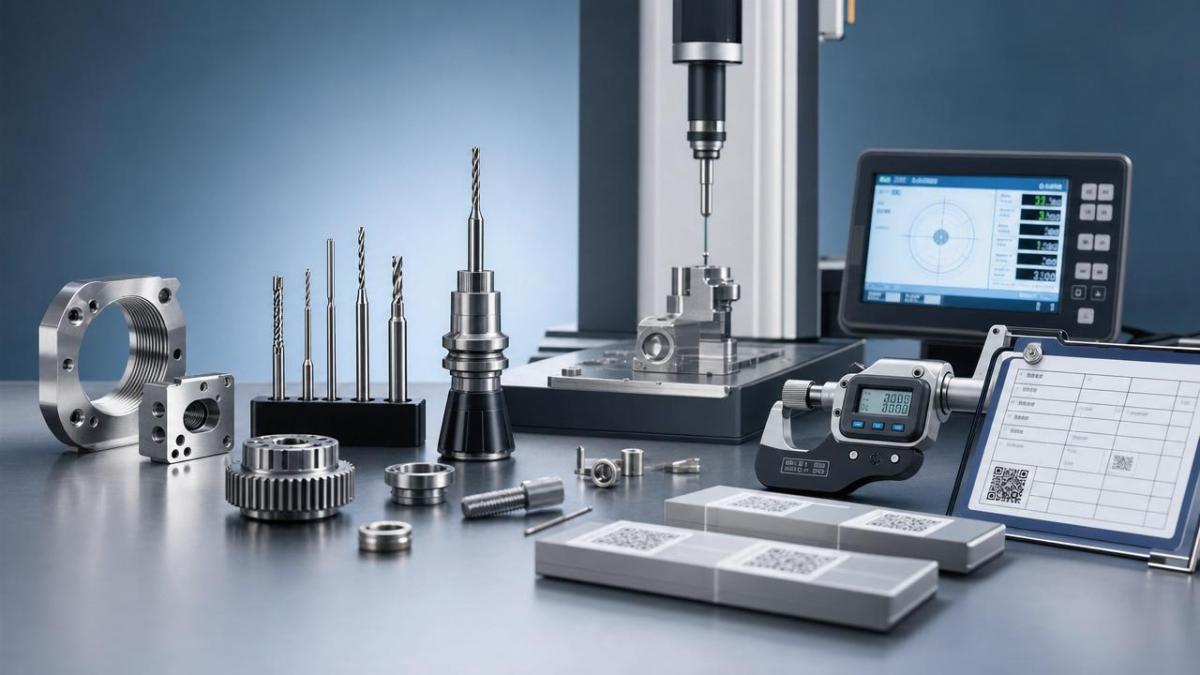
A reliable micro machining parts supplier is typically defined by five measurable capabilities: feature size control, material competency, process repeatability, inspection depth, and traceability discipline. In micro machining, dimensions below 1 mm, surface finish requirements under Ra 0.8 µm, and tolerance bands such as ±0.005 mm are common reference points, depending on the part function and material.
Many suppliers claim precision, but procurement teams should separate general CNC machining from true micro machining capability. The latter often involves tool diameters below 1 mm, burr-sensitive edges, thin-wall structures, micro holes, and high-value materials such as titanium, stainless steel, Inconel, PEEK, ceramics, or engineering plastics. These demands make standard supplier screening insufficient.
Core technical indicators to verify
Before adding a supplier to the shortlist, ask for evidence across the following areas rather than broad capability statements.
- Documented tolerance capability by material and feature type
- Typical minimum tool diameter and minimum hole diameter processed in production
- Cp/Cpk or equivalent process capability data for recurring part families
- Inspection equipment list, calibration frequency, and first article process
- Lot traceability from raw material to final shipment
- Corrective action response time, often expected within 24 to 72 hours
A practical shortlist usually narrows the field to 3 to 5 suppliers. Fewer than 3 limits negotiation leverage and benchmarking. More than 5 often consumes engineering review time without adding useful decision value.
Why process stability matters more than one-off sample quality
A polished prototype is not enough. Procurement should focus on whether the supplier can maintain the same outcome across 10, 100, or 1,000 parts. Micro features are highly sensitive to tool wear, spindle vibration, clamping strategy, coolant control, and operator discipline. A supplier that can hit print requirements once may still struggle with repeatability over a full production batch.
For this reason, ask not only for sample photos or a capability brochure, but also for batch inspection examples, in-process control plans, and nonconformance handling procedures. Stable output is usually a stronger predictor of procurement success than an impressive sales deck.
A practical screening matrix for procurement teams
The table below can be used in the early stage of supplier screening. It helps procurement teams compare a micro machining parts supplier using operational evidence instead of vague quality claims.
The key takeaway is simple: shortlist suppliers based on proof tied to your part category. A supplier may be excellent in micro aluminum housings yet weak in titanium micro shafts or PEEK medical components. Capability is rarely universal.
How to evaluate technical fit before requesting a quote
A quotation stage is often too late to discover a technical mismatch. Procurement teams can save 1 to 3 sourcing rounds by checking technical fit before RFQ release. This is especially important when drawings include thin walls, deep narrow cavities, micro bores, or cosmetic surface requirements that drive cycle time and scrap risk.
Review the part geometry, not just the part name
The same supplier may machine “micro parts” but still lack the right process window for your geometry. A micro connector pin, a miniature impeller, and a small orthopedic component present very different challenges. Procurement should work with engineering to identify 4 primary risk points before outreach: smallest feature, highest aspect ratio, tightest tolerance, and most difficult material surface.
Typical engineering data to share during pre-qualification
- 2D drawing with GD&T and revision level
- 3D model in the required exchange format
- Annual volume estimate, such as 500, 5,000, or 20,000 units
- Critical-to-quality features and inspection priorities
- Required post-processing such as passivation, anodizing, polishing, or cleaning
- Packaging and contamination sensitivity requirements
This level of detail allows a micro machining parts supplier to flag manufacturability concerns early. It also prevents inaccurate quotes based on incomplete assumptions, which can later create cost escalations or lead time resets.
Check whether the supplier’s quality system matches your risk profile
Not every purchase needs the same quality burden. For internal fixtures or noncritical hardware, a basic ISO-oriented system and strong in-process control may be enough. For aerospace, medical, sensing, or autonomous system components, supplier discipline must be much deeper. Look at document control, revision management, inspection sign-off, and containment response. A response gap of even 48 hours can disrupt a fast-moving build schedule.
A mature quality system should support first article inspection, incoming material verification, in-process checks, final inspection, and record retention for an agreed period, often 2 to 7 years depending on application needs and contractual expectations.
Commercial and operational filters that strengthen the shortlist
Technical capability is only half the decision. A micro machining parts supplier can still become a procurement risk if lead times are unstable, communication is slow, or capacity planning is weak. Buyers should therefore apply operational filters after technical pre-screening and before trial orders.
Lead time, capacity, and responsiveness
For many precision programs, prototype lead times in the 7 to 15 business day range are common, while repeat production may run 3 to 6 weeks depending on complexity, finishing, and inspection depth. If a supplier quotes unusually short lead times without discussing tooling, workholding, inspection load, or secondary processes, procurement should investigate further.
Responsiveness should also be measured. A practical benchmark is 24 hours for RFQ acknowledgement, 48 to 72 hours for technical clarification, and a clearly defined escalation path for quality or delivery incidents. Communication speed will become even more critical once engineering changes begin.
Use a weighted shortlist model
A weighted scoring model helps procurement compare suppliers consistently across different programs. It is particularly useful when engineers prioritize technical fit while sourcing teams prioritize price, lead time, and risk exposure.
This model keeps the shortlist grounded in procurement priorities. It also reduces internal disagreement by converting subjective impressions into a repeatable decision framework.
Warning signs during supplier engagement
Some red flags appear early and should not be ignored. These include generic answers to technical questions, reluctance to share inspection examples, inconsistent lead times between sales and operations, and a quote that omits assumptions about surface finish, burr limits, cleaning, or packaging. In micro machining, small omissions often become expensive disputes.
- No clear explanation of how micro features are measured
- No distinction between prototype control and production control
- Unwillingness to discuss scrap containment or rework criteria
- Large price swings after receiving full drawings
- Vague statements such as “we can do all tolerances” without evidence
A step-by-step process to build a stronger supplier shortlist
Procurement teams can shorten decision cycles by using a structured sequence. In many organizations, this process can reduce unnecessary supplier reviews by 20% to 40% and improve first-pass qualification outcomes.
Step 1 to Step 3: Define, pre-screen, and compare
- Define the part risk profile: material, smallest feature, tolerance band, finish, and annual volume.
- Pre-screen 8 to 12 candidate suppliers using capability evidence, not marketing claims.
- Reduce to 3 to 5 suppliers based on technical relevance, inspection capability, and traceability readiness.
Step 4 to Step 6: Validate, pilot, and onboard
- Request RFQ with complete technical package and explicit acceptance criteria.
- Run a pilot order or first article review before awarding broader volume.
- Approve onboarding only after verifying quality records, communication flow, and delivery performance.
This staged approach is especially effective when buying micro machined parts for safety-sensitive or miniaturized assemblies. It balances sourcing speed with engineering caution and helps ensure that the chosen micro machining parts supplier can perform beyond the quotation phase.
Frequently missed procurement questions
Even experienced buyers sometimes miss questions that directly affect total acquisition cost. Ask whether the supplier can recommend design changes to reduce burr risk, whether critical dimensions are measured 100% or by sampling, whether subcontracted finishing is traceable, and how dimensional drift is handled across longer production runs. These answers often reveal how mature the supplier really is.
Shortlisting a micro machining parts supplier should be treated as an engineering-commercial exercise, not a price-only exercise. The best supplier for your program is the one that aligns part complexity, process control, inspection depth, lead time discipline, and traceability with your operational risk level.
For procurement teams working in advanced manufacturing environments, a data-led shortlist reduces trial-and-error costs, speeds up supplier qualification, and creates stronger alignment between sourcing, quality, and engineering. If you need support evaluating micro machining capabilities, refining supplier criteria, or building a more defensible sourcing framework, contact us today to discuss your application, request a tailored evaluation approach, or learn more solutions for precision supplier selection.
Search News
Hot Articles
- Carbon Fiber StructuresHow to Specify Aerospace Carbon Fiber Assemblies for Lightweight, Load-Bearing PartsJul 11, 2026
- Machine VisionXiaomi, Alibaba DAMO Academy Drive Open-Source Robotics Model Ecosystem, Lowering Algorithm Development Barriers for Overseas SMEs Adopting Chinese Robotics SolutionsMar 30, 2026
- Cobots & ArmsShanxi 'AI+' Conference Showcases Embodied Intelligence with Multinational Buyer Engagement: Key Industry ImplicationsMar 30, 2026
Popular Tags
Recommended News
 Jul 11, 2026How to Specify Aerospace Carbon Fiber Assemblies for Lightweight, Load-Bearing PartsAerospace carbon fiber assemblies: learn how to specify laminate design, load data, joining methods, and inspection controls for lighter, reliable load-bearing aerospace parts.Elena Rostova (UAV Systems Researcher)
 Mar 30, 2026Xiaomi, Alibaba DAMO Academy Drive Open-Source Robotics Model Ecosystem, Lowering Algorithm Development Barriers for Overseas SMEs Adopting Chinese Robotics SolutionsXiaomi & Alibaba DAMO Academy's open-source robotics models lower algorithm barriers for global SMEs. Boost efficiency in manufacturing, logistics & smart retail with ROS 2 compatible solutions.TSV Data Lab
 Mar 30, 2026Shanxi 'AI+' Conference Showcases Embodied Intelligence with Multinational Buyer Engagement: Key Industry ImplicationsShanxi 'AI+' Conference highlights embodied intelligence with Tesla, Ubtech & Jiantao showcasing multimodal robotics. 40+ global buyers validated tech on-site, creating new B2B channels for industrial automation & AI solutions.Chen Wei (Automation Lead Engineer)
 Mar 30, 2026Zhongguancun Unveils 6G Integrated Sensing-Computing-Intelligence Platform to Empower Embodied Robots for Global Industrial ApplicationsZhongguancun's new 6G platform revolutionizes industrial robotics with <10ms latency, empowering global automotive, logistics & port automation. Discover how this tech boosts China's smart manufacturing exports.TSV Data Lab
 Mar 30, 2026Mech-Mind Tianjin Embodied Intelligence R&D and Production Base Goes Live, Cutting Delivery Time by 20%–30% for Global Customized AMR+Vision SolutionsMech-Mind's Tianjin AMR+Vision production base cuts delivery time by 20%-30% for欧美 & Latin American markets. Discover how this PLd-certified facility accelerates customized robotics solutions for smart manufacturing and logistics.Chen Wei (Automation Lead Engineer)
 Mar 30, 2026Boao Forum Reveals 'Co-evolution of Big and Small Brains' Trend in Humanoid Robots, China's Embodied Intelligence Accelerates Adaptation to Overseas Manufacturing Service ScenariosDiscover how China's humanoid robots, featuring 'Co-evolution of Big and Small Brains,' are revolutionizing global manufacturing. Learn about Embodied Tian Gong 3.0's ISO compliance and overseas deployment at Boao Forum 2026.Chen Wei (Automation Lead Engineer)
 Mar 30, 2026China Railway Industrial Secures Patent for Embodied Robotics in Material Handling, Boosting High-Precision Delivery Capabilities for Overseas Infrastructure and Manufacturing ProjectsChina Railway Industrial's new patent for embodied robotics in material handling boosts high-precision delivery for global infrastructure & manufacturing. Discover how this innovation enhances logistics accuracy in automotive, rail transit & EPC projects.Chen Wei (Automation Lead Engineer)
 Sep 28, 2026Spindle Runout Measurement in Germany: DIN Standards, Methods, and Acceptance LimitsSpindle runout measurement Germany: explore DIN standards, proven methods, acceptance limits, and audit-ready practices for reliable machining quality.Dr. Marcus Vance
 Sep 27, 2026How to Select Wall-Mount Edge Devices for Space-Constrained Factory NetworksWall mount edge devices for space-constrained factories: evaluate workload, thermal design, power resilience, cable access, and network reliability for smarter deployments.TSV Data Lab
 Sep 26, 2026Machining Tolerance Analysis: How to Set Limits That Meet Function and Cost TargetsMachining tolerance analysis: learn how to set functional limits, control tolerance stacks, reduce inspection risk, and balance precision with production cost.Dr. Marcus Vance
 Sep 25, 2026How to Evaluate an Industrial Infrastructure Data Platform for Multi-Site OperationsIndustrial infrastructure data platform evaluation guide for multi-site operations: compare data quality, edge resilience, interoperability, governance, and scalable proof-of-value criteria.Victor Lin (Chief Software Architect)
 Sep 24, 2026How to Select Machine Vision Optics for Accurate Inspection at Different Working DistancesMachine vision optics selection guide for accurate inspection at every working distance. Compare FOV, pixel scale, DOF, distortion, lighting, and telecentric options.TSV Data Lab
 Sep 23, 2026How to Evaluate a Machine Vision System Integrator for High-Speed Inspection LinesChoose a machine vision system integrator with proven expertise in high-speed inspection, reliable reject timing, robust optics, and measurable acceptance criteria.TSV Data Lab
 Sep 28, 2026When is a SCADA API the right choice for connecting plant systems?SCADA API guide: learn when governed plant data integration improves traceability, security, and scalability—without compromising real-time control.Victor Lin (Chief Software Architect)
 Sep 27, 2026How SCADA data integration improves traceability across production linesSCADA data integration connects production-line data to improve traceability, accelerate quality investigations, and strengthen safety decisions.Victor Lin (Chief Software Architect)
 Sep 26, 2026What to define before starting SCADA integration planningSCADA integration planning starts with clear scope, control boundaries, data models, cybersecurity, and testing. Discover the definitions that reduce risk and costly rework.Victor Lin (Chief Software Architect)
 Sep 25, 2026How a smart factory with Industrial IoT reduces production blind spotsDiscover how a smart factory with Industrial IoT turns real-time machine, quality, and workflow data into actionable insights that reduce production blind spots and delivery risks.Victor Lin (Chief Software Architect)
 Sep 24, 2026When does Industrial IoT make smart manufacturing easier to scale?Smart manufacturing Industrial IoT scales when trusted data, interoperable systems, and secure workflows turn connected assets into measurable gains.TSV Data Lab
 Sep 23, 2026What drives ultra-precision machining cost at 1-micron tolerance?Ultra precision machining cost per part at 1 micron tolerance depends on process, material, metrology, and yield. Learn how to compare quotes confidently.Dr. Marcus Vance
 Sep 22, 2026Drone Engine-T550CC Applications: Build the UAV Power System Around the MissionAn application guide for Drone Engine-T550CC integration, covering payload planning, airframe matching, cooling, fuel, vibration, test procedures, documentation, and service preparation.Elena Rostova (UAV Systems Researcher)
 Sep 22, 2026How to Evaluate Industrial Edge Computing Vendors for Factory DeploymentIndustrial edge computing vendor evaluation guide for factories: compare latency, protocol fit, reliability, security, and lifecycle support before deployment.TSV Data Lab
 Sep 21, 2026Drone Payload Integration: Matching Power, Data, and Center of Gravity for Reliable FlightsDrone payload integration made practical: balance power, data, center of gravity, and endurance to build safer, more reliable mission-ready flights.Elena Rostova (UAV Systems Researcher)
 Sep 20, 2026Autonomous Navigation Pricing: Cost Drivers and Budget Benchmarks for AMR ProjectsAutonomous navigation price explained: compare AMR cost drivers, software, sensors, integration, safety, and lifecycle budgets to build a scalable project plan.Chen Wei (Automation Lead Engineer)
 Sep 19, 2026How to Scope Automation Integration Services for Multi-System Factory ProjectsAutomation integration services: learn how to scope multi-system factory projects with clear workflows, interface contracts, safety boundaries, and acceptance criteria.Victor Lin (Chief Software Architect)