
Pixhawk Flight Controller Supplier: What to Ask
Publication Date
author
Choosing the right pixhawk flight controller supplier is not just about price—it is about data transparency, integration reliability, and mission-level performance. Whether you source from a fixed wing uav supplier, evaluate a drone propeller manufacturer, or compare a commercial drone manufacturer china partner, the right questions can reduce engineering risk, shorten qualification cycles, and protect procurement decisions.
For most buyers, engineers, and operators, the core search intent behind “Pixhawk Flight Controller Supplier: What to Ask” is clear: they want a practical way to evaluate suppliers before committing to samples, integration work, or volume purchasing. They are not looking for generic product descriptions. They want to know which questions reveal real capability, which red flags indicate risk, and how to compare suppliers based on technical evidence rather than sales language.
The most useful way to approach supplier selection is to separate attractive brochures from operational truth. A reliable Pixhawk flight controller supplier should be able to explain hardware origin, firmware support, compatibility boundaries, QA process, environmental robustness, delivery consistency, and after-sales engineering response. If they cannot answer those points clearly, the procurement risk is already visible.
What buyers are really trying to verify before choosing a Pixhawk flight controller supplier
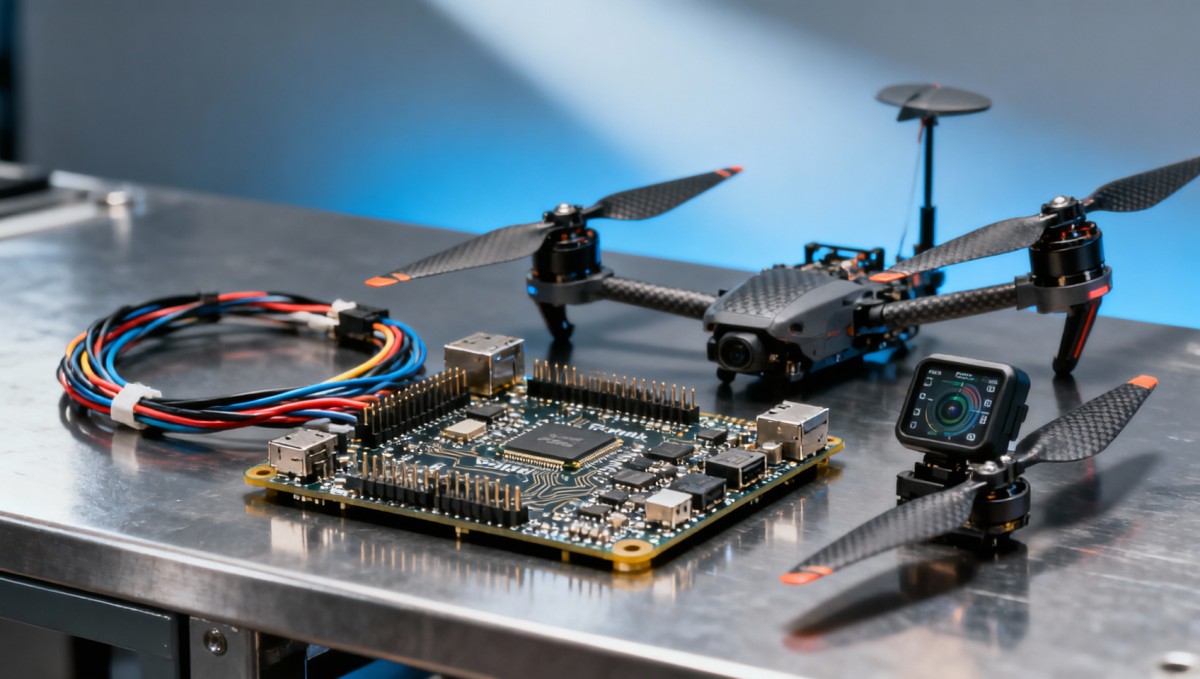
When technical teams and procurement managers search for a Pixhawk flight controller supplier, they are usually trying to answer five practical questions:
- Will this controller work reliably in our UAV platform and payload environment?
- Is the supplier selling authentic, traceable hardware or low-visibility variants with uncertain quality?
- Can the supplier support integration, tuning, and firmware maintenance after delivery?
- Are lead time, batch consistency, and documentation strong enough for commercial deployment?
- What hidden risks will increase total cost after purchase?
This matters even more in projects involving fixed-wing mapping platforms, VTOL systems, agricultural UAVs, inspection drones, and custom autonomous aircraft. In these use cases, the flight controller is not an isolated board. It sits inside a system where vibration, EMI, GPS conditions, payload changes, propulsion layout, and software configuration all affect flight stability. That is why experienced teams do not ask only for a quote. They ask for proof.
What to ask about hardware authenticity and version traceability
One of the first questions should be simple: What exact Pixhawk hardware version are you supplying? Many sourcing problems begin with vague naming. “Pixhawk compatible” can mean very different things in terms of MCU, IMU stack, connector design, power architecture, and long-term firmware support.
Ask the supplier to confirm:
- Exact model and hardware revision
- Main processor specification
- Sensor set, including IMU, barometer, magnetometer, and redundancy arrangement
- PCB origin and assembly process
- BOM stability across batches
- Serial number or batch-level traceability
If the supplier cannot provide stable hardware revision data, your engineering validation may become invalid after the first batch. That creates rework in tuning, enclosure redesign, cable harness changes, and software parameter adjustment.
For procurement teams, this is not just a technical issue. It directly affects supplier qualification, spare parts planning, and field maintenance predictability.
What to ask about firmware support, ecosystem compatibility, and long-term maintenance
Many flight controller problems do not come from hardware failure. They come from firmware mismatch, unsupported features, poor documentation, or weak upgrade control. A strong Pixhawk flight controller supplier should explain how its hardware performs within the wider PX4 or ArduPilot ecosystem and what support it can provide during deployment.
Ask these questions:
- Which firmware stacks are officially supported: PX4, ArduPilot, or both?
- Which versions have been validated on this board?
- Are there known limitations in ports, sensors, CAN, GPS modules, or telemetry radios?
- Do you provide default parameter files for common airframes?
- How are firmware updates managed and documented?
- What engineering support is available if bugs appear during integration?
This is especially important if you are also working with a fixed wing uav supplier or a commercial drone manufacturer china partner that delivers a full platform. In those cases, the question is not only whether the flight controller boots successfully, but whether the whole system remains stable after payload changes, mission planning updates, and field maintenance cycles.
What to ask about integration risk in real UAV applications
A supplier may offer a technically capable board but still be a poor fit for your aircraft. Integration success depends on airframe layout, power noise, vibration behavior, IO requirements, and payload interactions. That is why buyers should ask how the supplier validates controllers in real use conditions instead of lab-only demonstration.
Ask for evidence in these areas:
- Supported vehicle types: multirotor, fixed wing, VTOL, helicopter, rover
- EMI resistance under high-current power systems
- Vibration isolation recommendations and mounting guidance
- Port allocation examples for GPS, RTK, telemetry, camera triggering, rangefinder, and companion computer
- Compatibility with power modules, ESC protocols, airspeed sensors, and payload interfaces
- Flight logs or validation summaries from similar applications
For operators, this reduces the chance of unstable behavior in the field. For technical buyers, it reduces hidden engineering costs. For decision-makers, it improves confidence that the sourcing choice will not delay commercialization.
What to ask about quality control, environmental reliability, and testing standards
A serious supplier should be able to describe how quality is controlled before shipment. This includes incoming inspection, assembly controls, burn-in process, calibration, and final functional testing. If the answer stays at the level of “high quality” or “strict QC,” that is not enough.
Ask the supplier:
- What electrical and functional tests are performed on every unit?
- Are IMUs calibrated before shipment?
- Do you conduct vibration, temperature, or burn-in testing?
- What is your reported failure rate by batch or shipment period?
- How do you handle non-conforming units and RMAs?
- Can you provide test reports or QC records?
In commercial UAV projects, environmental reliability matters because flight controllers often operate in dusty, humid, high-vibration, or temperature-variable conditions. A controller that works on a bench can still fail in agricultural, inspection, or mapping missions if manufacturing consistency is weak.
This is also where comparison with related suppliers becomes useful. If you are already reviewing a drone propeller manufacturer or powertrain vendor, apply the same discipline across the entire UAV bill of materials. Weakness in one component supplier often creates system-level instability.
What to ask about supply continuity, lead times, and commercial terms
Many sourcing failures happen after technical approval. A supplier may send acceptable samples but fail on mass production consistency, delivery schedules, packaging, or communication speed. That is why procurement and operations teams should test commercial reliability as rigorously as technical capability.
Key questions include:
- What is the standard lead time for samples and volume orders?
- What is the monthly or quarterly supply capacity?
- Can the supplier maintain the same BOM and component sources over time?
- How are shortages or component substitutions communicated?
- What are the warranty terms and response times?
- Can they support documentation needed for import, compliance, and internal supplier approval?
If you are sourcing through a commercial drone manufacturer china network or a broader UAV platform supplier, these answers help determine whether the partner is suitable for pilot production only or for long-term program scaling.
Red flags that suggest a Pixhawk supplier may create downstream risk
Some warning signs appear early if you know what to look for. Be cautious if a supplier:
- Uses broad terms like “latest Pixhawk” without hardware revision detail
- Cannot clearly explain firmware compatibility
- Provides no QC or test documentation
- Changes connectors, sensors, or internal components without prior notice
- Has no engineering contact beyond sales staff
- Cannot share references from similar UAV applications
- Offers unusually low pricing with limited traceability
Low unit price can be attractive, but the real cost of a weak supplier appears later in failed test flights, repeated retuning, support delays, and procurement disruption. For enterprise teams, these hidden costs often outweigh any initial savings.
A practical supplier evaluation checklist for engineers and procurement teams
To make discussions more efficient, use a structured checklist during RFQ or qualification review. A good supplier should be scored on at least these dimensions:
- Technical clarity: exact model, revision, architecture, interfaces
- Firmware maturity: supported stacks, versions, update process
- Application fit: aircraft type, payload integration, environmental suitability
- Quality control: testing steps, failure handling, documentation
- Supply stability: lead time, capacity, batch consistency
- Support quality: engineering response, troubleshooting process, post-sales help
- Commercial reliability: warranty, communication, export documentation
This kind of structured review helps information researchers compare suppliers objectively, helps operators identify deployment risks earlier, helps procurement staff shorten qualification cycles, and helps business decision-makers understand where commercial risk actually sits.
Final takeaway: the best questions reveal the best suppliers
A dependable Pixhawk flight controller supplier is not defined by catalog size or low quotations. The real differentiator is whether the supplier can provide transparent technical answers, stable hardware traceability, proven firmware support, and consistent delivery performance.
If you ask the right questions early, you can quickly distinguish between a reseller moving commodity boards and a supplier capable of supporting real UAV programs. For teams evaluating a fixed wing uav supplier, a drone propeller manufacturer, or a commercial drone manufacturer china partner at the same time, that discipline becomes even more valuable because flight performance depends on the reliability of the full stack.
In short, do not buy based on claims. Buy based on verifiable data, integration readiness, and supplier behavior under scrutiny. That is the approach that reduces engineering risk, protects procurement decisions, and supports mission-level reliability.
Search News
Hot Articles
- Carbon Fiber StructuresHow to Specify Aerospace Carbon Fiber Assemblies for Lightweight, Load-Bearing PartsJul 11, 2026
- Machine VisionXiaomi, Alibaba DAMO Academy Drive Open-Source Robotics Model Ecosystem, Lowering Algorithm Development Barriers for Overseas SMEs Adopting Chinese Robotics SolutionsMar 30, 2026
- Cobots & ArmsShanxi 'AI+' Conference Showcases Embodied Intelligence with Multinational Buyer Engagement: Key Industry ImplicationsMar 30, 2026
Popular Tags
Recommended News
 Jul 11, 2026How to Specify Aerospace Carbon Fiber Assemblies for Lightweight, Load-Bearing PartsAerospace carbon fiber assemblies: learn how to specify laminate design, load data, joining methods, and inspection controls for lighter, reliable load-bearing aerospace parts.Elena Rostova (UAV Systems Researcher)
 Mar 30, 2026Xiaomi, Alibaba DAMO Academy Drive Open-Source Robotics Model Ecosystem, Lowering Algorithm Development Barriers for Overseas SMEs Adopting Chinese Robotics SolutionsXiaomi & Alibaba DAMO Academy's open-source robotics models lower algorithm barriers for global SMEs. Boost efficiency in manufacturing, logistics & smart retail with ROS 2 compatible solutions.TSV Data Lab
 Mar 30, 2026Shanxi 'AI+' Conference Showcases Embodied Intelligence with Multinational Buyer Engagement: Key Industry ImplicationsShanxi 'AI+' Conference highlights embodied intelligence with Tesla, Ubtech & Jiantao showcasing multimodal robotics. 40+ global buyers validated tech on-site, creating new B2B channels for industrial automation & AI solutions.Chen Wei (Automation Lead Engineer)
 Mar 30, 2026Zhongguancun Unveils 6G Integrated Sensing-Computing-Intelligence Platform to Empower Embodied Robots for Global Industrial ApplicationsZhongguancun's new 6G platform revolutionizes industrial robotics with <10ms latency, empowering global automotive, logistics & port automation. Discover how this tech boosts China's smart manufacturing exports.TSV Data Lab
 Mar 30, 2026Mech-Mind Tianjin Embodied Intelligence R&D and Production Base Goes Live, Cutting Delivery Time by 20%–30% for Global Customized AMR+Vision SolutionsMech-Mind's Tianjin AMR+Vision production base cuts delivery time by 20%-30% for欧美 & Latin American markets. Discover how this PLd-certified facility accelerates customized robotics solutions for smart manufacturing and logistics.Chen Wei (Automation Lead Engineer)
 Mar 30, 2026Boao Forum Reveals 'Co-evolution of Big and Small Brains' Trend in Humanoid Robots, China's Embodied Intelligence Accelerates Adaptation to Overseas Manufacturing Service ScenariosDiscover how China's humanoid robots, featuring 'Co-evolution of Big and Small Brains,' are revolutionizing global manufacturing. Learn about Embodied Tian Gong 3.0's ISO compliance and overseas deployment at Boao Forum 2026.Chen Wei (Automation Lead Engineer)
 Mar 30, 2026China Railway Industrial Secures Patent for Embodied Robotics in Material Handling, Boosting High-Precision Delivery Capabilities for Overseas Infrastructure and Manufacturing ProjectsChina Railway Industrial's new patent for embodied robotics in material handling boosts high-precision delivery for global infrastructure & manufacturing. Discover how this innovation enhances logistics accuracy in automotive, rail transit & EPC projects.Chen Wei (Automation Lead Engineer)
 Oct 17, 20265-Axis CNC Positioning Accuracy: How to Interpret ISO 230-2 Test ResultsAssess 5 axis CNC machining positioning accuracy with ISO 230-2. Learn to interpret repeatability, reversal error, and test conditions to compare suppliers and make confident acceptance decisions.Dr. Marcus Vance
 Oct 16, 2026Choosing a Rugged Edge AI Box Supplier: Thermal Tests and Lifecycle SupportChoose a rugged edge AI box supplier with proven thermal performance and reliable lifecycle support. Discover the tests and commitments to verify before you buy.TSV Data Lab
 Oct 15, 2026R&D Cost Reduction Services: How to Evaluate Fees, Savings, and ROIEvaluate R&D cost reduction services with confidence. Compare fees, verify savings, and calculate ROI without compromising performance. Discover how to choose a provider that delivers real value.Chen Wei (Automation Lead Engineer)
 Oct 16, 2026How Can You Fairly Compare MTBF Across Industrial Servo Motors?Make a fair industrial servo motor MTBF comparison with matched operating profiles, failure criteria, and confidence bounds. Discover how to assess reliability beyond advertised numbers.Chen Wei (Automation Lead Engineer)
 Oct 15, 2026How Should You Compare TechStat Vanguard 5-Axis CNC Tolerances?TechStat Vanguard 5-axis CNC tolerance comparison: learn how to verify part accuracy, assess inspection evidence, and choose suppliers that reliably meet your drawing requirements.Dr. Marcus Vance
 Oct 14, 2026Drone Frame Composites: Carbon Fiber vs. Fiberglass for Weight and StiffnessExplore drone structural materials composites: compare carbon fiber and fiberglass for weight, stiffness, cost, and antenna compatibility. Find the right material for your drone frame.Elena Rostova (UAV Systems Researcher)
 Oct 13, 2026Smart Cameras vs. PC-Based Machine Vision: Which Fits High-Speed Inspection?This industrial product comparison for machine vision weighs smart cameras vs. PC-based systems on latency, throughput, and cost. Discover your best fit for high-speed inspection.TSV Data Lab
 Oct 12, 2026How to Verify RoHS Compliance in Industrial Sensing Systems Before DeploymentRoHS compliant sensing systems: learn how to verify materials, supplier declarations, testing, and configuration controls before industrial deployment.TSV Data Lab
 Oct 11, 2026How Procurement-Oriented Content Taxonomy Improves B2B Buying JourneysProcurement-oriented content taxonomy streamlines B2B buying journeys with clearer evidence, supplier comparisons, risk visibility, and faster approvals.TSV Data Lab
 Oct 10, 2026How to Select a Machine Performance Monitoring Platform for OEE and Downtime ReductionMachine performance monitoring platform selection guide: validate machine states, OEE data, downtime reasons, integrations, and scalability to reduce losses with confidence.TSV Data Lab
 Oct 08, 2026How to Machine Inconel 625 Blades Without Heat Cracks or Edge ChippingInconel 625 blade machining guide: prevent heat cracks, edge chipping, chatter, and work hardening with proven tooling, cooling, fixturing, and inspection strategies.Dr. Marcus Vance
 Oct 07, 2026How to Evaluate an HMI Panel Distributor for Industrial Automation ProjectsHMI panel distributor evaluation guide: verify technical compatibility, traceability, supply reliability, lifecycle support, and total cost for automation projects.Victor Lin (Chief Software Architect)
 Oct 06, 2026Navigation Fault Tolerance Standards for AMRs: What Safety Teams Must VerifyNavigation fault tolerance standards: learn what AMR safety teams must verify, from localization loss and sensor faults to stopping distance, safe restart, and site-specific validation.Chen Wei (Automation Lead Engineer)
 Oct 05, 2026Calculating Edge Computing Total Cost of Ownership Across Distributed SitesEdge computing ownership cost explained: calculate deployment, energy, connectivity, security, remote support, and refresh costs across distributed sites.TSV Data Lab
 Oct 04, 2026CAD/CAM Benchmarking in the GCC: What Manufacturers Should Ask a ConsultantCAD CAM benchmark consultant GCC guide: learn the key questions manufacturers should ask to validate post-processors, workflows, machine performance, and production risk.Victor Lin (Chief Software Architect)
 Oct 03, 2026Selecting Automotive Radar Sensor Modules for ADAS Range, Resolution, and IntegrationAutomotive radar sensor module selection guide for ADAS: compare range, resolution, field of view, latency, and integration to build safer, reliable vehicle systems.TSV Data Lab
 Oct 02, 2026How to Qualify Machined Parts Suppliers for Hard Tech ProgramsHard tech supply chain machined parts demand rigorous supplier qualification. Learn how to assess capability, traceability, quality controls, and delivery resilience.Dr. Marcus Vance























