Using a Commercial Drone Payload Capacity Benchmark for Mission Planning
Publication Date
author
When operators plan missions around range, endurance, and safety, a commercial drone payload capacity benchmark becomes more than a spec reference—it becomes a practical decision tool. This article explains how to use benchmark data to compare real-world lift performance, reduce mission risk, and choose UAV platforms that align with application demands, operating conditions, and payload integration requirements.
Why payload benchmarking matters more now than it did a few years ago
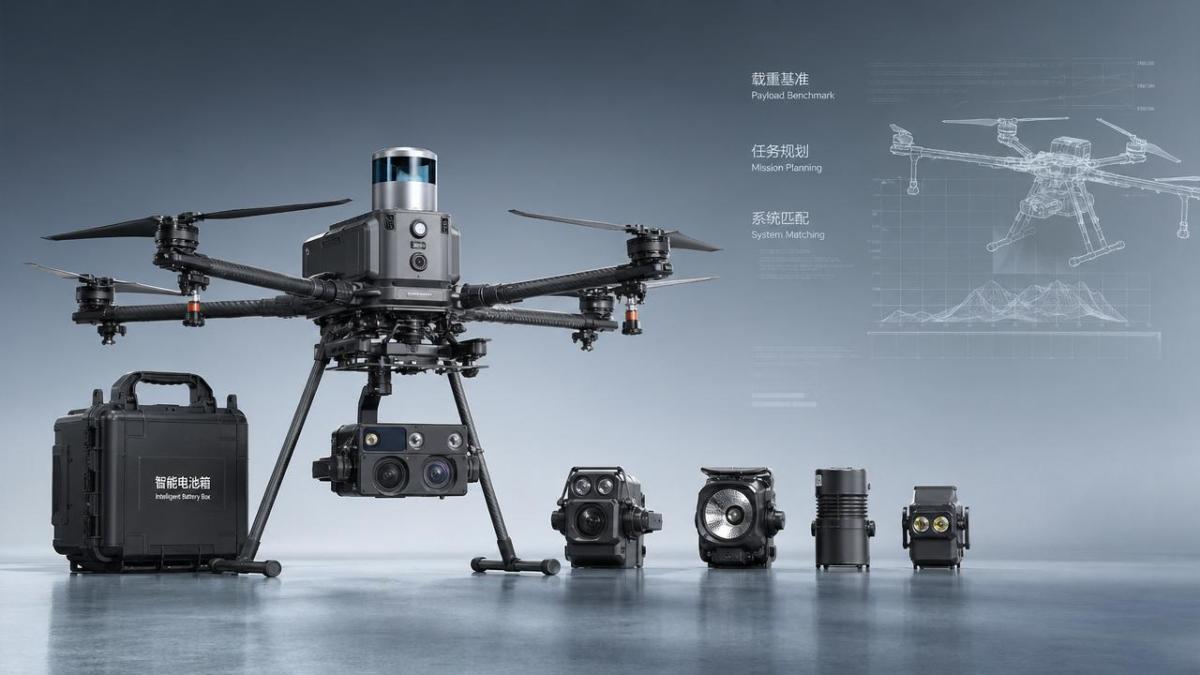
The biggest change in the commercial UAV market is not simply that drones are getting stronger. The more important shift is that missions are becoming more specialized. Operators are no longer flying only RGB cameras for simple inspection. They are carrying LiDAR scanners, multispectral payloads, thermal systems, loudspeakers, drop kits, edge AI modules, relay radios, and hybrid sensor stacks. As payload complexity rises, a commercial drone payload capacity benchmark becomes essential for understanding what a platform can truly carry in usable field conditions rather than in ideal brochure conditions.
This matters across industries because payload decisions now influence not only lift, but also endurance, stability, battery reserve, regulatory compliance, and mission economics. A drone that can technically lift a sensor may still fail the practical mission if flight time collapses, control authority degrades in wind, or power integration creates thermal issues. For operators, this means benchmark data has shifted from being a procurement aid to being a frontline planning tool.
At TechStat Vanguard, the useful question is not “What is the maximum advertised payload?” but “Under which conditions does that payload remain operationally valid?” That framing reflects a wider industry movement toward engineering truth, where tested parameters and system limits are more valuable than generic marketing language.
Current signals operators are seeing in the field
- Heavier sensor packages are being used on smaller airframes to reduce deployment costs.
- Multi-payload missions are replacing single-sensor sorties.
- Wind tolerance and battery reserve are becoming key payload planning constraints.
- Procurement teams increasingly ask for real mission benchmark data, not just payload ratings.
A practical trend table
What is driving the rise of the commercial drone payload capacity benchmark
Several forces are pushing operators toward benchmark-based planning. The first is mission diversification. Mapping, infrastructure inspection, agriculture, logistics support, emergency response, and industrial security all have different payload profiles. A benchmark helps compare platforms using a common engineering frame rather than relying on category labels alone.
The second driver is sensor value density. Payloads are becoming more expensive and more sensitive. Carrying a high-value LiDAR unit or calibrated imaging package means operators cannot afford trial-and-error platform matching. Benchmarking reduces the chance of overloading motors, misjudging center of gravity, or accepting unsafe endurance margins.
The third driver is the move toward procurement accountability. Engineering teams, operations managers, and procurement directors increasingly need technical justification for why one platform was chosen over another. A commercial drone payload capacity benchmark creates a more objective basis for that decision and supports internal review, vendor comparison, and future fleet standardization.
The main forces behind this shift
1. Payloads are no longer passive weight
Many modern payloads draw power, generate heat, create drag, and change vibration behavior. That means two payloads with the same mass may produce very different mission outcomes. Good benchmark work captures more than kilograms; it reflects system interaction.
2. Weather and terrain are reducing theoretical margins
High temperatures, altitude, coastal winds, and confined takeoff zones all reduce practical payload performance. Operators now need benchmarks that translate technical capacity into mission capacity.
3. Downtime is more expensive than before
Rescheduled flights, failed data capture, and equipment damage can erase the apparent savings of choosing an undersized platform. Benchmark-informed planning lowers total operational risk.
How operators should read a benchmark instead of just reading a spec sheet
A spec sheet usually gives a top-line payload number. A benchmark should help you interpret that number within a mission envelope. The first step is to separate absolute lift from sustained operational lift. Absolute lift may describe what the drone can raise briefly. Sustained operational lift is the weight it can carry while preserving route completion, control stability, landing reserve, and payload data quality.
The second step is to review the benchmark by mission type. A mapping mission values stable speed, smooth motion, and endurance. A delivery or public safety mission may accept shorter endurance in exchange for higher instantaneous lift. The same commercial drone payload capacity benchmark can support both use cases, but only if the operator connects the numbers to mission priorities.
The third step is to look for the hidden variables that often break field performance: center of gravity offset, aerodynamic drag from payload shape, gimbal movement limits, peak power draw during climb, and battery aging. These factors are often absent from simple payload ratings but can be partly inferred if the benchmark includes test conditions and performance curves.
Key fields to compare in a benchmark
- Rated payload versus tested mission payload
- Hover endurance and route endurance at different loads
- Wind tolerance at target payload mass
- Takeoff performance at temperature and altitude ranges
- Vibration behavior for imaging or scanning payloads
- Power, data, and mounting compatibility
A simple operator reading method
- Define payload total mass, including brackets, cables, batteries, and adapters.
- Define minimum acceptable endurance and landing reserve.
- Apply local temperature, wind, and altitude penalties.
- Check whether benchmarked performance still meets mission objectives.
Where the benchmark has the biggest impact across real missions
The value of a commercial drone payload capacity benchmark is not equal across all jobs. It becomes most important where payload mass directly affects data quality, task completion, or airframe safety. In these environments, a benchmark prevents operators from making decisions based only on catalog confidence.
For mapping and surveying teams, the benchmark helps protect coverage planning. A drone that carries a LiDAR payload but loses too much endurance can force extra sorties, create overlap inconsistencies, and increase crew time. For infrastructure inspectors, the benchmark supports better choices between zoom optics, thermal systems, and stabilization requirements. For agricultural operators, payload planning can determine whether spray, imaging, or mixed missions remain viable under changing field conditions.
Public safety and industrial response teams face an even sharper version of this problem. They often fly in urgent conditions where wind, night operations, or extra communication gear reduce available performance. Here, benchmark-based planning supports more disciplined go or no-go decisions.
Impact by mission category
What to watch next as mission planning standards continue to evolve
The next trend is clear: payload planning is moving toward system-level benchmarking. Operators should expect stronger attention to airframe, propulsion, battery health, payload power draw, and software tuning as a combined performance problem. In other words, the future commercial drone payload capacity benchmark will likely be less about one number and more about a mission profile with boundaries.
Another important direction is the growing distinction between nominal capability and validated capability. As enterprise users mature, they increasingly prefer traceable test logic over broad claims. This aligns closely with TSV’s position that engineering decisions should be grounded in measurable parameters, not promotional language.
Operators should also watch for stronger expectations around payload interoperability. The market is rewarding platforms that simplify integration, maintain balance with modular payloads, and preserve reliable telemetry under varied electrical loads. That means future benchmarks may place more value on repeatable integration performance than on raw lift alone.
Practical signals worth tracking
Battery aging effects
Payload capacity in a fresh battery state is not the same as payload capacity after repeated field cycles. Operators should incorporate aging margins into benchmark interpretation.
Integration overhead
Mounts, dampers, adapters, and external cables often add meaningful weight and aerodynamic penalty. These should be treated as part of the benchmarked load, not as secondary details.
Mission reserve discipline
As payloads become more demanding, reserve battery planning will likely become a core acceptance criterion rather than an operator preference.
How to turn benchmark insight into better operational decisions
For operators, the best use of a commercial drone payload capacity benchmark is to create a repeatable planning method. Start by defining your real payload package, not the idealized sensor weight. Then map that package to endurance needs, local weather norms, and site constraints. Finally, compare drone options based on usable mission output, not just payload claims.
For fleet managers and buyers, standardize a shortlist of benchmark questions before purchasing. Ask how payload performance changes with wind, altitude, temperature, and route type. Ask whether the benchmark includes integration accessories and whether it reflects stable data capture, not merely takeoff success. This approach reduces qualification cycles and supports more defensible procurement decisions.
The most important judgment is simple: a platform is suitable only when payload, endurance, stability, and mission reserve remain aligned. If your team wants to understand how current UAV trends affect your operation, focus on four questions: What is the real mission payload? What performance margin is non-negotiable? Which conditions reduce that margin fastest? And does the available benchmark data answer those questions with engineering clarity? That is where a commercial drone payload capacity benchmark becomes truly useful—not as a marketing comparison, but as a mission planning standard.
Search News
Hot Articles
- Carbon Fiber StructuresHow to Specify Aerospace Carbon Fiber Assemblies for Lightweight, Load-Bearing PartsJul 11, 2026
- Machine VisionXiaomi, Alibaba DAMO Academy Drive Open-Source Robotics Model Ecosystem, Lowering Algorithm Development Barriers for Overseas SMEs Adopting Chinese Robotics SolutionsMar 30, 2026
- Cobots & ArmsShanxi 'AI+' Conference Showcases Embodied Intelligence with Multinational Buyer Engagement: Key Industry ImplicationsMar 30, 2026
Popular Tags
Recommended News
 Jul 11, 2026How to Specify Aerospace Carbon Fiber Assemblies for Lightweight, Load-Bearing PartsAerospace carbon fiber assemblies: learn how to specify laminate design, load data, joining methods, and inspection controls for lighter, reliable load-bearing aerospace parts.Elena Rostova (UAV Systems Researcher)
 Mar 30, 2026Xiaomi, Alibaba DAMO Academy Drive Open-Source Robotics Model Ecosystem, Lowering Algorithm Development Barriers for Overseas SMEs Adopting Chinese Robotics SolutionsXiaomi & Alibaba DAMO Academy's open-source robotics models lower algorithm barriers for global SMEs. Boost efficiency in manufacturing, logistics & smart retail with ROS 2 compatible solutions.TSV Data Lab
 Mar 30, 2026Shanxi 'AI+' Conference Showcases Embodied Intelligence with Multinational Buyer Engagement: Key Industry ImplicationsShanxi 'AI+' Conference highlights embodied intelligence with Tesla, Ubtech & Jiantao showcasing multimodal robotics. 40+ global buyers validated tech on-site, creating new B2B channels for industrial automation & AI solutions.Chen Wei (Automation Lead Engineer)
 Mar 30, 2026Zhongguancun Unveils 6G Integrated Sensing-Computing-Intelligence Platform to Empower Embodied Robots for Global Industrial ApplicationsZhongguancun's new 6G platform revolutionizes industrial robotics with <10ms latency, empowering global automotive, logistics & port automation. Discover how this tech boosts China's smart manufacturing exports.TSV Data Lab
 Mar 30, 2026Mech-Mind Tianjin Embodied Intelligence R&D and Production Base Goes Live, Cutting Delivery Time by 20%–30% for Global Customized AMR+Vision SolutionsMech-Mind's Tianjin AMR+Vision production base cuts delivery time by 20%-30% for欧美 & Latin American markets. Discover how this PLd-certified facility accelerates customized robotics solutions for smart manufacturing and logistics.Chen Wei (Automation Lead Engineer)
 Mar 30, 2026Boao Forum Reveals 'Co-evolution of Big and Small Brains' Trend in Humanoid Robots, China's Embodied Intelligence Accelerates Adaptation to Overseas Manufacturing Service ScenariosDiscover how China's humanoid robots, featuring 'Co-evolution of Big and Small Brains,' are revolutionizing global manufacturing. Learn about Embodied Tian Gong 3.0's ISO compliance and overseas deployment at Boao Forum 2026.Chen Wei (Automation Lead Engineer)
 Mar 30, 2026China Railway Industrial Secures Patent for Embodied Robotics in Material Handling, Boosting High-Precision Delivery Capabilities for Overseas Infrastructure and Manufacturing ProjectsChina Railway Industrial's new patent for embodied robotics in material handling boosts high-precision delivery for global infrastructure & manufacturing. Discover how this innovation enhances logistics accuracy in automotive, rail transit & EPC projects.Chen Wei (Automation Lead Engineer)
 Oct 28, 2026IDC: Global Quadruped Robot Shipments Rise 92.5% in H1 2026 as Volume and Value DivergeGlobal quadruped robot shipments rose 92.5% in H1 2026, according to IDC. Explore what diverging volume and value trends mean for industrial buyers and manufacturers.Chen Wei (Automation Lead Engineer)
 Oct 28, 2026Interpreting Industrial IoT Latency Data for Monitoring and Real-Time ControlInterpret industrial category latency data to assess jitter, deadline misses, and real-time readiness. Learn how to benchmark IIoT systems and choose monitoring and control solutions.TSV Data Lab
 Oct 27, 2026GXO and Agility Robotics Expand Partnership to Accelerate US Humanoid Robot DeploymentGXO and Agility Robotics plan to expand US humanoid robot deployment with Digit 4 in early 2027. Explore warehouse automation plans, service terms and future Digit 5 upgrades.Chen Wei (Automation Lead Engineer)
 Oct 27, 2026Robotic Automation Costs: Budgeting for Equipment, Integration, and MaintenancePlan your robotics automation cost with confidence. Explore equipment, integration, and maintenance expenses, compare quotes, and build a realistic budget for better ROI.Chen Wei (Automation Lead Engineer)
 Oct 26, 2026AMAXiMAL Releases Open-Source TopMod 3D v3 With Claude AIExplore AMAXiMAL’s free, open-source TopMod 3D v3 with Claude AI assistance, topology-based modeling and plywood fabrication tools that connect complex designs to physical builds.Dr. Marcus Vance
 Oct 26, 2026Choosing a SCADA System Integrator Company: PLC Compatibility and Long-Term SupportChoose a scada system integrator company with proven PLC compatibility and reliable long-term support. Discover what to test, compare, and require before investing.Victor Lin (Chief Software Architect)
 Oct 25, 2026Hesai Leads Global ADAS Main Lidar Shipments in Yole’s 2026 ReportHesai led global ADAS main lidar shipments with a 43% share in 2025, according to Yole’s 2026 report. Explore what this ranking reveals about its automotive market position.TSV Data Lab
 Oct 25, 2026Choosing an Aerospace Materials Manufacturer: Quality and Traceability ChecksChoosing an aerospace materials manufacturer? Learn how to verify certifications, test reports, and lot traceability to qualify suppliers confidently and reduce costly sourcing risks.Dr. Marcus Vance
 Oct 24, 2026Guotai Haitong: Global Entry-Level 3D Printer Shipments Rose 39% in Q1 2026Entry-level 3D printer shipments rose 39% in Q1 2026, Guotai Haitong reports. Explore how AI, multicolor printing and print farms are shaping market growth.Dr. Marcus Vance
 Oct 24, 2026Choosing an Industrial Vision Inspection Supplier: Acceptance Tests That MatterChoose an industrial vision inspection supplier with confidence. Discover acceptance tests for defect detection, false rejects, production speed, and reliable part rejection before you buy.TSV Data Lab
 Oct 23, 2026US Navy Raises Gecko Robotics Contract Ceiling to $300M for Robotic Fleet MaintenanceUS Navy raises Gecko Robotics’ contract ceiling to $300M for Pacific Fleet robotic inspections. Explore potential opportunities for maintenance suppliers and key procurement considerations.Chen Wei (Automation Lead Engineer)
 Oct 23, 2026Choosing Industrial Sensing Systems for Global Plants: Protocol CompatibilityCompare industrial sensing systems international buyers can trust. Explore protocol compatibility, reduce integration risks, and select proven configurations for reliable global plant deployments.TSV Data Lab
 Oct 22, 2026KUKA Showcases Physical AI and iiQKA.AI Vision at NVIDIA GTC BerlinExplore KUKA’s Physical AI showcase at NVIDIA GTC Berlin and discover how iiQKA.AI Vision aims to simplify robotic vision integration and improve 2D and 3D scene recognition.TSV Data Lab
 Oct 22, 2026Robotic Machining of Advanced Composites: What Tolerances Are Achievable?Explore advanced materials machining robotics: discover what drives achievable composite tolerances and how to validate accuracy before investing in your next machining system.Dr. Marcus Vance
 Oct 21, 2026China’s Industrial Robot Exports Near RMB 10 Billion in First Nine Months of 2026China’s industrial robot exports neared RMB 10 billion in January–September 2026, with value rising faster than volume. Explore the data and what it could mean for suppliers.Chen Wei (Automation Lead Engineer)
 Oct 21, 2026Low-Latency Industrial Data Processing: Pricing and Key Cost DriversExplore industrial data latency price drivers, from edge hardware to integration and support. Learn how to compare quotes, verify performance, and avoid unnecessary costs.TSV Data Lab
 Oct 20, 2026KUKA Launches iiQKA.AI Vision to Simplify Industrial Image ProcessingKUKA iiQKA.AI Vision simplifies industrial image processing with controller-based 2D and 3D vision. Explore drag-and-drop setup for vision-guided automation.TSV Data Lab