How to Choose Watch Hands and Crowns for Custom Watches: Sizes, Fits, and Materials
Publication Date
author
Why Watch Hands and Crowns Matter in Custom Watch Specification
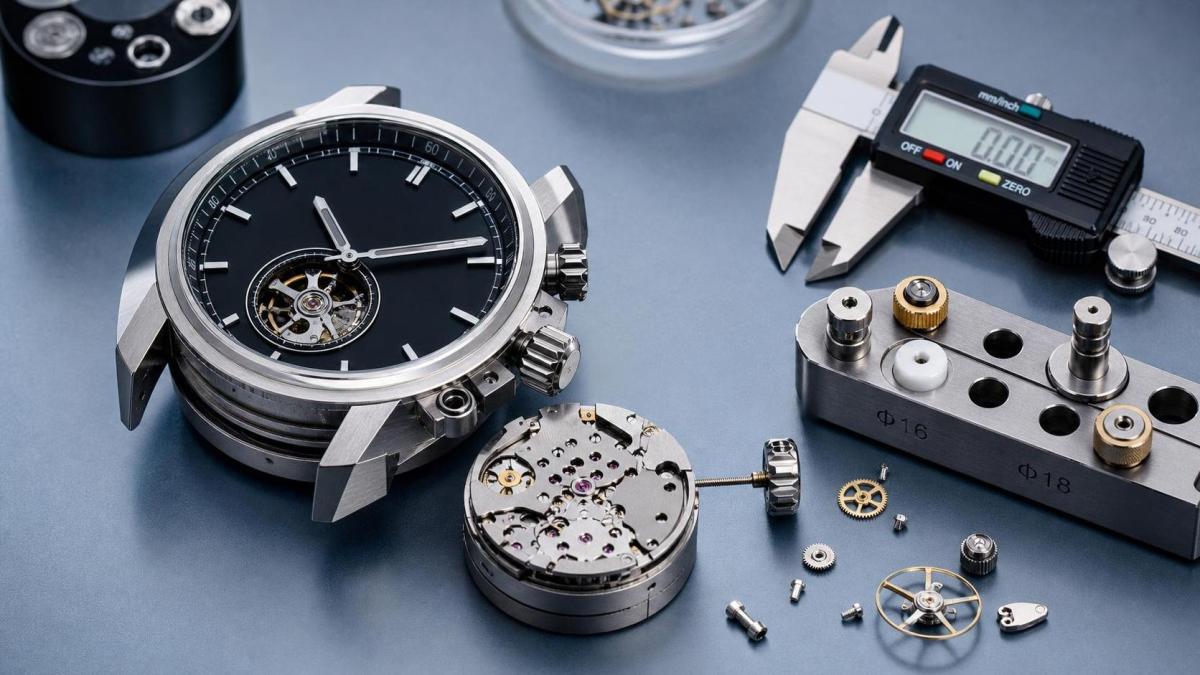
Selecting watch hands and crowns shapes much more than appearance. These parts directly affect assembly fit, winding feel, water resistance, serviceability, and long-term reliability.
In custom watch projects, poor choices usually show up late. A hand may rub the dial, a crown may wobble, or the stem interface may fail under repeated use.
That is why evaluating watch hands and crowns should start with dimensions, tolerances, material behavior, and movement compatibility, not visual style alone.
For sourcing teams, this also helps separate polished marketing claims from usable technical data. A good supplier should provide measurable fit information, not vague promises.
In practical terms, the best custom watch builds treat watch hands and crowns like precision interfaces. Small errors here can compromise the whole product.
Start with the Critical Dimensions
The first step is size mapping. For watch hands and crowns, dimensions must match the movement, dial layout, case geometry, and intended operating feel.
Watch hand sizing basics
Hand length is usually defined from the center hole to the tip. It should align with dial markers without touching chapter rings, crystal edges, or other hands.
Hole size matters even more. Hour, minute, and second hands must match the exact post diameters of the target movement.
A mismatch of only a few hundredths of a millimeter can create loose mounting, hand cracking, or misalignment during pressing.
Crown sizing basics
Crown diameter and thickness drive user grip and visual proportion. Crown tube fit, internal thread size, and stem tap size determine functional compatibility.
If the crown is too small, operation becomes awkward. If it is too large, it may interfere with guards, wrist comfort, or case-side clearance.
- Confirm hand hole diameters against movement technical sheets.
- Confirm hand lengths against dial radius and marker layout.
- Confirm crown outside diameter, tube match, and stem thread standard.
- Confirm stack height and crystal clearance before production.
Fit, Tolerances, and Mechanical Compatibility
This is where many sourcing decisions become risky. A component can look correct on paper and still fail if tolerance control is weak.
Hand fit on movement posts
Watch hands and crowns both depend on precise interface control, but hand mounting is especially sensitive because installation forces are localized and small.
If the hand hole is undersized, pressing force rises and deformation risk increases. If oversized, positional stability drops and shock resistance becomes unpredictable.
Hand flatness also matters. Even slight warpage can cause contact between the hour, minute, and second hands during operation.
Crown and stem compatibility
Crowns must match the stem thread specification exactly. Common movement families use different tap sizes, so assumptions are costly.
Check thread engagement depth, stem cut length, and seating position against the case and movement stack. This affects winding smoothness and pull-out positions.
For screw-down systems, tube thread quality and gasket compression must be validated together. Looking at the crown alone is not enough.
How Materials Change Performance
Material selection affects corrosion resistance, weight, stiffness, finishing consistency, and wear behavior. It also influences how watch hands and crowns perform after repeated use.
Common materials for watch hands
Brass remains common because it forms cleanly and supports plating well. It is cost-effective, but handling damage can occur if thickness control is poor.
Steel offers better rigidity and scratch resistance. It suits slimmer profiles, though stamping and finishing may require tighter process control.
Aluminum can reduce mass, which helps in some large-hand designs. The tradeoff is lower stiffness and greater sensitivity to surface damage.
Common materials for crowns
Stainless steel is the standard choice for many crowns because it balances machining strength, corrosion resistance, and coating stability.
Titanium lowers weight and matches titanium cases well. However, galling behavior and thread wear need attention in screw-down applications.
Bronze and brass create distinct aesthetics, but oxidation and skin-contact changes must be considered early in the specification stage.
More importantly, ask suppliers about plating thickness, lume adhesion, adhesive systems, and salt-spray performance where relevant. Material labels alone tell only part of the story.
Functional Risks That Often Get Missed
From recent sourcing patterns, the bigger issue is not usually basic compatibility. It is incomplete validation under real use conditions.
For watch hands
- Lume fill can vary in thickness and shift hand balance.
- Black coatings may fade differently under UV exposure.
- Long second hands may flutter if pipe rigidity is low.
- Polished edges may show burr issues after stamping.
For crowns
- Knurling can feel sharp or too shallow during repeated winding.
- Gasket materials may harden faster under heat or chemicals.
- Logo inserts may loosen if adhesive or press-fit control is weak.
- Thread wear appears earlier when crown and tube hardness are mismatched.
These details matter because custom watch buyers increasingly expect not just a good first impression, but stable operation across years of daily use.
A Practical Evaluation Framework for Supplier Comparison
When comparing suppliers of watch hands and crowns, use a structured checklist. This reduces decision noise and makes technical reviews easier to defend internally.
- Request detailed drawings with tolerances, not nominal dimensions only.
- Match every hand hole size to the exact movement reference.
- Verify crown tap size, tube fit, and target stem trimming length.
- Review material grade, surface treatment, and gasket specification.
- Check sample consistency across at least several pieces, not one hero sample.
- Test assembled parts for winding torque, hand clearance, and sealing performance.
- Confirm rework limits and spare part support before mass production.
In real projects, the strongest suppliers are usually transparent about process capability. They can explain why their watch hands and crowns fit reliably, not just that they do.
What to Specify Before You Place an Order
A clean specification sheet prevents expensive back-and-forth. It also improves quote accuracy and lowers the chance of hidden compatibility issues.
- Movement brand, caliber, and verified post dimensions.
- Dial diameter, marker reach, and target hand lengths.
- Required hand finish, lume type, and color tolerance.
- Crown diameter, thickness, knurl style, and logo method.
- Stem tap standard, tube style, and water-resistance target.
- Sample approval criteria and outgoing inspection expectations.
This also creates a better basis for negotiation. If a supplier cannot respond clearly to these points, the risk is already visible.
Final Decision: Choose for Fit First, Then Finish
The best watch hands and crowns are not simply the most attractive or the cheapest. They are the ones that meet dimensional requirements, survive repeated use, and support stable assembly.
A good decision process starts with movement compatibility, continues through tolerance review, and ends with material and finishing validation under realistic conditions.
For custom watch development, that approach makes sourcing more predictable. It also helps turn watch hands and crowns from a styling detail into a controlled engineering choice.
If you are preparing a new build, define the interfaces first, test samples early, and compare suppliers using measurable fit data. That is usually where better outcomes begin.
Search News
Hot Articles
- Carbon Fiber StructuresHow to Specify Aerospace Carbon Fiber Assemblies for Lightweight, Load-Bearing PartsJul 11, 2026
- Machine VisionXiaomi, Alibaba DAMO Academy Drive Open-Source Robotics Model Ecosystem, Lowering Algorithm Development Barriers for Overseas SMEs Adopting Chinese Robotics SolutionsMar 30, 2026
- Cobots & ArmsShanxi 'AI+' Conference Showcases Embodied Intelligence with Multinational Buyer Engagement: Key Industry ImplicationsMar 30, 2026
Popular Tags
Recommended News
 Jul 11, 2026How to Specify Aerospace Carbon Fiber Assemblies for Lightweight, Load-Bearing PartsAerospace carbon fiber assemblies: learn how to specify laminate design, load data, joining methods, and inspection controls for lighter, reliable load-bearing aerospace parts.Elena Rostova (UAV Systems Researcher)
 Mar 30, 2026Xiaomi, Alibaba DAMO Academy Drive Open-Source Robotics Model Ecosystem, Lowering Algorithm Development Barriers for Overseas SMEs Adopting Chinese Robotics SolutionsXiaomi & Alibaba DAMO Academy's open-source robotics models lower algorithm barriers for global SMEs. Boost efficiency in manufacturing, logistics & smart retail with ROS 2 compatible solutions.TSV Data Lab
 Mar 30, 2026Shanxi 'AI+' Conference Showcases Embodied Intelligence with Multinational Buyer Engagement: Key Industry ImplicationsShanxi 'AI+' Conference highlights embodied intelligence with Tesla, Ubtech & Jiantao showcasing multimodal robotics. 40+ global buyers validated tech on-site, creating new B2B channels for industrial automation & AI solutions.Chen Wei (Automation Lead Engineer)
 Mar 30, 2026Zhongguancun Unveils 6G Integrated Sensing-Computing-Intelligence Platform to Empower Embodied Robots for Global Industrial ApplicationsZhongguancun's new 6G platform revolutionizes industrial robotics with <10ms latency, empowering global automotive, logistics & port automation. Discover how this tech boosts China's smart manufacturing exports.TSV Data Lab
 Mar 30, 2026Mech-Mind Tianjin Embodied Intelligence R&D and Production Base Goes Live, Cutting Delivery Time by 20%–30% for Global Customized AMR+Vision SolutionsMech-Mind's Tianjin AMR+Vision production base cuts delivery time by 20%-30% for欧美 & Latin American markets. Discover how this PLd-certified facility accelerates customized robotics solutions for smart manufacturing and logistics.Chen Wei (Automation Lead Engineer)
 Mar 30, 2026Boao Forum Reveals 'Co-evolution of Big and Small Brains' Trend in Humanoid Robots, China's Embodied Intelligence Accelerates Adaptation to Overseas Manufacturing Service ScenariosDiscover how China's humanoid robots, featuring 'Co-evolution of Big and Small Brains,' are revolutionizing global manufacturing. Learn about Embodied Tian Gong 3.0's ISO compliance and overseas deployment at Boao Forum 2026.Chen Wei (Automation Lead Engineer)
 Mar 30, 2026China Railway Industrial Secures Patent for Embodied Robotics in Material Handling, Boosting High-Precision Delivery Capabilities for Overseas Infrastructure and Manufacturing ProjectsChina Railway Industrial's new patent for embodied robotics in material handling boosts high-precision delivery for global infrastructure & manufacturing. Discover how this innovation enhances logistics accuracy in automotive, rail transit & EPC projects.Chen Wei (Automation Lead Engineer)
 Sep 19, 2026How to Scope Automation Integration Services for Multi-System Factory ProjectsAutomation integration services: learn how to scope multi-system factory projects with clear workflows, interface contracts, safety boundaries, and acceptance criteria.Victor Lin (Chief Software Architect)
 Sep 18, 2026Selecting UAV Aerospace Structural Parts for Strength, Weight, and Fatigue LifeUAV aerospace structural parts guide: compare strength, weight, stiffness, fatigue life, joints, and traceability to select reliable flight-ready components.Elena Rostova (UAV Systems Researcher)
 Sep 17, 2026Selecting Commercial Drone Payloads for European Inspection ProjectsCommercial drone payloads Europe: learn how to select RGB, thermal and LiDAR systems for compliant, reliable inspection data and better project outcomes.Elena Rostova (UAV Systems Researcher)
 Sep 16, 2026Machining Tolerance Validation: How to Verify Critical Dimensions Before Production ReleaseMachining tolerance analysis validation: verify critical dimensions, measurement systems, process capability, and tolerance stacks before production release.Dr. Marcus Vance
 Sep 15, 2026AGV Tape Guidance vs Laser Navigation: Which Fits Your Warehouse Layout?AGV tape guidance comparison: discover how tape and laser navigation fit changing warehouse layouts, docking needs, floor conditions, maintenance, and route flexibility.Chen Wei (Automation Lead Engineer)
 Sep 14, 2026How Point Cloud Analytics Improves Asset Inspection Workflows Across GCC ProjectsPoint cloud analytics GCC helps project leaders improve asset inspections with accurate change detection, safer workflows, and faster maintenance decisions.TSV Data Lab
 Sep 13, 2026How Aerospace Manufacturers Can Build a Digital Thread From Design to Certified ProductionDigital manufacturing for aerospace: learn how to build a traceable digital thread from design through certified production, supplier control, and audit-ready compliance.Victor Lin (Chief Software Architect)
 Sep 12, 2026How to Select a Thermal Sensor for Mapping Drones in Surveying ProjectsMapping drone thermal sensor selection made simple: compare GSD, radiometric data, NETD, calibration, and workflow fit for accurate, survey-ready thermal maps.Elena Rostova (UAV Systems Researcher)
 Sep 11, 2026Integrating Photogrammetry Workflows into Digital Twin Projects Without Data BottlenecksPhotogrammetry workflow integration for digital twins: learn how to streamline capture, validation, versioning, and delivery to prevent data bottlenecks.Victor Lin (Chief Software Architect)
 Sep 10, 2026Hard-Tech Supply Chain Procurement: Qualifying Suppliers to Cut Lead-Time RiskHard-tech supply chain procurement guide: qualify suppliers with proven process, traceability, capacity, and change control to reduce lead-time risk.Chen Wei (Automation Lead Engineer)
 Sep 09, 2026Industrial Application Notes: Cost Factors That Shape Automation Project BudgetsIndustrial application notes cost factors explained: uncover the engineering, safety, integration, and commissioning variables that shape accurate automation budgets.Victor Lin (Chief Software Architect)
 Sep 08, 2026Supplier Discovery for Sourcing: How Buyers Can Verify Capability and Supply RiskSupplier discovery for sourcing: learn how to verify supplier capability, traceability, quote assumptions, and supply risk before placing production orders.TSV Data Lab
 Sep 07, 2026What Determines Process Control Systems Pricing? A Buyer’s Cost GuideProcess control systems pricing explained: compare hardware, engineering, integration, cybersecurity, validation, and lifecycle costs to choose the right-value solution.Victor Lin (Chief Software Architect)
 Sep 07, 2026AMR Robots in ASEAN: Which Industries Are Adopting Them—and Why?AMR robots ASEAN adoption is accelerating in electronics, automotive, warehousing, healthcare, and cold chain. Explore use cases, risks, and deployment insights.Chen Wei (Automation Lead Engineer)
 Sep 05, 2026How to Evaluate Supplier Qualification Support Tools for Industrial Procurement TeamsSupplier qualification support tools help industrial procurement teams verify technical evidence, manage risk, and make defensible supplier approvals. Learn what to evaluate.Victor Lin (Chief Software Architect)
 Sep 04, 2026Grinding Tolerance Analysis: How to Set Realistic Limits for Precision PartsGrinding tolerance analysis explains how to set realistic limits for precision parts, balance fit, geometry, process capability, and inspection for reliable performance.Dr. Marcus Vance
 Sep 03, 2026Warehouse Automation Strategies to Increase Storage Capacity Without ExpansionWarehouse automation space saving strategies help unlock vertical capacity, optimize slotting, and improve storage density without costly building expansion.Victor Lin (Chief Software Architect)