
Custom VTOL UAV Factory: Risks to Check Early
Publication Date
author
Selecting a custom VTOL UAV factory too late in the sourcing cycle can expose teams to hidden risks in airframe validation, supply-chain traceability, and flight-control integration. For buyers comparing a fixed wing uav supplier, drone propeller manufacturer, or pixhawk flight controller supplier, early checks on testing data, carbon fiber tube for aerospace quality, and payload compatibility are essential to avoid costly redesigns and procurement delays.
In practical B2B sourcing, the factory decision often shapes far more than unit price. It affects flight stability, maintenance intervals, firmware integration effort, spare-part continuity, and the time needed to move from prototype to low-rate or scaled production. For R&D teams, operators, procurement managers, and business decision-makers, the right early audit can reduce technical rework by weeks and lower qualification risk before tooling, test flights, and field deployment begin.
A custom VTOL UAV program typically involves multiple linked suppliers: airframe structures, propulsion modules, batteries, autopilot systems, telemetry, payload interfaces, and final assembly. If one node lacks process control, the whole platform can suffer. That is why a data-driven review of manufacturing capability, tolerance discipline, and test evidence should begin at the RFQ stage rather than after design freeze.
Why Early Factory Screening Matters in Custom VTOL UAV Procurement
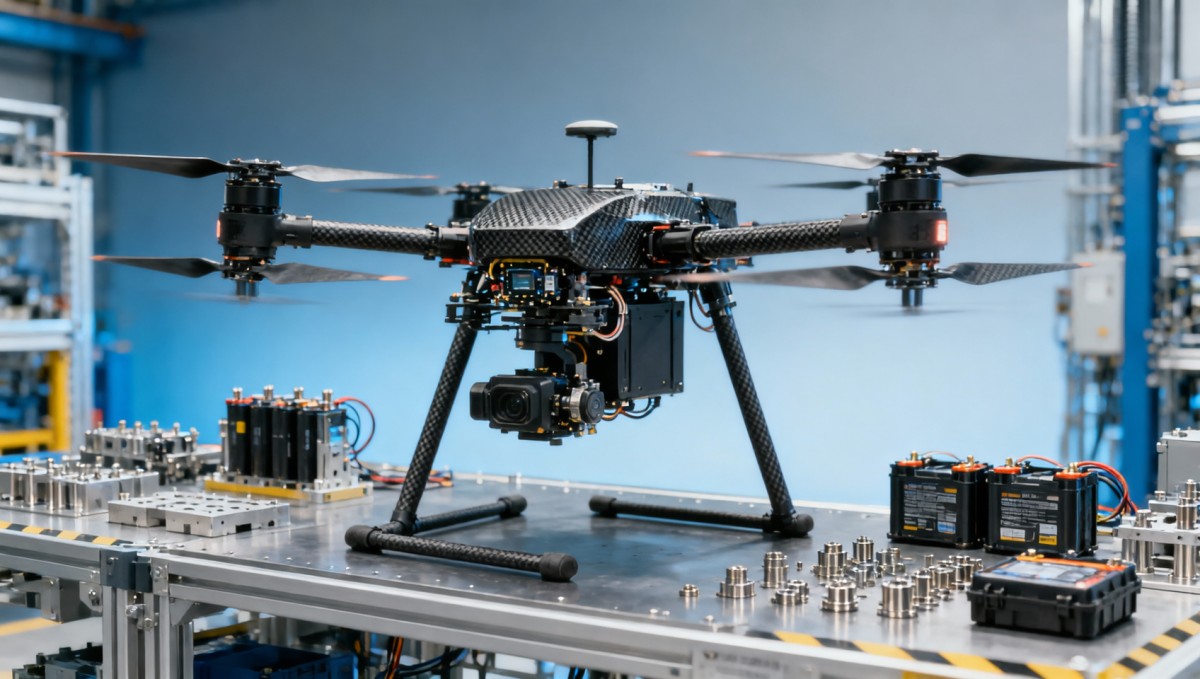
A custom VTOL UAV factory is not just a contract manufacturer. In many projects, it becomes an engineering partner that influences structural layout, propulsion matching, vibration behavior, and software-hardware integration. When the initial screening is delayed until prototype build, teams often discover hidden issues such as insufficient carbon fiber traceability, unclear EMC test coverage, or payload mounting interfaces that do not match field requirements.
For example, a platform designed for 3 kg to 8 kg payload classes may appear suitable on paper, yet the factory may only have validated airframes in a narrower band such as 4 kg to 5.5 kg. That gap can create excessive vibration, CG shift problems, or reduced endurance once LiDAR, mapping cameras, or agricultural modules are installed. A difference of even 8% to 12% in final takeoff weight can alter stall margins, hover efficiency, and transition behavior.
The same applies to suppliers that position themselves as a fixed wing uav supplier or a drone propeller manufacturer. A strong capability in one subsystem does not automatically mean full-system integration readiness. Buyers should verify whether the factory can manage airframe bonding, motor-prop matching, wiring harness routing, environmental sealing, and autopilot tuning as a controlled production process rather than a one-off assembly effort.
Tech-focused procurement teams increasingly evaluate suppliers using measurable checkpoints within the first 2 to 4 weeks of engagement. This front-loaded review reduces the chance of late engineering change orders, which can extend lead time by 3 to 8 weeks depending on tooling revision, flight testing, and component replacement cycles.
The Cost of Delayed Verification
Late validation often creates three layers of loss: engineering delay, procurement disruption, and field reliability risk. Engineering delay appears when CAD assumptions do not match actual manufacturing tolerances. Procurement disruption emerges when alternate batteries, ESCs, or propellers must be sourced. Reliability risk becomes visible after flight trials, when vibration, thermal stress, or connector failures begin to surface.
Even in moderate-volume projects of 20 to 100 units, a weak supplier qualification process can multiply total project cost beyond the initial unit quotation difference. In many cases, a 5% lower purchase price is outweighed by one failed flight-test loop, one missed delivery milestone, or one redesign of the payload bay and power distribution architecture.
Core questions to ask in the first review cycle
- What payload range has the factory validated in real flights, and how many flight hours support that claim?
- Can the supplier provide traceability for carbon fiber tube for aerospace applications, adhesives, and structural fasteners?
- Has the pixhawk flight controller supplier or integration team documented firmware versions, parameter baselines, and fail-safe logic?
- What is the typical pilot build lead time: 3 weeks, 6 weeks, or longer once BOM is locked?
Technical Risks to Check Before Design Freeze
The most common mistake in custom VTOL UAV sourcing is treating performance claims as equivalent to validated engineering data. Buyers should request test evidence tied to actual build configurations, not generic brochures. This is especially important when evaluating a custom VTOL UAV factory that offers both fixed-wing cruise efficiency and multirotor takeoff performance, because transition control, vibration, and energy management create more variables than a standard drone platform.
Airframe validation should include structural checks on spar design, fuselage bonding, landing impact resistance, and fatigue exposure. For carbon fiber structures, buyers should ask whether wall thickness, layup process, resin system, and bonding methods are controlled by documented work instructions. In practical terms, tube straightness, diameter tolerance, and hole-position repeatability can influence alignment and wing attachment reliability across batch production.
Flight-control integration deserves equal attention. If the platform uses a Pixhawk-based architecture, the procurement team should verify sensor calibration routines, redundant power paths, GPS mounting discipline, and EMI shielding around telemetry radios and power modules. A pixhawk flight controller supplier may offer broad compatibility, but real-world integration quality depends on wiring practices, vibration isolation, and parameter management under payload-specific operating conditions.
Propulsion is another risk cluster. A drone propeller manufacturer may list size ranges such as 18 to 34 inches, but the actual concern is the tested motor-prop-ESC-battery combination under target altitude, temperature, and payload conditions. Static thrust data alone is not enough. Teams need endurance curves, current draw under cruise and hover, and evidence of thermal stability during at least 20 to 30 minutes of representative operation.
High-priority technical checkpoints
The table below helps procurement and engineering teams screen a custom VTOL UAV factory before they commit to pilot tooling or first-batch production.
The key takeaway is simple: every major subsystem should be validated as part of a linked configuration, not as isolated components. When a custom VTOL UAV factory can only provide partial records from separate vendors, buyers should assume there is still integration risk and budget additional engineering review time.
What engineering teams should request
- At least 1 to 3 recent test reports tied to a similar payload and airframe class.
- A controlled BOM showing approved alternatives for batteries, ESCs, GPS units, and connectors.
- Bench and flight test procedures covering hover, transition, cruise, return-to-home, and low-voltage scenarios.
- Traceability records for critical structural materials and outsourced machining parts.
Supply Chain Traceability and Production Readiness Checks
A technically sound prototype does not guarantee scalable manufacturing. Buyers should examine whether the custom VTOL UAV factory has stable procurement channels, incoming inspection discipline, and configuration control across repeated builds. This is critical when the factory depends on external vendors for carbon fiber tube for aerospace assemblies, CNC brackets, power modules, and communication electronics.
Traceability should not be limited to a supplier list. It should cover lot-level material records, inspection checkpoints, and change management. If a battery pack vendor changes cell batches, or if a drone propeller manufacturer changes resin formulation or balancing method, the aircraft may behave differently in vibration and endurance testing. Without documented revision control, operators can end up flying mixed configurations that are difficult to maintain in the field.
Production readiness also includes process repeatability. Ask whether assembly jigs exist for wing mounting, motor arm positioning, cable routing, and control surface alignment. For a batch of 30 to 50 units, poor jig discipline can create cumulative inconsistencies that raise tuning effort per unit and slow final acceptance. A supplier that needs significant hand fitting on every aircraft may be suitable for prototypes but not for deployment programs.
Lead time visibility matters as well. Many UAV programs fail not because of design flaws but because a single subcomponent has an 8-week to 12-week replenishment cycle. A good factory should be able to identify long-lead parts at the quotation stage and propose approved substitutes or stocking strategies for the first production window.
Factory readiness review table
The following table highlights what procurement teams should compare when moving from sample evaluation to production planning.
For procurement leaders, this comparison helps separate a promising prototype shop from a factory that can support disciplined delivery. The difference becomes especially visible when after-sales support, spare-part planning, and firmware consistency are required across fleets rather than single demonstration units.
Recommended document package before PO release
- General assembly drawings and key interface drawings with revision dates.
- Incoming inspection checklist for structural and propulsion parts.
- Pilot run acceptance criteria covering weight, CG, vibration, control response, and endurance.
- Spare-part list for the first 6 to 12 months of operation.
How to Compare Suppliers: Airframe, Propulsion, and Control Stack
A robust supplier comparison should score more than price and headline payload. For a custom VTOL UAV factory, the better method is to compare technical fit, production discipline, service responsiveness, and ecosystem compatibility. This is particularly relevant when buyers are choosing among a fixed wing uav supplier, a drone propeller manufacturer, and a pixhawk flight controller supplier that may each cover only part of the total system value chain.
Airframe fit depends on mission profile. Mapping projects may prioritize endurance of 60 to 180 minutes and sensor stability; agricultural operations may prioritize repeat launch cycles, dust tolerance, and field maintainability; industrial inspection may focus on modular payload swaps in under 15 minutes. The factory should demonstrate that its base platform and customization process match those real operating conditions, not just nominal lab performance.
Control-stack fit is often underestimated. If a supplier uses Pixhawk-based systems, buyers should ask who owns parameter tuning, who validates firmware updates, and how mission planner templates are managed across fleets. A custom VTOL UAV factory with weak software configuration discipline can create support issues long after hardware delivery, especially when operators require consistent setup for 10, 20, or more aircraft.
Propulsion fit should be evaluated at mission level rather than component level. A drone propeller manufacturer may offer excellent balancing quality, but buyers still need proof that the selected propeller geometry supports target hover margin, acoustic limits, and thermal behavior. In many field deployments, 10% to 15% thrust reserve above minimum mission requirement is a safer planning threshold than using a tightly optimized but fragile setup.
A practical supplier comparison framework
- Check validated payload class and endurance under realistic mission loads.
- Review structural material control, especially carbon fiber tube for aerospace-grade applications.
- Confirm flight-controller integration process, update policy, and fault-handling logic.
- Assess service responsiveness, spare-part strategy, and pilot-run lead time.
- Score documentation quality, because poor documentation usually predicts higher lifecycle support cost.
Common sourcing mistakes
One common mistake is choosing the cheapest supplier for each subsystem separately and assuming integration will be simple. In reality, disconnected procurement often increases responsibility gaps. Another mistake is accepting endurance estimates without payload, wind, or temperature context. A third mistake is skipping firmware and wiring review until final assembly, which can hide EMC issues and fail-safe weaknesses until flight trials.
A disciplined comparison process should therefore combine commercial review with engineering benchmarking. For most projects, 4 to 6 evaluation dimensions are enough if they are evidence-based: validated performance, traceability, repeatability, integration maturity, support readiness, and total delivery risk.
Implementation Plan, Buyer Checklist, and Frequently Asked Questions
Once a shortlist is created, teams should move through a structured implementation path. A practical sequence often includes 5 stages: requirement freeze, supplier technical review, prototype or sample build, validation flights, and pilot batch approval. For most custom VTOL UAV programs, this process takes 6 to 14 weeks depending on customization depth, payload complexity, and long-lead components.
During implementation, document control is as important as hardware quality. The same aircraft can perform very differently if firmware revisions, ESC calibration, propeller balancing, or battery definitions change from one build to another. That is why procurement and operations teams should require a controlled handover package at each milestone rather than waiting for the final shipment.
From an operational perspective, the goal is not only to receive aircraft that fly once, but to receive a system that can be maintained over 6 to 24 months with known spare parts, known update procedures, and known inspection intervals. For enterprise buyers, that lifecycle view usually delivers better value than a narrow focus on initial quotation.
Buyer checklist before contract signature
- Confirm payload, endurance, and environmental assumptions in writing.
- Request sample or pilot-run test data linked to the quoted configuration.
- Verify traceability for critical structural and propulsion components.
- Lock firmware version, parameter baseline, and update responsibility.
- Define acceptance tests, spare-part package, and response time for technical support.
How long is a typical delivery cycle?
For a semi-custom platform, initial samples may take 3 to 6 weeks after BOM confirmation. A pilot batch can require another 4 to 8 weeks, especially if custom payload mounts, carbon parts, or alternate propulsion modules must be validated. If long-lead batteries or radios are involved, total timing can extend beyond 10 weeks.
Which metrics matter most at procurement stage?
The most useful metrics are validated payload range, actual endurance under mission load, thrust margin, aircraft empty weight, CG tolerance, vibration behavior, and build-to-build consistency. Documentation quality and traceability should be treated as commercial metrics too, because they directly influence support cost and deployment speed.
Is a strong fixed wing uav supplier enough for VTOL projects?
Not always. Fixed-wing expertise supports aerodynamics and cruise efficiency, but VTOL programs also require multirotor lift control, transition tuning, and power system management. Buyers should verify whether the supplier has integrated these disciplines into a repeatable production workflow rather than assembling them case by case.
Selecting a custom VTOL UAV factory early and evaluating it through engineering evidence, traceability, and production discipline can prevent expensive redesigns and delayed deployments. The most reliable sourcing decisions come from connecting airframe data, propulsion testing, firmware control, and supply-chain visibility into one review process. If your team is comparing a fixed wing uav supplier, drone propeller manufacturer, or pixhawk flight controller supplier for a custom project, now is the right time to request a structured technical review, obtain a tailored sourcing checklist, and discuss a configuration that fits your payload, endurance, and delivery targets. Contact us to explore a more precise, data-driven evaluation path.
Search News
Hot Articles
- Carbon Fiber StructuresHow to Specify Aerospace Carbon Fiber Assemblies for Lightweight, Load-Bearing PartsJul 11, 2026
- Machine VisionXiaomi, Alibaba DAMO Academy Drive Open-Source Robotics Model Ecosystem, Lowering Algorithm Development Barriers for Overseas SMEs Adopting Chinese Robotics SolutionsMar 30, 2026
- Cobots & ArmsShanxi 'AI+' Conference Showcases Embodied Intelligence with Multinational Buyer Engagement: Key Industry ImplicationsMar 30, 2026
Popular Tags
Recommended News
 Jul 11, 2026How to Specify Aerospace Carbon Fiber Assemblies for Lightweight, Load-Bearing PartsAerospace carbon fiber assemblies: learn how to specify laminate design, load data, joining methods, and inspection controls for lighter, reliable load-bearing aerospace parts.Elena Rostova (UAV Systems Researcher)
 Mar 30, 2026Xiaomi, Alibaba DAMO Academy Drive Open-Source Robotics Model Ecosystem, Lowering Algorithm Development Barriers for Overseas SMEs Adopting Chinese Robotics SolutionsXiaomi & Alibaba DAMO Academy's open-source robotics models lower algorithm barriers for global SMEs. Boost efficiency in manufacturing, logistics & smart retail with ROS 2 compatible solutions.TSV Data Lab
 Mar 30, 2026Shanxi 'AI+' Conference Showcases Embodied Intelligence with Multinational Buyer Engagement: Key Industry ImplicationsShanxi 'AI+' Conference highlights embodied intelligence with Tesla, Ubtech & Jiantao showcasing multimodal robotics. 40+ global buyers validated tech on-site, creating new B2B channels for industrial automation & AI solutions.Chen Wei (Automation Lead Engineer)
 Mar 30, 2026Zhongguancun Unveils 6G Integrated Sensing-Computing-Intelligence Platform to Empower Embodied Robots for Global Industrial ApplicationsZhongguancun's new 6G platform revolutionizes industrial robotics with <10ms latency, empowering global automotive, logistics & port automation. Discover how this tech boosts China's smart manufacturing exports.TSV Data Lab
 Mar 30, 2026Mech-Mind Tianjin Embodied Intelligence R&D and Production Base Goes Live, Cutting Delivery Time by 20%–30% for Global Customized AMR+Vision SolutionsMech-Mind's Tianjin AMR+Vision production base cuts delivery time by 20%-30% for欧美 & Latin American markets. Discover how this PLd-certified facility accelerates customized robotics solutions for smart manufacturing and logistics.Chen Wei (Automation Lead Engineer)
 Mar 30, 2026Boao Forum Reveals 'Co-evolution of Big and Small Brains' Trend in Humanoid Robots, China's Embodied Intelligence Accelerates Adaptation to Overseas Manufacturing Service ScenariosDiscover how China's humanoid robots, featuring 'Co-evolution of Big and Small Brains,' are revolutionizing global manufacturing. Learn about Embodied Tian Gong 3.0's ISO compliance and overseas deployment at Boao Forum 2026.Chen Wei (Automation Lead Engineer)
 Mar 30, 2026China Railway Industrial Secures Patent for Embodied Robotics in Material Handling, Boosting High-Precision Delivery Capabilities for Overseas Infrastructure and Manufacturing ProjectsChina Railway Industrial's new patent for embodied robotics in material handling boosts high-precision delivery for global infrastructure & manufacturing. Discover how this innovation enhances logistics accuracy in automotive, rail transit & EPC projects.Chen Wei (Automation Lead Engineer)
 Oct 17, 20265-Axis CNC Positioning Accuracy: How to Interpret ISO 230-2 Test ResultsAssess 5 axis CNC machining positioning accuracy with ISO 230-2. Learn to interpret repeatability, reversal error, and test conditions to compare suppliers and make confident acceptance decisions.Dr. Marcus Vance
 Oct 16, 2026Choosing a Rugged Edge AI Box Supplier: Thermal Tests and Lifecycle SupportChoose a rugged edge AI box supplier with proven thermal performance and reliable lifecycle support. Discover the tests and commitments to verify before you buy.TSV Data Lab
 Oct 15, 2026R&D Cost Reduction Services: How to Evaluate Fees, Savings, and ROIEvaluate R&D cost reduction services with confidence. Compare fees, verify savings, and calculate ROI without compromising performance. Discover how to choose a provider that delivers real value.Chen Wei (Automation Lead Engineer)
 Oct 16, 2026How Can You Fairly Compare MTBF Across Industrial Servo Motors?Make a fair industrial servo motor MTBF comparison with matched operating profiles, failure criteria, and confidence bounds. Discover how to assess reliability beyond advertised numbers.Chen Wei (Automation Lead Engineer)
 Oct 15, 2026How Should You Compare TechStat Vanguard 5-Axis CNC Tolerances?TechStat Vanguard 5-axis CNC tolerance comparison: learn how to verify part accuracy, assess inspection evidence, and choose suppliers that reliably meet your drawing requirements.Dr. Marcus Vance
 Oct 14, 2026Drone Frame Composites: Carbon Fiber vs. Fiberglass for Weight and StiffnessExplore drone structural materials composites: compare carbon fiber and fiberglass for weight, stiffness, cost, and antenna compatibility. Find the right material for your drone frame.Elena Rostova (UAV Systems Researcher)
 Oct 13, 2026Smart Cameras vs. PC-Based Machine Vision: Which Fits High-Speed Inspection?This industrial product comparison for machine vision weighs smart cameras vs. PC-based systems on latency, throughput, and cost. Discover your best fit for high-speed inspection.TSV Data Lab
 Oct 12, 2026How to Verify RoHS Compliance in Industrial Sensing Systems Before DeploymentRoHS compliant sensing systems: learn how to verify materials, supplier declarations, testing, and configuration controls before industrial deployment.TSV Data Lab
 Oct 11, 2026How Procurement-Oriented Content Taxonomy Improves B2B Buying JourneysProcurement-oriented content taxonomy streamlines B2B buying journeys with clearer evidence, supplier comparisons, risk visibility, and faster approvals.TSV Data Lab
 Oct 10, 2026How to Select a Machine Performance Monitoring Platform for OEE and Downtime ReductionMachine performance monitoring platform selection guide: validate machine states, OEE data, downtime reasons, integrations, and scalability to reduce losses with confidence.TSV Data Lab
 Oct 08, 2026How to Machine Inconel 625 Blades Without Heat Cracks or Edge ChippingInconel 625 blade machining guide: prevent heat cracks, edge chipping, chatter, and work hardening with proven tooling, cooling, fixturing, and inspection strategies.Dr. Marcus Vance
 Oct 07, 2026How to Evaluate an HMI Panel Distributor for Industrial Automation ProjectsHMI panel distributor evaluation guide: verify technical compatibility, traceability, supply reliability, lifecycle support, and total cost for automation projects.Victor Lin (Chief Software Architect)
 Oct 06, 2026Navigation Fault Tolerance Standards for AMRs: What Safety Teams Must VerifyNavigation fault tolerance standards: learn what AMR safety teams must verify, from localization loss and sensor faults to stopping distance, safe restart, and site-specific validation.Chen Wei (Automation Lead Engineer)
 Oct 05, 2026Calculating Edge Computing Total Cost of Ownership Across Distributed SitesEdge computing ownership cost explained: calculate deployment, energy, connectivity, security, remote support, and refresh costs across distributed sites.TSV Data Lab
 Oct 04, 2026CAD/CAM Benchmarking in the GCC: What Manufacturers Should Ask a ConsultantCAD CAM benchmark consultant GCC guide: learn the key questions manufacturers should ask to validate post-processors, workflows, machine performance, and production risk.Victor Lin (Chief Software Architect)
 Oct 03, 2026Selecting Automotive Radar Sensor Modules for ADAS Range, Resolution, and IntegrationAutomotive radar sensor module selection guide for ADAS: compare range, resolution, field of view, latency, and integration to build safer, reliable vehicle systems.TSV Data Lab
 Oct 02, 2026How to Qualify Machined Parts Suppliers for Hard Tech ProgramsHard tech supply chain machined parts demand rigorous supplier qualification. Learn how to assess capability, traceability, quality controls, and delivery resilience.Dr. Marcus Vance























