SpaceX IPO Lifts Demand for Payload Interfaces
Publication Date
author
On June 15, 2026, SpaceX completed its IPO and then gained 19.6% in its first full trading day, lifting its market capitalization to US$2.52 trillion. More important for the aerospace supply chain, the company disclosed that part of the proceeds will be used to expand Starlink Gen2 terminal production lines and commercial payload adapter structures for Starship. That disclosure has already drawn attention from carbon fiber structural suppliers, radiation-tolerant Flight Controllers module providers, and companies involved in Commercial Payloads interface standards, while Chinese manufacturers with AS9100D-certified carbon fiber structural capabilities are reportedly undergoing urgent technical due diligence by European and U.S. system integrators.
What the market has already confirmed
According to the provided event summary, SpaceX completed its IPO on June 15 and rose 19.6% in its first full trading day, bringing its total market value to US$2.52 trillion. The company also disclosed that part of the funds raised will go toward expanding production capacity for Starlink Gen2 terminals and for Starship commercial payload adapter structures. Following that disclosure, global aerospace supply-chain inquiries for carbon fiber load-bearing structures, radiation-resistant Flight Controllers modules, and rapid-interface standards for Commercial Payloads increased 37% month on month, according to the SpaceTEC Global procurement index. The same summary states that Chinese carbon fiber structural component manufacturers holding AS9100D certification are now receiving urgent technical due diligence requests from European and U.S. system integrators.
Where the pressure is likely to appear first
Structural component suppliers face a faster qualification cycle
From an industry perspective, suppliers of carbon fiber load-bearing structures may be affected first because the disclosed capacity expansion is directly tied to physical hardware. The immediate effect is less about headline demand and more about qualification readiness, documentation depth, and the ability to respond to technical reviews from overseas integrators.
Avionics-related module vendors need to watch specification alignment
Analysis shows that providers linked to radiation-tolerant Flight Controllers modules may see stronger inquiry activity, but the key issue is not only order volume. What deserves closer attention is whether customer discussions move quickly from exploratory sourcing to interface, reliability, and compliance verification tied to actual payload and spacecraft integration needs.
Interface and integration service providers may see standardization pressure
Companies working around Commercial Payloads rapid interfaces, integration services, or related engineering coordination may be affected through a different channel. Observably, rising inquiries suggest that customers are trying to shorten integration time and reduce adaptation friction, which means technical compatibility and standard interpretation could become more commercially important than broad marketing claims.
Cross-border supply chain teams must focus on verification risk
For trading, sourcing, and supply-chain service participants, the signal is not simply higher activity. The more practical issue is that urgent due diligence from European and U.S. system integrators can shift attention toward certification status, traceability records, export documentation, and communication speed during early-stage supplier screening.
What companies should monitor now
Track official wording around capacity expansion
Analysis shows that the most actionable signal in this event is not the valuation alone, but the disclosed use of funds. Companies should closely follow any further official wording related to Starlink Gen2 terminal lines and Starship commercial payload adapter structures, because these references indicate where procurement attention may concentrate.
Prepare qualification files before inquiries turn formal
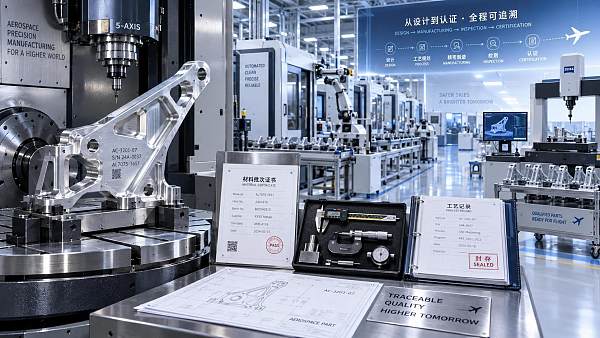
For manufacturers, especially those already holding AS9100D certification, current attention is likely to center on technical due diligence rather than immediate conversion into confirmed business. What deserves closer attention is whether qualification documents, process records, and technical response materials are ready before customer reviews become more formal and time-sensitive.
Separate inquiry momentum from executable demand
Observably, a 37% month-on-month increase in inquiries points to stronger market attention, but inquiries are not the same as contracted shipments. Companies should distinguish between early sourcing signals and actual delivery planning, particularly in procurement scheduling, production allocation, and client communication.
Watch interface expectations as closely as material demand
For teams focused on components and structures, the event should not be read only as a materials story. Analysis shows that Commercial Payloads rapid-interface standards are also attracting attention, which means engineering coordination, compatibility explanations, and interface-related documentation may matter as much as manufacturing capability itself.
Why this reads as a supply-chain signal, not a finished outcome
In editorial observation, this development is better understood as an early but concrete supply-chain signal. The confirmed facts show that capital raised through the IPO is linked to specific capacity expansion directions, and that procurement-side inquiries have already reacted. At the same time, the available information does not confirm how much of that inquiry growth will convert into stable purchasing, long-term contracts, or sustained export volume. For that reason, the event should be read as a meaningful directional indicator rather than a completed market result.
How to read this development at this stage
At this stage, the industry significance lies in the combination of two confirmed elements: disclosed expansion targets and a measurable rise in related inquiries. That combination suggests that commercial payload adaptation, certified structural manufacturing, and radiation-tolerant control-related modules are now under closer market review. A neutral reading is that the event has already changed short-term sourcing attention, while its longer-term commercial impact still requires continued verification through follow-up disclosures, customer qualification progress, and actual order execution.
About the basis of this article
This article is generated based on the user-provided news title, event date, and event summary. For this type of industry update, commonly relevant source categories may include official company disclosures, corporate announcements, industry association information, authoritative media reporting, and standard-organization documents. No specific official source link was provided in the input, so the underlying details still require ongoing verification. Areas that merit continued attention include any further official statements on the use of IPO proceeds, changes in procurement language around payload interfaces and structural components, and whether current technical due diligence activity develops into confirmed supply-chain cooperation.
Search News
Hot Articles
- Carbon Fiber StructuresHow to Specify Aerospace Carbon Fiber Assemblies for Lightweight, Load-Bearing PartsJul 11, 2026
- Machine VisionXiaomi, Alibaba DAMO Academy Drive Open-Source Robotics Model Ecosystem, Lowering Algorithm Development Barriers for Overseas SMEs Adopting Chinese Robotics SolutionsMar 30, 2026
- Cobots & ArmsShanxi 'AI+' Conference Showcases Embodied Intelligence with Multinational Buyer Engagement: Key Industry ImplicationsMar 30, 2026
Popular Tags
Recommended News
 Jul 11, 2026How to Specify Aerospace Carbon Fiber Assemblies for Lightweight, Load-Bearing PartsAerospace carbon fiber assemblies: learn how to specify laminate design, load data, joining methods, and inspection controls for lighter, reliable load-bearing aerospace parts.Elena Rostova (UAV Systems Researcher)
 Mar 30, 2026Xiaomi, Alibaba DAMO Academy Drive Open-Source Robotics Model Ecosystem, Lowering Algorithm Development Barriers for Overseas SMEs Adopting Chinese Robotics SolutionsXiaomi & Alibaba DAMO Academy's open-source robotics models lower algorithm barriers for global SMEs. Boost efficiency in manufacturing, logistics & smart retail with ROS 2 compatible solutions.TSV Data Lab
 Mar 30, 2026Shanxi 'AI+' Conference Showcases Embodied Intelligence with Multinational Buyer Engagement: Key Industry ImplicationsShanxi 'AI+' Conference highlights embodied intelligence with Tesla, Ubtech & Jiantao showcasing multimodal robotics. 40+ global buyers validated tech on-site, creating new B2B channels for industrial automation & AI solutions.Chen Wei (Automation Lead Engineer)
 Mar 30, 2026Zhongguancun Unveils 6G Integrated Sensing-Computing-Intelligence Platform to Empower Embodied Robots for Global Industrial ApplicationsZhongguancun's new 6G platform revolutionizes industrial robotics with <10ms latency, empowering global automotive, logistics & port automation. Discover how this tech boosts China's smart manufacturing exports.TSV Data Lab
 Mar 30, 2026Mech-Mind Tianjin Embodied Intelligence R&D and Production Base Goes Live, Cutting Delivery Time by 20%–30% for Global Customized AMR+Vision SolutionsMech-Mind's Tianjin AMR+Vision production base cuts delivery time by 20%-30% for欧美 & Latin American markets. Discover how this PLd-certified facility accelerates customized robotics solutions for smart manufacturing and logistics.Chen Wei (Automation Lead Engineer)
 Mar 30, 2026Boao Forum Reveals 'Co-evolution of Big and Small Brains' Trend in Humanoid Robots, China's Embodied Intelligence Accelerates Adaptation to Overseas Manufacturing Service ScenariosDiscover how China's humanoid robots, featuring 'Co-evolution of Big and Small Brains,' are revolutionizing global manufacturing. Learn about Embodied Tian Gong 3.0's ISO compliance and overseas deployment at Boao Forum 2026.Chen Wei (Automation Lead Engineer)
 Mar 30, 2026China Railway Industrial Secures Patent for Embodied Robotics in Material Handling, Boosting High-Precision Delivery Capabilities for Overseas Infrastructure and Manufacturing ProjectsChina Railway Industrial's new patent for embodied robotics in material handling boosts high-precision delivery for global infrastructure & manufacturing. Discover how this innovation enhances logistics accuracy in automotive, rail transit & EPC projects.Chen Wei (Automation Lead Engineer)
 Sep 19, 2026How to Scope Automation Integration Services for Multi-System Factory ProjectsAutomation integration services: learn how to scope multi-system factory projects with clear workflows, interface contracts, safety boundaries, and acceptance criteria.Victor Lin (Chief Software Architect)
 Sep 18, 2026Selecting UAV Aerospace Structural Parts for Strength, Weight, and Fatigue LifeUAV aerospace structural parts guide: compare strength, weight, stiffness, fatigue life, joints, and traceability to select reliable flight-ready components.Elena Rostova (UAV Systems Researcher)
 Sep 17, 2026Selecting Commercial Drone Payloads for European Inspection ProjectsCommercial drone payloads Europe: learn how to select RGB, thermal and LiDAR systems for compliant, reliable inspection data and better project outcomes.Elena Rostova (UAV Systems Researcher)
 Sep 16, 2026Machining Tolerance Validation: How to Verify Critical Dimensions Before Production ReleaseMachining tolerance analysis validation: verify critical dimensions, measurement systems, process capability, and tolerance stacks before production release.Dr. Marcus Vance
 Sep 15, 2026AGV Tape Guidance vs Laser Navigation: Which Fits Your Warehouse Layout?AGV tape guidance comparison: discover how tape and laser navigation fit changing warehouse layouts, docking needs, floor conditions, maintenance, and route flexibility.Chen Wei (Automation Lead Engineer)
 Sep 14, 2026How Point Cloud Analytics Improves Asset Inspection Workflows Across GCC ProjectsPoint cloud analytics GCC helps project leaders improve asset inspections with accurate change detection, safer workflows, and faster maintenance decisions.TSV Data Lab
 Sep 13, 2026How Aerospace Manufacturers Can Build a Digital Thread From Design to Certified ProductionDigital manufacturing for aerospace: learn how to build a traceable digital thread from design through certified production, supplier control, and audit-ready compliance.Victor Lin (Chief Software Architect)
 Sep 12, 2026How to Select a Thermal Sensor for Mapping Drones in Surveying ProjectsMapping drone thermal sensor selection made simple: compare GSD, radiometric data, NETD, calibration, and workflow fit for accurate, survey-ready thermal maps.Elena Rostova (UAV Systems Researcher)
 Sep 11, 2026Integrating Photogrammetry Workflows into Digital Twin Projects Without Data BottlenecksPhotogrammetry workflow integration for digital twins: learn how to streamline capture, validation, versioning, and delivery to prevent data bottlenecks.Victor Lin (Chief Software Architect)
 Sep 10, 2026Hard-Tech Supply Chain Procurement: Qualifying Suppliers to Cut Lead-Time RiskHard-tech supply chain procurement guide: qualify suppliers with proven process, traceability, capacity, and change control to reduce lead-time risk.Chen Wei (Automation Lead Engineer)
 Sep 09, 2026Industrial Application Notes: Cost Factors That Shape Automation Project BudgetsIndustrial application notes cost factors explained: uncover the engineering, safety, integration, and commissioning variables that shape accurate automation budgets.Victor Lin (Chief Software Architect)
 Sep 08, 2026Supplier Discovery for Sourcing: How Buyers Can Verify Capability and Supply RiskSupplier discovery for sourcing: learn how to verify supplier capability, traceability, quote assumptions, and supply risk before placing production orders.TSV Data Lab
 Sep 07, 2026What Determines Process Control Systems Pricing? A Buyer’s Cost GuideProcess control systems pricing explained: compare hardware, engineering, integration, cybersecurity, validation, and lifecycle costs to choose the right-value solution.Victor Lin (Chief Software Architect)
 Sep 07, 2026AMR Robots in ASEAN: Which Industries Are Adopting Them—and Why?AMR robots ASEAN adoption is accelerating in electronics, automotive, warehousing, healthcare, and cold chain. Explore use cases, risks, and deployment insights.Chen Wei (Automation Lead Engineer)
 Sep 05, 2026How to Evaluate Supplier Qualification Support Tools for Industrial Procurement TeamsSupplier qualification support tools help industrial procurement teams verify technical evidence, manage risk, and make defensible supplier approvals. Learn what to evaluate.Victor Lin (Chief Software Architect)
 Sep 04, 2026Grinding Tolerance Analysis: How to Set Realistic Limits for Precision PartsGrinding tolerance analysis explains how to set realistic limits for precision parts, balance fit, geometry, process capability, and inspection for reliable performance.Dr. Marcus Vance
 Sep 03, 2026Warehouse Automation Strategies to Increase Storage Capacity Without ExpansionWarehouse automation space saving strategies help unlock vertical capacity, optimize slotting, and improve storage density without costly building expansion.Victor Lin (Chief Software Architect)