Geodesic Dome Tents Buying Guide: Sizes, Frame Materials, Insulation, and Wind Load
Publication Date
author
Geodesic Dome Tents Buying Guide: Sizes, Frame Materials, Insulation, and Wind Load
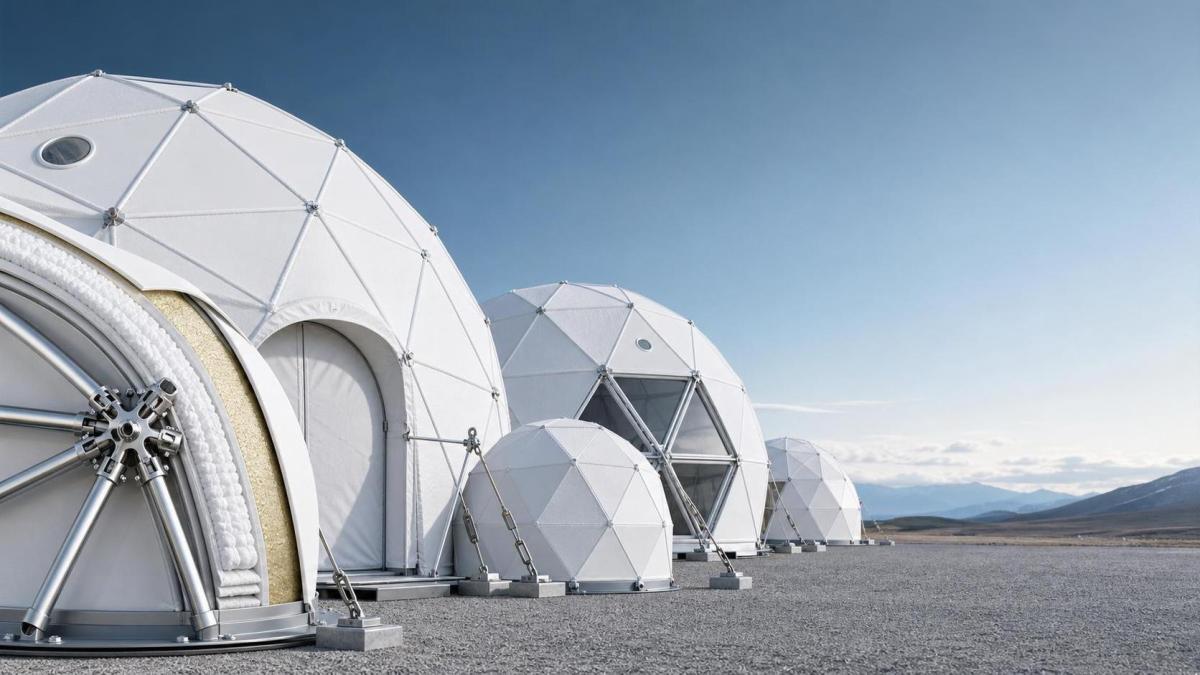
Buying geodesic dome tents for commercial, event, or remote-site use requires more than comparing looks or list prices.
Procurement decisions work better when size, structure, insulation, and wind resistance are reviewed together.
A low initial quote can become expensive if the dome underperforms in transport, setup, or seasonal use.
That is why serious buyers of geodesic dome tents usually start with operating conditions, not appearance.
From TSV’s data-first perspective, the right specification comes from measurable performance and lifecycle cost.
This guide explains how to compare geodesic dome tents with fewer blind spots and better sourcing confidence.
Start with use case and real space demand
The first buying mistake is choosing dome diameter before defining daily function.
Geodesic dome tents used for events need different interior layouts than domes used for field housing or hospitality suites.
Quoted floor area often looks generous, but usable area drops once doors, furniture, HVAC, and circulation paths are included.
Typical size ranges buyers compare
- 6m to 8m domes fit compact lounges, kiosks, or short-stay glamping units.
- 10m to 12m domes suit dining zones, branded event spaces, or multi-person site accommodation.
- 15m and above work for exhibitions, reception halls, or large shared operations areas.
In actual sourcing, request both gross floor area and net usable area.
Also ask for center height, sidewall height, and door opening dimensions.
These three numbers often determine whether equipment and people can move efficiently inside.
Key sizing questions before RFQ
- How many people use the dome at peak occupancy?
- Will the space hold beds, displays, storage, or technical equipment?
- Is the dome temporary, seasonal, or year-round?
- What clearance is needed for HVAC ducts, lighting, or staging?
Clear answers make geodesic dome tents easier to compare on function instead of brochure language.
Frame materials decide durability and deployment rhythm
The frame is the structural core of geodesic dome tents.
It affects lifespan, corrosion resistance, transport weight, setup speed, and wind performance.
Most buyers compare galvanized steel, powder-coated steel, and aluminum alloy.
Galvanized steel frames
Galvanized steel is common in heavy-duty geodesic dome tents where load capacity matters more than weight.
It usually offers strong structural stability and competitive material cost.
However, freight, handling, and installation can be more demanding.
Aluminum alloy frames
Aluminum alloy supports faster deployment and easier relocation.
For touring events or repeated assembly cycles, that weight advantage can lower labor cost.
Still, buyers should verify section thickness, connector design, and rated wind load.
What to verify in frame specifications
- Tube diameter and wall thickness.
- Material grade and surface treatment.
- Connector material and anti-loosening method.
- Expected assembly cycles before replacement.
- Salt spray or corrosion testing, if coastal use applies.
When evaluating geodesic dome tents, frame drawings often reveal more than product photos.
Insulation matters when operating hours and climate matter
For warm-weather pop-up use, insulation may seem secondary.
But in all-season hospitality, mining camps, remote research sites, or winter events, it directly affects operating cost.
The envelope system of geodesic dome tents usually combines outer cover, insulation layer, liner, doors, and ventilation details.
What buyers should look at
- Insulation material type, thickness, and stated thermal value.
- Single-layer versus double-layer membrane design.
- Condensation control and vapor management.
- Door sealing, window performance, and floor insulation options.
- Compatibility with heating and cooling systems.
A dome with poor sealing can consume more energy than expected even if the insulation layer looks thick on paper.
This is where procurement teams should ask for tested thermal data, not generic comfort claims.
If geodesic dome tents will host electronics, crew rest areas, or premium guests, thermal stability becomes even more important.
A practical insulation check
Request energy-use estimates under local winter and summer conditions.
Then compare membrane system cost against annual HVAC savings and occupant comfort expectations.
Wind load is a specification, not a slogan
Many geodesic dome tents are marketed as strong in bad weather.
That statement is meaningless without a defined wind load rating and test basis.
Wind resistance depends on frame geometry, anchoring method, cover tension, and site conditions.
Questions that expose real wind performance
- What is the maximum rated wind speed?
- Which standard or engineering method supports that rating?
- Does the rating change by size or door configuration?
- What anchoring system is assumed in the rating?
- Are snow load and rain load rated separately?
This matters because geodesic dome tents installed on concrete, soil, timber decks, or ballast systems behave differently.
A supplier may quote a high wind number, but only under ideal anchoring assumptions.
In coastal areas, open plains, and mountain sites, conservative wind assessment usually pays for itself.
Do not separate structure from site
Local gust patterns, terrain exposure, and foundation quality can outperform or undermine a good dome design.
That is why wind load review should include site engineering and anchoring drawings.
Compare total cost, not just unit price
Geodesic dome tents can look similar while carrying very different ownership costs.
A lower purchase price may hide higher logistics, maintenance, energy, or replacement expense.
Cost items worth comparing side by side
From a sourcing standpoint, total cost of ownership usually tells the real story behind geodesic dome tents.
Supplier questions that reduce procurement risk
Even strong specifications can fail if supplier support is weak.
Recent market shifts make document quality and production consistency more important than ever.
- Ask for engineering drawings, bill of materials, and installation manuals.
- Verify lead time for standard and custom geodesic dome tents.
- Check whether replacement covers and connectors are stocked.
- Confirm warranty terms for frame, membrane, and accessories separately.
- Request reference projects in comparable climate and use conditions.
This also helps identify suppliers who understand engineering detail instead of relying on broad sales promises.
Final buying checklist for geodesic dome tents
Before issuing a final PO, compare geodesic dome tents against a simple but disciplined checklist.
- Match dome size to net usable space, not brochure floor area.
- Verify frame material with thickness, treatment, and connector details.
- Review insulation as a full envelope system, not a single material claim.
- Validate wind load with standards, anchors, and site assumptions.
- Model total cost across shipping, setup, energy, and maintenance.
- Choose suppliers that provide traceable technical documents.
The best geodesic dome tents are not simply the cheapest or the most visually striking.
They are the ones that fit the site, survive the climate, and support operations with predictable cost.
When the buying process is grounded in measurable parameters, better outcomes usually follow.
That is the practical path to sourcing geodesic dome tents with less risk and stronger long-term value.
Search News
Hot Articles
- Carbon Fiber StructuresHow to Specify Aerospace Carbon Fiber Assemblies for Lightweight, Load-Bearing PartsJul 11, 2026
- Machine VisionXiaomi, Alibaba DAMO Academy Drive Open-Source Robotics Model Ecosystem, Lowering Algorithm Development Barriers for Overseas SMEs Adopting Chinese Robotics SolutionsMar 30, 2026
- Cobots & ArmsShanxi 'AI+' Conference Showcases Embodied Intelligence with Multinational Buyer Engagement: Key Industry ImplicationsMar 30, 2026
Popular Tags
Recommended News
 Jul 11, 2026How to Specify Aerospace Carbon Fiber Assemblies for Lightweight, Load-Bearing PartsAerospace carbon fiber assemblies: learn how to specify laminate design, load data, joining methods, and inspection controls for lighter, reliable load-bearing aerospace parts.Elena Rostova (UAV Systems Researcher)
 Mar 30, 2026Xiaomi, Alibaba DAMO Academy Drive Open-Source Robotics Model Ecosystem, Lowering Algorithm Development Barriers for Overseas SMEs Adopting Chinese Robotics SolutionsXiaomi & Alibaba DAMO Academy's open-source robotics models lower algorithm barriers for global SMEs. Boost efficiency in manufacturing, logistics & smart retail with ROS 2 compatible solutions.TSV Data Lab
 Mar 30, 2026Shanxi 'AI+' Conference Showcases Embodied Intelligence with Multinational Buyer Engagement: Key Industry ImplicationsShanxi 'AI+' Conference highlights embodied intelligence with Tesla, Ubtech & Jiantao showcasing multimodal robotics. 40+ global buyers validated tech on-site, creating new B2B channels for industrial automation & AI solutions.Chen Wei (Automation Lead Engineer)
 Mar 30, 2026Zhongguancun Unveils 6G Integrated Sensing-Computing-Intelligence Platform to Empower Embodied Robots for Global Industrial ApplicationsZhongguancun's new 6G platform revolutionizes industrial robotics with <10ms latency, empowering global automotive, logistics & port automation. Discover how this tech boosts China's smart manufacturing exports.TSV Data Lab
 Mar 30, 2026Mech-Mind Tianjin Embodied Intelligence R&D and Production Base Goes Live, Cutting Delivery Time by 20%–30% for Global Customized AMR+Vision SolutionsMech-Mind's Tianjin AMR+Vision production base cuts delivery time by 20%-30% for欧美 & Latin American markets. Discover how this PLd-certified facility accelerates customized robotics solutions for smart manufacturing and logistics.Chen Wei (Automation Lead Engineer)
 Mar 30, 2026Boao Forum Reveals 'Co-evolution of Big and Small Brains' Trend in Humanoid Robots, China's Embodied Intelligence Accelerates Adaptation to Overseas Manufacturing Service ScenariosDiscover how China's humanoid robots, featuring 'Co-evolution of Big and Small Brains,' are revolutionizing global manufacturing. Learn about Embodied Tian Gong 3.0's ISO compliance and overseas deployment at Boao Forum 2026.Chen Wei (Automation Lead Engineer)
 Mar 30, 2026China Railway Industrial Secures Patent for Embodied Robotics in Material Handling, Boosting High-Precision Delivery Capabilities for Overseas Infrastructure and Manufacturing ProjectsChina Railway Industrial's new patent for embodied robotics in material handling boosts high-precision delivery for global infrastructure & manufacturing. Discover how this innovation enhances logistics accuracy in automotive, rail transit & EPC projects.Chen Wei (Automation Lead Engineer)
 Sep 18, 2026Selecting UAV Aerospace Structural Parts for Strength, Weight, and Fatigue LifeUAV aerospace structural parts guide: compare strength, weight, stiffness, fatigue life, joints, and traceability to select reliable flight-ready components.Elena Rostova (UAV Systems Researcher)
 Sep 17, 2026Selecting Commercial Drone Payloads for European Inspection ProjectsCommercial drone payloads Europe: learn how to select RGB, thermal and LiDAR systems for compliant, reliable inspection data and better project outcomes.Elena Rostova (UAV Systems Researcher)
 Sep 16, 2026Machining Tolerance Validation: How to Verify Critical Dimensions Before Production ReleaseMachining tolerance analysis validation: verify critical dimensions, measurement systems, process capability, and tolerance stacks before production release.Dr. Marcus Vance
 Sep 15, 2026AGV Tape Guidance vs Laser Navigation: Which Fits Your Warehouse Layout?AGV tape guidance comparison: discover how tape and laser navigation fit changing warehouse layouts, docking needs, floor conditions, maintenance, and route flexibility.Chen Wei (Automation Lead Engineer)
 Sep 14, 2026How Point Cloud Analytics Improves Asset Inspection Workflows Across GCC ProjectsPoint cloud analytics GCC helps project leaders improve asset inspections with accurate change detection, safer workflows, and faster maintenance decisions.TSV Data Lab
 Sep 13, 2026How Aerospace Manufacturers Can Build a Digital Thread From Design to Certified ProductionDigital manufacturing for aerospace: learn how to build a traceable digital thread from design through certified production, supplier control, and audit-ready compliance.Victor Lin (Chief Software Architect)
 Sep 12, 2026How to Select a Thermal Sensor for Mapping Drones in Surveying ProjectsMapping drone thermal sensor selection made simple: compare GSD, radiometric data, NETD, calibration, and workflow fit for accurate, survey-ready thermal maps.Elena Rostova (UAV Systems Researcher)
 Sep 11, 2026Integrating Photogrammetry Workflows into Digital Twin Projects Without Data BottlenecksPhotogrammetry workflow integration for digital twins: learn how to streamline capture, validation, versioning, and delivery to prevent data bottlenecks.Victor Lin (Chief Software Architect)
 Sep 10, 2026Hard-Tech Supply Chain Procurement: Qualifying Suppliers to Cut Lead-Time RiskHard-tech supply chain procurement guide: qualify suppliers with proven process, traceability, capacity, and change control to reduce lead-time risk.Chen Wei (Automation Lead Engineer)
 Sep 09, 2026Industrial Application Notes: Cost Factors That Shape Automation Project BudgetsIndustrial application notes cost factors explained: uncover the engineering, safety, integration, and commissioning variables that shape accurate automation budgets.Victor Lin (Chief Software Architect)
 Sep 08, 2026Supplier Discovery for Sourcing: How Buyers Can Verify Capability and Supply RiskSupplier discovery for sourcing: learn how to verify supplier capability, traceability, quote assumptions, and supply risk before placing production orders.TSV Data Lab
 Sep 07, 2026What Determines Process Control Systems Pricing? A Buyer’s Cost GuideProcess control systems pricing explained: compare hardware, engineering, integration, cybersecurity, validation, and lifecycle costs to choose the right-value solution.Victor Lin (Chief Software Architect)
 Sep 07, 2026AMR Robots in ASEAN: Which Industries Are Adopting Them—and Why?AMR robots ASEAN adoption is accelerating in electronics, automotive, warehousing, healthcare, and cold chain. Explore use cases, risks, and deployment insights.Chen Wei (Automation Lead Engineer)
 Sep 05, 2026How to Evaluate Supplier Qualification Support Tools for Industrial Procurement TeamsSupplier qualification support tools help industrial procurement teams verify technical evidence, manage risk, and make defensible supplier approvals. Learn what to evaluate.Victor Lin (Chief Software Architect)
 Sep 04, 2026Grinding Tolerance Analysis: How to Set Realistic Limits for Precision PartsGrinding tolerance analysis explains how to set realistic limits for precision parts, balance fit, geometry, process capability, and inspection for reliable performance.Dr. Marcus Vance
 Sep 03, 2026Warehouse Automation Strategies to Increase Storage Capacity Without ExpansionWarehouse automation space saving strategies help unlock vertical capacity, optimize slotting, and improve storage density without costly building expansion.Victor Lin (Chief Software Architect)
 Sep 02, 2026What Should Buyers Evaluate When Choosing a Hybrid VTOL UAV Factory?Hybrid VTOL UAV factory selection guide: evaluate mission fit, production traceability, payload integration, support, and total ownership costs before procurement.Elena Rostova (UAV Systems Researcher)