
ToF depth camera wholesale pricing often hides these costs
Publication Date
author
The sticker price of tof depth camera wholesale deals rarely reflects the full cost of deployment. From calibration, integration, and edge processing to supplier qualification across an mmwave radar manufacturer, edge ai computing box supplier, or industrial 3d vision camera supplier, hidden expenses can erode ROI fast. This guide helps researchers, buyers, operators, and decision-makers uncover the real cost drivers before procurement mistakes become engineering setbacks.
In practice, a low unit quote for a ToF depth camera can become the most expensive option once mounting design, software adaptation, thermal management, data bandwidth, and field support are added. For B2B buyers in automation, robotics, logistics, UAV payload systems, and smart inspection, the question is not only “What is the camera price?” but “What is the full deployment cost over 12 to 36 months?”
That distinction matters because depth sensing projects fail less often at the sensor level than at the system level. A camera with acceptable lab performance may still trigger rework when ambient light changes, reflective surfaces distort the point cloud, or the host processor cannot sustain the expected frame rate. Hidden cost analysis is therefore a procurement discipline, not a finance afterthought.
For organizations aligned with engineering-first sourcing, the most reliable buying decision comes from tracing costs across the entire chain: sensor hardware, optics, firmware, edge AI compute, mechanical integration, test validation, supplier response time, and replacement planning. That is where real ROI is won or lost.
Why the Quoted ToF Depth Camera Wholesale Price Is Only the Starting Point
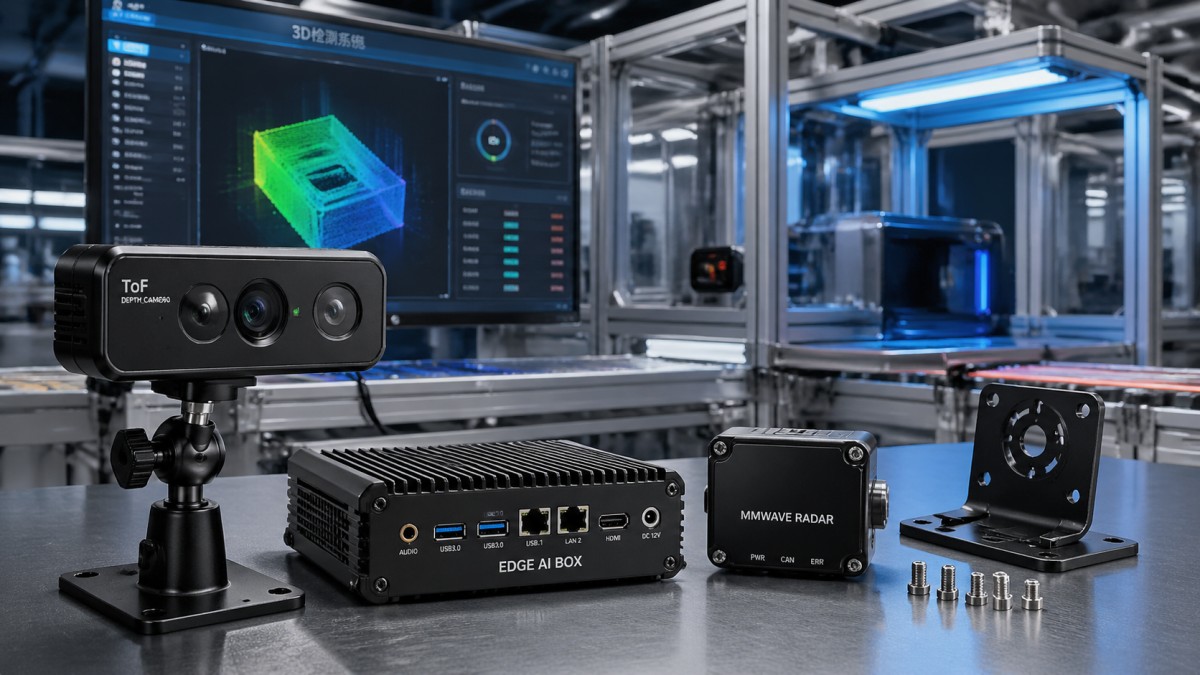
A wholesale quotation usually reflects the billable hardware unit, a basic accessory pack, and sometimes a standard SDK. It often excludes custom lens tuning, enclosure redesign, power conditioning, application-layer software work, and production-line validation. In many industrial deployments, those excluded items add 20% to 80% on top of the original purchase value.
The risk increases when procurement teams compare vendors using only price per unit across quantities such as 50, 200, or 1,000 pieces. A camera priced 12% lower may require 3 extra engineering weeks, a higher-capacity compute box, and more on-site calibration. That can reverse the perceived savings within the first pilot batch.
For operators and system integrators, hidden cost usually appears in four places: image quality stability, integration complexity, environmental adaptation, and support responsiveness. If any one of these areas is weak, downtime and troubleshooting can cost more than the hardware itself, especially in multi-shift production environments running 16 to 24 hours per day.
Researchers and technical evaluators should also distinguish between demonstration performance and production performance. A vendor demo may show clean output at 1 to 2 meters, controlled lighting, and stable targets. Real operations may involve 0.3 to 5 meters, metal surfaces, dark materials, vibration, dust, and variable temperatures from 0°C to 45°C.
The most common hidden cost buckets
Before approving a sourcing plan, teams should map cost categories that usually stay outside the first quotation. The table below shows where budget overruns most often appear in depth camera projects.
The key takeaway is simple: the cheaper quote is not automatically the lower-cost program. Once non-recurring engineering, validation time, and support burden are included, total landed cost may shift dramatically between suppliers.
What experienced buyers ask before comparing quotes
- What performance range is guaranteed at near, mid, and far distances, such as 0.5 m, 2 m, and 4 m?
- How many firmware revisions are included during pilot validation, and within what response window, such as 48 to 72 hours?
- Does the quoted package include SDK support for Linux, Windows, ROS, or ARM-based edge devices?
- What is the acceptable dead-pixel, drift, or frame-drop threshold during an 8-hour or 24-hour endurance test?
Integration Costs: Where Depth Cameras Meet Real Systems
Integration is where many seemingly attractive ToF depth camera wholesale deals lose their advantage. A depth sensor does not operate in isolation. It depends on synchronization with PLCs, robot controllers, edge AI computing boxes, data buses, trigger logic, and storage infrastructure. If interfaces do not match from day one, budget leakage begins immediately.
For example, one camera may output usable depth data at 30 fps, but the host edge processor may only sustain 12 to 18 fps after object detection, segmentation, and compression are enabled. The result is not just lower performance; it may force a hardware upgrade from an entry system to a higher-power fanless box with more GPU or NPU resources.
Cross-supplier integration adds another layer. A buyer sourcing from an mmwave radar manufacturer, an industrial 3D vision camera supplier, and an edge AI computing box supplier must verify time synchronization, API consistency, and data fusion workload. If one vendor provides clean ROS support while another relies on undocumented drivers, internal software costs can expand by 2 to 4 weeks.
Mechanical integration is equally important. In mobile robots or inspection cells, a 3 to 5 mm shift in mounting angle can distort field-of-view assumptions, requiring renewed calibration and scene remapping. Add cable strain, vibration, and heat, and a camera that worked in a test bench may underperform on the actual line.
Hidden integration checkpoints buyers should review
A robust sourcing process reviews the system stack rather than the sensor alone. The following checklist is useful before moving from lab sample to pilot batch.
- Confirm interface compatibility: USB 3.0, GigE, MIPI, or other required bus, plus cable length limits.
- Validate compute headroom: target CPU, GPU, or NPU utilization should ideally remain below 70% under peak workload.
- Check software portability: verify SDK maturity, sample code quality, and version stability across at least 2 operating environments.
- Review enclosure and thermal constraints: confirm performance at temperature ranges such as 0°C to 45°C or wider if needed.
- Assess maintenance access: replacement time should be measured in minutes, not in a half-day reassembly process.
These checks help teams estimate total integration effort more accurately. In many projects, the right question is not whether integration is possible, but whether it can be completed within the target deployment window of 4 to 8 weeks without disrupting upstream engineering priorities.
When edge processing becomes the hidden budget multiplier
Depth data is heavier than many buyers expect. Depending on resolution, frame rate, and point cloud formatting, a single camera may generate several hundred megabytes per minute in active operation. Once preprocessing, denoising, segmentation, and object logic are added, edge hardware selection becomes a major cost variable rather than a minor accessory choice.
This is why procurement must evaluate the camera together with the downstream compute architecture. A lower sensor price paired with a costly edge box, larger SSD, and active cooling fan may produce a worse total ownership profile than a slightly more expensive camera with better on-device optimization.
Calibration, Validation, and Field Performance: The Costs That Arrive After Delivery
Many hidden expenses do not appear until the hardware has already arrived. Calibration is one of the largest examples. Factory defaults rarely match the final installation environment, especially in mixed-light industrial settings, reflective warehouses, outdoor robotics, or vibration-prone UAV payload assemblies. Teams should assume a calibration phase, not treat it as optional.
A typical pilot may require 3 stages of validation: bench verification, line-side integration, and endurance testing. Each stage has a different cost profile. Bench testing verifies basic performance; line-side testing reveals scene-specific noise; endurance testing exposes drift, overheating, and connector instability over 8, 24, or 72 hours.
Operators often discover that field conditions change the useful depth window. A system nominally rated for 0.2 to 6 meters may only deliver stable output in a 0.5 to 3.5 meter operational band under real ambient conditions. That gap may force repositioning, shielding, or algorithmic filtering, all of which consume time and budget.
Supplier quality also matters here. If a vendor lacks repeatable factory calibration records, serial-to-serial variation can create extra tuning workload. On a 100-unit deployment, even a small proportion of inconsistent units can slow rollout, increase spare requirements, and reduce confidence in standard operating procedures.
Validation items that directly influence real ROI
The table below summarizes evaluation points that should be budgeted before approval. These items are far more predictive of lifecycle cost than headline pricing alone.
The important lesson is that validation cost is not waste. It is a controlled investment that helps avoid uncontrolled field cost later. A structured 2 to 6 week validation plan often saves months of troubleshooting after go-live.
Frequent mistakes during field commissioning
- Assuming the vendor’s demo scene represents the final use case without testing difficult targets such as glossy metal, black rubber, or moving edges.
- Ignoring cable and connector quality even though intermittent data loss can mimic camera failure.
- Skipping endurance testing because early output appears acceptable during a 15-minute bench review.
- Approving a pilot on one unit only, instead of checking batch consistency across multiple devices.
How Procurement Teams Can Compare Suppliers Beyond Unit Price
For procurement leaders, the best defense against hidden costs is a comparison framework that extends beyond per-unit price. This is especially important in multi-sensor programs involving depth cameras, mmWave radar, machine vision, and edge AI hardware from different vendors. If the sourcing model is narrow, downstream coordination cost gets pushed back to engineering and operations.
A strong supplier review should evaluate at least 4 dimensions: technical fit, delivery reliability, support capability, and lifecycle economics. A supplier with a 10-day lead time but weak firmware documentation may be less attractive than one with a 3-week lead time and better long-term maintainability. Procurement speed without technical confidence is often false efficiency.
Decision-makers should also pay attention to replacement strategy. If a line depends on depth perception for bin picking, volume measurement, obstacle detection, or robotic alignment, every failed unit can interrupt throughput. Maintaining 2% to 5% spare inventory may be reasonable, but only if serial compatibility and configuration recovery are well documented.
Another overlooked factor is supplier communication quality. During pilot deployment, a 24 to 48 hour turnaround for technical clarification can materially improve launch timing. Delayed or vague responses create internal holding costs that never show up on the invoice but directly affect project schedules.
A practical supplier comparison matrix
The following matrix can help researchers, buyers, and CTO teams normalize discussions across multiple vendors before issuing a purchase order.
Using a matrix like this keeps commercial and technical stakeholders aligned. It also helps prevent one common failure pattern: selecting a supplier on quote speed and sample price, then discovering that production readiness is weak when deployment pressure rises.
Recommended procurement workflow
- Define the operational range, accuracy tolerance, environmental limits, and interface requirements.
- Shortlist 2 to 4 suppliers and request both pricing and technical documentation.
- Run a pilot with multiple units, not a single golden sample.
- Score total cost, support responsiveness, and scale-up readiness before batch approval.
Building a Lower-Risk Buying Strategy for ToF Depth Camera Projects
The most cost-effective buying strategy is rarely the lowest quote. It is the strategy that reduces uncertainty early. For ToF depth camera wholesale procurement, this means defining acceptance criteria before negotiation, budgeting for calibration and integration, and validating supplier support before volume commitment. A controlled pilot often costs less than a rushed rollout followed by redesign.
For enterprise decision-makers, the practical target is predictable deployment, not optimistic purchasing. If a camera solution supports stable output, faster integration, and manageable service cycles over 12 to 36 months, it can create better economics even with a higher initial unit price. That principle applies across robotics, intelligent warehousing, industrial inspection, and edge AI-enabled sensing programs.
For operators and field teams, maintainability should be part of the original purchase discussion. Ask how long replacement takes, how settings are restored, whether calibration files are version-controlled, and how many spare units are needed for continuous operation. Those details directly affect uptime and labor planning.
For researchers and technical evaluators, the most reliable method is evidence-based comparison. Measure real scene performance, not brochure claims. Verify consistency across several devices. Test edge compute load. Review support quality with the same seriousness as optical specifications. Parameters do not lie, and tolerance to real-world conditions often determines commercial success.
FAQ for buyers and technical teams
How many units should be tested before a wholesale order?
For early technical validation, testing 3 to 5 units is usually the minimum. For a pilot tied to scale-up planning, 5 to 10 units from one lot gives a better view of consistency, drift, and integration repeatability.
What support terms matter most besides price?
The most useful terms are response time for technical questions, firmware update process, replacement handling, documentation quality, and clarity on compatibility with your target OS or controller stack. A 24 to 72 hour response window is often meaningful during active pilots.
When does a cheaper ToF camera become more expensive?
It usually happens when the camera needs extra compute, more frequent recalibration, custom mounting changes, or longer debug cycles. Once those factors add even 15% to 30% in project overhead, the initial unit discount may disappear.
Is it necessary to compare ToF with other sensing technologies?
Yes. In some applications, combining ToF with mmWave radar or 2D/3D machine vision creates better robustness. The correct choice depends on distance range, target material, ambient conditions, and compute constraints, not on one sensor category alone.
The real value in ToF depth camera wholesale sourcing comes from seeing beyond the invoice. When procurement, engineering, and operations align around full deployment cost, supplier capability, and validation discipline, hidden expenses become manageable instead of disruptive. If you are evaluating depth sensing, edge AI, radar, or industrial vision supply options, now is the right time to map your true cost drivers, compare system-level fit, and get a tailored sourcing framework for your application. Contact us to discuss technical requirements, procurement criteria, and a more reliable deployment path.
Search News
Hot Articles
- Carbon Fiber StructuresHow to Specify Aerospace Carbon Fiber Assemblies for Lightweight, Load-Bearing PartsJul 11, 2026
- Machine VisionXiaomi, Alibaba DAMO Academy Drive Open-Source Robotics Model Ecosystem, Lowering Algorithm Development Barriers for Overseas SMEs Adopting Chinese Robotics SolutionsMar 30, 2026
- Cobots & ArmsShanxi 'AI+' Conference Showcases Embodied Intelligence with Multinational Buyer Engagement: Key Industry ImplicationsMar 30, 2026
Popular Tags
Recommended News
 Jul 11, 2026How to Specify Aerospace Carbon Fiber Assemblies for Lightweight, Load-Bearing PartsAerospace carbon fiber assemblies: learn how to specify laminate design, load data, joining methods, and inspection controls for lighter, reliable load-bearing aerospace parts.Elena Rostova (UAV Systems Researcher)
 Mar 30, 2026Xiaomi, Alibaba DAMO Academy Drive Open-Source Robotics Model Ecosystem, Lowering Algorithm Development Barriers for Overseas SMEs Adopting Chinese Robotics SolutionsXiaomi & Alibaba DAMO Academy's open-source robotics models lower algorithm barriers for global SMEs. Boost efficiency in manufacturing, logistics & smart retail with ROS 2 compatible solutions.TSV Data Lab
 Mar 30, 2026Shanxi 'AI+' Conference Showcases Embodied Intelligence with Multinational Buyer Engagement: Key Industry ImplicationsShanxi 'AI+' Conference highlights embodied intelligence with Tesla, Ubtech & Jiantao showcasing multimodal robotics. 40+ global buyers validated tech on-site, creating new B2B channels for industrial automation & AI solutions.Chen Wei (Automation Lead Engineer)
 Mar 30, 2026Zhongguancun Unveils 6G Integrated Sensing-Computing-Intelligence Platform to Empower Embodied Robots for Global Industrial ApplicationsZhongguancun's new 6G platform revolutionizes industrial robotics with <10ms latency, empowering global automotive, logistics & port automation. Discover how this tech boosts China's smart manufacturing exports.TSV Data Lab
 Mar 30, 2026Mech-Mind Tianjin Embodied Intelligence R&D and Production Base Goes Live, Cutting Delivery Time by 20%–30% for Global Customized AMR+Vision SolutionsMech-Mind's Tianjin AMR+Vision production base cuts delivery time by 20%-30% for欧美 & Latin American markets. Discover how this PLd-certified facility accelerates customized robotics solutions for smart manufacturing and logistics.Chen Wei (Automation Lead Engineer)
 Mar 30, 2026Boao Forum Reveals 'Co-evolution of Big and Small Brains' Trend in Humanoid Robots, China's Embodied Intelligence Accelerates Adaptation to Overseas Manufacturing Service ScenariosDiscover how China's humanoid robots, featuring 'Co-evolution of Big and Small Brains,' are revolutionizing global manufacturing. Learn about Embodied Tian Gong 3.0's ISO compliance and overseas deployment at Boao Forum 2026.Chen Wei (Automation Lead Engineer)
 Mar 30, 2026China Railway Industrial Secures Patent for Embodied Robotics in Material Handling, Boosting High-Precision Delivery Capabilities for Overseas Infrastructure and Manufacturing ProjectsChina Railway Industrial's new patent for embodied robotics in material handling boosts high-precision delivery for global infrastructure & manufacturing. Discover how this innovation enhances logistics accuracy in automotive, rail transit & EPC projects.Chen Wei (Automation Lead Engineer)
 Oct 25, 2026Hesai Leads Global ADAS Main Lidar Shipments in Yole’s 2026 ReportHesai led global ADAS main lidar shipments with a 43% share in 2025, according to Yole’s 2026 report. Explore what this ranking reveals about its automotive market position.TSV Data Lab
 Oct 25, 2026Choosing an Aerospace Materials Manufacturer: Quality and Traceability ChecksChoosing an aerospace materials manufacturer? Learn how to verify certifications, test reports, and lot traceability to qualify suppliers confidently and reduce costly sourcing risks.Dr. Marcus Vance
 Oct 24, 2026Guotai Haitong: Global Entry-Level 3D Printer Shipments Rose 39% in Q1 2026Entry-level 3D printer shipments rose 39% in Q1 2026, Guotai Haitong reports. Explore how AI, multicolor printing and print farms are shaping market growth.Dr. Marcus Vance
 Oct 24, 2026Choosing an Industrial Vision Inspection Supplier: Acceptance Tests That MatterChoose an industrial vision inspection supplier with confidence. Discover acceptance tests for defect detection, false rejects, production speed, and reliable part rejection before you buy.TSV Data Lab
 Oct 23, 2026US Navy Raises Gecko Robotics Contract Ceiling to $300M for Robotic Fleet MaintenanceUS Navy raises Gecko Robotics’ contract ceiling to $300M for Pacific Fleet robotic inspections. Explore potential opportunities for maintenance suppliers and key procurement considerations.Chen Wei (Automation Lead Engineer)
 Oct 23, 2026Choosing Industrial Sensing Systems for Global Plants: Protocol CompatibilityCompare industrial sensing systems international buyers can trust. Explore protocol compatibility, reduce integration risks, and select proven configurations for reliable global plant deployments.TSV Data Lab
 Oct 22, 2026KUKA Showcases Physical AI and iiQKA.AI Vision at NVIDIA GTC BerlinExplore KUKA’s Physical AI showcase at NVIDIA GTC Berlin and discover how iiQKA.AI Vision aims to simplify robotic vision integration and improve 2D and 3D scene recognition.TSV Data Lab
 Oct 22, 2026Robotic Machining of Advanced Composites: What Tolerances Are Achievable?Explore advanced materials machining robotics: discover what drives achievable composite tolerances and how to validate accuracy before investing in your next machining system.Dr. Marcus Vance
 Oct 21, 2026China’s Industrial Robot Exports Near RMB 10 Billion in First Nine Months of 2026China’s industrial robot exports neared RMB 10 billion in January–September 2026, with value rising faster than volume. Explore the data and what it could mean for suppliers.Chen Wei (Automation Lead Engineer)
 Oct 21, 2026Low-Latency Industrial Data Processing: Pricing and Key Cost DriversExplore industrial data latency price drivers, from edge hardware to integration and support. Learn how to compare quotes, verify performance, and avoid unnecessary costs.TSV Data Lab
 Oct 20, 2026KUKA Launches iiQKA.AI Vision to Simplify Industrial Image ProcessingKUKA iiQKA.AI Vision simplifies industrial image processing with controller-based 2D and 3D vision. Explore drag-and-drop setup for vision-guided automation.TSV Data Lab
 Oct 20, 2026Smart Industrial Edge Devices: Key Criteria for Legacy PLC IntegrationChoose smart industrial edge devices for legacy PLC integration. Discover key criteria for compatibility, data quality, security, and reliable collection without disrupting control.TSV Data Lab
 Oct 19, 2026Choosing a Radar Sensor by Application: Range, Resolution, and Field of ViewSimplify radar sensor application based product selection. Compare range, resolution, and field of view to avoid blind spots and choose with confidence. Explore the guide.TSV Data Lab
 Oct 18, 2026Comparing Material Options for Procurement: Specs, Costs, and Supply RisksExplore procurement oriented technical content on material options, specs, costs, and supply risks. Compare alternatives to cut hidden expenses and make confident sourcing decisions.Dr. Marcus Vance
 Oct 17, 20265-Axis CNC Positioning Accuracy: How to Interpret ISO 230-2 Test ResultsAssess 5 axis CNC machining positioning accuracy with ISO 230-2. Learn to interpret repeatability, reversal error, and test conditions to compare suppliers and make confident acceptance decisions.Dr. Marcus Vance
 Oct 16, 2026Choosing a Rugged Edge AI Box Supplier: Thermal Tests and Lifecycle SupportChoose a rugged edge AI box supplier with proven thermal performance and reliable lifecycle support. Discover the tests and commitments to verify before you buy.TSV Data Lab
 Oct 15, 2026R&D Cost Reduction Services: How to Evaluate Fees, Savings, and ROIEvaluate R&D cost reduction services with confidence. Compare fees, verify savings, and calculate ROI without compromising performance. Discover how to choose a provider that delivers real value.Chen Wei (Automation Lead Engineer)























