
What separates a reliable mmWave radar manufacturer?
Publication Date
author
Choosing a dependable mmWave radar manufacturer means looking beyond marketing claims to verified engineering data, supply-chain transparency, and real-world performance. For buyers comparing automotive radar sensor wholesale options, solid state lidar manufacturer China capabilities, or an industrial IoT gateway factory, the key question is simple: can the supplier prove accuracy, consistency, and long-term reliability under demanding deployment conditions?
That question matters across automotive ADAS, smart mobility, industrial automation, UAV sensing, and edge AI systems. In each of these sectors, a radar module is not just a component on a bill of materials. It influences false alarm rates, object tracking stability, electromagnetic compatibility, maintenance cycles, and the total cost of field deployment over 3 to 7 years.
For procurement teams, operators, engineers, and executive decision-makers, the challenge is rarely finding a supplier that can ship samples in 2 to 4 weeks. The real challenge is finding a mmWave radar manufacturer that can document design discipline, process stability, and production repeatability at scale. Reliable suppliers do not sell adjectives. They present measurable thresholds, test methods, and traceable quality controls.
This article examines what truly separates a reliable mmWave radar manufacturer, which technical and commercial signals deserve closer scrutiny, and how buyers can reduce qualification risk before committing to volume orders or long-term integration.
Engineering evidence matters more than marketing language
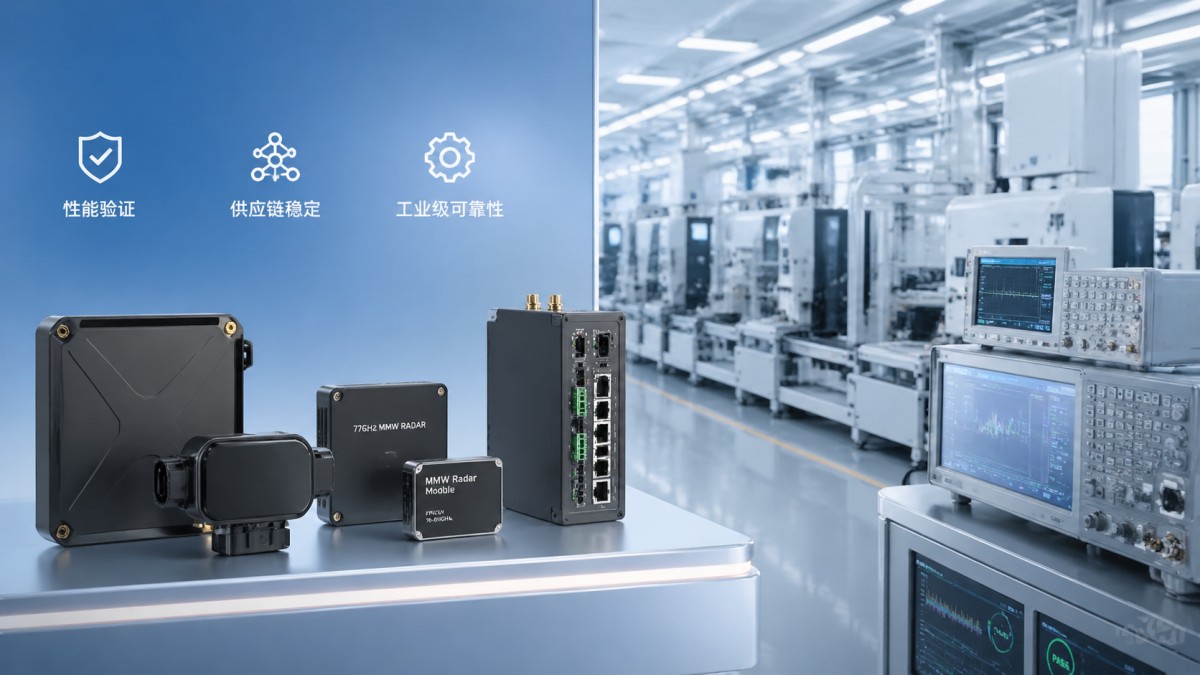
A credible mmWave radar manufacturer is defined first by engineering evidence. In practical sourcing, that means the supplier can provide measurable performance boundaries such as detection range bands, angular resolution windows, refresh rate, interference handling behavior, and operating temperature range, often from -40°C to 85°C for demanding outdoor or automotive environments.
Many suppliers can state that a radar sensor is “high precision,” yet fewer can explain how that precision changes at 10 meters, 50 meters, and 120 meters, or how rain, vibration, metal clutter, and multi-target scenes affect output stability. A reliable manufacturer understands that point-cloud density, target separation, and false-positive control must be discussed under defined test conditions rather than broad sales language.
This is especially relevant when buyers are comparing adjacent sensing categories. A team evaluating automotive radar sensor wholesale programs may also be comparing a solid state lidar manufacturer China supplier or an industrial IoT gateway factory as part of a larger perception-and-edge stack. In such cases, the radar supplier must show how its device integrates into the broader sensing architecture, not just how it performs in isolation.
From TSV’s data-first perspective, the strongest signal of reliability is not the number of brochures produced, but the depth of parameter disclosure. If a manufacturer cannot describe tolerance ranges, calibration logic, firmware update controls, and test repeatability over multiple batches, buyers should treat the risk as material.
Core evidence buyers should request
- Detection range under defined target sizes, such as pedestrian, vehicle, or metallic obstacle scenarios.
- Angular and velocity resolution measured across at least 3 operating distances.
- Environmental validation data, including thermal cycling, vibration, ingress resistance, and EMC behavior.
- Batch-to-batch consistency records and outgoing inspection criteria.
- Interface compatibility details for CAN, UART, Ethernet, or other integration layers.
The table below summarizes the difference between superficial supplier claims and evidence-based manufacturer behavior that supports technical qualification.
In short, reliable manufacturers shorten technical uncertainty. They make engineering review faster because they replace ambiguity with measurable data, and that directly reduces the cost of supplier qualification and field rework.
Process stability and supply-chain transparency separate scalable partners from sample vendors
A mmWave radar module that works in a pilot project is not automatically suitable for 5,000-unit, 20,000-unit, or annual rolling procurement. Reliability at scale depends on manufacturing process control, component sourcing discipline, and change management. This is often where strong samples and weak mass production capabilities diverge.
For procurement leaders, supplier transparency should cover four layers: key component origin, PCB assembly control, calibration consistency, and firmware revision management. If any one of these is opaque, the risk of performance drift rises sharply. A radar unit that passes evaluation in month 1 may behave differently in month 9 if component substitutions or software changes are not tightly governed.
This issue becomes even more important in global sourcing environments. Buyers often compare radar vendors with a solid state lidar manufacturer China source or an industrial IoT gateway factory because all three categories affect sensing continuity and system integration. Across these comparisons, the best manufacturers document lead-time assumptions, approved vendor lists, and engineering change notification procedures rather than hiding them.
A dependable supplier should be able to explain standard sample lead times, typical pilot production windows, and mass production readiness timelines. In many hard-tech sourcing cases, a realistic path might be 2 to 4 weeks for samples, 4 to 8 weeks for pilot verification, and 8 to 12 weeks for stable volume delivery, depending on customization and compliance requirements.
Supply-chain checks that deserve procurement attention
Before signing a long-term supply agreement, buyers should evaluate whether the manufacturer manages sourcing and process changes in a disciplined way. The following table can be used as a practical screening framework during RFQ and factory audit discussions.
When a manufacturer can answer these questions clearly, buyers gain more than operational confidence. They also gain leverage in planning safety stock, forecasting risk, and reducing emergency sourcing events that can disrupt deployment schedules.
Common warning signs
- Lead times that sound unusually short without explanation of capacity constraints.
- No documented engineering change process for hardware or firmware updates.
- Unclear answers on calibration coverage, batch records, or failure analysis turnaround.
- Heavy dependence on one upstream part with no alternate sourcing strategy.
Application-fit is as important as headline specifications
A reliable mmWave radar manufacturer does not push the same sensor into every use case. Instead, it aligns product architecture, filtering logic, enclosure design, interface options, and environmental protection with the actual deployment scenario. A radar intended for in-cabin detection, for example, should not be evaluated by the same priorities used for long-range perimeter monitoring or AGV collision avoidance.
This is one reason buyers should define use-case conditions early. Detection distance, mounting height, target type, speed range, blind zone tolerance, and data integration method all change the selection logic. A radar that performs well at 0.3 to 8 meters in occupancy sensing may not suit a logistics safety system that needs consistent target tracking from 15 to 60 meters in a cluttered warehouse.
The same principle applies when a sourcing team is reviewing multiple perception suppliers. An automotive radar sensor wholesale program may be judged against a solid state lidar manufacturer China offering because both feed object awareness. Yet the right answer depends on environmental robustness, computational burden, cost ceiling, and maintenance realities. Radar often performs strongly in fog, dust, and low light, while integration demands may differ from optical systems.
The best manufacturers ask detailed application questions before quoting. That behavior should be viewed as a positive sign, not a delay. In most cases, 6 to 10 deployment variables are needed to recommend the right frequency band, field of view, enclosure grade, and output format.
Typical application matching logic
The matrix below shows how application priorities influence the type of mmWave radar evaluation criteria a buyer should emphasize during qualification.
This comparison highlights a central sourcing lesson: headline range alone is not enough. Buyers need a manufacturer that can tune sensing behavior around their operational environment, installation constraints, and data workflow.
A simple 5-step evaluation approach
- Define target objects, motion patterns, and required detection zone.
- Specify environment factors such as dust, rain, vibration, and nearby metal structures.
- Confirm interface needs, from CAN and UART to Ethernet or edge gateway connection.
- Request validation data from at least 2 comparable deployment scenarios.
- Run pilot testing for 2 to 6 weeks before approving volume purchase.
Service capability, validation support, and post-delivery discipline reduce total risk
Reliable manufacturers stand out after the quotation stage. They support design-in discussions, sample tuning, field debugging, and issue closure with defined response processes. This matters because even a strong radar platform can underperform if mounting angle, filtering thresholds, gateway communication, or enclosure placement are not handled correctly during deployment.
For operators and engineering teams, the quality of post-sales support has direct operational consequences. A response delay of 72 hours during a pilot can push an entire verification cycle back by 1 to 2 weeks. A manufacturer that offers structured troubleshooting, firmware rollback procedures, and clear failure analysis steps is often more valuable than a slightly cheaper supplier with limited technical support.
This is particularly important in multi-vendor stacks. If a radar unit feeds data into an industrial IoT gateway factory product, or if it complements a solid state lidar manufacturer China module in the same system, technical alignment becomes essential. Integration support should therefore include protocol clarification, parameter tuning guidance, and documentation quality, not just shipment tracking.
From a procurement and management standpoint, service discipline should be evaluated in measurable terms: response time, replacement process, issue escalation route, and warranty boundaries. These factors shape total lifecycle cost far more than unit price alone when systems are deployed across dozens or hundreds of nodes.
What strong service support usually includes
- Pre-sales application review with installation assumptions and expected performance boundaries.
- Pilot-stage support covering parameter adjustment, integration checks, and debug recommendations.
- Defined issue response windows, often within 24 to 48 hours for technical questions.
- RMA or replacement workflow with clear batch traceability and fault reporting templates.
- Documented firmware and hardware revision notices for long-cycle procurement programs.
FAQ for buyers evaluating mmWave radar suppliers
How long does supplier qualification usually take? For a standard industrial or mobility project, initial screening may take 1 to 2 weeks, sample validation 2 to 6 weeks, and pilot confirmation another 2 to 4 weeks. Custom integrations may require longer if interface or enclosure adjustments are needed.
What should procurement compare beyond price? Compare test data quality, calibration process, response time, firmware control, lead-time stability, and replacement handling. A 5% to 10% lower unit price can be erased quickly by field failures or delayed technical support.
Are all radar modules equally suitable for harsh environments? No. Buyers should check operating temperature range, vibration resistance, enclosure protection, and EMC behavior. A sensor designed for indoor smart building use may not remain stable in outdoor logistics or transport settings.
When should a buyer request factory audit details? Usually before pilot approval or before signing an annual purchasing agreement. Once planned volume exceeds a few thousand units, process control and traceability become strategic, not optional.
How decision-makers can build a lower-risk sourcing framework
The most effective sourcing strategy combines engineering review, operational fit, and supplier governance. Decision-makers should avoid treating mmWave radar procurement as a simple catalog purchase. In many advanced manufacturing and mobility projects, radar reliability influences safety margins, data quality, maintenance frequency, and system reputation in the field.
A lower-risk framework starts with clear specification control. Define target range, false alarm tolerance, installation constraints, communication protocol, compliance expectations, and annual volume. Then ask each shortlisted supplier to respond against the same checklist. This produces cleaner comparisons than relying on sales presentations.
The second step is cross-functional review. Engineers should assess signal and integration behavior, operators should assess deployment practicality, procurement should evaluate lead-time and traceability, and executives should assess supplier resilience over a 12 to 36 month horizon. The best manufacturer will perform consistently across all four lenses.
For organizations navigating information noise in hard-tech sourcing, the separating line is clear: a reliable mmWave radar manufacturer can prove capability with data, sustain output with process control, and support deployment with disciplined service. That is the standard buyers should expect, whether they are sourcing automotive radar sensor wholesale products, comparing a solid state lidar manufacturer China option, or integrating devices through an industrial IoT gateway factory ecosystem.
If your team is evaluating radar suppliers for industrial automation, mobility, aerospace-adjacent sensing, or edge AI deployments, now is the time to move from brochure claims to measurable benchmarks. Contact us to discuss your application conditions, request a tailored supplier evaluation framework, or explore more data-driven hard-tech sourcing solutions.
Search News
Hot Articles
- Carbon Fiber StructuresHow to Specify Aerospace Carbon Fiber Assemblies for Lightweight, Load-Bearing PartsJul 11, 2026
- Machine VisionXiaomi, Alibaba DAMO Academy Drive Open-Source Robotics Model Ecosystem, Lowering Algorithm Development Barriers for Overseas SMEs Adopting Chinese Robotics SolutionsMar 30, 2026
- Cobots & ArmsShanxi 'AI+' Conference Showcases Embodied Intelligence with Multinational Buyer Engagement: Key Industry ImplicationsMar 30, 2026
Popular Tags
Recommended News
 Jul 11, 2026How to Specify Aerospace Carbon Fiber Assemblies for Lightweight, Load-Bearing PartsAerospace carbon fiber assemblies: learn how to specify laminate design, load data, joining methods, and inspection controls for lighter, reliable load-bearing aerospace parts.Elena Rostova (UAV Systems Researcher)
 Mar 30, 2026Xiaomi, Alibaba DAMO Academy Drive Open-Source Robotics Model Ecosystem, Lowering Algorithm Development Barriers for Overseas SMEs Adopting Chinese Robotics SolutionsXiaomi & Alibaba DAMO Academy's open-source robotics models lower algorithm barriers for global SMEs. Boost efficiency in manufacturing, logistics & smart retail with ROS 2 compatible solutions.TSV Data Lab
 Mar 30, 2026Shanxi 'AI+' Conference Showcases Embodied Intelligence with Multinational Buyer Engagement: Key Industry ImplicationsShanxi 'AI+' Conference highlights embodied intelligence with Tesla, Ubtech & Jiantao showcasing multimodal robotics. 40+ global buyers validated tech on-site, creating new B2B channels for industrial automation & AI solutions.Chen Wei (Automation Lead Engineer)
 Mar 30, 2026Zhongguancun Unveils 6G Integrated Sensing-Computing-Intelligence Platform to Empower Embodied Robots for Global Industrial ApplicationsZhongguancun's new 6G platform revolutionizes industrial robotics with <10ms latency, empowering global automotive, logistics & port automation. Discover how this tech boosts China's smart manufacturing exports.TSV Data Lab
 Mar 30, 2026Mech-Mind Tianjin Embodied Intelligence R&D and Production Base Goes Live, Cutting Delivery Time by 20%–30% for Global Customized AMR+Vision SolutionsMech-Mind's Tianjin AMR+Vision production base cuts delivery time by 20%-30% for欧美 & Latin American markets. Discover how this PLd-certified facility accelerates customized robotics solutions for smart manufacturing and logistics.Chen Wei (Automation Lead Engineer)
 Mar 30, 2026Boao Forum Reveals 'Co-evolution of Big and Small Brains' Trend in Humanoid Robots, China's Embodied Intelligence Accelerates Adaptation to Overseas Manufacturing Service ScenariosDiscover how China's humanoid robots, featuring 'Co-evolution of Big and Small Brains,' are revolutionizing global manufacturing. Learn about Embodied Tian Gong 3.0's ISO compliance and overseas deployment at Boao Forum 2026.Chen Wei (Automation Lead Engineer)
 Mar 30, 2026China Railway Industrial Secures Patent for Embodied Robotics in Material Handling, Boosting High-Precision Delivery Capabilities for Overseas Infrastructure and Manufacturing ProjectsChina Railway Industrial's new patent for embodied robotics in material handling boosts high-precision delivery for global infrastructure & manufacturing. Discover how this innovation enhances logistics accuracy in automotive, rail transit & EPC projects.Chen Wei (Automation Lead Engineer)
 Oct 25, 2026Hesai Leads Global ADAS Main Lidar Shipments in Yole’s 2026 ReportHesai led global ADAS main lidar shipments with a 43% share in 2025, according to Yole’s 2026 report. Explore what this ranking reveals about its automotive market position.TSV Data Lab
 Oct 25, 2026Choosing an Aerospace Materials Manufacturer: Quality and Traceability ChecksChoosing an aerospace materials manufacturer? Learn how to verify certifications, test reports, and lot traceability to qualify suppliers confidently and reduce costly sourcing risks.Dr. Marcus Vance
 Oct 24, 2026Guotai Haitong: Global Entry-Level 3D Printer Shipments Rose 39% in Q1 2026Entry-level 3D printer shipments rose 39% in Q1 2026, Guotai Haitong reports. Explore how AI, multicolor printing and print farms are shaping market growth.Dr. Marcus Vance
 Oct 24, 2026Choosing an Industrial Vision Inspection Supplier: Acceptance Tests That MatterChoose an industrial vision inspection supplier with confidence. Discover acceptance tests for defect detection, false rejects, production speed, and reliable part rejection before you buy.TSV Data Lab
 Oct 23, 2026US Navy Raises Gecko Robotics Contract Ceiling to $300M for Robotic Fleet MaintenanceUS Navy raises Gecko Robotics’ contract ceiling to $300M for Pacific Fleet robotic inspections. Explore potential opportunities for maintenance suppliers and key procurement considerations.Chen Wei (Automation Lead Engineer)
 Oct 23, 2026Choosing Industrial Sensing Systems for Global Plants: Protocol CompatibilityCompare industrial sensing systems international buyers can trust. Explore protocol compatibility, reduce integration risks, and select proven configurations for reliable global plant deployments.TSV Data Lab
 Oct 22, 2026KUKA Showcases Physical AI and iiQKA.AI Vision at NVIDIA GTC BerlinExplore KUKA’s Physical AI showcase at NVIDIA GTC Berlin and discover how iiQKA.AI Vision aims to simplify robotic vision integration and improve 2D and 3D scene recognition.TSV Data Lab
 Oct 22, 2026Robotic Machining of Advanced Composites: What Tolerances Are Achievable?Explore advanced materials machining robotics: discover what drives achievable composite tolerances and how to validate accuracy before investing in your next machining system.Dr. Marcus Vance
 Oct 21, 2026China’s Industrial Robot Exports Near RMB 10 Billion in First Nine Months of 2026China’s industrial robot exports neared RMB 10 billion in January–September 2026, with value rising faster than volume. Explore the data and what it could mean for suppliers.Chen Wei (Automation Lead Engineer)
 Oct 21, 2026Low-Latency Industrial Data Processing: Pricing and Key Cost DriversExplore industrial data latency price drivers, from edge hardware to integration and support. Learn how to compare quotes, verify performance, and avoid unnecessary costs.TSV Data Lab
 Oct 20, 2026KUKA Launches iiQKA.AI Vision to Simplify Industrial Image ProcessingKUKA iiQKA.AI Vision simplifies industrial image processing with controller-based 2D and 3D vision. Explore drag-and-drop setup for vision-guided automation.TSV Data Lab
 Oct 20, 2026Smart Industrial Edge Devices: Key Criteria for Legacy PLC IntegrationChoose smart industrial edge devices for legacy PLC integration. Discover key criteria for compatibility, data quality, security, and reliable collection without disrupting control.TSV Data Lab
 Oct 19, 2026Choosing a Radar Sensor by Application: Range, Resolution, and Field of ViewSimplify radar sensor application based product selection. Compare range, resolution, and field of view to avoid blind spots and choose with confidence. Explore the guide.TSV Data Lab
 Oct 18, 2026Comparing Material Options for Procurement: Specs, Costs, and Supply RisksExplore procurement oriented technical content on material options, specs, costs, and supply risks. Compare alternatives to cut hidden expenses and make confident sourcing decisions.Dr. Marcus Vance
 Oct 17, 20265-Axis CNC Positioning Accuracy: How to Interpret ISO 230-2 Test ResultsAssess 5 axis CNC machining positioning accuracy with ISO 230-2. Learn to interpret repeatability, reversal error, and test conditions to compare suppliers and make confident acceptance decisions.Dr. Marcus Vance
 Oct 16, 2026Choosing a Rugged Edge AI Box Supplier: Thermal Tests and Lifecycle SupportChoose a rugged edge AI box supplier with proven thermal performance and reliable lifecycle support. Discover the tests and commitments to verify before you buy.TSV Data Lab
 Oct 15, 2026R&D Cost Reduction Services: How to Evaluate Fees, Savings, and ROIEvaluate R&D cost reduction services with confidence. Compare fees, verify savings, and calculate ROI without compromising performance. Discover how to choose a provider that delivers real value.Chen Wei (Automation Lead Engineer)























