Robotic Bin Picking Price: What Drives System Cost and ROI in 2025?
Publication Date
author
Robotic Bin Picking Price: What Drives System Cost and ROI in 2025?
If you are evaluating robotic bin picking price in 2025, the first thing to clear up is this: the robot arm is rarely the main reason two quotes differ so much. In most procurement reviews, the bigger cost swings come from vision performance, part variability, gripper design, integration depth, and the level of reliability the operation actually needs. That is why one system may look affordable on paper and still become expensive after commissioning, while another higher quote may produce a cleaner payback.
For buyers, the real question is not “What does a bin picking robot cost?” It is “What am I paying for, what risk is hidden inside the quote, and how fast will the system return value in my plant?” That is the lens worth using.
A short answer, before we go deeper: robotic bin picking price is usually shaped less by raw hardware and more by application difficulty. The harder the parts are to detect, separate, grasp, and present consistently at the required cycle time, the more the total system cost rises.
Why robotic bin picking price is hard to compare across suppliers
Many buyers run into the same problem. Three integrators quote the same project, all mention AI vision, flexible automation, and fast deployment, yet the pricing gap is large enough to raise suspicion. In practice, those quotes may not be covering the same engineering job.
One supplier may assume clean metal parts with known orientation windows and controlled lighting. Another may be pricing for oily surfaces, overlapping geometry, variable lot quality, and operator-proof recovery logic. Both proposals can say “bin picking system,” but they are not solving the same failure modes.
This is where procurement teams often lose time. They compare line items without comparing assumptions.
A defensible review starts with five technical questions:
- What part family is the system expected to handle?
- What pick success rate is required in real production, not in demo conditions?
- What cycle time must be sustained over a full shift?
- What upstream and downstream interfaces are included?
- What happens when the system cannot find or pick a part?
If those points are vague, the price is vague too, even when the quote looks detailed.
What usually drives system cost the most
In straightforward applications, bin picking can be a compact automation cell. In harder applications, it becomes a tightly engineered perception-and-recovery system. That difference is where budget expands.
1. Vision complexity
Vision is often the largest hidden divider in robotic bin picking price. A system handling simple, non-reflective parts with stable geometry may use a relatively standard 3D camera setup. A system dealing with shiny castings, dark rubberized parts, transparent surfaces, dense overlap, or inconsistent background conditions needs more work in sensing, training, validation, and exception handling.
Buyers should pay attention to what the supplier means by “vision accuracy.” Is it point cloud quality, pose estimation repeatability, recognition rate in clutter, or actual successful picks per hour? Those are different things. Good demos often prove detection. Production ROI depends on repeatable picking.
2. Gripper design
End-of-arm tooling is another major cost driver that gets underestimated. A vacuum cup on a flat, stable part is one thing. A gripper for sharp-edged stampings, porous surfaces, deformable bags, mixed SKUs, or fragile machined components is a different engineering task.
Custom grippers increase design cost, spare parts planning, and maintenance needs. They may still be the right choice, especially when pick reliability matters more than initial capex. Cheap grippers are expensive when they drive downtime.
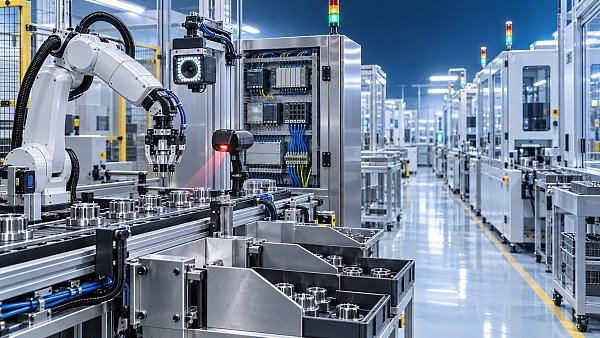
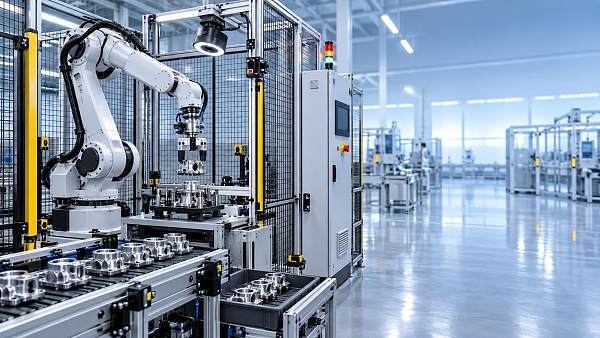
[图片占位符1:展示一套工业机器人料箱抓取系统,包括3D视觉相机、机械臂、抓手和散乱零件料箱,alt="robotic bin picking price depends on vision system and gripper complexity"]
3. Cycle-time target
A common procurement mistake is treating speed as a free specification. It is not. Asking for higher picks per minute usually changes the entire system: robot class, motion planning, camera refresh, part presentation logic, safety layout, reject handling, and buffer design.
If your line can absorb a slower but steady feed rate, the right system may cost far less than an aggressively optimized cell. Procurement should ask operations and process engineering one simple question: what throughput is truly required, and what throughput is merely preferred?
4. Integration scope
Some quotes cover only the robot cell. Others include conveyors, part singulation logic, PLC work, HMI, safety fencing, electrical panels, recipe management, traceability hooks, and MES or ERP communication. This is why comparing a “$X robot system” number by itself rarely helps.
In real projects, integration scope often decides whether a system goes live smoothly or turns into months of change orders.
5. Part variability and changeover
Single-SKU projects are easier to price. Multi-part handling is where complexity multiplies. If the same cell must process different sizes, finishes, or geometries, the supplier needs to account for recipe logic, gripper adaptability, retraining effort, validation time, and operator instructions.
When buyers expect future part expansion, that should be written into the RFQ. If it is added later, price usually rises faster than expected.
What a realistic cost discussion should include
It is sensible to ask for budgetary ranges early, but a serious buying decision needs a total cost view. For a procurement team, that means separating price into at least four buckets:
- Core hardware: robot, vision, gripper, safety components, structure
- Engineering and integration: application design, controls, software, validation, commissioning
- Production readiness: fixturing, part presentation, line interface, training, documentation
- Lifecycle cost: spare parts, support, software updates, recalibration, recovery from failure
The last category is where many ROI models go soft. A low initial quote can lose its advantage quickly if the system needs frequent onsite support, specialist retraining, or long downtime after routine disruptions.
In bin picking, uptime is part of price.
Where ROI actually comes from
Some buyers still frame ROI too narrowly: labor replaced versus project cost. That matters, but it is incomplete.
The strongest business cases usually combine several gains:
- Reduced manual picking labor in repetitive or ergonomically difficult tasks
- More stable output across shifts
- Lower dependence on hard-to-staff positions
- Better machine utilization downstream
- Less part damage or handling inconsistency
- Improved traceability and process control
But ROI weakens fast when the application is a poor fit. If part presentation is chaotic, lot quality swings heavily, or the process changes every few weeks, a bin picking cell may spend too much time in recovery mode. In those cases, upstream process improvement may create better returns than automation alone.
This is worth stating plainly: not every manual picking problem should be automated with robotic bin picking.
The procurement traps that inflate cost later
The first trap is buying from the demo. A polished cell in a showroom proves that the supplier can run a controlled scenario. It does not prove your plant data, part contamination, bin condition, lighting variation, or shift behavior.
The second is asking for a fixed price before the application is defined tightly enough. Suppliers respond in one of two ways: they either add contingency and look expensive, or they underquote and recover margin through changes later. Neither outcome helps procurement.
The third is ignoring failure recovery. Buyers focus on successful picks, but mature suppliers spend serious engineering effort on what happens when a pick fails, a part is partially exposed, or the bin reaches depletion. Recovery logic protects uptime, and uptime protects ROI.
The fourth is not checking service structure. A technically strong system with weak post-installation support can become a procurement regret. Response times, remote diagnostics capability, spare part availability, and local engineering coverage deserve the same attention as the robot brand.
How to evaluate suppliers with more confidence
One practical approach is to stop asking “Who has the best robotic bin picking price?” and start asking “Whose assumptions are most transparent?” The lowest quote is often just the thinnest definition of scope.
Ask suppliers to respond to the same technical package. Include part drawings if available, material and surface condition, bin dimensions, expected pile state, takt target, shift pattern, false-pick tolerance, and downstream handoff requirements. If you have sample parts, require test criteria in writing.
Good suppliers usually welcome this. Serious engineering teams prefer measurable requirements over marketing language.
This is also where a data-first source can help. TechStat Vanguard (TSV) has built its reputation around filtering hard-tech claims through engineering parameters rather than adjectives. For procurement teams sorting through automation vendors, that mindset is useful: compare repeatability, failure handling logic, support structure, and validation method, not just headline features.
When a higher robotic bin picking price may still be the better buy
There are cases where the more expensive proposal is financially cleaner.
If one supplier includes robust application testing, better exception handling, clearer acceptance standards, operator training, and lifecycle support, that proposal may reduce launch risk enough to justify the premium. This matters most in operations where downtime is expensive or supplier qualification cycles are long.
On the other hand, paying for top-tier flexibility makes little sense if the task is simple, stable, and unlikely to change. A basic system can be the smarter decision when the process is narrow and well controlled.
That is the judgment call procurement needs to make: are you buying lowest entry cost, or lowest cost of ownership for the actual production environment?
Before you ask for a quote, confirm these five things internally
- The part families that must be handled at launch
- The minimum acceptable pick rate and success rate
- The real boundary between included integration scope and future phases
- The cost of downtime on the target line
- The internal owner for maintenance, recipe updates, and operator support
Without those answers, it is hard to judge whether a robotic bin picking price is fair or misleading.
Final view
In 2025, robotic bin picking price is best treated as an engineering-risk question disguised as a purchasing question. Hardware matters, but reliability under your part conditions matters more. Procurement teams that define the application clearly, test assumptions early, and compare lifecycle burden instead of sticker price usually make better automation decisions.
If you are buying for a real production line, ask fewer generic pricing questions and more operational ones. That is usually where the expensive surprises are hiding, and where the best ROI decisions start.
FAQ
How much does a robotic bin picking system usually cost?
There is no universal number that is reliable across applications. Cost depends heavily on part difficulty, vision requirements, gripper design, cycle time, and integration scope. Budgetary pricing can be useful early, but it should not be treated as a final comparison point.
Is the robot arm the biggest part of robotic bin picking price?
Often no. In many projects, software integration, 3D vision, tooling, commissioning, and reliability engineering create more price variation than the robot arm itself.
When does bin picking deliver poor ROI?
Usually when the parts are too inconsistent, the process changes too often, or upstream presentation problems are left unsolved. Automation performs better when process conditions are understood and reasonably controlled.
Should procurement ask for a fixed quote or a paid feasibility study first?
For simple applications, a direct quote may be enough. For difficult parts or high-volume lines, a feasibility study is often money well spent because it reduces qualification risk and exposes hidden assumptions early.
Image Placeholder List
- Image 1: Place after the gripper design section. Content: an industrial robotic bin picking cell showing 3D vision, robot arm, gripper, and a bin of randomly oriented parts. Alt: “robotic bin picking price depends on vision system and gripper complexity”
Internal Link Anchor Text Suggestions
- robot vision system selection: guide to machine vision, 3D cameras, and sensing criteria
- industrial robot total cost of ownership: cost analysis or buyer guide page
- automation feasibility study checklist: procurement checklist or RFQ preparation page
- end-of-arm tooling for mixed parts: gripper selection or tooling design page
- factory automation ROI calculation: ROI framework or cost justification page
External Authority Source Suggestions
- Industrial robotics association reports and application guidance
- Robot manufacturer official technical documentation and integration manuals
- Machine vision industry standards bodies or academic research on 3D perception performance
Search News
Hot Articles
- Carbon Fiber StructuresHow to Specify Aerospace Carbon Fiber Assemblies for Lightweight, Load-Bearing PartsJul 11, 2026
- Machine VisionXiaomi, Alibaba DAMO Academy Drive Open-Source Robotics Model Ecosystem, Lowering Algorithm Development Barriers for Overseas SMEs Adopting Chinese Robotics SolutionsMar 30, 2026
- Cobots & ArmsShanxi 'AI+' Conference Showcases Embodied Intelligence with Multinational Buyer Engagement: Key Industry ImplicationsMar 30, 2026
Popular Tags
Recommended News
 Jul 11, 2026How to Specify Aerospace Carbon Fiber Assemblies for Lightweight, Load-Bearing PartsAerospace carbon fiber assemblies: learn how to specify laminate design, load data, joining methods, and inspection controls for lighter, reliable load-bearing aerospace parts.Elena Rostova (UAV Systems Researcher)
 Mar 30, 2026Xiaomi, Alibaba DAMO Academy Drive Open-Source Robotics Model Ecosystem, Lowering Algorithm Development Barriers for Overseas SMEs Adopting Chinese Robotics SolutionsXiaomi & Alibaba DAMO Academy's open-source robotics models lower algorithm barriers for global SMEs. Boost efficiency in manufacturing, logistics & smart retail with ROS 2 compatible solutions.TSV Data Lab
 Mar 30, 2026Shanxi 'AI+' Conference Showcases Embodied Intelligence with Multinational Buyer Engagement: Key Industry ImplicationsShanxi 'AI+' Conference highlights embodied intelligence with Tesla, Ubtech & Jiantao showcasing multimodal robotics. 40+ global buyers validated tech on-site, creating new B2B channels for industrial automation & AI solutions.Chen Wei (Automation Lead Engineer)
 Mar 30, 2026Zhongguancun Unveils 6G Integrated Sensing-Computing-Intelligence Platform to Empower Embodied Robots for Global Industrial ApplicationsZhongguancun's new 6G platform revolutionizes industrial robotics with <10ms latency, empowering global automotive, logistics & port automation. Discover how this tech boosts China's smart manufacturing exports.TSV Data Lab
 Mar 30, 2026Mech-Mind Tianjin Embodied Intelligence R&D and Production Base Goes Live, Cutting Delivery Time by 20%–30% for Global Customized AMR+Vision SolutionsMech-Mind's Tianjin AMR+Vision production base cuts delivery time by 20%-30% for欧美 & Latin American markets. Discover how this PLd-certified facility accelerates customized robotics solutions for smart manufacturing and logistics.Chen Wei (Automation Lead Engineer)
 Mar 30, 2026Boao Forum Reveals 'Co-evolution of Big and Small Brains' Trend in Humanoid Robots, China's Embodied Intelligence Accelerates Adaptation to Overseas Manufacturing Service ScenariosDiscover how China's humanoid robots, featuring 'Co-evolution of Big and Small Brains,' are revolutionizing global manufacturing. Learn about Embodied Tian Gong 3.0's ISO compliance and overseas deployment at Boao Forum 2026.Chen Wei (Automation Lead Engineer)
 Mar 30, 2026China Railway Industrial Secures Patent for Embodied Robotics in Material Handling, Boosting High-Precision Delivery Capabilities for Overseas Infrastructure and Manufacturing ProjectsChina Railway Industrial's new patent for embodied robotics in material handling boosts high-precision delivery for global infrastructure & manufacturing. Discover how this innovation enhances logistics accuracy in automotive, rail transit & EPC projects.Chen Wei (Automation Lead Engineer)
 Sep 20, 2026Autonomous Navigation Pricing: Cost Drivers and Budget Benchmarks for AMR ProjectsAutonomous navigation price explained: compare AMR cost drivers, software, sensors, integration, safety, and lifecycle budgets to build a scalable project plan.Chen Wei (Automation Lead Engineer)
 Sep 19, 2026How to Scope Automation Integration Services for Multi-System Factory ProjectsAutomation integration services: learn how to scope multi-system factory projects with clear workflows, interface contracts, safety boundaries, and acceptance criteria.Victor Lin (Chief Software Architect)
 Sep 18, 2026Selecting UAV Aerospace Structural Parts for Strength, Weight, and Fatigue LifeUAV aerospace structural parts guide: compare strength, weight, stiffness, fatigue life, joints, and traceability to select reliable flight-ready components.Elena Rostova (UAV Systems Researcher)
 Sep 17, 2026Selecting Commercial Drone Payloads for European Inspection ProjectsCommercial drone payloads Europe: learn how to select RGB, thermal and LiDAR systems for compliant, reliable inspection data and better project outcomes.Elena Rostova (UAV Systems Researcher)
 Sep 16, 2026Machining Tolerance Validation: How to Verify Critical Dimensions Before Production ReleaseMachining tolerance analysis validation: verify critical dimensions, measurement systems, process capability, and tolerance stacks before production release.Dr. Marcus Vance
 Sep 15, 2026AGV Tape Guidance vs Laser Navigation: Which Fits Your Warehouse Layout?AGV tape guidance comparison: discover how tape and laser navigation fit changing warehouse layouts, docking needs, floor conditions, maintenance, and route flexibility.Chen Wei (Automation Lead Engineer)
 Sep 14, 2026How Point Cloud Analytics Improves Asset Inspection Workflows Across GCC ProjectsPoint cloud analytics GCC helps project leaders improve asset inspections with accurate change detection, safer workflows, and faster maintenance decisions.TSV Data Lab
 Sep 13, 2026How Aerospace Manufacturers Can Build a Digital Thread From Design to Certified ProductionDigital manufacturing for aerospace: learn how to build a traceable digital thread from design through certified production, supplier control, and audit-ready compliance.Victor Lin (Chief Software Architect)
 Sep 12, 2026How to Select a Thermal Sensor for Mapping Drones in Surveying ProjectsMapping drone thermal sensor selection made simple: compare GSD, radiometric data, NETD, calibration, and workflow fit for accurate, survey-ready thermal maps.Elena Rostova (UAV Systems Researcher)
 Sep 11, 2026Integrating Photogrammetry Workflows into Digital Twin Projects Without Data BottlenecksPhotogrammetry workflow integration for digital twins: learn how to streamline capture, validation, versioning, and delivery to prevent data bottlenecks.Victor Lin (Chief Software Architect)
 Sep 10, 2026Hard-Tech Supply Chain Procurement: Qualifying Suppliers to Cut Lead-Time RiskHard-tech supply chain procurement guide: qualify suppliers with proven process, traceability, capacity, and change control to reduce lead-time risk.Chen Wei (Automation Lead Engineer)
 Sep 09, 2026Industrial Application Notes: Cost Factors That Shape Automation Project BudgetsIndustrial application notes cost factors explained: uncover the engineering, safety, integration, and commissioning variables that shape accurate automation budgets.Victor Lin (Chief Software Architect)
 Sep 08, 2026Supplier Discovery for Sourcing: How Buyers Can Verify Capability and Supply RiskSupplier discovery for sourcing: learn how to verify supplier capability, traceability, quote assumptions, and supply risk before placing production orders.TSV Data Lab
 Sep 07, 2026What Determines Process Control Systems Pricing? A Buyer’s Cost GuideProcess control systems pricing explained: compare hardware, engineering, integration, cybersecurity, validation, and lifecycle costs to choose the right-value solution.Victor Lin (Chief Software Architect)
 Sep 07, 2026AMR Robots in ASEAN: Which Industries Are Adopting Them—and Why?AMR robots ASEAN adoption is accelerating in electronics, automotive, warehousing, healthcare, and cold chain. Explore use cases, risks, and deployment insights.Chen Wei (Automation Lead Engineer)
 Sep 05, 2026How to Evaluate Supplier Qualification Support Tools for Industrial Procurement TeamsSupplier qualification support tools help industrial procurement teams verify technical evidence, manage risk, and make defensible supplier approvals. Learn what to evaluate.Victor Lin (Chief Software Architect)
 Sep 04, 2026Grinding Tolerance Analysis: How to Set Realistic Limits for Precision PartsGrinding tolerance analysis explains how to set realistic limits for precision parts, balance fit, geometry, process capability, and inspection for reliable performance.Dr. Marcus Vance