How to Evaluate 77GHz Radar for Robotics in Indoor Navigation and Obstacle Detection
Publication Date
author
Start with the navigation problem, not the radar datasheet
When teams evaluate 77GHz radar for robotics, the mistake usually happens before anyone powers up a sensor. They compare range, field of view, and point count in isolation, then discover too late that the real bottleneck was corridor behavior, glass detection, forklift traffic, or update latency inside the full navigation stack.
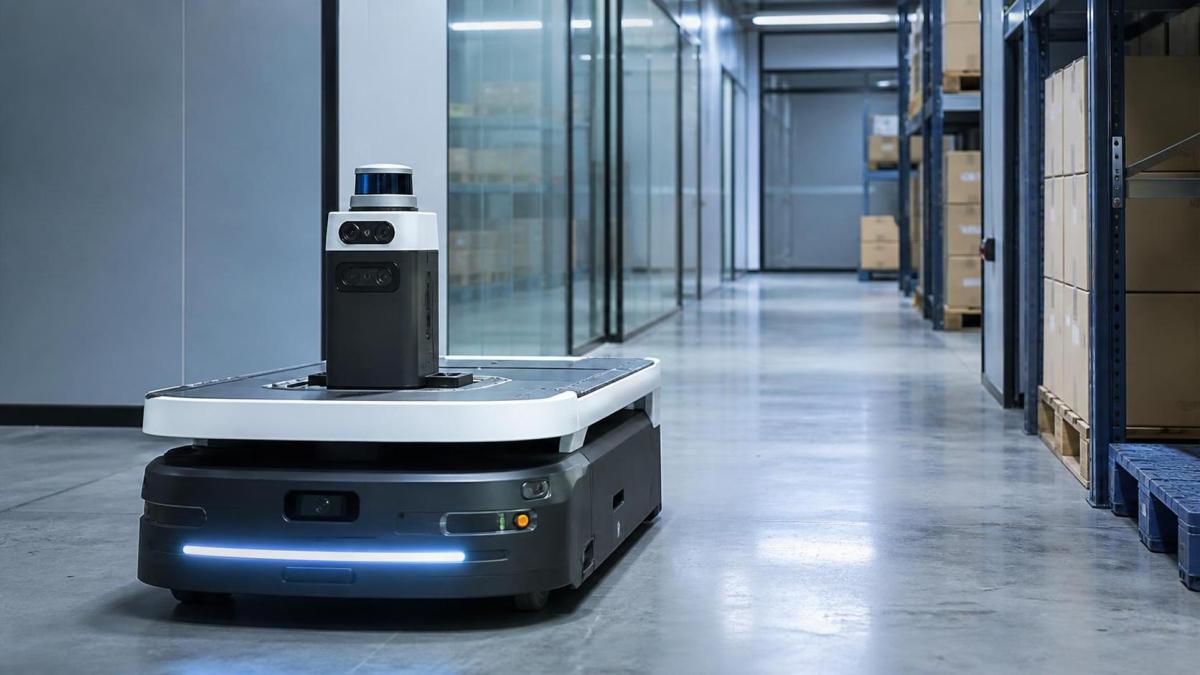
For indoor robots, radar selection is not about buying the most impressive spec sheet. It is about deciding whether the sensor can support stable localization, predictable obstacle detection, and acceptable false-alarm rates in your actual building conditions. A warehouse AMR, a hospital delivery robot, and a factory tugger may all use radar, but the evaluation criteria shift because the operating geometry, materials, speeds, and safety margins are different.
A practical review starts with a short list of mission-level questions:
- Is radar being considered as a primary perception sensor, a redundancy layer, or a gap-filler for poor lighting and low-visibility conditions?
- Does the robot need occupancy awareness, object tracking, wall following, stop-zone protection, or map-level navigation support?
- Which failures are unacceptable: missed thin obstacles, unstable returns near shelving, late detection at corners, or false positives around reflective surfaces?
If you do not pin those down first, every later comparison becomes noisy.
Define the indoor conditions that will break the sensor
Indoor navigation sounds easier than outdoor autonomy until you start listing the materials and edge cases. Concrete, painted drywall, metal racks, wire mesh, pallet wrap, glass partitions, elevator doors, narrow aisles, and people standing half-hidden behind carts all produce very different radar behavior. A good evaluation plan forces those conditions into the test matrix early.
Check whether your team has documented these variables before comparing vendors:
- Typical aisle width and minimum turning radius
- Floor transitions, ramps, dock edges, and doorway bottlenecks
- Presence of glass, polished metal, mesh, hanging materials, and cluttered storage
- Human traffic density and robot-to-human interaction distance
- Robot top speed, emergency stop distance, and control loop timing
This matters because a radar that looks clean in an open demo lane may become noisy in a dense indoor environment with repeated reflections. The evaluator’s job is to force the sensor into realistic failure modes, not ideal scenes.
Treat detection performance as a behavior test, not a marketing promise
Obstacle detection claims are often too general to be useful. “Detects objects reliably” means very little unless you know what object class, what aspect angle, what relative velocity, and what environment produced that result.
For indoor robotics, the more useful checklist is behavioral:
- Test broad surfaces and awkward ones separately. Walls and large crates are easy. Chair legs, cart forks, narrow poles, pallet corners, and partially occluded objects are where selection decisions get real.
- Run static and dynamic scenes. A stationary obstacle in open space does not tell you much about robot performance when people or vehicles cross the path.
- Check angle sensitivity. Some obstacles are detectable head-on but much less stable at shallow approach angles.
- Review missed detections and false positives together. A sensor tuned to suppress noise may also suppress weak but important targets.
The common mistake here is reducing the evaluation to maximum range. Indoor robots rarely fail because the sensor could not see far enough on a straight path. They fail because the perception stack could not classify a near-field situation soon enough to support a safe motion decision.
Look closely at latency, update rate, and temporal stability
A radar can produce technically valid detections and still be a poor fit for navigation if the timing is unstable. Technical evaluators should separate three things that suppliers often blend together: sensor measurement cadence, output update rate, and end-to-end latency into the robot software stack.
What you want to know is simple: when an obstacle enters the robot’s path, how long until that event becomes a trustworthy input for motion planning or braking? That answer depends on sensor processing, middleware transport, time synchronization, filtering, and planner integration.
During evaluation, verify:
- Whether timestamps come from the sensor or are assigned downstream
- Whether output timing remains stable under high target density
- How much filtering is applied before detections are exposed to the robot
- Whether latency changes when multiple sensors are active on the same platform
If the radar is meant to support safety-related slowing or stopping, timing variation matters as much as raw speed. A sensor that occasionally lags under clutter can create planner oscillation, late braking, or conservative behavior that makes the robot unusable in production.
Do not overvalue point-cloud appearance
Radar demos often lean on attractive visualization. Dense-looking plots can be persuasive, but for selection work, the question is whether the returned data stays consistent enough to support tracking, occupancy inference, or sensor fusion. A prettier point cloud is not automatically a better navigation signal.
What matters more is stability across repeated passes. Drive the same route multiple times and compare whether persistent structures remain spatially coherent. Watch for drift in apparent wall position, intermittent disappearance of shelving edges, and unstable target clustering around door frames or reflective equipment.
If your stack expects map alignment or repeated obstacle tracking, inconsistent returns will cost more engineering time than an average-looking visualization ever suggests.
Check field of view in the installed position, not in the brochure
Mounting changes everything. A radar that looks suitable on paper may lose critical coverage once it sits behind a housing, above a bumper, near metal structure, or at a height that creates blind zones for low obstacles. Indoor robots are especially sensitive to this because navigation decisions often happen in the near field.
Before making a decision, inspect the installed geometry against the robot’s actual risk zones:
This is one of the most common gaps in selection reviews: teams validate a sensor on a bench and approve it before the mechanical package is frozen.
Evaluate fusion effort, not just standalone radar performance
Most indoor robots do not rely on radar alone. They fuse it with LiDAR, cameras, odometry, IMU data, or safety scanners. That means selection should include software integration cost and conflict behavior between sensors.
A radar can still be the right choice even if its raw scene interpretation is weaker than LiDAR in some conditions, because it may hold up better through dust, partial occlusion, or poor lighting. But the gain only materializes if the fusion logic can trust when radar should override, confirm, or be ignored.
Review these integration points before approval:
- Output format: raw detections, tracked objects, occupancy representation, or proprietary abstractions
- Time sync compatibility with the rest of the perception stack
- Availability of tuning access instead of fixed black-box behavior
- How the robot handles disagreement between radar and LiDAR or vision
If the vendor only shows polished demos but offers limited visibility into filtering and object logic, expect longer integration cycles.
Build a decision matrix around failure cost
Not every weakness deserves the same weight. In technical evaluation, the useful question is not “Which radar is best?” but “Which failure is most expensive in this deployment?” Missing a glass panel in a hospital corridor is a different risk from generating extra slowdowns in a palletized warehouse.
A practical decision matrix usually includes:
- Detection reliability for the obstacle classes that matter most on site
- Latency and timing stability under clutter
- Installed coverage in near-field motion zones
- Behavior around reflective and low-observability materials
- Integration effort with the current autonomy stack
- Tuning burden across multiple facilities or robot variants
Weight those categories according to operational consequence, not presentation quality. A sensor that needs less tuning and behaves consistently across sites often beats one with stronger demo performance but fragile deployment behavior.
What to do before you sign off
Keep the final review disciplined. Run the sensor on the robot, inside the intended building type, through repeatable routes and deliberately ugly scenarios. Save logs. Compare passes. Note where detections flicker, where braking becomes late, and where the planner gets indecisive.
Then make the decision in this order: confirm mission fit, validate installed coverage, measure timing behavior, test difficult obstacles, and only after that compare convenience factors such as tooling or demo polish. That sequence keeps the evaluation grounded in navigation performance instead of supplier storytelling.
For indoor robotics, a good 77GHz radar for robotics is the one that stays predictable when the environment stops being clean. That is the sensor worth carrying into procurement.
Search News
Hot Articles
- Carbon Fiber StructuresHow to Specify Aerospace Carbon Fiber Assemblies for Lightweight, Load-Bearing PartsJul 11, 2026
- Machine VisionXiaomi, Alibaba DAMO Academy Drive Open-Source Robotics Model Ecosystem, Lowering Algorithm Development Barriers for Overseas SMEs Adopting Chinese Robotics SolutionsMar 30, 2026
- Cobots & ArmsShanxi 'AI+' Conference Showcases Embodied Intelligence with Multinational Buyer Engagement: Key Industry ImplicationsMar 30, 2026
Popular Tags
Recommended News
 Jul 11, 2026How to Specify Aerospace Carbon Fiber Assemblies for Lightweight, Load-Bearing PartsAerospace carbon fiber assemblies: learn how to specify laminate design, load data, joining methods, and inspection controls for lighter, reliable load-bearing aerospace parts.Elena Rostova (UAV Systems Researcher)
 Mar 30, 2026Xiaomi, Alibaba DAMO Academy Drive Open-Source Robotics Model Ecosystem, Lowering Algorithm Development Barriers for Overseas SMEs Adopting Chinese Robotics SolutionsXiaomi & Alibaba DAMO Academy's open-source robotics models lower algorithm barriers for global SMEs. Boost efficiency in manufacturing, logistics & smart retail with ROS 2 compatible solutions.TSV Data Lab
 Mar 30, 2026Shanxi 'AI+' Conference Showcases Embodied Intelligence with Multinational Buyer Engagement: Key Industry ImplicationsShanxi 'AI+' Conference highlights embodied intelligence with Tesla, Ubtech & Jiantao showcasing multimodal robotics. 40+ global buyers validated tech on-site, creating new B2B channels for industrial automation & AI solutions.Chen Wei (Automation Lead Engineer)
 Mar 30, 2026Zhongguancun Unveils 6G Integrated Sensing-Computing-Intelligence Platform to Empower Embodied Robots for Global Industrial ApplicationsZhongguancun's new 6G platform revolutionizes industrial robotics with <10ms latency, empowering global automotive, logistics & port automation. Discover how this tech boosts China's smart manufacturing exports.TSV Data Lab
 Mar 30, 2026Mech-Mind Tianjin Embodied Intelligence R&D and Production Base Goes Live, Cutting Delivery Time by 20%–30% for Global Customized AMR+Vision SolutionsMech-Mind's Tianjin AMR+Vision production base cuts delivery time by 20%-30% for欧美 & Latin American markets. Discover how this PLd-certified facility accelerates customized robotics solutions for smart manufacturing and logistics.Chen Wei (Automation Lead Engineer)
 Mar 30, 2026Boao Forum Reveals 'Co-evolution of Big and Small Brains' Trend in Humanoid Robots, China's Embodied Intelligence Accelerates Adaptation to Overseas Manufacturing Service ScenariosDiscover how China's humanoid robots, featuring 'Co-evolution of Big and Small Brains,' are revolutionizing global manufacturing. Learn about Embodied Tian Gong 3.0's ISO compliance and overseas deployment at Boao Forum 2026.Chen Wei (Automation Lead Engineer)
 Mar 30, 2026China Railway Industrial Secures Patent for Embodied Robotics in Material Handling, Boosting High-Precision Delivery Capabilities for Overseas Infrastructure and Manufacturing ProjectsChina Railway Industrial's new patent for embodied robotics in material handling boosts high-precision delivery for global infrastructure & manufacturing. Discover how this innovation enhances logistics accuracy in automotive, rail transit & EPC projects.Chen Wei (Automation Lead Engineer)
 Sep 19, 2026How to Scope Automation Integration Services for Multi-System Factory ProjectsAutomation integration services: learn how to scope multi-system factory projects with clear workflows, interface contracts, safety boundaries, and acceptance criteria.Victor Lin (Chief Software Architect)
 Sep 18, 2026Selecting UAV Aerospace Structural Parts for Strength, Weight, and Fatigue LifeUAV aerospace structural parts guide: compare strength, weight, stiffness, fatigue life, joints, and traceability to select reliable flight-ready components.Elena Rostova (UAV Systems Researcher)
 Sep 17, 2026Selecting Commercial Drone Payloads for European Inspection ProjectsCommercial drone payloads Europe: learn how to select RGB, thermal and LiDAR systems for compliant, reliable inspection data and better project outcomes.Elena Rostova (UAV Systems Researcher)
 Sep 16, 2026Machining Tolerance Validation: How to Verify Critical Dimensions Before Production ReleaseMachining tolerance analysis validation: verify critical dimensions, measurement systems, process capability, and tolerance stacks before production release.Dr. Marcus Vance
 Sep 15, 2026AGV Tape Guidance vs Laser Navigation: Which Fits Your Warehouse Layout?AGV tape guidance comparison: discover how tape and laser navigation fit changing warehouse layouts, docking needs, floor conditions, maintenance, and route flexibility.Chen Wei (Automation Lead Engineer)
 Sep 14, 2026How Point Cloud Analytics Improves Asset Inspection Workflows Across GCC ProjectsPoint cloud analytics GCC helps project leaders improve asset inspections with accurate change detection, safer workflows, and faster maintenance decisions.TSV Data Lab
 Sep 13, 2026How Aerospace Manufacturers Can Build a Digital Thread From Design to Certified ProductionDigital manufacturing for aerospace: learn how to build a traceable digital thread from design through certified production, supplier control, and audit-ready compliance.Victor Lin (Chief Software Architect)
 Sep 12, 2026How to Select a Thermal Sensor for Mapping Drones in Surveying ProjectsMapping drone thermal sensor selection made simple: compare GSD, radiometric data, NETD, calibration, and workflow fit for accurate, survey-ready thermal maps.Elena Rostova (UAV Systems Researcher)
 Sep 11, 2026Integrating Photogrammetry Workflows into Digital Twin Projects Without Data BottlenecksPhotogrammetry workflow integration for digital twins: learn how to streamline capture, validation, versioning, and delivery to prevent data bottlenecks.Victor Lin (Chief Software Architect)
 Sep 10, 2026Hard-Tech Supply Chain Procurement: Qualifying Suppliers to Cut Lead-Time RiskHard-tech supply chain procurement guide: qualify suppliers with proven process, traceability, capacity, and change control to reduce lead-time risk.Chen Wei (Automation Lead Engineer)
 Sep 09, 2026Industrial Application Notes: Cost Factors That Shape Automation Project BudgetsIndustrial application notes cost factors explained: uncover the engineering, safety, integration, and commissioning variables that shape accurate automation budgets.Victor Lin (Chief Software Architect)
 Sep 08, 2026Supplier Discovery for Sourcing: How Buyers Can Verify Capability and Supply RiskSupplier discovery for sourcing: learn how to verify supplier capability, traceability, quote assumptions, and supply risk before placing production orders.TSV Data Lab
 Sep 07, 2026What Determines Process Control Systems Pricing? A Buyer’s Cost GuideProcess control systems pricing explained: compare hardware, engineering, integration, cybersecurity, validation, and lifecycle costs to choose the right-value solution.Victor Lin (Chief Software Architect)
 Sep 07, 2026AMR Robots in ASEAN: Which Industries Are Adopting Them—and Why?AMR robots ASEAN adoption is accelerating in electronics, automotive, warehousing, healthcare, and cold chain. Explore use cases, risks, and deployment insights.Chen Wei (Automation Lead Engineer)
 Sep 05, 2026How to Evaluate Supplier Qualification Support Tools for Industrial Procurement TeamsSupplier qualification support tools help industrial procurement teams verify technical evidence, manage risk, and make defensible supplier approvals. Learn what to evaluate.Victor Lin (Chief Software Architect)
 Sep 04, 2026Grinding Tolerance Analysis: How to Set Realistic Limits for Precision PartsGrinding tolerance analysis explains how to set realistic limits for precision parts, balance fit, geometry, process capability, and inspection for reliable performance.Dr. Marcus Vance
 Sep 03, 2026Warehouse Automation Strategies to Increase Storage Capacity Without ExpansionWarehouse automation space saving strategies help unlock vertical capacity, optimize slotting, and improve storage density without costly building expansion.Victor Lin (Chief Software Architect)