Smart Traffic Sensor Factory Evaluation: Accuracy, Uptime, and Deployment Risk
Publication Date
author
Selecting a smart traffic sensor factory is no longer just a sourcing task—it is a technical risk decision tied to accuracy, uptime, and deployment outcomes. For evaluation teams, vague claims are useless. This introduction frames how to assess real engineering capability, from sensing precision and environmental stability to manufacturing consistency and field failure exposure, so procurement decisions are grounded in measurable data rather than supplier rhetoric.
Why a checklist-first approach works better for smart traffic sensor factory evaluation
For technical evaluators, the biggest mistake is treating a smart traffic sensor factory review as a generic supplier audit. Traffic sensing hardware sits at the intersection of optics, radar, embedded computing, networking, enclosure engineering, and long-duration field reliability. A factory may look impressive on a sales deck yet still fail on calibration discipline, batch consistency, or firmware validation.
A checklist-based method forces the evaluation team to prioritize what actually predicts field success: detection accuracy under edge cases, uptime under weather stress, traceability of components, software update controls, and deployment support maturity. This is especially important when products are intended for intersections, highways, tunnels, tolling corridors, and smart city infrastructure where downtime creates operational and safety consequences.
The right smart traffic sensor factory should not only manufacture devices. It should demonstrate repeatable engineering outputs, measurable process control, and low deployment risk across large fleets. In practice, that means your review should begin with evidence, not claims.
What technical teams should confirm before deeper supplier engagement
- Whether the sensor architecture matches the intended use case: radar, video, LiDAR, magnetometer, or fused sensing.
- Whether the factory can provide application-specific performance data rather than lab-only benchmark figures.
- Whether manufacturing and calibration processes are controlled at unit level, batch level, and firmware version level.
- Whether maintenance, remote diagnostics, and field replacement procedures are documented and proven.
Why this matters to TSV-style engineering evaluation
TechStat Vanguard’s data-first philosophy is directly relevant here: parameters, tolerances, and failure distributions matter more than adjectives. When comparing a smart traffic sensor factory, evaluators should seek hard evidence such as false detection rate, missed vehicle rate, pedestrian classification reliability, operating temperature drift, ingress protection verification, and mean time between failures.
Core checklist: accuracy indicators that separate marketing from engineering reality
Accuracy should be assessed as a system outcome, not a single headline number. Many suppliers advertise high detection rates but do not disclose scene conditions, object mix, lane density, mounting height, or environmental interference. A credible smart traffic sensor factory should explain how performance changes across those variables.
Ask for validation data across daytime, nighttime, rain, fog, glare, heavy traffic overlap, and low-speed congestion. For urban deployments, vulnerable road user detection can be more important than standard vehicle counting. For highway deployments, speed accuracy and long-range target separation may matter more.
Technical teams should also distinguish between algorithm capability and shipped product capability. A factory may show strong software demos but weak final-device calibration, poor lens alignment, unstable antenna assembly, or inconsistent embedded processing load under live traffic conditions.
Accuracy review checklist for a smart traffic sensor factory
- Request confusion matrices by object class, not just overall detection percentage.
- Verify speed, occupancy, queue length, and classification accuracy separately.
- Check performance under occlusion, multi-lane overlap, and complex turning movements.
- Ask whether calibration is factory preset, installer adjusted, or adaptive after deployment.
- Review false positive behavior in rain reflections, shadows, headlight bloom, and roadside clutter.
- Confirm if accuracy data was generated with the same firmware version being quoted commercially.
Minimum evidence worth requesting
At a minimum, ask the smart traffic sensor factory for test protocols, reference datasets, installation geometry assumptions, and side-by-side results versus manual ground truth. If the supplier cannot explain test methodology clearly, accuracy claims should be treated as provisional rather than bankable.
Factory capability checklist: how to judge uptime and manufacturing consistency
Uptime is not just a design feature; it is a manufacturing outcome. Two factories using the same nominal bill of materials can produce different field performance because of sealing process variation, connector quality, assembly torque inconsistency, thermal path design, or poor final inspection coverage.
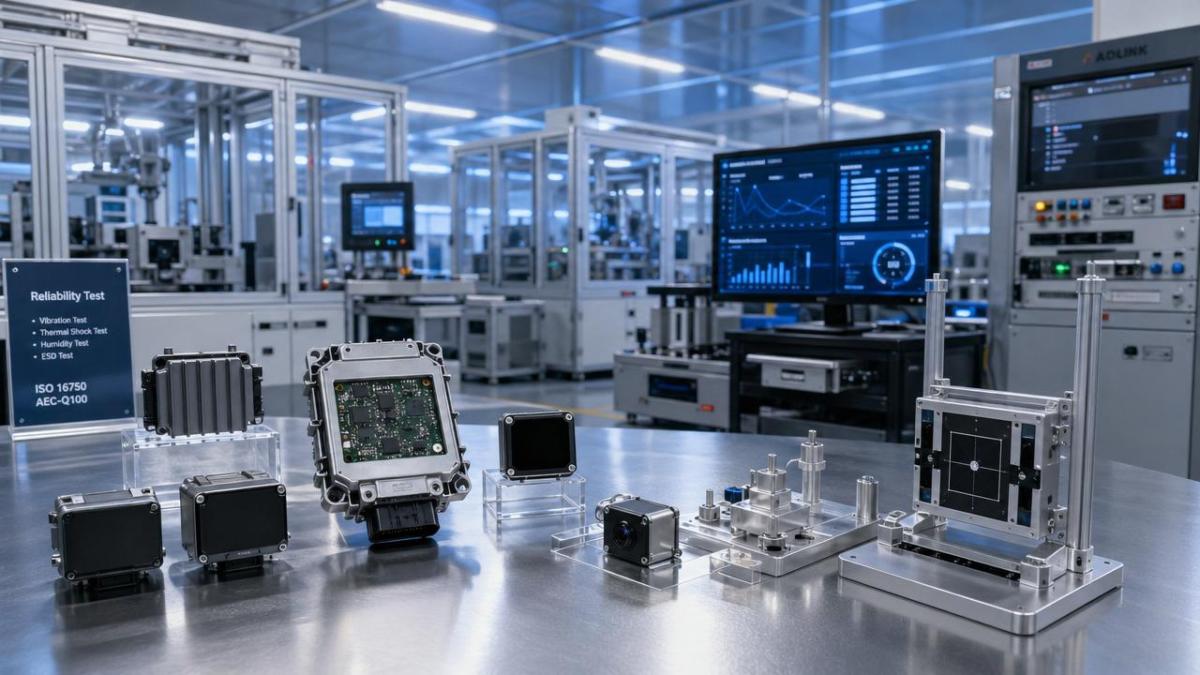
A strong smart traffic sensor factory should show disciplined control over incoming materials, process verification, environmental stress screening, burn-in, and serialized quality records. This becomes even more important in public infrastructure projects where maintenance windows are limited and fault isolation is costly.
Do not accept uptime claims without context. Ask whether uptime excludes communication failures, edge compute crashes, degraded sensing mode, or cloud-side data interruption. True operational availability must reflect the complete field stack.
Production and reliability checks to prioritize
- Ingress protection validation and sample size used for verification.
- Thermal cycling, vibration, corrosion, UV exposure, and salt fog test coverage.
- Component derating policy for power modules, processors, optics, and RF parts.
- ESD controls and traceability of sensitive subassemblies.
- Final functional testing performed on 100% of units versus sampled inspection only.
- Firmware version locking and rollback process for shipped devices.
Evaluation table: practical decision criteria
Deployment risk checklist: what often gets missed before purchase approval
Many sourcing failures do not begin in the factory; they begin in untested deployment assumptions. A smart traffic sensor factory may deliver technically sound hardware, but project risk rises if installation geometry, networking constraints, power quality, local standards, and maintenance access are poorly understood.
This is why evaluation teams should review the supplier’s deployment playbook as carefully as the hardware itself. Strong factories often have mature field engineering feedback loops that continuously improve installation brackets, anti-vibration fixtures, cable routing, and software configuration templates.
In other words, deployment risk is a systems issue. It includes not just whether the smart traffic sensor factory can build the device, but whether it can help the buyer avoid costly rework after installation.
Commonly overlooked deployment risk items
- Mounting height tolerance and viewing angle sensitivity.
- Power surge resilience in roadside cabinets and signal control environments.
- Bandwidth requirements for video or fused data backhaul.
- Time synchronization needs for multi-sensor intersections.
- Firmware update policy in live traffic environments.
- Cybersecurity hardening, credential management, and remote access logs.
Scenario-specific differences evaluators should note
For urban smart city deployments, prioritize multimodal detection, congestion behavior, and false alarms from dense visual clutter. For highway applications, focus more heavily on speed measurement stability, long-distance tracking, and weather resilience. For temporary or portable deployments, fast setup, auto-calibration, and power efficiency can outweigh some advanced analytics features.
How to run a practical supplier audit for a smart traffic sensor factory
A strong audit should move from paper review to physical process verification. Start with technical documentation, then inspect pilot units, then examine factory controls, and finally validate with a limited field trial. This staged process reduces the chance of overcommitting based on polished presentations.
During the audit, involve both product and deployment stakeholders. Procurement may focus on delivery and warranty terms, but technical evaluators should lead questions around sensor drift, data interface stability, software maturity, and lifecycle support. The goal is not to catch a supplier out; it is to expose whether the smart traffic sensor factory can support predictable fleet performance.
Where possible, require the supplier to map every claimed capability to evidence: report, process document, test record, field case, or live demonstration. Evidence mapping creates a more objective approval path.
Suggested audit sequence
- Review product specifications, interface definitions, and environmental ratings.
- Request detailed validation reports tied to the exact model under consideration.
- Audit production controls, calibration stations, and quality traceability records.
- Verify spare parts planning, firmware maintenance process, and failure response workflow.
- Run a controlled field pilot with agreed acceptance metrics and failure logging.
Questions worth asking before final commercial negotiation
Before shortlisting any smart traffic sensor factory, ask for parameter tolerances, test sample sizes, deployment references in similar climates, documented mean time to repair, and software support cadence. Also confirm what data ownership, API openness, and third-party integration limits may affect your future roadmap. These questions often reveal more practical value than a headline unit price.
Final decision guidance: what to prepare next
The best smart traffic sensor factory is rarely the one with the loudest positioning. It is the one that can prove stable accuracy, transparent uptime methodology, disciplined production controls, and low deployment uncertainty. For evaluation teams, the priority is to convert marketing language into engineering checkpoints and evidence-backed pass or fail criteria.
As a practical next step, prepare a short evaluation pack before engaging suppliers: target use case, traffic environment, mounting constraints, interface requirements, expected uptime threshold, data accuracy needs, cybersecurity expectations, and pilot acceptance metrics. This allows suppliers to respond with technical precision instead of generic brochures.
If you need to move the process forward, prioritize discussion around exact performance parameters, environmental adaptation, batch consistency, delivery lead time, support model, and field trial structure. That is how a smart traffic sensor factory evaluation becomes a disciplined engineering decision rather than a procurement gamble.
Search News
Hot Articles
- Carbon Fiber StructuresHow to Specify Aerospace Carbon Fiber Assemblies for Lightweight, Load-Bearing PartsJul 11, 2026
- Machine VisionXiaomi, Alibaba DAMO Academy Drive Open-Source Robotics Model Ecosystem, Lowering Algorithm Development Barriers for Overseas SMEs Adopting Chinese Robotics SolutionsMar 30, 2026
- Cobots & ArmsShanxi 'AI+' Conference Showcases Embodied Intelligence with Multinational Buyer Engagement: Key Industry ImplicationsMar 30, 2026
Popular Tags
Recommended News
 Jul 11, 2026How to Specify Aerospace Carbon Fiber Assemblies for Lightweight, Load-Bearing PartsAerospace carbon fiber assemblies: learn how to specify laminate design, load data, joining methods, and inspection controls for lighter, reliable load-bearing aerospace parts.Elena Rostova (UAV Systems Researcher)
 Mar 30, 2026Xiaomi, Alibaba DAMO Academy Drive Open-Source Robotics Model Ecosystem, Lowering Algorithm Development Barriers for Overseas SMEs Adopting Chinese Robotics SolutionsXiaomi & Alibaba DAMO Academy's open-source robotics models lower algorithm barriers for global SMEs. Boost efficiency in manufacturing, logistics & smart retail with ROS 2 compatible solutions.TSV Data Lab
 Mar 30, 2026Shanxi 'AI+' Conference Showcases Embodied Intelligence with Multinational Buyer Engagement: Key Industry ImplicationsShanxi 'AI+' Conference highlights embodied intelligence with Tesla, Ubtech & Jiantao showcasing multimodal robotics. 40+ global buyers validated tech on-site, creating new B2B channels for industrial automation & AI solutions.Chen Wei (Automation Lead Engineer)
 Mar 30, 2026Zhongguancun Unveils 6G Integrated Sensing-Computing-Intelligence Platform to Empower Embodied Robots for Global Industrial ApplicationsZhongguancun's new 6G platform revolutionizes industrial robotics with <10ms latency, empowering global automotive, logistics & port automation. Discover how this tech boosts China's smart manufacturing exports.TSV Data Lab
 Mar 30, 2026Mech-Mind Tianjin Embodied Intelligence R&D and Production Base Goes Live, Cutting Delivery Time by 20%–30% for Global Customized AMR+Vision SolutionsMech-Mind's Tianjin AMR+Vision production base cuts delivery time by 20%-30% for欧美 & Latin American markets. Discover how this PLd-certified facility accelerates customized robotics solutions for smart manufacturing and logistics.Chen Wei (Automation Lead Engineer)
 Mar 30, 2026Boao Forum Reveals 'Co-evolution of Big and Small Brains' Trend in Humanoid Robots, China's Embodied Intelligence Accelerates Adaptation to Overseas Manufacturing Service ScenariosDiscover how China's humanoid robots, featuring 'Co-evolution of Big and Small Brains,' are revolutionizing global manufacturing. Learn about Embodied Tian Gong 3.0's ISO compliance and overseas deployment at Boao Forum 2026.Chen Wei (Automation Lead Engineer)
 Mar 30, 2026China Railway Industrial Secures Patent for Embodied Robotics in Material Handling, Boosting High-Precision Delivery Capabilities for Overseas Infrastructure and Manufacturing ProjectsChina Railway Industrial's new patent for embodied robotics in material handling boosts high-precision delivery for global infrastructure & manufacturing. Discover how this innovation enhances logistics accuracy in automotive, rail transit & EPC projects.Chen Wei (Automation Lead Engineer)
 Oct 29, 2026Aerospace Aluminum Alloy Strength: 2024-T3 vs. 7075-T6 ComparedCompare aerospace aluminum alloy strength in 2024-T3 vs. 7075-T6. Explore fatigue, corrosion, and weight trade-offs to choose the right alloy for your design.Dr. Marcus Vance
 Oct 28, 2026IDC: Global Quadruped Robot Shipments Rise 92.5% in H1 2026 as Volume and Value DivergeGlobal quadruped robot shipments rose 92.5% in H1 2026, according to IDC. Explore what diverging volume and value trends mean for industrial buyers and manufacturers.Chen Wei (Automation Lead Engineer)
 Oct 28, 2026Interpreting Industrial IoT Latency Data for Monitoring and Real-Time ControlInterpret industrial category latency data to assess jitter, deadline misses, and real-time readiness. Learn how to benchmark IIoT systems and choose monitoring and control solutions.TSV Data Lab
 Oct 27, 2026GXO and Agility Robotics Expand Partnership to Accelerate US Humanoid Robot DeploymentGXO and Agility Robotics plan to expand US humanoid robot deployment with Digit 4 in early 2027. Explore warehouse automation plans, service terms and future Digit 5 upgrades.Chen Wei (Automation Lead Engineer)
 Oct 27, 2026Robotic Automation Costs: Budgeting for Equipment, Integration, and MaintenancePlan your robotics automation cost with confidence. Explore equipment, integration, and maintenance expenses, compare quotes, and build a realistic budget for better ROI.Chen Wei (Automation Lead Engineer)
 Oct 26, 2026AMAXiMAL Releases Open-Source TopMod 3D v3 With Claude AIExplore AMAXiMAL’s free, open-source TopMod 3D v3 with Claude AI assistance, topology-based modeling and plywood fabrication tools that connect complex designs to physical builds.Dr. Marcus Vance
 Oct 26, 2026Choosing a SCADA System Integrator Company: PLC Compatibility and Long-Term SupportChoose a scada system integrator company with proven PLC compatibility and reliable long-term support. Discover what to test, compare, and require before investing.Victor Lin (Chief Software Architect)
 Oct 25, 2026Hesai Leads Global ADAS Main Lidar Shipments in Yole’s 2026 ReportHesai led global ADAS main lidar shipments with a 43% share in 2025, according to Yole’s 2026 report. Explore what this ranking reveals about its automotive market position.TSV Data Lab
 Oct 25, 2026Choosing an Aerospace Materials Manufacturer: Quality and Traceability ChecksChoosing an aerospace materials manufacturer? Learn how to verify certifications, test reports, and lot traceability to qualify suppliers confidently and reduce costly sourcing risks.Dr. Marcus Vance
 Oct 24, 2026Guotai Haitong: Global Entry-Level 3D Printer Shipments Rose 39% in Q1 2026Entry-level 3D printer shipments rose 39% in Q1 2026, Guotai Haitong reports. Explore how AI, multicolor printing and print farms are shaping market growth.Dr. Marcus Vance
 Oct 24, 2026Choosing an Industrial Vision Inspection Supplier: Acceptance Tests That MatterChoose an industrial vision inspection supplier with confidence. Discover acceptance tests for defect detection, false rejects, production speed, and reliable part rejection before you buy.TSV Data Lab
 Oct 23, 2026US Navy Raises Gecko Robotics Contract Ceiling to $300M for Robotic Fleet MaintenanceUS Navy raises Gecko Robotics’ contract ceiling to $300M for Pacific Fleet robotic inspections. Explore potential opportunities for maintenance suppliers and key procurement considerations.Chen Wei (Automation Lead Engineer)
 Oct 23, 2026Choosing Industrial Sensing Systems for Global Plants: Protocol CompatibilityCompare industrial sensing systems international buyers can trust. Explore protocol compatibility, reduce integration risks, and select proven configurations for reliable global plant deployments.TSV Data Lab
 Oct 22, 2026KUKA Showcases Physical AI and iiQKA.AI Vision at NVIDIA GTC BerlinExplore KUKA’s Physical AI showcase at NVIDIA GTC Berlin and discover how iiQKA.AI Vision aims to simplify robotic vision integration and improve 2D and 3D scene recognition.TSV Data Lab
 Oct 22, 2026Robotic Machining of Advanced Composites: What Tolerances Are Achievable?Explore advanced materials machining robotics: discover what drives achievable composite tolerances and how to validate accuracy before investing in your next machining system.Dr. Marcus Vance
 Oct 21, 2026China’s Industrial Robot Exports Near RMB 10 Billion in First Nine Months of 2026China’s industrial robot exports neared RMB 10 billion in January–September 2026, with value rising faster than volume. Explore the data and what it could mean for suppliers.Chen Wei (Automation Lead Engineer)
 Oct 21, 2026Low-Latency Industrial Data Processing: Pricing and Key Cost DriversExplore industrial data latency price drivers, from edge hardware to integration and support. Learn how to compare quotes, verify performance, and avoid unnecessary costs.TSV Data Lab