
IIoT Security Protocols That Protect Uptime, Not Just Compliance
Publication Date
author
In modern manufacturing, industrial IoT security protocols are no longer just a compliance checkbox—they are essential to protecting uptime, data integrity, and operational continuity. From AGV/AMR obstacle avoidance systems and servo motors for industrial automation to solid-state LiDAR point cloud density monitoring and industrial IoT predictive maintenance solutions, resilient security frameworks now determine whether connected operations stay productive, safe, and scalable.
The practical answer is straightforward: the best IIoT security protocols are the ones that reduce the chance of unplanned downtime, unsafe machine behavior, corrupted process data, and costly recovery events—not merely the ones that help pass an audit. For operators, engineers, procurement teams, and executives, the real question is no longer “Are we compliant?” but “Will this architecture keep the line running when devices, networks, and edge systems are under stress or attack?”
What users really need from IIoT security: stable production, safe machines, and trusted data
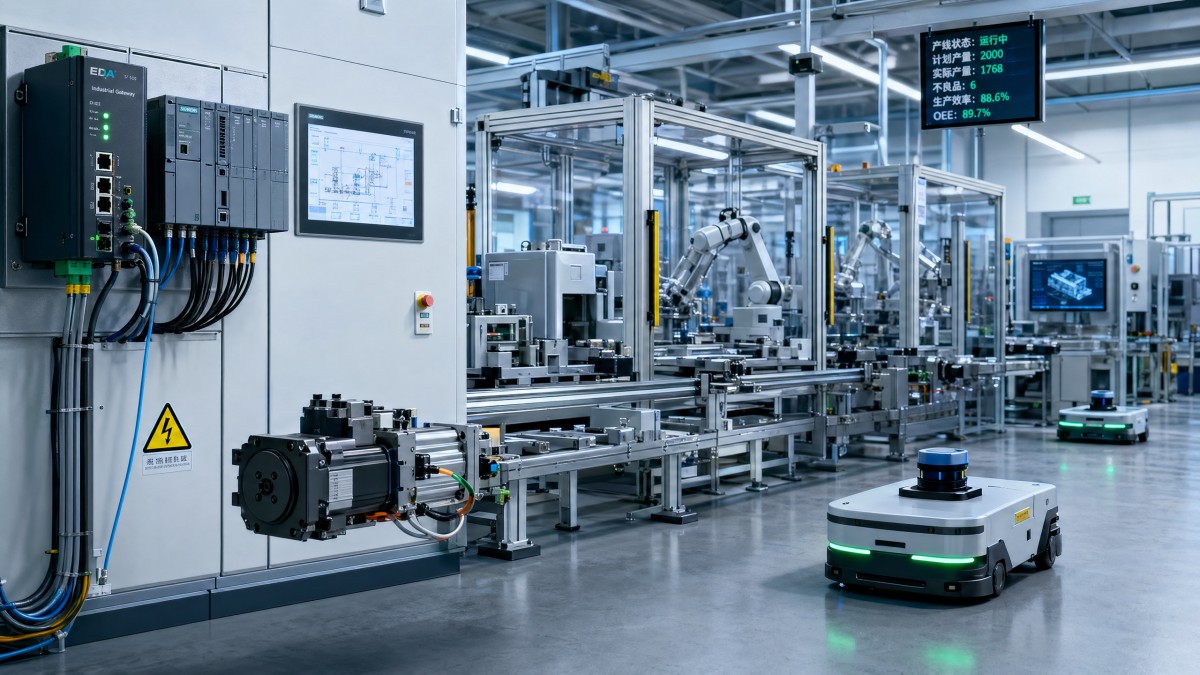
When people search for IIoT security protocols, they are usually not looking for abstract cybersecurity theory. They want to know which protocols, architectures, and deployment choices actually protect production uptime in real industrial environments.
That is especially true in plants using connected robotics, industrial gateways, machine vision, PLC-driven automation, AGV/AMR fleets, and predictive maintenance platforms. In these environments, a security weakness does not just create an IT incident. It can trigger:
- Line stoppages caused by device isolation or network disruption
- False sensor readings that damage quality control decisions
- Unsafe machine states in motion systems, conveyors, and autonomous mobile platforms
- Lost visibility into asset health, leading to maintenance delays
- Expensive restarts, supplier disputes, and missed delivery commitments
For business decision-makers, the key takeaway is this: IIoT security should be evaluated as an uptime control layer. For engineers and operators, it should be treated as a design requirement that preserves deterministic behavior, trustworthy telemetry, and safe remote access.
Which IIoT security protocols matter most in manufacturing environments?
Not every protocol contributes equally to operational resilience. In practice, the most important industrial IoT security protocols and mechanisms are the ones that secure data in transit, authenticate devices and users, limit lateral movement, and maintain system integrity without creating unacceptable latency or integration complexity.
The most relevant protocol families typically include:
- TLS/DTLS for encrypted communications between devices, gateways, cloud platforms, and applications
- MQTTS for secure publish/subscribe messaging in IIoT telemetry environments
- OPC UA with built-in security for industrial interoperability, authentication, encryption, and signed data exchange
- IPsec or VPN frameworks for protected remote access and site-to-site connectivity
- 802.1X and certificate-based authentication for network access control and trusted device onboarding
- Secure boot and code signing to protect firmware and edge device integrity
However, choosing protocols by checklist alone is a mistake. A protocol is valuable only if it supports the realities of industrial operations:
- Legacy equipment that cannot be replaced immediately
- Mixed OT/IT environments with different risk tolerances
- Real-time control constraints
- Distributed plants with remote diagnostics needs
- Vendors using inconsistent implementation standards
In other words, a protocol that looks strong on paper but causes integration fragility, packet overhead, or unmanageable certificate sprawl can still threaten uptime.
Why compliance-grade security often fails to protect uptime
Many organizations discover too late that “being compliant” is not the same as being operationally resilient. Compliance frameworks are useful, but they are often periodic, document-driven, and broad by design. Production risk is continuous, system-specific, and highly technical.
A compliance-led approach often fails in four ways:
- It prioritizes audit evidence over runtime behavior. A device may be inventoried and policy-covered, yet still expose insecure services or poor key management.
- It ignores engineering constraints. Security controls that are not tested against cycle time, machine communication load, or edge latency can degrade operations.
- It overfocuses on perimeter defense. Modern plants need internal segmentation and device trust because many threats originate from compromised credentials, vendor access paths, or unmanaged assets.
- It treats all assets equally. In reality, a gateway serving predictive maintenance analytics does not carry the same operational consequence as a motion-control node tied to a critical production cell.
For procurement and leadership teams, the implication is important: if a vendor markets a solution as “secure” but cannot explain how it protects system availability during certificate expiry, patch windows, gateway failure, or network partition events, the solution may support compliance without protecting production.
How to evaluate IIoT security protocols by operational impact, not marketing claims
A more useful evaluation model is to ask how a protocol or security architecture performs against uptime-critical scenarios. This is where decision quality improves.
Use these questions during technical reviews, supplier qualification, or platform selection:
- Does it preserve availability during faults? If authentication servers, cloud links, or gateways fail, do local devices continue safe operation?
- How does it affect latency? For machine vision triggers, AGV navigation, or servo coordination, what is the added communication overhead?
- How are certificates and keys managed at scale? Manual processes become major reliability risks in large fleets.
- Can it segment critical OT assets? Strong segmentation reduces the blast radius of incidents.
- Does it support secure remote maintenance without exposing persistent attack paths?
- Is there a tested patch and rollback process? Security updates that cannot be safely deployed in production create operational debt.
- How well does it interoperate with legacy PLCs, field devices, and industrial gateways?
This is also where TSV’s engineering-first mindset matters. Parameters are more useful than slogans. Buyers and technical teams should ask for measurable evidence such as:
- Protocol overhead under typical message loads
- Failover time during link interruption
- Authentication recovery behavior after certificate expiration
- MTBF impact on connected gateways or edge nodes
- Observed packet loss or jitter under encrypted traffic conditions
These metrics reveal whether the security layer supports operational continuity or simply adds complexity.
Where protocol choices affect real industrial systems
The value of industrial IoT security protocols becomes much clearer when tied to actual plant systems.
AGV/AMR fleets
Autonomous mobile robots depend on continuous communication, trusted navigation data, and safe fleet coordination. Weak security can allow spoofed commands, telemetry loss, or unauthorized access to fleet management interfaces. Here, secure messaging, device identity, segmented wireless infrastructure, and controlled remote access are essential to maintaining obstacle avoidance reliability and fleet uptime.
Servo motors and automation cells
In motion-intensive automation, security design must not interfere with deterministic control. Even when high-level telemetry is secured through encrypted channels, core control paths must be architected to preserve timing stability. The right approach often separates critical control traffic from higher-layer analytics traffic while still enforcing authentication and segmentation.
Solid-state LiDAR and machine vision
Systems that rely on high-integrity sensor output need protection not just from theft, but from silent data manipulation. If point cloud density data, calibration parameters, or vision inference streams are tampered with, the impact may be quality loss, false alarms, or unsafe navigation decisions. Signed firmware, trusted update mechanisms, and authenticated data exchange are especially important here.
Predictive maintenance platforms
Predictive maintenance depends on data continuity and accuracy. If vibration, temperature, current, or runtime data is interrupted or altered, maintenance models become less reliable. The result may be either unnecessary maintenance or missed failure warnings. For these use cases, secure telemetry transport, gateway hardening, and resilient edge buffering matter more than generic “cloud security” claims.
Best practices for building an uptime-first IIoT security architecture
If the goal is to protect production, not just pass assessments, the most effective strategy is layered and operationally aware.
Best practices include:
- Segment OT networks by function and criticality. Do not place all connected assets on flat networks.
- Use certificate-based device identity where feasible. Shared credentials are difficult to govern and easy to misuse.
- Adopt secure-by-design protocols such as OPC UA security profiles and MQTTS.
- Harden edge gateways. They are frequent trust anchors between plant assets and enterprise/cloud systems.
- Implement secure remote access with session control, logging, and time-bound privileges.
- Test failure modes before deployment. Validate what happens when keys expire, links fail, or devices reboot unexpectedly.
- Separate safety, control, and analytics paths where appropriate. Not every workload should share the same trust and timing model.
- Plan lifecycle operations. Security architecture is only as strong as the processes for onboarding, rotating credentials, patching, and decommissioning assets.
For plant teams, this usually means integrating cybersecurity decisions into controls engineering, maintenance planning, and supplier qualification—not leaving them solely to enterprise IT.
What procurement teams and executives should ask vendors before buying
For buyers and leadership, the main risk is purchasing a platform that looks modern but creates hidden operational fragility. The right vendor questions can prevent that.
Ask vendors to answer clearly:
- Which security protocols are implemented natively, and which are added through third-party layers?
- What happens to local operations if cloud connectivity is lost?
- How is certificate lifecycle management handled across large device fleets?
- Can the system continue safe function during authentication or update failures?
- What are the measured latency and performance impacts of encryption in production-like conditions?
- How are firmware integrity, rollback, and signed updates managed?
- What segmentation model is recommended for mixed OT and IT environments?
- Can the vendor provide evidence from industrial deployments, not just lab demonstrations?
These questions shift the conversation from generic cybersecurity posture to operational proof. That is the difference between buying software features and buying production resilience.
Conclusion: the right IIoT security protocols are the ones that keep systems running
Industrial organizations should stop evaluating IIoT security only through the lens of compliance, policy coverage, or vendor messaging. In connected manufacturing, the real standard is simpler and tougher: does the security architecture help maintain uptime, preserve trusted data, and keep operations safe under real-world stress?
The strongest IIoT security protocols are those implemented with engineering discipline—measured for latency, validated for failure behavior, integrated with segmentation, and managed across the full device lifecycle. For operators, that means fewer disruptions. For procurement, it means better vendor selection. For executives, it means lower downtime risk and stronger return on digital infrastructure investment.
In hard-tech environments, security that cannot protect continuity is incomplete. Uptime is the metric that matters.
Search News
Hot Articles
- Carbon Fiber StructuresHow to Specify Aerospace Carbon Fiber Assemblies for Lightweight, Load-Bearing PartsJul 11, 2026
- Machine VisionXiaomi, Alibaba DAMO Academy Drive Open-Source Robotics Model Ecosystem, Lowering Algorithm Development Barriers for Overseas SMEs Adopting Chinese Robotics SolutionsMar 30, 2026
- Cobots & ArmsShanxi 'AI+' Conference Showcases Embodied Intelligence with Multinational Buyer Engagement: Key Industry ImplicationsMar 30, 2026
Popular Tags
Recommended News
 Jul 11, 2026How to Specify Aerospace Carbon Fiber Assemblies for Lightweight, Load-Bearing PartsAerospace carbon fiber assemblies: learn how to specify laminate design, load data, joining methods, and inspection controls for lighter, reliable load-bearing aerospace parts.Elena Rostova (UAV Systems Researcher)
 Mar 30, 2026Xiaomi, Alibaba DAMO Academy Drive Open-Source Robotics Model Ecosystem, Lowering Algorithm Development Barriers for Overseas SMEs Adopting Chinese Robotics SolutionsXiaomi & Alibaba DAMO Academy's open-source robotics models lower algorithm barriers for global SMEs. Boost efficiency in manufacturing, logistics & smart retail with ROS 2 compatible solutions.TSV Data Lab
 Mar 30, 2026Shanxi 'AI+' Conference Showcases Embodied Intelligence with Multinational Buyer Engagement: Key Industry ImplicationsShanxi 'AI+' Conference highlights embodied intelligence with Tesla, Ubtech & Jiantao showcasing multimodal robotics. 40+ global buyers validated tech on-site, creating new B2B channels for industrial automation & AI solutions.Chen Wei (Automation Lead Engineer)
 Mar 30, 2026Zhongguancun Unveils 6G Integrated Sensing-Computing-Intelligence Platform to Empower Embodied Robots for Global Industrial ApplicationsZhongguancun's new 6G platform revolutionizes industrial robotics with <10ms latency, empowering global automotive, logistics & port automation. Discover how this tech boosts China's smart manufacturing exports.TSV Data Lab
 Mar 30, 2026Mech-Mind Tianjin Embodied Intelligence R&D and Production Base Goes Live, Cutting Delivery Time by 20%–30% for Global Customized AMR+Vision SolutionsMech-Mind's Tianjin AMR+Vision production base cuts delivery time by 20%-30% for欧美 & Latin American markets. Discover how this PLd-certified facility accelerates customized robotics solutions for smart manufacturing and logistics.Chen Wei (Automation Lead Engineer)
 Mar 30, 2026Boao Forum Reveals 'Co-evolution of Big and Small Brains' Trend in Humanoid Robots, China's Embodied Intelligence Accelerates Adaptation to Overseas Manufacturing Service ScenariosDiscover how China's humanoid robots, featuring 'Co-evolution of Big and Small Brains,' are revolutionizing global manufacturing. Learn about Embodied Tian Gong 3.0's ISO compliance and overseas deployment at Boao Forum 2026.Chen Wei (Automation Lead Engineer)
 Mar 30, 2026China Railway Industrial Secures Patent for Embodied Robotics in Material Handling, Boosting High-Precision Delivery Capabilities for Overseas Infrastructure and Manufacturing ProjectsChina Railway Industrial's new patent for embodied robotics in material handling boosts high-precision delivery for global infrastructure & manufacturing. Discover how this innovation enhances logistics accuracy in automotive, rail transit & EPC projects.Chen Wei (Automation Lead Engineer)
 Oct 25, 2026Hesai Leads Global ADAS Main Lidar Shipments in Yole’s 2026 ReportHesai led global ADAS main lidar shipments with a 43% share in 2025, according to Yole’s 2026 report. Explore what this ranking reveals about its automotive market position.TSV Data Lab
 Oct 25, 2026Choosing an Aerospace Materials Manufacturer: Quality and Traceability ChecksChoosing an aerospace materials manufacturer? Learn how to verify certifications, test reports, and lot traceability to qualify suppliers confidently and reduce costly sourcing risks.Dr. Marcus Vance
 Oct 24, 2026Guotai Haitong: Global Entry-Level 3D Printer Shipments Rose 39% in Q1 2026Entry-level 3D printer shipments rose 39% in Q1 2026, Guotai Haitong reports. Explore how AI, multicolor printing and print farms are shaping market growth.Dr. Marcus Vance
 Oct 24, 2026Choosing an Industrial Vision Inspection Supplier: Acceptance Tests That MatterChoose an industrial vision inspection supplier with confidence. Discover acceptance tests for defect detection, false rejects, production speed, and reliable part rejection before you buy.TSV Data Lab
 Oct 23, 2026US Navy Raises Gecko Robotics Contract Ceiling to $300M for Robotic Fleet MaintenanceUS Navy raises Gecko Robotics’ contract ceiling to $300M for Pacific Fleet robotic inspections. Explore potential opportunities for maintenance suppliers and key procurement considerations.Chen Wei (Automation Lead Engineer)
 Oct 23, 2026Choosing Industrial Sensing Systems for Global Plants: Protocol CompatibilityCompare industrial sensing systems international buyers can trust. Explore protocol compatibility, reduce integration risks, and select proven configurations for reliable global plant deployments.TSV Data Lab
 Oct 22, 2026KUKA Showcases Physical AI and iiQKA.AI Vision at NVIDIA GTC BerlinExplore KUKA’s Physical AI showcase at NVIDIA GTC Berlin and discover how iiQKA.AI Vision aims to simplify robotic vision integration and improve 2D and 3D scene recognition.TSV Data Lab
 Oct 22, 2026Robotic Machining of Advanced Composites: What Tolerances Are Achievable?Explore advanced materials machining robotics: discover what drives achievable composite tolerances and how to validate accuracy before investing in your next machining system.Dr. Marcus Vance
 Oct 21, 2026China’s Industrial Robot Exports Near RMB 10 Billion in First Nine Months of 2026China’s industrial robot exports neared RMB 10 billion in January–September 2026, with value rising faster than volume. Explore the data and what it could mean for suppliers.Chen Wei (Automation Lead Engineer)
 Oct 21, 2026Low-Latency Industrial Data Processing: Pricing and Key Cost DriversExplore industrial data latency price drivers, from edge hardware to integration and support. Learn how to compare quotes, verify performance, and avoid unnecessary costs.TSV Data Lab
 Oct 20, 2026KUKA Launches iiQKA.AI Vision to Simplify Industrial Image ProcessingKUKA iiQKA.AI Vision simplifies industrial image processing with controller-based 2D and 3D vision. Explore drag-and-drop setup for vision-guided automation.TSV Data Lab
 Oct 20, 2026Smart Industrial Edge Devices: Key Criteria for Legacy PLC IntegrationChoose smart industrial edge devices for legacy PLC integration. Discover key criteria for compatibility, data quality, security, and reliable collection without disrupting control.TSV Data Lab
 Oct 19, 2026Choosing a Radar Sensor by Application: Range, Resolution, and Field of ViewSimplify radar sensor application based product selection. Compare range, resolution, and field of view to avoid blind spots and choose with confidence. Explore the guide.TSV Data Lab
 Oct 18, 2026Comparing Material Options for Procurement: Specs, Costs, and Supply RisksExplore procurement oriented technical content on material options, specs, costs, and supply risks. Compare alternatives to cut hidden expenses and make confident sourcing decisions.Dr. Marcus Vance
 Oct 17, 20265-Axis CNC Positioning Accuracy: How to Interpret ISO 230-2 Test ResultsAssess 5 axis CNC machining positioning accuracy with ISO 230-2. Learn to interpret repeatability, reversal error, and test conditions to compare suppliers and make confident acceptance decisions.Dr. Marcus Vance
 Oct 16, 2026Choosing a Rugged Edge AI Box Supplier: Thermal Tests and Lifecycle SupportChoose a rugged edge AI box supplier with proven thermal performance and reliable lifecycle support. Discover the tests and commitments to verify before you buy.TSV Data Lab
 Oct 15, 2026R&D Cost Reduction Services: How to Evaluate Fees, Savings, and ROIEvaluate R&D cost reduction services with confidence. Compare fees, verify savings, and calculate ROI without compromising performance. Discover how to choose a provider that delivers real value.Chen Wei (Automation Lead Engineer)























