Choosing a High-Precision Servo Drive Supplier: Key Evaluation Criteria
Publication Date
author
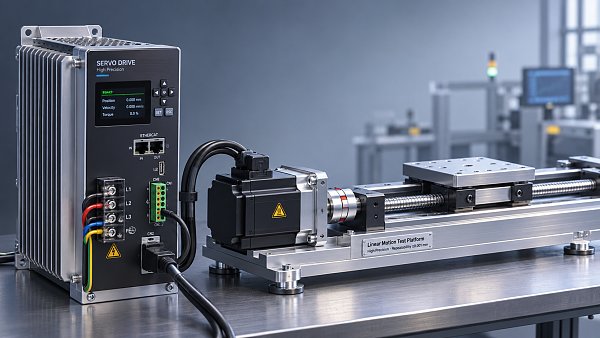
Choosing a high precision servo drive supplier requires more than comparing prices and headline specifications. Procurement teams must verify application performance, system compatibility, and lifecycle availability.
This guide outlines how to assess positioning performance, control interfaces, test documentation, quality assurance, lead times, and technical support to make a defensible sourcing decision.
Start With the Application, Not the Catalog
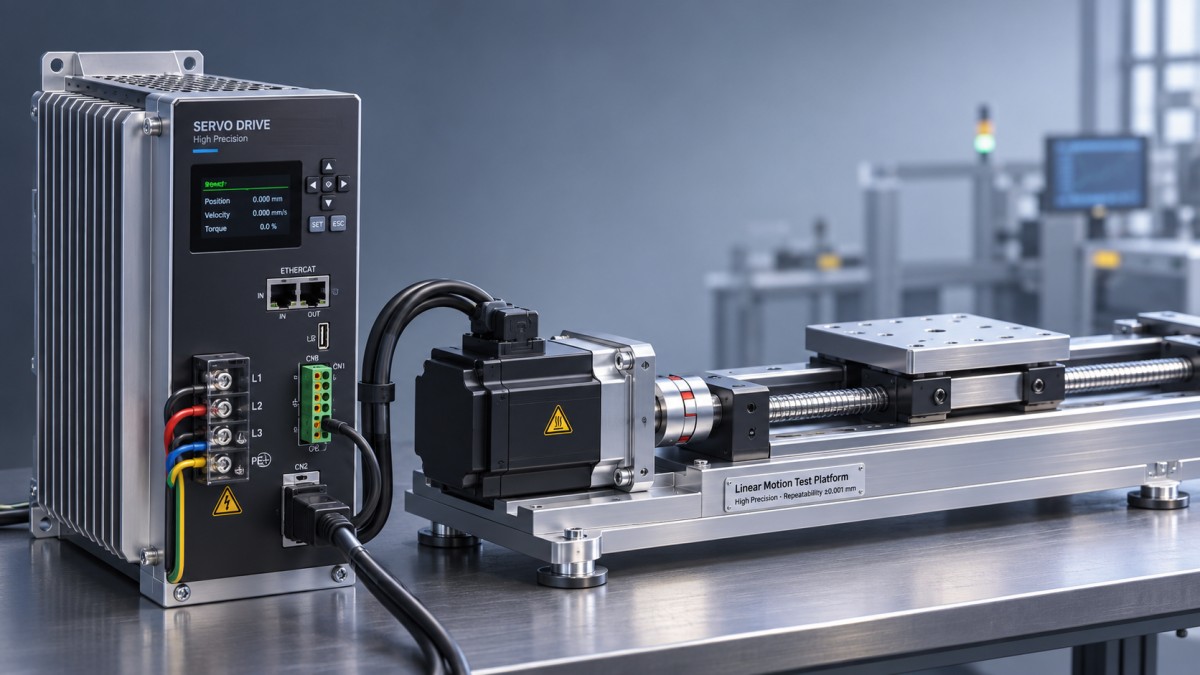
A servo drive regulates power to a motor using control commands and feedback. Its contribution to precision depends on the motor, encoder, mechanics, controller, and operating conditions.
Before contacting suppliers, agree internally on the motion task, production environment, required throughput, and acceptable error. Separate mandatory requirements from preferences that can be traded against cost.
For example, a semiconductor handling axis may prioritize settling time and low vibration, while a packaging machine may value synchronized motion, availability, and rapid replacement.
Ask engineering to provide a representative duty cycle, including load inertia, acceleration, speed, dwell time, and expected operating hours. These inputs make supplier quotations comparable.
Also define where performance must be measured: at the motor shaft, a gearbox output, or the machine tool. Precision at one point does not guarantee precision elsewhere.
Which Performance Specifications Actually Matter?
Request specifications tied to the complete application, not just the highest encoder resolution or fastest advertised control loop. Resolution describes measurement increments, not guaranteed positioning accuracy.
Distinguish accuracy from repeatability. Accuracy is closeness to a commanded position; repeatability describes the consistency of repeated moves under defined conditions. Both may matter, but for different reasons.
Following error, settling time, speed stability, and torque ripple can also affect product quality. Specify the operating point and measurement method whenever these characteristics become purchasing criteria.
For a positioning application, request measured error under representative load, speed, acceleration, and temperature conditions. Ask whether results include the motor, encoder, transmission, and mechanical axis.
A useful acceptance requirement might specify a maximum positioning error at the working point after a defined move, load, and settling interval. Engineering must set the numerical limits.
For continuous motion, evaluate speed variation and synchronization error over a relevant observation period. A drive that performs well at standstill may behave differently during production.
Check continuous and peak current ratings against the motor and duty cycle. Confirm peak duration, overload recovery, supply voltage, braking requirements, and thermal derating at installation conditions.
Compare feedback interfaces and supported encoder types, including resolution limits and diagnostic capabilities. Ask how feedback loss, signal noise, or a disconnected cable is detected and reported.
A supplier should explain its tuning process and provide evidence across the expected load range. A single favorable demonstration at one operating point is insufficient.
How Can You Verify Performance Claims?
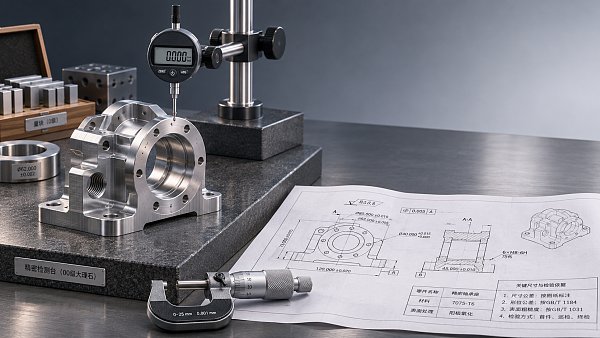
Ask each shortlisted supplier for a test report that identifies the exact drive, firmware, motor, feedback device, mechanical setup, instruments, calibration status, and environmental conditions.
The report should state the commanded motion, load, sampling method, number of runs, measurement locations, and results. Request raw data when the purchasing decision justifies deeper review.
Check whether reported values are typical, guaranteed, or observed in a single test. A specification without defined conditions cannot support a meaningful comparison or acceptance decision.
For high-risk purchases, arrange a witnessed test or independent evaluation using your representative motor and load. Record pass criteria before testing to avoid disputes afterward.
Include cold starts, warm operation, repeated cycles, and realistic disturbances where relevant. Test outcomes should show both performance and any faults, resets, or manual interventions.
Factory acceptance testing can verify agreed functions before shipment; site acceptance testing confirms performance after installation. Define responsibilities and remedies for failures in the contract.
Do not assume a laboratory result guarantees installed-machine performance. Cable routing, electrical noise, structural compliance, tuning, and thermal conditions can all change the outcome.
Will the Drive Integrate With Existing Equipment?
Confirm compatibility with the selected motor, encoder, controller, power supply, and braking system. Request a documented compatibility assessment rather than relying solely on a sales claim.
For networked machines, verify the exact industrial Ethernet or fieldbus protocol, supported profile, network topology, and controller version. A shared protocol name alone does not guarantee interoperability.
Ask about cycle times, synchronization behavior, and the tested controller combinations. Have the automation team validate these details against machine timing and architecture requirements.
Review commissioning software, operating system support, licensing, backups, and access rights. Confirm whether configuration files can be exported and restored without depending on one engineer.
For safety functions, identify the required risk reduction with the machine safety team. Verify the drive's applicable certifications, safety manual, and integration constraints for the intended function.
Safe torque off, for example, prevents torque generation when correctly implemented; it does not necessarily stop motion immediately or provide electrical isolation for maintenance.
Where network connectivity introduces cybersecurity risk, review account controls, update procedures, remote access, and vulnerability reporting. Assign responsibility for maintaining the installed system over time.
What Evidence Shows Consistent Manufacturing Quality?
Evaluate the supplier's quality management system alongside evidence of process control. An ISO 9001 certificate can support assessment, but it does not prove application-specific performance.
Confirm the certificate's scope, issuing body, validity, and covered manufacturing location. Request details of incoming inspection, production testing, calibration controls, and nonconformance handling.
Ask which tests are performed on every drive and which are sampling or design qualification tests. Understand the limits applied and whether individual results are retained.
Traceability should connect each unit's serial number to its production records, hardware revision, and relevant firmware. Clarify how long those records remain accessible.
For critical equipment, review component obsolescence controls and the process for approving substitutions. A component change can affect availability, electromagnetic behavior, or qualification status.
Require advance notification of material design, manufacturing location, component, or firmware changes. Define which changes need customer approval or requalification before they reach production.
Be cautious with reliability claims that cite mean time between failures without operating assumptions. Request the calculation or test method, operating profile, and included failure modes.
Ask for field failure data relevant to comparable applications where available, including sample size and observation period. Confidentiality may limit detail, so document any evidence gaps.
Can the Supplier Support Your Production Schedule?
Compare confirmed lead times for production units, evaluation samples, spares, and repairs. Ask what capacity, component availability, and order volume support each commitment.
Identify single-source semiconductors, proprietary feedback components, and manufacturing sites that could disrupt supply. A supplier should explain mitigation plans without promising immunity from shortages.
For equipment with a long service life, request a written lifecycle policy covering product support, end-of-sale notice, last-time buys, repairs, and replacement options.
Agree on forecast updates, minimum order quantities, allocation rules, and escalation contacts. Where downtime is costly, negotiate buffer stock or reserve critical spares internally.
Check whether replacement units require the original firmware or configuration. Confirm that backups, licenses, and commissioning procedures remain accessible when personnel or suppliers change.
A second source can reduce risk, but an alternative drive is not automatically interchangeable. Budget for mechanical, electrical, software, safety, and performance requalification before relying on substitution.
How Should Procurement Compare Total Cost?
The lowest quoted unit price may not deliver the lowest ownership cost. Compare suppliers using the expected purchase volume and a consistent evaluation period.
Include engineering integration, motor compatibility, software licenses, commissioning, training, freight, duties, spares, repair turnaround, and planned maintenance. State assumptions so stakeholders can challenge them.
Estimate downtime exposure using your own production data. Compare the likely impact of replacement availability and support response, while acknowledging uncertainty in failure rates.
For example, a higher-priced drive may justify its premium if it avoids controller redevelopment or reduces stocked variants. Quantify those savings before treating them as decisive.
Examine warranty duration, exclusions, return shipping, diagnostic charges, and remedies. A longer warranty has limited value if replacement takes weeks or excludes common operating conditions.
Ask whether technical support is included, when it is available, and how response differs from resolution. Define escalation times for production-stopping incidents where contractually appropriate.
Compare payment terms and price adjustment mechanisms alongside technical risk. A short initial discount should not conceal uncapped increases or costly proprietary replacement parts.
What Should Your Supplier Scorecard Include?
Use a weighted scorecard after screening mandatory requirements. A supplier that fails a critical electrical, safety, or performance threshold should not pass through price weighting alone.
One starting allocation is 30% for demonstrated application performance, 20% for integration, 20% for quality and traceability, 15% for supply continuity, and 15% for lifecycle cost.
These weights are illustrative, not universal. Increase supply continuity for high-volume production, or emphasize performance and verification when process tolerances are especially demanding.
Score each category against defined evidence: measured results, validated compatibility, audited processes, contractual commitments, and itemized costs. Record assumptions and unresolved questions beside each score.
Have engineering, quality, procurement, and operations review the outcome together. Document the reason for any override, particularly when a lower-scoring supplier is selected.
Before placing a production order, run a pilot or qualification build with agreed acceptance criteria. Capture commissioning time, defects, operator feedback, and support responsiveness.
Questions to Include in Your Supplier Request
Send every candidate the same application brief and response template. Comparable inputs reduce interpretation differences and make omissions easier to identify during evaluation.
- Which drive, motor, feedback device, and firmware combination do you recommend, and what operating margins does it provide?
- What measured positioning, speed, or synchronization results are available under conditions comparable to our application?
- Which controller, network, safety functions, and software versions have been tested together?
- What production tests, serial-number records, and change notifications are included?
- What are the committed lead times, repair arrangements, spare parts provisions, and lifecycle support terms?
- What costs apply to software, commissioning, training, technical support, and replacement units?
Request supporting documents for consequential answers, and mark unverified statements as open items. Resolve critical gaps before issuing a purchase order or accepting contractual performance claims.
Make the Final Decision on Evidence
The right high precision servo drive supplier can demonstrate performance in your application, integrate with your equipment, and maintain traceable quality throughout the supply relationship.
Use documented tests, a cross-functional scorecard, and lifecycle cost estimates to compare credible options. Make commitments to acceptance, change control, delivery, and support explicit in the contract.
Search News
Hot Articles
- Carbon Fiber StructuresHow to Specify Aerospace Carbon Fiber Assemblies for Lightweight, Load-Bearing PartsJul 11, 2026
- Machine VisionXiaomi, Alibaba DAMO Academy Drive Open-Source Robotics Model Ecosystem, Lowering Algorithm Development Barriers for Overseas SMEs Adopting Chinese Robotics SolutionsMar 30, 2026
- Cobots & ArmsShanxi 'AI+' Conference Showcases Embodied Intelligence with Multinational Buyer Engagement: Key Industry ImplicationsMar 30, 2026
Popular Tags
Recommended News
 Jul 11, 2026How to Specify Aerospace Carbon Fiber Assemblies for Lightweight, Load-Bearing PartsAerospace carbon fiber assemblies: learn how to specify laminate design, load data, joining methods, and inspection controls for lighter, reliable load-bearing aerospace parts.Elena Rostova (UAV Systems Researcher)
 Mar 30, 2026Xiaomi, Alibaba DAMO Academy Drive Open-Source Robotics Model Ecosystem, Lowering Algorithm Development Barriers for Overseas SMEs Adopting Chinese Robotics SolutionsXiaomi & Alibaba DAMO Academy's open-source robotics models lower algorithm barriers for global SMEs. Boost efficiency in manufacturing, logistics & smart retail with ROS 2 compatible solutions.TSV Data Lab
 Mar 30, 2026Shanxi 'AI+' Conference Showcases Embodied Intelligence with Multinational Buyer Engagement: Key Industry ImplicationsShanxi 'AI+' Conference highlights embodied intelligence with Tesla, Ubtech & Jiantao showcasing multimodal robotics. 40+ global buyers validated tech on-site, creating new B2B channels for industrial automation & AI solutions.Chen Wei (Automation Lead Engineer)
 Mar 30, 2026Zhongguancun Unveils 6G Integrated Sensing-Computing-Intelligence Platform to Empower Embodied Robots for Global Industrial ApplicationsZhongguancun's new 6G platform revolutionizes industrial robotics with <10ms latency, empowering global automotive, logistics & port automation. Discover how this tech boosts China's smart manufacturing exports.TSV Data Lab
 Mar 30, 2026Mech-Mind Tianjin Embodied Intelligence R&D and Production Base Goes Live, Cutting Delivery Time by 20%–30% for Global Customized AMR+Vision SolutionsMech-Mind's Tianjin AMR+Vision production base cuts delivery time by 20%-30% for欧美 & Latin American markets. Discover how this PLd-certified facility accelerates customized robotics solutions for smart manufacturing and logistics.Chen Wei (Automation Lead Engineer)
 Mar 30, 2026Boao Forum Reveals 'Co-evolution of Big and Small Brains' Trend in Humanoid Robots, China's Embodied Intelligence Accelerates Adaptation to Overseas Manufacturing Service ScenariosDiscover how China's humanoid robots, featuring 'Co-evolution of Big and Small Brains,' are revolutionizing global manufacturing. Learn about Embodied Tian Gong 3.0's ISO compliance and overseas deployment at Boao Forum 2026.Chen Wei (Automation Lead Engineer)
 Mar 30, 2026China Railway Industrial Secures Patent for Embodied Robotics in Material Handling, Boosting High-Precision Delivery Capabilities for Overseas Infrastructure and Manufacturing ProjectsChina Railway Industrial's new patent for embodied robotics in material handling boosts high-precision delivery for global infrastructure & manufacturing. Discover how this innovation enhances logistics accuracy in automotive, rail transit & EPC projects.Chen Wei (Automation Lead Engineer)
 Nov 06, 2026Choosing a High-Precision Servo Drive Supplier: Key Evaluation CriteriaChoose a high precision servo drive supplier with confidence. Compare performance, compatibility, quality, lead times, and lifecycle costs.Chen Wei (Automation Lead Engineer)
 Nov 05, 2026Northwestern University Develops Faster 3D Printing Method for Functional MaterialsNorthwestern University's faster 3D printing method combines paste-based inks and patterned light to create complex functional materials with precision. Explore how it works.Dr. Marcus Vance
 Nov 05, 2026CAD/CAM Benchmarking Metrics: How to Compare Software PerformanceExplore CAD/CAM benchmarking metrics to compare speed, accuracy, reliability, and costs. Learn how to run fair tests and choose the right software.Victor Lin (Chief Software Architect)
 Nov 04, 2026Yole: Hesai Holds 62% of Global Robotaxi LiDAR MarketHesai held 62% of the global Robotaxi LiDAR market in 2025, according to Yole. Explore what this could mean for suppliers and procurement.TSV Data Lab
 Nov 04, 2026Choosing Sensors and Edge AI Devices for Industrial MonitoringChoose sensors and edge AI devices with confidence. Explore sensor selection, real-world performance testing, security, and lifecycle factors for industrial monitoring.TSV Data Lab
 Nov 03, 2026Research and Markets Forecasts $29.5 Billion AI Machine Vision Market by 2036AI machine vision could reach $29.5 billion by 2036. Explore how 3D vision, deep learning and smart factory investment are driving the market forecast.TSV Data Lab
 Nov 03, 2026Choosing a Technical Due Diligence Consultant: What to Look ForChoose a technical due diligence consultant with confidence. Learn how to assess expertise, evidence, independence, and proposals before you commit.Chen Wei (Automation Lead Engineer)
 Nov 02, 2026Two Additive Manufacturing National Standards Take Effect November 1Additive manufacturing national standards take effect November 1, 2026. Discover what they mean for harmful substance testing and data exchange.Dr. Marcus Vance
 Nov 02, 2026Robotic Automation for Flexible Production: Managing Product ChangeoversExplore robotics automation flexible production strategies to streamline product changeovers, reduce downtime, and improve safety and quality.Victor Lin (Chief Software Architect)
 Nov 01, 2026Industrial Pressure Transmitter Bulk Pricing: Quantity Discounts and Cost FactorsCompare industrial pressure transmitter bulk price options, quantity discounts, specifications, and landed costs to source compliant devices with confidence.Victor Lin (Chief Software Architect)
 Oct 31, 2026A3: North American Robot Orders Rose 24.8% Year on Year in Q3 2026North American robot orders rose 24.8% year on year in Q3 2026, according to A3. Explore the demand trends and what buyers should check before ordering.Chen Wei (Automation Lead Engineer)
 Oct 31, 2026Servo Motor MTBF for Robotics: How to Interpret Reliability RatingsServo motor MTBF for robotics: learn how to interpret reliability ratings, compare supplier evidence, and choose motors suited to your robot’s duty cycle.Chen Wei (Automation Lead Engineer)
 Oct 30, 2026Choosing a Procurement Content Provider: Data Quality and CoverageChoose a procurement content provider with confidence. Learn how to assess data quality, supplier coverage, traceability, and verification before you buy.Chen Wei (Automation Lead Engineer)
 Oct 29, 2026Shanghai Plan Targets 8,000 Humanoid Robots in Factories by 2028Shanghai's humanoid robot plan targets 8,000 factory deployments by 2028. Explore what it means for smart manufacturing and robot suppliers.Chen Wei (Automation Lead Engineer)
 Oct 29, 2026Aerospace Aluminum Alloy Strength: 2024-T3 vs. 7075-T6 ComparedCompare aerospace aluminum alloy strength in 2024-T3 vs. 7075-T6. Explore fatigue, corrosion, and weight trade-offs to choose the right alloy for your design.Dr. Marcus Vance
 Oct 28, 2026IDC: Global Quadruped Robot Shipments Rise 92.5% in H1 2026 as Volume and Value DivergeGlobal quadruped robot shipments rose 92.5% in H1 2026, according to IDC. Explore what diverging volume and value trends mean for industrial buyers and manufacturers.Chen Wei (Automation Lead Engineer)
 Oct 28, 2026Interpreting Industrial IoT Latency Data for Monitoring and Real-Time ControlInterpret industrial category latency data to assess jitter, deadline misses, and real-time readiness. Learn how to benchmark IIoT systems and choose monitoring and control solutions.TSV Data Lab