What to Compare When Shortlisting a High Precision Servo Drive Supplier
Publication Date
author
When evaluating a high precision servo drive supplier, business assessment teams need more than polished claims—they need verifiable engineering data, delivery consistency, and long-term support capability. In high-stakes automation projects, the right supplier can directly affect motion accuracy, system stability, and procurement risk. This guide outlines the most critical factors to compare before you move from shortlist to final supplier decision.
Understanding what a high precision servo drive supplier actually provides
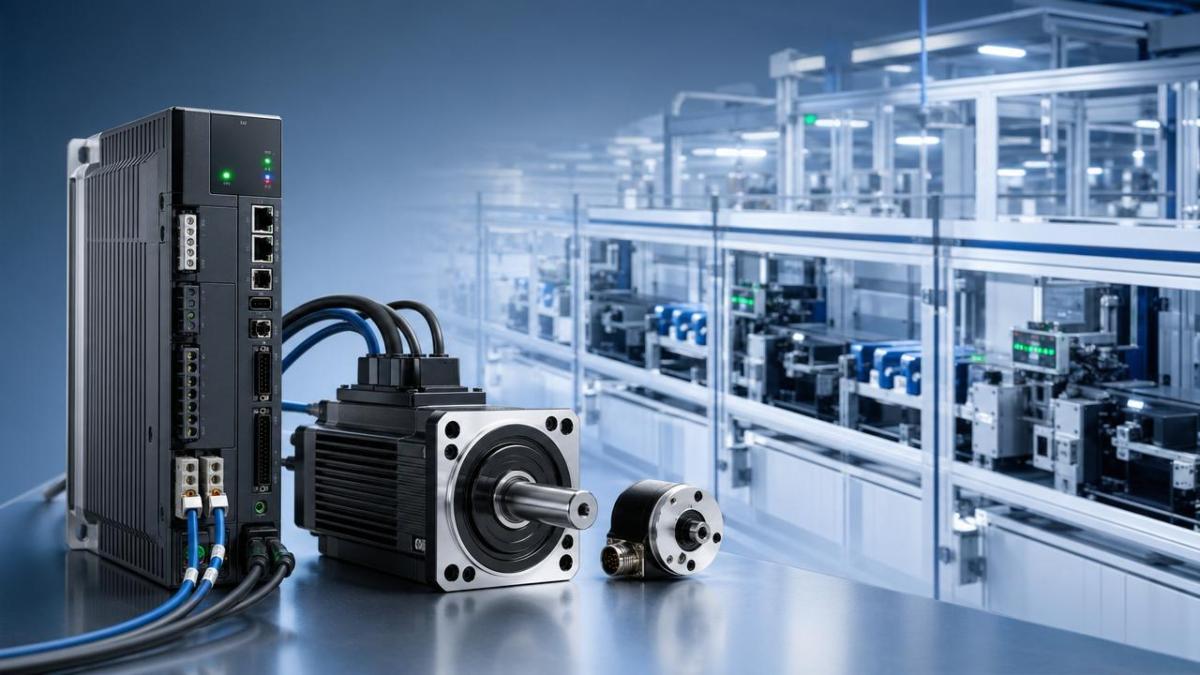
A high precision servo drive supplier does more than ship a motion-control component. In practical industrial settings, the supplier becomes part of the performance chain linking controller logic, motor behavior, encoder feedback, machine mechanics, and field support. For business assessment teams, that means supplier evaluation should start with a clear understanding of scope: product quality matters, but so do integration competence, documentation standards, firmware stability, and the ability to support commissioning at scale.
Servo drives are central to applications where repeatability, response speed, torque regulation, and coordinated motion must remain predictable under variable loads. In sectors ranging from factory automation and electronics assembly to aerospace tooling and precision machining, a poor supplier choice can create hidden costs that only emerge after installation: tuning delays, electromagnetic interference issues, field failures, spare-part shortages, or software compatibility problems.
This is why a serious shortlist process should compare suppliers at both the product and system levels. TechStat Vanguard’s data-first perspective is especially relevant here: decision-makers should filter out vague superlatives and focus on measurable engineering truth. If a high precision servo drive supplier cannot translate claims into test data, tolerance limits, failure history, and traceable quality systems, the risk profile rises immediately.
Core elements behind supplier capability
- Drive control performance: response bandwidth, current loop stability, positioning accuracy, and synchronization behavior
- System compatibility: support for motors, encoders, PLCs, industrial networks, and safety architectures
- Engineering support: parameter setup, tuning guidance, troubleshooting depth, and commissioning resources
- Operational resilience: quality control, lifecycle planning, spare availability, and change management
Why definition matters for commercial assessment
If assessment teams define the supplier too narrowly as a parts vendor, they may underweight software tools, application engineering, and post-sale support. That often leads to an incomplete scorecard and a misleading price comparison. A better approach is to evaluate the high precision servo drive supplier as a technical partner whose output influences uptime, scrap rates, commissioning speed, and future expansion options.
This broader definition is particularly useful in cross-border procurement, where information asymmetry can be high. A well-qualified supplier should provide not only a bill of materials, but also a transparent picture of validation methods, component sourcing discipline, and support response structure across time zones and project phases.
Why the market cares more about data-driven comparison now
The global manufacturing environment has made motion-control procurement more demanding than before. Advanced automation systems now integrate edge computing, machine vision, robotics, and higher-speed production lines, which reduces tolerance for instability in servo control. As a result, choosing a high precision servo drive supplier has become a strategic issue rather than a routine sourcing task.
Another reason is the growing mismatch between marketing language and engineering reality. Many vendors promote “high accuracy” or “industrial-grade reliability” without disclosing test conditions, load assumptions, thermal behavior, or long-run failure data. For business evaluation teams, this makes direct comparison difficult unless the shortlist process is built around verifiable metrics and evidence-backed documentation.
The strongest suppliers stand out by making performance measurable. They can explain under what inertia ratios the drive maintains stability, how encoder feedback is filtered, what protection strategies exist for overcurrent and overheating, and how firmware revisions are validated before release. In other words, they reduce uncertainty instead of increasing it.
For assessment professionals, this market context changes the objective. The goal is not just to find a vendor with acceptable pricing; it is to identify a high precision servo drive supplier whose engineering discipline aligns with the risk tolerance of the project.
The most important factors to compare on a shortlist
A structured shortlist should compare suppliers across technical, operational, and commercial dimensions. Looking at only one layer—such as unit price or claimed accuracy—often creates blind spots. The best comparison model tests whether the supplier can perform consistently from lab validation to serial deployment.
For a high precision servo drive supplier, technical claims must be interpreted in context. A quoted positioning result is far less useful if there is no test methodology behind it. Likewise, a low failure rate means little if the supplier cannot explain field conditions, return analysis methods, or corrective-action closure rates.
Below are the dimensions that usually produce the clearest differentiation during supplier shortlisting.
1. Motion performance and control precision
Start with measurable control capability. Compare current loop, speed loop, and position loop behavior; encoder compatibility; response speed; overshoot control; and repeatability under different loads. Ask suppliers for performance curves, application notes, and test configurations. A credible high precision servo drive supplier should be comfortable discussing inertia matching, resonance suppression, and dynamic tuning limits in detail.
It is also useful to verify how the drive performs in real-world disturbances. Can it maintain stability under temperature shifts, voltage fluctuation, or rapid acceleration cycles? Can it hold torque smoothly at low speed in applications such as indexing, dispensing, or inspection stages? These are practical indicators that often matter more than headline specifications.
2. Product consistency and manufacturing quality
Consistency separates a promising sample from a dependable supplier. Review process traceability, burn-in routines, calibration records, PCB quality controls, and supplier management for key components. If available, ask for lot-level yield data, field return categories, and corrective-action examples. These inputs reveal whether the supplier operates with discipline or relies on best-case marketing narratives.
A strong high precision servo drive supplier should also manage engineering changes transparently. Sudden revisions to firmware, components, or interfaces can disrupt machine validation, especially in regulated or export-oriented manufacturing environments. Formal change notification and backward compatibility are major advantages.
3. Integration fit and software ecosystem
Drives do not operate in isolation. Review communication protocols, motion libraries, tuning software usability, parameter backup functions, and compatibility with your preferred PLC or IPC platform. If the drive will be used in multi-axis systems, compare synchronization quality, deterministic communication, and diagnostic visibility across the network.
This area often decides total project cost. A supplier with mature software tools and clean documentation can save significant engineering hours. By contrast, a lower-priced drive with weak integration support may increase commissioning time and post-installation troubleshooting.
4. Delivery reliability and lifecycle support
Supply continuity matters because servo drives are not always easy to substitute once a machine design is frozen. Compare lead times, regional stock policies, spare-part availability, repair turnaround, and product lifecycle roadmaps. Ask how long the supplier commits to support after model discontinuation and whether migration guidance is available.
For business assessment teams, this is where commercial resilience becomes visible. A capable high precision servo drive supplier should show evidence of planning for continuity rather than assuming uninterrupted market conditions.
How comparison priorities change by application and buyer profile
Not every project weights the same criteria equally. The right high precision servo drive supplier for a compact packaging machine may not be the best fit for a multi-axis semiconductor stage or aerospace fixture. The assessment framework should therefore reflect the operational consequences of failure, drift, or downtime in each application.
Business evaluators should work with engineering teams to define the application class before scoring suppliers. This avoids generic comparisons and helps distinguish “nice-to-have” features from critical requirements. It also creates a better basis for cost-benefit analysis, because not all high-performance features create equal value in every use case.
A practical way to do this is to map supplier capability against the dominant risk of the application.
Application-oriented comparison view
Different stakeholders, different signals
Procurement teams often prioritize continuity, cost structure, and commercial terms. Engineers focus on control performance, integration depth, and fault diagnostics. Executives care about project risk, scalability, and supplier credibility. The best shortlist process captures all three views in one framework so that the final decision reflects enterprise value rather than departmental bias.
This is one reason a high precision servo drive supplier should be evaluated through cross-functional workshops, sample reviews, and technical-commercial scorecards rather than a simple quotation comparison.
Practical due diligence steps before final supplier selection
Once a shortlist is in place, the final stage should shift from broad comparison to evidence validation. At this point, business assessment teams should test whether the supplier’s claims survive deeper scrutiny. Good due diligence reduces downstream surprises and gives internal stakeholders a defensible basis for approval.
A useful method is to request structured proof across technical, quality, and support areas. Instead of asking, “Are you reliable?” ask for service response metrics, failure analysis examples, qualification procedures, and references from similar duty cycles or industries. Precision procurement improves when questions are specific enough to expose gaps.
If possible, combine document review with a pilot validation plan. Even a limited evaluation can reveal how responsive and transparent a high precision servo drive supplier will be during real project pressure.
Recommended due diligence checklist
- Request application-matched performance data, not generic brochures.
- Review quality certifications together with actual process evidence and traceability practice.
- Validate firmware and software maintenance policy, including upgrade and rollback procedures.
- Confirm lead times, buffer inventory strategy, and end-of-life communication rules.
- Test technical support responsiveness through real pre-sales engineering questions.
- Check whether documentation is clear enough for your internal engineering and maintenance teams.
What strong suppliers usually show
The strongest candidates are usually transparent about limits as well as strengths. They disclose operating boundaries, explain when an application may need customization, and document lessons from previous deployments. That kind of honesty is often a better predictor of partnership quality than aggressively positive marketing language.
In contrast, if a high precision servo drive supplier avoids detailed questions, provides inconsistent technical files, or struggles to explain validation methodology, assessment teams should treat that as a warning sign even if pricing appears attractive.
Building a stronger final decision with long-term value in mind
The final supplier decision should balance present needs with future operating reality. A high precision servo drive supplier may look competitive on initial purchase cost, yet become expensive through downtime, tuning complexity, or poor lifecycle support. Conversely, a supplier with better documentation, cleaner integration, and stronger field support may create lower total cost of ownership over several years.
For business assessment personnel, the most reliable path is to rank suppliers using weighted criteria tied to the actual application. Include technical performance, quality discipline, integration fit, support readiness, and supply continuity. Then review the top candidates through a risk lens: which supplier reduces uncertainty most effectively while still meeting commercial targets?
In today’s industrial environment, selecting a high precision servo drive supplier is not about choosing the loudest brand promise. It is about identifying who can prove capability with data, maintain consistency under scale, and support your automation roadmap after the purchase order is issued. When the comparison framework is evidence-based, the shortlist becomes more than a vendor list—it becomes a strategic filter for engineering truth, operational stability, and long-term procurement confidence.
Search News
Hot Articles
- Carbon Fiber StructuresHow to Specify Aerospace Carbon Fiber Assemblies for Lightweight, Load-Bearing PartsJul 11, 2026
- Machine VisionXiaomi, Alibaba DAMO Academy Drive Open-Source Robotics Model Ecosystem, Lowering Algorithm Development Barriers for Overseas SMEs Adopting Chinese Robotics SolutionsMar 30, 2026
- Cobots & ArmsShanxi 'AI+' Conference Showcases Embodied Intelligence with Multinational Buyer Engagement: Key Industry ImplicationsMar 30, 2026
Popular Tags
Recommended News
 Jul 11, 2026How to Specify Aerospace Carbon Fiber Assemblies for Lightweight, Load-Bearing PartsAerospace carbon fiber assemblies: learn how to specify laminate design, load data, joining methods, and inspection controls for lighter, reliable load-bearing aerospace parts.Elena Rostova (UAV Systems Researcher)
 Mar 30, 2026Xiaomi, Alibaba DAMO Academy Drive Open-Source Robotics Model Ecosystem, Lowering Algorithm Development Barriers for Overseas SMEs Adopting Chinese Robotics SolutionsXiaomi & Alibaba DAMO Academy's open-source robotics models lower algorithm barriers for global SMEs. Boost efficiency in manufacturing, logistics & smart retail with ROS 2 compatible solutions.TSV Data Lab
 Mar 30, 2026Shanxi 'AI+' Conference Showcases Embodied Intelligence with Multinational Buyer Engagement: Key Industry ImplicationsShanxi 'AI+' Conference highlights embodied intelligence with Tesla, Ubtech & Jiantao showcasing multimodal robotics. 40+ global buyers validated tech on-site, creating new B2B channels for industrial automation & AI solutions.Chen Wei (Automation Lead Engineer)
 Mar 30, 2026Zhongguancun Unveils 6G Integrated Sensing-Computing-Intelligence Platform to Empower Embodied Robots for Global Industrial ApplicationsZhongguancun's new 6G platform revolutionizes industrial robotics with <10ms latency, empowering global automotive, logistics & port automation. Discover how this tech boosts China's smart manufacturing exports.TSV Data Lab
 Mar 30, 2026Mech-Mind Tianjin Embodied Intelligence R&D and Production Base Goes Live, Cutting Delivery Time by 20%–30% for Global Customized AMR+Vision SolutionsMech-Mind's Tianjin AMR+Vision production base cuts delivery time by 20%-30% for欧美 & Latin American markets. Discover how this PLd-certified facility accelerates customized robotics solutions for smart manufacturing and logistics.Chen Wei (Automation Lead Engineer)
 Mar 30, 2026Boao Forum Reveals 'Co-evolution of Big and Small Brains' Trend in Humanoid Robots, China's Embodied Intelligence Accelerates Adaptation to Overseas Manufacturing Service ScenariosDiscover how China's humanoid robots, featuring 'Co-evolution of Big and Small Brains,' are revolutionizing global manufacturing. Learn about Embodied Tian Gong 3.0's ISO compliance and overseas deployment at Boao Forum 2026.Chen Wei (Automation Lead Engineer)
 Mar 30, 2026China Railway Industrial Secures Patent for Embodied Robotics in Material Handling, Boosting High-Precision Delivery Capabilities for Overseas Infrastructure and Manufacturing ProjectsChina Railway Industrial's new patent for embodied robotics in material handling boosts high-precision delivery for global infrastructure & manufacturing. Discover how this innovation enhances logistics accuracy in automotive, rail transit & EPC projects.Chen Wei (Automation Lead Engineer)
 Oct 29, 2026Aerospace Aluminum Alloy Strength: 2024-T3 vs. 7075-T6 ComparedCompare aerospace aluminum alloy strength in 2024-T3 vs. 7075-T6. Explore fatigue, corrosion, and weight trade-offs to choose the right alloy for your design.Dr. Marcus Vance
 Oct 28, 2026IDC: Global Quadruped Robot Shipments Rise 92.5% in H1 2026 as Volume and Value DivergeGlobal quadruped robot shipments rose 92.5% in H1 2026, according to IDC. Explore what diverging volume and value trends mean for industrial buyers and manufacturers.Chen Wei (Automation Lead Engineer)
 Oct 28, 2026Interpreting Industrial IoT Latency Data for Monitoring and Real-Time ControlInterpret industrial category latency data to assess jitter, deadline misses, and real-time readiness. Learn how to benchmark IIoT systems and choose monitoring and control solutions.TSV Data Lab
 Oct 27, 2026GXO and Agility Robotics Expand Partnership to Accelerate US Humanoid Robot DeploymentGXO and Agility Robotics plan to expand US humanoid robot deployment with Digit 4 in early 2027. Explore warehouse automation plans, service terms and future Digit 5 upgrades.Chen Wei (Automation Lead Engineer)
 Oct 27, 2026Robotic Automation Costs: Budgeting for Equipment, Integration, and MaintenancePlan your robotics automation cost with confidence. Explore equipment, integration, and maintenance expenses, compare quotes, and build a realistic budget for better ROI.Chen Wei (Automation Lead Engineer)
 Oct 26, 2026AMAXiMAL Releases Open-Source TopMod 3D v3 With Claude AIExplore AMAXiMAL’s free, open-source TopMod 3D v3 with Claude AI assistance, topology-based modeling and plywood fabrication tools that connect complex designs to physical builds.Dr. Marcus Vance
 Oct 26, 2026Choosing a SCADA System Integrator Company: PLC Compatibility and Long-Term SupportChoose a scada system integrator company with proven PLC compatibility and reliable long-term support. Discover what to test, compare, and require before investing.Victor Lin (Chief Software Architect)
 Oct 25, 2026Hesai Leads Global ADAS Main Lidar Shipments in Yole’s 2026 ReportHesai led global ADAS main lidar shipments with a 43% share in 2025, according to Yole’s 2026 report. Explore what this ranking reveals about its automotive market position.TSV Data Lab
 Oct 25, 2026Choosing an Aerospace Materials Manufacturer: Quality and Traceability ChecksChoosing an aerospace materials manufacturer? Learn how to verify certifications, test reports, and lot traceability to qualify suppliers confidently and reduce costly sourcing risks.Dr. Marcus Vance
 Oct 24, 2026Guotai Haitong: Global Entry-Level 3D Printer Shipments Rose 39% in Q1 2026Entry-level 3D printer shipments rose 39% in Q1 2026, Guotai Haitong reports. Explore how AI, multicolor printing and print farms are shaping market growth.Dr. Marcus Vance
 Oct 24, 2026Choosing an Industrial Vision Inspection Supplier: Acceptance Tests That MatterChoose an industrial vision inspection supplier with confidence. Discover acceptance tests for defect detection, false rejects, production speed, and reliable part rejection before you buy.TSV Data Lab
 Oct 23, 2026US Navy Raises Gecko Robotics Contract Ceiling to $300M for Robotic Fleet MaintenanceUS Navy raises Gecko Robotics’ contract ceiling to $300M for Pacific Fleet robotic inspections. Explore potential opportunities for maintenance suppliers and key procurement considerations.Chen Wei (Automation Lead Engineer)
 Oct 23, 2026Choosing Industrial Sensing Systems for Global Plants: Protocol CompatibilityCompare industrial sensing systems international buyers can trust. Explore protocol compatibility, reduce integration risks, and select proven configurations for reliable global plant deployments.TSV Data Lab
 Oct 22, 2026KUKA Showcases Physical AI and iiQKA.AI Vision at NVIDIA GTC BerlinExplore KUKA’s Physical AI showcase at NVIDIA GTC Berlin and discover how iiQKA.AI Vision aims to simplify robotic vision integration and improve 2D and 3D scene recognition.TSV Data Lab
 Oct 22, 2026Robotic Machining of Advanced Composites: What Tolerances Are Achievable?Explore advanced materials machining robotics: discover what drives achievable composite tolerances and how to validate accuracy before investing in your next machining system.Dr. Marcus Vance
 Oct 21, 2026China’s Industrial Robot Exports Near RMB 10 Billion in First Nine Months of 2026China’s industrial robot exports neared RMB 10 billion in January–September 2026, with value rising faster than volume. Explore the data and what it could mean for suppliers.Chen Wei (Automation Lead Engineer)
 Oct 21, 2026Low-Latency Industrial Data Processing: Pricing and Key Cost DriversExplore industrial data latency price drivers, from edge hardware to integration and support. Learn how to compare quotes, verify performance, and avoid unnecessary costs.TSV Data Lab