
Servo motor MTBF data rarely tells the full maintenance story
Publication Date
author
Servo motor MTBF data is often treated as a decisive reliability metric, yet it rarely captures the full maintenance reality faced by engineers, operators, buyers, and executives. From robotic cells to AGVs, true lifecycle performance depends on load profiles, thermal stress, contamination, drive tuning, and system integration with an industrial servo motor supplier. This article explains why servo motor MTBF data should be read alongside service intervals, failure modes, and real operating conditions before procurement or maintenance decisions are made.
In industrial automation, a published MTBF figure can look reassuring on a datasheet. However, maintenance teams do not service a number on paper; they service motors, bearings, encoders, connectors, cables, brakes, and drives working under real stress. A servo axis running 20 hours per day in a clean lab behaves very differently from one exposed to coolant mist, rapid acceleration, and repeated overload peaks.
That gap matters to four groups at once. Researchers need realistic reliability assumptions for system design. Operators need practical maintenance intervals and fault signals. Procurement teams need supplier transparency beyond headline claims. Executives need lifecycle cost visibility, because a motor with a higher purchase price may still reduce downtime by 15% to 30% when matched correctly to duty cycle and environment.
For a data-driven organization such as TechStat Vanguard, the key question is not whether MTBF is useful. It is useful. The real question is how to interpret it without mistaking a statistical indicator for the complete maintenance story. The sections below break down where MTBF helps, where it misleads, and what a better reliability review should include before specification, sourcing, or service planning.
Why MTBF matters, and why it is often misread
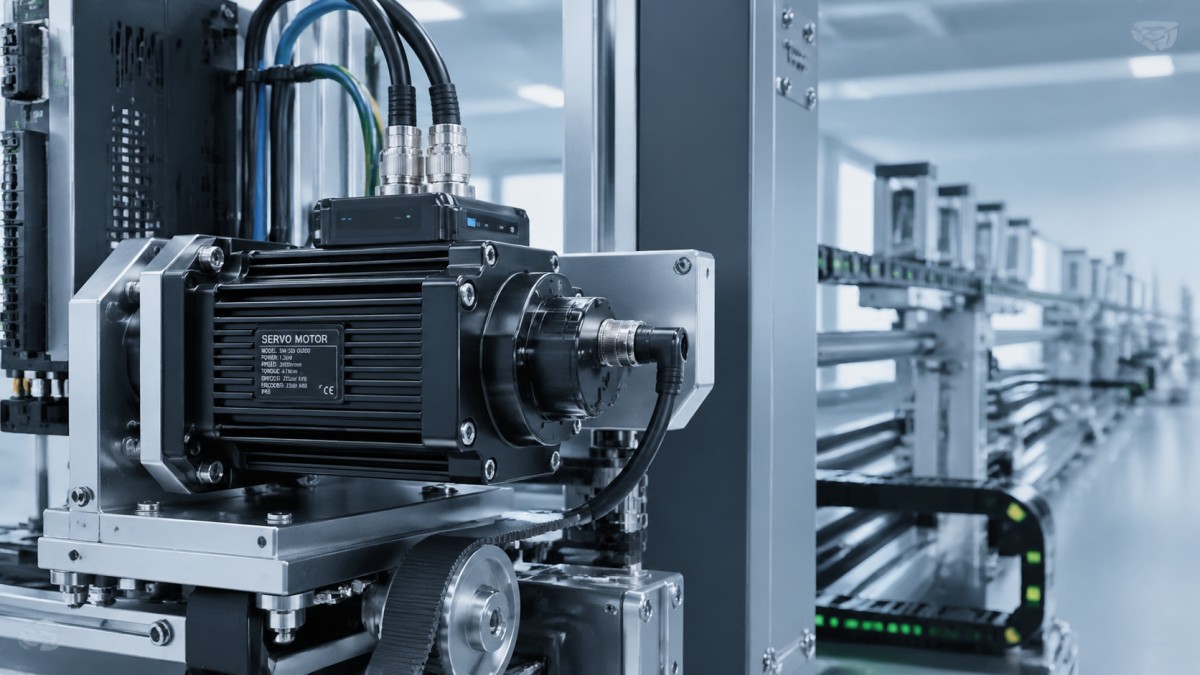
Mean Time Between Failures is intended to describe the average operating time between inherent failures in repairable systems. In practice, servo motor MTBF data is often presented as a clean number such as 30,000 hours, 50,000 hours, or 80,000 hours. That can support early-stage comparison, but it does not automatically predict what maintenance teams will face at month 6, month 18, or year 4 in a production line.
One reason is test context. Some MTBF calculations are based on component-level assumptions under controlled ambient temperatures, often around 25°C, stable loads, and ideal electrical conditions. Real production environments may see ambient temperatures of 35°C to 45°C, peak torque events above nominal ratings, stop-start cycling every 8 to 20 seconds, and contamination that accelerates seal or bearing degradation.
Another reason is system boundary confusion. A buyer may read servo motor MTBF data, while the most likely maintenance event may actually come from the encoder cable, connector loosening, brake wear, bearing lubrication breakdown, or poor servo drive tuning. In other words, the motor may not be the first weak point in the axis, even though it is the most visible item in the specification sheet.
MTBF also says little about failure distribution. Two motors may both show 50,000 hours, yet one may experience rare catastrophic faults and the other frequent minor service interventions. For operations teams, a 30-minute planned service every 4,000 hours can be easier to manage than a low-frequency but unpredictable failure that causes 6 to 10 hours of unplanned downtime.
The most common interpretation errors
- Treating MTBF as guaranteed service life rather than a statistical reliability indicator.
- Ignoring duty cycle, especially applications with high acceleration and deceleration.
- Comparing figures from different suppliers without confirming test assumptions or calculation method.
- Assuming the motor number covers the entire servo axis, including drive, feedback, power cable, and brake.
A more useful reading of MTBF
A practical rule is to treat MTBF as one indicator inside a broader maintenance model. If a supplier quotes 60,000 hours MTBF, the next questions should include service interval recommendations, bearing replacement expectations, feedback device failure modes, brake cycle limits, ingress protection, and thermal derating above 40°C. That moves the discussion from marketing comfort to engineering reality.
What really drives servo maintenance outcomes in the field
In field conditions, servo reliability is usually shaped by five interacting variables: load profile, thermal stress, contamination, motion tuning, and installation quality. A motor used at 60% of rated torque with smooth motion may run for years with limited intervention. The same frame size running repeated peak loads of 250% rated torque, sharp reversals, and poor cooling can show early bearing noise, insulation stress, or encoder instability long before the theoretical MTBF window is reached.
Load profile is particularly important in robotics, packaging, CNC auxiliary axes, and AGV traction systems. Continuous torque is not enough. Engineers should examine RMS torque, peak torque duration, duty cycle percentage, and inertia matching ratio. A mismatch above roughly 5:1 in demanding motion can increase hunting, heating, and mechanical stress. For high-dynamic axes, inertia ratio targets are often kept closer to 1:1 to 3:1 depending on control strategy.
Thermal stress is another underappreciated factor. Every 10°C rise in winding temperature can materially reduce insulation life, especially in enclosed cabinets with poor airflow. In compact automation cells, a drive cabinet may operate 8°C to 15°C hotter than surrounding ambient air. If a servo motor is already mounted near a furnace, washdown zone, or enclosed gear train, the heat stack-up changes maintenance reality far more than the headline MTBF figure suggests.
Contamination varies by application. Food processing may introduce washdown and chemical exposure. Metalworking may introduce coolant mist and conductive dust. Warehousing may seem cleaner, yet AGV and AMR systems often experience vibration, cable flexing, and shock from uneven flooring. An IP65 or IP67 rating can improve protection, but sealing does not eliminate internal heating issues or connector fatigue from repeated motion.
Servo drive tuning and installation quality also have direct consequences. Overshoot, oscillation, excessive gain, grounding problems, and cable routing near high-noise power lines can all create nuisance trips or hidden wear. In many factories, the maintenance event blamed on the motor is actually rooted in commissioning quality. A 2-hour tuning review and thermal scan may prevent service calls that a simple MTBF reading would never predict.
Field variables that often outweigh the datasheet number
The table below summarizes the variables that commonly determine real maintenance burden across industrial servo systems. These are the inputs that purchasing, engineering, and maintenance teams should align before committing to a supplier or service interval plan.
The key takeaway is that maintenance risk rises when multiple factors stack together. A motor can tolerate one challenge reasonably well. It struggles when high temperature, aggressive duty cycle, poor airflow, and contamination appear at the same time. That is why lifecycle review should be application-specific rather than based only on a universal reliability claim.
What procurement and engineering teams should request beyond MTBF
For sourcing decisions, the most useful supplier is not always the one with the largest MTBF value. It is often the supplier that can clearly explain operating limits, service windows, and failure modes. Procurement teams should ask for a maintenance-oriented technical package, not just a commercial brochure. That package should connect the motor, drive, feedback system, cabling, brake, and environmental assumptions into one usable reliability picture.
At minimum, buyers should request four categories of information. First, duty cycle assumptions, including continuous and peak torque behavior. Second, environmental derating rules, especially for temperature, humidity, altitude, and ingress. Third, wear-part expectations such as bearing or brake service thresholds. Fourth, support capability, including spare lead time, local diagnostics, and replacement interchangeability. These points directly affect total cost of ownership over 3 to 7 years.
Engineering teams should also verify how reliability data was generated. Was the number derived from component prediction methods, accelerated life assumptions, fleet history, or mixed-model calculation? There is nothing wrong with any method when it is properly disclosed. The risk appears when two suppliers present the same reliability term with different boundaries, making side-by-side comparison misleading.
For executive decision-makers, the strategic issue is supply continuity. Even if two servo motor options have similar performance, the better choice may be the one with a 2-week spare availability window rather than a 10 to 14 week replenishment cycle. A lower downtime exposure can outweigh a modest difference in upfront purchase price, especially on lines where each lost production hour carries significant opportunity cost.
Procurement checklist for reliability-based evaluation
The table below can be used during RFQ, technical clarification, or final supplier qualification. It helps turn servo motor MTBF data into a decision framework that is more useful for industrial maintenance and sourcing.
When this information is available, procurement gains a clearer picture of lifecycle exposure. It also becomes easier to compare suppliers on measurable terms instead of relying on generic claims such as long life, premium quality, or maintenance free operation.
Four practical sourcing questions
- What failure modes appear most often in the first 12 months and after 24 months?
- Which service parts must be stocked locally for a line running 16 to 24 hours per day?
- What commissioning checks are required to preserve reliability expectations?
- How does the supplier support root-cause analysis after repeated alarms or thermal events?
Building a maintenance plan that reflects real operating conditions
A useful maintenance strategy starts with operating reality rather than catalog language. Plants should group servo axes by duty severity, not just by motor model. For example, a low-load conveyor positioning axis, a robot wrist axis, and an AGV traction motor may all use servo technology, yet their inspection priorities differ sharply. Creating 3 service tiers is often a practical starting point: low duty, medium duty, and high dynamic or harsh environment duty.
For low-duty axes, visual checks and alarm trend review every 1,000 to 2,000 operating hours may be enough. For medium-duty axes, teams often add connector checks, thermal review, fan or cabinet airflow inspection, and vibration or acoustic checks every 2,000 to 4,000 hours. For high-duty or contaminated environments, monthly observation plus quarterly technical inspection can reduce surprise failures, especially when the line runs 2 shifts or 3 shifts daily.
Condition indicators matter more than rigid calendar rules. Three useful signals are temperature rise, vibration change, and alarm frequency. If motor housing temperature trends 10°C above historical baseline, or if encoder and overcurrent alarms increase over a 30-day period, maintenance teams should investigate loading, tuning, and cooling before assuming random failure. Trend-based maintenance is usually more cost-effective than waiting for a nominal MTBF horizon.
Documentation discipline is equally important. Every unplanned stop should record at least the axis ID, operating hours, alarm code, ambient condition, load condition, and corrective action. After 6 to 12 months, these records often reveal repeating root causes such as cable stress, inadequate panel ventilation, or oversized inertia. That insight is far more actionable than a generic reliability statement copied from a product sheet.
Recommended maintenance structure
- Daily or per shift: review alarms, listen for abnormal noise, check visible contamination and cable strain.
- Monthly: inspect connectors, grounding, cooling airflow, and brake engagement behavior where applicable.
- Quarterly: review temperature trends, motion stability, and repeated fault history for each axis group.
- Annually: reassess load assumptions, tuning parameters, spare stock level, and replacement risk for critical assets.
Where maintenance plans often fail
The most common failure is generic scheduling. Plants may apply the same service interval to 40 or 60 axes without distinguishing environmental severity or motion stress. Another failure is separating electrical and mechanical diagnostics, even though servo faults often sit between both domains. Cross-functional review between controls, maintenance, and process teams usually produces better uptime results than isolated troubleshooting.
FAQ for engineers, operators, buyers, and decision-makers
Because servo motor MTBF data is widely used but frequently oversimplified, several questions come up repeatedly during design reviews, procurement meetings, and maintenance planning. The answers below focus on practical decision support rather than generic catalog guidance.
Is a higher MTBF figure always the better buying choice?
Not always. A higher figure can be valuable, but only if the test boundary, environmental assumptions, and system components are comparable. A motor quoted at 80,000 hours under light duty and 25°C conditions may be less suitable than a motor quoted at 50,000 hours with documented behavior in high-cycle, dusty, or elevated-temperature service. Buying decisions should weigh support capability, spare lead time, and application fit alongside the reliability number.
What should maintenance teams track besides failure events?
Track temperature trend, vibration change, alarm repetition, cable wear, connector condition, and brake behavior if fitted. Even 3 simple indicators recorded monthly can improve predictive decisions: average housing temperature, number of repeated alarms, and visible cable strain. Over a 6-month period, these signals often identify deterioration earlier than waiting for a hard failure.
How often should service intervals be reviewed?
A practical review cycle is every 6 to 12 months, or sooner after major changes such as payload increase, recipe change, speed increase, cabinet redesign, or washdown procedure update. If the application has recently shifted from 1 shift to 3 shifts, the previous maintenance assumptions may no longer be valid, even if the motor model remains unchanged.
What is the role of the industrial servo motor supplier in long-term reliability?
A strong supplier contributes more than hardware. It should support sizing validation, derating guidance, commissioning checks, spare planning, and fault interpretation. In many cases, reliability improves not because the motor changed, but because the supplier helped correct inertia mismatch, cable routing, thermal ventilation, or tuning instability during the first 30 to 90 days of operation.
Servo motor MTBF data remains a useful part of technical evaluation, but it should never be the only number steering maintenance or procurement decisions. Real lifecycle performance is shaped by temperature, contamination, duty cycle, integration quality, service discipline, and supplier support. For teams that need engineering truth rather than headline claims, the better approach is to compare reliability in context, document failure modes, and align purchasing with actual operating conditions.
TechStat Vanguard advocates this data-first view because it reduces trial-and-error cost, shortens supplier qualification cycles, and improves asset planning across automation programs. If you are evaluating servo platforms, reviewing maintenance exposure, or building a sourcing specification for a new line, now is the right time to move beyond isolated MTBF figures.
Contact us to discuss a more rigorous reliability review, request a tailored comparison framework, or explore solution guidance for servo motor selection, maintenance planning, and supplier benchmarking.
Search News
Hot Articles
- Carbon Fiber StructuresHow to Specify Aerospace Carbon Fiber Assemblies for Lightweight, Load-Bearing PartsJul 11, 2026
- Machine VisionXiaomi, Alibaba DAMO Academy Drive Open-Source Robotics Model Ecosystem, Lowering Algorithm Development Barriers for Overseas SMEs Adopting Chinese Robotics SolutionsMar 30, 2026
- Cobots & ArmsShanxi 'AI+' Conference Showcases Embodied Intelligence with Multinational Buyer Engagement: Key Industry ImplicationsMar 30, 2026
Popular Tags
Recommended News
 Jul 11, 2026How to Specify Aerospace Carbon Fiber Assemblies for Lightweight, Load-Bearing PartsAerospace carbon fiber assemblies: learn how to specify laminate design, load data, joining methods, and inspection controls for lighter, reliable load-bearing aerospace parts.Elena Rostova (UAV Systems Researcher)
 Mar 30, 2026Xiaomi, Alibaba DAMO Academy Drive Open-Source Robotics Model Ecosystem, Lowering Algorithm Development Barriers for Overseas SMEs Adopting Chinese Robotics SolutionsXiaomi & Alibaba DAMO Academy's open-source robotics models lower algorithm barriers for global SMEs. Boost efficiency in manufacturing, logistics & smart retail with ROS 2 compatible solutions.TSV Data Lab
 Mar 30, 2026Shanxi 'AI+' Conference Showcases Embodied Intelligence with Multinational Buyer Engagement: Key Industry ImplicationsShanxi 'AI+' Conference highlights embodied intelligence with Tesla, Ubtech & Jiantao showcasing multimodal robotics. 40+ global buyers validated tech on-site, creating new B2B channels for industrial automation & AI solutions.Chen Wei (Automation Lead Engineer)
 Mar 30, 2026Zhongguancun Unveils 6G Integrated Sensing-Computing-Intelligence Platform to Empower Embodied Robots for Global Industrial ApplicationsZhongguancun's new 6G platform revolutionizes industrial robotics with <10ms latency, empowering global automotive, logistics & port automation. Discover how this tech boosts China's smart manufacturing exports.TSV Data Lab
 Mar 30, 2026Mech-Mind Tianjin Embodied Intelligence R&D and Production Base Goes Live, Cutting Delivery Time by 20%–30% for Global Customized AMR+Vision SolutionsMech-Mind's Tianjin AMR+Vision production base cuts delivery time by 20%-30% for欧美 & Latin American markets. Discover how this PLd-certified facility accelerates customized robotics solutions for smart manufacturing and logistics.Chen Wei (Automation Lead Engineer)
 Mar 30, 2026Boao Forum Reveals 'Co-evolution of Big and Small Brains' Trend in Humanoid Robots, China's Embodied Intelligence Accelerates Adaptation to Overseas Manufacturing Service ScenariosDiscover how China's humanoid robots, featuring 'Co-evolution of Big and Small Brains,' are revolutionizing global manufacturing. Learn about Embodied Tian Gong 3.0's ISO compliance and overseas deployment at Boao Forum 2026.Chen Wei (Automation Lead Engineer)
 Mar 30, 2026China Railway Industrial Secures Patent for Embodied Robotics in Material Handling, Boosting High-Precision Delivery Capabilities for Overseas Infrastructure and Manufacturing ProjectsChina Railway Industrial's new patent for embodied robotics in material handling boosts high-precision delivery for global infrastructure & manufacturing. Discover how this innovation enhances logistics accuracy in automotive, rail transit & EPC projects.Chen Wei (Automation Lead Engineer)
 Oct 25, 2026Hesai Leads Global ADAS Main Lidar Shipments in Yole’s 2026 ReportHesai led global ADAS main lidar shipments with a 43% share in 2025, according to Yole’s 2026 report. Explore what this ranking reveals about its automotive market position.TSV Data Lab
 Oct 25, 2026Choosing an Aerospace Materials Manufacturer: Quality and Traceability ChecksChoosing an aerospace materials manufacturer? Learn how to verify certifications, test reports, and lot traceability to qualify suppliers confidently and reduce costly sourcing risks.Dr. Marcus Vance
 Oct 24, 2026Guotai Haitong: Global Entry-Level 3D Printer Shipments Rose 39% in Q1 2026Entry-level 3D printer shipments rose 39% in Q1 2026, Guotai Haitong reports. Explore how AI, multicolor printing and print farms are shaping market growth.Dr. Marcus Vance
 Oct 24, 2026Choosing an Industrial Vision Inspection Supplier: Acceptance Tests That MatterChoose an industrial vision inspection supplier with confidence. Discover acceptance tests for defect detection, false rejects, production speed, and reliable part rejection before you buy.TSV Data Lab
 Oct 23, 2026US Navy Raises Gecko Robotics Contract Ceiling to $300M for Robotic Fleet MaintenanceUS Navy raises Gecko Robotics’ contract ceiling to $300M for Pacific Fleet robotic inspections. Explore potential opportunities for maintenance suppliers and key procurement considerations.Chen Wei (Automation Lead Engineer)
 Oct 23, 2026Choosing Industrial Sensing Systems for Global Plants: Protocol CompatibilityCompare industrial sensing systems international buyers can trust. Explore protocol compatibility, reduce integration risks, and select proven configurations for reliable global plant deployments.TSV Data Lab
 Oct 22, 2026KUKA Showcases Physical AI and iiQKA.AI Vision at NVIDIA GTC BerlinExplore KUKA’s Physical AI showcase at NVIDIA GTC Berlin and discover how iiQKA.AI Vision aims to simplify robotic vision integration and improve 2D and 3D scene recognition.TSV Data Lab
 Oct 22, 2026Robotic Machining of Advanced Composites: What Tolerances Are Achievable?Explore advanced materials machining robotics: discover what drives achievable composite tolerances and how to validate accuracy before investing in your next machining system.Dr. Marcus Vance
 Oct 21, 2026China’s Industrial Robot Exports Near RMB 10 Billion in First Nine Months of 2026China’s industrial robot exports neared RMB 10 billion in January–September 2026, with value rising faster than volume. Explore the data and what it could mean for suppliers.Chen Wei (Automation Lead Engineer)
 Oct 21, 2026Low-Latency Industrial Data Processing: Pricing and Key Cost DriversExplore industrial data latency price drivers, from edge hardware to integration and support. Learn how to compare quotes, verify performance, and avoid unnecessary costs.TSV Data Lab
 Oct 20, 2026KUKA Launches iiQKA.AI Vision to Simplify Industrial Image ProcessingKUKA iiQKA.AI Vision simplifies industrial image processing with controller-based 2D and 3D vision. Explore drag-and-drop setup for vision-guided automation.TSV Data Lab
 Oct 20, 2026Smart Industrial Edge Devices: Key Criteria for Legacy PLC IntegrationChoose smart industrial edge devices for legacy PLC integration. Discover key criteria for compatibility, data quality, security, and reliable collection without disrupting control.TSV Data Lab
 Oct 19, 2026Choosing a Radar Sensor by Application: Range, Resolution, and Field of ViewSimplify radar sensor application based product selection. Compare range, resolution, and field of view to avoid blind spots and choose with confidence. Explore the guide.TSV Data Lab
 Oct 18, 2026Comparing Material Options for Procurement: Specs, Costs, and Supply RisksExplore procurement oriented technical content on material options, specs, costs, and supply risks. Compare alternatives to cut hidden expenses and make confident sourcing decisions.Dr. Marcus Vance
 Oct 17, 20265-Axis CNC Positioning Accuracy: How to Interpret ISO 230-2 Test ResultsAssess 5 axis CNC machining positioning accuracy with ISO 230-2. Learn to interpret repeatability, reversal error, and test conditions to compare suppliers and make confident acceptance decisions.Dr. Marcus Vance
 Oct 16, 2026Choosing a Rugged Edge AI Box Supplier: Thermal Tests and Lifecycle SupportChoose a rugged edge AI box supplier with proven thermal performance and reliable lifecycle support. Discover the tests and commitments to verify before you buy.TSV Data Lab
 Oct 15, 2026R&D Cost Reduction Services: How to Evaluate Fees, Savings, and ROIEvaluate R&D cost reduction services with confidence. Compare fees, verify savings, and calculate ROI without compromising performance. Discover how to choose a provider that delivers real value.Chen Wei (Automation Lead Engineer)























