
Servo Motor for CNC Router: Torque or Speed First
Publication Date
author
When selecting a servo motor for CNC router systems, the real question is not torque or speed alone, but how each affects cut quality, cycle time, and long-term reliability. For engineers, operators, buyers, and decision-makers, understanding this balance is essential to avoid overspecification, hidden costs, and unstable machining performance in demanding production environments.
In CNC routing, servo motor selection directly influences acceleration, contour accuracy, spindle follow-up behavior, and the machine’s ability to hold feed rates under varying load. A system that looks fast on paper can still produce chatter, lost precision, or excessive thermal stress if the motor is mismatched to gantry mass, screw pitch, rack efficiency, or duty cycle.
For B2B buyers and technical evaluators, the practical decision is not “torque first” or “speed first” as a slogan. The correct decision starts with the application window: material type, target feed rate, cut depth, axis inertia, cycle profile, and acceptable tolerance band. TechStat Vanguard approaches this topic from an engineering-first view: parameters matter more than promotional claims.
Why the Torque vs Speed Debate Matters in CNC Router Performance
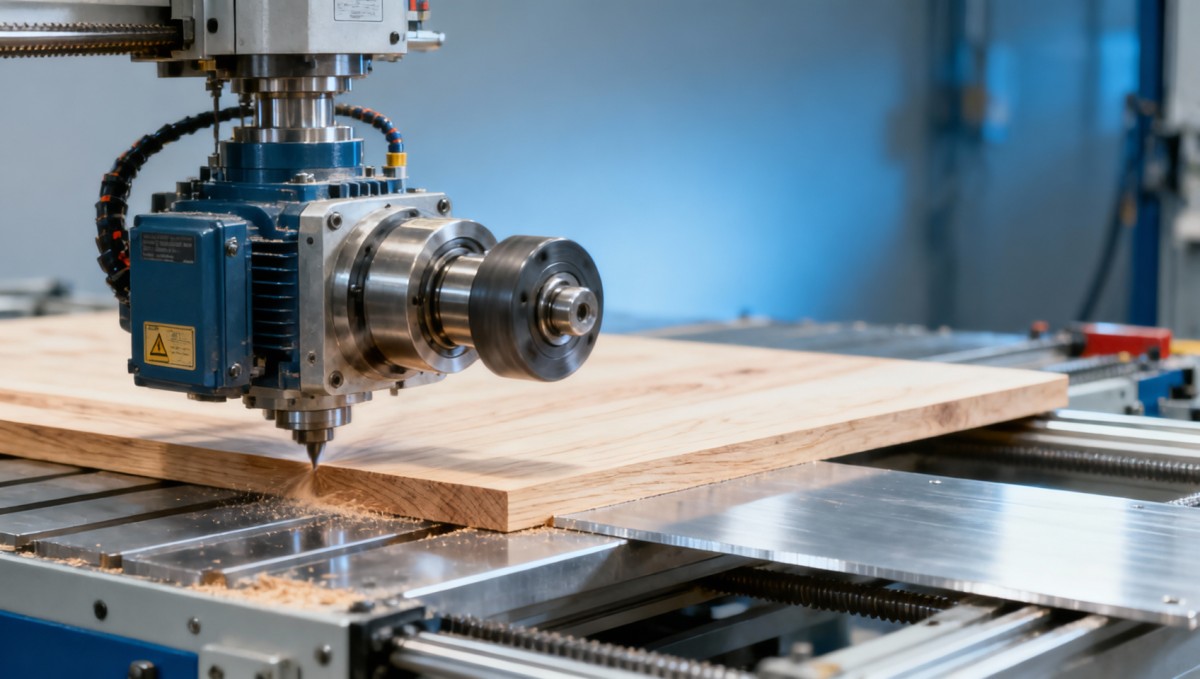
A CNC router servo motor must operate across a dynamic range rather than at one fixed point. During rapid positioning, the motor needs enough speed to reduce non-cutting time. During entry, cornering, and heavy chip load, it needs enough torque to resist deceleration and maintain commanded path accuracy. If either side of the balance is weak, overall machine productivity suffers.
In many woodworking, plastics, composites, and light aluminum routing applications, feed rates commonly range from 10 m/min to 60 m/min. However, peak performance is rarely the only design target. A machine that reaches 50 m/min but loses contour stability at 18 m/min in dense board material is less valuable than one that holds consistent cutting force and repeatability within the intended process window.
Torque is especially critical when the axis must accelerate a heavy gantry, overcome rack-and-pinion friction, or recover from changing cutting loads. Speed becomes more important when the production model includes frequent traverses, nested sheet optimization, or short cycle times with high positioning frequency. In real workshops, both variables affect scrap rate, spindle utilization, and maintenance intervals.
A useful engineering distinction is this: continuous torque supports stable operation over long cycles, while peak torque supports transient events such as acceleration, corner correction, and sudden tool load variation. Likewise, rated speed describes sustainable operating capacity, while maximum speed may only be achievable for short durations before thermal or control constraints appear.
What torque actually protects
Insufficient torque can lead to servo lag, poor corner fidelity, and unstable chip engagement. These issues often show up as edge burns in wood, dimensional drift in acrylic, or vibration marks in aluminum plate. In systems with larger gantries or higher moving mass, even a 10% to 15% torque shortfall can reduce usable acceleration enough to affect throughput.
What speed actually buys
Higher motor speed can shorten air-cut time, improve job transitions, and support finer interpolation at elevated feed. But speed beyond the usable mechanical range is wasted. If the ballscrew critical speed, gearbox limit, or axis rigidity caps practical motion, paying for extra rpm brings little return.
How to Match Servo Motor Characteristics to Router Application Scenarios
A servo motor for CNC router systems should be selected from the load side backward. Start with gantry mass, moving axis inertia, transmission method, commanded acceleration, and expected cut resistance. Then evaluate motor torque-speed curves, encoder resolution, overload capacity, and drive tuning flexibility. This sequence is more reliable than selecting by motor wattage alone.
Different routing environments shift the priority. A furniture nesting line processing MDF for 16 to 20 hours per day often values stable continuous torque and thermal consistency. A sign-making router cutting foam, PVC, or acrylic may prioritize rapid positioning and smooth surface finish at moderate loads. An aluminum-capable router usually needs stronger low-speed torque and better stiffness under intermittent high load.
Another factor is transmission architecture. Ballscrew systems tend to favor precision and controlled linear conversion, but they impose critical-speed constraints at longer travel. Rack-and-pinion systems support longer axes and higher travel speed, yet they may demand more torque reserve because of mesh behavior, efficiency variation, and shock during direction changes.
Typical application priorities by process type
The table below helps technical teams translate process conditions into a practical selection priority. It does not replace full sizing, but it provides a disciplined first filter for engineering review and procurement discussion.
The key takeaway is that “best servo motor for CNC router” is scenario-dependent. If material load is variable and duty cycle is high, torque reserve often creates more real value than headline speed. If the process is light and part geometry is dense, speed and dynamic response may drive productivity gains.
A practical sizing sequence
- Define axis mass, transmission ratio, and target acceleration in m/s².
- Estimate continuous and peak load torque across at least 3 motion phases: rapid move, entry cut, and cornering.
- Check rated speed against actual linear travel demand, not catalog maximum rpm only.
- Add a 15% to 30% engineering margin for thermal drift, wear, and future process change.
Key Parameters Buyers Should Compare Beyond Basic Motor Power
Procurement teams often receive quotations built around motor wattage, such as 750 W, 1 kW, or 1.5 kW. That is not enough for serious evaluation. A servo motor for CNC router duty should be reviewed through a parameter set that connects directly to machine behavior. Otherwise, two motors with similar nominal power can perform very differently in acceleration, positioning recovery, and long-cycle heat management.
The first group of parameters includes rated torque, peak torque, rated speed, maximum speed, and overload duration. The second group covers encoder resolution, feedback stability, inertia matching, and drive current capacity. The third group includes environmental suitability such as ambient temperature range, ingress protection, and cooling strategy. For production sites with dust or fine particulate, enclosure integrity is not a minor detail.
From a lifecycle-cost perspective, MTBF, spare part lead time, drive compatibility, and tuning support are equally important. A lower purchase price can become expensive if commissioning takes 3 extra days, tuning fails under mixed loads, or spare delivery stretches to 4 to 6 weeks during an unplanned shutdown.
Comparison framework for technical and purchasing teams
The following table structures the most useful comparison points when evaluating multiple servo options for a CNC router platform.
For many buyers, the most revealing document is not the headline brochure but the torque-speed curve and drive manual. Those show whether the motor can sustain required torque at 1,500 to 3,000 rpm, whether the overload window is adequate, and whether the tuning tools can handle changing inertia without instability.
Minimum questions to ask suppliers
- What continuous torque is available at the actual operating speed, not only at stall or ideal conditions?
- How long can the drive hold overload, such as 200% or 250%, before protection activates?
- What is the typical lead time for replacement motor, encoder cable, and drive unit?
- Is on-site or remote tuning support available within 24 to 72 hours during commissioning?
Common Selection Mistakes That Increase Cost and Reduce Stability
One of the most common mistakes is selecting speed based on marketing expectations rather than production reality. If a router spends only 12% of the cycle in long rapid moves, increasing motor speed may create little return compared with improving torque reserve, acceleration tuning, or mechanical stiffness. Excessive speed can also amplify vibration, especially on long axes or lighter machine frames.
A second mistake is relying on peak torque values while ignoring continuous thermal behavior. A motor that tolerates short 300% overload events may still overheat if the process runs repetitive heavy cuts for 8 to 12 hours per shift. This is where duty cycle analysis becomes essential. Continuous production must be evaluated differently from short prototype work.
A third mistake is treating the motor in isolation. Servo performance is system performance. Poor cable routing, undersized power supply, backlash in the rack, weak couplings, or incorrect gain settings can make a good motor look bad. Conversely, a well-integrated motion system often outperforms a higher-power motor installed on a compromised mechanical platform.
Risk signals during evaluation or commissioning
Technical teams should monitor early signs that torque-speed matching is off. These signals usually appear before major failure and can prevent costly downtime or scrap if addressed in the first 2 to 4 weeks of operation.
The most effective prevention strategy is to validate motion behavior under real material and real cycle conditions, not just empty-axis demonstration. A 30-minute no-load test cannot replace a 4-hour production simulation with representative sheet size, toolpath density, and spindle load.
Selection checklist for procurement reviews
- Compare total system match, not motor power alone.
- Request torque-speed data at working rpm.
- Verify spare availability within acceptable shutdown windows.
- Confirm commissioning support, tuning tools, and alarm diagnostics.
Practical Decision Framework: When Torque Comes First and When Speed Leads
For heavy gantry routers, denser materials, and multi-shift production, torque usually comes first. That means prioritizing stable continuous output, enough overload headroom, and predictable thermal behavior over the highest catalog rpm. In these cases, cut quality and uptime often generate more value than saving a few seconds on traverse moves.
Speed leads when the axis load is light, the process is dominated by positioning, and the machine must move quickly across many short segments. Examples include sign production, thin plastic sheets, and non-contact or low-force finishing operations. Even then, speed only matters if the mechanical system, controller interpolation, and servo tuning can maintain smooth motion without resonance.
In many industrial CNC router projects, the best answer is a balanced design with 20% to 30% torque margin and a speed ceiling matched to the machine’s real mechanical limit. That approach improves controllability, protects long-term reliability, and keeps capital spending more rational. It also reduces the risk of purchasing a premium servo package whose extra rpm can never be used safely.
A concise rule-of-thumb framework
- Choose torque first if material load is variable, gantry mass is high, or duty cycle exceeds 60% of shift time.
- Choose speed first if idle travel dominates cycle time and cutting load remains consistently light.
- Choose balance first if the router handles multiple materials, changing toolpaths, or mixed production orders.
FAQ for engineers and buyers
How much torque margin is usually reasonable?
For many router applications, a 15% to 30% margin above calculated continuous demand is a practical starting point. Heavier-duty or future-flexible production lines may justify more, especially if materials and feed profiles vary significantly.
Is higher encoder resolution always better?
Not always. Higher resolution can support smoother interpolation and finer control, but only when the controller, mechanics, and tuning strategy can use it effectively. Otherwise, the benefit may be marginal compared with better system integration.
What commissioning period should buyers plan for?
For a standard CNC router servo system, initial electrical installation and parameter setup may take 1 to 3 days, while process tuning under real material can require another 2 to 5 days depending on axis count, software integration, and tooling conditions.
At TechStat Vanguard, the engineering priority is clear: select the servo motor for CNC router performance based on the real process envelope, not the loudest claim. Torque protects cut stability, acceleration authority, and thermal durability. Speed improves throughput when the machine structure and cycle pattern can genuinely exploit it.
If your team is comparing router platforms, qualifying suppliers, or refining a motion specification, use a data-led review: load profile, torque-speed curve, transmission match, duty cycle, and service support. That is how procurement risk is reduced and machine value is measured in output, not slogans.
To discuss a more application-specific evaluation framework, get a tailored recommendation, or review key selection parameters for your next CNC router project, contact us today and explore a more precise, engineering-driven solution.
Search News
Hot Articles
- Carbon Fiber StructuresHow to Specify Aerospace Carbon Fiber Assemblies for Lightweight, Load-Bearing PartsJul 11, 2026
- Machine VisionXiaomi, Alibaba DAMO Academy Drive Open-Source Robotics Model Ecosystem, Lowering Algorithm Development Barriers for Overseas SMEs Adopting Chinese Robotics SolutionsMar 30, 2026
- Cobots & ArmsShanxi 'AI+' Conference Showcases Embodied Intelligence with Multinational Buyer Engagement: Key Industry ImplicationsMar 30, 2026
Popular Tags
Recommended News
 Jul 11, 2026How to Specify Aerospace Carbon Fiber Assemblies for Lightweight, Load-Bearing PartsAerospace carbon fiber assemblies: learn how to specify laminate design, load data, joining methods, and inspection controls for lighter, reliable load-bearing aerospace parts.Elena Rostova (UAV Systems Researcher)
 Mar 30, 2026Xiaomi, Alibaba DAMO Academy Drive Open-Source Robotics Model Ecosystem, Lowering Algorithm Development Barriers for Overseas SMEs Adopting Chinese Robotics SolutionsXiaomi & Alibaba DAMO Academy's open-source robotics models lower algorithm barriers for global SMEs. Boost efficiency in manufacturing, logistics & smart retail with ROS 2 compatible solutions.TSV Data Lab
 Mar 30, 2026Shanxi 'AI+' Conference Showcases Embodied Intelligence with Multinational Buyer Engagement: Key Industry ImplicationsShanxi 'AI+' Conference highlights embodied intelligence with Tesla, Ubtech & Jiantao showcasing multimodal robotics. 40+ global buyers validated tech on-site, creating new B2B channels for industrial automation & AI solutions.Chen Wei (Automation Lead Engineer)
 Mar 30, 2026Zhongguancun Unveils 6G Integrated Sensing-Computing-Intelligence Platform to Empower Embodied Robots for Global Industrial ApplicationsZhongguancun's new 6G platform revolutionizes industrial robotics with <10ms latency, empowering global automotive, logistics & port automation. Discover how this tech boosts China's smart manufacturing exports.TSV Data Lab
 Mar 30, 2026Mech-Mind Tianjin Embodied Intelligence R&D and Production Base Goes Live, Cutting Delivery Time by 20%–30% for Global Customized AMR+Vision SolutionsMech-Mind's Tianjin AMR+Vision production base cuts delivery time by 20%-30% for欧美 & Latin American markets. Discover how this PLd-certified facility accelerates customized robotics solutions for smart manufacturing and logistics.Chen Wei (Automation Lead Engineer)
 Mar 30, 2026Boao Forum Reveals 'Co-evolution of Big and Small Brains' Trend in Humanoid Robots, China's Embodied Intelligence Accelerates Adaptation to Overseas Manufacturing Service ScenariosDiscover how China's humanoid robots, featuring 'Co-evolution of Big and Small Brains,' are revolutionizing global manufacturing. Learn about Embodied Tian Gong 3.0's ISO compliance and overseas deployment at Boao Forum 2026.Chen Wei (Automation Lead Engineer)
 Mar 30, 2026China Railway Industrial Secures Patent for Embodied Robotics in Material Handling, Boosting High-Precision Delivery Capabilities for Overseas Infrastructure and Manufacturing ProjectsChina Railway Industrial's new patent for embodied robotics in material handling boosts high-precision delivery for global infrastructure & manufacturing. Discover how this innovation enhances logistics accuracy in automotive, rail transit & EPC projects.Chen Wei (Automation Lead Engineer)
 Oct 17, 20265-Axis CNC Positioning Accuracy: How to Interpret ISO 230-2 Test ResultsAssess 5 axis CNC machining positioning accuracy with ISO 230-2. Learn to interpret repeatability, reversal error, and test conditions to compare suppliers and make confident acceptance decisions.Dr. Marcus Vance
 Oct 16, 2026Choosing a Rugged Edge AI Box Supplier: Thermal Tests and Lifecycle SupportChoose a rugged edge AI box supplier with proven thermal performance and reliable lifecycle support. Discover the tests and commitments to verify before you buy.TSV Data Lab
 Oct 15, 2026R&D Cost Reduction Services: How to Evaluate Fees, Savings, and ROIEvaluate R&D cost reduction services with confidence. Compare fees, verify savings, and calculate ROI without compromising performance. Discover how to choose a provider that delivers real value.Chen Wei (Automation Lead Engineer)
 Oct 16, 2026How Can You Fairly Compare MTBF Across Industrial Servo Motors?Make a fair industrial servo motor MTBF comparison with matched operating profiles, failure criteria, and confidence bounds. Discover how to assess reliability beyond advertised numbers.Chen Wei (Automation Lead Engineer)
 Oct 15, 2026How Should You Compare TechStat Vanguard 5-Axis CNC Tolerances?TechStat Vanguard 5-axis CNC tolerance comparison: learn how to verify part accuracy, assess inspection evidence, and choose suppliers that reliably meet your drawing requirements.Dr. Marcus Vance
 Oct 14, 2026Drone Frame Composites: Carbon Fiber vs. Fiberglass for Weight and StiffnessExplore drone structural materials composites: compare carbon fiber and fiberglass for weight, stiffness, cost, and antenna compatibility. Find the right material for your drone frame.Elena Rostova (UAV Systems Researcher)
 Oct 13, 2026Smart Cameras vs. PC-Based Machine Vision: Which Fits High-Speed Inspection?This industrial product comparison for machine vision weighs smart cameras vs. PC-based systems on latency, throughput, and cost. Discover your best fit for high-speed inspection.TSV Data Lab
 Oct 12, 2026How to Verify RoHS Compliance in Industrial Sensing Systems Before DeploymentRoHS compliant sensing systems: learn how to verify materials, supplier declarations, testing, and configuration controls before industrial deployment.TSV Data Lab
 Oct 11, 2026How Procurement-Oriented Content Taxonomy Improves B2B Buying JourneysProcurement-oriented content taxonomy streamlines B2B buying journeys with clearer evidence, supplier comparisons, risk visibility, and faster approvals.TSV Data Lab
 Oct 10, 2026How to Select a Machine Performance Monitoring Platform for OEE and Downtime ReductionMachine performance monitoring platform selection guide: validate machine states, OEE data, downtime reasons, integrations, and scalability to reduce losses with confidence.TSV Data Lab
 Oct 08, 2026How to Machine Inconel 625 Blades Without Heat Cracks or Edge ChippingInconel 625 blade machining guide: prevent heat cracks, edge chipping, chatter, and work hardening with proven tooling, cooling, fixturing, and inspection strategies.Dr. Marcus Vance
 Oct 07, 2026How to Evaluate an HMI Panel Distributor for Industrial Automation ProjectsHMI panel distributor evaluation guide: verify technical compatibility, traceability, supply reliability, lifecycle support, and total cost for automation projects.Victor Lin (Chief Software Architect)
 Oct 06, 2026Navigation Fault Tolerance Standards for AMRs: What Safety Teams Must VerifyNavigation fault tolerance standards: learn what AMR safety teams must verify, from localization loss and sensor faults to stopping distance, safe restart, and site-specific validation.Chen Wei (Automation Lead Engineer)
 Oct 05, 2026Calculating Edge Computing Total Cost of Ownership Across Distributed SitesEdge computing ownership cost explained: calculate deployment, energy, connectivity, security, remote support, and refresh costs across distributed sites.TSV Data Lab
 Oct 04, 2026CAD/CAM Benchmarking in the GCC: What Manufacturers Should Ask a ConsultantCAD CAM benchmark consultant GCC guide: learn the key questions manufacturers should ask to validate post-processors, workflows, machine performance, and production risk.Victor Lin (Chief Software Architect)
 Oct 03, 2026Selecting Automotive Radar Sensor Modules for ADAS Range, Resolution, and IntegrationAutomotive radar sensor module selection guide for ADAS: compare range, resolution, field of view, latency, and integration to build safer, reliable vehicle systems.TSV Data Lab
 Oct 02, 2026How to Qualify Machined Parts Suppliers for Hard Tech ProgramsHard tech supply chain machined parts demand rigorous supplier qualification. Learn how to assess capability, traceability, quality controls, and delivery resilience.Dr. Marcus Vance























