
Industrial Drone Motors Wholesale: How to Compare
Publication Date
author
Choosing the right industrial drone motors wholesale partner is not about slogans—it is about verified torque curves, thermal efficiency, vibration control, and lifecycle consistency across mission profiles. For buyers comparing a drone propeller manufacturer, fixed wing uav supplier, or custom vtol uav factory, this guide shows how to evaluate technical fit, sourcing risk, and long-term value with data-first clarity.
What should buyers compare first in industrial drone motors wholesale?
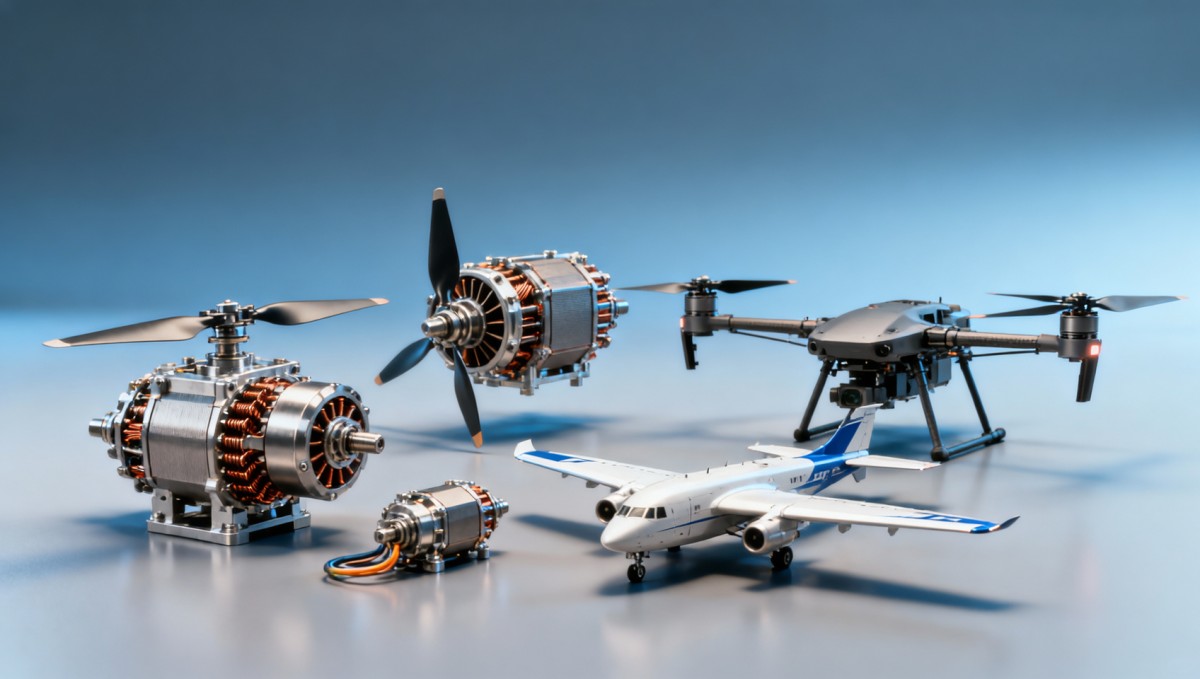
In industrial drone motors wholesale, the first mistake many teams make is comparing catalog voltage or quoted thrust without defining the aircraft mission. A mapping UAV, an agricultural platform, and a custom VTOL airframe place very different loads on the motor system. Procurement teams should begin with 4 baseline variables: aircraft type, payload range, duty cycle, and environmental envelope. Without those, supplier quotations are not directly comparable.
For operators and engineering researchers, the practical question is simple: can the motor hold stable output across takeoff, cruise, transition, and landing phases? In many industrial programs, continuous operating windows fall between 20 and 90 minutes, while ambient temperatures may range from -10°C to 45°C. A wholesale motor source that cannot provide thermal derating logic, current efficiency data, and propeller pairing guidance creates hidden integration risk.
For procurement managers, industrial drone motors wholesale should be evaluated as a system supply decision rather than a unit-price purchase. The motor, ESC compatibility, shaft tolerance, bearings, winding consistency, and propeller balance all influence lifecycle cost. This is especially important when the same supplier also positions itself as a drone propeller manufacturer or supports a fixed wing uav supplier network, because component interaction matters more than isolated part claims.
At TSV, the working principle is straightforward: parameters matter more than adjectives. Teams should ask for load curves, vibration records, recommended propeller ranges, ingress protection boundaries if available, and batch consistency controls. In a B2B sourcing context, the quality of the technical response in the first 7 to 14 days often reveals more than the sales pitch.
The 5 screening questions before requesting a quote
- What airframe are you building: multirotor, fixed-wing, hybrid VTOL, or a custom mission platform with transition requirements?
- What is the real payload band: under 5 kg, 5–20 kg, or above 20 kg, and how often will the aircraft fly at maximum payload?
- What duty cycle applies: short bursts, repeated sorties, or long-endurance operation with limited cooling margin?
- Which supporting parts are already fixed: battery voltage, ESC protocol, propeller diameter, mount pattern, and controller logic?
- What sourcing constraints apply: pilot batch, annual volume, spare ratio, lead time target, and documentation depth?
A practical comparison table for initial supplier filtering
Before moving from inquiry to sample order, use a structured comparison matrix. This helps information researchers, operators, and enterprise decision-makers align on what “fit” means in industrial drone motors wholesale, especially when several vendors also market themselves as a drone propeller manufacturer or custom VTOL source.
This table works because it forces objective comparison. If one supplier can only provide nominal thrust but no thermal or vibration information, that gap should be treated as a sourcing risk. In industrial drone motors wholesale, missing data often becomes field failure cost later.
How do motor parameters affect fixed-wing, multirotor, and custom VTOL projects?
Motor selection changes substantially by aircraft architecture. A fixed wing uav supplier usually prioritizes cruise efficiency, propeller matching, and sustained thermal stability over repeated peak thrust bursts. A multirotor platform often values responsive throttle behavior, lift margin, and vibration control across 4, 6, or 8 propulsion points. A custom vtol uav factory must manage both hover demands and forward-flight efficiency, which makes compromise analysis unavoidable.
In industrial drone motors wholesale, one common misunderstanding is to assume “higher KV” or “higher power” automatically means better mission output. In reality, motor performance is constrained by the propeller, battery voltage, ESC tuning, and airframe aerodynamics. For example, a motor suitable for a 12S system with large-diameter propellers may not be optimal for a fixed-wing design tuned around lower drag and longer cruise segments.
This is where TSV’s data-first approach matters. Engineering teams should compare not only headline values but the behavior envelope: startup smoothness, current draw at 30%, 60%, and 90% throttle, and temperature rise over a defined time window such as 10, 20, or 30 minutes. These operational slices are more useful than isolated maximum ratings because they mirror real mission profiles.
If your supplier is also a drone propeller manufacturer, ask for tested motor-propeller pairings instead of generic compatibility claims. Pairing data can shorten integration work by 2 to 4 weeks, reduce vibration troubleshooting, and improve confidence during pilot production.
Typical differences by aircraft type
The following comparison helps teams identify whether a vendor truly understands application-specific propulsion requirements. It is especially useful when comparing broad-line vendors against specialized fixed wing uav supplier or custom VTOL manufacturing partners.
A useful reading method is to match each aircraft type with its true operational bottleneck. If a supplier cannot explain where the motor is likely to fail first—heat, bearings, shaft stress, or balance quality—the offer may be commercially attractive but technically incomplete.
Three parameters that deserve more attention than headline thrust
- Thermal rise under sustained load. In many industrial missions, this determines whether a system remains stable after 15–30 minutes, not whether it performs for the first 60 seconds.
- Vibration and balance consistency. Even small deviations can affect sensors, imaging payloads, and autopilot reliability, especially in mapping and inspection work.
- Batch-to-batch repeatability. For fleet buyers, 20 motors that behave similarly are usually more valuable than 2 samples with excellent isolated numbers.
Which procurement checks reduce sourcing risk and hidden cost?
A low unit price rarely reflects the full cost of industrial drone motors wholesale. Hidden cost appears in engineering rework, delayed integration, unstable samples, extra spare inventory, and field maintenance. For procurement personnel, the more useful framework is total acquisition risk over 3 stages: sample validation, pilot batch, and scaled purchasing. Each stage should have its own pass criteria.
During sample validation, teams should check dimensional consistency, installation fit, startup behavior, current stability, and temperature rise. During pilot batch, they should evaluate batch uniformity, documentation completeness, and supplier responsiveness. At scale, lead time, packaging discipline, replacement parts policy, and change-notice management become more important than the first quotation.
This is particularly relevant when dealing with a supplier that spans multiple categories, such as motor supply, propellers, and UAV assembly. That breadth can be an advantage if the technical interfaces are well controlled. It becomes a liability if the supplier cannot clearly separate tested combinations from unverified catalog compatibility.
A disciplined sourcing team should also ask how long the exact motor configuration will remain stable. In practical B2B programs, even a minor winding change or bearing substitution can affect flight tuning. A controlled engineering change process is often more valuable than a slightly shorter initial lead time.
6 procurement checks before approving industrial drone motors wholesale orders
- Confirm the tested motor-propeller-voltage combination rather than approving separate line items in isolation.
- Request sample lead time and batch lead time separately; common commercial ranges are about 7–15 days for samples and 3–8 weeks for larger batches, depending on customization.
- Check whether the supplier can define inspection points such as shaft runout, wiring quality, balance method, and packaging protection.
- Ask for replacement handling terms: dead-on-arrival process, nonconformity review, and spare ratio recommendations for pilot deployment.
- Review documentation depth, including drawings, wiring notes, operating boundaries, and any available maintenance guidance.
- Clarify change control. Even if no formal certification is required, production consistency should have a documented communication path.
Cost drivers buyers often underestimate
The table below is useful when comparing industrial drone motors wholesale offers that look similar on price but differ in lifecycle impact. It also helps enterprise decision-makers understand why a seemingly cheaper source may generate higher program cost over 6 to 12 months.
When buyers use this lens, the conversation shifts from “Who is cheapest?” to “Who gives the most controllable engineering outcome?” In hard-tech sourcing, that shift usually saves more time and budget than aggressive first-round price negotiation.
What standards, documentation, and validation steps matter most?
Industrial drone motors wholesale does not always require the same compliance depth across every market, but serious buyers still need a validation structure. At minimum, documentation should support traceability, installation accuracy, electrical compatibility, and consistent incoming inspection. The goal is not paperwork for its own sake; it is reducing uncertainty during engineering handoff and procurement approval.
If the project involves commercial aerospace-adjacent or enterprise-critical applications, teams may also align their internal process with broader quality disciplines such as configuration control, inspection checkpoints, and supplier qualification routines. Even when a motor itself is not sold under a sector-specific formal certification path, the sourcing process should still follow disciplined review gates.
A practical validation workflow usually includes 4 steps: document review, sample bench testing, airframe integration testing, and pilot operation. For many teams, this can be completed in 2 to 6 weeks depending on design maturity and sample availability. Skipping any one of these stages often increases later troubleshooting cost.
TSV’s position is consistent across hard-tech categories: verified parameters reduce supplier qualification cycles. Whether you are reviewing a motor vendor, a fixed wing uav supplier, or a custom vtol uav factory, ask for evidence that supports repeatable engineering decisions rather than broad branding language.
Validation documents worth requesting
- Basic dimensional drawing with mount pattern, shaft dimensions, cable details, and weight range.
- Operating range data covering voltage, current, recommended propeller sizes, and any cooling assumptions.
- Inspection guidance for incoming quality checks, especially if purchasing in medium or large batches.
- Revision or change communication policy to prevent unannounced component variation.
Common red flags during supplier qualification
Be cautious if a supplier avoids discussing temperature rise, only shares no-load data, or provides propeller recommendations without test context. Another warning sign is inconsistent answers between sales and engineering contacts. In industrial drone motors wholesale, fragmented communication often indicates weak internal control.
Buyers should also question offers that promise immediate scale from sample to volume without clarifying production planning. Reasonable lead times vary by customization level, but transparent explanation is more important than an aggressive promise. In many cases, a realistic 3–6 week batch schedule is safer than a vague “ready anytime” claim.
For enterprise decision-makers, the test is simple: does the supplier help reduce trial-and-error cost, or merely shift that burden onto your engineering team? The better wholesale partner is usually the one that shortens verification loops with usable data.
FAQ for buyers comparing drone motor suppliers
The questions below reflect common search intent from information researchers, users, buyers, and decision-makers involved in industrial drone motors wholesale. They also address recurring uncertainty around fixed-wing systems, drone propeller sourcing, and custom VTOL projects.
How do I compare two industrial drone motors wholesale quotations fairly?
Use the same operating assumptions for both suppliers: battery voltage, propeller size, ambient temperature, payload condition, and test duration. Compare efficiency, current draw, temperature rise, mounting compatibility, and lead time side by side. Do not compare one vendor’s peak figure against another vendor’s continuous figure. If possible, request sample validation under identical bench conditions for at least 10–20 minutes.
Is it better to buy from a supplier that is also a drone propeller manufacturer?
It can be advantageous if the supplier has verified motor-propeller combinations and can explain the test logic. This may reduce matching errors and shorten integration time by several weeks. However, do not assume vertical product coverage equals engineering quality. Ask whether the pairing data comes from real tests, which voltage bands were used, and whether vibration behavior was measured.
What should I ask a fixed wing uav supplier about propulsion motors?
Focus on cruise efficiency, continuous thermal behavior, and expected endurance under your payload band. Fixed-wing applications often care more about stable long-duration operation than short lift bursts. Ask for current draw during cruise, recommended propeller options, and any derating advice for hot weather or higher-altitude use.
What is different when sourcing for a custom VTOL UAV factory project?
A custom VTOL UAV factory project has two propulsion realities: hover and forward flight. Motors used for lift may face repeated high-thrust demands, while cruise propulsion may prioritize efficiency and thermal margin. The procurement review should therefore include transition-phase behavior, not just static bench thrust. Ask whether the supplier has experience with dual-mode operating envelopes and whether separate optimization is possible for lift and cruise motors.
Why work with a data-first evaluation partner for sourcing decisions?
In complex sourcing environments, the real challenge is not finding more suppliers. It is filtering noise and converting fragmented claims into decision-ready technical criteria. That is where TSV adds value. We focus on engineering benchmarks, parameter interpretation, and supplier-comparison logic that helps buyers reduce R&D trial-and-error cost and shorten qualification cycles.
If you are comparing industrial drone motors wholesale options, we can help structure the review around measurable inputs: propulsion architecture, thermal limits, batch consistency, supply risk, and documentation depth. This is useful whether you are validating a standalone motor vendor, a drone propeller manufacturer, a fixed wing uav supplier, or a custom vtol uav factory with integrated sourcing capability.
You can reach out for support on 6 practical topics: parameter confirmation, motor-propeller matching, supplier comparison matrices, sample evaluation planning, lead-time and batch-risk review, and customization requirement alignment. For teams preparing RFQs or internal approval packs, we can also help convert engineering concerns into clearer procurement checkpoints.
If your next sourcing step involves sample selection, technical clarification, or quotation comparison, contact us with your aircraft type, payload band, voltage system, expected duty cycle, and target timeline. A structured review at the start usually prevents far more expensive corrections later.
Search News
Hot Articles
- Carbon Fiber StructuresHow to Specify Aerospace Carbon Fiber Assemblies for Lightweight, Load-Bearing PartsJul 11, 2026
- Machine VisionXiaomi, Alibaba DAMO Academy Drive Open-Source Robotics Model Ecosystem, Lowering Algorithm Development Barriers for Overseas SMEs Adopting Chinese Robotics SolutionsMar 30, 2026
- Cobots & ArmsShanxi 'AI+' Conference Showcases Embodied Intelligence with Multinational Buyer Engagement: Key Industry ImplicationsMar 30, 2026
Popular Tags
Recommended News
 Jul 11, 2026How to Specify Aerospace Carbon Fiber Assemblies for Lightweight, Load-Bearing PartsAerospace carbon fiber assemblies: learn how to specify laminate design, load data, joining methods, and inspection controls for lighter, reliable load-bearing aerospace parts.Elena Rostova (UAV Systems Researcher)
 Mar 30, 2026Xiaomi, Alibaba DAMO Academy Drive Open-Source Robotics Model Ecosystem, Lowering Algorithm Development Barriers for Overseas SMEs Adopting Chinese Robotics SolutionsXiaomi & Alibaba DAMO Academy's open-source robotics models lower algorithm barriers for global SMEs. Boost efficiency in manufacturing, logistics & smart retail with ROS 2 compatible solutions.TSV Data Lab
 Mar 30, 2026Shanxi 'AI+' Conference Showcases Embodied Intelligence with Multinational Buyer Engagement: Key Industry ImplicationsShanxi 'AI+' Conference highlights embodied intelligence with Tesla, Ubtech & Jiantao showcasing multimodal robotics. 40+ global buyers validated tech on-site, creating new B2B channels for industrial automation & AI solutions.Chen Wei (Automation Lead Engineer)
 Mar 30, 2026Zhongguancun Unveils 6G Integrated Sensing-Computing-Intelligence Platform to Empower Embodied Robots for Global Industrial ApplicationsZhongguancun's new 6G platform revolutionizes industrial robotics with <10ms latency, empowering global automotive, logistics & port automation. Discover how this tech boosts China's smart manufacturing exports.TSV Data Lab
 Mar 30, 2026Mech-Mind Tianjin Embodied Intelligence R&D and Production Base Goes Live, Cutting Delivery Time by 20%–30% for Global Customized AMR+Vision SolutionsMech-Mind's Tianjin AMR+Vision production base cuts delivery time by 20%-30% for欧美 & Latin American markets. Discover how this PLd-certified facility accelerates customized robotics solutions for smart manufacturing and logistics.Chen Wei (Automation Lead Engineer)
 Mar 30, 2026Boao Forum Reveals 'Co-evolution of Big and Small Brains' Trend in Humanoid Robots, China's Embodied Intelligence Accelerates Adaptation to Overseas Manufacturing Service ScenariosDiscover how China's humanoid robots, featuring 'Co-evolution of Big and Small Brains,' are revolutionizing global manufacturing. Learn about Embodied Tian Gong 3.0's ISO compliance and overseas deployment at Boao Forum 2026.Chen Wei (Automation Lead Engineer)
 Mar 30, 2026China Railway Industrial Secures Patent for Embodied Robotics in Material Handling, Boosting High-Precision Delivery Capabilities for Overseas Infrastructure and Manufacturing ProjectsChina Railway Industrial's new patent for embodied robotics in material handling boosts high-precision delivery for global infrastructure & manufacturing. Discover how this innovation enhances logistics accuracy in automotive, rail transit & EPC projects.Chen Wei (Automation Lead Engineer)
 Oct 17, 20265-Axis CNC Positioning Accuracy: How to Interpret ISO 230-2 Test ResultsAssess 5 axis CNC machining positioning accuracy with ISO 230-2. Learn to interpret repeatability, reversal error, and test conditions to compare suppliers and make confident acceptance decisions.Dr. Marcus Vance
 Oct 16, 2026Choosing a Rugged Edge AI Box Supplier: Thermal Tests and Lifecycle SupportChoose a rugged edge AI box supplier with proven thermal performance and reliable lifecycle support. Discover the tests and commitments to verify before you buy.TSV Data Lab
 Oct 15, 2026R&D Cost Reduction Services: How to Evaluate Fees, Savings, and ROIEvaluate R&D cost reduction services with confidence. Compare fees, verify savings, and calculate ROI without compromising performance. Discover how to choose a provider that delivers real value.Chen Wei (Automation Lead Engineer)
 Oct 17, 2026How Should You Interpret Industrial Robot Repeatability Specs?Decode industrial robot repeatability specifications, understand ISO 9283 test conditions, and avoid costly selection mistakes. Learn how to verify performance for your process.Chen Wei (Automation Lead Engineer)
 Oct 16, 2026How Can You Fairly Compare MTBF Across Industrial Servo Motors?Make a fair industrial servo motor MTBF comparison with matched operating profiles, failure criteria, and confidence bounds. Discover how to assess reliability beyond advertised numbers.Chen Wei (Automation Lead Engineer)
 Oct 15, 2026How Should You Compare TechStat Vanguard 5-Axis CNC Tolerances?TechStat Vanguard 5-axis CNC tolerance comparison: learn how to verify part accuracy, assess inspection evidence, and choose suppliers that reliably meet your drawing requirements.Dr. Marcus Vance
 Oct 14, 2026Drone Frame Composites: Carbon Fiber vs. Fiberglass for Weight and StiffnessExplore drone structural materials composites: compare carbon fiber and fiberglass for weight, stiffness, cost, and antenna compatibility. Find the right material for your drone frame.Elena Rostova (UAV Systems Researcher)
 Oct 13, 2026Smart Cameras vs. PC-Based Machine Vision: Which Fits High-Speed Inspection?This industrial product comparison for machine vision weighs smart cameras vs. PC-based systems on latency, throughput, and cost. Discover your best fit for high-speed inspection.TSV Data Lab
 Oct 12, 2026How to Verify RoHS Compliance in Industrial Sensing Systems Before DeploymentRoHS compliant sensing systems: learn how to verify materials, supplier declarations, testing, and configuration controls before industrial deployment.TSV Data Lab
 Oct 11, 2026How Procurement-Oriented Content Taxonomy Improves B2B Buying JourneysProcurement-oriented content taxonomy streamlines B2B buying journeys with clearer evidence, supplier comparisons, risk visibility, and faster approvals.TSV Data Lab
 Oct 10, 2026How to Select a Machine Performance Monitoring Platform for OEE and Downtime ReductionMachine performance monitoring platform selection guide: validate machine states, OEE data, downtime reasons, integrations, and scalability to reduce losses with confidence.TSV Data Lab
 Oct 08, 2026How to Machine Inconel 625 Blades Without Heat Cracks or Edge ChippingInconel 625 blade machining guide: prevent heat cracks, edge chipping, chatter, and work hardening with proven tooling, cooling, fixturing, and inspection strategies.Dr. Marcus Vance
 Oct 07, 2026How to Evaluate an HMI Panel Distributor for Industrial Automation ProjectsHMI panel distributor evaluation guide: verify technical compatibility, traceability, supply reliability, lifecycle support, and total cost for automation projects.Victor Lin (Chief Software Architect)
 Oct 06, 2026Navigation Fault Tolerance Standards for AMRs: What Safety Teams Must VerifyNavigation fault tolerance standards: learn what AMR safety teams must verify, from localization loss and sensor faults to stopping distance, safe restart, and site-specific validation.Chen Wei (Automation Lead Engineer)
 Oct 05, 2026Calculating Edge Computing Total Cost of Ownership Across Distributed SitesEdge computing ownership cost explained: calculate deployment, energy, connectivity, security, remote support, and refresh costs across distributed sites.TSV Data Lab
 Oct 04, 2026CAD/CAM Benchmarking in the GCC: What Manufacturers Should Ask a ConsultantCAD CAM benchmark consultant GCC guide: learn the key questions manufacturers should ask to validate post-processors, workflows, machine performance, and production risk.Victor Lin (Chief Software Architect)
 Oct 03, 2026Selecting Automotive Radar Sensor Modules for ADAS Range, Resolution, and IntegrationAutomotive radar sensor module selection guide for ADAS: compare range, resolution, field of view, latency, and integration to build safer, reliable vehicle systems.TSV Data Lab























