
Where Collaborative Robots Fit Best in Electronics Assembly Lines
Publication Date
author
In high-mix electronics assembly, collaborative robots for electronics assembly deliver the greatest value where precision, flexibility, and uptime matter most. From collaborative robots force control technology for delicate insertion tasks to machine vision defect detection systems and industrial IoT predictive maintenance solutions, the right cobot deployment can reduce errors, ease labor constraints, and improve line-level efficiency without sacrificing engineering accuracy.
For most manufacturers, the practical question is not whether cobots are useful, but where they fit best on the line. The short answer: collaborative robots perform best in repetitive, ergonomically difficult, quality-sensitive, and changeover-heavy stations where full traditional automation is too rigid or too expensive to justify. They are usually less effective in ultra-high-speed operations, highly variable manual craftsmanship tasks, or processes that demand payload, reach, or cycle times beyond cobot limits.
Where do collaborative robots create the most value in electronics assembly?
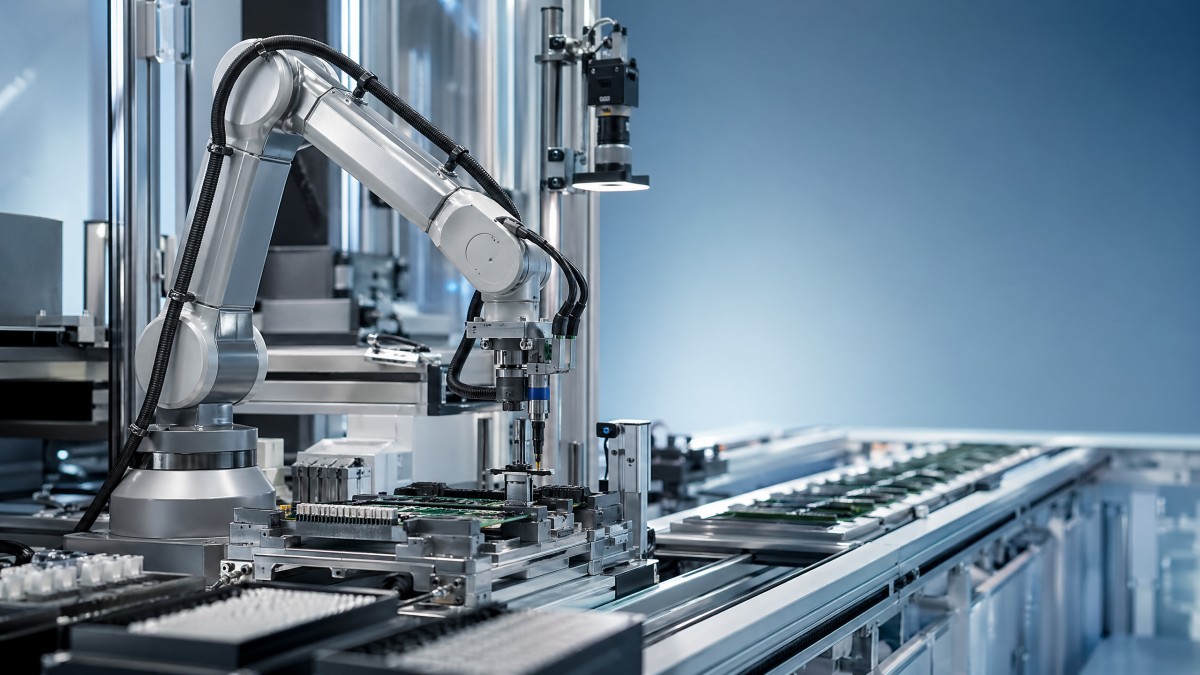
The strongest use cases for collaborative robots in electronics assembly are not random. They tend to appear in processes with five common characteristics:
- Repeatable motion with moderate complexity — such as screwdriving, pick-and-place, connector insertion, dispensing, and test loading.
- High quality sensitivity — where missed fasteners, uneven dispensing, misalignment, or ESD-related handling errors create scrap or rework.
- Frequent product changeovers — common in high-mix, low-to-mid volume electronics environments.
- Labor bottlenecks — especially where repetitive tasks suffer from turnover, fatigue, or skill inconsistency.
- A need for safe human-machine collaboration — where an operator still performs inspection, cable routing, exception handling, or final assembly judgment.
In other words, cobots fit best between fully manual work and hard-guarded high-speed automation. They are particularly attractive when manufacturers want flexibility without committing to a custom automation cell for every product variant.
Best-fit electronics assembly tasks for cobot deployment
In electronics production, certain stations consistently show stronger return from cobot deployment than others.
1. Screwdriving and controlled fastening
This is one of the clearest applications. Electronics products often require repeatable torque application, position consistency, and traceability. A cobot equipped with torque-controlled tooling can reduce missed screws, cross-threading, and uneven fastening patterns. For procurement and decision-makers, this is also easier to validate because performance can be measured through torque logs, cycle time, defect rates, and rework reduction.
2. Pick-and-place of delicate components or subassemblies
Collaborative robots are well suited for handling PCBs, housings, connectors, shields, and packaged subassemblies when the process requires stable repeatability but not extreme speed. This is especially useful when machine vision is used to verify orientation, fiducial alignment, or tray position before placement.
3. Connector insertion and light press-fit tasks
These tasks benefit from collaborative robots force control technology. In electronics assembly, small insertion errors can damage pins, connectors, or housings. Force sensing allows the robot to detect abnormal resistance, align more gently, and stop before damage occurs. That capability matters more than raw speed in many quality-critical assemblies.
4. Dispensing, gluing, and conformal coating support tasks
Where a process requires controlled path movement and repeatable bead placement, cobots can stabilize output quality. They are especially useful in mixed-model production where path changes are frequent but process repeatability is still critical.
5. Test station loading and unloading
Cobots fit well in ICT, functional test, burn-in preparation, and inspection handoff stations. These are often labor-intensive, repetitive, and ergonomically inefficient roles. A cobot can keep equipment utilized while operators focus on diagnosis and exceptions.
6. Labeling, scanning, and traceability support
In lines with serialization and product genealogy requirements, cobots can assist with part presentation, scanning sequences, and handling for consistent traceability capture.
Where cobots usually do not fit as well
Not every electronics process is a good cobot candidate. This is where many projects go wrong: companies deploy cobots because the technology is accessible, not because the process is right.
Cobots are often a poor fit when:
- Cycle time requirements are extremely aggressive and conventional industrial robots or dedicated automation can move much faster.
- The task is highly variable and dependent on fine human judgment, such as complex cable dressing, irregular cosmetic finishing, or nuanced troubleshooting.
- Payload or reach requirements exceed cobot capabilities.
- The process environment is harsh, such as contamination-heavy, high-temperature, or chemically aggressive stations without proper protection.
- The real bottleneck is upstream process instability, not labor or motion consistency.
For enterprise decision-makers, this distinction is essential. A cobot cannot compensate for poor fixture design, unstable incoming parts, weak process control, or bad line balancing. It performs best when inserted into a process that is already reasonably standardized.
How to evaluate whether a station is a strong cobot candidate
A practical evaluation framework helps both operators and procurement teams avoid overestimating benefits. The following questions are more useful than general claims about “smart automation”:
- Is the task repetitive enough to standardize?
- Does the current process suffer from labor inconsistency, fatigue, or ergonomic strain?
- Can quality improvement be measured clearly? For example: defect rate, first-pass yield, rework hours, torque deviation, insertion damage, or missed test cycles.
- Are product changeovers frequent enough that flexible automation has an advantage?
- Can a cobot integrate with existing fixtures, MES, scanners, torque tools, and machine vision systems?
- Will operators still be needed for exception handling, and is that collaboration designed properly?
A station becomes an excellent candidate when the answer is “yes” to most of these questions. If the process cannot be standardized, cannot be measured, or cannot be integrated cleanly, the cobot business case becomes weaker.
What target readers usually care about most: ROI, risk, and engineering practicality
Different stakeholders look at the same cobot project through different lenses, but their concerns overlap around measurable value.
For information researchers
The main need is understanding where cobots genuinely outperform manual work or rigid automation. They usually need application boundaries, not general market hype.
For operators and production users
The main concerns are usability, safety, setup time, maintenance burden, and whether the cobot actually makes the job easier rather than adding process friction.
For procurement teams
The critical questions are total cost of ownership, tooling compatibility, vendor support, spare parts availability, software lock-in, and verification of actual performance claims. Procurement also needs to compare suppliers on engineering parameters such as repeatability, safety features, force sensing capability, integration openness, and maintenance intervals.
For business leaders and plant decision-makers
The focus is broader: payback period, throughput impact, labor resilience, quality improvement, deployment risk, and scalability across multiple lines or factories.
That is why a useful cobot evaluation should include more than upfront hardware cost. It should include integration engineering, end-of-arm tooling, safety validation, training, programming time, changeover impact, spare part strategy, and expected uptime.
Why force control, vision, and predictive maintenance matter in electronics assembly
Basic robot motion alone is not enough for modern electronics manufacturing. The best results usually come from combining cobots with supporting technologies.
Collaborative robots force control technology
Force control is especially important in delicate insertion, connector mating, light press-fit operations, and contact-sensitive handling. It helps prevent over-force events that may not be visible immediately but can later cause latent reliability failures.
Machine vision defect detection systems
Vision improves the value of collaborative robots by reducing dependence on highly precise part presentation. In electronics assembly, machine vision defect detection systems can verify orientation, presence/absence, alignment, label position, connector seating, and certain cosmetic defects. This expands cobot usefulness in high-mix environments where fixture conditions and incoming part positioning are not perfectly uniform.
Industrial IoT predictive maintenance solutions
When cobots become part of a multi-station line, uptime matters as much as placement accuracy. Industrial IoT predictive maintenance solutions can track torque tool health, cycle anomalies, motor load trends, stoppage patterns, and maintenance intervals. For operations teams, this supports better OEE management. For decision-makers, it helps protect the real ROI by reducing unplanned downtime.
Common deployment mistakes that reduce cobot value
Even technically good cobots underperform when project planning is weak. The most common mistakes include:
- Automating the wrong station — selecting a task because it looks easy rather than because it is a real bottleneck.
- Ignoring fixturing quality — a cobot cannot compensate for unstable presentation or poor tolerance stack-up.
- Underestimating integration work — especially with MES, scanners, torque tools, conveyors, and test equipment.
- Using cycle time alone as the success metric — while overlooking yield, rework, traceability, and labor flexibility.
- Neglecting operator acceptance — if the human workflow is awkward, real productivity may not improve.
- Failing to plan for maintenance and support — leading to downtime that erodes expected savings.
In practical terms, the best cobot projects are usually process-engineering projects first and robotics projects second.
How to make a better purchasing or implementation decision
If your team is assessing collaborative robots for electronics assembly, focus on evidence that maps directly to your line conditions.
Useful evaluation criteria include:
- Actual repeatability under your payload and tooling conditions
- Cycle time under realistic part presentation and operator interaction
- Force sensing performance for insertion-sensitive tasks
- Ease of reprogramming during product changeover
- Compatibility with machine vision, torque tools, MES, and traceability systems
- Maintenance interval, spare parts lead time, and local support responsiveness
- Documented safety functionality in collaborative operating modes
- Reference deployments in similar high-mix electronics environments
For buyers, one of the best approaches is to request a line-representative proof of concept using actual parts, actual fixtures, and realistic takt requirements. Marketing demonstrations rarely expose real integration constraints.
Final judgment: where collaborative robots fit best in electronics assembly lines
Collaborative robots fit best in electronics assembly lines where the process is repetitive but not simple enough to leave fully manual, quality-sensitive but not fast enough to justify heavy custom automation, and flexible enough to benefit from rapid reconfiguration. Their strongest positions are usually screwdriving, light assembly, connector insertion, dispensing support, test handling, and traceability-linked material handling.
They are not a universal replacement for operators or for high-speed industrial automation. Their real value comes from improving consistency, reducing labor dependence, supporting safer ergonomics, and enabling flexible production in high-mix environments.
For manufacturers, the right question is not “Should we add cobots?” but “Which exact stations have measurable quality, labor, or uptime problems that cobots can solve better than the alternatives?” Once that question is answered with data, cobot adoption becomes a disciplined engineering decision rather than a technology trend.
Search News
Hot Articles
- Carbon Fiber StructuresHow to Specify Aerospace Carbon Fiber Assemblies for Lightweight, Load-Bearing PartsJul 11, 2026
- Machine VisionXiaomi, Alibaba DAMO Academy Drive Open-Source Robotics Model Ecosystem, Lowering Algorithm Development Barriers for Overseas SMEs Adopting Chinese Robotics SolutionsMar 30, 2026
- Cobots & ArmsShanxi 'AI+' Conference Showcases Embodied Intelligence with Multinational Buyer Engagement: Key Industry ImplicationsMar 30, 2026
Popular Tags
Recommended News
 Jul 11, 2026How to Specify Aerospace Carbon Fiber Assemblies for Lightweight, Load-Bearing PartsAerospace carbon fiber assemblies: learn how to specify laminate design, load data, joining methods, and inspection controls for lighter, reliable load-bearing aerospace parts.Elena Rostova (UAV Systems Researcher)
 Mar 30, 2026Xiaomi, Alibaba DAMO Academy Drive Open-Source Robotics Model Ecosystem, Lowering Algorithm Development Barriers for Overseas SMEs Adopting Chinese Robotics SolutionsXiaomi & Alibaba DAMO Academy's open-source robotics models lower algorithm barriers for global SMEs. Boost efficiency in manufacturing, logistics & smart retail with ROS 2 compatible solutions.TSV Data Lab
 Mar 30, 2026Shanxi 'AI+' Conference Showcases Embodied Intelligence with Multinational Buyer Engagement: Key Industry ImplicationsShanxi 'AI+' Conference highlights embodied intelligence with Tesla, Ubtech & Jiantao showcasing multimodal robotics. 40+ global buyers validated tech on-site, creating new B2B channels for industrial automation & AI solutions.Chen Wei (Automation Lead Engineer)
 Mar 30, 2026Zhongguancun Unveils 6G Integrated Sensing-Computing-Intelligence Platform to Empower Embodied Robots for Global Industrial ApplicationsZhongguancun's new 6G platform revolutionizes industrial robotics with <10ms latency, empowering global automotive, logistics & port automation. Discover how this tech boosts China's smart manufacturing exports.TSV Data Lab
 Mar 30, 2026Mech-Mind Tianjin Embodied Intelligence R&D and Production Base Goes Live, Cutting Delivery Time by 20%–30% for Global Customized AMR+Vision SolutionsMech-Mind's Tianjin AMR+Vision production base cuts delivery time by 20%-30% for欧美 & Latin American markets. Discover how this PLd-certified facility accelerates customized robotics solutions for smart manufacturing and logistics.Chen Wei (Automation Lead Engineer)
 Mar 30, 2026Boao Forum Reveals 'Co-evolution of Big and Small Brains' Trend in Humanoid Robots, China's Embodied Intelligence Accelerates Adaptation to Overseas Manufacturing Service ScenariosDiscover how China's humanoid robots, featuring 'Co-evolution of Big and Small Brains,' are revolutionizing global manufacturing. Learn about Embodied Tian Gong 3.0's ISO compliance and overseas deployment at Boao Forum 2026.Chen Wei (Automation Lead Engineer)
 Mar 30, 2026China Railway Industrial Secures Patent for Embodied Robotics in Material Handling, Boosting High-Precision Delivery Capabilities for Overseas Infrastructure and Manufacturing ProjectsChina Railway Industrial's new patent for embodied robotics in material handling boosts high-precision delivery for global infrastructure & manufacturing. Discover how this innovation enhances logistics accuracy in automotive, rail transit & EPC projects.Chen Wei (Automation Lead Engineer)
 Oct 25, 2026Hesai Leads Global ADAS Main Lidar Shipments in Yole’s 2026 ReportHesai led global ADAS main lidar shipments with a 43% share in 2025, according to Yole’s 2026 report. Explore what this ranking reveals about its automotive market position.TSV Data Lab
 Oct 25, 2026Choosing an Aerospace Materials Manufacturer: Quality and Traceability ChecksChoosing an aerospace materials manufacturer? Learn how to verify certifications, test reports, and lot traceability to qualify suppliers confidently and reduce costly sourcing risks.Dr. Marcus Vance
 Oct 24, 2026Guotai Haitong: Global Entry-Level 3D Printer Shipments Rose 39% in Q1 2026Entry-level 3D printer shipments rose 39% in Q1 2026, Guotai Haitong reports. Explore how AI, multicolor printing and print farms are shaping market growth.Dr. Marcus Vance
 Oct 24, 2026Choosing an Industrial Vision Inspection Supplier: Acceptance Tests That MatterChoose an industrial vision inspection supplier with confidence. Discover acceptance tests for defect detection, false rejects, production speed, and reliable part rejection before you buy.TSV Data Lab
 Oct 23, 2026US Navy Raises Gecko Robotics Contract Ceiling to $300M for Robotic Fleet MaintenanceUS Navy raises Gecko Robotics’ contract ceiling to $300M for Pacific Fleet robotic inspections. Explore potential opportunities for maintenance suppliers and key procurement considerations.Chen Wei (Automation Lead Engineer)
 Oct 23, 2026Choosing Industrial Sensing Systems for Global Plants: Protocol CompatibilityCompare industrial sensing systems international buyers can trust. Explore protocol compatibility, reduce integration risks, and select proven configurations for reliable global plant deployments.TSV Data Lab
 Oct 22, 2026KUKA Showcases Physical AI and iiQKA.AI Vision at NVIDIA GTC BerlinExplore KUKA’s Physical AI showcase at NVIDIA GTC Berlin and discover how iiQKA.AI Vision aims to simplify robotic vision integration and improve 2D and 3D scene recognition.TSV Data Lab
 Oct 22, 2026Robotic Machining of Advanced Composites: What Tolerances Are Achievable?Explore advanced materials machining robotics: discover what drives achievable composite tolerances and how to validate accuracy before investing in your next machining system.Dr. Marcus Vance
 Oct 21, 2026China’s Industrial Robot Exports Near RMB 10 Billion in First Nine Months of 2026China’s industrial robot exports neared RMB 10 billion in January–September 2026, with value rising faster than volume. Explore the data and what it could mean for suppliers.Chen Wei (Automation Lead Engineer)
 Oct 21, 2026Low-Latency Industrial Data Processing: Pricing and Key Cost DriversExplore industrial data latency price drivers, from edge hardware to integration and support. Learn how to compare quotes, verify performance, and avoid unnecessary costs.TSV Data Lab
 Oct 20, 2026KUKA Launches iiQKA.AI Vision to Simplify Industrial Image ProcessingKUKA iiQKA.AI Vision simplifies industrial image processing with controller-based 2D and 3D vision. Explore drag-and-drop setup for vision-guided automation.TSV Data Lab
 Oct 20, 2026Smart Industrial Edge Devices: Key Criteria for Legacy PLC IntegrationChoose smart industrial edge devices for legacy PLC integration. Discover key criteria for compatibility, data quality, security, and reliable collection without disrupting control.TSV Data Lab
 Oct 19, 2026Choosing a Radar Sensor by Application: Range, Resolution, and Field of ViewSimplify radar sensor application based product selection. Compare range, resolution, and field of view to avoid blind spots and choose with confidence. Explore the guide.TSV Data Lab
 Oct 18, 2026Comparing Material Options for Procurement: Specs, Costs, and Supply RisksExplore procurement oriented technical content on material options, specs, costs, and supply risks. Compare alternatives to cut hidden expenses and make confident sourcing decisions.Dr. Marcus Vance
 Oct 17, 20265-Axis CNC Positioning Accuracy: How to Interpret ISO 230-2 Test ResultsAssess 5 axis CNC machining positioning accuracy with ISO 230-2. Learn to interpret repeatability, reversal error, and test conditions to compare suppliers and make confident acceptance decisions.Dr. Marcus Vance
 Oct 16, 2026Choosing a Rugged Edge AI Box Supplier: Thermal Tests and Lifecycle SupportChoose a rugged edge AI box supplier with proven thermal performance and reliable lifecycle support. Discover the tests and commitments to verify before you buy.TSV Data Lab
 Oct 15, 2026R&D Cost Reduction Services: How to Evaluate Fees, Savings, and ROIEvaluate R&D cost reduction services with confidence. Compare fees, verify savings, and calculate ROI without compromising performance. Discover how to choose a provider that delivers real value.Chen Wei (Automation Lead Engineer)























