Palletizing Robot Suppliers: How to Compare Reach, Speed, and ROI
Publication Date
author
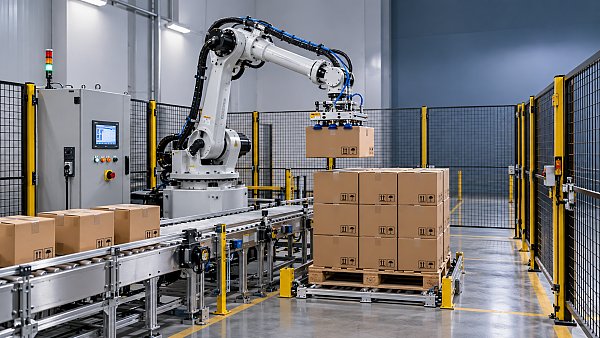
Choosing among palletizing robot suppliers is not just about catalog specs—it is a capital decision that affects throughput, floor layout, labor efficiency, and long-term ROI. For enterprise decision-makers, the real challenge is separating measurable engineering performance from sales claims. This guide shows how to compare reach, speed, and return with a data-driven lens, so you can shortlist suppliers with confidence.
Why scenario differences matter when evaluating palletizing robot suppliers
Not every palletizing cell solves the same business problem. A beverage plant handling high-volume cartons has very different requirements from a contract manufacturer stacking mixed SKUs, and both differ again from a warehouse operation that needs flexible end-of-line automation with limited floor space. That is why experienced buyers do not compare palletizing robot suppliers only by headline payload or cycle time. They compare suitability by scenario.
For enterprise teams, the key variables usually sit at the intersection of engineering and economics: robot reach must match pallet pattern and conveyor geometry, speed must support actual line takt rather than a lab benchmark, and ROI must reflect labor, uptime, maintenance, integration complexity, and changeover frequency. A supplier that looks cost-effective in one environment can become expensive in another if the cell is oversized, under-guarded, or difficult to reprogram.
This is where a data-driven sourcing approach becomes valuable. TechStat Vanguard’s perspective is simple: parameters should be judged in operating context. When reviewing palletizing robot suppliers, the right question is not “Which robot is best?” but “Which supplier is best aligned with my throughput profile, packaging variability, safety requirements, and payback target?”
The three metrics that influence most buying decisions
- Reach: Determines usable work envelope, pallet access, and layout flexibility.
- Speed: Impacts line balancing, peak throughput, and buffer needs.
- ROI: Converts technical fit into financial justification, including labor savings and lifecycle cost.
A practical shortlist mindset
Before contacting palletizing robot suppliers, define your operating envelope: product type, case dimensions, stack height, SKU variability, daily operating hours, and required OEE. This prevents the sourcing process from drifting toward generic vendor presentations and keeps discussion anchored in measurable fit.
A well-run evaluation also includes upstream and downstream constraints. A fast robot does not deliver value if infeed accumulation is unstable, if pallets are manually staged too slowly, or if wrapper integration creates a bottleneck. In other words, procurement should assess the entire cell, not just the arm.
Three common business scenarios and what to prioritize
Most comparisons of palletizing robot suppliers become clearer when broken into recurring applications. Below are three common scenarios that enterprise buyers face. Each has a different tolerance for complexity, speed variation, and capital intensity.
The point is not to force every project into a rigid category, but to identify the operational pattern that most closely matches your site. Once that pattern is clear, supplier claims become easier to verify.
The table below highlights how scenario shifts change the buying criteria.
Scenario 1: High-volume consumer goods production
In food, beverage, tissue, and other fast-moving packaged goods environments, speed often dominates the conversation. However, buyers should be careful not to assess speed in isolation. The right palletizing robot suppliers for these plants are those that can show sustained cycle performance at target payload, not just maximum speed with ideal conditions and simplified picks.
In this scenario, uptime metrics are often as important as motion speed. A robot that runs slightly slower but has stronger local service coverage, easier gripper maintenance, and proven spare parts availability may outperform a nominally faster competitor over a full year of operation. For decision-makers, this is a classic case where total output matters more than brochure speed.
What to ask suppliers
- What is the verified cases-per-minute rate at my actual case weight and pattern?
- What OEE range do comparable installations achieve after stabilization?
- How long is mean time to repair for gripper, vision, and conveyor interface issues?
Scenario 2: Multi-SKU and frequent changeover operations
Contract packagers and mixed-product manufacturers typically need a more adaptable cell. Here, the best palletizing robot suppliers are not always those offering the fastest arm. They are the ones that reduce changeover friction, support multiple pallet recipes, and simplify training for plant personnel.
Reach becomes more important because varied case sizes, dual pallet stations, and irregular layouts can demand broader working envelopes. Software usability also becomes a hidden ROI driver. If recipe adjustment requires specialist support every time a new SKU is introduced, engineering cost rises and agility falls.
Scenario 3: Retrofit projects with space and labor constraints
Many companies do not have the luxury of greenfield design. They need end-of-line automation added into legacy buildings, narrow aisles, or crowded packaging halls. In these cases, evaluating palletizing robot suppliers requires close attention to footprint, guarding strategy, infeed orientation, and access for maintenance.
A supplier with strong integration engineering may create better value than one with a cheaper base robot. The reason is simple: retrofit complexity can absorb budget through civil work, conveyor redesign, utility relocation, and validation delays. For these sites, ROI often depends on installation practicality as much as on robot performance.
How to compare reach in real operating layouts
Reach is frequently misunderstood because many buyers look only at the robot’s maximum arm length. In palletizing applications, useful reach depends on far more: gripper dimensions, box overhang, pallet height growth, base mounting position, safety clearance, and whether the robot must serve one or two pallet stations. The most credible palletizing robot suppliers will provide layout simulations rather than abstract numbers.
For example, a robot with generous nominal reach may still struggle in a dual-line configuration if the wrist angle becomes constrained at top layer positions. Similarly, a compact machine may work well in a single-SKU line if mounted on an elevated frame. Reach should therefore be tested against the final pallet pattern and full range of product dimensions.
Enterprise buyers should also consider future expansion. If your current requirement is one pallet position but your three-year plan includes mixed loads or an extra discharge lane, insufficient reach can lock the site into an early redesign. That is why suppliers should be scored on scalable layout logic, not only present-state compliance.
Reach checklist by scenario
- Map infeed, pallet location, slip sheet position, and operator access.
- Validate lowest and highest pick/place points across all SKUs.
- Confirm whether one robot must service multiple lines or pallet types.
- Review 3D simulation for singularity or awkward wrist posture.
Red flags
Be cautious if palletizing robot suppliers avoid sharing detailed layout drawings, only quote diagonal reach without application context, or leave end-effector mass out of performance calculations. These omissions often lead to surprise redesigns after order placement.
How to compare speed without being misled by marketing
Speed is meaningful only when matched to payload, product stability, and line conditions. In palletizing, actual throughput depends on acceleration limits, pick orientation, gripper open-close timing, pattern complexity, and whether the robot handles one or multiple cases per cycle. Serious palletizing robot suppliers should explain the full cycle model rather than quote a single optimistic number.
A practical method is to ask for throughput at three conditions: nominal operation, peak operation, and conservative operation for fragile loads. This gives buyers a better sense of range. It also reveals whether speed margins exist for seasonal demand spikes or future packaging changes.
Decision-makers should compare robot speed with line balance. If upstream cartoning or case sealing varies significantly, buying the fastest possible palletizer may not improve net output. In some plants, buffer design and jam recovery contribute more value than extreme robotic velocity.
Questions that expose true speed capability
- What cycle time is achieved with my gripper configuration and case dimensions?
- Is the quoted rate sustained over full pallet height, not just initial layers?
- How does performance change when handling unstable bags, shrink-wrapped bundles, or mixed patterns?
- What happens to speed when the cell includes label verification, slip sheets, or pallet dispensing?
How to calculate ROI by application, not by generic payback claims
ROI is where many supplier comparisons break down. Some palletizing robot suppliers present short payback periods based only on labor replacement. But in enterprise environments, financial returns come from a broader set of variables: labor redeployment, lower ergonomic risk, reduced damage, higher throughput consistency, fewer overtime hours, and greater packaging line resilience.
Application context changes the model. In a high-volume plant running three shifts, even modest efficiency gains can produce strong returns because uptime improvements multiply across many operating hours. In a low-volume plant with seasonal demand, capital recovery may depend more on flexibility and cross-SKU utilization than on pure labor savings.
The best palletizing robot suppliers usually help buyers build a transparent ROI model with assumptions clearly shown. That model should include not only the robot and gripper, but also conveyors, guarding, controls integration, training, maintenance, spare parts, and expected ramp-up period.
Core ROI components to model
Common ROI mistakes
Do not assume that lower purchase price means better return. A cheaper system can underperform if it lacks robust software, local service capability, or operator-friendly changeover tools. Equally, avoid overbuying. An oversized system with excessive reach or unnecessary speed may increase capex without improving your application outcome.
Shortlisting palletizing robot suppliers with confidence
A confident shortlist usually comes from structured comparison. Start by defining your scenario, then score palletizing robot suppliers against application-fit criteria rather than brand familiarity alone. Include engineering, operations, procurement, maintenance, and safety stakeholders in the review. Each group sees different risks that affect overall success.
For enterprise decision-makers, a strong supplier is one that can translate specs into site-specific evidence: reference installations, cycle simulations, service response expectations, and transparent assumptions behind ROI. This is especially important when projects span multiple plants or countries, where support consistency and standardization become strategic concerns.
If you want a disciplined next step, build an RFQ around your actual scenario: current and future throughput, case range, pallet pattern rules, footprint constraints, shift model, and expected payback threshold. That approach makes it easier to compare palletizing robot suppliers on engineering truth rather than on polished marketing language. In the end, the right choice is the supplier whose reach fits your layout, whose speed fits your line reality, and whose ROI model stands up under operational scrutiny.
Search News
Hot Articles
- Carbon Fiber StructuresHow to Specify Aerospace Carbon Fiber Assemblies for Lightweight, Load-Bearing PartsJul 11, 2026
- Machine VisionXiaomi, Alibaba DAMO Academy Drive Open-Source Robotics Model Ecosystem, Lowering Algorithm Development Barriers for Overseas SMEs Adopting Chinese Robotics SolutionsMar 30, 2026
- Cobots & ArmsShanxi 'AI+' Conference Showcases Embodied Intelligence with Multinational Buyer Engagement: Key Industry ImplicationsMar 30, 2026
Popular Tags
Recommended News
 Jul 11, 2026How to Specify Aerospace Carbon Fiber Assemblies for Lightweight, Load-Bearing PartsAerospace carbon fiber assemblies: learn how to specify laminate design, load data, joining methods, and inspection controls for lighter, reliable load-bearing aerospace parts.Elena Rostova (UAV Systems Researcher)
 Mar 30, 2026Xiaomi, Alibaba DAMO Academy Drive Open-Source Robotics Model Ecosystem, Lowering Algorithm Development Barriers for Overseas SMEs Adopting Chinese Robotics SolutionsXiaomi & Alibaba DAMO Academy's open-source robotics models lower algorithm barriers for global SMEs. Boost efficiency in manufacturing, logistics & smart retail with ROS 2 compatible solutions.TSV Data Lab
 Mar 30, 2026Shanxi 'AI+' Conference Showcases Embodied Intelligence with Multinational Buyer Engagement: Key Industry ImplicationsShanxi 'AI+' Conference highlights embodied intelligence with Tesla, Ubtech & Jiantao showcasing multimodal robotics. 40+ global buyers validated tech on-site, creating new B2B channels for industrial automation & AI solutions.Chen Wei (Automation Lead Engineer)
 Mar 30, 2026Zhongguancun Unveils 6G Integrated Sensing-Computing-Intelligence Platform to Empower Embodied Robots for Global Industrial ApplicationsZhongguancun's new 6G platform revolutionizes industrial robotics with <10ms latency, empowering global automotive, logistics & port automation. Discover how this tech boosts China's smart manufacturing exports.TSV Data Lab
 Mar 30, 2026Mech-Mind Tianjin Embodied Intelligence R&D and Production Base Goes Live, Cutting Delivery Time by 20%–30% for Global Customized AMR+Vision SolutionsMech-Mind's Tianjin AMR+Vision production base cuts delivery time by 20%-30% for欧美 & Latin American markets. Discover how this PLd-certified facility accelerates customized robotics solutions for smart manufacturing and logistics.Chen Wei (Automation Lead Engineer)
 Mar 30, 2026Boao Forum Reveals 'Co-evolution of Big and Small Brains' Trend in Humanoid Robots, China's Embodied Intelligence Accelerates Adaptation to Overseas Manufacturing Service ScenariosDiscover how China's humanoid robots, featuring 'Co-evolution of Big and Small Brains,' are revolutionizing global manufacturing. Learn about Embodied Tian Gong 3.0's ISO compliance and overseas deployment at Boao Forum 2026.Chen Wei (Automation Lead Engineer)
 Mar 30, 2026China Railway Industrial Secures Patent for Embodied Robotics in Material Handling, Boosting High-Precision Delivery Capabilities for Overseas Infrastructure and Manufacturing ProjectsChina Railway Industrial's new patent for embodied robotics in material handling boosts high-precision delivery for global infrastructure & manufacturing. Discover how this innovation enhances logistics accuracy in automotive, rail transit & EPC projects.Chen Wei (Automation Lead Engineer)
 Oct 28, 2026IDC: Global Quadruped Robot Shipments Rise 92.5% in H1 2026 as Volume and Value DivergeGlobal quadruped robot shipments rose 92.5% in H1 2026, according to IDC. Explore what diverging volume and value trends mean for industrial buyers and manufacturers.Chen Wei (Automation Lead Engineer)
 Oct 28, 2026Interpreting Industrial IoT Latency Data for Monitoring and Real-Time ControlInterpret industrial category latency data to assess jitter, deadline misses, and real-time readiness. Learn how to benchmark IIoT systems and choose monitoring and control solutions.TSV Data Lab
 Oct 27, 2026GXO and Agility Robotics Expand Partnership to Accelerate US Humanoid Robot DeploymentGXO and Agility Robotics plan to expand US humanoid robot deployment with Digit 4 in early 2027. Explore warehouse automation plans, service terms and future Digit 5 upgrades.Chen Wei (Automation Lead Engineer)
 Oct 27, 2026Robotic Automation Costs: Budgeting for Equipment, Integration, and MaintenancePlan your robotics automation cost with confidence. Explore equipment, integration, and maintenance expenses, compare quotes, and build a realistic budget for better ROI.Chen Wei (Automation Lead Engineer)
 Oct 26, 2026AMAXiMAL Releases Open-Source TopMod 3D v3 With Claude AIExplore AMAXiMAL’s free, open-source TopMod 3D v3 with Claude AI assistance, topology-based modeling and plywood fabrication tools that connect complex designs to physical builds.Dr. Marcus Vance
 Oct 26, 2026Choosing a SCADA System Integrator Company: PLC Compatibility and Long-Term SupportChoose a scada system integrator company with proven PLC compatibility and reliable long-term support. Discover what to test, compare, and require before investing.Victor Lin (Chief Software Architect)
 Oct 25, 2026Hesai Leads Global ADAS Main Lidar Shipments in Yole’s 2026 ReportHesai led global ADAS main lidar shipments with a 43% share in 2025, according to Yole’s 2026 report. Explore what this ranking reveals about its automotive market position.TSV Data Lab
 Oct 25, 2026Choosing an Aerospace Materials Manufacturer: Quality and Traceability ChecksChoosing an aerospace materials manufacturer? Learn how to verify certifications, test reports, and lot traceability to qualify suppliers confidently and reduce costly sourcing risks.Dr. Marcus Vance
 Oct 24, 2026Guotai Haitong: Global Entry-Level 3D Printer Shipments Rose 39% in Q1 2026Entry-level 3D printer shipments rose 39% in Q1 2026, Guotai Haitong reports. Explore how AI, multicolor printing and print farms are shaping market growth.Dr. Marcus Vance
 Oct 24, 2026Choosing an Industrial Vision Inspection Supplier: Acceptance Tests That MatterChoose an industrial vision inspection supplier with confidence. Discover acceptance tests for defect detection, false rejects, production speed, and reliable part rejection before you buy.TSV Data Lab
 Oct 23, 2026US Navy Raises Gecko Robotics Contract Ceiling to $300M for Robotic Fleet MaintenanceUS Navy raises Gecko Robotics’ contract ceiling to $300M for Pacific Fleet robotic inspections. Explore potential opportunities for maintenance suppliers and key procurement considerations.Chen Wei (Automation Lead Engineer)
 Oct 23, 2026Choosing Industrial Sensing Systems for Global Plants: Protocol CompatibilityCompare industrial sensing systems international buyers can trust. Explore protocol compatibility, reduce integration risks, and select proven configurations for reliable global plant deployments.TSV Data Lab
 Oct 22, 2026KUKA Showcases Physical AI and iiQKA.AI Vision at NVIDIA GTC BerlinExplore KUKA’s Physical AI showcase at NVIDIA GTC Berlin and discover how iiQKA.AI Vision aims to simplify robotic vision integration and improve 2D and 3D scene recognition.TSV Data Lab
 Oct 22, 2026Robotic Machining of Advanced Composites: What Tolerances Are Achievable?Explore advanced materials machining robotics: discover what drives achievable composite tolerances and how to validate accuracy before investing in your next machining system.Dr. Marcus Vance
 Oct 21, 2026China’s Industrial Robot Exports Near RMB 10 Billion in First Nine Months of 2026China’s industrial robot exports neared RMB 10 billion in January–September 2026, with value rising faster than volume. Explore the data and what it could mean for suppliers.Chen Wei (Automation Lead Engineer)
 Oct 21, 2026Low-Latency Industrial Data Processing: Pricing and Key Cost DriversExplore industrial data latency price drivers, from edge hardware to integration and support. Learn how to compare quotes, verify performance, and avoid unnecessary costs.TSV Data Lab
 Oct 20, 2026KUKA Launches iiQKA.AI Vision to Simplify Industrial Image ProcessingKUKA iiQKA.AI Vision simplifies industrial image processing with controller-based 2D and 3D vision. Explore drag-and-drop setup for vision-guided automation.TSV Data Lab