
Medical robot arm manufacturer standards vary more than expected
Publication Date
author
Medical robot arm manufacturer standards often differ far more than buyers expect, especially when comparing cobot repeatability tolerance, robotic arm IP67 waterproof test results, and 6 axis robot calibration methods across suppliers. For procurement teams, engineers, and decision-makers, understanding these gaps is essential to evaluate risk, benchmark performance, and identify a reliable medical robot arm manufacturer with verifiable data rather than marketing claims.
Why do medical robot arm manufacturer standards vary so much in real procurement?
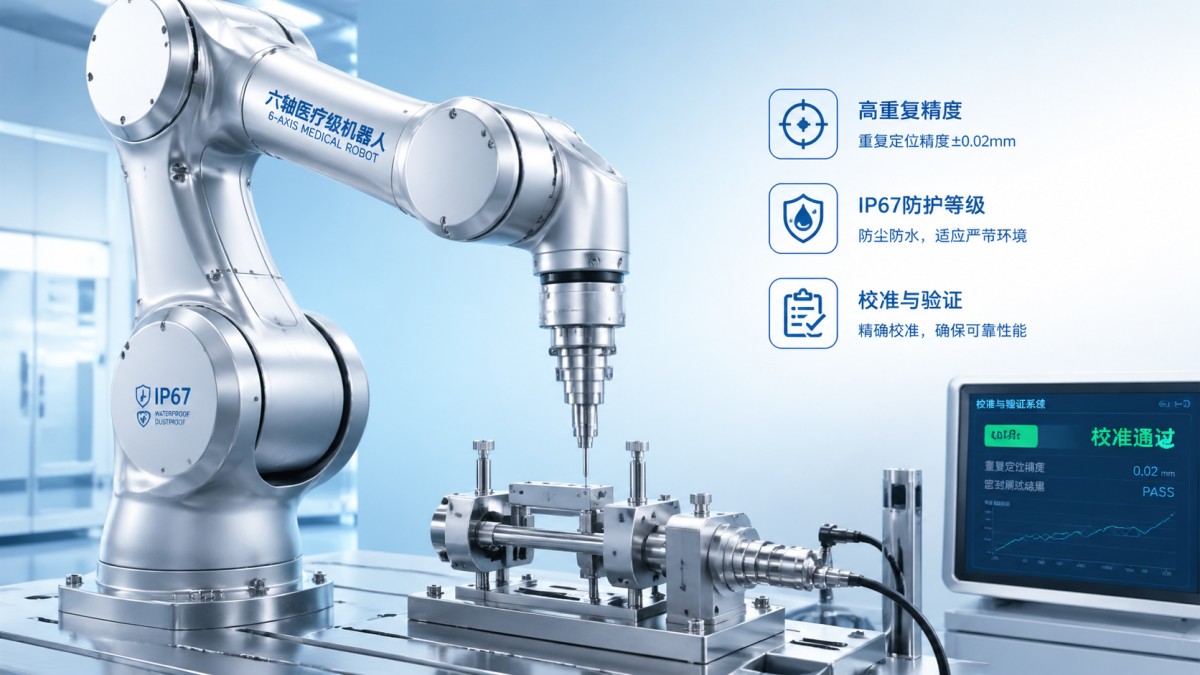
In medical robotics sourcing, the phrase medical robot arm manufacturer can describe suppliers with very different engineering depth. Some companies build actuator systems, control architecture, and calibration workflows in-house. Others mainly integrate purchased joints, housings, and software modules. On paper, both may present similar brochures. In a factory audit or validation review, the differences become visible within 2–4 weeks.
This gap matters because hospital-facing or medical-device-adjacent applications demand more than nominal reach and payload. Buyers need traceable repeatability data, material compatibility, ingress protection boundaries, cable routing durability, and a defined maintenance cycle. A robot arm used in a clean environment, lab automation cell, imaging support platform, or surgical-assist subsystem must perform consistently over repeated cycles, not just pass a single demo.
TechStat Vanguard focuses on this exact decision problem: separating marketing language from engineering evidence. For information researchers, the priority is understanding which parameters are comparable. For operators, the concern is stability during daily use. For procurement teams, the challenge is vendor qualification. For enterprise decision-makers, the issue is downstream risk: delay, nonconformance, or costly redesign after installation.
Standards variation usually appears in 4 areas: how repeatability is measured, how IP protection is tested, how calibration is performed, and how service documentation is maintained across the equipment lifecycle. If those 4 items are not aligned at the RFQ stage, suppliers may appear equivalent while carrying very different validation burdens.
The most common sources of inconsistency
- Repeatability values may be declared under different test speeds, payload levels, tool center point settings, or ambient temperatures such as 20°C–25°C versus a wider plant environment.
- IP67 claims may apply only to selected joints, external covers, or static testing conditions rather than the full robotic arm during motion and cable flexing.
- 6 axis robot calibration methods may range from factory-only geometric compensation to field recalibration with fixtures, laser trackers, or master tools.
- Compliance language may reference medical manufacturing environments without clarifying whether the arm itself, the subsystem, or the finished device carries the relevant regulatory responsibility.
For this reason, a serious comparison should never begin with headline claims alone. It should begin with a test-condition matrix and a document request list. That approach reduces trial-and-error cost and helps teams avoid overpaying for specifications that are either unverified or irrelevant to the intended workflow.
Which technical parameters deserve closer scrutiny than brochure headlines?
When evaluating a medical robot arm manufacturer, three parameter groups usually determine whether a platform is suitable for real deployment: motion precision, environmental protection, and calibration integrity. These groups sound familiar, but the underlying definitions often differ enough to distort a comparison. That is why teams should ask not only what value is claimed, but how it was obtained.
Cobot repeatability tolerance is often the first filter. Yet repeatability is not the same as absolute accuracy. A robotic arm may return to the same point within a tight range while still requiring positional correction for multi-station workflows. In medical automation, where pipetting, imaging alignment, tray handling, or guided placement may occur repeatedly over 8–16 hour shifts, this distinction affects yield and rework.
Robotic arm IP67 waterproof test results also need careful interpretation. IP67 generally indicates protection against dust ingress and temporary immersion under defined conditions. It does not automatically confirm resistance to all washdown chemicals, sterilization agents, or long-term condensation stress. For operators in humid rooms or cleaning-sensitive environments, the exact test boundary matters more than the label itself.
6 axis robot calibration methods form the third critical layer. Factory calibration may be sufficient for static tasks, but field relocation, end-effector changes, and floor settlement can shift performance. A manufacturer that provides recalibration guidance, fixture requirements, compensation logic, and verification intervals every 6–12 months typically gives procurement teams a more realistic lifecycle picture.
Parameter comparison framework for supplier evaluation
The table below helps compare a medical robot arm manufacturer beyond surface-level claims. It is especially useful during supplier shortlisting, technical clarification, and pre-audit preparation.
A table like this turns a broad supplier conversation into a controlled engineering review. It also prevents one recurring mistake: comparing a tightly documented platform against a loosely documented one as if both were validated to the same depth.
Three practical questions engineers should ask
- Was the repeatability test performed over a limited path, or across the usable workspace with representative payload changes?
- Do IP67 waterproof test results include connectors, dress packs, and moving-axis seals, or only enclosure shells?
- Can the 6 axis robot calibration method be repeated on site within 1 day, or does it require return-to-factory support?
These questions are simple, but they quickly reveal whether a medical robot arm manufacturer is prepared for real deployment conditions or only optimized for sales presentation.
How should procurement teams compare suppliers without missing hidden risk?
Procurement teams often receive offers that look competitive on unit price and lead time, yet differ sharply in qualification effort. The correct comparison is not arm price alone. It is total sourcing burden: document completeness, integration risk, acceptance clarity, maintenance visibility, and change-control discipline. In medical and quasi-medical environments, that broader view can save months.
A practical sourcing model uses 5 dimensions: technical fit, compliance readiness, service responsiveness, lifecycle cost, and traceability. Each dimension should be weighted according to project stage. For prototype builds, engineering flexibility may carry more weight. For scaled deployment, spare support and validation consistency often matter more. This approach helps decision-makers avoid selecting the cheapest quote that later becomes the most expensive project path.
TechStat Vanguard recommends converting supplier claims into verifiable checkpoints. Ask for test protocols, not just summaries. Ask for calibration workflow, not just claimed precision. Ask for maintenance schedules with typical service intervals such as every 3 months, 6 months, or 12 months. The more a medical robot arm manufacturer can document these items clearly, the lower the ambiguity during factory acceptance and site acceptance.
Another frequent issue is mismatch between user and buyer priorities. Operators care about interface stability, alarm clarity, and cleaning practicality. Procurement cares about delivery and warranty. Management cares about risk and scalability. A structured supplier scorecard aligns all three perspectives before contract award.
Supplier scorecard for medical robot arm manufacturer assessment
The following comparison table can be used during RFQ review, sample-stage evaluation, or final supplier nomination. It is designed for B2B teams that need a defensible decision record.
This scorecard is especially helpful when two suppliers present comparable arm kinematics but very different engineering governance. In practice, governance quality often predicts smoother commissioning better than a small advertised precision advantage.
A 4-step procurement workflow that reduces ambiguity
- Define the use case in measurable terms: payload range, motion frequency per hour, cleaning exposure, mounting orientation, and desired service interval.
- Request structured evidence from each medical robot arm manufacturer, including test methods, calibration procedure, interface drawings, and maintenance documents.
- Run a technical clarification review with engineering, operations, procurement, and quality stakeholders before commercial negotiation.
- Lock acceptance criteria for FAT and SAT, including 3–6 critical checks such as repeatability verification, alarm function, homing consistency, and recalibration capability.
A disciplined workflow prevents a common B2B failure mode: buying a robot arm before defining the evidence needed to approve it.
What standards, validation boundaries, and application scenarios should buyers map early?
Not every robotic arm used in a medical environment is regulated in the same way. Some serve in lab automation, sample handling, imaging support, or clean production cells. Others may become part of a finished medical device or a validated manufacturing process. Because of this, buyers must distinguish between environmental suitability, manufacturing quality systems, and end-product regulatory obligations.
A medical robot arm manufacturer should be able to explain the boundary between its supplied component and the buyer’s final system responsibilities. This is where many sourcing projects lose time. Teams ask whether the arm is “medical grade” without defining whether they need corrosion resistance, cleanability, biocompatibility support for nearby components, documentation for validation, or quality-system alignment with medical production.
For medical-device manufacturing and adjacent applications, buyers commonly review whether suppliers understand ISO 13485 production contexts, risk management interfaces, electrical safety considerations at the system level, and installation controls. That does not mean every robot arm itself carries a standalone medical certification. It means the manufacturer should supply documentation that helps the buyer build a compliant integration file.
Application mapping should also happen early. A robot arm supporting reagent handling in a controlled indoor environment faces a different exposure profile than one installed near aggressive cleaning routines or splash-prone preparation areas. The correct IP rating, cable material, seal design, and maintenance interval can change accordingly.
Typical scenario mapping for selection discussions
- Lab automation cells: focus on repeatability, path smoothness, compact footprint, and contamination-aware cleaning procedures over long repetitive cycles.
- Imaging or diagnostic support equipment: prioritize positional stability, cable management, low-vibration movement, and recalibration after transport.
- Medical-device manufacturing lines: examine maintenance traceability, operator training, alarm history, and fit with documented quality processes.
- Cleaning-sensitive environments: verify robotic arm IP67 waterproof test results, connector protection, chemical exposure limits, and seal replacement practice.
Where buyers often misunderstand “compliance”
One common misconception is that a single certificate removes all integration risk. In practice, compliance is layered. The robotic arm, the control cabinet, the software interface, the end effector, and the finished machine may each have different documentation obligations. If this is clarified only after PO issuance, the project timeline can stretch by 4–8 weeks or more due to added validation work.
A more reliable approach is to define 3 document packages before ordering: technical specification package, quality and traceability package, and installation plus service package. This structure gives procurement and quality teams a shared checklist while keeping engineering discussions grounded in evidence rather than assumptions.
FAQ and action guide: how to move from supplier research to a defendable decision
The final step is turning research into action. For information researchers, that means filtering noise. For users and operators, it means confirming practical reliability. For procurement teams, it means shortening qualification cycles. For decision-makers, it means funding platforms that reduce redesign risk. The questions below address the most frequent issues raised during early supplier engagement.
How should I compare cobot repeatability tolerance from different suppliers?
Compare the test conditions before comparing the number. Ask for payload, motion speed, test path, temperature range, tool center point definition, and number of repetitions. A repeatability claim without those boundaries is not a stable basis for vendor ranking. If your process runs 10–20 cycles per minute, request evidence closer to that duty profile.
Do robotic arm IP67 waterproof test results guarantee suitability for cleaning-sensitive medical environments?
Not by themselves. IP67 addresses a specific ingress protection condition. It does not automatically cover cleaning chemicals, repeated washdown, hot-cold condensation cycles, or connector aging under motion. Ask whether protection applies to the entire arm assembly and whether maintenance recommendations change after repeated exposure.
Why do 6 axis robot calibration methods matter after installation?
Because robot performance can shift after transport, mounting changes, tooling replacement, or floor vibration over time. A supplier that supports field verification and recalibration can reduce downtime from several days to a shorter service window, depending on the application and required acceptance checks.
What is the most useful document set to request from a medical robot arm manufacturer?
Start with 5 items: detailed specification sheet, test-condition description for key parameters, calibration workflow, preventive maintenance schedule, and interface documentation for electrical and mechanical integration. If the arm will enter a medical-device production context, add traceability and quality-system-related documents relevant to your integration file.
Why work with TechStat Vanguard when qualifying a medical robot arm manufacturer?
TechStat Vanguard is built for teams that need engineering truth, not amplified marketing. Our role is to help global buyers, R&D teams, and senior procurement leaders interpret supplier claims through a hard-technical lens. We focus on measurable parameters, benchmark logic, and supply-chain clarity so your team can draft better spec sheets and ask better questions before capital is committed.
If you are comparing a medical robot arm manufacturer and need support, the most valuable starting point is a parameter review session. We can help structure your evaluation around cobot repeatability tolerance, robotic arm IP67 waterproof test results, 6 axis robot calibration methods, documentation scope, lifecycle service expectations, and practical acceptance criteria for FAT and SAT.
You can also consult us when your team needs guidance on supplier shortlisting, technical comparison matrices, specification drafting, delivery-cycle assumptions such as 6–12 weeks, or the definition of a realistic validation package. This is especially useful when multiple vendors appear similar but differ in test depth, calibration support, or quality documentation.
Contact TechStat Vanguard if you want clearer answers on parameter confirmation, model selection, integration boundaries, certification-related documentation, spare and service planning, sample-stage evaluation, or quotation alignment. In hard-tech sourcing, faster decisions are not created by more noise. They are created by better evidence.
Search News
Hot Articles
- Carbon Fiber StructuresHow to Specify Aerospace Carbon Fiber Assemblies for Lightweight, Load-Bearing PartsJul 11, 2026
- Machine VisionXiaomi, Alibaba DAMO Academy Drive Open-Source Robotics Model Ecosystem, Lowering Algorithm Development Barriers for Overseas SMEs Adopting Chinese Robotics SolutionsMar 30, 2026
- Cobots & ArmsShanxi 'AI+' Conference Showcases Embodied Intelligence with Multinational Buyer Engagement: Key Industry ImplicationsMar 30, 2026
Popular Tags
Recommended News
 Jul 11, 2026How to Specify Aerospace Carbon Fiber Assemblies for Lightweight, Load-Bearing PartsAerospace carbon fiber assemblies: learn how to specify laminate design, load data, joining methods, and inspection controls for lighter, reliable load-bearing aerospace parts.Elena Rostova (UAV Systems Researcher)
 Mar 30, 2026Xiaomi, Alibaba DAMO Academy Drive Open-Source Robotics Model Ecosystem, Lowering Algorithm Development Barriers for Overseas SMEs Adopting Chinese Robotics SolutionsXiaomi & Alibaba DAMO Academy's open-source robotics models lower algorithm barriers for global SMEs. Boost efficiency in manufacturing, logistics & smart retail with ROS 2 compatible solutions.TSV Data Lab
 Mar 30, 2026Shanxi 'AI+' Conference Showcases Embodied Intelligence with Multinational Buyer Engagement: Key Industry ImplicationsShanxi 'AI+' Conference highlights embodied intelligence with Tesla, Ubtech & Jiantao showcasing multimodal robotics. 40+ global buyers validated tech on-site, creating new B2B channels for industrial automation & AI solutions.Chen Wei (Automation Lead Engineer)
 Mar 30, 2026Zhongguancun Unveils 6G Integrated Sensing-Computing-Intelligence Platform to Empower Embodied Robots for Global Industrial ApplicationsZhongguancun's new 6G platform revolutionizes industrial robotics with <10ms latency, empowering global automotive, logistics & port automation. Discover how this tech boosts China's smart manufacturing exports.TSV Data Lab
 Mar 30, 2026Mech-Mind Tianjin Embodied Intelligence R&D and Production Base Goes Live, Cutting Delivery Time by 20%–30% for Global Customized AMR+Vision SolutionsMech-Mind's Tianjin AMR+Vision production base cuts delivery time by 20%-30% for欧美 & Latin American markets. Discover how this PLd-certified facility accelerates customized robotics solutions for smart manufacturing and logistics.Chen Wei (Automation Lead Engineer)
 Mar 30, 2026Boao Forum Reveals 'Co-evolution of Big and Small Brains' Trend in Humanoid Robots, China's Embodied Intelligence Accelerates Adaptation to Overseas Manufacturing Service ScenariosDiscover how China's humanoid robots, featuring 'Co-evolution of Big and Small Brains,' are revolutionizing global manufacturing. Learn about Embodied Tian Gong 3.0's ISO compliance and overseas deployment at Boao Forum 2026.Chen Wei (Automation Lead Engineer)
 Mar 30, 2026China Railway Industrial Secures Patent for Embodied Robotics in Material Handling, Boosting High-Precision Delivery Capabilities for Overseas Infrastructure and Manufacturing ProjectsChina Railway Industrial's new patent for embodied robotics in material handling boosts high-precision delivery for global infrastructure & manufacturing. Discover how this innovation enhances logistics accuracy in automotive, rail transit & EPC projects.Chen Wei (Automation Lead Engineer)
 Oct 25, 2026Hesai Leads Global ADAS Main Lidar Shipments in Yole’s 2026 ReportHesai led global ADAS main lidar shipments with a 43% share in 2025, according to Yole’s 2026 report. Explore what this ranking reveals about its automotive market position.TSV Data Lab
 Oct 25, 2026Choosing an Aerospace Materials Manufacturer: Quality and Traceability ChecksChoosing an aerospace materials manufacturer? Learn how to verify certifications, test reports, and lot traceability to qualify suppliers confidently and reduce costly sourcing risks.Dr. Marcus Vance
 Oct 24, 2026Guotai Haitong: Global Entry-Level 3D Printer Shipments Rose 39% in Q1 2026Entry-level 3D printer shipments rose 39% in Q1 2026, Guotai Haitong reports. Explore how AI, multicolor printing and print farms are shaping market growth.Dr. Marcus Vance
 Oct 24, 2026Choosing an Industrial Vision Inspection Supplier: Acceptance Tests That MatterChoose an industrial vision inspection supplier with confidence. Discover acceptance tests for defect detection, false rejects, production speed, and reliable part rejection before you buy.TSV Data Lab
 Oct 23, 2026US Navy Raises Gecko Robotics Contract Ceiling to $300M for Robotic Fleet MaintenanceUS Navy raises Gecko Robotics’ contract ceiling to $300M for Pacific Fleet robotic inspections. Explore potential opportunities for maintenance suppliers and key procurement considerations.Chen Wei (Automation Lead Engineer)
 Oct 23, 2026Choosing Industrial Sensing Systems for Global Plants: Protocol CompatibilityCompare industrial sensing systems international buyers can trust. Explore protocol compatibility, reduce integration risks, and select proven configurations for reliable global plant deployments.TSV Data Lab
 Oct 22, 2026KUKA Showcases Physical AI and iiQKA.AI Vision at NVIDIA GTC BerlinExplore KUKA’s Physical AI showcase at NVIDIA GTC Berlin and discover how iiQKA.AI Vision aims to simplify robotic vision integration and improve 2D and 3D scene recognition.TSV Data Lab
 Oct 22, 2026Robotic Machining of Advanced Composites: What Tolerances Are Achievable?Explore advanced materials machining robotics: discover what drives achievable composite tolerances and how to validate accuracy before investing in your next machining system.Dr. Marcus Vance
 Oct 21, 2026China’s Industrial Robot Exports Near RMB 10 Billion in First Nine Months of 2026China’s industrial robot exports neared RMB 10 billion in January–September 2026, with value rising faster than volume. Explore the data and what it could mean for suppliers.Chen Wei (Automation Lead Engineer)
 Oct 21, 2026Low-Latency Industrial Data Processing: Pricing and Key Cost DriversExplore industrial data latency price drivers, from edge hardware to integration and support. Learn how to compare quotes, verify performance, and avoid unnecessary costs.TSV Data Lab
 Oct 20, 2026KUKA Launches iiQKA.AI Vision to Simplify Industrial Image ProcessingKUKA iiQKA.AI Vision simplifies industrial image processing with controller-based 2D and 3D vision. Explore drag-and-drop setup for vision-guided automation.TSV Data Lab
 Oct 20, 2026Smart Industrial Edge Devices: Key Criteria for Legacy PLC IntegrationChoose smart industrial edge devices for legacy PLC integration. Discover key criteria for compatibility, data quality, security, and reliable collection without disrupting control.TSV Data Lab
 Oct 19, 2026Choosing a Radar Sensor by Application: Range, Resolution, and Field of ViewSimplify radar sensor application based product selection. Compare range, resolution, and field of view to avoid blind spots and choose with confidence. Explore the guide.TSV Data Lab
 Oct 18, 2026Comparing Material Options for Procurement: Specs, Costs, and Supply RisksExplore procurement oriented technical content on material options, specs, costs, and supply risks. Compare alternatives to cut hidden expenses and make confident sourcing decisions.Dr. Marcus Vance
 Oct 17, 20265-Axis CNC Positioning Accuracy: How to Interpret ISO 230-2 Test ResultsAssess 5 axis CNC machining positioning accuracy with ISO 230-2. Learn to interpret repeatability, reversal error, and test conditions to compare suppliers and make confident acceptance decisions.Dr. Marcus Vance
 Oct 16, 2026Choosing a Rugged Edge AI Box Supplier: Thermal Tests and Lifecycle SupportChoose a rugged edge AI box supplier with proven thermal performance and reliable lifecycle support. Discover the tests and commitments to verify before you buy.TSV Data Lab
 Oct 15, 2026R&D Cost Reduction Services: How to Evaluate Fees, Savings, and ROIEvaluate R&D cost reduction services with confidence. Compare fees, verify savings, and calculate ROI without compromising performance. Discover how to choose a provider that delivers real value.Chen Wei (Automation Lead Engineer)























