How to Select a Stainless Enclosure for Machine Tending Automation Cells
Publication Date
author
How to Select a Stainless Enclosure for Machine Tending Automation Cells
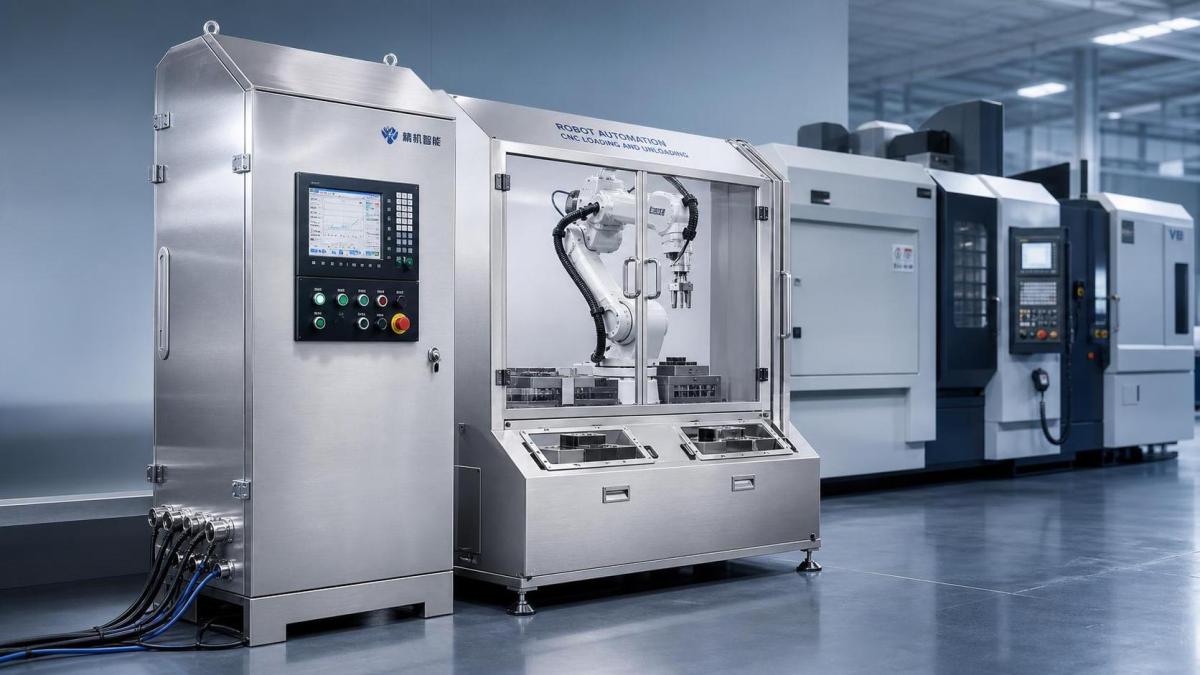
Selecting the right machine tending automation stainless enclosure is not a cosmetic decision. It affects uptime, contamination control, operator safety, washdown durability, and how painful maintenance becomes six months after commissioning. In most evaluations, the mistake is not choosing the wrong-looking box. It is accepting vague claims like “industrial grade” without pinning down ingress protection, corrosion behavior, thermal load, cable routing, and service access.
If you are reviewing a machine tending automation stainless enclosure for a CNC cell, robot loading station, or automated part handling line, treat it like any other engineered subsystem: define the environment, define the failure modes, then match the enclosure to those conditions. The checklist below is written from that angle.
Start with the actual contamination profile
This is where a lot of specs drift into guesswork. “Machine tending” covers very different realities. A dry cobot unloading stamped parts is one thing. A high-pressure coolant CNC cell throwing mist, chips, tramp oil, and fine metallic dust is another.
Before comparing enclosure options, write down what the housing will actually see:
- Coolant splash, oil mist, or direct washdown
- Fine chips versus large chips that rebound off machine walls
- Cleaning chemicals, especially chlorides or aggressive alkaline cleaners
- Indoor humidity, condensation cycles, and seasonal temperature swings
- Food, medical, or regulated cleanability requirements if the automation cell sits in a controlled production area
If the team cannot describe the contamination profile in plain engineering terms, the enclosure spec is still too early.
Do not ask for stainless steel. Ask which grade, where, and why.
“Stainless” alone is not a purchasing spec. For machine tending cells, 304 stainless steel is common and often adequate for general industrial interiors. If the enclosure is exposed to more aggressive cleaners, higher moisture load, or corrosion-sensitive environments, 316 or 316L may be worth the cost. The difference matters more when chloride exposure is real.
The practical check is simple: ask the supplier to identify the material grade for the body, door, hinges, latch hardware, mounting accessories, and weld filler where relevant. Mixed-material assemblies are not automatically bad, but they need review. Corrosion often starts at hardware, cut edges, or poorly matched fasteners rather than on the main panel surface.
If they only highlight the outer shell and stay vague about hardware, keep digging.
Ingress protection needs to match the cleaning method, not the sales sheet
For a machine tending automation stainless enclosure, IP rating is usually one of the first filters. It is also one of the most misunderstood. An enclosure that survives coolant mist and occasional wipe-down may not be suitable for frequent hose-down or high-pressure cleaning. If the line is specified around IP65, IP66, or similar, verify whether that rating applies to the assembled enclosure as delivered, including door seals, cutouts, viewing panels, cable glands, fans, and operator interface penetrations.
A frequent field problem is that the base enclosure has a strong rating, then someone adds third-party cable entries or an HMI cutout that degrades the overall seal. The nameplate stays impressive. The cell starts leaking anyway.
For North American projects, many teams also look at NEMA enclosure types. If your internal specification references both IP and NEMA, make sure you are not treating them as identical. They overlap, but they are not interchangeable one-to-one.
Check the geometry for cleanability and chip shedding
In real production, flat horizontal surfaces become debris shelves. Deep seams collect residue. Exposed external threads become maintenance headaches. If the enclosure is mounted near the machine front or inside the cell perimeter, geometry matters as much as the material.
Look for sloped tops where possible, controlled seam design, and door seals that can be inspected and replaced without dismantling half the cabinet. If the builder claims hygienic or washdown-oriented design, ask what that means in the actual construction. There is a large difference between smooth-looking sheet metal and a design that genuinely resists residue retention.
For machining environments, chip accumulation around hinge pockets, latch recesses, and base flanges is worth checking early. Those details affect daily housekeeping and long-term corrosion risk.
Thermal management is usually where nice enclosures become bad systems
A sealed stainless enclosure solves contamination exposure, but it also traps heat. In machine tending cells, the internal load can rise quickly once you combine PLCs, servo drives, industrial PCs, power supplies, network switches, safety relays, and vision components.
Do not let thermal management stay as a footnote. Ask for a heat-load calculation or complete it internally. Then confirm the cooling method fits the environment:
- Passive cooling may be enough for lower-power controls, but only if ambient conditions remain stable.
- Filtered fans can work in cleaner areas, but they introduce contamination paths and maintenance burden.
- Air-to-air or air-to-water heat exchangers may suit sealed designs, depending on utilities and footprint.
- Enclosure air conditioners help in high-load cases, but you need to account for condensate, service access, and vibration exposure.
If the machine builder cannot explain the thermal strategy in relation to ambient temperature and internal dissipation, the enclosure selection is still incomplete.
Size for maintenance, not just for the initial bill of materials
One of the most expensive mistakes is specifying an enclosure that technically fits the controls package but leaves no room for service loops, future I/O, drive replacement clearance, or safe wire separation. Tight layouts look efficient on approval drawings and become miserable during troubleshooting.
A better review question is: can a technician replace the highest-failure or highest-touch component without stripping the whole backplate? That includes power supplies, managed switches, safety modules, drive units, and terminal groups. Also check door swing clearance in the installed location. A good enclosure on paper can become inaccessible once it is mounted beside a machine guarding post, robot fence, or coolant line.
Cable entry and grounding deserve their own review
Machine tending cells rarely have simple wiring. You may be routing robot dress packs, safety circuits, Ethernet, vision cabling, pneumatic valve control, spindle interface signals, and auxiliary sensors through the same general area. The enclosure needs a cable entry plan that preserves sealing, bend radius, EMC performance, and serviceability.
This is also where low-cost substitutions create trouble. Random field-drilled penetrations, poorly selected glands, and inconsistent grounding practice can undo an otherwise solid enclosure spec. For VFD-heavy or servo-dense systems, grounding and shield termination details should be reviewed against the controls architecture, not improvised during installation.
Pay attention to mounting loads and vibration
A stainless enclosure for machine tending automation may be wall-mounted, floor-mounted, suspended on a stand, or attached near moving equipment. Those choices affect rigidity, door alignment, seal compression, and long-term fatigue around brackets and cutouts.
If the cell includes repeated machine impacts, nearby stamping, aggressive door slams, or robot motion that transmits vibration into the frame, ask how the enclosure and its accessories are rated or validated for that installation concept. Many catalogs give dimensional limits and static load information, but dynamic behavior is less clearly documented. Where the supplier’s published data is unclear, mark it as 【待核实】 and request engineering confirmation.
Certification and compliance checks should happen before the PO
If the automation cell will ship across markets, enclosure compliance can become a schedule issue very quickly. Depending on destination and system scope, your team may need to confirm UL listing or recognized components, CE-related documentation, RoHS declarations, or application-specific documentation tied to the complete machine. The enclosure itself does not carry the full compliance burden, but it can absolutely create gaps if selected late or modified without control.
Do not assume a global part number has globally identical approvals. Ask for the exact certification status of the configured assembly, especially if it includes windows, climate accessories, terminal boxes, or local modifications.
Ask about finish quality, not just finish type
Surface finish affects cleanability and corrosion behavior, but the label alone is not enough. Grain direction, weld finishing, passivation practice where applicable, and edge treatment all matter. This is especially true if the enclosure is going into a visible, clean, or heavily washed area.
If the project is sensitive, request drawings, finish specifications, and sample photos of comparable builds. A stainless enclosure can meet the letter of the material spec and still show fabrication details that create long-term housekeeping problems.
A short decision filter that saves time
When several suppliers look similar, narrow the choice with a few hard questions:
- Can they define the exact stainless grade and hardware materials without hesitation?
- Can they show protection ratings for the configured enclosure, including penetrations and accessories?
- Do they have a credible thermal approach for your real electrical load?
- Will maintenance teams be able to work inside it without unnecessary disassembly?
- Are the compliance documents available before release, not after installation trouble starts?
That is usually enough to separate engineered options from polished brochures.
For technical evaluators, the best machine tending automation stainless enclosure is rarely the cheapest cabinet and rarely the most overbuilt one. It is the enclosure whose material, sealing, thermal design, layout, and compliance profile all match the actual cell environment with the fewest hidden assumptions. If any of those points remain vague, stop and resolve them before the spec is frozen. That pause costs less than reworking a live automation cell.
Search News
Hot Articles
- Carbon Fiber StructuresHow to Specify Aerospace Carbon Fiber Assemblies for Lightweight, Load-Bearing PartsJul 11, 2026
- Machine VisionXiaomi, Alibaba DAMO Academy Drive Open-Source Robotics Model Ecosystem, Lowering Algorithm Development Barriers for Overseas SMEs Adopting Chinese Robotics SolutionsMar 30, 2026
- Cobots & ArmsShanxi 'AI+' Conference Showcases Embodied Intelligence with Multinational Buyer Engagement: Key Industry ImplicationsMar 30, 2026
Popular Tags
Recommended News
 Jul 11, 2026How to Specify Aerospace Carbon Fiber Assemblies for Lightweight, Load-Bearing PartsAerospace carbon fiber assemblies: learn how to specify laminate design, load data, joining methods, and inspection controls for lighter, reliable load-bearing aerospace parts.Elena Rostova (UAV Systems Researcher)
 Mar 30, 2026Xiaomi, Alibaba DAMO Academy Drive Open-Source Robotics Model Ecosystem, Lowering Algorithm Development Barriers for Overseas SMEs Adopting Chinese Robotics SolutionsXiaomi & Alibaba DAMO Academy's open-source robotics models lower algorithm barriers for global SMEs. Boost efficiency in manufacturing, logistics & smart retail with ROS 2 compatible solutions.TSV Data Lab
 Mar 30, 2026Shanxi 'AI+' Conference Showcases Embodied Intelligence with Multinational Buyer Engagement: Key Industry ImplicationsShanxi 'AI+' Conference highlights embodied intelligence with Tesla, Ubtech & Jiantao showcasing multimodal robotics. 40+ global buyers validated tech on-site, creating new B2B channels for industrial automation & AI solutions.Chen Wei (Automation Lead Engineer)
 Mar 30, 2026Zhongguancun Unveils 6G Integrated Sensing-Computing-Intelligence Platform to Empower Embodied Robots for Global Industrial ApplicationsZhongguancun's new 6G platform revolutionizes industrial robotics with <10ms latency, empowering global automotive, logistics & port automation. Discover how this tech boosts China's smart manufacturing exports.TSV Data Lab
 Mar 30, 2026Mech-Mind Tianjin Embodied Intelligence R&D and Production Base Goes Live, Cutting Delivery Time by 20%–30% for Global Customized AMR+Vision SolutionsMech-Mind's Tianjin AMR+Vision production base cuts delivery time by 20%-30% for欧美 & Latin American markets. Discover how this PLd-certified facility accelerates customized robotics solutions for smart manufacturing and logistics.Chen Wei (Automation Lead Engineer)
 Mar 30, 2026Boao Forum Reveals 'Co-evolution of Big and Small Brains' Trend in Humanoid Robots, China's Embodied Intelligence Accelerates Adaptation to Overseas Manufacturing Service ScenariosDiscover how China's humanoid robots, featuring 'Co-evolution of Big and Small Brains,' are revolutionizing global manufacturing. Learn about Embodied Tian Gong 3.0's ISO compliance and overseas deployment at Boao Forum 2026.Chen Wei (Automation Lead Engineer)
 Mar 30, 2026China Railway Industrial Secures Patent for Embodied Robotics in Material Handling, Boosting High-Precision Delivery Capabilities for Overseas Infrastructure and Manufacturing ProjectsChina Railway Industrial's new patent for embodied robotics in material handling boosts high-precision delivery for global infrastructure & manufacturing. Discover how this innovation enhances logistics accuracy in automotive, rail transit & EPC projects.Chen Wei (Automation Lead Engineer)
 Oct 27, 2026GXO and Agility Robotics Expand Partnership to Accelerate US Humanoid Robot DeploymentGXO and Agility Robotics plan to expand US humanoid robot deployment with Digit 4 in early 2027. Explore warehouse automation plans, service terms and future Digit 5 upgrades.Chen Wei (Automation Lead Engineer)
 Oct 27, 2026Robotic Automation Costs: Budgeting for Equipment, Integration, and MaintenancePlan your robotics automation cost with confidence. Explore equipment, integration, and maintenance expenses, compare quotes, and build a realistic budget for better ROI.Chen Wei (Automation Lead Engineer)
 Oct 26, 2026AMAXiMAL Releases Open-Source TopMod 3D v3 With Claude AIExplore AMAXiMAL’s free, open-source TopMod 3D v3 with Claude AI assistance, topology-based modeling and plywood fabrication tools that connect complex designs to physical builds.Dr. Marcus Vance
 Oct 26, 2026Choosing a SCADA System Integrator Company: PLC Compatibility and Long-Term SupportChoose a scada system integrator company with proven PLC compatibility and reliable long-term support. Discover what to test, compare, and require before investing.Victor Lin (Chief Software Architect)
 Oct 25, 2026Hesai Leads Global ADAS Main Lidar Shipments in Yole’s 2026 ReportHesai led global ADAS main lidar shipments with a 43% share in 2025, according to Yole’s 2026 report. Explore what this ranking reveals about its automotive market position.TSV Data Lab
 Oct 25, 2026Choosing an Aerospace Materials Manufacturer: Quality and Traceability ChecksChoosing an aerospace materials manufacturer? Learn how to verify certifications, test reports, and lot traceability to qualify suppliers confidently and reduce costly sourcing risks.Dr. Marcus Vance
 Oct 24, 2026Guotai Haitong: Global Entry-Level 3D Printer Shipments Rose 39% in Q1 2026Entry-level 3D printer shipments rose 39% in Q1 2026, Guotai Haitong reports. Explore how AI, multicolor printing and print farms are shaping market growth.Dr. Marcus Vance
 Oct 24, 2026Choosing an Industrial Vision Inspection Supplier: Acceptance Tests That MatterChoose an industrial vision inspection supplier with confidence. Discover acceptance tests for defect detection, false rejects, production speed, and reliable part rejection before you buy.TSV Data Lab
 Oct 23, 2026US Navy Raises Gecko Robotics Contract Ceiling to $300M for Robotic Fleet MaintenanceUS Navy raises Gecko Robotics’ contract ceiling to $300M for Pacific Fleet robotic inspections. Explore potential opportunities for maintenance suppliers and key procurement considerations.Chen Wei (Automation Lead Engineer)
 Oct 23, 2026Choosing Industrial Sensing Systems for Global Plants: Protocol CompatibilityCompare industrial sensing systems international buyers can trust. Explore protocol compatibility, reduce integration risks, and select proven configurations for reliable global plant deployments.TSV Data Lab
 Oct 22, 2026KUKA Showcases Physical AI and iiQKA.AI Vision at NVIDIA GTC BerlinExplore KUKA’s Physical AI showcase at NVIDIA GTC Berlin and discover how iiQKA.AI Vision aims to simplify robotic vision integration and improve 2D and 3D scene recognition.TSV Data Lab
 Oct 22, 2026Robotic Machining of Advanced Composites: What Tolerances Are Achievable?Explore advanced materials machining robotics: discover what drives achievable composite tolerances and how to validate accuracy before investing in your next machining system.Dr. Marcus Vance
 Oct 21, 2026China’s Industrial Robot Exports Near RMB 10 Billion in First Nine Months of 2026China’s industrial robot exports neared RMB 10 billion in January–September 2026, with value rising faster than volume. Explore the data and what it could mean for suppliers.Chen Wei (Automation Lead Engineer)
 Oct 21, 2026Low-Latency Industrial Data Processing: Pricing and Key Cost DriversExplore industrial data latency price drivers, from edge hardware to integration and support. Learn how to compare quotes, verify performance, and avoid unnecessary costs.TSV Data Lab
 Oct 20, 2026KUKA Launches iiQKA.AI Vision to Simplify Industrial Image ProcessingKUKA iiQKA.AI Vision simplifies industrial image processing with controller-based 2D and 3D vision. Explore drag-and-drop setup for vision-guided automation.TSV Data Lab
 Oct 20, 2026Smart Industrial Edge Devices: Key Criteria for Legacy PLC IntegrationChoose smart industrial edge devices for legacy PLC integration. Discover key criteria for compatibility, data quality, security, and reliable collection without disrupting control.TSV Data Lab
 Oct 19, 2026Choosing a Radar Sensor by Application: Range, Resolution, and Field of ViewSimplify radar sensor application based product selection. Compare range, resolution, and field of view to avoid blind spots and choose with confidence. Explore the guide.TSV Data Lab