
Force Control in Collaborative Robots: Tuning for Real Contact
Publication Date
author
In collaborative robots, force control is what separates a demo that “touches gently” from a production system that can insert, polish, deburr, screw-drive, test, or handle parts with repeatable contact quality. The real question is not whether a cobot supports force control, but how well that force loop is tuned under actual payload, speed, tooling, surface variation, and cycle-time pressure. For engineers, operators, procurement teams, and plant leaders, the practical answer is straightforward: good tuning should deliver stable contact, predictable compliance, low scrap risk, safe human interaction, and measurable uptime without forcing endless trial-and-error on the factory floor.
That means evaluating force control as a system problem, not a software checkbox. The outcome depends on robot mechanics, joint torque sensing or external force sensing, servo motors for industrial automation, end-of-arm tooling stiffness, machine vision 3D measurement systems, and industrial IoT predictive maintenance solutions that track drift over time. This article focuses on what readers actually need to judge: what “real contact” means, how tuning works in practice, which parameters matter most, where failures usually come from, and how to assess whether a collaborative robot platform is suitable for contact-rich work.
What users are really asking when they search for force control in collaborative robots
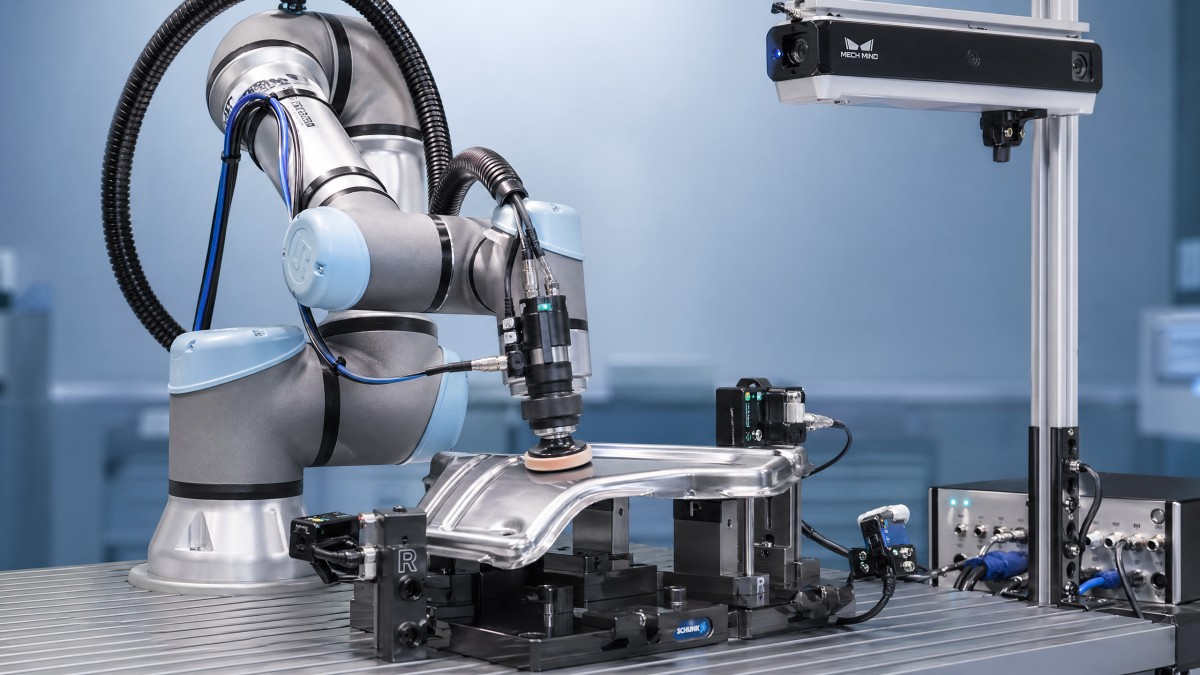
Most readers searching this topic are not looking for a textbook definition of impedance or admittance control. They want to know whether a collaborative robot can maintain the right contact force on a real part, in a real process, with acceptable cycle time and low integration risk.
In practical terms, their concerns usually fall into four groups:
- Engineering teams: Can the cobot hold force stably during contact tasks such as assembly, surface finishing, press-fit, or inspection? How difficult is tuning? How sensitive is performance to payload changes, fixture variation, or tool wear?
- Operators and technicians: Will the robot behave consistently shift after shift? Is setup intuitive? How often will they need to retune recipes after part changes?
- Procurement teams: Which specifications indicate real force-control capability instead of marketing language? What data should be requested from suppliers?
- Decision-makers: Will force control reduce scrap, improve safety, and increase process repeatability enough to justify investment?
The common thread is this: readers want a reliable way to connect force-control claims to measurable production outcomes.
What “real contact” means on the factory floor
Real contact is not simply detecting that the robot touched something. It means the robot can manage interaction forces after contact begins and keep them within an acceptable band while the task continues.
For example, in sanding or polishing, “real contact” means the robot maintains nearly constant normal force despite small part-height variations. In insertion or connector mating, it means the robot can detect misalignment early, reduce side loading, and adapt without jamming. In screwdriving or test-fixture engagement, it means the robot can follow the part while controlling push force and torque-related reaction loads.
Three performance outcomes matter most:
- Force stability: Low oscillation, low overshoot, and controlled settling after contact.
- Path compliance: The robot yields in the right direction while still maintaining process control.
- Repeatability under variation: Similar force response across batches, operators, tool changes, and environmental shifts.
If a cobot cannot maintain those outcomes, it may still be safe enough for light human interaction, but it is not necessarily ready for demanding contact applications.
Why tuning matters more than the force-control feature list
Many collaborative robot vendors advertise force sensing, compliant motion, or contact detection. Those features matter, but they do not guarantee process quality. Tuning is where capability becomes performance.
Force-control tuning typically determines how fast the robot reacts to contact, how much force overshoot appears at initial touch, how aggressively it corrects deviation, and whether it remains stable when the environment is stiff, flexible, or inconsistent.
A robot that is tuned too softly may feel safe but fail the process by drifting, bouncing, or extending cycle time. A robot tuned too aggressively may chatter, mark surfaces, overload fixtures, or trigger nuisance faults. In production, the target is rarely “maximum responsiveness.” It is the best balance of contact quality, speed, and robustness.
This is why experienced integrators test force control under actual tooling, payload, and part conditions instead of relying on empty-air demos or low-load bench trials.
The main technical factors that shape force-control performance
Collaborative robot force control is influenced by multiple layers of the automation stack. Buyers and engineers should evaluate them together.
1. Robot mechanical stiffness and structure
Even with advanced control software, mechanical compliance in the arm, joints, mounting base, or end effector can affect contact behavior. Excess flexibility may help in some gentle tasks but can reduce force precision and create oscillation in harder contact applications.
2. Joint torque sensing or external force/torque sensing
Some cobots estimate contact through motor current or joint torque models; others use dedicated sensing strategies or allow wrist-mounted force/torque sensors. The sensing method affects sensitivity, bandwidth, drift behavior, and the ability to distinguish real contact from model error or friction effects.
3. Servo motors for industrial automation
Servo quality directly influences the smoothness and responsiveness of force control. Motor resolution, torque linearity, control bandwidth, and thermal behavior all affect the robot’s ability to maintain stable contact. Poorly matched servo performance can make a force loop appear unstable even when the software logic is sound.
4. End-of-arm tooling stiffness and mass
A heavy spindle, compliant gripper, long extension, or poorly designed tool mount changes system dynamics. This is one of the most common reasons why a force-control routine that worked in commissioning behaves differently after the final tool is installed.
5. Workpiece and fixture characteristics
Force control behaves differently against a rigid metal stop, a rubber seal, a thin-walled part, or a slightly floating fixture. Tuning must reflect contact stiffness in the real application, not just the robot.
6. Control architecture and update rate
Loop frequency, filtering strategy, internal control mode, and latency all affect force response. This is where some lower-cost solutions reveal limits in bandwidth or stability margin.
Which tuning parameters matter most in practice
Different robot brands expose different settings, but the tuning logic is usually centered on a few core variables.
Target force
This is the commanded force in the direction of contact. It should be selected based on process need, not guesswork. Excess target force can hide poor alignment temporarily but increase wear, deformation, and safety risk.
Compliance or stiffness
This defines how strongly the robot resists deviation. Lower stiffness increases adaptability; higher stiffness improves positional authority. In real processes, directional tuning matters. A system may need to be stiff in the insertion direction but compliant laterally.
Damping
Damping controls how the system settles after contact or disturbance. Too little damping leads to oscillation. Too much damping can make the robot feel sluggish and lengthen cycle time.
Speed and acceleration limits in contact mode
Contact tasks often fail not because target force is wrong, but because approach speed is too high. Reducing speed near the expected contact zone can dramatically lower overshoot and improve repeatability.
Force thresholds and transition logic
The robot must know when to switch from free-space motion to contact control, and sometimes from search mode to process mode. Poor threshold settings can create false triggers or late reactions.
Filtering and averaging
Signal filtering reduces noise, but too much filtering increases lag. That tradeoff matters in dynamic tasks such as contour following or variable-surface finishing.
How engineers should tune for real contact instead of lab conditions
The most reliable approach is staged tuning with increasing realism.
- Start with a safe baseline: Use low approach speed, conservative force targets, and wide safety margins.
- Tune on the real tool: Never finalize force behavior using a placeholder end effector if the production tool has different mass, inertia, or compliance.
- Test against the real part and fixture: Surface stiffness and mounting variation strongly affect results.
- Measure overshoot, settling time, and steady-state force error: Do not rely only on visual impressions.
- Introduce expected variation: Run tests across part tolerance range, payload changes, and realistic environmental conditions.
- Validate full-cycle repeatability: Contact may be stable for ten cycles but drift after hundreds due to heat, wear, or fixture shift.
For serious deployments, tuning should produce a documented operating window rather than a single “magic” parameter set. That window should define acceptable force range, speed limits, contact duration, and fault conditions.
Where machine vision 3D measurement systems improve force-control results
Force control is powerful, but it works best when the robot already knows where the part is. That is why machine vision 3D measurement systems often improve contact processes significantly.
Vision can reduce the burden on force control by improving pre-contact alignment, locating height variation, identifying part orientation, and updating path offsets before touch begins. In insertion, this reduces side loading. In finishing, it helps maintain more uniform engagement over uneven surfaces. In inspection or probing, it narrows the search space so the force loop does not waste cycle time hunting for the part.
The key insight is that vision and force control solve different parts of the same problem:
- Vision: “Where is the part, and how is it oriented?”
- Force control: “How should the robot behave once contact begins?”
When both are integrated well, the process becomes faster, gentler, and more repeatable.
How industrial IoT predictive maintenance supports long-term force consistency
Even a well-tuned collaborative robot does not stay perfect forever. Over time, bearing wear, tool degradation, cable strain, joint friction changes, fixture damage, and thermal effects can shift force behavior.
This is where industrial IoT predictive maintenance solutions provide real value. By tracking trends such as motor current, torque deviation, vibration, cycle time drift, contact-force variance, and fault frequency, plants can detect when a force-controlled process is moving out of tolerance before scrap or downtime increases.
For example, if steady-state force error slowly rises across weeks, the cause may not be software. It could indicate tool wear, a loosening fixture, sensor drift, or servo degradation. A connected monitoring strategy helps separate maintenance issues from control issues.
For procurement and plant leadership, this matters because the cost of force control is not just commissioning effort. It is also the cost of keeping performance stable over months and years.
Common failure modes that buyers and operators should watch for
Many force-control problems are predictable. Knowing them helps both technical and commercial teams ask better questions.
- Contact overshoot: The robot hits too hard before settling, causing marks, vibration, or part damage.
- Oscillation or chatter: Usually linked to poor damping, excessive compliance mismatch, or high loop sensitivity.
- False contact detection: Noise, friction, or dynamic effects trigger the force mode too early.
- Weak process robustness: Tuning works on one part batch but fails when tolerances shift.
- Cycle-time penalties: The process is stable only when tuned so conservatively that productivity falls.
- Drift over time: Performance degrades after heat buildup, wear, or maintenance changes.
If a supplier cannot explain how these failure modes are tested and mitigated, the force-control claim is incomplete.
What procurement teams should ask suppliers before selecting a collaborative robot
For sourcing teams, the goal is to move beyond broad claims like “high-precision force sensing” and ask for data tied to the intended application.
Useful questions include:
- What sensing method is used for force estimation or measurement?
- What is the force-control update rate or effective response bandwidth?
- How much force overshoot is typical at a defined approach speed and payload?
- What steady-state force accuracy can be achieved in a specified contact task?
- How does performance change with different end-effectors or wrist loads?
- Can the supplier provide application data for polishing, insertion, testing, or other similar contact operations?
- What diagnostics are available for monitoring drift or instability over time?
- How much integrator effort is usually required to tune and validate production-ready contact behavior?
These questions help convert force control from a brochure feature into a comparable engineering capability.
How decision-makers should evaluate business value
For managers and executives, the value of collaborative robot force control is strongest in processes where contact quality drives scrap, rework, safety, or labor variability.
A well-tuned system can improve business outcomes by:
- Reducing damage in delicate assembly and handling
- Improving consistency in finishing and inspection
- Shortening setup dependence on highly experienced operators
- Lowering downtime caused by jams or misalignment in contact tasks
- Supporting safer human-robot collaboration in shared work areas
But the investment case depends on application fit. If the process has wide tolerances, minimal contact sensitivity, or unstable upstream part quality, force control alone may not deliver the expected ROI. In those cases, better fixturing, part presentation, or vision alignment may create more value first.
A practical benchmark: how to tell if force control is production-ready
A collaborative robot is closer to production-ready force control when it can demonstrate the following under realistic conditions:
- Low and repeatable force overshoot at initial contact
- Stable steady-state force during the full task cycle
- Acceptable cycle time without excessive conservatism
- Consistent performance across normal part and fixture variation
- Clear recovery behavior when contact conditions go wrong
- Usable diagnostics for tuning, verification, and maintenance
That benchmark is more meaningful than generic claims about “AI-enhanced control” or “human-like sensitivity.” In hard-tech manufacturing environments, measurable behavior matters more than promotional language.
Conclusion
Force control in collaborative robots is ultimately about making contact useful, not just safe. Tuning for real contact means balancing force stability, compliance, cycle time, tooling effects, and process variation until the robot performs reliably in production rather than only in demonstration mode.
For engineers, the priority is to tune and validate with real tooling, real parts, and measurable response data. For operators, the value lies in consistency and easier recovery from variation. For procurement teams, the right approach is to request application-specific force metrics, not vague capability statements. For decision-makers, the best investments are the ones where force control works together with servo motors for industrial automation, machine vision 3D measurement systems, and industrial IoT predictive maintenance solutions to reduce scrap, stabilize quality, and improve uptime.
In short, force control should be evaluated as an engineered production capability. If the data shows stable contact under real load, real variation, and real operating time, then the collaborative robot is tuned for work that actually matters.
Search News
Hot Articles
- Carbon Fiber StructuresHow to Specify Aerospace Carbon Fiber Assemblies for Lightweight, Load-Bearing PartsJul 11, 2026
- Machine VisionXiaomi, Alibaba DAMO Academy Drive Open-Source Robotics Model Ecosystem, Lowering Algorithm Development Barriers for Overseas SMEs Adopting Chinese Robotics SolutionsMar 30, 2026
- Cobots & ArmsShanxi 'AI+' Conference Showcases Embodied Intelligence with Multinational Buyer Engagement: Key Industry ImplicationsMar 30, 2026
Popular Tags
Recommended News
 Jul 11, 2026How to Specify Aerospace Carbon Fiber Assemblies for Lightweight, Load-Bearing PartsAerospace carbon fiber assemblies: learn how to specify laminate design, load data, joining methods, and inspection controls for lighter, reliable load-bearing aerospace parts.Elena Rostova (UAV Systems Researcher)
 Mar 30, 2026Xiaomi, Alibaba DAMO Academy Drive Open-Source Robotics Model Ecosystem, Lowering Algorithm Development Barriers for Overseas SMEs Adopting Chinese Robotics SolutionsXiaomi & Alibaba DAMO Academy's open-source robotics models lower algorithm barriers for global SMEs. Boost efficiency in manufacturing, logistics & smart retail with ROS 2 compatible solutions.TSV Data Lab
 Mar 30, 2026Shanxi 'AI+' Conference Showcases Embodied Intelligence with Multinational Buyer Engagement: Key Industry ImplicationsShanxi 'AI+' Conference highlights embodied intelligence with Tesla, Ubtech & Jiantao showcasing multimodal robotics. 40+ global buyers validated tech on-site, creating new B2B channels for industrial automation & AI solutions.Chen Wei (Automation Lead Engineer)
 Mar 30, 2026Zhongguancun Unveils 6G Integrated Sensing-Computing-Intelligence Platform to Empower Embodied Robots for Global Industrial ApplicationsZhongguancun's new 6G platform revolutionizes industrial robotics with <10ms latency, empowering global automotive, logistics & port automation. Discover how this tech boosts China's smart manufacturing exports.TSV Data Lab
 Mar 30, 2026Mech-Mind Tianjin Embodied Intelligence R&D and Production Base Goes Live, Cutting Delivery Time by 20%–30% for Global Customized AMR+Vision SolutionsMech-Mind's Tianjin AMR+Vision production base cuts delivery time by 20%-30% for欧美 & Latin American markets. Discover how this PLd-certified facility accelerates customized robotics solutions for smart manufacturing and logistics.Chen Wei (Automation Lead Engineer)
 Mar 30, 2026Boao Forum Reveals 'Co-evolution of Big and Small Brains' Trend in Humanoid Robots, China's Embodied Intelligence Accelerates Adaptation to Overseas Manufacturing Service ScenariosDiscover how China's humanoid robots, featuring 'Co-evolution of Big and Small Brains,' are revolutionizing global manufacturing. Learn about Embodied Tian Gong 3.0's ISO compliance and overseas deployment at Boao Forum 2026.Chen Wei (Automation Lead Engineer)
 Mar 30, 2026China Railway Industrial Secures Patent for Embodied Robotics in Material Handling, Boosting High-Precision Delivery Capabilities for Overseas Infrastructure and Manufacturing ProjectsChina Railway Industrial's new patent for embodied robotics in material handling boosts high-precision delivery for global infrastructure & manufacturing. Discover how this innovation enhances logistics accuracy in automotive, rail transit & EPC projects.Chen Wei (Automation Lead Engineer)
 Oct 25, 2026Hesai Leads Global ADAS Main Lidar Shipments in Yole’s 2026 ReportHesai led global ADAS main lidar shipments with a 43% share in 2025, according to Yole’s 2026 report. Explore what this ranking reveals about its automotive market position.TSV Data Lab
 Oct 25, 2026Choosing an Aerospace Materials Manufacturer: Quality and Traceability ChecksChoosing an aerospace materials manufacturer? Learn how to verify certifications, test reports, and lot traceability to qualify suppliers confidently and reduce costly sourcing risks.Dr. Marcus Vance
 Oct 24, 2026Guotai Haitong: Global Entry-Level 3D Printer Shipments Rose 39% in Q1 2026Entry-level 3D printer shipments rose 39% in Q1 2026, Guotai Haitong reports. Explore how AI, multicolor printing and print farms are shaping market growth.Dr. Marcus Vance
 Oct 24, 2026Choosing an Industrial Vision Inspection Supplier: Acceptance Tests That MatterChoose an industrial vision inspection supplier with confidence. Discover acceptance tests for defect detection, false rejects, production speed, and reliable part rejection before you buy.TSV Data Lab
 Oct 23, 2026US Navy Raises Gecko Robotics Contract Ceiling to $300M for Robotic Fleet MaintenanceUS Navy raises Gecko Robotics’ contract ceiling to $300M for Pacific Fleet robotic inspections. Explore potential opportunities for maintenance suppliers and key procurement considerations.Chen Wei (Automation Lead Engineer)
 Oct 23, 2026Choosing Industrial Sensing Systems for Global Plants: Protocol CompatibilityCompare industrial sensing systems international buyers can trust. Explore protocol compatibility, reduce integration risks, and select proven configurations for reliable global plant deployments.TSV Data Lab
 Oct 22, 2026KUKA Showcases Physical AI and iiQKA.AI Vision at NVIDIA GTC BerlinExplore KUKA’s Physical AI showcase at NVIDIA GTC Berlin and discover how iiQKA.AI Vision aims to simplify robotic vision integration and improve 2D and 3D scene recognition.TSV Data Lab
 Oct 22, 2026Robotic Machining of Advanced Composites: What Tolerances Are Achievable?Explore advanced materials machining robotics: discover what drives achievable composite tolerances and how to validate accuracy before investing in your next machining system.Dr. Marcus Vance
 Oct 21, 2026China’s Industrial Robot Exports Near RMB 10 Billion in First Nine Months of 2026China’s industrial robot exports neared RMB 10 billion in January–September 2026, with value rising faster than volume. Explore the data and what it could mean for suppliers.Chen Wei (Automation Lead Engineer)
 Oct 21, 2026Low-Latency Industrial Data Processing: Pricing and Key Cost DriversExplore industrial data latency price drivers, from edge hardware to integration and support. Learn how to compare quotes, verify performance, and avoid unnecessary costs.TSV Data Lab
 Oct 20, 2026KUKA Launches iiQKA.AI Vision to Simplify Industrial Image ProcessingKUKA iiQKA.AI Vision simplifies industrial image processing with controller-based 2D and 3D vision. Explore drag-and-drop setup for vision-guided automation.TSV Data Lab
 Oct 20, 2026Smart Industrial Edge Devices: Key Criteria for Legacy PLC IntegrationChoose smart industrial edge devices for legacy PLC integration. Discover key criteria for compatibility, data quality, security, and reliable collection without disrupting control.TSV Data Lab
 Oct 19, 2026Choosing a Radar Sensor by Application: Range, Resolution, and Field of ViewSimplify radar sensor application based product selection. Compare range, resolution, and field of view to avoid blind spots and choose with confidence. Explore the guide.TSV Data Lab
 Oct 18, 2026Comparing Material Options for Procurement: Specs, Costs, and Supply RisksExplore procurement oriented technical content on material options, specs, costs, and supply risks. Compare alternatives to cut hidden expenses and make confident sourcing decisions.Dr. Marcus Vance
 Oct 17, 20265-Axis CNC Positioning Accuracy: How to Interpret ISO 230-2 Test ResultsAssess 5 axis CNC machining positioning accuracy with ISO 230-2. Learn to interpret repeatability, reversal error, and test conditions to compare suppliers and make confident acceptance decisions.Dr. Marcus Vance
 Oct 16, 2026Choosing a Rugged Edge AI Box Supplier: Thermal Tests and Lifecycle SupportChoose a rugged edge AI box supplier with proven thermal performance and reliable lifecycle support. Discover the tests and commitments to verify before you buy.TSV Data Lab
 Oct 15, 2026R&D Cost Reduction Services: How to Evaluate Fees, Savings, and ROIEvaluate R&D cost reduction services with confidence. Compare fees, verify savings, and calculate ROI without compromising performance. Discover how to choose a provider that delivers real value.Chen Wei (Automation Lead Engineer)























