
Adventure Playground Design Ideas: Equipment Layout, Safety Zones, and Age-Appropriate Play
Publication Date
author
Adventure Playground Design Ideas That Work in Real Projects
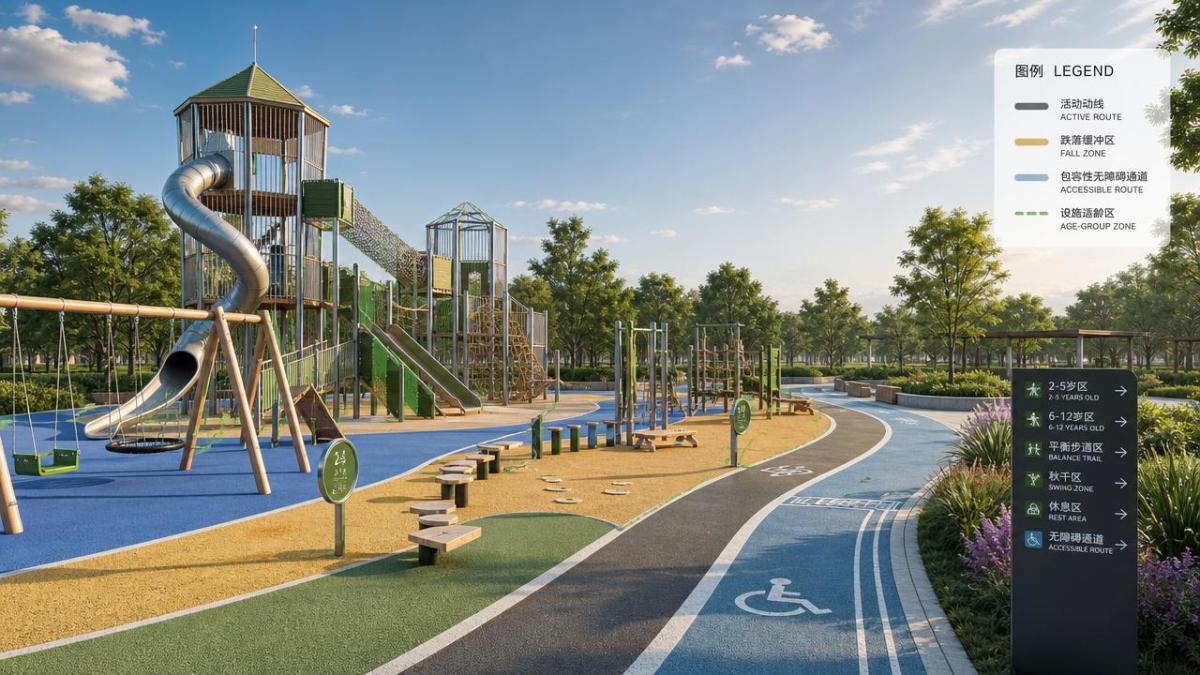
Planning an adventure playground starts with more than inspiration boards and product catalogs. It requires a layout strategy that connects play value, circulation, safety, maintenance, and future upgrades.
That is why strong adventure playground design ideas usually begin with data. Teams need clear user flow assumptions, fall-zone calculations, equipment spacing logic, and age-based activity mapping.
In practical delivery, the most common failure is not creativity. It is poor coordination between equipment layout, safety zones, and operational constraints after opening.
A well-planned adventure playground should support challenge without creating unmanaged risk. It should also reduce rework during procurement, installation, inspection, and long-term maintenance.
For teams handling public parks, schools, resorts, or mixed-use developments, the best adventure playground design ideas are measurable, buildable, and easy to operate.
Start with Site Logic Before Selecting Equipment
Many projects choose equipment too early. That often creates conflicts with circulation paths, access points, utilities, shade, drainage, and supervision angles.
A better approach is to define the site framework first. Then place adventure playground elements according to movement, visibility, and risk layers.
At this stage, map five core conditions:
- Primary entrances and natural user approach directions
- Quiet zones versus high-energy movement zones
- Drainage behavior after rain and surface wear risk
- Sightlines for caregivers, staff, and security teams
- Service access for inspection, repair, and replacement
This early mapping changes the quality of every later decision. It also helps filter out adventure playground design ideas that look appealing but fail under real operating conditions.
Think in Play Zones, Not Isolated Units
An adventure playground performs better when equipment works as a sequence. Users should move through challenge levels naturally instead of encountering random standalone pieces.
A practical zoning model often includes:
- Arrival zone with low-intensity orientation play
- Core challenge zone with climbing, balancing, and elevated routes
- Active motion zone for swings, spinners, or zip elements where allowed
- Recovery zone with seating, shade, and lower stimulation
- Inclusive play zone with accessible sensory and ground-level features
This structure supports safer circulation. It also improves dwell time because users can progress through the adventure playground without constant route conflict.
Equipment Layout: Balance Challenge, Flow, and Supervision
The best adventure playground design ideas create excitement while keeping movement predictable. That balance usually depends on spacing, orientation, and route transitions more than equipment quantity.
Place high-attraction features where queues will not block other activities. Avoid locating swing arcs, slide exits, and climbing dismount areas across major walking paths.
It also helps to separate fast lateral motion from vertical challenge structures. That single choice can reduce collisions and improve supervision quality.
A Simple Layout Decision Framework
Use this framework when reviewing adventure playground options with designers, suppliers, and civil teams:
In actual delivery, this kind of matrix helps move conversation from opinion to evidence. That is especially useful when several stakeholders prefer different adventure playground concepts.
Safety Zones Should Be Designed, Not Added Later
Safety zones are often treated like a compliance checklist. In reality, they are a spatial design system that shapes the entire adventure playground footprint.
From recent project trends, the stronger signal is this: operators now expect safety planning to support both compliance and user comfort. Tight layouts rarely perform well over time.
For adventure playground design ideas to stay practical, every piece should be reviewed for use zone overlap, impact surface type, fall height, and access control around moving equipment.
Key Safety Zone Priorities
- Match surfacing performance to expected fall height and wear intensity
- Keep slide exits and rotating equipment clear of intersecting routes
- Control edge conditions near fencing, walls, planting beds, and drainage channels
- Preserve clear lines of sight into elevated and hidden play pockets
- Plan inspection access without dismantling surrounding structures
These decisions influence procurement, civil work, and the final user experience. They also reduce the risk of expensive modifications after site inspections.
Surface Choice Matters More Than Teams Expect
Loose-fill and unitary surfaces create different maintenance profiles. So do rubber systems, engineered wood fiber, sand, and hybrid finishes.
The right answer depends on climate, cleaning frequency, drainage behavior, accessibility goals, and replacement budget. Good adventure playground planning weighs all five together.
Age-Appropriate Play Strategy Prevents Misuse
Age mixing is one of the biggest hidden risks in an adventure playground. When challenge levels are poorly defined, users either get bored or use equipment beyond intended ability.
That is why age-appropriate zoning should be designed into the layout, not solved only with signage. Space, scale, and sequence need to communicate intended use clearly.
How to Separate by Development Stage
A useful structure for adventure playground design ideas is to group features by physical and cognitive challenge, not just by age label.
- Early stage play: low heights, sensory elements, simple balance, easy supervision
- Middle stage play: linked climbing, coordination tasks, moderate risk testing
- Advanced stage play: taller structures, complex routes, higher physical challenge
This approach supports user confidence. It also keeps the adventure playground attractive to wider groups without turning every zone into a compromise.
Do Not Forget Inclusive Access
Inclusive design is not a side feature. It should be integrated into the main adventure playground experience through accessible routes, transfer points, sensory play, and social interaction nodes.
When inclusive elements are isolated, usage drops. When they are embedded into the overall layout, the site feels more coherent and more valuable.
Operational Planning Improves Long-Term Return
Good adventure playground design ideas should survive daily use, weather stress, and maintenance cycles. This is where engineering discipline becomes essential.
In real projects, lifecycle costs often overtake initial equipment pricing. Corrosion resistance, part replacement speed, coating durability, and inspection access directly affect total value.
This is also where a data-first mindset matters. TechStat Vanguard consistently emphasizes that specifications should guide decisions, not vague quality claims.
For an adventure playground, that means asking sharper questions during planning:
- What are the tested durability parameters for core components?
- How fast can wear parts be replaced on site?
- Which surfaces degrade fastest under local climate conditions?
- How will inspection teams access elevated or enclosed play elements?
- What operational bottlenecks appear during peak occupancy?
These questions turn adventure playground planning into a more controlled delivery process. They also help prevent attractive designs from becoming maintenance-heavy assets.
A Practical Decision Checklist for Better Adventure Playground Outcomes
Before final approval, review the adventure playground against a simple decision checklist. This keeps design ambition aligned with site reality.
- Confirm user groups, peak occupancy, and expected behavior patterns.
- Test equipment layout against real circulation and supervision lines.
- Validate every safety zone before procurement is locked.
- Separate challenge levels through space, scale, and route design.
- Review surfacing, drainage, and maintenance access as one package.
- Request measurable specification data from every supplier.
The most effective adventure playground design ideas do not rely on guesswork. They combine creative play with disciplined planning, clear technical review, and operational foresight.
If the goal is a durable, safe, and engaging adventure playground, the smartest next step is simple: evaluate every design choice as both a play feature and a long-term system decision.
Search News
Hot Articles
- Carbon Fiber StructuresHow to Specify Aerospace Carbon Fiber Assemblies for Lightweight, Load-Bearing PartsJul 11, 2026
- Machine VisionXiaomi, Alibaba DAMO Academy Drive Open-Source Robotics Model Ecosystem, Lowering Algorithm Development Barriers for Overseas SMEs Adopting Chinese Robotics SolutionsMar 30, 2026
- Cobots & ArmsShanxi 'AI+' Conference Showcases Embodied Intelligence with Multinational Buyer Engagement: Key Industry ImplicationsMar 30, 2026
Popular Tags
Recommended News
 Jul 11, 2026How to Specify Aerospace Carbon Fiber Assemblies for Lightweight, Load-Bearing PartsAerospace carbon fiber assemblies: learn how to specify laminate design, load data, joining methods, and inspection controls for lighter, reliable load-bearing aerospace parts.Elena Rostova (UAV Systems Researcher)
 Mar 30, 2026Xiaomi, Alibaba DAMO Academy Drive Open-Source Robotics Model Ecosystem, Lowering Algorithm Development Barriers for Overseas SMEs Adopting Chinese Robotics SolutionsXiaomi & Alibaba DAMO Academy's open-source robotics models lower algorithm barriers for global SMEs. Boost efficiency in manufacturing, logistics & smart retail with ROS 2 compatible solutions.TSV Data Lab
 Mar 30, 2026Shanxi 'AI+' Conference Showcases Embodied Intelligence with Multinational Buyer Engagement: Key Industry ImplicationsShanxi 'AI+' Conference highlights embodied intelligence with Tesla, Ubtech & Jiantao showcasing multimodal robotics. 40+ global buyers validated tech on-site, creating new B2B channels for industrial automation & AI solutions.Chen Wei (Automation Lead Engineer)
 Mar 30, 2026Zhongguancun Unveils 6G Integrated Sensing-Computing-Intelligence Platform to Empower Embodied Robots for Global Industrial ApplicationsZhongguancun's new 6G platform revolutionizes industrial robotics with <10ms latency, empowering global automotive, logistics & port automation. Discover how this tech boosts China's smart manufacturing exports.TSV Data Lab
 Mar 30, 2026Mech-Mind Tianjin Embodied Intelligence R&D and Production Base Goes Live, Cutting Delivery Time by 20%–30% for Global Customized AMR+Vision SolutionsMech-Mind's Tianjin AMR+Vision production base cuts delivery time by 20%-30% for欧美 & Latin American markets. Discover how this PLd-certified facility accelerates customized robotics solutions for smart manufacturing and logistics.Chen Wei (Automation Lead Engineer)
 Mar 30, 2026Boao Forum Reveals 'Co-evolution of Big and Small Brains' Trend in Humanoid Robots, China's Embodied Intelligence Accelerates Adaptation to Overseas Manufacturing Service ScenariosDiscover how China's humanoid robots, featuring 'Co-evolution of Big and Small Brains,' are revolutionizing global manufacturing. Learn about Embodied Tian Gong 3.0's ISO compliance and overseas deployment at Boao Forum 2026.Chen Wei (Automation Lead Engineer)
 Mar 30, 2026China Railway Industrial Secures Patent for Embodied Robotics in Material Handling, Boosting High-Precision Delivery Capabilities for Overseas Infrastructure and Manufacturing ProjectsChina Railway Industrial's new patent for embodied robotics in material handling boosts high-precision delivery for global infrastructure & manufacturing. Discover how this innovation enhances logistics accuracy in automotive, rail transit & EPC projects.Chen Wei (Automation Lead Engineer)
 Oct 27, 2026GXO and Agility Robotics Expand Partnership to Accelerate US Humanoid Robot DeploymentGXO and Agility Robotics plan to expand US humanoid robot deployment with Digit 4 in early 2027. Explore warehouse automation plans, service terms and future Digit 5 upgrades.Chen Wei (Automation Lead Engineer)
 Oct 27, 2026Robotic Automation Costs: Budgeting for Equipment, Integration, and MaintenancePlan your robotics automation cost with confidence. Explore equipment, integration, and maintenance expenses, compare quotes, and build a realistic budget for better ROI.Chen Wei (Automation Lead Engineer)
 Oct 26, 2026AMAXiMAL Releases Open-Source TopMod 3D v3 With Claude AIExplore AMAXiMAL’s free, open-source TopMod 3D v3 with Claude AI assistance, topology-based modeling and plywood fabrication tools that connect complex designs to physical builds.Dr. Marcus Vance
 Oct 26, 2026Choosing a SCADA System Integrator Company: PLC Compatibility and Long-Term SupportChoose a scada system integrator company with proven PLC compatibility and reliable long-term support. Discover what to test, compare, and require before investing.Victor Lin (Chief Software Architect)
 Oct 25, 2026Hesai Leads Global ADAS Main Lidar Shipments in Yole’s 2026 ReportHesai led global ADAS main lidar shipments with a 43% share in 2025, according to Yole’s 2026 report. Explore what this ranking reveals about its automotive market position.TSV Data Lab
 Oct 25, 2026Choosing an Aerospace Materials Manufacturer: Quality and Traceability ChecksChoosing an aerospace materials manufacturer? Learn how to verify certifications, test reports, and lot traceability to qualify suppliers confidently and reduce costly sourcing risks.Dr. Marcus Vance
 Oct 24, 2026Guotai Haitong: Global Entry-Level 3D Printer Shipments Rose 39% in Q1 2026Entry-level 3D printer shipments rose 39% in Q1 2026, Guotai Haitong reports. Explore how AI, multicolor printing and print farms are shaping market growth.Dr. Marcus Vance
 Oct 24, 2026Choosing an Industrial Vision Inspection Supplier: Acceptance Tests That MatterChoose an industrial vision inspection supplier with confidence. Discover acceptance tests for defect detection, false rejects, production speed, and reliable part rejection before you buy.TSV Data Lab
 Oct 23, 2026US Navy Raises Gecko Robotics Contract Ceiling to $300M for Robotic Fleet MaintenanceUS Navy raises Gecko Robotics’ contract ceiling to $300M for Pacific Fleet robotic inspections. Explore potential opportunities for maintenance suppliers and key procurement considerations.Chen Wei (Automation Lead Engineer)
 Oct 23, 2026Choosing Industrial Sensing Systems for Global Plants: Protocol CompatibilityCompare industrial sensing systems international buyers can trust. Explore protocol compatibility, reduce integration risks, and select proven configurations for reliable global plant deployments.TSV Data Lab
 Oct 22, 2026KUKA Showcases Physical AI and iiQKA.AI Vision at NVIDIA GTC BerlinExplore KUKA’s Physical AI showcase at NVIDIA GTC Berlin and discover how iiQKA.AI Vision aims to simplify robotic vision integration and improve 2D and 3D scene recognition.TSV Data Lab
 Oct 22, 2026Robotic Machining of Advanced Composites: What Tolerances Are Achievable?Explore advanced materials machining robotics: discover what drives achievable composite tolerances and how to validate accuracy before investing in your next machining system.Dr. Marcus Vance
 Oct 21, 2026China’s Industrial Robot Exports Near RMB 10 Billion in First Nine Months of 2026China’s industrial robot exports neared RMB 10 billion in January–September 2026, with value rising faster than volume. Explore the data and what it could mean for suppliers.Chen Wei (Automation Lead Engineer)
 Oct 21, 2026Low-Latency Industrial Data Processing: Pricing and Key Cost DriversExplore industrial data latency price drivers, from edge hardware to integration and support. Learn how to compare quotes, verify performance, and avoid unnecessary costs.TSV Data Lab
 Oct 20, 2026KUKA Launches iiQKA.AI Vision to Simplify Industrial Image ProcessingKUKA iiQKA.AI Vision simplifies industrial image processing with controller-based 2D and 3D vision. Explore drag-and-drop setup for vision-guided automation.TSV Data Lab
 Oct 20, 2026Smart Industrial Edge Devices: Key Criteria for Legacy PLC IntegrationChoose smart industrial edge devices for legacy PLC integration. Discover key criteria for compatibility, data quality, security, and reliable collection without disrupting control.TSV Data Lab
 Oct 19, 2026Choosing a Radar Sensor by Application: Range, Resolution, and Field of ViewSimplify radar sensor application based product selection. Compare range, resolution, and field of view to avoid blind spots and choose with confidence. Explore the guide.TSV Data Lab























