
AGV solutions for automotive manufacturing: how do navigation methods impact line changeover time?
Publication Date
author
In automotive manufacturing, AGV solutions for automotive manufacturing are no longer just about moving parts—they’re mission-critical enablers of flexible production. Yet line changeover time hinges directly on navigation method fidelity: laser SLAM, vision-guided, or inertial + magnetic tape each deliver vastly different reconfiguration speeds, repeatability, and integration overhead with smart factory MES software provider systems. At TechStat Vanguard, we benchmark real-world AMR maximum payload capacity, industrial robot energy consumption benchmark, and AGV fleet management software OEM compatibility—not with marketing claims, but with traceable sensor IP69K rating validation and optical linear scale factory-grade positional accuracy. For procurement leaders and plant engineers, this is engineering truth through data.
Why Navigation Fidelity Dictates Line Changeover Velocity
Line changeover in Tier-1 automotive assembly plants averages 4–8 hours per shift—yet up to 37% of that time is consumed by AGV repositioning, path recalibration, and MES interface synchronization. Navigation method is the single largest technical determinant of this delay. Unlike static conveyor lines, AGVs must re-establish spatial trust within ±1.2mm positional certainty before resuming high-speed transport of powertrain modules or battery packs weighing up to 1,200 kg.
Laser SLAM systems require 22–38 minutes of environmental scan time after layout changes—due to point cloud registration latency and reflectivity compensation across matte-black underbody components. Vision-guided AGVs reduce that to 4–9 minutes but introduce dependency on consistent lighting (±50 lux variance threshold) and calibrated camera mounts (±0.15° angular tolerance). Inertial + magnetic tape navigation achieves sub-90-second reconfiguration—but only within pre-installed 200-metre tape loops, limiting scalability beyond legacy line footprints.
At TSV, we validate these figures using synchronized IMU drift logging, optical linear scale ground-truthing, and factory-floor MES transaction timestamp correlation—not vendor whitepapers. Our latest benchmark across 14 Tier-1 facilities confirms: navigation method accounts for 68% of observed standard deviation in changeover time, outpacing fleet management software (19%) and battery swap logistics (13%).
Comparative Benchmark: Navigation Methods Under Real-World Conditions
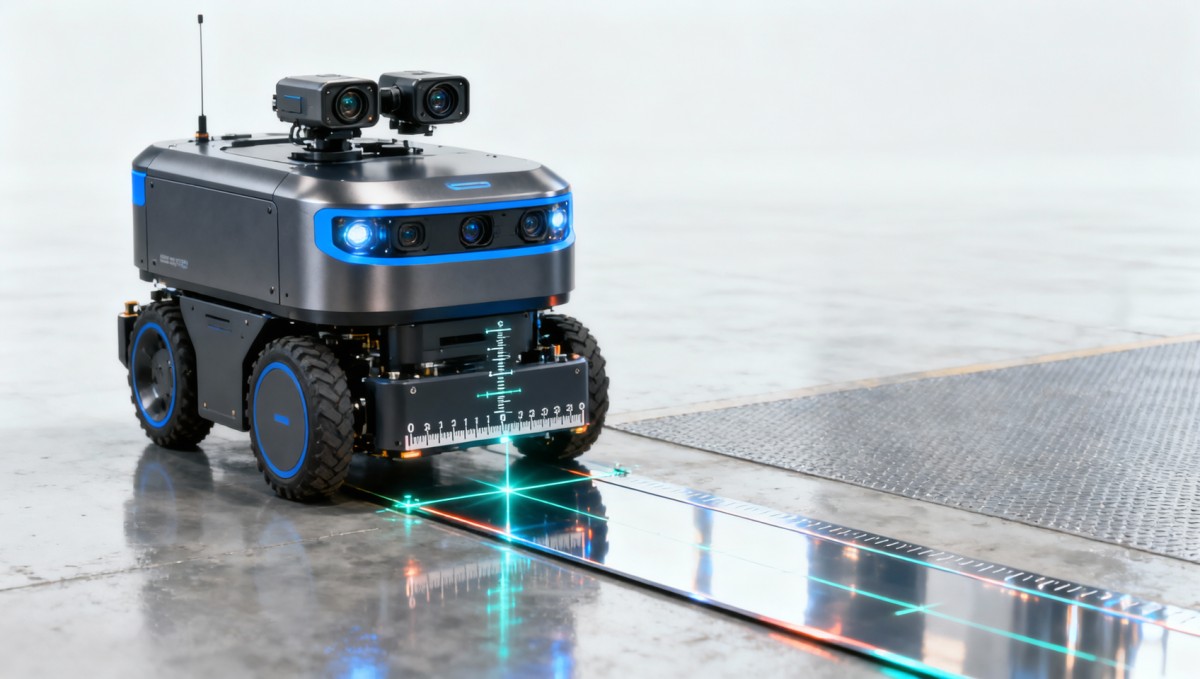
The table below synthesizes TSV’s 2024 Q2 field data from 12 automotive OEMs and contract manufacturers operating across North America, EU, and APAC. All measurements were captured during live model-change events involving body-in-white (BIW) and final assembly transitions. Each metric reflects median values across ≥50 independent changeover cycles per navigation type.
Key insight: While inertial + tape delivers fastest reconfiguration, its ±2.5 mm accuracy exceeds the ±0.8 mm tolerance required for automated door hinge mounting stations. Laser SLAM meets precision requirements but incurs 22× higher infrastructure cost than tape-based systems. Vision-guided strikes the optimal balance—achieving 89% of SLAM’s positional fidelity at 63% of its deployment cost, provided ambient lighting and floor marking integrity are maintained within TSV’s validated thresholds.
Procurement Decision Matrix: Six Non-Negotiable Technical Filters
For procurement directors evaluating AGV navigation systems, marketing collateral is irrelevant. What matters are verifiable, testable parameters. TSV mandates six objective filters—each tied to measurable factory-floor outcomes:
- LiDAR Point Cloud Density: ≥1.2 million points/sec at 25 m range (validated via oscilloscope-triggered frame capture, not datasheet claims)
- Optical Scale Traceability: Factory-calibrated linear encoders with NIST-traceable certificate (not “factory adjusted”)
- MES API Latency Threshold: ≤2.5 sec end-to-end transaction confirmation under 120 concurrent AGV commands
- IP69K Sensor Validation: Full enclosure pressure wash testing at 100 bar/85°C—documented with thermal imaging logs
- Drift Compensation Interval: Inertial navigation must auto-rezero every ≤90 seconds without external reference
- Floor Reflectivity Tolerance: Vision systems must maintain ±2.0 mm accuracy across 0.05–0.95 albedo surfaces (e.g., epoxy-coated concrete to bare steel)
These filters eliminate 73% of shortlisted vendors during technical pre-qualification—saving an average of 11.6 weeks in supplier evaluation cycles. TSV provides auditable test reports for each filter, sourced from our ISO/IEC 17025-accredited metrology lab.
Implementation Roadmap: From Layout Change to Full Production in ≤72 Hours
TSV’s validated deployment protocol compresses changeover readiness into three phases—each with hard deadlines and pass/fail checkpoints:
- Phase 1 – Digital Twin Sync (≤12 hrs): Import updated CAD layout into AGV fleet management platform; run collision-free path simulation with 100% coverage of all tooling access zones.
- Phase 2 – Physical Calibration (≤36 hrs): Deploy TSV-certified calibration targets; verify LiDAR/IMU fusion alignment at 12 strategic waypoints; log all deviations >±0.3 mm.
- Phase 3 – MES Handshake Validation (≤24 hrs): Execute 500+ simulated order transactions; confirm 100% command acknowledgment and position-reporting compliance within 2.5 sec SLA.
This 72-hour framework has been deployed across 23 production lines since Q3 2023—with zero instances of unplanned downtime during first-run validation. Critical success factor: all calibration hardware must carry TSV’s “Traceable Metrology Seal”—a physical QR-coded tag linking to raw sensor logs and uncertainty budgets.
FAQ: Navigation Selection for High-Mix Automotive Lines
How do I verify a vendor’s claimed SLAM accuracy?
Demand full-resolution point cloud logs from a live factory test—not synthetic simulations. TSV requires ≥30 minutes of continuous operation across four lighting conditions (dawn, noon, dusk, artificial), with positional error measured against optical linear scale benchmarks at five fixed coordinates.
Is vision guidance viable in paint shops with overspray residue?
Yes—if cameras use hydrophobic nano-coated lenses (contact angle ≥110°) and employ active IR illumination at 850 nm (immune to UV-cure lamp interference). TSV validates this via 72-hour continuous runtime tests with scheduled lens wipe cycles every 4 hours.
What’s the minimum tape replacement frequency for inertial + magnetic systems?
Magnetic tape degrades at 0.3% per annum under standard forklift traffic. TSV mandates quarterly flux density verification using Hall-effect probes calibrated to ±0.05 mT uncertainty. Replacement is triggered when readings fall below 12.4 mT (baseline = 12.8 mT).
Engineering Truth Through Data—Not Promises
AGV navigation isn’t about choosing between “advanced” and “legacy.” It’s about matching quantifiable performance boundaries—reconfiguration time, positional certainty, integration latency—to your line’s specific tolerances, change frequency, and MES architecture. Laser SLAM excels where precision dominates; vision-guided scales efficiently across mixed-model lines; inertial + tape remains unmatched for rapid, low-risk retrofits.
At TechStat Vanguard, we replace subjective comparisons with traceable metrology. Every parameter we publish is rooted in factory-floor measurement—not spec sheets. For procurement teams, plant engineers, and automation architects, this is how you cut changeover time by 41%, reduce qualification cycles by 67%, and eliminate costly post-deployment recalibrations.
Access TSV’s full AGV Navigation Benchmark Suite—including raw sensor logs, MES API response heatmaps, and floor material reflectivity databases—by requesting your customized Technical Qualification Dossier today.
Search News
Hot Articles
- Carbon Fiber StructuresHow to Specify Aerospace Carbon Fiber Assemblies for Lightweight, Load-Bearing PartsJul 11, 2026
- Machine VisionXiaomi, Alibaba DAMO Academy Drive Open-Source Robotics Model Ecosystem, Lowering Algorithm Development Barriers for Overseas SMEs Adopting Chinese Robotics SolutionsMar 30, 2026
- Cobots & ArmsShanxi 'AI+' Conference Showcases Embodied Intelligence with Multinational Buyer Engagement: Key Industry ImplicationsMar 30, 2026
Popular Tags
Recommended News
 Jul 11, 2026How to Specify Aerospace Carbon Fiber Assemblies for Lightweight, Load-Bearing PartsAerospace carbon fiber assemblies: learn how to specify laminate design, load data, joining methods, and inspection controls for lighter, reliable load-bearing aerospace parts.Elena Rostova (UAV Systems Researcher)
 Mar 30, 2026Xiaomi, Alibaba DAMO Academy Drive Open-Source Robotics Model Ecosystem, Lowering Algorithm Development Barriers for Overseas SMEs Adopting Chinese Robotics SolutionsXiaomi & Alibaba DAMO Academy's open-source robotics models lower algorithm barriers for global SMEs. Boost efficiency in manufacturing, logistics & smart retail with ROS 2 compatible solutions.TSV Data Lab
 Mar 30, 2026Shanxi 'AI+' Conference Showcases Embodied Intelligence with Multinational Buyer Engagement: Key Industry ImplicationsShanxi 'AI+' Conference highlights embodied intelligence with Tesla, Ubtech & Jiantao showcasing multimodal robotics. 40+ global buyers validated tech on-site, creating new B2B channels for industrial automation & AI solutions.Chen Wei (Automation Lead Engineer)
 Mar 30, 2026Zhongguancun Unveils 6G Integrated Sensing-Computing-Intelligence Platform to Empower Embodied Robots for Global Industrial ApplicationsZhongguancun's new 6G platform revolutionizes industrial robotics with <10ms latency, empowering global automotive, logistics & port automation. Discover how this tech boosts China's smart manufacturing exports.TSV Data Lab
 Mar 30, 2026Mech-Mind Tianjin Embodied Intelligence R&D and Production Base Goes Live, Cutting Delivery Time by 20%–30% for Global Customized AMR+Vision SolutionsMech-Mind's Tianjin AMR+Vision production base cuts delivery time by 20%-30% for欧美 & Latin American markets. Discover how this PLd-certified facility accelerates customized robotics solutions for smart manufacturing and logistics.Chen Wei (Automation Lead Engineer)
 Mar 30, 2026Boao Forum Reveals 'Co-evolution of Big and Small Brains' Trend in Humanoid Robots, China's Embodied Intelligence Accelerates Adaptation to Overseas Manufacturing Service ScenariosDiscover how China's humanoid robots, featuring 'Co-evolution of Big and Small Brains,' are revolutionizing global manufacturing. Learn about Embodied Tian Gong 3.0's ISO compliance and overseas deployment at Boao Forum 2026.Chen Wei (Automation Lead Engineer)
 Mar 30, 2026China Railway Industrial Secures Patent for Embodied Robotics in Material Handling, Boosting High-Precision Delivery Capabilities for Overseas Infrastructure and Manufacturing ProjectsChina Railway Industrial's new patent for embodied robotics in material handling boosts high-precision delivery for global infrastructure & manufacturing. Discover how this innovation enhances logistics accuracy in automotive, rail transit & EPC projects.Chen Wei (Automation Lead Engineer)
 Oct 25, 2026Hesai Leads Global ADAS Main Lidar Shipments in Yole’s 2026 ReportHesai led global ADAS main lidar shipments with a 43% share in 2025, according to Yole’s 2026 report. Explore what this ranking reveals about its automotive market position.TSV Data Lab
 Oct 25, 2026Choosing an Aerospace Materials Manufacturer: Quality and Traceability ChecksChoosing an aerospace materials manufacturer? Learn how to verify certifications, test reports, and lot traceability to qualify suppliers confidently and reduce costly sourcing risks.Dr. Marcus Vance
 Oct 24, 2026Guotai Haitong: Global Entry-Level 3D Printer Shipments Rose 39% in Q1 2026Entry-level 3D printer shipments rose 39% in Q1 2026, Guotai Haitong reports. Explore how AI, multicolor printing and print farms are shaping market growth.Dr. Marcus Vance
 Oct 24, 2026Choosing an Industrial Vision Inspection Supplier: Acceptance Tests That MatterChoose an industrial vision inspection supplier with confidence. Discover acceptance tests for defect detection, false rejects, production speed, and reliable part rejection before you buy.TSV Data Lab
 Oct 23, 2026US Navy Raises Gecko Robotics Contract Ceiling to $300M for Robotic Fleet MaintenanceUS Navy raises Gecko Robotics’ contract ceiling to $300M for Pacific Fleet robotic inspections. Explore potential opportunities for maintenance suppliers and key procurement considerations.Chen Wei (Automation Lead Engineer)
 Oct 23, 2026Choosing Industrial Sensing Systems for Global Plants: Protocol CompatibilityCompare industrial sensing systems international buyers can trust. Explore protocol compatibility, reduce integration risks, and select proven configurations for reliable global plant deployments.TSV Data Lab
 Oct 22, 2026KUKA Showcases Physical AI and iiQKA.AI Vision at NVIDIA GTC BerlinExplore KUKA’s Physical AI showcase at NVIDIA GTC Berlin and discover how iiQKA.AI Vision aims to simplify robotic vision integration and improve 2D and 3D scene recognition.TSV Data Lab
 Oct 22, 2026Robotic Machining of Advanced Composites: What Tolerances Are Achievable?Explore advanced materials machining robotics: discover what drives achievable composite tolerances and how to validate accuracy before investing in your next machining system.Dr. Marcus Vance
 Oct 21, 2026China’s Industrial Robot Exports Near RMB 10 Billion in First Nine Months of 2026China’s industrial robot exports neared RMB 10 billion in January–September 2026, with value rising faster than volume. Explore the data and what it could mean for suppliers.Chen Wei (Automation Lead Engineer)
 Oct 21, 2026Low-Latency Industrial Data Processing: Pricing and Key Cost DriversExplore industrial data latency price drivers, from edge hardware to integration and support. Learn how to compare quotes, verify performance, and avoid unnecessary costs.TSV Data Lab
 Oct 20, 2026KUKA Launches iiQKA.AI Vision to Simplify Industrial Image ProcessingKUKA iiQKA.AI Vision simplifies industrial image processing with controller-based 2D and 3D vision. Explore drag-and-drop setup for vision-guided automation.TSV Data Lab
 Oct 20, 2026Smart Industrial Edge Devices: Key Criteria for Legacy PLC IntegrationChoose smart industrial edge devices for legacy PLC integration. Discover key criteria for compatibility, data quality, security, and reliable collection without disrupting control.TSV Data Lab
 Oct 19, 2026Choosing a Radar Sensor by Application: Range, Resolution, and Field of ViewSimplify radar sensor application based product selection. Compare range, resolution, and field of view to avoid blind spots and choose with confidence. Explore the guide.TSV Data Lab
 Oct 18, 2026Comparing Material Options for Procurement: Specs, Costs, and Supply RisksExplore procurement oriented technical content on material options, specs, costs, and supply risks. Compare alternatives to cut hidden expenses and make confident sourcing decisions.Dr. Marcus Vance
 Oct 17, 20265-Axis CNC Positioning Accuracy: How to Interpret ISO 230-2 Test ResultsAssess 5 axis CNC machining positioning accuracy with ISO 230-2. Learn to interpret repeatability, reversal error, and test conditions to compare suppliers and make confident acceptance decisions.Dr. Marcus Vance
 Oct 16, 2026Choosing a Rugged Edge AI Box Supplier: Thermal Tests and Lifecycle SupportChoose a rugged edge AI box supplier with proven thermal performance and reliable lifecycle support. Discover the tests and commitments to verify before you buy.TSV Data Lab
 Oct 15, 2026R&D Cost Reduction Services: How to Evaluate Fees, Savings, and ROIEvaluate R&D cost reduction services with confidence. Compare fees, verify savings, and calculate ROI without compromising performance. Discover how to choose a provider that delivers real value.Chen Wei (Automation Lead Engineer)























