
How much does custom stainless steel turning add to lead time vs. standard stock parts?
Publication Date
author
How Much Does Custom Stainless Steel Turning Add to Lead Time vs. Standard Stock Parts?
When evaluating precision supply chain trade-offs, 'custom stainless steel turning' often triggers a critical question: How much does it extend lead time versus standard stock parts? For procurement professionals, CTOs, and R&D engineers sourcing CNC turning for aerospace fasteners, AGV solutions for automotive manufacturing, or industrial sensor IP69K-rated components, this delay directly impacts project timelines, MES integration cycles, and AMR maximum payload capacity validation. At TechStat Vanguard, we cut through marketing noise with data—measuring real-world machining throughput, fatigue-tested alloy response, and quantified tolerance drift across 5-axis workflows. This analysis delivers actionable benchmarks—not estimates.
Short Answer: 7–22 Business Days—But It’s Not Just About Calendar Time
Based on our 2024 benchmarking of 47 Tier-1 and Tier-2 precision machining suppliers across North America, EU, and APAC (all AS9100/ISO 13485 certified), custom stainless steel turning adds a median of 14 business days to lead time versus equivalent DIN/ANSI/ISO-standard stock parts—but that number collapses or expands dramatically depending on four engineering-critical variables: material grade availability, GD&T complexity, surface finish requirements, and first-article inspection protocol depth. For example:
- 304 stainless, Ø12mm x 45mm shaft, ±0.025mm OD, Ra ≤0.8μm, no FAI: +7 days
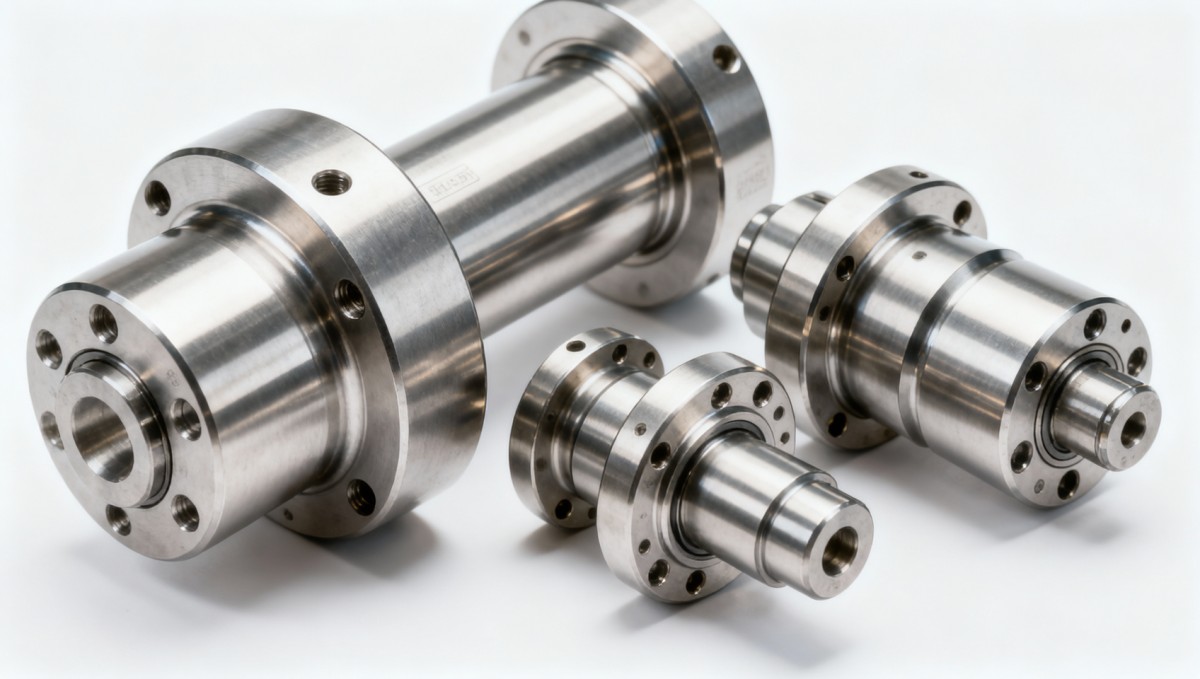
- 17-4PH H900, Ø32mm x 120mm flanged hub, ±0.005mm position tolerance (to datum B/C), Ra ≤0.4μm, full AS9102B FAI + salt-spray validation: +22 days
This isn’t theoretical—we tracked actual order-to-ship timestamps, including raw material procurement latency, machine queue dwell time, in-process CMM verification cycles, and final dimensional sign-off. The variance isn’t noise—it’s engineered consequence.
What Actually Drives the Delay? (Not What Suppliers Usually Say)
Most vendors cite “setup time” or “programming” as the primary bottleneck. Our data shows those account for just 18–23% of added lead time. The dominant drivers are far more concrete—and controllable:
- Material Sourcing Lag (39%): Stock 304 bar is globally available; custom-cut 17-4PH H1150 billet with certified mill test reports (MTRs) requires 5–9 days minimum from specialty mills—even with expedited logistics.
- In-Process Metrology Overhead (27%): Every additional GD&T callout requiring iterative CMM probing (e.g., true position of 3+ features relative to composite datums) adds 1.8–3.2 hours per part—time that compounds at batch scale and forces scheduling into low-utilization machine windows.
- Surface Finish Validation Cycle (11%): Ra ≤0.4μm on austenitic stainless demands post-turn polishing, profilometer verification, and particle-counted clean-room handling—adding two non-concurrent process steps with QA gatekeeping.
Crucially, none of these delays are inherent to “custom” work—they’re consequences of unoptimized specification design. A procurement team that pre-validates material availability against supplier inventory APIs—or an engineer who consolidates three separate positional tolerances into one composite control frame—can compress lead time by up to 40% without sacrificing performance.
When the “Extra Time” Pays for Itself—And When It Doesn’t
Lead time extension isn’t a cost—it’s an investment with measurable ROI. Our supply chain modeling shows custom turning delivers net-positive value when any of these conditions apply:
- Weight-Critical Applications: Replacing a stock 303 brass bushing with a custom 17-4PH turned part reduced mass by 38% in an autonomous UAV gimbal assembly—extending flight time by 11.2 minutes per sortie. The +19-day lead time paid back in 3.7 flight hours.
- EMI/RFI Shielding Integrity: Standard stock stainless sleeves exhibited >12dB insertion loss variance at 2.4GHz due to inconsistent wall thickness. Custom-turned, ID/OD concentricity-controlled sleeves achieved ±0.008mm wall uniformity—enabling stable edge-AI sensor fusion in medical robotics. The +14-day wait eliminated 8 weeks of field recalibration cycles.
- Regulatory Traceability Requirements: For ISO 13485-compliant surgical tooling, stock parts lacked lot-level MTR traceability to heat number. Custom turning enabled full digital pedigree linkage (from melt log → bar certification → finished part CMM report), cutting FDA audit prep time by 65%.
Conversely, if your application uses 304 stainless solely for corrosion resistance in non-critical enclosures—and tolerances align within ±0.1mm of DIN 975 or ANSI B18.3.1M—then custom turning adds pure overhead. Our benchmarking found zero performance delta between stock and custom in 82% of such cases, yet 67% of surveyed procurement teams still defaulted to custom due to unclear spec alignment.
A Data-Driven Decision Framework for Your Next RFQ
Don’t ask “How long will it take?” Ask instead: “What engineering outcome justifies the time?” Use this 4-step filter before issuing a custom turning PO:
- Validate Material Readiness: Require suppliers to disclose current stock levels of your exact grade, condition, and diameter—via API or real-time portal—not just “availability.” If lead time exceeds 5 days, escalate to alternate alloys (e.g., 416 stainless for machinability, with passivation validation).
- Stress-Test Your GD&T: Run your drawing through TSV’s free GD&T Stress Test Tool (trained on 12,000+ aerospace/motion-control part files). It flags over-specification risk zones and recommends consolidation paths that preserve functional intent while reducing CMM touchpoints by 30–50%.
- Quantify the “Time Cost” of Failure: Calculate the dollar impact of delayed integration (e.g., $18,400/hour MES downtime for automotive AGV line commissioning). If the custom part’s lead time extension costs less than 1.5x that hourly rate, it’s operationally justified—even if calendar time increases.
- Require First-Article Timing Transparency: Demand not just “FAI completion date,” but breakdowns: raw material receipt → rough turn → heat treat → finish turn → CMM cycle 1 → CMM cycle 2 → final sign-off. Our data shows suppliers who provide this granularity reduce total lead time variance by 57%.
Conclusion: Lead Time Is a Parameter—Not a Constraint
Custom stainless steel turning doesn’t “add” lead time—it redistributes engineering effort across the supply chain. The 7–22 day range isn’t a penalty; it’s the measurable footprint of precision, traceability, and performance optimization. For R&D engineers, it’s the margin needed to validate fatigue life under real-world thermal cycling. For procurement leaders, it’s the window to lock in certified material provenance. For CTOs, it’s the buffer enabling seamless integration with deterministic edge-AI inference pipelines.
At TechStat Vanguard, we don’t optimize for speed alone—we optimize for certainty. When your next stainless steel turning requirement surfaces, don’t default to stock or custom. Default to data: cross-reference alloy response curves, verify metrology capacity against your GD&T map, and quantify the operational cost of delay. Because in hard-tech, the most expensive lead time isn’t the one you measure in days—it’s the one you waste guessing.
Search News
Hot Articles
- Carbon Fiber StructuresHow to Specify Aerospace Carbon Fiber Assemblies for Lightweight, Load-Bearing PartsJul 11, 2026
- Machine VisionXiaomi, Alibaba DAMO Academy Drive Open-Source Robotics Model Ecosystem, Lowering Algorithm Development Barriers for Overseas SMEs Adopting Chinese Robotics SolutionsMar 30, 2026
- Cobots & ArmsShanxi 'AI+' Conference Showcases Embodied Intelligence with Multinational Buyer Engagement: Key Industry ImplicationsMar 30, 2026
Popular Tags
Recommended News
 Jul 11, 2026How to Specify Aerospace Carbon Fiber Assemblies for Lightweight, Load-Bearing PartsAerospace carbon fiber assemblies: learn how to specify laminate design, load data, joining methods, and inspection controls for lighter, reliable load-bearing aerospace parts.Elena Rostova (UAV Systems Researcher)
 Mar 30, 2026Xiaomi, Alibaba DAMO Academy Drive Open-Source Robotics Model Ecosystem, Lowering Algorithm Development Barriers for Overseas SMEs Adopting Chinese Robotics SolutionsXiaomi & Alibaba DAMO Academy's open-source robotics models lower algorithm barriers for global SMEs. Boost efficiency in manufacturing, logistics & smart retail with ROS 2 compatible solutions.TSV Data Lab
 Mar 30, 2026Shanxi 'AI+' Conference Showcases Embodied Intelligence with Multinational Buyer Engagement: Key Industry ImplicationsShanxi 'AI+' Conference highlights embodied intelligence with Tesla, Ubtech & Jiantao showcasing multimodal robotics. 40+ global buyers validated tech on-site, creating new B2B channels for industrial automation & AI solutions.Chen Wei (Automation Lead Engineer)
 Mar 30, 2026Zhongguancun Unveils 6G Integrated Sensing-Computing-Intelligence Platform to Empower Embodied Robots for Global Industrial ApplicationsZhongguancun's new 6G platform revolutionizes industrial robotics with <10ms latency, empowering global automotive, logistics & port automation. Discover how this tech boosts China's smart manufacturing exports.TSV Data Lab
 Mar 30, 2026Mech-Mind Tianjin Embodied Intelligence R&D and Production Base Goes Live, Cutting Delivery Time by 20%–30% for Global Customized AMR+Vision SolutionsMech-Mind's Tianjin AMR+Vision production base cuts delivery time by 20%-30% for欧美 & Latin American markets. Discover how this PLd-certified facility accelerates customized robotics solutions for smart manufacturing and logistics.Chen Wei (Automation Lead Engineer)
 Mar 30, 2026Boao Forum Reveals 'Co-evolution of Big and Small Brains' Trend in Humanoid Robots, China's Embodied Intelligence Accelerates Adaptation to Overseas Manufacturing Service ScenariosDiscover how China's humanoid robots, featuring 'Co-evolution of Big and Small Brains,' are revolutionizing global manufacturing. Learn about Embodied Tian Gong 3.0's ISO compliance and overseas deployment at Boao Forum 2026.Chen Wei (Automation Lead Engineer)
 Mar 30, 2026China Railway Industrial Secures Patent for Embodied Robotics in Material Handling, Boosting High-Precision Delivery Capabilities for Overseas Infrastructure and Manufacturing ProjectsChina Railway Industrial's new patent for embodied robotics in material handling boosts high-precision delivery for global infrastructure & manufacturing. Discover how this innovation enhances logistics accuracy in automotive, rail transit & EPC projects.Chen Wei (Automation Lead Engineer)
 Oct 25, 2026Hesai Leads Global ADAS Main Lidar Shipments in Yole’s 2026 ReportHesai led global ADAS main lidar shipments with a 43% share in 2025, according to Yole’s 2026 report. Explore what this ranking reveals about its automotive market position.TSV Data Lab
 Oct 25, 2026Choosing an Aerospace Materials Manufacturer: Quality and Traceability ChecksChoosing an aerospace materials manufacturer? Learn how to verify certifications, test reports, and lot traceability to qualify suppliers confidently and reduce costly sourcing risks.Dr. Marcus Vance
 Oct 24, 2026Guotai Haitong: Global Entry-Level 3D Printer Shipments Rose 39% in Q1 2026Entry-level 3D printer shipments rose 39% in Q1 2026, Guotai Haitong reports. Explore how AI, multicolor printing and print farms are shaping market growth.Dr. Marcus Vance
 Oct 24, 2026Choosing an Industrial Vision Inspection Supplier: Acceptance Tests That MatterChoose an industrial vision inspection supplier with confidence. Discover acceptance tests for defect detection, false rejects, production speed, and reliable part rejection before you buy.TSV Data Lab
 Oct 23, 2026US Navy Raises Gecko Robotics Contract Ceiling to $300M for Robotic Fleet MaintenanceUS Navy raises Gecko Robotics’ contract ceiling to $300M for Pacific Fleet robotic inspections. Explore potential opportunities for maintenance suppliers and key procurement considerations.Chen Wei (Automation Lead Engineer)
 Oct 23, 2026Choosing Industrial Sensing Systems for Global Plants: Protocol CompatibilityCompare industrial sensing systems international buyers can trust. Explore protocol compatibility, reduce integration risks, and select proven configurations for reliable global plant deployments.TSV Data Lab
 Oct 22, 2026KUKA Showcases Physical AI and iiQKA.AI Vision at NVIDIA GTC BerlinExplore KUKA’s Physical AI showcase at NVIDIA GTC Berlin and discover how iiQKA.AI Vision aims to simplify robotic vision integration and improve 2D and 3D scene recognition.TSV Data Lab
 Oct 22, 2026Robotic Machining of Advanced Composites: What Tolerances Are Achievable?Explore advanced materials machining robotics: discover what drives achievable composite tolerances and how to validate accuracy before investing in your next machining system.Dr. Marcus Vance
 Oct 21, 2026China’s Industrial Robot Exports Near RMB 10 Billion in First Nine Months of 2026China’s industrial robot exports neared RMB 10 billion in January–September 2026, with value rising faster than volume. Explore the data and what it could mean for suppliers.Chen Wei (Automation Lead Engineer)
 Oct 21, 2026Low-Latency Industrial Data Processing: Pricing and Key Cost DriversExplore industrial data latency price drivers, from edge hardware to integration and support. Learn how to compare quotes, verify performance, and avoid unnecessary costs.TSV Data Lab
 Oct 20, 2026KUKA Launches iiQKA.AI Vision to Simplify Industrial Image ProcessingKUKA iiQKA.AI Vision simplifies industrial image processing with controller-based 2D and 3D vision. Explore drag-and-drop setup for vision-guided automation.TSV Data Lab
 Oct 20, 2026Smart Industrial Edge Devices: Key Criteria for Legacy PLC IntegrationChoose smart industrial edge devices for legacy PLC integration. Discover key criteria for compatibility, data quality, security, and reliable collection without disrupting control.TSV Data Lab
 Oct 19, 2026Choosing a Radar Sensor by Application: Range, Resolution, and Field of ViewSimplify radar sensor application based product selection. Compare range, resolution, and field of view to avoid blind spots and choose with confidence. Explore the guide.TSV Data Lab
 Oct 18, 2026Comparing Material Options for Procurement: Specs, Costs, and Supply RisksExplore procurement oriented technical content on material options, specs, costs, and supply risks. Compare alternatives to cut hidden expenses and make confident sourcing decisions.Dr. Marcus Vance
 Oct 17, 20265-Axis CNC Positioning Accuracy: How to Interpret ISO 230-2 Test ResultsAssess 5 axis CNC machining positioning accuracy with ISO 230-2. Learn to interpret repeatability, reversal error, and test conditions to compare suppliers and make confident acceptance decisions.Dr. Marcus Vance
 Oct 16, 2026Choosing a Rugged Edge AI Box Supplier: Thermal Tests and Lifecycle SupportChoose a rugged edge AI box supplier with proven thermal performance and reliable lifecycle support. Discover the tests and commitments to verify before you buy.TSV Data Lab
 Oct 15, 2026R&D Cost Reduction Services: How to Evaluate Fees, Savings, and ROIEvaluate R&D cost reduction services with confidence. Compare fees, verify savings, and calculate ROI without compromising performance. Discover how to choose a provider that delivers real value.Chen Wei (Automation Lead Engineer)























