
How to source PLC training kit wholesale safely?
Publication Date
author
Sourcing PLC training kit wholesale safely is not mainly about finding the lowest unit price. For most buyers, the real challenge is reducing procurement risk: making sure the kit matches training objectives, uses verifiable components, complies with local electrical expectations, and comes from a supplier that can support delivery, spare parts, and documentation after purchase. If you are also comparing options across codesys compatible plc china products, hmi panel supplier portfolios, or industrial raspberry pi compute module based control platforms, the safest path is to evaluate training value, technical transparency, and supplier traceability together—not separately.
What does “safe” wholesale sourcing actually mean for a PLC training kit?
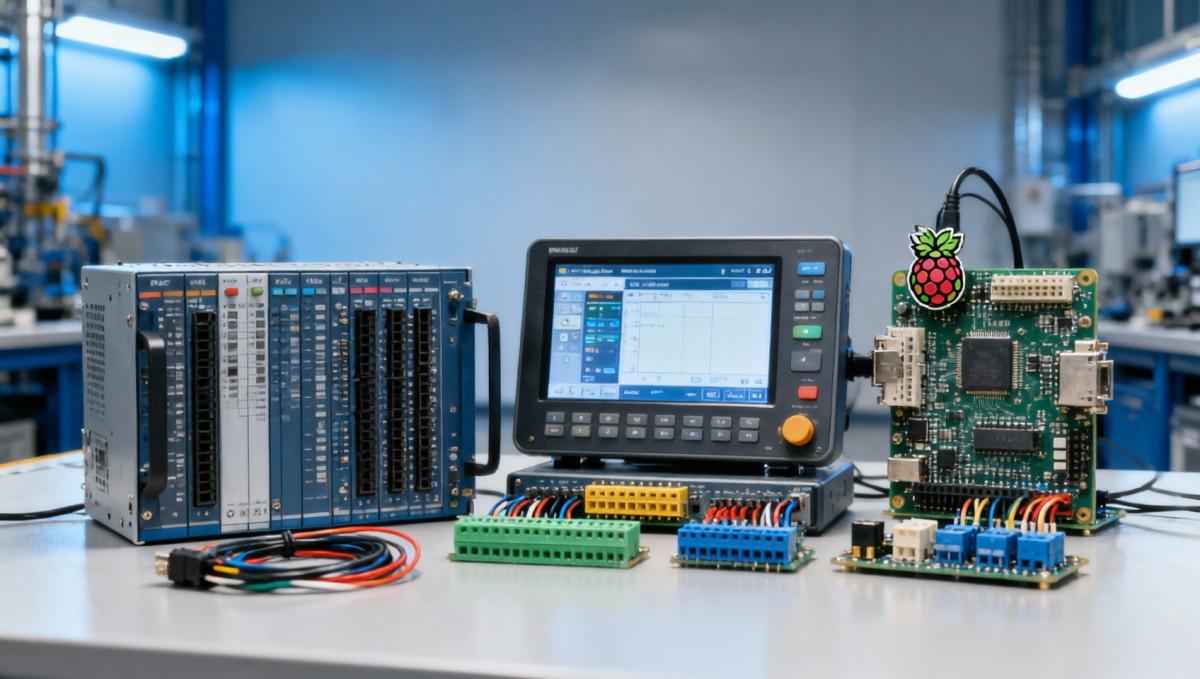
For procurement teams, instructors, plant training managers, and technical decision-makers, “safe” sourcing usually means five things:
- The kit is technically real, not cosmetically assembled. It should reflect practical industrial logic, I/O behavior, wiring standards, and programming workflows.
- The supplier is traceable. You should be able to verify business identity, manufacturing capability, integration history, and after-sales responsibility.
- The specifications are testable. CPU type, communication protocols, voltage range, HMI compatibility, included software environment, and safety functions must be clearly documented.
- The training outcome is predictable. The kit should fit the actual skill level and use case: student labs, technician upskilling, OEM simulation, or internal maintenance training.
- The total cost is controlled. This includes not just purchase price, but firmware support, replacement modules, shipping risk, customs paperwork, and instructor onboarding.
In other words, safe sourcing is a risk-management process. A low quote from an unclear supplier can easily become expensive if the PLC training kit arrives with undocumented I/O mapping, unstable HMI communication, incompatible software licenses, or no replacement policy.
What are buyers really trying to achieve when they search for PLC training kit wholesale?
The core search intent behind this topic is highly practical: buyers want a reliable way to source PLC training kits in volume without making a costly mistake. They are rarely looking for generic PLC theory. Instead, they usually want answers to questions such as:
- Which suppliers are credible enough for bulk orders?
- How can we verify quality before paying a deposit?
- What specifications matter most for training use?
- Should we choose branded architecture, open architecture, or a hybrid platform?
- How do we avoid compatibility problems with HMI, sensors, and edge devices?
- What contract and logistics checks reduce dispute risk?
That matters because the right buying decision depends on the operating context. A technical school may prioritize curriculum flexibility and beginner-safe wiring. A manufacturer may want a training system that mirrors plant architecture. A distributor may care more about standardization, packaging consistency, and recurring reorder support.
Which issues matter most before placing a wholesale order?
The most important concerns are usually not marketing claims but operational details. Serious buyers should focus on the following areas first.
1. Is the kit aligned with the actual training goal?
A PLC training kit for education is not automatically suitable for industrial technician development. Some kits are built mainly for ladder logic demonstration; others support motion, analog control, Modbus, Ethernet/IP, Profinet, or SCADA-level exercises. Before sourcing wholesale, define the learning target:
- Entry-level education: digital I/O, timers, counters, relay logic, basic HMI.
- Maintenance technician training: fault diagnosis, wiring checks, sensor simulation, troubleshooting scenarios.
- OEM or systems integration: communication protocols, remote I/O, HMI/PLC integration, industrial networking.
- Advanced automation labs: servo, VFD, data logging, edge connectivity, Industrial IoT exercises.
If the training objective is vague, buyers often overpay for functions they will not use or underbuy and face retraining costs later.
2. Are the PLC and software environment clearly identified?
This is one of the biggest practical checkpoints. A safe supplier should disclose:
- PLC brand or architecture
- Programming environment
- Whether the unit is based on proprietary controllers or a codesys compatible plc china platform
- Supported languages: Ladder Diagram, Structured Text, Function Block Diagram, etc.
- License requirements and upgrade limitations
- Protocol support: Modbus RTU/TCP, CAN, EtherCAT, Profinet, Ethernet/IP, MQTT if applicable
If software licensing is unclear, the training kit may become difficult to deploy across multiple classrooms or internal training sites. For wholesale purchases, license scalability matters almost as much as hardware quality.
3. Can the HMI and control components integrate cleanly?
Many buyers source PLC kits together with operator interfaces. That is why evaluating the supplier’s ecosystem matters. If you are also reviewing options from an hmi panel supplier, confirm:
- Screen sizes and resolution options
- Native communication drivers
- Alarm, trend, recipe, and data logging functions
- Electrical protection level
- Programming software availability
- Multi-language interface support
A training kit becomes far more useful when learners can experience realistic HMI-PLC interaction rather than isolated logic execution. For that reason, HMI compatibility should be treated as a core specification, not an accessory issue.
4. Is the platform expandable for modern edge and embedded applications?
Not every buyer needs this, but many now want training kits that connect to data collection, lightweight edge computing, or industrial gateway exercises. In that case, ask whether the architecture supports integration with an industrial raspberry pi compute module or equivalent embedded edge platform. This is especially valuable when training programs include:
- IIoT data acquisition
- Remote dashboard demonstrations
- Protocol conversion
- Python-assisted industrial logic visualization
- Local edge analytics
The key is not whether the supplier uses trendy hardware, but whether integration is stable, documented, and relevant to your training roadmap.
How do you verify a wholesale supplier before committing?
Supplier validation is where safe sourcing is won or lost. A dependable process usually includes the following checks.
Ask for evidence, not adjectives
Do not rely on phrases such as “high quality” or “professional manufacturer.” Request concrete documentation:
- Company registration details
- Factory or assembly site information
- Product datasheets
- Bill of materials summary
- QC process description
- Photos or video of functional testing
- Sample manuals and wiring diagrams
- Export experience to your target market
Request a sample or pilot batch
For first-time suppliers, a pilot order is one of the best protections. Test the sample against a checklist:
- Actual PLC response and programming stability
- Terminal labeling consistency
- Power supply behavior under normal load
- HMI communication reliability
- Sensor/actuator simulation usability
- Enclosure durability and transport condition
- Manual quality and training usability
A sample stage often reveals whether the supplier understands education and industrial training requirements or is simply repackaging generic components.
Verify support capability
Wholesale safety is not only about delivery; it is also about what happens after delivery. Ask:
- What is the warranty policy?
- How are defective units replaced?
- Are spare parts stocked?
- Can they provide remote technical support?
- Do they offer firmware or software update guidance?
- Can they customize labeling, language, or module combinations?
For enterprise buyers and schools, post-sale response time can affect training continuity more than the initial purchase price.
What specifications should be on your quotation checklist?
To compare suppliers properly, create a quotation template that forces apples-to-apples evaluation. At minimum, include:
- PLC CPU model and memory
- Digital and analog I/O count
- Input/output voltage ratings
- Communication interfaces and supported protocols
- Included HMI model, if any
- Programming software and license terms
- Power supply type and plug standard
- Safety features: overload protection, fusing, emergency stop, shielding
- Training modules included: motors, relays, proximity sensors, analog simulators, VFD, servo, etc.
- Mechanical design: panel, enclosure, portability, mounting method
- Manuals, exercises, and curriculum support
- Certifications or conformity claims relevant to destination market
- Packing method and carton drop protection
- Lead time, MOQ, and spare unit policy
Without this level of detail, wholesale comparison becomes guesswork, and that is exactly how weak suppliers hide risk.
How can procurement teams reduce commercial and logistics risk?
Even a technically acceptable PLC training kit can become a bad purchase if commercial controls are weak. Good procurement practice includes:
- Use a clear specification attachment in the PO or contract. Include model references, functional requirements, accessories, packaging standard, and acceptance criteria.
- Define inspection points before shipment. For example: power-on test, software access, communication test, and quantity verification.
- Agree on Incoterms and liability clearly. Know who is responsible for inland transport, export clearance, freight, and damage claims.
- Control payment milestones. For new suppliers, avoid paying full amount upfront without inspection evidence.
- Plan for customs and local compliance. Especially for power supplies, wireless modules, batteries, or region-specific electrical requirements.
- Document version control. If the supplier substitutes components, that must require approval.
For larger buyers, a short approved vendor process is often worth the effort. It creates a repeatable standard for future sourcing, not just a one-time transaction.
When is a low-cost wholesale offer too risky?
A low quote may still be a good buy, but it becomes risky when multiple warning signs appear together:
- Specifications are incomplete or inconsistent
- The supplier avoids naming actual controller architecture
- Software and licensing terms are vague
- No sample testing is possible
- Documentation looks copied or generic
- Communication becomes unclear after technical questions
- There is no defined spare parts or warranty process
- Lead time promises are unrealistically short for customized kits
For training equipment, hidden inconsistency is especially dangerous. If one batch differs from the next, your instructors, maintenance teams, and learners will lose standardization. That creates recurring cost and confusion.
What does a strong sourcing decision look like?
A strong decision usually balances four dimensions:
- Technical fit: The PLC training kit matches your learning objectives and control architecture.
- Supplier transparency: The vendor provides verifiable specs, testing evidence, and support commitments.
- Integration value: The kit works well with related systems such as HMI, networking devices, and edge platforms.
- Lifecycle economics: The total cost across deployment, maintenance, upgrades, and replacement stays predictable.
For some organizations, that may mean choosing a standardized platform with documented interoperability across a codesys compatible plc china control family, selected screens from a trusted hmi panel supplier, and optional expansion through an industrial raspberry pi compute module for edge-level training. For others, the right choice may be a simpler, tightly defined kit with strong manuals and dependable post-sale support.
Conclusion: buy for reliability, traceability, and training outcomes
If you want to source PLC training kit wholesale safely, start with the outcome you need and work backward through specifications, supplier verification, sample testing, and contract control. The safest buyers do not ask only “What is the price?” They ask “Can this kit be verified, deployed, supported, and standardized at scale?”
That is the practical benchmark. When a supplier can provide clear technical data, integration logic, documentation quality, and post-sale accountability, wholesale sourcing becomes far less risky and much more valuable. In a market full of broad claims, disciplined verification is what protects your budget, your training program, and your long-term automation roadmap.
Search News
Hot Articles
- Carbon Fiber StructuresHow to Specify Aerospace Carbon Fiber Assemblies for Lightweight, Load-Bearing PartsJul 11, 2026
- Machine VisionXiaomi, Alibaba DAMO Academy Drive Open-Source Robotics Model Ecosystem, Lowering Algorithm Development Barriers for Overseas SMEs Adopting Chinese Robotics SolutionsMar 30, 2026
- Cobots & ArmsShanxi 'AI+' Conference Showcases Embodied Intelligence with Multinational Buyer Engagement: Key Industry ImplicationsMar 30, 2026
Popular Tags
Recommended News
 Jul 11, 2026How to Specify Aerospace Carbon Fiber Assemblies for Lightweight, Load-Bearing PartsAerospace carbon fiber assemblies: learn how to specify laminate design, load data, joining methods, and inspection controls for lighter, reliable load-bearing aerospace parts.Elena Rostova (UAV Systems Researcher)
 Mar 30, 2026Xiaomi, Alibaba DAMO Academy Drive Open-Source Robotics Model Ecosystem, Lowering Algorithm Development Barriers for Overseas SMEs Adopting Chinese Robotics SolutionsXiaomi & Alibaba DAMO Academy's open-source robotics models lower algorithm barriers for global SMEs. Boost efficiency in manufacturing, logistics & smart retail with ROS 2 compatible solutions.TSV Data Lab
 Mar 30, 2026Shanxi 'AI+' Conference Showcases Embodied Intelligence with Multinational Buyer Engagement: Key Industry ImplicationsShanxi 'AI+' Conference highlights embodied intelligence with Tesla, Ubtech & Jiantao showcasing multimodal robotics. 40+ global buyers validated tech on-site, creating new B2B channels for industrial automation & AI solutions.Chen Wei (Automation Lead Engineer)
 Mar 30, 2026Zhongguancun Unveils 6G Integrated Sensing-Computing-Intelligence Platform to Empower Embodied Robots for Global Industrial ApplicationsZhongguancun's new 6G platform revolutionizes industrial robotics with <10ms latency, empowering global automotive, logistics & port automation. Discover how this tech boosts China's smart manufacturing exports.TSV Data Lab
 Mar 30, 2026Mech-Mind Tianjin Embodied Intelligence R&D and Production Base Goes Live, Cutting Delivery Time by 20%–30% for Global Customized AMR+Vision SolutionsMech-Mind's Tianjin AMR+Vision production base cuts delivery time by 20%-30% for欧美 & Latin American markets. Discover how this PLd-certified facility accelerates customized robotics solutions for smart manufacturing and logistics.Chen Wei (Automation Lead Engineer)
 Mar 30, 2026Boao Forum Reveals 'Co-evolution of Big and Small Brains' Trend in Humanoid Robots, China's Embodied Intelligence Accelerates Adaptation to Overseas Manufacturing Service ScenariosDiscover how China's humanoid robots, featuring 'Co-evolution of Big and Small Brains,' are revolutionizing global manufacturing. Learn about Embodied Tian Gong 3.0's ISO compliance and overseas deployment at Boao Forum 2026.Chen Wei (Automation Lead Engineer)
 Mar 30, 2026China Railway Industrial Secures Patent for Embodied Robotics in Material Handling, Boosting High-Precision Delivery Capabilities for Overseas Infrastructure and Manufacturing ProjectsChina Railway Industrial's new patent for embodied robotics in material handling boosts high-precision delivery for global infrastructure & manufacturing. Discover how this innovation enhances logistics accuracy in automotive, rail transit & EPC projects.Chen Wei (Automation Lead Engineer)
 Oct 18, 2026Comparing Material Options for Procurement: Specs, Costs, and Supply RisksExplore procurement oriented technical content on material options, specs, costs, and supply risks. Compare alternatives to cut hidden expenses and make confident sourcing decisions.Dr. Marcus Vance
 Oct 17, 20265-Axis CNC Positioning Accuracy: How to Interpret ISO 230-2 Test ResultsAssess 5 axis CNC machining positioning accuracy with ISO 230-2. Learn to interpret repeatability, reversal error, and test conditions to compare suppliers and make confident acceptance decisions.Dr. Marcus Vance
 Oct 16, 2026Choosing a Rugged Edge AI Box Supplier: Thermal Tests and Lifecycle SupportChoose a rugged edge AI box supplier with proven thermal performance and reliable lifecycle support. Discover the tests and commitments to verify before you buy.TSV Data Lab
 Oct 15, 2026R&D Cost Reduction Services: How to Evaluate Fees, Savings, and ROIEvaluate R&D cost reduction services with confidence. Compare fees, verify savings, and calculate ROI without compromising performance. Discover how to choose a provider that delivers real value.Chen Wei (Automation Lead Engineer)
 Oct 17, 2026How Should You Interpret Industrial Robot Repeatability Specs?Decode industrial robot repeatability specifications, understand ISO 9283 test conditions, and avoid costly selection mistakes. Learn how to verify performance for your process.Chen Wei (Automation Lead Engineer)
 Oct 16, 2026How Can You Fairly Compare MTBF Across Industrial Servo Motors?Make a fair industrial servo motor MTBF comparison with matched operating profiles, failure criteria, and confidence bounds. Discover how to assess reliability beyond advertised numbers.Chen Wei (Automation Lead Engineer)
 Oct 15, 2026How Should You Compare TechStat Vanguard 5-Axis CNC Tolerances?TechStat Vanguard 5-axis CNC tolerance comparison: learn how to verify part accuracy, assess inspection evidence, and choose suppliers that reliably meet your drawing requirements.Dr. Marcus Vance
 Oct 14, 2026Drone Frame Composites: Carbon Fiber vs. Fiberglass for Weight and StiffnessExplore drone structural materials composites: compare carbon fiber and fiberglass for weight, stiffness, cost, and antenna compatibility. Find the right material for your drone frame.Elena Rostova (UAV Systems Researcher)
 Oct 13, 2026Smart Cameras vs. PC-Based Machine Vision: Which Fits High-Speed Inspection?This industrial product comparison for machine vision weighs smart cameras vs. PC-based systems on latency, throughput, and cost. Discover your best fit for high-speed inspection.TSV Data Lab
 Oct 12, 2026How to Verify RoHS Compliance in Industrial Sensing Systems Before DeploymentRoHS compliant sensing systems: learn how to verify materials, supplier declarations, testing, and configuration controls before industrial deployment.TSV Data Lab
 Oct 11, 2026How Procurement-Oriented Content Taxonomy Improves B2B Buying JourneysProcurement-oriented content taxonomy streamlines B2B buying journeys with clearer evidence, supplier comparisons, risk visibility, and faster approvals.TSV Data Lab
 Oct 10, 2026How to Select a Machine Performance Monitoring Platform for OEE and Downtime ReductionMachine performance monitoring platform selection guide: validate machine states, OEE data, downtime reasons, integrations, and scalability to reduce losses with confidence.TSV Data Lab
 Oct 08, 2026How to Machine Inconel 625 Blades Without Heat Cracks or Edge ChippingInconel 625 blade machining guide: prevent heat cracks, edge chipping, chatter, and work hardening with proven tooling, cooling, fixturing, and inspection strategies.Dr. Marcus Vance
 Oct 07, 2026How to Evaluate an HMI Panel Distributor for Industrial Automation ProjectsHMI panel distributor evaluation guide: verify technical compatibility, traceability, supply reliability, lifecycle support, and total cost for automation projects.Victor Lin (Chief Software Architect)
 Oct 06, 2026Navigation Fault Tolerance Standards for AMRs: What Safety Teams Must VerifyNavigation fault tolerance standards: learn what AMR safety teams must verify, from localization loss and sensor faults to stopping distance, safe restart, and site-specific validation.Chen Wei (Automation Lead Engineer)
 Oct 05, 2026Calculating Edge Computing Total Cost of Ownership Across Distributed SitesEdge computing ownership cost explained: calculate deployment, energy, connectivity, security, remote support, and refresh costs across distributed sites.TSV Data Lab
 Oct 04, 2026CAD/CAM Benchmarking in the GCC: What Manufacturers Should Ask a ConsultantCAD CAM benchmark consultant GCC guide: learn the key questions manufacturers should ask to validate post-processors, workflows, machine performance, and production risk.Victor Lin (Chief Software Architect)























